
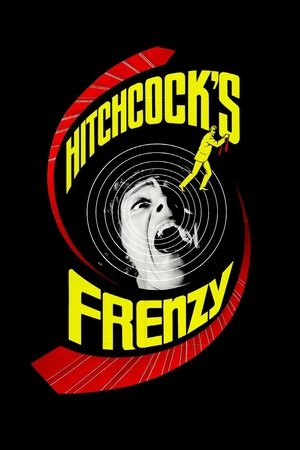
1972
Alfred Hitchcock
Horror Director · Biography · Horror Filmography · Family · Collaborators · Credits
Horror subgenres & themes
Most represented across this person's horror filmography:
CHRISTMAS
• PSYCHOLOGICAL
• VAMPIRE
Biography
Alfred Hitchcock and the Foundations of Modern Horror
Alfred Hitchcock spent most of his career moving between suspense, crime and psychological thriller rather than working exclusively inside horror, yet the films in which he crossed decisively into the genre changed its history. Psycho dismantled assumptions about protagonists, screen violence and the safety of ordinary American spaces, while The Birds transformed familiar animals into an unexplained apocalyptic threat. Together they demonstrate two very different approaches to horror. One turns inward toward identity, voyeurism and murder hidden behind the routines of a roadside motel; the other expands outward until an entire community becomes vulnerable to a force whose motives are never explained. Both depend less on elaborate mythology than on Hitchcock's ability to control what the audience sees, knows and anticipates.
Hitchcock's importance to horror therefore extends far beyond the number of films he made within the genre. His methods became part of horror grammar itself. Point of view can implicate the viewer in voyeurism. Editing can make violence feel more explicit than what is actually shown. An ordinary house can become Gothic through composition and expectation. A threat can remain frightening without receiving a final explanation. His films repeatedly demonstrate that fear begins before the attack, when the audience understands that something may happen inside a space that previously appeared safe.
Psycho and the Destruction of Narrative Security
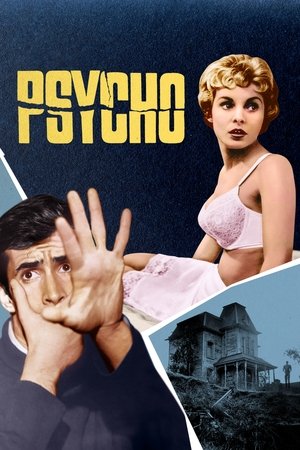
Psycho (1960) begins by appearing to tell the story of Marion Crane, a secretary who steals money and leaves Phoenix hoping to build another life. Hitchcock follows her closely enough that the theft, the police officer who watches her, the changing cars and the long drive toward California appear to establish the entire dramatic problem. The Bates Motel initially seems like another obstacle in Marion's flight. Instead, the film kills its apparent protagonist and forces the audience to understand that the story it believed it was watching has ended. The shock of the shower murder comes not only from physical violence but from Hitchcock's willingness to remove the character through whom the viewer had been experiencing the film.
This narrative rupture became enormously influential on later horror. Once Marion dies, the audience has no secure protagonist and no reliable understanding of where the story will move next. Attention transfers toward Norman Bates, the awkward young motel proprietor whose relationship with his unseen mother appears increasingly disturbing. Hitchcock turns the Bates Motel from a temporary stop into the true center of the film and makes the ordinary American roadside landscape function like a modern Gothic environment. The isolated motel, the looming house and the hidden rooms surrounding Norman become spaces in which family history and murder have been sealed away from the outside world.
Anthony Perkins and Norman Bates
Anthony Perkins is the defining acting collaborator of Hitchcock's horror cinema because Norman Bates depends upon contradiction. He is nervous, polite, physically unthreatening and capable of appearing genuinely sympathetic during his conversation with Marion. Hitchcock does not introduce Norman as an obvious monster. Perkins instead creates a young man whose vulnerability invites trust even while small changes in expression and speech suggest that something underneath the surface is unstable. The audience can feel discomfort around Norman without yet understanding its source.
The performance becomes crucial after Marion's death because Hitchcock increasingly allows the viewer to experience events through Norman. When he cleans the bathroom, removes evidence and pushes Marion's car into the swamp, suspense briefly depends upon whether he will succeed. The film therefore makes the audience anxious on behalf of someone connected with the murder before the full truth about Norman has been revealed. This manipulation of identification is one of Psycho's darkest achievements. Hitchcock does not merely hide the killer; he repeatedly moves the audience into morally uncomfortable positions while information remains incomplete.
The Shower Murder and the Violence of Editing
The shower scene became one of the defining sequences in screen horror because Hitchcock constructs extreme violence through fragments rather than sustained anatomical detail. Marion is placed in one of the most private and physically vulnerable situations imaginable when the silhouette appears behind the curtain. The attack is then assembled through rapid changes of angle, the movement of the knife, Marion's reactions, water, blood and the violent rhythm of the soundtrack. The viewer experiences an assault far more graphic in memory than many of the individual images actually shown.
The sequence also changes the meaning of the bathroom itself. A shower should represent privacy, routine and cleansing, but Hitchcock turns the inability to see beyond the curtain into a mechanism of vulnerability. Once the attack begins, the confined space offers no route of escape. The scene helped establish an idea that later slashers would use relentlessly: horror does not require remote castles or supernatural landscapes when violence can invade bedrooms, bathrooms and other spaces where people normally assume they are protected.
George Tomasini and the Rhythm of Horror
Editor George Tomasini is one of Hitchcock's strongest recurring horror collaborators because he edited both Psycho and The Birds. His work is fundamental to the way Hitchcock converts anticipation into physical reaction. In Psycho, the shower murder depends upon compressed fragments and the viewer's ability to mentally assemble them into a continuous attack. Other sequences rely on the opposite strategy, allowing shots to continue long enough that the audience begins searching the frame for the danger it expects to appear.
The Birds requires another form of editing discipline. The threat often develops through accumulation rather than immediate attack. A few birds become many; an apparently empty background gradually fills; one isolated strike becomes evidence that something larger may be beginning. Tomasini and Hitchcock repeatedly control when the audience is allowed to notice the change. The resulting suspense demonstrates that editing in horror is not simply about accelerating violence. It can also force the viewer to wait long enough for an ordinary image to become threatening.
Bernard Herrmann and the Sound of Psycho
Bernard Herrmann's score for Psycho became inseparable from the film's horror identity. Written for strings, the music creates tension through repetition, sharp attacks and unresolved movement rather than through the lush romantic orchestration associated with much classical Hollywood cinema. The shower sequence provides the most famous example: the stabbing sound of the strings does not merely accompany the attack but effectively becomes part of the violence. The image and score strike the viewer simultaneously.
Herrmann's relationship with Hitchcock also extended into The Birds, although that film famously avoids a conventional musical score. Herrmann served as sound consultant while Remi Gassmann and Oskar Sala created the electronic bird sounds that replace ordinary film music as one of the dominant components of the soundtrack. His involvement across both productions connects Hitchcock's two central horror films through radically different sonic strategies: Psycho uses music to intensify violence, while The Birds allows distorted animal sound, silence and environmental noise to create an atmosphere in which ordinary nature no longer sounds familiar.
Mother, Voyeurism and the Horror of the Bates House
The final revelations of Psycho transform Norman's relationship with Mother from a disturbing family arrangement into a horror of divided identity, preservation and performance. The apparently living woman dominating Norman from the house exists through his own reconstruction of her, while the preserved corpse hidden inside the building turns family memory into literal Gothic decay. Hitchcock repeatedly links the house above the motel with secrets that cannot remain contained, creating a vertical geography in which Norman moves between public business below and the preserved violence of family history above.
Voyeurism connects those spaces with the audience. Norman watches Marion through a hidden opening before her murder, while Hitchcock repeatedly places viewers in positions from which they observe characters without being observed themselves. The film makes looking morally unstable. Curiosity brings information, but it also aligns the viewer with surveillance, secrets and eventually violence. Horror emerges not simply from what is seen but from the realization that the act of watching has itself become part of the film's disturbing machinery.
The Birds and Horror Without an Explanation
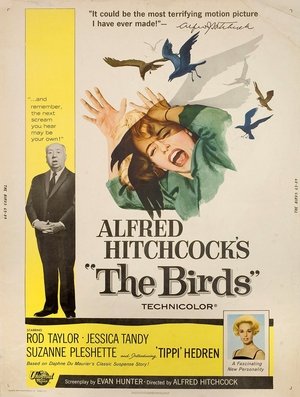
The Birds (1963) takes Hitchcock in the opposite direction from Psycho. Instead of narrowing horror toward one house, one motel and one disturbed individual, the film allows the threat to spread across the coastal community of Bodega Bay. Melanie Daniels arrives for reasons completely unrelated to horror, following Mitch Brenner after a playful encounter in San Francisco. A gull strike initially appears strange but isolated. Only gradually do separate incidents begin forming a pattern, until ordinary birds gather in unnatural numbers and launch coordinated attacks on human beings.
Hitchcock never provides a definitive explanation. There is no scientific experiment, supernatural curse or final revelation capable of restoring intellectual control over the events. This refusal is fundamental to the film's power. Birds exist almost everywhere humans do, so the characters cannot simply identify a forbidden territory and avoid it. The sky, rooftops, playgrounds and telephone wires all become potential sources of attack. Nature has not merely produced a monster; something familiar has stopped behaving according to the rules through which people normally understand it.
Tippi Hedren and Melanie Daniels
Tippi Hedren gives The Birds its central human perspective as Melanie Daniels, a sophisticated San Francisco socialite whose confidence initially allows her to treat the trip to Bodega Bay as a game. Hitchcock gradually removes the protections surrounding that identity. Social confidence becomes useless against an attack that has no negotiable motive, while Melanie's ability to understand and manipulate ordinary human interaction offers no advantage when birds begin behaving like an organized hostile force.
Her performance is especially important because the attacks progressively change Melanie physically and psychologically. The woman who arrives in Bodega Bay with complete control over her appearance and intentions ends the film injured, exhausted and almost incapable of speech. Hitchcock does not give her a conventional heroic victory over the threat. Survival means leaving quietly while thousands of birds surround the characters, creating one of the bleakest conclusions in his cinema. Humanity has not defeated anything; it has merely been granted enough temporary space to escape.
The Schoolyard and the Horror of Accumulation
The schoolyard sequence demonstrates Hitchcock's method with extraordinary clarity. Melanie sits outside the school while children sing inside, unaware that birds are gathering on the climbing frame behind her. Hitchcock repeatedly returns to the same background and allows the number of birds to increase between cuts. The audience recognizes the danger before Melanie does, making waiting itself the source of suspense. Nothing needs to attack immediately because the knowledge that an attack is becoming more likely is already enough to create fear.
When Melanie finally notices the birds, the threat has reached a scale that transforms the meaning of everything around her. The playground equipment is no longer a neutral object; it has become a structure occupied by predators. The sequence became one of the clearest examples of Hitchcock's belief that suspense depends upon giving the audience information at precisely controlled moments. Horror is produced not simply by the attack but by the unbearable period during which the viewer knows something the character does not.
Electronic Sound and the Absence of a Conventional Score
The Birds abandons the familiar security of conventional film music and instead builds its soundtrack around electronic manipulation, bird calls, environmental sound and silence. Remi Gassmann and Oskar Sala created the electronic bird material, with Bernard Herrmann serving as sound consultant. The choice removes one of the normal systems through which an audience interprets cinematic emotion. There is no traditional musical theme reassuring the viewer that the film itself understands what the birds represent.
The attacks instead develop their own sonic language. Wings, cries and mechanical electronic textures become overwhelming when the flock gathers, while quieter passages force the audience to listen for the possibility that the threat is returning. The absence of conventional scoring reinforces the film's refusal to explain the attacks. The birds do not arrive with a musical identity clarifying whether they are supernatural, symbolic or scientific. They simply sound increasingly wrong.
Macabre Television and Alfred Hitchcock Presents
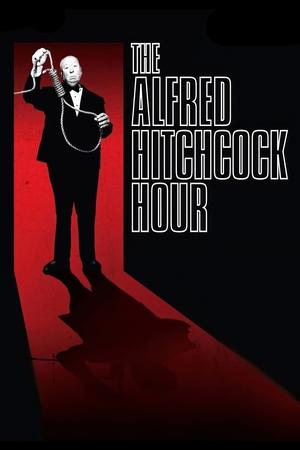
Hitchcock's relationship with horror also extended through television, particularly the anthology identity created around Alfred Hitchcock Presents and its later hour-long form. The series moved between crime, suspense, murder and macabre storytelling, with Hitchcock's introductions turning his own public persona into part of the entertainment. His dry humor allowed stories of death, betrayal and violence to be framed with an almost playful familiarity, helping make the macabre acceptable inside the domestic space of television.
This persona mattered to horror culture because Hitchcock himself became a recognizable emblem of controlled menace. His silhouette, voice and ironic introductions taught audiences to expect murder and unpleasant reversals while simultaneously enjoying the artificiality of the presentation. Long before filmmakers routinely became public genre personalities, Hitchcock had turned the director into part of the horror experience.
From Psycho to the Slasher
Psycho predates the established American slasher cycle, but many of the genre's later mechanisms are already visible within it: a psychologically disturbed killer, murder with a bladed weapon, voyeurism, sexuality linked with danger, an isolated location and violence invading intimate spaces. Later slashers would reorganize these ingredients around different structures, particularly groups of young victims and recurring masked killers, but Hitchcock demonstrated how powerfully ordinary American environments could become sites of horror.
Norman Bates also established a different model from the supernatural or physically indestructible killers that eventually dominated slasher franchises. He is frightening precisely because he appears human, awkward and comprehensible until the film reveals how unstable that apparent identity actually is. The influence of Psycho therefore extends through both the visual language of screen murder and the recurring horror fascination with killers whose ordinary appearance conceals extreme violence.
The Birds and the Horror of Nature
The Birds left an equally significant legacy in animal-attack and ecological horror. Its importance lies not simply in using birds as killers but in refusing to reduce the event to one exceptional creature. The threat is collective, distributed and potentially limitless. Killing one attacker offers no meaningful victory because the environment can always produce more. Later films about sharks, insects, animals and natural systems turning against humans repeatedly return to the same fundamental anxiety: humanity may discover that its assumed dominance over the surrounding world was temporary.
Hitchcock intensifies that idea through the ending. The characters move carefully through enormous numbers of birds without understanding why the attack has paused or whether another will begin. There is no restoration of the natural order because the film never confirms that such an order still exists. This unresolved ending makes The Birds larger than a conventional creature feature. The characters survive an event but learn almost nothing about the force capable of producing it.
Alfred Hitchcock's Horror Legacy
Alfred Hitchcock's horror legacy rests most powerfully on Psycho and The Birds, two films that attack security from opposite directions. Psycho discovers horror inside an individual, a family secret and a roadside motel whose apparent normality conceals murder. The Birds removes the possibility of locating the threat inside one person at all, allowing ordinary nature to become inexplicably hostile. Both films refuse to give the audience complete security after the immediate crisis has passed.
Bernard Herrmann and George Tomasini were essential recurring collaborators across this period, shaping the sound and editing through which Hitchcock controlled physical audience reaction. Anthony Perkins gave Norman Bates the vulnerability and instability required for Psycho to become more than a simple murder mystery, while Tippi Hedren carried The Birds from social confidence into near-total psychological collapse. These collaborations demonstrate why Hitchcock's horror cannot be reduced to clever plots. Its power is constructed through performance, sound, editing, space and the precise management of what the viewer is permitted to understand.
Hitchcock showed horror filmmakers that a monster did not need to be supernatural and that a threat did not need to be explained. A motel owner could become terrifying because the audience had trusted him, while a common bird could become terrifying because nothing could explain why it had stopped behaving normally. Modern psychological horror, slasher cinema and nature-attack films continue to operate inside territory that Psycho and The Birds helped define.
Photos (11)
Images: TMDB
Selected Work
Notable Horror Collaborators
Notable collaborators and creative partners throughout Alfred Hitchcock's horror career.
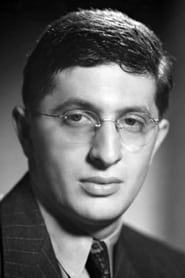 Bernard Herrmann
Defining Horror Music & Sound Collaborator
Herrmann created the iconic score for Psycho and returned as sound consultant on The Birds, making him a central sonic collaborator across Hitchcock's two defining horror films.
GT
George Tomasini
Defining Horror Editor
Tomasini edited both Psycho and The Birds, shaping the radically different rhythms of the shower murder, psychological suspense and escalating avian attacks.
 Anthony Perkins
Defining Horror Lead
Perkins played Norman Bates in Psycho, creating the disturbed motel owner whose apparent vulnerability became central to one of the foundational performances of modern psychological horror.
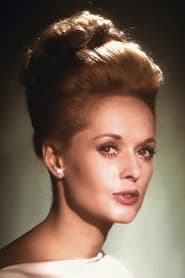 Tippi Hedren
Defining Horror Lead
Hedren carried The Birds as Melanie Daniels, providing the central human perspective through which Hitchcock transformed unexplained animal attacks into apocalyptic horror.
Alfred Hitchcock Horror Movies
Directing (5 credits)
1963
1962
1960
1955
Acting (9 credits)
1992
1989
1985
1984
1972
1963
1962
1960
1955
Creator (3 credits)
1985
1962
1955
Production (4 credits)
1972
1963
1960
1955
Writing (1 credits)
1959
Other Crew (1 credits)
1998