


2021
James Wan
Horror Director · Biography · Horror Filmography · Family · Collaborators · Credits
Horror subgenres & themes
Most represented across this person's horror filmography:
EVIL DOLL
• HAUNTED HOUSES
• ANIMAL
• BODY HORROR
Biography
James Wan and the Architecture of Modern Supernatural Horror
James Wan became one of the most influential horror filmmakers of the twenty-first century by repeatedly changing the kind of horror with which audiences associated him. Saw connected his name with traps, moral punishment and the extreme-horror cycle of the 2000s. Insidious moved almost completely away from physical gore and helped revive low-budget supernatural horror built around haunted families, demonic imagery and carefully engineered scares. The Conjuring expanded that approach into classical Gothic filmmaking and eventually generated an entire interconnected franchise. Then Malignant deliberately disrupted the image of Wan as a restrained ghost-story director by combining giallo, body horror, slasher cinema and extravagant practical spectacle.
Across those different phases, several techniques remain recognizable. Wan is fascinated by spaces before he is fascinated by monsters. Cameras move through hallways, rooms, staircases and dark corners long enough for the audience to understand the geography and begin searching it for danger. Objects are introduced before their importance becomes clear. Sound may disappear completely before a violent interruption. Dolls, puppets, photographs and apparently harmless household objects become disturbing because Wan repeatedly treats fear as something that can hide inside familiar environments. His career demonstrates how commercial horror can remain highly accessible while still being built around an unusually precise understanding of suspense.
Malaysia, Australia and the Partnership with Leigh Whannell
Wan was born in Kuching, Sarawak, Malaysia, in 1977 and moved with his family to Australia while still young. His interest in filmmaking eventually led him to study in Melbourne, where he met Leigh Whannell. The friendship became one of the most important creative partnerships in modern horror because the two were developing ideas together long before Hollywood knew either name.
Wan and Whannell shared an enthusiasm for genre filmmaking but lacked the resources required to enter the industry through conventional large productions. Their solution was to design a concept that could demonstrate what they could accomplish with limited locations and a powerful central idea. That process eventually produced the short-film version of Saw, directed by Wan and written by Whannell, which functioned as a proof of concept for the feature they wanted to make.
The approach would become important to Wan's later career as both director and producer. Rather than begin with scale, he repeatedly gravitates toward a simple high-concept mechanism that can be explained immediately: two men chained inside a room; a child whose consciousness has become trapped somewhere beyond the physical world; paranormal investigators entering a haunted house; a woman witnessing murders she cannot physically be present to see. The mythology can grow enormously afterward, but the initial dramatic engine remains clear.
Saw and the Trap That Changed Horror
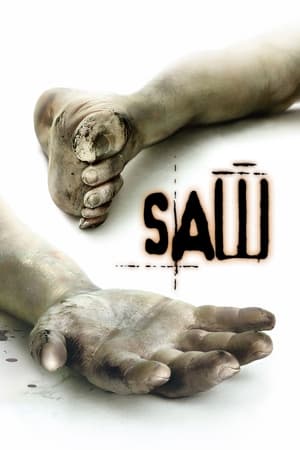
Saw (2004) provided Wan with his international breakthrough. Written by Leigh Whannell from a story developed with Wan, the film begins with two strangers awakening inside a filthy industrial bathroom, chained at opposite ends of the room with a corpse lying between them. The simplicity of that setup allows the film to construct an increasingly complicated network of flashbacks, investigations and moral tests around one contained location.
Jigsaw became one of the defining horror figures of the decade, although Wan's original film uses him very differently from the increasingly elaborate mythology of later sequels. The horror comes not simply from physical suffering but from the idea that apparently ordinary people have been placed inside situations specifically designed around their weaknesses, secrets or failures. The trap is therefore part torture device and part accusation.
Wan's direction gives the film an abrasive visual identity. Industrial spaces, rapid editing, surveillance imagery, distressed textures and aggressive sound design create a world that seems contaminated even before violence begins. Yet much of the film remains structurally dependent upon suspense rather than constant gore. The bathroom story is a mystery, and the final revelation works because Wan has been controlling what the audience sees and assumes throughout the film.
The success of Saw produced an extensive franchise, but Wan did not direct the sequels. His continued credits as creator and producer connected him to the mythology while allowing other filmmakers to develop the increasingly complex trap structures that became synonymous with the series. His own directing career instead moved in another direction.
Dead Silence and the Horror of the Artificial Face
Wan reunited with Whannell for Dead Silence (2007), a supernatural horror film built around ventriloquist dolls, a murdered performer and the legend of Mary Shaw. Although the production was more elaborate than Saw, its central fear is almost childlike: an artificial face that should remain motionless appears capable of watching, moving and carrying something malevolent inside it.
The film contains several ideas that would become increasingly important in Wan's later work. Dolls are treated as objects capable of storing fear long before they physically do anything. Silence itself becomes a warning sign. Large Gothic interiors are explored through deliberate camera movement, while supernatural mythology gradually emerges from a family history that initially seems disconnected from the immediate haunting.
Dead Silence remains revealing because it occupies the transitional space between Saw and the supernatural cinema that would soon redefine Wan's career. The industrial ugliness of the earlier film begins giving way to theatrical lighting, haunted architecture and the carefully staged reveal of a figure occupying the background of the frame.
Insidious and the Reinvention of James Wan
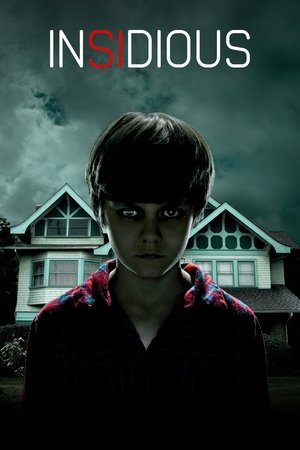
Insidious (2010) became the decisive reinvention. Working again with Leigh Whannell and producer Jason Blum, Wan deliberately returned to comparatively small-scale filmmaking. Instead of attempting to compete through elaborate production value, the film concentrates on a family, a house and the frightening possibility that the apparent haunting has been misunderstood from the beginning.
Patrick Wilson and Rose Byrne play Josh and Renai Lambert, whose son Dalton inexplicably falls into a coma-like state. Strange sounds, figures and disturbances initially suggest the familiar structure of a haunted house, but the film eventually reveals that the central problem is not the building. Dalton has become trapped in an astral dimension known as the Further, leaving his physical body vulnerable to entities attempting to occupy it.
The shift gives Wan enormous freedom. Once the haunting is no longer tied to a specific property, ordinary domestic security becomes meaningless. Moving house cannot solve the problem because the doorway exists within the family itself. The concept also allowed the film to move from domestic supernatural suspense into increasingly surreal imagery without abandoning the emotional structure established around the Lamberts.
Lin Shaye, Elise Rainier and the Insidious Mythology
Lin Shaye's Elise Rainier became one of the most important characters to emerge from Insidious. Initially arriving as the experienced paranormal investigator capable of understanding what has happened to Dalton, Elise provides the film with a bridge between ordinary family experience and the supernatural rules of the Further.
The character proved durable enough to become the central human figure of the larger franchise. Later films moved backward and forward through Elise's history, gradually transforming what began as an important supporting role into the connective tissue of the series. Shaye's warmth is essential to that development. The supernatural world surrounding Elise may be grotesque, but the character approaches frightened people with empathy rather than theatrical mysticism.
This became one of Wan's recurring strengths when developing horror franchises. The mythology may attract audiences initially, but recurring human characters provide continuity. Elise performs that function for Insidious just as Ed and Lorraine Warren would later perform it for The Conjuring.
Joseph Bishara and the Sound of the Supernatural
Composer Joseph Bishara became another defining collaborator during this period. His score for Insidious rejects comforting melody in favor of abrasive strings, sudden attacks and dissonant textures that can make the soundtrack itself feel physically hostile. Wan uses music not simply to accompany scares but to destabilize the audience before the image has fully revealed what is wrong.
Bishara also appeared physically in several of Wan's supernatural films, most memorably as the Lipstick-Face Demon in Insidious and Bathsheba in The Conjuring. That dual role as composer and performer makes him an unusual recurring presence: he contributes both the sounds associated with the supernatural and some of the bodies through which it becomes visible.
The partnership continued across the expanding Insidious and Conjuring worlds and later into Malignant. His work became part of the sonic grammar audiences increasingly associated with Wan's horror, where a quiet scene can transform instantly into violent noise without the score ever feeling detached from the physical environment.
Insidious: Chapter 2 and the Expansion of the Further
Wan returned to direct Insidious: Chapter 2 (2013), again working with Whannell, Wilson, Byrne and Shaye. The sequel begins almost immediately after the first film and expands the mythology surrounding Josh Lambert, Elise and the Further rather than simply repeating another haunting.
The film explores earlier events from different perspectives and uses the supernatural dimension to connect moments across time. Wan increasingly treats the Further not simply as a location but as a narrative mechanism through which past and present can occupy the same story. What appeared mysterious in the first film acquires additional explanation without eliminating the basic visual idea of human beings walking through darkness inhabited by things watching from outside the light.
After the sequel, Wan stepped away from directing the series while remaining connected to it. Whannell moved into the director's chair for Insidious: Chapter 3, and the franchise increasingly focused on Elise. That transition illustrates the durability of the creative system Wan and Whannell had established together.
The Conjuring and the Classical Haunted House
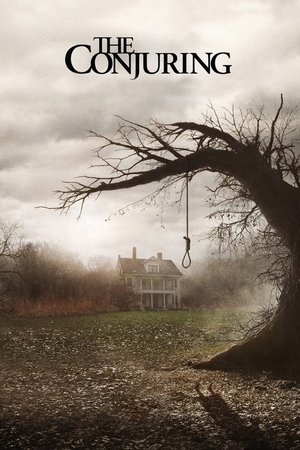
The Conjuring (2013) brought Wan's supernatural filmmaking into a more classical register. Patrick Wilson and Vera Farmiga play paranormal investigators Ed and Lorraine Warren, who become involved with the Perron family after disturbing events begin inside their Rhode Island farmhouse. The film draws upon the language of older haunted-house cinema rather than the abrasive visual style associated with Saw.
Wan emphasized mood, geography and anticipation. The camera explores the house carefully enough for the audience to understand doors, stairs, rooms and hidden spaces before supernatural activity escalates. That clarity allows relatively simple events to become frightening. A door moving or hands emerging from darkness can produce a strong reaction because the audience has already been taught where everyone should be.
The result depends heavily upon restraint during its early passages. Fear accumulates through small disturbances until the family and investigators can no longer treat them as unrelated incidents. Wan turns the ordinary architecture of the house into a system of potential threats before allowing the supernatural elements to become fully visible.
Patrick Wilson and Vera Farmiga
Patrick Wilson became one of Wan's most important recurring actors by occupying major roles in both Insidious and The Conjuring. Josh Lambert and Ed Warren are very different characters, but Wilson provides both films with an emotionally grounded male lead capable of functioning inside extraordinary supernatural circumstances without competing with the horror for attention.
Vera Farmiga's Lorraine Warren became equally essential to The Conjuring. Wan presents Lorraine's sensitivity to supernatural phenomena as both an ability and a source of vulnerability. She is capable of perceiving things others cannot, but perception carries a psychological and physical cost. Farmiga and Wilson give the Warrens a domestic relationship strong enough that the franchise can move between different hauntings without losing its emotional center.
The partnership continued through later entries even when Wan no longer directed them. Their presence helped transform the series from a collection of paranormal cases into a continuing family story, while Wan remained involved through production and development.
Peter Safran and the Birth of the Conjuring Universe
Producer Peter Safran became central to the expansion of The Conjuring beyond Wan's original film. The first movie contained several supernatural elements capable of existing independently, and the production team gradually developed those elements into separate franchises. Annabelle moved from disturbing object inside the Warrens' collection to the center of her own series, while the demonic nun Valak expanded from The Conjuring 2 into another branch of the mythology.
Wan and Safran therefore helped create something relatively unusual in horror: an interconnected cinematic universe built primarily from hauntings, demons and cursed objects rather than superheroes or action characters. The films could vary in director, location and period while remaining connected through recurring artifacts, characters and supernatural mythology.
The commercial longevity of the universe became extraordinary. The franchise expanded through the main Conjuring films, the Annabelle series and The Nun films, turning the original haunted-house story into one of the largest continuing properties in modern horror.
The Conjuring 2 and the Expansion of the Mythology
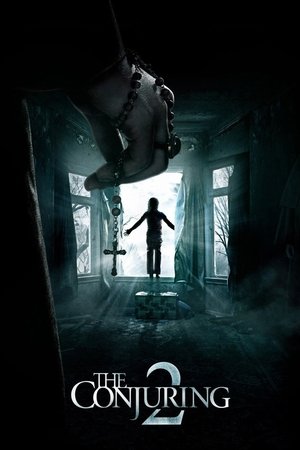
Wan returned as director for The Conjuring 2 (2016), following the Warrens to England and the Enfield haunting. The sequel increases the scale while retaining the careful control of space that defined the first film. A suburban London house becomes another environment whose rooms and hallways gradually acquire supernatural significance.
Valak, appearing in the form of a demonic nun, became the film's most important new creation. The character illustrates Wan's ability to build fear from a simple graphic image: a pale face surrounded by black clothing, often placed within compositions where the audience has enough time to recognize the shape before the scene confirms what it is seeing.
The film also contains one of Wan's recurring obsessions with artificial figures through the Crooked Man sequence and other objects surrounding the Hodgson children. Dolls, toys and decorative images become threatening because they exist within the domestic environment before anything supernatural happens.
Atomic Monster and Wan as Horror Producer
Wan founded Atomic Monster in 2014, allowing his influence on horror to extend far beyond the films he personally directed. The company became a vehicle for developing genre filmmakers and expanding existing franchises while maintaining the high-concept approach that had characterized Wan's own breakthrough.
Lights Out became an early example of that philosophy. Director David F. Sandberg had attracted attention through a short horror film built around the simple idea that a supernatural figure appears only when the lights are turned off. Atomic Monster helped expand the concept into a feature while preserving the clarity of the original mechanism.
The producer role allowed Wan to participate in far more horror than directing alone would have made possible. Projects associated with Atomic Monster came to include extensions of the Conjuring universe, M3GAN, Night Swim, The Monkey and numerous film and television productions. The company's development strategy repeatedly favors concepts that can be understood quickly but expanded through character, visual design and franchise potential.
M3GAN and the Return of the Dangerous Doll
M3GAN brought several of Wan's recurring interests together from the producer's position. Developed from a story by Wan and written by Akela Cooper, the film centers on an artificially intelligent companion doll whose role as emotional protector gradually becomes lethal. The concept updates the uncanny artificial figures that had appeared throughout Wan's earlier horror for a technological environment built around machine learning, consumer products and delegated parenting.
The character became immediately recognizable through design, movement and behavior rather than relying entirely on conventional monstrous appearance. M3GAN can speak, dance and interact socially, making the threat disturbing because the artificial personality appears increasingly comfortable inside human space.
The film also demonstrates the continued importance of collaboration within Wan's producing career. Rather than directing every concept generated by Atomic Monster, he increasingly functions as a filmmaker capable of identifying an effective central idea, pairing it with writers and directors and allowing another creative voice to shape the finished film.
Malignant and the Refusal to Remain the Ghost Director
After becoming strongly associated with the supernatural success of Insidious and The Conjuring, Wan deliberately disrupted expectations with Malignant (2021). The project draws from giallo, body horror, slasher cinema and the exaggerated physicality of cult genre filmmaking without attempting to reproduce any one tradition literally.
The film begins with Madison experiencing visions of brutal murders before gradually revealing that the relationship between witness and killer is far more physical than it appears. Gabriel becomes a fusion of psychological horror, medical abnormality, body horror and supernatural-style staging, culminating in movement that seems anatomically impossible because the performer's body is effectively being controlled backward.
Wan and Ingrid Bisu developed the underlying concept from an interest in medical anomalies, while performers and practical-effects artists created Gabriel through a combination of prosthetics, animatronics, contortion and physical performance. The result is deliberately excessive. After years in which Wan had become associated with carefully controlled haunted-house scares, Malignant explodes into violent action and grotesque physical spectacle during its final movement.
Changing Labels Before They Become Limitations
Wan's directing career repeatedly demonstrates an awareness of how quickly horror filmmakers become classified by the success of their previous work. After Saw, he was strongly associated with extreme horror. After Insidious and The Conjuring, the same filmmaker became identified instead with ghosts, demonic entities and carefully engineered supernatural scares.
Malignant became a deliberate disruption of that expectation. Rather than perfect one formula indefinitely, Wan tends to establish a successful form and then move far enough away from it that the next film creates a different set of expectations.
The changes do not erase recurring interests. Dolls remain important. Families remain vulnerable. Architecture remains carefully mapped. Monsters frequently occupy the border between something physically present and something psychologically impossible. Wan changes subgenres more readily than he changes the basic mechanics through which he constructs fear.
Camera Movement, Space and the Mechanics of the Scare
Wan's most recognizable technical strength is the organization of space. His camera often moves before anything threatening happens, introducing the audience to a room and quietly establishing where doors, windows and empty areas exist. Once the geography has been learned, the viewer begins searching it. Suspense therefore develops because the audience participates in surveillance.
This is especially effective in the supernatural films because the threat does not need to obey normal movement. A figure may occupy the background of one composition and disappear when the camera returns. An empty doorway may remain empty long enough for the audience to convince itself that something should appear there. Wan often allows anticipation to become uncomfortable before deciding whether to deliver the expected scare or redirect attention somewhere else.
Sound follows the same logic. Silence is not merely an absence but a preparation. When ordinary environmental noise disappears, viewers understand that the film is asking them to listen. A sudden sonic attack can then function as the equivalent of something entering the visual frame. Wan's reputation for jump scares sometimes obscures the amount of preparation required to make those moments effective.
Horror as an Industrial Ecosystem
Wan's later career increasingly demonstrates an interest in horror as an ecosystem rather than simply a sequence of personal directing projects. Atomic Monster allows him to develop filmmakers, writers, franchises and concepts simultaneously, while recurring collaborators continue moving between his directorial and production projects.
In 2024 Atomic Monster merged with Blumhouse while retaining its identity as a production label. The combination formally connected Wan with Jason Blum, whose low-budget production model had already been important to Insidious. The merger gave both companies a shared industrial structure while allowing Atomic Monster to continue developing its own projects.
The development is particularly appropriate to Wan's career because his breakthrough was itself created through resourcefulness. More than two decades after using a short film to demonstrate the concept behind Saw, his producing career continues to favor filmmakers capable of proving that a strong horror idea can survive without enormous initial resources.
Returning to Saw
The franchise that began Wan's international career eventually returned to his professional orbit in a more direct way. Through the later evolution of Atomic Monster and Blumhouse, Wan and Leigh Whannell again became connected with the future development of the property that originally introduced them to international horror audiences.
The development carries unusual historical symmetry. Saw began as an attempt by two young filmmakers to prove that a strong concept could create opportunity without enormous resources. It eventually became a long-running industrial property developed largely without Wan directing its sequels. His later involvement as a producer therefore reconnects the mature filmmaker with the idea that began his horror career.
James Wan's Horror Legacy
James Wan's importance to modern horror is unusual because it cannot be reduced to a single franchise. Saw, Insidious and The Conjuring each produced major continuing series, and each represents a different mode of horror. One is built around captivity and engineered moral tests, another around astral projection and demonic invasion, and the third around paranormal investigation and classical haunted-house imagery.
The collaborators surrounding those films became equally important. Leigh Whannell shared the foundational creative journey from Saw into Insidious. Patrick Wilson became the human bridge between Wan's two major supernatural worlds. Vera Farmiga helped transform the Warrens into continuing emotional protagonists. Lin Shaye became the enduring face of the Further. Joseph Bishara gave the supernatural films a distinctive sonic violence, while Peter Safran helped turn The Conjuring into a franchise capable of continuing far beyond Wan's individual directing assignments.
Wan's producer career expanded that influence further. Atomic Monster developed new filmmakers, built franchises and helped move horror concepts from short films or simple pitches into worldwide releases. His directorial filmography remains comparatively selective, but his influence on contemporary horror extends through a much larger network of films he created, produced or helped develop.
The common element is an understanding that horror begins with anticipation. A trap is frightening before it closes. A doll is disturbing before it moves. A hallway becomes threatening before anyone enters it. A dark corner becomes active simply because the camera has taught the audience to watch it. James Wan built several of modern horror's largest franchises from that principle: establish the space, establish the rule, make the audience understand what could happen, and then wait just long enough before proving that their fear was justified.
Photos (4)
Images: TMDB
Selected Work
Notable Horror Collaborators
Notable collaborators and creative partners throughout James Wan's horror career.
 Leigh Whannell
Defining Creative Partner
Whannell co-created Saw with Wan and later helped build Insidious, forming the creative partnership that launched two major horror franchises.
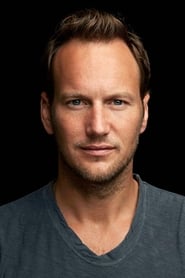 Patrick Wilson
Defining Horror Lead
Wilson became Wan's recurring supernatural leading man, anchoring both the Insidious and Conjuring worlds.
 Peter Safran
Defining Franchise Producer
Safran partnered with Wan in expanding The Conjuring from a haunted-house film into a major interconnected horror universe.
 Joseph Bishara
Defining Musical Collaborator
Bishara gave Wan's supernatural horror a distinctive sonic identity while also physically embodying several of its most memorable entities.
 Vera Farmiga
Defining Horror Lead
Farmiga's Lorraine Warren became the emotional and supernatural center of the Conjuring mythology created by Wan.
 Lin Shaye
Defining Insidious Performer
Shaye transformed Elise Rainier into the enduring human heart of the Insidious franchise and one of Wan's most recognizable supernatural characters.
James Wan Horror Movies
Directing (9 credits)
2016
2013
2013
2011
2007
2004
2003
1998
Writing (23 credits)
2026
2025
2025
2023
2023
2023
2021
2021
2021
2019
2018
2017
2016
2013
2010
2009
2008
2007
2006
2006
2005
2004
1998
Production (42 credits)
2027
2027
2027
2027
2026
2026
2026
2026
2026
2025
2025
2025
2024
2024
2024
2023
2023
2023
2023
2022
2021
2021
2021
2021
2019
2019
2019
2018
2018
2017
2017
2016
2016
2015
2015
2014
2010
2009
2008
2007
2006
2005
Acting (4 credits)
2025
2020
2015
2015
Editing (2 credits)
2011
2003
Other Crew (2 credits)
2017
2015