



1992
Brian De Palma
Horror Director · Biography · Horror Filmography · Family · Collaborators · Credits
Horror subgenres & themes
Most represented across this person's horror filmography:
HAUNTED HOUSES
Biography
Brian De Palma and the Cinema of Horror
Brian De Palma occupies a distinctive place in American horror because he repeatedly transformed the act of looking into a source of danger. His horror films are filled with witnesses, cameras, mirrors, windows, split screens and characters who see something they cannot fully understand. Sometimes they observe a murder. Sometimes they are being watched themselves. Sometimes the image contains the truth but the person looking at it fails to interpret it correctly. Across films such as Sisters, Carrie, Dressed to Kill and Body Double, seeing is rarely passive. To look is to become involved.
De Palma has worked extensively outside horror, but the genre occupies a central position in the development of his visual language. Sisters established his combination of voyeurism, divided identity and elaborate suspense. Phantom of the Paradise fused Gothic horror with rock music and black comedy. Carrie turned adolescent humiliation and telekinesis into one of the defining supernatural horror films of the 1970s. The Fury expanded psychic horror into conspiracy and bodily destruction, while Dressed to Kill, Body Double and Raising Cain repeatedly returned to murder, doubles, unstable identity and the dangerous pleasures of spectatorship.
Sisters and the Emergence of De Palma Horror
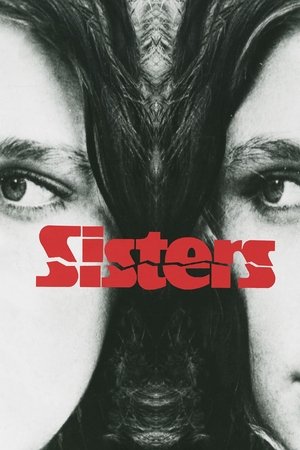
Sisters in 1973 was the film in which De Palma's mature horror language became fully recognizable. Margot Kidder plays Danielle Breton, a model whose relationship with her separated conjoined twin Dominique becomes connected to a brutal murder witnessed from another apartment. Jennifer Salt plays Grace Collier, the reporter who sees the crime and becomes obsessed with proving that it occurred even after the evidence appears to disappear.
The basic situation establishes several themes that would recur throughout De Palma's horror work. A witness sees something from a distance. Authorities fail to respond adequately. The apparent evidence becomes unreliable. Identity divides into competing versions. The audience possesses information that individual characters do not, yet even the audience can be manipulated by framing and editing.
The film's famous use of split screen makes those ideas visible. De Palma can show different actions simultaneously, forcing the viewer to choose where to look while still being aware that important information may be occurring elsewhere. The technique is not simply decorative. It makes spectatorship itself stressful. The viewer becomes another witness trying to assemble an event from incomplete fragments.
Voyeurism, Murder and the Divided Image
Voyeurism became one of the defining elements of De Palma's horror because his characters frequently experience danger through acts of observation. Windows, lenses and screens promise access to information but also establish distance. A witness may see a crime without being able to intervene or may possess an image that other characters refuse to believe.
In Sisters, Grace sees violence through a window but cannot immediately translate vision into proof. This distinction between seeing and knowing became fundamental to De Palma. The camera may show something clearly while the narrative simultaneously undermines the viewer's confidence in what that image means.
The split screen extends the principle further by dividing the image itself. Instead of allowing the audience one privileged viewpoint, De Palma creates competing areas of attention. Horror emerges not only from what is visible but from the possibility that the viewer is watching the wrong part of the frame.
William Finley and the Early De Palma Horror World
Actor William Finley became one of the most recognizable figures in De Palma's early horror cinema. After working with the director on earlier projects, Finley appeared in Sisters as Dr. Emil Breton, a figure connected to the history of Danielle and Dominique. His distinctive physical presence and theatrical intensity fit naturally into De Palma's emerging world of medical control, fractured identity and psychological manipulation.
Finley would become even more central in Phantom of the Paradise and later appear in The Fury. His recurring presence helped give De Palma's 1970s horror films a loose repertory quality. These were not connected stories, but performers and technicians repeatedly returned while De Palma explored different versions of bodily transformation, obsessive behavior and supernatural or psychological instability.
Phantom of the Paradise: Gothic Horror as Rock Nightmare
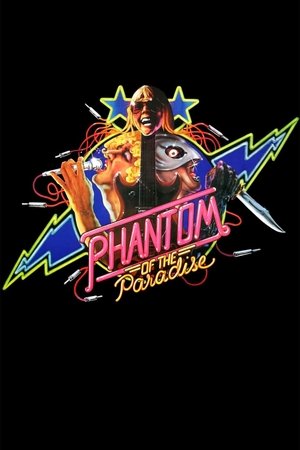
Phantom of the Paradise in 1974 moved De Palma from the urban psychological horror of Sisters into an extravagant fusion of Gothic horror, rock musical, satire and black comedy. William Finley plays composer Winslow Leach, whose music is stolen by powerful producer Swan, played by Paul Williams. Betrayal, imprisonment and physical disfigurement transform Winslow into the masked Phantom who haunts Swan's new concert venue, the Paradise.
The film combines elements of The Phantom of the Opera, the Faust legend and The Picture of Dorian Gray without behaving like a conventional adaptation of any of them. De Palma uses those familiar stories as raw material for a horror film about artistic exploitation. Bodies, voices and identities become commodities controlled by a producer who treats performers as replaceable components of an entertainment machine.
The Phantom himself combines tragic monster and violent avenger. Winslow is physically transformed after entering the machinery of the record industry, making his disfigurement almost a literal expression of what the system has done to him. His mask and mechanical voice turn him into one of De Palma's most striking horror figures, simultaneously grotesque, sympathetic and dangerous.
Performance, Surveillance and Death in Phantom of the Paradise
Phantom of the Paradise is also important because performance and observation are inseparable. Swan watches performers, records them and manipulates their identities. The Paradise exists as a space where spectacle can convert violence into entertainment. De Palma repeatedly positions the viewer between the stage and the machinery controlling what appears on it.
This relationship between spectacle and death would become increasingly important in his horror work. De Palma is fascinated by moments when violence becomes something to be watched: a murder seen through a window, a prom observed from multiple angles, a woman followed through a museum or a killing witnessed from another building. Phantom of the Paradise makes that connection unusually explicit because almost everything occurs inside a culture built to turn people into images.
Carrie and the Horror of Adolescence
Carrie in 1976 became De Palma's most important contribution to supernatural horror and the first feature adaptation of a Stephen King novel. Sissy Spacek plays Carrie White, an isolated high-school student whose emerging telekinetic abilities develop alongside relentless bullying at school and religious abuse at home. Rather than treating her powers as the film's only source of horror, De Palma builds the story around humiliation, repression and the fear of losing control.
The opening locker-room sequence establishes the connection between the body and terror immediately. Carrie experiences her first menstrual period without understanding what is happening and is mocked by the other girls rather than helped. The scene makes physical maturation itself frightening because Carrie has been denied the knowledge necessary to understand her own body.
At home, Piper Laurie's Margaret White interprets sexuality and bodily development through extreme religious terror. Carrie therefore occupies two hostile environments. At school she is ridiculed for being different. At home she is taught to experience normal desire and physical development as evidence of sin. Her telekinesis emerges inside that pressure rather than outside it.
The Prom Sequence and the Mechanics of Catastrophe
The prom sequence in Carrie is one of De Palma's defining horror set pieces because the audience is allowed to understand the trap before Carrie does. The bucket of pig's blood, the rope, the stage and the conspirators are established spatially so that suspense develops from waiting for a known mechanism to activate.
De Palma initially stretches time. Carrie experiences an unfamiliar moment of acceptance and happiness while the audience already knows that another group of characters is preparing to destroy it. When the humiliation occurs, the film shifts dramatically. Telekinetic violence erupts and De Palma again uses divided imagery to show multiple areas of destruction simultaneously.
The horror is powerful because the supernatural explosion has been prepared through human cruelty. Carrie does not arrive at the prom as a monster. The catastrophe is created through a chain of humiliation, manipulation and revenge. Her powers make the consequences extraordinary, but the emotional structure is built from recognizable social violence.
Carrie and the Final Shock
De Palma also helped establish one of modern horror's most influential forms of the false ending. After the apparent destruction has ended, the film moves into a quiet dreamlike sequence in which Sue Snell approaches Carrie's grave. The sudden emergence of Carrie's hand violently breaks the calm and reveals the sequence as a nightmare.
The shock works because De Palma carefully changes rhythm before delivering it. The film appears to have moved from horror into mourning. The viewer is encouraged to relax, and the final eruption punishes that relaxation. Variations on this structure became increasingly common in later horror, where apparent safety after the climax becomes an opportunity for one final attack.
The Fury and Psychic Horror
The Fury in 1978 returned De Palma to supernatural powers but approached them very differently from Carrie. Amy Irving and Andrew Stevens play young people with extraordinary psychic abilities, while the story expands into secret research, government manipulation and attempts to weaponize those powers.
Where Carrie's telekinesis is deeply connected to personal humiliation and emotional repression, The Fury treats psychic ability as something institutions want to control. The young characters become valuable precisely because their bodies and minds can perform things ordinary people cannot. Horror develops from the attempt to turn those abilities into tools.
The film also pushes bodily destruction further. Psychic power can produce bleeding, convulsions and spectacular physical rupture. De Palma connects apparently invisible mental forces with extremely visible consequences, culminating in one of the most extravagant deaths in his horror filmography.
Paul Hirsch and the Editing of De Palma Horror
Editor Paul Hirsch was one of the most important collaborators in De Palma's early horror period. He edited Sisters, Phantom of the Paradise, Carrie and The Fury, four films in which rhythm and visual structure are essential to the experience of fear.
De Palma's elaborate camera movements sometimes create the impression that his cinema is primarily about staging within individual shots, but editing is equally important. Parallel action, delayed revelation, split-screen construction and sudden changes in tempo determine when the audience receives information and how long it must wait for consequences.
The collaboration with Hirsch helped establish the balance between visual complexity and narrative clarity that makes these horror sequences effective. De Palma can show the viewer more than one thing at once without removing suspense because the editing continually controls the relationship between knowledge and timing.
Dressed to Kill and the Return to Murder
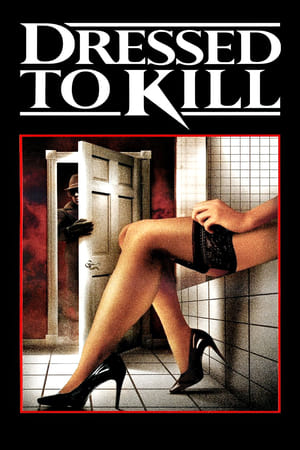
Dressed to Kill in 1980 brought De Palma back toward psychological murder horror. Angie Dickinson plays Kate Miller, whose movement through a Manhattan museum becomes an extended exercise in looking, following and being followed before the film erupts into sudden violence. Nancy Allen plays Liz Blake, a witness drawn into the investigation after encountering the aftermath of the murder.
The museum sequence is a concentrated example of De Palma's method. Very little conventional dialogue is required. Eye lines, movement and geography establish shifting relationships between pursuer and pursued. The viewer is continually asked to interpret who is watching whom. Desire itself becomes a suspense mechanism.
The elevator murder then violently changes the film's center of gravity. De Palma again uses a structure in which a woman who appears central to the narrative can suddenly be removed, forcing another character to inherit the investigation. The relationship with Psycho is deliberate, but the scene belongs equally to De Palma's own recurring obsession with witnesses, exchanged identities and murders that reorganize the act of looking.
Pino Donaggio and the Sound of De Palma Horror
Composer Pino Donaggio became one of De Palma's most important horror collaborators beginning with Carrie. His music could move between tenderness, romantic excess and sudden violence, qualities particularly suited to a director whose horror often places beauty and danger inside the same sequence.
Their collaboration continued through films including Dressed to Kill, Body Double and Raising Cain. Donaggio's scores frequently allow De Palma to stretch visual sequences beyond ordinary realistic rhythm. A camera can continue moving, a character can continue watching and suspense can accumulate because the music supplies emotional continuity even when dialogue disappears.
In De Palma's horror cinema, music often participates directly in manipulation. The score encourages the audience to experience attraction, anxiety and dread before the film reveals exactly what should be feared. Donaggio became particularly effective at moving between those emotional states without making them feel separate.
Body Double and Voyeurism Taken to the Extreme
Body Double in 1984 pushes De Palma's fascination with voyeurism into one of its most explicit forms. Craig Wasson plays Jake Scully, an actor who becomes obsessed with watching a woman from a distinctive Los Angeles house. What appears to be privileged access to another person's private life gradually becomes part of a constructed deception.
The film openly combines mechanisms associated with Rear Window and Vertigo, but De Palma exaggerates them through the environments of pornography, acting and body substitution. The very concept of a body double becomes central to the horror. A body can be used to create an image that encourages somebody else to believe they are seeing a particular person.
This makes Body Double particularly important within De Palma's horror of spectatorship. The protagonist is not simply someone who witnesses a crime. His desire to watch has been anticipated and manipulated. He sees exactly what somebody wants him to see.
The Murder Set Piece in Body Double
The central murder in Body Double demonstrates De Palma's tendency to transform violence into an extended piece of visual construction. The sequence builds through observation, pursuit and failed intervention before arriving at exaggerated physical brutality.
The killer's weapon and the staging push the murder beyond realistic restraint into something closer to Grand Guignol. De Palma is not attempting to make the violence invisible or tasteful. The sequence deliberately combines suspense with excess, creating discomfort around the fact that the audience has been watching as intensely as the protagonist.
This tension between condemnation and pleasure is fundamental to De Palma's horror. His films repeatedly expose voyeurism while simultaneously creating images designed to be watched obsessively. The viewer is never entirely outside the system being criticized.
Raising Cain and the Return of the Divided Self
Raising Cain in 1992 returned De Palma to themes that had been present since Sisters: divided identity, psychiatry, doubles, childhood experimentation and murder. John Lithgow plays child psychologist Carter Nix, whose apparently ordinary identity gradually fractures into multiple personalities connected with his father's experiments.
The film is deliberately excessive and often self-referential. De Palma revisits situations and visual ideas associated with his earlier horror while pushing them toward instability. Characters appear, disappear or transform according to the logic of Carter's fractured identity, making the film itself feel uncertain about which personality currently controls the narrative.
Instead of disguising the artificiality of the premise, De Palma embraces it. Long camera movements, sudden revelations and elaborate transitions turn psychological fragmentation into visual performance. Raising Cain therefore functions as both a return to his earlier horror and a more playful examination of techniques he had spent decades developing.
Doubles, Split Identities and Unstable Bodies
The double is one of the strongest recurring motifs in De Palma's horror cinema. Sisters begins with the physical and psychological consequences of conjoined twins. Body Double turns substitution into the mechanism of a murder plot. Raising Cain divides one body among multiple identities.
Even when the double is not literal, De Palma repeatedly creates characters who mirror, replace or observe one another. The horror often begins when identity stops functioning as something stable. A person may possess another self, resemble somebody who has disappeared or serve as an image constructed for another person to see.
This fascination connects naturally with cinema itself. Actors already present themselves as other people, doubles replace bodies and editing allows one image to stand in for another. De Palma repeatedly turns those basic cinematic processes into horror mechanisms.
Split Screens, Split Diopters and the Horror of Too Much Information
De Palma is strongly associated with techniques that allow several planes of information to remain visible simultaneously. Split screens can divide the frame into separate actions, while split-diopter compositions can keep subjects at radically different distances in focus within the same image.
In horror, these techniques create a particular kind of anxiety. Conventional editing tells the viewer where to look. De Palma often refuses that comfort. Several pieces of information may compete for attention, and suspense emerges from understanding that something dangerous can occur while the viewer is concentrating elsewhere.
This is especially appropriate to films built around witnesses and surveillance. The problem is rarely that nothing can be seen. The problem is that there is too much to see and no guarantee that the observer understands which detail matters.
Brian De Palma and the Horror of Looking
Across De Palma's horror films, looking repeatedly creates responsibility. Grace witnesses a murder in Sisters. The audience watches the mechanism of humiliation being prepared in Carrie. Kate participates in a silent visual pursuit in Dressed to Kill. Jake becomes trapped because he watches too closely in Body Double.
This structure implicates the spectator because cinema itself depends on watching people who cannot see the audience. De Palma exploits that basic condition more openly than most directors. His horror films frequently make the pleasure of observation uncomfortable by reminding viewers that the murderer may also be watching, that the image may have been staged or that watching without acting has consequences.
His elaborate style therefore has a direct relationship with horror rather than existing merely as technical exhibition. Camera movement, divided frames, slow motion and complex compositions are ways of controlling what the audience knows and when it knows it.
Brian De Palma's Horror Legacy
Brian De Palma's horror filmography is relatively concentrated, but its influence is substantial. Sisters established a personal language of voyeurism, divided identity and visual fragmentation. Phantom of the Paradise transformed Gothic archetypes into a rock-era nightmare about bodies and art being consumed by entertainment. Carrie became one of the defining supernatural horror films of the 1970s and the first major screen adaptation of Stephen King.
The Fury expanded psychic horror toward conspiracy and bodily spectacle. Dressed to Kill turned murder, sexuality and spectatorship into an elaborate visual game. Body Double made the manipulation of the observer central to its plot, while Raising Cain returned to the divided identities and psychiatric horror that had haunted De Palma since Sisters.
What unites these films is the belief that horror can exist inside the relationship between an image and the person watching it. De Palma repeatedly gives spectators access to information and then demonstrates how unreliable that access can be. The camera reveals, conceals, divides and deceives. A witness can see everything and still understand nothing.
That is the central horror principle running through his work. De Palma does not merely show frightening events. He makes the act of looking at them unstable. The viewer becomes witness, voyeur and potential victim at the same time, which is why his most important horror films remain immediately recognizable decades after they were made.
Known Among Horror Fans For
Notable Horror Collaborators
Notable collaborators and creative partners throughout Brian De Palma's horror career.
 Pino Donaggio
Composer
De Palma's most important recurring horror composer. Donaggio scored Carrie, Dressed to Kill, Body Double and Raising Cain, helping shape the mixture of romanticism, suspense and sudden violence that defines several periods of the director's horror work.
PH
Paul Hirsch
Editor
A fundamental collaborator during De Palma's formative horror period. Hirsch edited Sisters, Phantom of the Paradise, Carrie and The Fury, films in which split screens, parallel action, delayed revelation and rapidly changing rhythms became essential to De Palma's suspense style.
 William Finley
Actor
One of the defining performers of De Palma's early horror cinema. Finley appeared in Sisters, starred as Winslow Leach in Phantom of the Paradise and returned in The Fury, linking psychological horror, Gothic transformation and psychic horror across the director's 1970s work.
 Nancy Allen
Actor
Allen played Chris Hargensen in Carrie and Liz Blake in Dressed to Kill, moving from one of the principal agents of Carrie White's humiliation to the endangered witness at the center of De Palma's later murder horror.
 Amy Irving
Actor
Irving appeared as Sue Snell in Carrie and returned as the psychically gifted Gillian Bellaver in The Fury, giving her an important place in De Palma's two major supernatural horror films centered on young people with destructive psychic powers.
 Gregg Henry
Actor
Henry collaborated with De Palma in Body Double and Raising Cain, two later horror films built around deception, voyeurism, unstable identity and elaborate visual manipulation.
Brian De Palma Horror Movies
Directing (7 credits)
1980
1978
1976
1974
1973
1962
Writing (6 credits)
2006
1992
1980
1974
1973
1962
Other Crew (1 credits)
1999