



2010
John Carpenter
Horror Director · Biography · Horror Filmography · Family · Collaborators · Credits
Horror subgenres & themes
Most represented across this person's horror filmography:
HALLOWEEN
• SLASHER
• VAMPIRE
• BODY HORROR
Biography
John Carpenter and the Architecture of Modern Horror
John Carpenter occupies a central position in modern horror and science fiction cinema. Director, screenwriter, producer, composer and musician, he built a body of work in which stripped-down filmmaking, widescreen compositions, electronic music and an instinctive understanding of suspense became immediately recognizable. From suburban streets stalked by an apparently motiveless killer to Antarctic corridors contaminated by an unknowable organism, Carpenter repeatedly transformed simple genre premises into films about isolation, paranoia, distrust and the terrifying possibility that the world may be governed by forces that cannot be understood or controlled.
Born in Carthage, New York, in 1948 and raised in Bowling Green, Kentucky, Carpenter developed an early fascination with cinema, particularly westerns, science fiction and horror. The films of Howard Hawks became a major influence on his approach to groups under pressure, professional characters and clean visual storytelling, while 1950s science fiction provided images and ideas he would later reinterpret in his own work. He studied filmmaking at the University of Southern California, where he participated in the student short The Resurrection of Broncho Billy, which won the Academy Award for Best Live Action Short Film in 1970.
Dark Star, Assault on Precinct 13 and the Formation of a Style
Carpenter's first feature, Dark Star (1974), began as a student project made with Dan O'Bannon before being expanded into a feature. Its combination of low-budget science fiction, deadpan humor and existential absurdity was very different from the films that would make Carpenter famous, but several elements of his later cinema were already visible: enclosed environments, isolated characters, practical filmmaking and a willingness to create an entire world with extremely limited resources.
Assault on Precinct 13 (1976) brought those instincts into much sharper focus. Inspired partly by the siege structure of Howard Hawks' Rio Bravo, the film traps police officers, prisoners and civilians inside an almost abandoned station while a seemingly endless street gang attacks from outside. Carpenter strips the attackers of conventional psychology until they begin to resemble an impersonal force rather than ordinary villains. The result sits somewhere between urban thriller, western and horror film, establishing a pattern that would recur throughout his career: a small group under siege by something that cannot be reasoned with.
The film also demonstrated Carpenter's ability to generate tension through spatial clarity rather than frantic editing. Corridors, windows, doorways and empty streets become part of the suspense. The audience understands where danger might come from, but not when it will arrive. Carpenter's own electronic score reinforces that economy, using repetition and a limited number of musical elements to create momentum far beyond the film's modest production resources.
Halloween and the Birth of a Modern Horror Icon
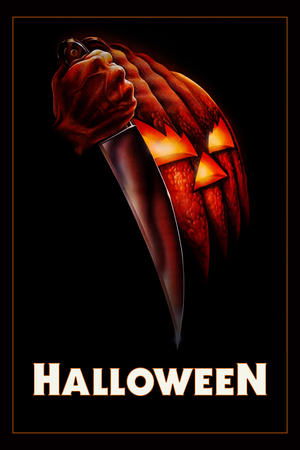
Everything changed with Halloween (1978). Made independently on a limited budget, the film follows babysitter Laurie Strode as Michael Myers returns to the fictional town of Haddonfield years after murdering his sister as a child. Carpenter and co-writer Debra Hill reduced the premise to something almost elemental: a quiet neighborhood, an approaching night and a masked figure whose motivations remain largely unexplained.
The simplicity was crucial. Michael Myers is frightening precisely because Carpenter refuses to make him psychologically manageable. He appears in backgrounds, at the edges of frames and across apparently safe suburban spaces before disappearing again. Ordinary streets and houses become threatening because the film suggests that evil does not require a gothic castle, remote graveyard or elaborate mythology. It can stand silently across the road in daylight.
Carpenter's widescreen compositions and Dean Cundey's cinematography gave the film an unusually controlled visual language, while the opening point-of-view sequence immediately aligned the camera itself with danger. Equally important was Carpenter's music. The main Halloween theme, built around a repeating synthesizer figure, became one of the most recognizable pieces of horror music ever recorded and demonstrated how effectively Carpenter could use minimalism to create tension.
Halloween became enormously successful and helped establish the commercial vocabulary of the American slasher film that would dominate large parts of horror during the following decade. Countless films borrowed its suburban setting, stalking structure, final-girl dynamic and masked killer, although the influence of Carpenter's original extends far beyond the conventions later associated with the genre. In 2006, Halloween was selected for preservation in the United States National Film Registry.
The Fog, Escape from New York and an Extraordinary Genre Run
Carpenter followed Halloween with one of the most concentrated runs of genre filmmaking in modern American cinema. The Fog (1980) moved from suburban horror into a supernatural ghost story about a coastal community confronted by the consequences of a crime buried in its own history. Fog physically covers the town while the dead emerge from it, allowing Carpenter to turn landscape and atmosphere into sources of threat.
Escape from New York (1981) expanded his world into dystopian science fiction. Kurt Russell's Snake Plissken became another Carpenter archetype: cynical, anti-authoritarian and reluctant to participate in the systems surrounding him. Although not primarily a horror film, its ruined urban landscape, hostility toward institutions and vision of social collapse connect closely with the pessimism running through Carpenter's darker work.
That period established Carpenter as a filmmaker who could move between horror, science fiction, action and western structures without completely belonging to any single genre. His films often feel like hybrids because Carpenter treated genre as a toolbox rather than a fixed category. A ghost story could become a siege film. Science fiction could become body horror. An action film could function like a western. What remained constant was his interest in pressure: characters pushed into enclosed situations where ordinary social structures cease to provide meaningful protection.
The Thing: Paranoia, Transformation and Body Horror
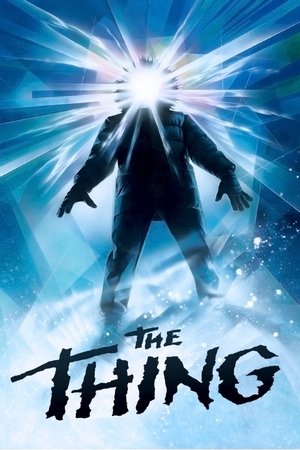
With The Thing (1982), Carpenter created what would eventually become one of the defining films of his career. Based on John W. Campbell Jr.'s novella Who Goes There? and following an earlier screen adaptation in The Thing from Another World (1951), the film isolates a group of American researchers in Antarctica with an extraterrestrial organism capable of perfectly imitating other living beings.
The central terror is therefore not simply the creature itself but uncertainty. Anyone may already have been replaced. Every conversation becomes potentially deceptive, and friendship or professional familiarity offers no reliable method of identifying who remains human. Carpenter's preference for enclosed groups under pressure reaches one of its purest forms here: the enemy may no longer be outside the walls because it may already be sitting in the room.
Rob Bottin's practical creature effects gave that paranoia an unforgettable physical form. Bodies split, stretch, mutate and reorganize themselves into grotesque combinations that refuse stable anatomy. The transformations remain powerful because the Thing appears to have no definitive body of its own. It is imitation without identity, capable of turning the familiar human form into something radically alien within seconds.
The film's initial reception was far less enthusiastic than its later reputation would suggest. Released during a period when audiences were embracing a very different image of extraterrestrial life, The Thing was criticized for its bleakness and graphic effects and performed below expectations. Its reputation changed dramatically over subsequent decades. Home video, theatrical revivals and critical reassessment transformed it into a landmark of science fiction and body horror, and in 2025 it was selected for the United States National Film Registry.
Christine, Prince of Darkness and the Apocalypse Trilogy
Carpenter continued working across genre boundaries throughout the 1980s. Christine (1983), adapted from Stephen King's novel, transformed a 1958 Plymouth Fury into an object of supernatural obsession and possession. Starman (1984) offered an unusually emotional variation on science fiction, while Big Trouble in Little China (1986) mixed martial arts, fantasy, comedy, action and supernatural mythology with an almost deliberately unstable tone.
He returned to much darker territory with Prince of Darkness (1987). Scientists, academics and a priest gather inside an abandoned Los Angeles church to study a mysterious cylinder containing a liquid apparently connected to an ancient evil. Carpenter combines religion with theoretical physics, possession and cosmic horror, creating a world in which traditional ideas of Satan or supernatural evil are reinterpreted through scientific language.
The film's recurring dream broadcasts are among Carpenter's most unsettling ideas. Characters receive fragmented images that appear to be transmissions from the future, warnings sent backward through time about something approaching the church. As in much of Carpenter's work, knowledge does not necessarily offer protection. Understanding the nature of the threat only reveals how much larger it may be.
The Thing, Prince of Darkness and In the Mouth of Madness (1994) later became widely known as Carpenter's informal Apocalypse Trilogy. The films have no continuous characters or narrative, but each attacks the stability of human reality from a different direction. In The Thing, identity becomes unreliable. In Prince of Darkness, science and religion encounter something neither can comfortably contain. In In the Mouth of Madness, reality itself begins to surrender to fiction.
They Live and Carpenter's Distrust of Authority
They Live (1988) turned Carpenter's skepticism toward institutions into open satire. Roddy Piper plays a drifter who discovers sunglasses revealing that wealthy members of society are extraterrestrial beings controlling humanity through advertising, media and subliminal commands. Billboards that once appeared ordinary suddenly display instructions such as obedience, consumption and conformity.
The film combines science fiction, horror, action and political satire, but its central Carpenter idea remains familiar: the visible world cannot be trusted. Reality has been disguised by systems designed to keep people from recognizing what surrounds them. The famous extended fight between Piper and Keith David gives the film physical comedy and brutality, but beneath it lies a characteristic Carpenter pessimism about power, authority and the structures claiming to provide stability.
This distrust appears throughout his career. Governments fail, corporations conceal danger, institutions misunderstand what they confront and authority figures frequently prove ineffective or compromised. Carpenter's protagonists are therefore often outsiders: workers, criminals, drifters, reluctant professionals or people whose survival depends on distrusting the official explanation of events.
In the Mouth of Madness and the Collapse of Reality
In the Mouth of Madness (1994) brought many of Carpenter's recurring ideas together in one of his most openly cosmic horror films. Sam Neill plays insurance investigator John Trent, who is sent to find missing horror novelist Sutter Cane. The investigation leads him toward Hobb's End, a town that seems to exist simultaneously as a physical location and as part of Cane's fiction.
The deeper Trent moves into the mystery, the less meaningful the distinction between reality, literature and madness becomes. Roads return travelers to the places they have just left. Fictional descriptions begin shaping the physical world. Monsters appear at the edges of reality while Cane's readers become participants in something resembling a global transformation.
The influence of H. P. Lovecraft is obvious in the film's concern with forbidden knowledge, cosmic insignificance and sanity collapsing before an incomprehensible reality, but Carpenter does not simply reproduce Lovecraftian imagery. He turns mass culture itself into part of the mechanism. Horror fiction spreads because people want to consume it, read it and believe in it. By the film's conclusion, the question is no longer whether Trent has lost his mind, but whether there remains any stable reality against which sanity could still be measured.
The Later Films
Carpenter's output became less frequent during the 1990s and early 2000s. Village of the Damned (1995) returned to science fiction horror through a new adaptation of John Wyndham's The Midwich Cuckoos, while Escape from L.A. (1996) brought Snake Plissken back into another dystopian American landscape.
Vampires (1998) combined horror with the structure and imagery of a western, following a group of professional vampire hunters through the American Southwest. Ghosts of Mars (2001) again used a siege structure, this time on a colonized Mars where an ancient force possesses human hosts. The film openly revisits ideas Carpenter had explored since Assault on Precinct 13: a fortified location, a group forced into temporary alliances and an apparently endless enemy attacking from outside.
After Ghosts of Mars, Carpenter largely stepped away from feature directing. He returned to television horror with episodes of Masters of Horror, including Cigarette Burns and Pro-Life, before directing The Ward, released in 2010 and 2011 in different markets. The psychological horror film became his most recent theatrical feature as director.
Music and the John Carpenter Sound
Music has never been secondary to Carpenter's filmmaking. Financial necessity originally encouraged him to score many of his own films, but the resulting sound became one of the defining elements of his identity. Repeating synthesizer patterns, simple melodic structures, electronic pulses and carefully controlled silence gave films such as Halloween, Assault on Precinct 13, The Fog and Escape from New York a sonic language as recognizable as their images.
Carpenter rarely approached film music as decoration. The score frequently establishes the rhythm of a scene before anything frightening appears. A repeating figure can suggest that something is approaching, while the absence of musical complexity makes small changes feel significant. The method mirrors his visual filmmaking: reduce the number of elements, control them carefully and allow repetition to generate tension.
In the 2010s music became an increasingly important part of Carpenter's career in its own right. Working primarily with his son Cody Carpenter and musician Daniel Davies, he released Lost Themes (2015), Lost Themes II (2016), Lost Themes III: Alive After Death (2021) and Lost Themes IV: Noir (2024). The albums allowed Carpenter to create cinematic music without attaching it to existing films, effectively producing soundtracks for movies imagined by the listener.
Carpenter, Cody Carpenter and Davies also created new music for the modern continuation of the Halloween series, scoring Halloween (2018), Halloween Kills (2021) and Halloween Ends (2022). Decades after the original film, the sound of Carpenter's synthesizers therefore remained directly connected to Michael Myers and the franchise that helped establish his career.
Suburban Screams and the Return to Directing
Carpenter returned to directing in 2023 through John Carpenter's Suburban Screams, a six-part anthology series combining true-horror accounts with interviews, archive material and dramatic reconstruction. Carpenter directed one of the six episodes and composed the series' theme music.
The project also brought him back to one of the environments most closely associated with his cinema: suburbia. Since Halloween, Carpenter has repeatedly understood the visual tension created when apparently safe homes, streets and communities become spaces of intrusion. Suburban Screams approached that idea through stories presented as real experiences rather than conventional fictional horror.
John Carpenter's Cathedral
In 2026 Carpenter expanded his work into another form with John Carpenter's Cathedral, his first original graphic novel. Written with Sandy King and Sean Sobczak and published by Storm King Comics, the story centers on an abandoned cathedral in downtown Los Angeles where a murder leads investigators into a confrontation with an ancient supernatural evil hidden beneath the building.
The project emerged from an idea Carpenter described as originating in a dream and was conceived as a combination of visual storytelling and music. Rather than simply releasing a separate album inspired by the book, Carpenter, Cody Carpenter and Daniel Davies created a complete Cathedral soundtrack designed to accompany the graphic novel, with individual tracks corresponding to sections of the story.
The graphic novel was published in August 2026, followed by the Cathedral album on August 7 through Sacred Bones Records. The music retains Carpenter's familiar synthesizer atmosphere while moving further toward heavy guitars, larger drums and a more aggressive sound. The combination effectively returns Carpenter to a form of cinematic storytelling without requiring a conventional film production: images, narrative and score operate together while the reader constructs the movement between them.
Critical Reassessment and Cult Status
Carpenter's present reputation is very different from the reception many of his films received when they first appeared. Several works now considered essential were commercially disappointing, critically dismissed or treated primarily as disposable genre entertainment. The Thing is the clearest example, but films such as Big Trouble in Little China, Prince of Darkness and They Live also developed much of their cultural stature after their original theatrical releases.
Home video was crucial to that transformation. Carpenter's films were watched repeatedly outside their initial commercial context, allowing audiences to notice connections between works that had originally been marketed as unrelated horror, action or science fiction pictures. Retrospectives, restorations, repertory screenings and critical writing subsequently reinforced the idea of Carpenter not simply as a successful genre director but as an auteur with a remarkably consistent worldview.
That consistency is visible in themes that return across decades: institutions fail, communication breaks down, apparently secure spaces become vulnerable and human beings discover that their understanding of reality may be dangerously incomplete. Carpenter rarely needs complicated explanations because uncertainty is frequently the source of the horror. The Shape in Halloween does not become more frightening through biography. The organism in The Thing does not need a complete origin story. The forces behind Prince of Darkness and In the Mouth of Madness become more disturbing precisely as conventional explanation begins to fail.
John Carpenter's Style and Legacy
Carpenter's cinema is built on economy. His camera often moves slowly and deliberately. Widescreen frames allow danger to exist beside the characters rather than directly in front of them. Empty space matters because the audience begins searching it. Editing establishes geography instead of deliberately confusing it. Music repeats until anticipation itself becomes frightening.
His protagonists are equally distinctive. Carpenter has little interest in conventional heroism. Snake Plissken, R.J. MacReady, John Nada and many of his other central characters survive through skepticism, stubbornness or practical instinct rather than moral purity. They frequently distrust the systems around them, and Carpenter rarely gives them much reason to change their minds.
His influence extends across slasher cinema, body horror, science fiction, electronic film scoring, independent genre filmmaking and modern synth-based music. Filmmakers have borrowed his framing, siege structures and minimalism; composers have expanded on his electronic sound; horror cinema continues to return to the suburban spaces, isolated groups and unknowable threats that he helped define.
Yet Carpenter's most enduring quality may be his ability to make enormous ideas feel simple. A man stands across a suburban street. A dog runs through the Antarctic snow. A bank of fog approaches a coastal town. A pair of sunglasses reveals that the world is not what it appears to be. A message from the future flickers across a dream.
John Carpenter rarely needs to show the entire universe behind the horror.
He only needs to open the door far enough for the audience to realize that something is waiting on the other side.
Known Among Horror Fans For
Notable Horror Collaborators
Notable collaborators and creative partners throughout John Carpenter's horror career.
 Debra Hill
Creative Partner
Co-writer and producer who helped shape Halloween, The Fog and several of Carpenter's most important early films.
 Kurt Russell
Frequent Collaborator
Carpenter's most iconic recurring leading actor, appearing in The Thing, Escape from New York, Big Trouble in Little China and other films.
 Alan Howarth
Music Collaborator
Electronic music collaborator who worked closely with Carpenter on numerous synthesizer-driven scores throughout the 1980s.
 Dean Cundey
Cinematographer
Director of photography on several defining Carpenter films including Halloween, The Fog, The Thing and Big Trouble in Little China.
 Jamie Lee Curtis
Frequent Collaborator
Star of Halloween and The Fog whose portrayal of Laurie Strode became inseparably linked with Carpenter's breakthrough in horror.
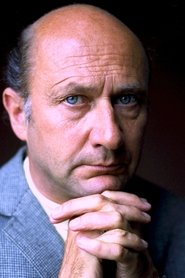 Donald Pleasence
Frequent Collaborator
Worked with Carpenter on Halloween, Escape from New York and Prince of Darkness, becoming one of the director's most recognizable recurring actors.
John Carpenter Horror Movies
Directing (17 credits)
2006
2005
2005
2001
1998
1995
1994
1993
1988
1987
1983
1982
1980
1978
1978
1969
Acting (24 credits)
2026
2025
2024
2024
2022
2020
2019
2014
2011
2009
2008
2006
2003
2001
2000
2000
1996
1995
1993
1988
1982
1982
1980
1978
Writing (20 credits)
2022
2021
2018
2012
2007
2005
2002
2001
1999
1998
1995
1988
1988
1987
1981
1980
1978
1978
1978
1969
Music & Sound (18 credits)
2025
2018
2018
2002
2001
1998
1995
1994
1993
1988
1988
1987
1983
1982
1982
1981
1980
1978
Production (6 credits)
2018
2002
1993
1982
1981
1969
Other Crew (7 credits)
2023
2020
2012
2010
2002
2000
1997