
2025
Guillermo del Toro
Horror Director · Biography · Horror Filmography · Collaborators · Credits
Horror subgenres & themes
Most represented across this person's horror filmography:
HAUNTED HOUSES
• ANIMAL
• BODY HORROR
• EVIL DOLL
Biography
Guillermo del Toro and His Contribution to Horror Cinema
Guillermo del Toro is a Mexican filmmaker, screenwriter, producer and former special-effects makeup artist whose work has contributed significantly to the development of contemporary Gothic and supernatural horror. His films bring together established traditions of vampire stories, ghost narratives, creature features and literary Gothic, with a sustained interest in the physical construction of monsters and the emotional lives attributed to them. Beginning with Cronos (1993), he developed a recognizable approach to horror in which fantastic events are embedded in detailed social environments and the appearance of a creature carries information about its origin and experience.
His place in horror history rests on several distinct achievements. Cronos reconsidered vampirism through addiction and bodily deterioration. The Devil's Backbone (2001) and Pan's Labyrinth (2006) placed supernatural experience beside political violence and the experience of children. Blade II (2002) explored vampiric mutation through aggressive creature design; Crimson Peak (2015) revived the architecture and family secrets of Gothic romance. His work on The Strain and Guillermo del Toro's Cabinet of Curiosities extended those interests into television, while Frankenstein (2025) returned him to a foundational figure of screen horror that had shaped his imagination since childhood.
Del Toro has also influenced the genre through collaborators and productions he did not direct. His early experience with prosthetics helps explain the practical priorities of his creature design, while his partnerships with performers and makeup departments have made bodily movement central to his monsters. His work as producer has helped other directors bring supernatural stories to international audiences. Across these activities, his contribution is identifiable in specific films, production methods and recurring interpretations of the monstrous.
Mexican Horror, Catholic Imagery and Early Influences
Guillermo del Toro Gómez was born in Guadalajara, Jalisco, on October 9, 1964. He grew up in a Catholic environment, and religious images became part of the visual vocabulary of his later supernatural films. Relics, ritual objects, wounds, sanctuaries and images of bodily suffering recur throughout his work. In Cronos, the apparatus promising immortality behaves like a sacred object while inflicting physical damage. In Pan's Labyrinth, ritual and belief structure the encounters between a child and figures whose intentions remain difficult to judge. Such material reflects an interest in the relationship between spiritual belief and the vulnerable body.
His early encounters with horror cinema were equally important. James Whale's Frankenstein (1931), with Boris Karloff as the Creature, became an enduring point of reference. Del Toro has described a childhood identification with the Creature, an attachment that informs his attention to beings feared or rejected because of their appearance. Classic Universal monsters, the films of Terence Fisher and Mario Bava, and traditions of illustrated fantastic literature contributed to his knowledge of Gothic imagery. These influences are visible through specific design choices, although his films generally reorganize inherited material around new characters and settings.
Mexican attitudes toward death, as represented in the director's accounts of his upbringing, also provided a cultural context for his treatment of corpses, burial and the persistence of the past. His ghost stories allow dead characters to carry information and unfinished obligations into the present. The supernatural often makes concealed human violence visible. The approach can be traced through the damaged bodies in The Devil's Backbone, the apparitions in Crimson Peak and the repeated appearance of preserved or constructed bodies in his later work.
Del Toro's reading and viewing extended to H. P. Lovecraft, European fairy tales and the traditions of weird fiction. The body, the house and the laboratory repeatedly become places where an apparently coherent world reveals something concealed. His treatment of these subjects is distinguished by the attention paid to how actors inhabit a space and how the physical design of the supernatural presence shapes the scene.
Practical Makeup, Necropia and the Formation of a Creature Designer
Before directing features, del Toro worked for years in special-effects makeup and established the effects company Necropia in Mexico. This background gave him direct experience with sculpting, casting, appliance application and the limitations that materials impose on performers. Early experience of this kind is relevant to his later directing because many of his monsters require precise interactions between mechanical construction, prosthetic surfaces, lighting and the person performing beneath them.
The design process begins with physical questions. A prosthetic head must accommodate facial movement; a creature's hands and costume alter how the performer walks; a surface intended to appear diseased or dead must react plausibly to camera distance and illumination. Del Toro has continued to discuss these problems while working with specialist teams on productions of much larger scale. His drawings establish anatomical ideas, but their realization depends on the accumulated knowledge of makeup artists, sculptors, suit performers and visual-effects departments.
The practical orientation is already apparent in Cronos, whose central device must seem both antique and biological. It becomes particularly evident in the mutated vampires of Blade II and the creatures of Pan's Labyrinth. In those films, horror is conveyed through what a body can do and the distinctive ways in which it moves. Digital work can extend or complete an effect, but the scene still needs coherent physical behavior and a performance that responds to it.
Del Toro also directed for the Mexican anthology series Hora marcada, gaining experience with compact genre storytelling and television production schedules. Work in horror television gave him opportunities to coordinate performance, atmosphere and effects within limited time and resources. This training supplied practical foundations for his first feature and for his later return to anthology horror as a producer and curator.
Cronos (1993): Vampirism, Addiction and the Decaying Body
Cronos, del Toro's debut feature, reimagines the vampire story through an alchemical mechanism that grants prolonged life at a severe physical cost. Elderly antiques dealer Jesús Gris discovers a device containing a living component and gradually becomes dependent upon its effects. The apparatus transforms the familiar vampire's bite into a mechanical process, making immortality inseparable from infection, appetite and injury. The film's central horror arises from the changes taking place in a previously ordinary body and in the relationships that body sustains.
Federico Luppi's performance gives the transformation a domestic context. Jesús is a grandfather whose relationship with his granddaughter Aurora becomes crucial as his condition worsens. Blood is presented as an increasingly urgent bodily need, and the promise of rejuvenation draws him toward behaviors that threaten his family. The contrast between apparent renewal and physical degradation supplies the film with its most disturbing images. The vampire myth is connected to the fear of aging and the prospect of losing control over one's own behavior.
The design of the Cronos device reflects del Toro's interest in technology that resembles an organism. Its interior is associated with insect anatomy and mysterious biological activity, suggesting a world in which machinery and living tissue have become interdependent. The connection anticipates later transformations in Mimic and The Strain, where monsters emerge through disturbances of physical systems that humans believe they can manage.
Bertha Navarro produced the film, Guillermo Navarro was its cinematographer and del Toro's company Necropia supplied special makeup effects. These collaborations established a working model in which production design, camera and prosthetics were considered together. The film received recognition at the 1993 Cannes Film Festival and helped introduce an internationally visible Mexican voice to modern horror. Its continuing importance lies in the close integration of a recognizable vampire narrative with detailed attention to mortality, familial attachment and the material consequences of transformation.
Mimic (1997): Evolution, Urban Fear and Studio Horror
With Mimic, del Toro moved into American studio filmmaking and a more familiar creature-feature format. The story begins with a genetically engineered insect intended to control a dangerous disease in New York. The intervention appears successful until the new species evolves into a threat capable of imitating human shape. The Judas Breed turns scientific problem-solving into a source of uncontrollable biological change, giving the city an unseen predator adapted to its own infrastructure.
The film's strongest images depend on the insects' ability to resemble people at a distance. Their wings and external anatomy produce the outline of a cloaked figure, connecting entomological details to urban legends of hidden danger. Subway tunnels, drainage systems and neglected spaces become habitats in which the creatures can reproduce beyond human observation. The setting places the horror inside a modern city whose inhabitants mistake their surroundings for a fully managed environment.
Del Toro's interest in the insects' anatomy was unusually specific. In later discussion of the production, he described studying photographs of actual insect structures with the creature designer and using natural forms as the basis for the monsters. This research gave their jaws, limbs and shells a sense of biological function. The film's anxieties about genetic intervention also connect the creatures to the scientific decisions that produced them: the threat emerges from a real problem and a proposed solution.
Mimic was also a difficult experience for its director because of conflicts over creative control. Years later he prepared a director's cut that restored character and atmospheric material while removing some footage added during the original production. The revision makes visible his preference for building dread through spatial investigation and the accumulating implications of the creatures' existence. The episode became significant to his subsequent insistence on maintaining an active role in the construction of his films.
The Devil's Backbone (2001): The Ghost as Historical Evidence
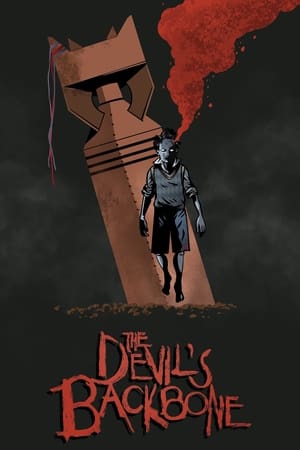
The Devil's Backbone marked del Toro's return to a Spanish-language supernatural story. Set in an isolated orphanage during the closing period of the Spanish Civil War, it follows the young Carlos as he encounters an apparition connected with a concealed death. The building's isolation and the political danger outside its walls create a setting where the adults carry divided loyalties and where children are exposed to decisions they cannot control. The ghost gives the narrative a means of uncovering violence that the living have failed to confront.
The apparition of Santi has a distinctive physical appearance, including the suggestion of a wound or disturbance that remains suspended around his head. His design establishes a connection between supernatural presence and the specific circumstances of death. The effect allows the viewer to observe traces of bodily injury as part of the ghost's continuing identity. Del Toro treats the apparition as an active witness, and the haunting gradually directs the children toward knowledge that alters their understanding of the orphanage.
Political violence enters the film through the history of the adults and the fear governing the institution. The orphanage contains material evidence of the conflict, most notably the unexploded bomb standing within its courtyard. Its presence brings a constant threat into the children's daily lives, while the supernatural story gives the dead a form of testimony. The bomb and the ghost operate through different kinds of suspense: one represents potential destruction, the other a past act whose consequences remain unresolved.
The film also develops a central distinction within del Toro's Gothic horror. Monstrous appearance cannot reliably identify moral danger. The children are frightened by what they see, but the most destructive actions emerge from human ambition and coercion. This arrangement will become more elaborate in Pan's Labyrinth, where fantasy is again situated beside the authority of men capable of organized violence. The connection between the films helps explain del Toro's unusual contribution to historical supernatural cinema: the haunting is inseparable from the society in which it occurs.
Blade II (2002): Reapers, Infection and Prosthetic Violence
Blade II allowed del Toro to work with a familiar vampire property while introducing a new biological threat. The Reapers are infected vampires whose mutations give them an extraordinary feeding apparatus and a physiology distinct from ordinary members of their kind. By turning the vampire's mouth into a violently transforming structure, the film makes feeding an event of bodily rupture. The familiar iconography of fangs is enlarged into an elaborate anatomy designed for attack.
The most recognizable Reaper effect involves the splitting of the jaws into extended sections capable of exposing teeth and feeding structures. It required close coordination of physical creature design and digital effects. Tippett Studio's work on the film included digital facial replacement for the transforming vampires, demonstrating how computer imagery could support the appearance of practical prosthetics. The underlying designs remain attached to a convincing sense of anatomy: the monster's transformation appears to be an extension of its biological function.
The film uses aggressive action choreography, but its relevance to body horror lies in the physical instability of the infected vampire. Movement through confined spaces, sudden attacks and the threat of contamination shift the genre's traditional emphasis toward disease and mutation. This concern also foreshadows the later treatment of vampirism in The Strain. Del Toro's work in this production helped translate elaborate monster makeup into a fast-moving studio feature while preserving the sense that the creature occupies a physical space shared with the actors.
Hellboy and Hellboy II: Occult Creatures and Physical Performance
Hellboy (2004) and Hellboy II: The Golden Army (2008) belong principally to supernatural fantasy and comic-book adventure, yet their contribution to del Toro's work with Gothic monsters is substantial. Adapted from Mike Mignola's comics, they place demons, folkloric beings and occult organizations within an elaborately designed physical world. Hellboy himself is a red-skinned demonic figure whose appearance sharply contrasts with his practical behavior and personal loyalties. The character allowed del Toro to develop a recurring horror concern through a protagonist usually treated as a monster by others.
Ron Perlman's performance and the design of Hellboy's face and body demonstrate the value del Toro places on actor-specific prosthetics. Horns, the massive stone hand and the other anatomical features must remain legible during dialogue and physical action. The films also depend on specialized creature performers, especially Doug Jones, whose movement gives distinctive personalities to figures with unconventional anatomy. Their interactions helped refine working relationships that del Toro continued to use in later Gothic productions.
The sequel expands the population of nonhuman beings and introduces elaborate market environments and creature societies. Its relevance here lies in the practical and performative treatment of monstrosity, along with the sustained use of folkloric and occult visual traditions. These elements also clarify the difference between del Toro's directly horrific films and his adjacent fantasy projects: some of the same design methods serve a different dramatic purpose, while remaining valuable to his larger contribution to monster cinema.
Pan's Labyrinth (2006): Fascism, Childhood and Fairy-Tale Terror
Pan's Labyrinth draws together the historical concerns of The Devil's Backbone and del Toro's fascination with fairy-tale beings. Set in Spain in 1944, the film follows Ofelia as her mother enters the household of Captain Vidal, an officer serving Franco's regime. Ofelia discovers an ancient labyrinth and encounters a Faun who assigns her a series of tasks. The fantastic world provides a language through which a child attempts to understand the violence and coercion surrounding her.
The film's most disturbing supernatural figure, the Pale Man, is constructed through a combination of makeup, suit performance and precise bodily choreography. His eyes rest in the palms of his hands, altering the expected relationship between sight and anatomy. When the figure raises his hands toward his face, a strange visual idea becomes a specific threatening action. Del Toro and the creature team use the design to control the audience's attention to movement and to make a brief appearance memorable within the film's larger structure.
Doug Jones performed both the Faun and the Pale Man, demonstrating how different creature designs can be distinguished through movement, weight and posture. The Faun's changing appearance and uncertain intentions demand a performance capable of suggesting age and concealed motives. The Pale Man, by contrast, moves with a concentrated predatory purpose. The performances exemplify del Toro's collaborative use of physical acting: makeup establishes a body, and the actor determines how its possibilities are expressed.
Vidal supplies an equally important source of terror. His authority is expressed through rules, punishment and the exercise of military power, with violence carried out against people who have little means of resistance. The narrative places this human brutality alongside rituals and monsters drawn from fantasy. Ofelia's decisions connect the two domains through questions of trust and obedience. Her final choices matter because the film has established the real consequences of submission to coercive authority.
Pan's Labyrinth received three Academy Awards, including awards recognizing cinematography, production design and makeup. Its international success gave greater visibility to a kind of horror-inflected fantasy that treated supernatural design as inseparable from historical experience. The film is central to del Toro's influence because it showed how an intensely specific political setting could support imaginative creature imagery without losing the human relationships that give the story its emotional weight.
Crimson Peak (2015): The Gothic House and the Material Ghost
Crimson Peak was conceived as a Gothic romance centered on a family estate whose decaying structure reflects the history of its occupants. The film follows Edith Cushing as she enters the household of Thomas and Lucille Sharpe at Allerdale Hall. The building is a dramatic instrument: corridors, damaged walls and the red clay rising through its foundations expose the instability of its owners' claim to respectable family life. Del Toro uses this setting to revive the haunted-house tradition through unusually detailed architectural design.
The apparitions are physically deteriorated and marked by circumstances connected to their deaths. Their surfaces suggest exposed tissue and fragmented bodily structures, producing moments of strong horror imagery within a narrative organized around inheritance, marriage and secrecy. They appear in spaces already saturated with evidence of concealed crimes. Their visual form participates in the investigation, directing the audience toward questions that the living characters avoid.
The ghosts of Crimson Peak extend the approach developed in The Devil's Backbone. They preserve injuries as signs of historical violence and have a relation to the house's past that the protagonist must gradually understand. The film also draws on the literary Gothic tradition in which domestic architecture can protect abusive power. The large estate and the characters' social rituals make private cruelty difficult to observe from outside, while the supernatural intrusions reveal the consequences of that secrecy.
Del Toro worked with cinematographer Dan Laustsen on a visual system involving pronounced color contrasts, deliberate camera movement and environments built to remain legible during long takes. Costume and production design contribute information about the social identities of Edith, Thomas and Lucille. The atmosphere depends on the integration of those departments with the ghost effects. In the context of contemporary horror, Crimson Peak stands as a substantial modern revival of elaborate, studio-scale Gothic production design.
The Strain (2014–2017): Vampirism as an Epidemic
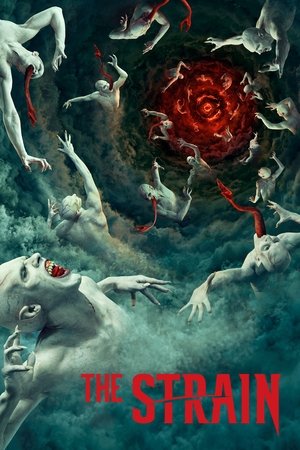
Del Toro extended his treatment of vampirism through The Strain, the novel trilogy written with Chuck Hogan and the television adaptation developed for FX. The story begins with an alarming incident involving an aircraft and develops into an outbreak narrative in which vampire infection spreads through biological mechanisms. The premise redefines the vampire as a parasitic organism with a reproductive cycle and distinctive anatomical adaptations. Its mixture of medical investigation and supernatural tradition returns to ideas visible in Cronos, but on the scale of a modern city.
The creatures of The Strain are marked by pale surfaces, altered mouths and a feeding structure that can emerge from the body. Their anatomy gives physical expression to infection and the loss of individual control. The outbreak produces familiar public-health questions about containment, evidence and institutional response, while older vampiric mythology shapes the opposing forces. The series thus connects traditional Gothic fears to images of contagion and mass transformation.
Del Toro and Hogan co-created and executive-produced the television series, with Carlton Cuse serving as showrunner and executive producer. Del Toro also directed the pilot episode, establishing some of the program's initial visual language. His role must be distinguished from that of the directors and departments responsible for later episodes. The series gave him an opportunity to revisit vampire horror in serial form, where the threat could expand over several seasons and the social consequences of infection could occupy sustained narrative attention.
The relationship between Cronos, Blade II and The Strain reveals a consistent strand within del Toro's work. Vampires are designed through bodies with specific appetites and limitations, and each story assigns those changes a different significance. The transformation of an elderly man, the emergence of a predator species and the spread of an epidemic all make the classic vampire dependent on processes that can be shown through makeup and effects.
Producing Horror and Supporting Other Directors
Del Toro's contribution to horror includes his work as producer and executive producer on films directed by other people. The Orphanage (2007), directed by J. A. Bayona, brought him into a Spanish-language ghost story built around childhood, bereavement and the concealed past of an institution. Its emphasis on the emotional consequences of haunting connects it to concerns visible in his own supernatural films, although the finished film is Bayona's directorial achievement and should be understood on those terms.
He co-wrote and produced Don't Be Afraid of the Dark (2010/2011), directed by Troy Nixey. The story follows a child in an old house who encounters dangerous creatures hidden beneath its domestic spaces. Its setting and creature-centered scares revisit the Gothic household as a place that adults misread and children experience differently. Del Toro's screenplay and production involvement show how he could contribute to a horror film through concept development and support for another director.
Mama (2013), directed by Andy Muschietti, included del Toro as executive producer. Its ghostly central figure draws upon a tragedy involving children and parental attachment, giving supernatural horror an emotional motive within the story. His association with the production supported the expansion of Muschietti's earlier short into a feature. Del Toro did not direct the film, and its specific images and performances belong to the filmmakers responsible for them.
For Scary Stories to Tell in the Dark (2019), directed by André Øvredal, del Toro received story and producer credits. Drawing on Alvin Schwartz's illustrated horror books, the production brings a series of memorable creatures into a connected narrative about adolescents and inherited fears. The film's monsters depend on recognizable visual silhouettes and practical performance integrated with additional effects. These producing and writing credits demonstrate his influence on the circulation of horror ideas beyond the films he personally directs.
Cabinet of Curiosities (2022): Horror Anthology and Curatorship
Guillermo del Toro's Cabinet of Curiosities is an eight-episode horror anthology in which del Toro served as creator, executive producer, co-showrunner and host. The series brought together different filmmakers to explore forms of supernatural, psychological and creature-based horror. The anthology structure matters because it allowed distinct directorial methods to coexist within one project, reconnecting contemporary streaming production with older traditions of televised and literary horror collections.
Del Toro supplied original stories for two episodes, Lot 36 and The Murmuring. The former, directed by Guillermo Navarro, follows a man whose purchase of a storage unit leads him toward occult material and concealed danger. The latter, directed by Jennifer Kent, combines a ghost story with the experience of bereavement. Their contrasting approaches show the range of horror he sought to accommodate: one develops an accumulating threat from objects and ritual, while the other uses supernatural encounters to reveal psychological pain.
Other episodes adapt works associated with H. P. Lovecraft or draw on established weird-fiction motifs, and the series includes directors with different relationships to contemporary horror. Del Toro's role was primarily creative supervision and curation, with the individual filmmakers responsible for their episodes. His public discussion of the project emphasized giving those directors room to pursue distinctive approaches within a shared production framework.
The anthology has particular importance within his larger contribution to the genre because it makes his knowledge of horror traditions available as an organizing principle for other artists. It also returns to the educational value of a collection of varied stories: monsters, unexplained events and psychological disturbances can be explored in compact forms, each requiring a different balance of suggestion, performance and visible effects.
Frankenstein (2025): Creature Design and the Gothic Inheritance
Mary Shelley's Frankenstein remained an enduring influence on del Toro long before he completed his own adaptation in 2025. His attachment began in childhood with Boris Karloff's Creature in James Whale's 1931 film. The character became a model for the sympathetic monster: a living being formed through an extraordinary act and then judged by the world into which it has been brought. Returning to this material allowed del Toro to engage directly with a foundational tradition of literary and cinematic Gothic horror.
In his film, Oscar Isaac plays Victor Frankenstein and Jacob Elordi portrays the Creature. Del Toro's adaptation concentrates on their relationship and on the moral responsibilities created by Victor's experiment. The Creature's appearance is central to that interpretation. Del Toro worked with makeup and creature specialists to develop a body that looks newly assembled and intentionally constructed. The design emphasizes the circumstances of creation while allowing Elordi to communicate expression through the altered face and body.
The contrast with established screen imagery is deliberate. Decades of Frankenstein films have produced recognizable conventions involving scars, bolts, decaying flesh and surgical trauma. Del Toro aimed for a Creature whose anatomy could suggest its recent construction without reproducing every sign familiar from earlier portrayals. Costume, surface texture and bodily movement therefore participate in the characterization, with the design tied closely to the film's interpretation of creation and abandonment.
The film also develops the director's long-standing interest in the boundary between scientific authority and the vulnerability of the beings exposed to it. Victor's attempt to master life produces a relationship he is unable to manage ethically. The Creature learns through experience and suffers the consequences of its maker's decisions. The Gothic setting and images of artificial life provide the framework for questions about responsibility, dependence and rejection.
Del Toro has explicitly described the adaptation as an emotional story and has resisted defining it primarily through the objective of frightening an audience. That distinction is important when assessing its place in horror history. Frankenstein belongs to the genre's Gothic lineage through its source, central figure and visual traditions, even as the director foregrounds the bond between creator and created. The film makes his identification with classic monsters a sustained dramatic subject.
Its release also brought together collaborators who had contributed to the visual and practical realization of earlier projects. The finished film reflects decades of attention to performance beneath makeup, artificial bodies and the relationship between sets and character. For an examination of del Toro's horror contribution, Frankenstein represents a return to material that had helped define his approach to creatures throughout his career.
Creature Performance, Recurring Collaborators and Horror Legacy
A central feature of del Toro's influence is his insistence that monsters remain performable. Ron Perlman's work in Hellboy and Doug Jones's performances in Pan's Labyrinth demonstrate different ways in which extensive makeup can support character. The design of a creature determines its range of movement, but the performer contributes timing and intent. Del Toro's effects background makes him attentive to the exchanges between sculptors, makeup technicians, cinematographers and actors necessary to produce that result.
His recurring collaborators have included producers, cinematographers, creature designers and production departments whose work shaped specific horror films. Bertha Navarro supported the production of Cronos; Guillermo Navarro photographed several of the director's early films and later directed an episode of Cabinet of Curiosities; Dan Laustsen contributed the visual approach to Crimson Peak and Frankenstein. Each collaboration demonstrates how the director's visual ideas were developed through the specialist decisions required on a set.
The treatment of space is equally significant. The orphanage in The Devil's Backbone, Vidal's military environment in Pan's Labyrinth, and Allerdale Hall in Crimson Peak place supernatural and human violence inside institutions with identifiable histories. Objects and architectural features carry information about previous events. The horror becomes stronger as the viewer understands that a setting has preserved evidence which its inhabitants may wish to conceal.
Del Toro's creatures are also connected to the development of modern body horror. The insect-like mechanism of Cronos, the evolved predators of Mimic, the Reapers in Blade II and the infected vampires of The Strain each produce fear through a particular biological process. Their designs emphasize a recognizable relationship between anatomy and behavior. This attention to function helps explain why his monsters remain distinctive even when their visual details differ substantially.
His strongest Gothic films use the supernatural to expose the consequences of human decisions. The dead in The Devil's Backbone and Crimson Peak carry evidence of injury; Ofelia's encounters in Pan's Labyrinth occur within a system of political coercion; the Creature in Frankenstein bears the physical and emotional consequences of its maker's conduct. These stories contribute to horror by giving their fantastic figures specific dramatic roles and placing them within recognizable relationships of responsibility and power.
Across directing, effects design, writing, producing and television, del Toro has contributed to the continuing development of vampire narratives, ghost stories and the Gothic monster film. His importance can be measured in the films themselves and in the work of collaborators and filmmakers whom he has supported. The practical construction of imaginary bodies and the sustained attention to their dramatic possibilities remain central to his place in modern horror cinema.
Photos (4)
Images: TMDB
Selected Work
 Mimic
1997
 The Devil's Backbone
2001
 Blade II
2002



 The Strain
2014
 Crimson Peak
2015

 Frankenstein
2025
Notable Horror Collaborators
Notable collaborators and creative partners throughout Guillermo del Toro's horror career.
 Ron Perlman
Director / Actor Collaborator
Perlman became one of del Toro’s longest-running actors beginning with Cronos and continuing through Blade II, Hellboy, Hellboy II: The Golden Army and Pacific Rim. Their work includes human characters, heavily prosthetic roles and major studio genre productions across more than two decades.
 Doug Jones
Director / Creature Performer Collaborator
Jones became central to del Toro’s creature cinema through roles including Abe Sapien, the Faun, the Pale Man, the Chamberlain and the Amphibian Man. Their repeated collaboration allowed complex prosthetic designs to remain grounded in precise physical acting and readable character behavior.
 Guillermo Navarro
Director / Cinematographer Collaborator
Navarro photographed numerous major del Toro films beginning with Cronos and continuing through The Devil’s Backbone, Hellboy, Pan’s Labyrinth, Hellboy II: The Golden Army and Pacific Rim. Their long relationship helped establish the color, lighting and camera systems of del Toro’s early and middle career.
BN
Bertha Navarro
Director / Producer Collaborator
Bertha Navarro produced Cronos and later worked with del Toro on The Devil’s Backbone and Pan’s Labyrinth. She also helped establish Tequila Gang with him, providing an important production structure for the international Spanish-language films that became central to his career.
 Federico Luppi
Director / Actor Collaborator
Luppi played major roles for del Toro in Cronos and The Devil’s Backbone and returned in Pan’s Labyrinth. Across the three Spanish-language films he became one of the principal performers connecting del Toro’s early vampire cinema with his later historical Gothic work.
 Dan Laustsen
Director / Cinematographer Collaborator
Laustsen first photographed Mimic for del Toro and later returned for Crimson Peak, The Shape of Water, Nightmare Alley and Frankenstein. Their mature collaboration is especially associated with carefully choreographed camera movement, expressive color and lighting designed around physical sets and performers.
Guillermo del Toro Horror Movies
Directing (9 credits)
2015
2014
2002
2001
1997
1993
1987
1985
Writing (14 credits)
2025
2022
2020
2019
2015
2014
2010
2007
2006
2001
1997
1993
1987
1985
Production (17 credits)
2025
2022
2021
2020
2019
2015
2013
2012
2010
2010
2010
2009
2008
2007
2005
1987
1985
Acting (8 credits)
2026
2025
2022
2015
2010
2008
2008
1993
Creator (2 credits)
2022
2014
Editing (1 credits)
1985
Other Crew (2 credits)
2025
2005