
1988
Klaus Kinski
Horror Actor · Biography · Horror Filmography · Family · Collaborators · Credits
Horror subgenres & themes
Most represented across this person's horror filmography:
MEDICAL
• ANIMAL
• HOME INVASION
• VAMPIRE
Biography
Klaus Kinski and European horror acting
Klaus Kinski was a German stage and screen actor whose work in horror developed across several different European film industries before reaching its most internationally recognized expression in Werner Herzog’s Nosferatu the Vampyre. His career included Gothic horror, German crime thrillers, Italian giallo, Spanish exploitation cinema and American horror productions. He became particularly associated with characters whose threatening behavior could be established through physical appearance, vocal delivery, facial expression and an ability to sustain tension with relatively little dialogue. Although he also worked extensively in westerns, historical drama, adventure and international art cinema, horror provided one of the most consistent outlets for the disturbing screen presence that made him commercially recognizable.
Kinski’s relationship with horror was complicated by his broader professional circumstances. He had been trained through postwar theatre and developed an established career in spoken-word performance before becoming a familiar presence in European commercial cinema. He frequently accepted film assignments without a strong personal commitment to the productions themselves, yet his performances could provide small genre films with a recognizable personality and an international marketing advantage. His reputation for extreme behavior also created serious difficulties for colleagues, particularly during his later career. An assessment of his contribution to horror therefore requires attention to his development as an actor, the production environments in which he worked and the documented distinction between his screen performances and his conduct outside them.
Early life, war and the beginning of an acting career
Kinski was born Nikolaus Günther Karl Nakszynski on October 18, 1926, in Zoppot, then part of the Free City of Danzig and now Sopot, Poland. His family moved to Berlin during his childhood. He grew up in difficult economic circumstances during the interwar period and was subsequently drawn into the final years of the Second World War. Conscripted into the German armed forces as a teenager, he was captured by British troops and spent time as a prisoner of war. His experience of performance began developing during this period, before he established himself professionally in postwar Germany.
After the war Kinski pursued acting through theatre, adopting the professional name under which he became known internationally. The German theatrical environment offered opportunities to develop speech, gesture and sustained character presentation at a time when the film industry was still recovering from wartime disruption. He became known for an intense stage manner that attracted attention but could also provoke conflict. This theatrical formation is important to his later horror work because his performances often rely on concentrated bodily and vocal expression, sometimes operating independently of conventional naturalistic dialogue.
Kinski entered feature filmmaking in the late 1940s and spent much of the following decade taking supporting parts. His credits included productions by established directors such as Anatole Litvak, Roberto Rossellini and Douglas Sirk. These films did not immediately make him a leading international actor, but they gave him experience in different production systems while he continued developing a reputation on stage. His later genre career emerged from this combination of formal theatrical experience and a willingness to accept screen roles across a wide range of commercial productions.
Theatre, spoken-word performance and the construction of screen presence
Kinski’s stage career included solo performances of poetry and dramatic literature. He became associated with highly personal interpretations of writers such as François Villon, Arthur Rimbaud and other figures whose language could support confrontational delivery. Unlike an actor whose principal training came from ensemble realism, Kinski learned to maintain audience attention through voice, changes in intensity and the physical presentation of a single performer. Recordings of his spoken-word work also helped establish his public identity beyond the theatre itself.
Those techniques later entered his screen acting, sometimes effectively and sometimes in ways that placed him at odds with directors. He could concentrate attention through prolonged stillness, abrupt changes of expression or unusual phrasing. His narrow facial structure, prominent eyes and distinctive voice made him particularly easy to cast as a suspicious stranger, unstable authority figure or threatening outsider. European horror and mystery producers recognized these qualities because they could establish uncertainty around a character before a screenplay explained that character’s intentions.
Kinski also developed a public image closely connected with anger and confrontation. This image was reinforced by interviews, stage incidents and later autobiographical writing. It would be misleading, however, to treat the extreme behavior associated with him as an essential artistic method. The distinction between an actor’s capacity to perform threatening characters and his responsibility to work safely and professionally with other people is especially important when examining the documented problems surrounding several of his horror productions.
German crime cinema and the transition into European horror
During the 1960s Kinski became increasingly active in German popular cinema, particularly mysteries and crime films connected with the Edgar Wallace adaptation cycle. These productions introduced audiences to conspiracies, concealed identities, threatening institutions and murder investigations that occupied an intermediate position between crime drama and Gothic horror. Kinski’s unusual physical appearance and ability to suggest concealed motives made him suitable for this environment, where audiences were often encouraged to suspect almost every important character.
His work in the Wallace cycle contributed to an important change in his professional identity. He was becoming a recognizable genre performer rather than an occasional supporting actor in prestigious productions. A producer could use his presence to communicate danger or instability immediately, even when Kinski’s character was ultimately revealed to be innocent. The effectiveness of this casting depended partly on the audience already recognizing his established screen persona.
The same qualities appealed to Italian and Spanish filmmakers working in international co-productions. Kinski began appearing frequently in productions designed for distribution across several European markets, often with actors speaking different languages during filming and dialogue subsequently dubbed for local releases. This working environment placed less emphasis on the continuity of an actor’s original voice than his theatrical background might suggest. His face, gestures, posture and ability to dominate a frame consequently became especially important to how his performances reached international audiences.
Working across Italian genre cinema
Kinski’s extensive participation in Italian popular filmmaking developed alongside his better-known appearances in spaghetti westerns. The commercial system relied heavily on recognizable performers who could move between genres according to financing and market demand. Kinski became particularly useful because he already possessed an international reputation and could work in relatively small productions without requiring the supporting infrastructure associated with a major Hollywood star.
His work with Italian directors included Gothic horror, psychological thrillers and films increasingly shaped by the conventions of giallo. These assignments differed substantially in production conditions. Some were built around elaborate period settings, while others used contemporary hospitals, apartments or isolated houses. Kinski did not develop one continuous character type across them, but producers frequently exploited his ability to appear untrustworthy or emotionally unpredictable.
His association with horror must also be understood in relation to the Italian industry’s treatment of actors as interchangeable components within international financing packages. A recognizable name could help a film secure distribution even when the actor’s actual screen time was limited. Kinski worked within that system throughout much of his career. His willingness to accept numerous assignments helped make him familiar to horror audiences, although the artistic results varied considerably from one production to another.
Jesús Franco and unconventional European horror
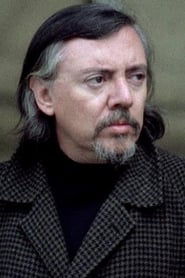
Jesús Franco became one of Kinski’s most important recurring directors in material connected with horror, eroticism and exploitation. Their collaborations included Venus in Furs, Count Dracula and Jack the Ripper, alongside the period drama Marquis de Sade: Justine. Franco worked rapidly, moved freely among genres and often built productions around the commercial opportunities offered by international casts and financing arrangements. Kinski fitted this system because his reputation could be used to strengthen projects whose resources were otherwise limited.
The relationship allowed Kinski to occupy very different positions within horror narratives. In Count Dracula he played Renfield opposite Christopher Lee’s Dracula, becoming one of the characters most closely associated with the vampire’s influence over vulnerable human minds. In Jack the Ripper he occupied the central role of a murderer whose public identity concealed his violence. Venus in Furs placed him within a more experimental production combining psychological uncertainty, death and supernatural suggestion.
These assignments show how Kinski could move between subordinate and dominant forms of menace. Renfield exists under the authority of another supernatural figure, while his later horror killers exercise direct power over their victims. Franco’s cinema frequently gave Kinski opportunities to use a recognizable screen personality without requiring strict naturalism, although the collaborative relationship also belonged to a production culture in which speed and international sales could take priority over extensive rehearsal or character development.
Gothic horror, giallo and the authority of the threatening stranger
Italian horror offered Kinski repeated roles built around apparently respectable men whose behavior concealed danger. His work included Slaughter Hotel, Death Smiles on a Murderer, The Hand That Feeds the Dead and Lover of the Monster. These productions used medical institutions, scientific experimentation, inherited family secrets and criminal deception, allowing Kinski to play doctors, researchers and other figures whose authority could become an instrument of fear.
The recurring use of medical characters was particularly compatible with his screen image. A doctor or psychiatrist is normally expected to possess knowledge and control, but Kinski’s performances could introduce doubt about whether that authority was legitimate. The audience’s familiarity with his earlier antagonistic roles intensified the uncertainty. Even when a film did not reveal him as the principal criminal, his presence could sustain suspicion throughout the investigation.
The Hand That Feeds the Dead and Lover of the Monster were made as closely connected productions under Sergio Garrone, sharing principal performers, locations and portions of their production arrangements. Kinski played versions of the doctor Nijinski in both. The unusual arrangement demonstrates the commercial circumstances of his European horror career: the same actor, costumes and locations could support more than one film when a producer needed to maximize the value of available resources. The projects also reveal how often Kinski’s horror casting relied on an already established reputation rather than the development of a completely new acting identity.
His appearances in films such as Footprints on the Moon and Web of the Spider illustrate a different use of the same persona. The performer does not necessarily need continuous screen time to remain important to the atmosphere of uncertainty. His association with mystery, instability and possible violence allows filmmakers to create dramatic tension around relatively limited appearances. Kinski’s commercial value within European horror therefore depended partly on what audiences brought to the film from earlier performances.
Werner Herzog and the development of a major artistic partnership
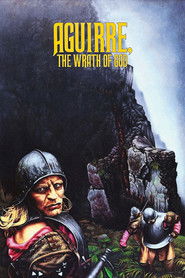
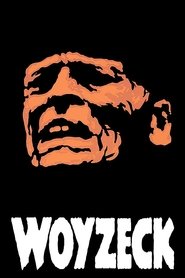
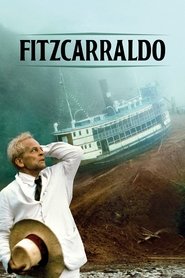
Werner Herzog became the filmmaker most closely associated with Kinski’s international artistic reputation. The two men first knew one another in Munich before beginning their professional collaboration on Aguirre, the Wrath of God. Their subsequent films included Nosferatu the Vampyre, Woyzeck, Fitzcarraldo and Cobra Verde. Only Nosferatu belongs directly to the horror genre, but the larger partnership is essential to understanding how Kinski developed the performance for which horror audiences most strongly remember him.
Herzog recognized a capacity in Kinski to portray characters driven by extreme belief, isolation and obsessive behavior. These qualities were already visible in his genre performances, but Herzog placed them inside productions where the psychological and physical condition of the protagonist became central to the film’s structure. The relationship brought Kinski into a very different professional context from the rapid European exploitation productions that occupied much of his career.
The collaboration was also marked by severe personal conflict. Herzog later documented their relationship in My Best Fiend, using memories, interviews and surviving production footage to examine both its achievements and its destructive arguments. Accounts supplied by the two men sometimes contradict one another, particularly concerning threats and incidents during location filming. Their professional relationship should therefore be understood through the surviving evidence rather than through either participant’s later mythology alone.
Nosferatu the Vampyre and the reinterpretation of Dracula
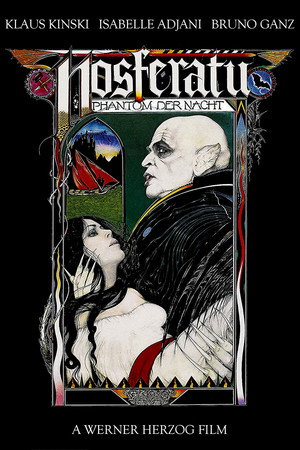
Nosferatu the Vampyre became Kinski’s defining performance in horror. Herzog approached the project through his admiration for F. W. Murnau’s 1922 Nosferatu and his desire to establish a connection between contemporary German filmmaking and the country’s earlier silent cinema. Kinski was cast as Count Dracula, appearing in extensive pale makeup, with a largely hairless head, elongated fingers and physical features recalling Max Schreck’s earlier screen vampire.
The performance required substantially greater physical restraint than many roles associated with Kinski. His Dracula moves slowly, speaks with controlled intensity and frequently appears exhausted by his own condition. Rather than relying on sudden displays of violence, Kinski emphasizes the creature’s isolation and the burden of an existence that continues without the possibility of ordinary human relationships. His theatre training and ability to hold attention through limited movement became especially valuable within Herzog’s approach.
Working under elaborate makeup also altered the relationship between actor and facial expression. Kinski could not depend entirely on the familiar features through which audiences recognized him. He had to communicate through the eyes, mouth, hands, posture and timing. The costume and prosthetic design therefore became components of performance rather than simply a visual disguise placed over an already completed character.
The distinction between this interpretation and more conventional screen Draculas is central to Kinski’s horror legacy. Christopher Lee’s vampire performances had emphasized authority, physical presence and predatory power. Kinski’s Dracula also threatens and destroys, but the characterization places unusual attention on exhaustion, loneliness and the suffering associated with continued existence. His performance remains one of the principal reasons Herzog’s film has an established place within modern Gothic cinema.
The importance of performance discipline in Nosferatu
Nosferatu also demonstrates that Kinski’s artistic effectiveness did not depend on constant confrontation or extravagant movement. The role required him to work within an unusually coherent visual environment and to sustain a characterization whose power depended heavily on repetition and restraint. His interactions with Isabelle Adjani and Bruno Ganz are organized around differences in physical presence and emotional control rather than the explosive delivery associated with some of his other performances.
This makes the film particularly useful when examining Kinski as an actor rather than simply as a notorious personality. He was capable of adapting his established intensity to the needs of a director with a precise visual conception. The result became more influential within horror than many of his performances built primarily around anger or instability, because it offered a complete reinterpretation of an established literary and cinematic figure.
American horror and the commercial use of Kinski’s reputation
During the 1980s Kinski increasingly appeared in English-language horror and thriller productions. Schizoid, Venom, Creature and Crawlspace used his established reputation in different ways. These films were generally produced within commercial systems quite different from Herzog’s cinema, and Kinski’s presence often functioned as a recognizable international attraction within modestly financed projects.
In Schizoid he played psychiatrist Pieter Fales, a character whose apparent professional authority became an important element in the film’s system of suspicion. The casting exploited the audience’s expectation that Kinski might be responsible for concealed violence. Creature placed him within American science-fiction horror, where his presence supplied a recognizable human antagonist alongside a larger creature-driven narrative. Venom and other thrillers similarly used his ability to appear threatening within confined situations.
These assignments indicate that the actor’s horror identity had become commercially independent of individual directors. Producers no longer needed to introduce him as a new kind of performer. They could assume that audiences associated his appearance with criminality, danger or emotional instability. That recognition brought him work but also restricted the kinds of characters for which filmmakers were likely to consider him.
Crawlspace and the consequences of Kinski’s conduct on set
Crawlspace became one of the most thoroughly documented examples of the professional difficulties surrounding Kinski. Writer-director David Schmoeller worked on the film for Empire Pictures, with Kinski cast as Karl Gunther, a murderous landlord whose concealed rooms and personal history become central to the threat. Schmoeller later described serious conflicts over wardrobe, direction, dialogue and the ordinary procedures of filmmaking.
Contemporary reporting confirmed that disagreements were already publicly discussed when the film was released. Schmoeller subsequently returned to the experience in the short documentary Please Kill Mr. Kinski and in interviews, describing behavior that disrupted shooting and created intense anxiety among the crew. His accounts also acknowledged that Kinski could be compelling on camera. The important distinction is that an actor’s effectiveness in the finished film does not justify threatening or abusive behavior during its production.
The experience illustrates a broader problem within Kinski’s later career. His recognizable name could help secure financing or distribution, which sometimes gave him substantial leverage over productions with limited resources. When that leverage was exercised through confrontation or refusal to cooperate, the consequences affected performers, technicians, schedules and budgets. Horror producers continued employing him because they believed his presence had commercial value, even as his reputation made individual productions difficult to manage.
Vampire in Venice and the return to Nosferatu
Vampire in Venice brought Kinski back to vampire horror in 1988, nearly a decade after Herzog’s film. The production was developed around the recognizable association between Kinski and Nosferatu, but it lacked the stable directorial relationship and clearly established production method that had characterized the earlier work. The project underwent substantial changes in direction and organization before producer Augusto Caminito assumed primary directing responsibility.
Accounts from participants describe major conflicts involving Kinski and the production team. The actor resisted aspects of the planned staging and declined to reproduce the same physical appearance used for Herzog’s Dracula. Some scenes were reportedly directed or substantially shaped by Kinski himself. The resulting film demonstrates how strongly an established horror image could be used to market a new production while also revealing the difficulties created when the star’s demands conflicted with the requirements of completing the film.
The experience is important to Kinski’s biography because it places two attempts to use the same vampire identity in sharply different working environments. Herzog had developed a long artistic relationship with the actor and incorporated his performance into a unified conception. Vampire in Venice was built around the commercial value of Kinski’s return while struggling with conflicting creative authority. The contrast helps explain why the earlier performance became the enduring historical reference.
Autobiography, personal allegations and the limits of the Kinski legend
Kinski published autobiographical writing in which he presented his experiences through highly provocative accounts of relationships, work and personal behavior. His memoirs contributed substantially to the public image of an actor defined by confrontation and uncontrolled emotion. They must be approached critically, since fellow performers and filmmakers have challenged particular claims and Herzog himself described elements of Kinski’s self-presentation as deliberately exaggerated.
In 2013 his daughter Pola Kinski publicly alleged that her father had subjected her to repeated sexual abuse during childhood, describing the allegations in interviews and in her memoir. Kinski had died in 1991 and could not respond. Her testimony forms a serious part of the documented public reassessment of his life. It should not be reduced to an anecdote about temperament or incorporated into romantic descriptions of an artist whose harmful behavior supposedly contributed to his work.
These distinctions are especially important because retrospective writing about Kinski frequently reproduces the language of legend. His performances, the testimony of colleagues and allegations concerning his private life are different kinds of historical evidence. A responsible account can recognize the lasting importance of his acting while examining reports of harmful conduct without treating either artistic achievement or notoriety as proof of the other.
The final years and Kinski’s ambition to direct
Kinski’s late career also included a longstanding ambition to direct a film about violinist Niccolò Paganini. He eventually wrote, directed and starred in Paganini, released in 1989. The project was not a horror film, but it is relevant to his professional development because it shows his desire to control an entire production after decades of conflict with directors whose decisions he often challenged.
The film was an intensely personal undertaking and did not establish a sustained second career as a director. It nevertheless demonstrates that Kinski regarded himself as more than a performer available for hire. He wanted increasing control over the presentation of character, movement and spectacle, an ambition that had sometimes created conflicts during his acting assignments and became explicit when he finally attempted to direct his own work.
Kinski died in Lagunitas, California, on November 23, 1991, at the age of sixty-five. His death ended a career that had passed through postwar German theatre, European popular cinema, major international productions and the horror markets of several decades. His reputation continued changing through restored films, documentaries, publications and new testimony from people who had worked or lived with him.
Klaus Kinski’s contribution to horror cinema
Kinski’s importance to horror rests on two related developments. During the 1960s and 1970s he became a familiar figure within European horror and thriller production, helping filmmakers establish suspicion, danger and unstable authority through a distinctive screen presence. Later, his performance in Nosferatu the Vampyre demonstrated that those qualities could support a highly controlled and historically significant reinterpretation of a classical monster.
The breadth of his horror career also reflects the changing industrial conditions of European genre cinema. Kinski moved among German crime films, Italian Gothic and giallo productions, Spanish exploitation and American horror, often working under very different budgets and creative expectations. His performances could be central or comparatively brief, but the commercial recognition attached to his name remained valuable to producers. The resulting filmography is uneven, and his professional conduct generated serious documented problems, yet his interpretation of Dracula and his recurring presence in European horror remain significant elements in the history of screen acting within the genre.
Photos (2)
Images: TMDB
Selected Work

 Count Dracula
1970
 Slaughter Hotel
1971
 Nosferatu the Vampyre
1979
 Venom
1981
 The Hitchhiker
1983
 Creature
1985
Notable Horror Collaborators
Notable collaborators and creative partners throughout Klaus Kinski's horror career.
 Jesús Franco
Actor / Director Collaborator
Kinski worked with Franco on the horror and supernatural productions Venus in Furs, Count Dracula and Jack the Ripper. Their wider professional relationship also included Marquis de Sade: Justine. The recurring collaboration connected Kinski with Franco’s international European exploitation cinema and gave him roles ranging from Renfield to a central serial murderer.
 Margaret Lee
Acting Collaborator
Kinski and Lee shared several European thriller and horror productions, including Venus in Furs, Double Face and Slaughter Hotel, alongside other genre films such as Circus of Fear. Their recurring screen partnership belongs to the international co-production system in which both performers became recognizable presences during the late 1960s and early 1970s.
Klaus Kinski Horror Movies
Acting (23 credits)
1986
1985
1983
1981
1980
1979
1976
1976
1975
1974
1974
1973
1971
1971
1970
1970
1969
1969
1967
1966
1963
1960