


1989
Antonio Margheriti
Horror Director · Biography · Horror Filmography · Family · Collaborators · Credits
Horror subgenres & themes
Most represented across this person's horror filmography:
ANIMAL
• CANNIBAL
• HAUNTED HOUSES
• NECROPHILIA
Biography
Antonio Margheriti: Gothic Horror, Haunted Castles and Italian Genre Cinema
Antonio Margheriti occupies a distinctive position in Italian horror because his work connects several different periods of the genre. During the early 1960s he participated in the flowering of Italian Gothic cinema alongside filmmakers such as Mario Bava and Riccardo Freda. By the end of that decade he was moving toward murder mysteries and supernatural chamber pieces, during the 1970s he combined Gothic imagery with the emerging giallo and international exploitation market, and by 1980 he was directing one of the most unusual entries in the Italian cannibal cycle. His horror career therefore cannot be reduced to one formula. Castles, ghosts, sadistic killers, séances, cannibals, predatory fish and extraterrestrial creatures all appear within a filmography unified less by subject than by an ability to manufacture atmosphere and spectacle with limited resources.
Born in Rome on September 19, 1930, Margheriti developed a strong interest in visual effects, miniatures and the technical construction of cinematic illusion. Those skills remained important throughout his career. Even when he was directing rather than working explicitly as an effects technician, he approached filmmaking as someone accustomed to finding practical solutions to images that budgets could not easily support. Miniatures, optical work, careful lighting and imaginative use of existing locations allowed his films to appear larger and more elaborate than their production circumstances suggested.
He frequently worked under the name Anthony M. Dawson, one of several anglicized identities used within the Italian film industry to make internationally distributed productions appear less specifically Italian. The pseudonym became strongly associated with Margheriti's genre work. For horror audiences, however, the name eventually mattered less than the visual traits connecting the films: shadowed corridors, oppressive architecture, violent reversals, fog, storms, elaborate practical effects and characters entering places where the distinction between the living and the dead becomes unstable.
Horror Castle and Margheriti's Entry into Gothic Horror
Horror Castle, released in 1963 and originally titled La vergine di Norimberga, marked Margheriti's first major engagement with horror. The story places a young woman inside a German castle containing a museum of medieval torture devices, including the iron maiden that gives the film its original title. Murder, historical trauma and the architecture of the castle combine to create a setting in which the past has not disappeared but has instead been preserved physically inside rooms, machines and mutilated bodies.
The film demonstrates several qualities that would become central to Margheriti's horror. The castle is not simply a decorative location. Corridors, staircases, chambers and hidden spaces determine how characters experience danger. Riccardo Pallottini's photography gives the interiors a strong visual structure, while Riz Ortolani's score adds a modern musical identity to imagery rooted in Gothic tradition. Christopher Lee's presence also connects the production to the international Gothic boom associated with Hammer Films, although Margheriti's visual language remains recognizably Italian.
Unlike supernatural Gothic horror, Horror Castle ultimately organizes much of its terror around human violence. Torture instruments and historical imagery become mechanisms through which contemporary murders are staged. This mixture of old-world architecture and modern brutality positioned Margheriti between traditional Gothic cinema and the more physical horror that would grow increasingly important during the following decade.
Castle of Blood and the Haunted World of Edgar Allan Poe
Castle of Blood in 1964 became the film most closely associated with Margheriti's Gothic period. The project began around Sergio Corbucci, who was unable to complete the production as originally planned, and Margheriti assumed responsibility for directing the film under severe time pressure. The result is nevertheless one of the most atmospheric films of the Italian Gothic cycle.
The premise is elegantly simple. Journalist Alan Foster encounters Edgar Allan Poe and accepts a wager that he can survive a night inside the supposedly haunted Blackwood Castle. Once inside, he discovers that the building is inhabited by the dead, who repeatedly reenact the passions, betrayals and murders that ended their lives. Foster gradually understands that these apparitions are not merely visions. Their temporary existence depends upon the blood of the living.
The film's horror grows from uncertainty rather than from constant attack. Characters appear, disappear and return without immediately revealing whether they are living people, memories or ghosts. Margheriti uses the castle as a fluid psychological space in which ordinary chronology breaks down. A room can become a stage for a murder that happened years earlier, then return immediately to stillness. The spectator experiences the building in approximately the same way as Foster: as a place where perception can no longer establish reliable boundaries between present and past.
Barbara Steele gives the film much of its emotional and visual identity as Elisabeth Blackwood. Steele had already become an international icon of Italian Gothic horror, and Margheriti photographs her as both romantic presence and spectral figure. Her character is simultaneously part of the castle's seductive attraction and one of the few forces attempting to help Foster understand what is happening around him.
Riccardo Pallottini's black-and-white photography is essential to the film. Candles, darkness, empty rooms and partially illuminated faces create an atmosphere that Margheriti himself later believed could not be reproduced effectively when he remade the story in color. The director's preference for monochrome Gothic imagery was not simply nostalgic. Black and white allowed inexpensive sets and locations to become ambiguous spaces in which texture, shadow and depth mattered more than literal realism.
The Long Hair of Death and Barbara Steele
Margheriti worked again with Barbara Steele on The Long Hair of Death, also released in 1964. Set against a medieval landscape marked by superstition, plague and accusations of witchcraft, the film begins with the execution of a woman whose death creates a cycle of revenge. Steele appears within a narrative built around identities that seem capable of returning from the grave and destabilizing the family responsible for the original crime.
The film is more directly concerned with resurrection and vengeance than Castle of Blood, but the two works share a fascination with people who cannot escape the consequences of the past. The castle remains an enclosed moral world where violence committed years earlier continues to determine the fate of the living. The supernatural does not interrupt normal life from outside. It emerges from crimes that the characters themselves have created.
Ernesto Gastaldi provided the story, while Riccardo Pallottini again photographed the film. Their presence reflects an important characteristic of Margheriti's career: repeated collaborations with technicians, writers and actors who understood the rapid working methods of Italian genre production. These recurring partnerships helped establish continuity even when Margheriti moved rapidly between horror and other forms of popular cinema.
Margheriti later expressed dissatisfaction with aspects of The Long Hair of Death, yet the film remains significant within his horror work because it completes a remarkably concentrated early Gothic period. Within a short span he had moved from the torture chambers of Horror Castle to the haunted temporal structure of Castle of Blood and then to witchcraft, plague and supernatural revenge. Together those films established his reputation as one of the major craftsmen of Italian Gothic horror.
Naked You Die and the Movement Toward Giallo
By Naked You Die in 1968, Italian horror was changing. The classical castle-centered Gothic cycle had begun to lose commercial momentum, while murder mysteries increasingly emphasized contemporary environments, sexual tension and serial violence. Margheriti responded by moving the threat into a girls' boarding school.
The film begins with murder and concealment before placing its young characters inside a closed institution where another killer is operating. The structure anticipates elements that would become increasingly familiar in giallo and later slasher cinema: an isolated group, a murderer whose identity remains uncertain, young victims moving through spaces they wrongly assume to be safe and an investigation unfolding alongside further attacks.
Margheriti's approach remains less formally obsessive than the highly stylized gialli that would soon dominate the Italian thriller, but the transition is important. The director was no longer dependent upon medieval architecture or explicit supernatural forces to create confinement. A contemporary school could function as another version of the castle, separating potential victims from the ordinary world while giving the murderer a controlled environment in which to operate.
Editor Otello Colangeli and actor Luciano Pigozzi were among the recurring collaborators who helped connect this film to Margheriti's wider genre network. Their continued presence illustrates how the director carried familiar technicians and performers into new forms of horror rather than treating every stylistic change as a completely separate phase.
The Unnaturals and the Return of the Supernatural
The Unnaturals in 1969 returned Margheriti to a more overtly Gothic environment while preserving the psychological cruelty and moral corruption associated with contemporary thrillers. During a violent storm, a group of travelers seek refuge inside an isolated house where they encounter a woman apparently capable of communicating with the dead. A séance gradually exposes hidden relationships, crimes and betrayals among the guests.
The film uses the classic device of strangers trapped together by weather, but its supernatural structure becomes a mechanism for judgment. The past is again active, and the people attempting to escape it are forced to confront actions they believed had been successfully concealed. In this respect The Unnaturals belongs directly beside Castle of Blood: both films present enclosed locations where secrets become visible through supernatural intervention.
Riccardo Pallottini returned as cinematographer, Otello Colangeli edited the film and Carlo Savina composed the score. Luciano Pigozzi, whom Margheriti described as a close friend, received one of his most substantial roles for the director. Pigozzi's character Uriat is not simply part of the ensemble but becomes central to the film's revelation and moral structure.
The production also demonstrates Margheriti's technical ingenuity. Existing studio sets were repurposed, and complex camera movement was achieved through physical solutions rather than expensive equipment. The director's effects background repeatedly encouraged this type of improvisation. Limited resources became an incentive to design shots around what could actually be built or manipulated.
And God Said to Cain and Gothic Horror Inside a Western
And God Said to Cain in 1970 is structurally a western, yet its place within the iHorrorDB horror filmography reflects how completely Margheriti applies Gothic horror techniques to the material. Klaus Kinski plays Gary Hamilton, a man returning after years of imprisonment to take revenge on the people responsible for his conviction. The action increasingly occurs at night while a violent storm surrounds the town.
Rather than staging revenge as a conventional series of western confrontations, Margheriti turns Hamilton into something resembling a supernatural presence. He moves through tunnels, rooftops and dark interiors while his enemies hear him without understanding where he will appear next. The town becomes a haunted structure, and the men waiting for him behave increasingly like victims inside a horror film.
Riccardo Pallottini's photography and Carlo Savina's music help create this transformation. Luciano Pigozzi and Giuliano Raffaelli also appear, extending collaborations that had already crossed Margheriti's Gothic work. The film is significant precisely because it reveals that his horror vocabulary was portable. Darkness, architecture, sound and spatial uncertainty could make a western setting function like a haunted castle.
Web of the Spider and Margheriti Remaking Castle of Blood
In 1971 Margheriti returned directly to Castle of Blood by remaking it as Web of the Spider. Anthony Franciosa replaced Georges Rivière as the skeptical visitor to the haunted castle, while Michèle Mercier and Karin Field occupied roles corresponding to the spectral women of the earlier film. Klaus Kinski appeared as Edgar Allan Poe.
The remake preserved much of the original narrative structure but changed one element that Margheriti later regarded as decisive: it was photographed in color. The director eventually argued that the change damaged the atmosphere and tension he had achieved in black and white. His dissatisfaction is revealing because it identifies what he considered essential to Gothic horror. The story itself was not enough. Lighting, contrast and the partial concealment of physical detail created the psychological world in which the story could function.
Riz Ortolani returned as composer and Otello Colangeli again edited the material, creating direct technical continuity between the two versions. Yet the films demonstrate how visual format can alter the emotional quality of nearly identical ideas. The color version possesses its own elaborate beauty, but Margheriti believed that the earlier film's shadows allowed the castle to remain less stable and therefore more frightening.
Seven Deaths in the Cat's Eye and Gothic Giallo
Seven Deaths in the Cat's Eye in 1973 combines several strands of Margheriti's horror experience. The setting returns to an old Scottish castle, but the narrative is organized around a succession of murders and suspicions associated with the giallo. Family secrets, possible supernatural explanations, violent deaths and the persistent presence of a cat create a film in which Gothic architecture and murder mystery continuously overlap.
Jane Birkin plays Corringa, who returns to the family estate and becomes surrounded by deaths whose explanation remains unclear. The film offers suggestions of vampirism and inherited curses while simultaneously encouraging the audience to search for a human killer. This uncertainty allows Margheriti to work within two genre traditions at once. The castle evokes the supernatural world of his 1960s films while the investigative structure belongs to the modern Italian thriller.
Riz Ortolani composed the score, incorporating musical material connected with earlier Margheriti productions. Luciano Pigozzi also returned in the cast, reinforcing the director's tendency to build new horror films with collaborators already familiar with his working methods.
The film is especially representative of Margheriti's flexibility. Rather than abandoning Gothic cinema when its initial commercial cycle declined, he absorbed elements of newer genres and placed them inside Gothic spaces. The result belongs neither entirely to traditional supernatural horror nor to the urban giallo. It is a hybrid created from both.
Flesh for Frankenstein and Blood for Dracula
During the same period Margheriti became involved in the production of Flesh for Frankenstein and Blood for Dracula, the Paul Morrissey films associated with producer Carlo Ponti and the Andy Warhol name. iHorrorDB credits Margheriti with second-unit and makeup-effects work on Flesh for Frankenstein and assistant-directing and makeup-effects responsibilities on Blood for Dracula.
These were not Margheriti-directed features in the conventional sense, so their place in his career should be understood differently from Castle of Blood or Cannibal Apocalypse. His contribution reflects the technical side of his filmmaking identity. An experienced director who understood effects, miniature work and the realities of Italian production could be valuable even when another filmmaker retained primary authorship.
The two films also belong to a period when European Gothic horror was becoming more explicit. Bodies are opened, organs are exposed and classical monsters are treated through sexuality, grotesque comedy and physical degradation. Margheriti's technical participation therefore connects his earlier atmospheric Gothic work to a more aggressively corporeal version of the tradition.
Killer Fish and Animal Horror
Killer Fish in 1979 brought Margheriti into the cycle of animal-attack horror that expanded internationally after the enormous commercial success of Jaws. The film surrounds a criminal story with piranha attacks, turning a remote body of water into another enclosed environment controlled by predatory forces.
The basic survival mechanism fits Margheriti well. Water appears open, but characters who enter it become trapped in a space whose danger they cannot see completely. The fish attack from beneath the surface while human greed and betrayal create additional threats above it. Crime adventure and animal horror therefore reinforce each other.
Margheriti's long experience with miniature work and visual effects was particularly useful in productions like this. The horror depends not on creating one iconic monster but on convincing the audience that an environment has become hostile. Editing, water photography, effects and reaction shots have to construct a threat that cannot always be filmed directly.
Cannibal Apocalypse and Urban Cannibal Horror
Invasion of the Flesh Hunters, widely known as Cannibal Apocalypse, became Margheriti's most important horror film of the 1980s. Released in 1980 and starring John Saxon, the film takes imagery associated with the Italian cannibal cycle and relocates it from remote jungle landscapes to contemporary American streets.
The story begins with the memory of war. A veteran who fought in Vietnam encounters former soldiers whose traumatic experiences are connected to an apparently contagious appetite for human flesh. Cannibalism therefore functions not simply as exotic spectacle but as a condition brought home from combat. Violence experienced abroad returns inside supposedly stable civilian society.
This premise distinguishes the film from many contemporary cannibal productions. Margheriti combines infection horror, war trauma, crime and graphic bodily violence. Biting becomes a form of transmission, allowing cannibalism to spread through contact in a manner closer to epidemic or zombie narratives than to traditional adventure stories about isolated tribes.
The urban setting is equally important. Apartments, hospitals, streets and sewers replace the castle as the film's system of confinement. Characters can move through a modern city yet remain trapped by surveillance, police pursuit and an urge they cannot control. Margheriti again demonstrates his ability to transfer basic horror structures from one environment to another.
Giannetto De Rossi's makeup effects give the violence a physical intensity far removed from the suggestive Gothic imagery of Margheriti's 1960s work. Wounds, bites and bodily damage are shown directly. The shift does not mean that the director had abandoned atmosphere. Instead, atmosphere now operates around explicit gore rather than replacing it.
Cannibal Apocalypse also demonstrates Margheriti's willingness to engage with contemporary exploitation trends without reproducing them mechanically. The cannibal film had become associated with remote landscapes and confrontations between Western travelers and allegedly primitive societies. Margheriti reverses the direction of contamination. The horror has already entered the modern world, carried inside people who appear to have returned to ordinary life.
Alien from the Deep and Late Creature Horror
Alien from the Deep in 1989 represents one of Margheriti's final major horror productions and returns directly to his lifelong interest in science fiction and effects. Environmental activists investigating industrial pollution encounter a monstrous extraterrestrial organism in a setting where toxic contamination and corporate secrecy create the conditions for creature horror.
The film openly participates in the late-1980s cycle of science-fiction horror shaped by the enormous influence of Alien and its descendants. Yet Margheriti's own relationship with science fiction extended back to the beginning of his directing career, giving the project a different historical context. Creature work, industrial environments and model effects brought together technical interests he had pursued for decades.
The monster becomes another example of Margheriti solving horror through physical fabrication. Even when the design reflects contemporary international trends, the process remains connected to the artisanal tradition in which he developed. The creature has to occupy a set, interact with actors and function within lighting designed to conceal limitations while emphasizing shape and movement.
Special Effects and the Architecture of Margheriti's Horror
Margheriti's effects background is fundamental to understanding his horror films. His strongest images often depend upon spaces that do not need to be entirely real as long as they produce the correct cinematic impression. A miniature, an existing castle, a repurposed studio set or a carefully lit corridor can become convincing when the camera presents only the information necessary for the scene.
This economy shaped the atmosphere of his Gothic cinema. Darkness is not merely a method of hiding production limitations. It becomes part of the emotional architecture. Characters move into rooms where they cannot see everything, and the audience shares that incomplete knowledge. Shadows make inexpensive environments appear larger because the boundaries of the space remain uncertain.
The same principle survives when the films become more explicit. Killer Fish hides its animals beneath water, Cannibal Apocalypse uses the city as an expanding maze of pursuit and Alien from the Deep places its creature within industrial darkness. Across very different subgenres, Margheriti repeatedly creates horror by limiting what characters understand about the spaces surrounding them.
Recurring Horror Collaborators
Margheriti's horror filmography was built through repeated partnerships rather than isolated productions. Cinematographer Riccardo Pallottini photographed much of the director's early Gothic world, including Horror Castle, Castle of Blood, The Long Hair of Death and The Unnaturals, while also contributing to And God Said to Cain. His photography was essential to the shadowed monochrome atmosphere that Margheriti later regarded as ideal for Gothic horror.
Editor Otello Colangeli worked across Horror Castle, Castle of Blood, Naked You Die, The Unnaturals and Web of the Spider, connecting several distinct phases of the director's horror career. Riz Ortolani supplied music for Horror Castle, Castle of Blood, Web of the Spider and Seven Deaths in the Cat's Eye, while Carlo Savina scored Naked You Die, The Unnaturals and And God Said to Cain.
Luciano Pigozzi became one of Margheriti's most recognizable recurring actors, appearing in horror titles including Naked You Die, The Unnaturals, And God Said to Cain and Seven Deaths in the Cat's Eye. Giuliano Raffaelli similarly links The Long Hair of Death, The Unnaturals and And God Said to Cain. These relationships demonstrate how Margheriti's genre cinema developed through a working community capable of moving with him between Gothic horror, thriller and hybrid forms.
Antonio Margheriti in the History of Italian Horror
Margheriti's horror career is smaller in numerical terms than the filmographies of directors who devoted most of their careers to the genre, but its historical range is unusually broad. He participated directly in the Italian Gothic boom, continued working with supernatural horror after that cycle had declined, absorbed elements of the giallo, contributed technically to revisionist Frankenstein and Dracula films, entered the animal-attack cycle, created an urban variation on cannibal horror and finished the decade of the 1980s with science-fiction creature horror.
Castle of Blood remains the central film for understanding his Gothic sensibility because it combines nearly all of his strongest qualities: inexpensive but expressive architecture, carefully controlled darkness, the sensuality of Barbara Steele, practical illusion and a narrative in which the past repeatedly becomes physically present. The Unnaturals and Seven Deaths in the Cat's Eye reveal how he adapted that sensibility to changing genre expectations, while Cannibal Apocalypse demonstrates that he could work inside a far more explicit era without simply reproducing his earlier style.
His significance also lies in the technical understanding behind the direction. Margheriti belonged to a tradition of filmmakers for whom directing could involve effects design, miniature construction, camera problem solving and rapid adaptation to available resources. That practical knowledge gave his horror films a handmade quality even when they were conceived for international exploitation markets.
Seen only as a prolific director for hire, the variety of Margheriti's career can obscure the consistency of his horror work. Viewed specifically through the genre, however, a clear pattern emerges. His films repeatedly transform architecture and environment into instruments of fear, repeatedly return hidden crimes to the surface and repeatedly use physical cinematic technique to give supernatural or extreme events a tangible presence. From the castles of the early 1960s to the cannibalized bodies and industrial monsters of his later films, those principles remained visible across nearly three decades of horror filmmaking.
Known Among Horror Fans For
Notable Horror Collaborators
Notable collaborators and creative partners throughout Antonio Margheriti's horror career.
RP
Riccardo Pallottini
KEY HORROR CINEMATOGRAPHER
Photographed Horror Castle, Castle of Blood, The Long Hair of Death and The Unnaturals, while also contributing to And God Said to Cain, making him the principal visual architect of Margheriti's early horror cinema.
OC
Otello Colangeli
HORROR EDITOR
Edited Horror Castle, Castle of Blood, Naked You Die, The Unnaturals and Web of the Spider, connecting Margheriti's Gothic period with his later murder and supernatural horror through five shared genre films.
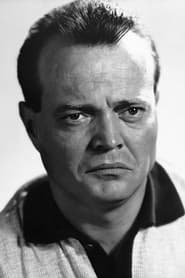 Luciano Pigozzi
RECURRING HORROR ACTOR
A close recurring performer for Margheriti across Naked You Die, The Unnaturals, And God Said to Cain and Seven Deaths in the Cat's Eye, moving between murderer suspects, Gothic figures and morally ambiguous characters.
 Riz Ortolani
GOTHIC HORROR COMPOSER
Scored Horror Castle, Castle of Blood, Web of the Spider and Seven Deaths in the Cat's Eye, providing a musical continuity across Margheriti's Gothic horror from the early 1960s into the giallo-influenced 1970s.
CS
Carlo Savina
HORROR COMPOSER
Composed the music for Naked You Die, The Unnaturals and And God Said to Cain, accompanying Margheriti as his horror moved from contemporary murder mystery to supernatural revenge and Gothic-inflected western imagery.
 Giuliano Raffaelli
RECURRING HORROR ACTOR
Appeared in The Long Hair of Death, The Unnaturals and And God Said to Cain, giving him three distinct roles across Margheriti's supernatural Gothic and darker genre hybrids of the 1960s and early 1970s.
Luciano Pigozzi
RECURRING HORROR ACTOR
A close recurring performer for Margheriti across Naked You Die, The Unnaturals, And God Said to Cain and Seven Deaths in the Cat's Eye, moving between murderer suspects, Gothic figures and morally ambiguous characters.
Riz Ortolani
GOTHIC HORROR COMPOSER
Scored Horror Castle, Castle of Blood, Web of the Spider and Seven Deaths in the Cat's Eye, providing a musical continuity across Margheriti's Gothic horror from the early 1960s into the giallo-influenced 1970s.
CS
Carlo Savina
HORROR COMPOSER
Composed the music for Naked You Die, The Unnaturals and And God Said to Cain, accompanying Margheriti as his horror moved from contemporary murder mystery to supernatural revenge and Gothic-inflected western imagery.
Giuliano Raffaelli
RECURRING HORROR ACTOR
Appeared in The Long Hair of Death, The Unnaturals and And God Said to Cain, giving him three distinct roles across Margheriti's supernatural Gothic and darker genre hybrids of the 1960s and early 1970s.
Antonio Margheriti Horror Movies
Directing (13 credits)
1980
1979
1974
1973
1973
1971
1970
1969
1968
1964
1964
1963
Writing (8 credits)
1980
1973
1971
1970
1969
1968
1964
1963
Special FX / Practical FX (2 credits)
1974
1973