


2026
Isabelle Fuhrman
Horror Actor · Biography · Horror Filmography · Collaborators · Credits
Biography
Isabelle Fuhrman and the Double Identity of Esther
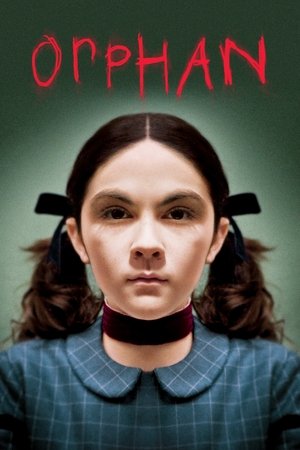
Isabelle Fuhrman entered horror with one of the most unusual child performances of the 2000s. In Orphan, she appears to play Esther, a nine-year-old girl adopted by a grieving American family, but the character gradually reveals herself as something far more disturbing. Fuhrman was still a child when she performed a role built around the idea of an adult woman successfully imitating childhood, requiring her to construct two identities simultaneously: the outwardly polite, carefully controlled child visible to the Coleman family and the manipulative adult personality hidden underneath that performance.
The role became even more unusual thirteen years later when Fuhrman returned for Orphan: First Kill. She was now an adult actor asked to reprise the same character at an earlier point in the chronology, meaning the central illusion had reversed. In the first film a child performer needed to suggest an adult masquerading as a child; in the prequel an adult performer needed to look convincingly like the same apparent child without conventional digital de-aging. Forced perspective, body doubles, makeup, camera placement and Fuhrman's own physical performance turned that technical problem into part of the fascination surrounding Esther.
Orphan and the Construction of Esther
Jaume Collet-Serra's Orphan introduced Esther in 2009 after Kate and John Coleman decide to adopt following the loss of a pregnancy. Esther initially appears unusually intelligent, artistic and composed for her age, but small incidents gradually reveal a capacity for manipulation and violence. The film depends upon the audience recognizing that something is wrong long before understanding exactly what the problem is, and Fuhrman therefore has to create suspicion without revealing the mechanism behind the character too early.
Esther's behavior operates through performance inside the performance. She watches adults carefully, adjusts her speech according to the person in front of her and weaponizes assumptions about childhood innocence whenever suspicion begins moving toward her. Fuhrman shifts between vulnerability, politeness, anger and sexualized adult confidence without making those personalities feel completely disconnected. The eventual revelation works because the preceding performance can be reconsidered as a series of calculated choices rather than simply the unexplained behavior of a frightening child.
Jaume Collet-Serra and the Original Orphan
Jaume Collet-Serra became the first director responsible for shaping Fuhrman's horror identity. Working from David Leslie Johnson's screenplay and Alex Mace's story, he deliberately approached Orphan as a character-driven thriller as much as a conventional horror film. That emphasis placed enormous responsibility on Fuhrman because the story could survive only if Esther remained believable both as the person the family initially accepts and as the increasingly dangerous figure Kate begins to suspect.
Collet-Serra also surrounds Fuhrman with experienced adult actors rather than isolating her inside a child-centered production. Scenes opposite Vera Farmiga and Peter Sarsgaard require Esther to manipulate characters whose reactions carry substantial dramatic weight, which prevents the performance from functioning only as a novelty. Fuhrman has to hold the center of scenes against actors playing adults who possess authority over her while simultaneously communicating to the audience that Esther may actually be the person with the greatest control.
Alex Mace and the Origin of Esther
Alex Mace created the original story for Orphan and later returned as a producer on Orphan: First Kill, making him one of the creative connections spanning both of Fuhrman's established Esther films. The original concept depends on a deceptively simple reversal of horror expectations. The apparently threatening child is not supernatural and is not actually a child at all. The danger comes from an adult exploiting the assumptions other people make about her body.
That idea gives Fuhrman a character capable of surviving beyond one film because Esther is not dependent upon a single haunted house, monster or supernatural rule. Her primary weapon is social perception. Every new family provides another environment in which she can build a false identity, observe weaknesses and attempt to control how adults interpret what they see. Mace's continued involvement in the prequel helped preserve that central mechanism even as the story moved backward into Esther's earlier history.
David Leslie Johnson-McGoldrick and the First Screenplay
David Leslie Johnson-McGoldrick wrote the screenplay for the original Orphan from Mace's story and later served as executive producer on Orphan: First Kill. His screenplay establishes the gradual escalation that makes Fuhrman's performance effective. Esther does not immediately behave like an obvious movie monster. She creates small disturbances, manipulates relationships and exploits the family's existing grief before the scale of her danger becomes undeniable.
The structure also gives Esther different relationships with different members of the Coleman family. She can appear vulnerable to John, threatening to Kate and controlling toward the children, allowing Fuhrman to adjust the character without abandoning the same underlying personality. This variation becomes essential after the central revelation because the audience understands that Esther has been performing strategically throughout the film rather than simply changing according to the demands of individual scenes.
Vera Farmiga and the Battle Between Kate and Esther
Vera Farmiga provides Fuhrman with the defining acting counterpart of the original film as Kate Coleman. The conflict works because Kate does not begin as someone naturally suspicious of Esther. She is grieving, trying to protect a damaged family and initially willing to accept the possibility that some of her discomfort may come from her own emotional history. Esther exploits that uncertainty, repeatedly creating situations in which Kate appears unstable while she herself appears controlled.
Fuhrman and Farmiga therefore build a horror relationship based on credibility as much as physical danger. Kate can recognize that Esther is threatening and still lose because recognition is useless if the surrounding family does not believe her. Esther understands this and attacks relationships before attacking bodies. By the final confrontation, the psychological struggle has become physical, but the violence matters because the film has spent so much time showing Esther systematically isolate the person most capable of exposing her.
Esther as a Horror Character
Esther differs from many child-shaped horror figures because the film ultimately removes the supernatural explanation entirely. Her disturbing appearance and behavior are not evidence that a demon or ghost occupies a child. She is an adult woman whose physical condition allows her to pass as one. The horror therefore depends upon deception, social expectation and the willingness of adults to interpret small size and youthful appearance as evidence of innocence.
Fuhrman makes the concept work by refusing to play Esther as openly monstrous in every scene. The character needs charm, patience and the ability to appear wounded because those qualities are essential to survival. Violence becomes most dangerous when it remains hidden behind behavior other people are culturally prepared to trust. This gives Esther an unusual place among modern horror antagonists: the disguise is not a mask she removes but an entire social identity she performs continuously.
Returning as an Adult in Orphan: First Kill
Orphan: First Kill presented a production problem almost as interesting as its story. Fuhrman was an adult when the prequel was made, yet Esther needed to appear younger than she had in the original film. Director William Brent Bell chose to bring Fuhrman back rather than replace her with another child actor or construct the role primarily through digital de-aging. The production instead relied on forced perspective, carefully chosen camera angles, body doubles and practical makeup techniques to manipulate relative height and apparent age.
The decision preserves something more important than simple visual continuity. Fuhrman already understands the contradiction at the center of Esther because she created it in the original film. Returning as an adult gives her a new relationship with the character. She no longer needs to imagine what it feels like for an adult mind to exist inside a body perceived as a child; she can approach that side of Esther from adult experience while using physical technique to reconstruct the outward appearance audiences remember.
William Brent Bell and a Different Esther Film
William Brent Bell directs Orphan: First Kill with full knowledge that the audience already understands Esther's secret. The prequel therefore cannot reproduce the mystery structure of the first film. Instead, suspense comes from watching Esther deliberately create another identity after escaping an Estonian psychiatric facility and inserting herself into the life of an American family by pretending to be their missing daughter.
Bell uses the audience's familiarity with Esther against expectation. Viewers understand that she is dangerous from the beginning, but the family she enters possesses secrets and forms of manipulation that complicate her usual control. This changes Fuhrman's position inside the story. Esther remains predator, liar and killer, yet she is no longer automatically the only person capable of reshaping reality around everyone else. The film becomes a battle between competing forms of deception.
Doug Morrow and the Practical Illusion
Makeup designer Doug Morrow became unusually important to Fuhrman's return because the production needed to make an adult performer appear convincingly close to the Esther audiences remembered. Morrow worked with Bell and the other departments on subtle physical adjustments rather than attempting to bury Fuhrman beneath extensive prosthetics. Dentures, makeup choices and facial treatment were combined with lighting, perspective and body doubles to preserve the character's recognizable appearance.
The achievement is significant because the technical method supports rather than replaces Fuhrman's acting. Her face remains visible and her expressions remain her own, allowing continuity with the original performance. The illusion depends upon multiple departments working around the actor instead of digitally constructing another version of her afterward. This practical approach became one of the most discussed aspects of First Kill and helped turn the apparent impossibility of Fuhrman reprising Esther into one of the film's central attractions.
Cell and Apocalyptic Horror
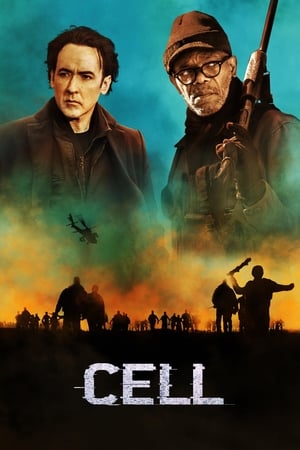
Fuhrman moved into a very different kind of horror with Cell, adapted from Stephen King's novel. She plays Alice Maxwell, one of the survivors travelling through a world where a mysterious signal transmitted through mobile phones has transformed large numbers of people into violent, interconnected attackers. Instead of being the hidden source of danger, Fuhrman now belongs to the vulnerable group attempting to survive it.
The reversal demonstrates that her genre career is not limited to Esther. Alice requires empathy rather than manipulation and exists inside an apocalyptic narrative where ordinary social systems have already collapsed. The film places Fuhrman beside John Cusack and Samuel L. Jackson and gives her a position inside another major branch of modern horror: technological catastrophe and mass behavioral transformation.
Down a Dark Hall and Gothic Horror
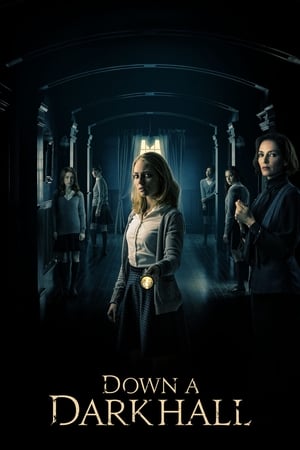
Down a Dark Hall moved Fuhrman into Gothic supernatural territory. The story centers on young women sent to an isolated boarding school where artistic ability, institutional control and supernatural influence gradually become intertwined. Fuhrman participates in an ensemble rather than carrying the film through one dominant character, placing her within a horror structure built around atmosphere, architecture and the secrets of an apparently prestigious institution.
The film expands the range of horror attached to her career. Esther operates through human deception, while Cell places her inside an apocalyptic outbreak and Down a Dark Hall surrounds her with explicitly supernatural forces. The variety matters because the cultural weight of Orphan could easily have reduced Fuhrman to one recognizable villain. Instead, she continued moving through different horror modes while periodically returning to the character that made her famous.
The Last Thing Mary Saw and Period Horror
Fuhrman later appeared in The Last Thing Mary Saw, a period horror film set in nineteenth-century New York and structured around religious repression, forbidden intimacy and an atmosphere of severe domestic control. The film is quieter than the violent mechanics of Orphan and depends heavily on ritual, belief and the oppressive authority exercised inside a household.
Her participation again places her on a different side of horror performance. Rather than playing a character whose intelligence controls everyone around her, she exists inside a world where social and religious structures determine what people are allowed to say, desire and believe. The contrast reinforces the breadth that developed around Fuhrman's genre work after Esther.
Signal One and Science-Fiction Horror
In 2026 Fuhrman starred in Signal One as Annika, a computer scientist involved in a project capable of communicating with alien intelligence. The film moves her into science-fiction horror built around the danger of establishing contact with something humanity may be incapable of understanding. The threat is therefore not another disguised human or a familiar supernatural entity but the consequences of opening communication with intelligence operating outside ordinary human assumptions.
The role places Fuhrman at the center of the investigation rather than at the center of the deception. By this stage of her career, horror could use the audience's memory of Esther without requiring every new character to reproduce her. The association remains part of Fuhrman's screen history, but it functions as background rather than a limitation on the kind of genre role she can play.
The Continuing Orphan Story
Fuhrman has continued returning to Esther beyond First Kill. A third production, titled Orphans, entered production with William Brent Bell again directing and Fuhrman once more playing the character. The project demonstrates how unusual the role has become within horror: a performer first introduced as a child has been able to return as an adult and continue portraying the same character at different points in a deliberately unstable chronology.
The durability comes from Esther herself rather than from conventional supernatural immortality. She survives as a franchise character because identity is her principal weapon. Each story can place her inside another family, another assumed history and another battle over who will recognize what she actually is. Fuhrman remains essential because the distinction between the false child and the adult consciousness behind the performance is now inseparable from the actor who created both sides of that illusion.
Isabelle Fuhrman's Horror Legacy
Isabelle Fuhrman's horror career remains centered on Esther, but the role represents an unusually demanding form of franchise continuity. Jaume Collet-Serra directed a child actor who needed to suggest an adult hidden inside a carefully constructed false identity. Alex Mace and David Leslie Johnson-McGoldrick supplied the story and screenplay architecture that made the deception possible, while Vera Farmiga gave Fuhrman the adult opponent whose growing suspicion drives the original film toward confrontation.
More than a decade later, William Brent Bell reversed the technical challenge and asked an adult Fuhrman to reconstruct the same apparent child. Doug Morrow and the practical-effects team supported that illusion without replacing the performer digitally, allowing Fuhrman herself to remain the central special effect. The success of that return transformed Esther from the unforgettable antagonist of one horror film into a sustainable franchise figure.
Fuhrman's work in Cell, Down a Dark Hall, The Last Thing Mary Saw and Signal One shows that her connection with horror extends beyond that single identity, but Esther remains one of the strangest actor-character relationships in contemporary genre cinema. The first film asked a child to play an adult pretending to be a child. The later films ask the adult actor to become that child again. Isabelle Fuhrman's horror legacy is built precisely inside that impossible contradiction.
Photos (14)
Images: TMDB
Selected Work
Notable Horror Collaborators
Notable collaborators and creative partners throughout Isabelle Fuhrman's horror career.
AM
Alex Mace
Defining Orphan Creator & Producer
Mace created the original story for Orphan and returned as producer on Orphan: First Kill, making him a creative link across both established Esther films.
 David Leslie Johnson-McGoldrick
Defining Orphan Screenwriter
Johnson-McGoldrick wrote the original Orphan screenplay and later executive produced Orphan: First Kill, connecting Fuhrman's two established performances as Esther.
 Jaume Collet-Serra
Defining Horror Director
Collet-Serra directed Fuhrman in the original Orphan and shaped the performance that introduced Esther as one of the most distinctive horror antagonists of her generation.
 William Brent Bell
Defining Franchise Director
Bell directed Fuhrman's return as Esther in Orphan: First Kill, rebuilding the character around practical perspective techniques rather than replacing the original performer.
DM
Doug Morrow
Defining Horror Makeup Collaborator
Morrow designed the makeup elements that helped adult Fuhrman convincingly reprise the childlike Esther in Orphan: First Kill alongside forced perspective and body doubles.
 Vera Farmiga
Defining Horror Co-Star
Farmiga's Kate Coleman became Esther's essential opponent in Orphan, with the struggle over whether the family believes Kate forming the dramatic core of Fuhrman's original horror breakthrough.
David Leslie Johnson-McGoldrick
Defining Orphan Screenwriter
Johnson-McGoldrick wrote the original Orphan screenplay and later executive produced Orphan: First Kill, connecting Fuhrman's two established performances as Esther.
Jaume Collet-Serra
Defining Horror Director
Collet-Serra directed Fuhrman in the original Orphan and shaped the performance that introduced Esther as one of the most distinctive horror antagonists of her generation.
William Brent Bell
Defining Franchise Director
Bell directed Fuhrman's return as Esther in Orphan: First Kill, rebuilding the character around practical perspective techniques rather than replacing the original performer.
DM
Doug Morrow
Defining Horror Makeup Collaborator
Morrow designed the makeup elements that helped adult Fuhrman convincingly reprise the childlike Esther in Orphan: First Kill alongside forced perspective and body doubles.
Vera Farmiga
Defining Horror Co-Star
Farmiga's Kate Coleman became Esther's essential opponent in Orphan, with the struggle over whether the family believes Kate forming the dramatic core of Fuhrman's original horror breakthrough.
Isabelle Fuhrman Horror Movies
Acting (9 credits)
2022
2021
2021
2018
2016
2010
2009
2009
Production (1 credits)
2022