


2026
Tony Todd
Horror Actor · Biography · Horror Filmography · Family · Collaborators · Credits
Horror subgenres & themes
Most represented across this person's horror filmography:
SPLATTER
• HALLOWEEN
• SLASHER
• BODY HORROR
Biography
Tony Todd and the Voice of Modern Horror
Tony Todd became one of the defining voices and faces of modern horror without relying on masks, elaborate prosthetics or constant screen time. His height, controlled physical presence and extraordinarily resonant voice allowed him to dominate scenes through stillness as easily as through violence. Across more than three decades in the genre, Todd moved from the besieged hero of Night of the Living Dead to the supernatural mythology of Candyman, the mysterious authority of Final Destination and the self-aware slasher world of Hatchet. The characters were different, but they repeatedly depended on his ability to make a few carefully delivered words sound as though they carried a much larger history behind them.
Horror eventually became the genre most closely associated with Todd, but his effectiveness within it came from a much broader acting background. He trained extensively for the stage and continued returning to theatre throughout his screen career. That foundation gave his horror performances an unusual seriousness. Todd rarely treated supernatural material as something requiring exaggeration. Whether playing a zombie survivor, an urban legend or a mortician explaining the rules of Death, he approached the character as someone inhabiting a complete reality rather than as a performer standing outside the genre.
Stage Training and the Road to Horror
Anthony Tiran Todd was born in Washington, D.C., in 1954 and grew up in Hartford, Connecticut. He studied theatre at the University of Connecticut and continued his training through institutions including the Eugene O'Neill National Theatre Institute before developing substantial experience in repertory theatre. Long before horror audiences associated him with supernatural killers, Todd considered himself fundamentally an actor shaped by stage discipline.
That background mattered because many of Todd's later horror characters required authority before they required violence. His voice could establish a character before the plot explained who that character was, while his theatrical training allowed him to hold attention without excessive movement. Horror filmmakers repeatedly discovered that Todd could create anticipation simply by entering a scene and making the audience wait for him to speak.
Night of the Living Dead and Ben
Todd's decisive entrance into horror came with Tom Savini's 1990 remake of George A. Romero's Night of the Living Dead. He played Ben, the central survivor originally portrayed by Duane Jones in Romero's 1968 film. Todd later described the role as his first lead and his first real venture into horror, and he approached it with an awareness of the importance of Jones's original performance.
Ben gave Todd a fundamentally different position from the supernatural characters that would later define him. He is the practical human center of a collapsing situation, attempting to organize frightened strangers while the dead surround the farmhouse. Todd's physical presence creates authority, but the performance also depends on frustration, exhaustion and the gradual realization that human conflict inside the house may be as dangerous as the creatures outside it.
The film became the foundation of Todd's relationship with horror audiences. He would later revisit Ben through voice and motion-capture work in Night of the Living Dead: Darkest Dawn, but the 1990 film remained especially important to him because it connected his own career to one of the central works of American zombie cinema. It also demonstrated that Todd could carry a horror film as a dramatic lead rather than simply appear as a threatening supporting presence.
Candyman and the Creation of a Horror Icon
Two years later, Bernard Rose cast Todd in the role that permanently transformed his career. Candyman (1992), adapted from Clive Barker's story The Forbidden, relocated Barker's urban legend from Britain to Chicago and connected the supernatural figure to the history and social environment surrounding Cabrini-Green. Todd plays Daniel Robitaille, the figure who has survived into the present as Candyman, summoned when his name is repeated five times before a mirror.
Todd understood that the character could not function merely as another slasher villain. Candyman needed seduction, intelligence, loneliness and tragedy alongside brutality. The deep voice, long coat and deliberate movements gave the character an almost ceremonial quality. Unlike killers whose menace depends upon silence or sudden attack, Candyman speaks directly to his victims and attempts to persuade them to enter his mythology. Todd makes language itself part of the threat.
The performance distinguished Candyman from many contemporary franchise killers. He is frightening, but he is also presented as a tragic figure shaped by racist violence and by his transformation from murdered man into enduring legend. Todd repeatedly emphasized the importance of giving the character humanity rather than reducing him to a supernatural stereotype. That complexity became one of the reasons Candyman remained so closely associated with the actor himself.
Clive Barker, Bernard Rose and the Myth Behind the Monster
Clive Barker provided the literary foundation for the character, while Bernard Rose fundamentally reshaped that material for the screen. The resulting film gave Todd room to construct a horror figure whose power depends upon belief. Candyman survives because people tell his story, repeat his name and continue to fear him. The premise makes performance particularly important: Todd must convince both Helen Lyle and the audience that the legend possesses a history extending far beyond the few minutes in which he physically appears.
Todd and Rose maintained a relationship long after the original film. They eventually reunited for Rose's 2015 adaptation of Frankenstein, where Todd played Eddie, a blind musician who treats the film's creature with compassion. The role is very different from Candyman, yet it again uses Todd's presence to give emotional weight to a character positioned between monstrosity and humanity.
The association with Barker also extended through the Candyman franchise. Barker's original creation remained the foundation upon which Todd's version of Daniel Robitaille developed, while Todd became the human face through which generations of viewers encountered that mythology.
Farewell to the Flesh and Day of the Dead
Todd returned as Candyman in Candyman: Farewell to the Flesh (1995), which relocated the story to New Orleans and expanded Daniel Robitaille's history. The sequel gave the character more biographical detail and made his past more explicit, allowing Todd to explore the relationship between the man who had once lived and the legend that had replaced him.
Candyman: Day of the Dead (1999) continued the mythology through another descendant of Robitaille. By this point Todd's identification with the character was complete. The voice, hook, coat and measured delivery had become recognizable components of a horror iconography that could survive changing directors, settings and supporting casts.
The sequels never displaced the critical reputation of the 1992 film, but they reinforced something important about Todd's career. Candyman was not simply one successful performance. It became a continuing role through which Todd could examine how a horror character changes when the audience already knows the legend before the film begins.
William Bludworth and Final Destination
In 2000, Todd entered another major horror franchise with Final Destination. As mortician William Bludworth, he appears only briefly, yet the character provides one of the film's clearest explanations of its central idea: Death has a design, and the survivors of the opening disaster have disrupted an order that will attempt to correct itself. Todd's delivery turns exposition into menace. Bludworth may understand the rules, but the films deliberately leave uncertain exactly how he acquired that knowledge.
The role was perfectly suited to Todd's screen persona. Bludworth does not chase anyone, wield a weapon or require supernatural effects. His power comes entirely from the suggestion that he knows something the protagonists do not. Todd's association with Candyman also gives the scene additional weight: horror audiences already understand that when he begins explaining death, they should listen.
Todd returned as Bludworth in Final Destination 2, contributed vocal work to Final Destination 3 and appeared again in Final Destination 5. Across these films, he became the closest thing the franchise had to a recurring human representative of Death's mythology. The protagonists changed, the disasters changed and the mechanisms of death became increasingly elaborate, but Todd provided continuity.
Final Destination: Bloodlines and the Last Bludworth
Todd returned once more for Final Destination: Bloodlines, filmed before his death and released posthumously in 2025. The film finally gave William Bludworth additional personal context while using the character as a bridge connecting the new story to the history of the franchise. After twenty-five years, Todd's presence had become almost as recognizable a component of Final Destination as the elaborate chain reactions leading to each death.
The appearance became an unintended farewell. Todd died on November 6, 2024, at the age of sixty-nine, months before Bloodlines reached cinemas. When the film was released, the Bludworth sequence carried the additional weight of being one of the actor's final encounters with the horror audience that had followed him for decades.
It also completed an unusual franchise relationship. Todd was never the conventional star of Final Destination, yet his intermittent appearances gave the series a human mythology. Craig Perry and other recurring producers repeatedly returned to Bludworth because Todd could make Death's rules feel older and more mysterious than whatever explanation the screenplay explicitly provided.
Wishmaster and the Community of Horror Icons
Todd's status within horror increasingly allowed filmmakers to use his presence as part of a larger dialogue with genre history. Wishmaster (1997) is a particularly clear example. The film assembled performers strongly associated with horror, including Todd and Kane Hodder, and treated recognition itself as part of the pleasure for genre audiences.
Todd appears as Johnny Valentine, a security guard who encounters the Djinn. The role is not large, but by the late 1990s the actor no longer needed extensive screen time to make an impression. His participation connected Wishmaster to the emerging culture in which horror performers themselves had become recognizable icons independent of any single character.
Adam Green, Hatchet and Reverend Zombie
Adam Green brought Todd into another deliberately old-school horror universe with Hatchet (2006). Todd plays Reverend Zombie, a New Orleans figure who initially seems to offer tourists access to the supernatural history surrounding Victor Crowley. The film was constructed as an aggressive return to practical-effects slasher horror and surrounded Todd with performers whose careers carried their own genre associations.
Todd returned in Hatchet II, where Reverend Zombie became more important to the mythology surrounding Victor Crowley. He later appeared again in Victor Crowley, continuing a collaboration with Green that stretched across three films. Kane Hodder, who embodied Victor Crowley, became another recurring collaborator across this period.
The Hatchet films reveal how Todd's position inside horror had changed since Night of the Living Dead. He was no longer merely an actor working within the genre. His casting itself carried historical meaning. A filmmaker could place Todd beside Hodder and other familiar horror performers and immediately create a connection between different generations of genre cinema.
A Constant Presence Across Modern Horror
Todd continued appearing throughout independent and studio horror in roles of radically different sizes. His filmography included titles such as The Prophecy: Forsaken, Death House, Hell Fest, Candy Corn, Tales from the Hood 3 and The Changed. Some offered substantial characters while others deliberately used his instantly recognizable voice or presence for a concentrated effect.
This willingness to work across different scales helped make Todd unusually visible within horror culture. He could appear in a major franchise, a low-budget independent production or a film built around veteran genre actors without treating one category as artistically beneath another. His long convention presence reinforced the relationship, allowing horror audiences to encounter him not simply through Candyman but as an actor with a genuine attachment to the genre and its community.
The Return of Candyman
Nia DaCosta's Candyman (2021) returned to Cabrini-Green and directly continued the mythology of the 1992 film. The new story reinterpreted the legend through a contemporary perspective on racial violence, memory and gentrification while acknowledging the character Todd had created nearly three decades earlier.
Todd appears briefly near the film's conclusion, reconnecting the new interpretation with Daniel Robitaille and the original screen incarnation. The cameo is deliberately restrained, but its effect depends upon recognition. After decades in which audiences had repeated the name Candyman and associated it with Todd's face and voice, his appearance carried the history of the franchise without requiring a lengthy explanation.
The return confirmed how completely Todd and Candyman had become linked in horror culture. Other characters could participate in the mythology, but Todd remained its foundational screen presence. His performance had helped transform a literary urban legend into a cinematic figure recognizable far beyond the original film.
Tony Todd's Horror Legacy
Tony Todd's horror career spans several major traditions of the genre. Night of the Living Dead connected him directly to the modern zombie film and to the legacy of Duane Jones. Candyman transformed him into a supernatural icon rooted in urban folklore, Gothic romance and racial history. Final Destination used him as the mysterious human voice explaining an otherwise invisible antagonist, while Hatchet placed him inside the self-conscious revival of practical-effects slasher cinema.
His recurring collaborators reflect those different phases. Clive Barker supplied the mythology that became inseparable from Todd's most famous character. Craig Perry, Warren Zide and Jeffrey Reddick connected him repeatedly to Final Destination. Adam Green brought him through three chapters of the Hatchet universe, while Kane Hodder became a recurring fellow performer across several genre productions. These relationships allowed Todd to move between very different forms of horror while remaining immediately recognizable.
What unified those performances was control. Todd understood that horror does not always require an actor to become louder, faster or more physically aggressive. Ben commands attention because people need him to survive. Candyman commands it because he wants people to believe. Bludworth commands it because he appears to understand Death itself. Reverend Zombie commands it because everyone around him senses that he knows more than he initially admits. Todd could create authority before the screenplay explained its source.
By the end of his career, his voice and silhouette had become part of the vocabulary of modern horror. His final return as William Bludworth and his late appearance in Candyman did more than revisit familiar characters: they demonstrated how much genre history had accumulated around the actor himself. Tony Todd entered horror as Ben, a man trying desperately to survive the dead. He left it as one of the performers whose presence alone could make an audience believe that death, legend and fear already knew his name.
Photos (3)
Images: TMDB
Selected Work
Notable Horror Collaborators
Notable collaborators and creative partners throughout Tony Todd's horror career.
CP
Craig Perry
Defining Franchise Producer
Perry helped shape Todd's long association with Final Destination, repeatedly bringing William Bludworth back into the franchise.
 Kane Hodder
Recurring Horror Co-Star
Their repeated collaborations across the Hatchet series and other genre films made Hodder one of Todd's most familiar horror co-stars.
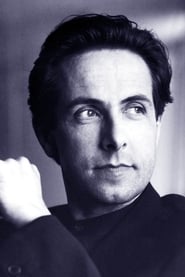 Clive Barker
Candyman Creator
Barker created the mythology that became inseparable from Todd's most iconic horror role, Daniel Robitaille.
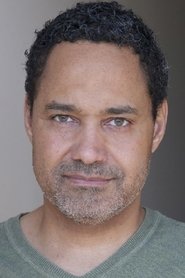 Jeffrey Reddick
Franchise Creator & Writer
Reddick's Final Destination mythology gave Todd another enduring horror identity through the mysterious William Bludworth.
WZ
Warren Zide
Recurring Franchise Producer
Zide was part of the recurring production team behind Todd's early appearances as William Bludworth in the Final Destination series.
 Adam Green
Recurring Horror Director
Green repeatedly cast Todd as Reverend Zombie, making him a familiar presence throughout the Hatchet universe.
Kane Hodder
Recurring Horror Co-Star
Their repeated collaborations across the Hatchet series and other genre films made Hodder one of Todd's most familiar horror co-stars.
Clive Barker
Candyman Creator
Barker created the mythology that became inseparable from Todd's most iconic horror role, Daniel Robitaille.
Jeffrey Reddick
Franchise Creator & Writer
Reddick's Final Destination mythology gave Todd another enduring horror identity through the mysterious William Bludworth.
WZ
Warren Zide
Recurring Franchise Producer
Zide was part of the recurring production team behind Todd's early appearances as William Bludworth in the Final Destination series.
Adam Green
Recurring Horror Director
Green repeatedly cast Todd as Reverend Zombie, making him a familiar presence throughout the Hatchet universe.
Tony Todd Horror Movies
Acting (93 credits)
2026
2025
2025
2025
2025
2025
2024
2024
2024
2023
2023
2022
2022
2022
2022
2022
2021
2021
2021
2021
2021
2021
2020
2019
2019
2019
2019
2018
2018
2018
2018
2017
2017
2017
2017
2015
2015
2015
2015
2015
2015
2015
2015
2015
2015
2014
2013
2013
2013
2013
2012
2011
2011
2010
2010
2010
2010
2010
2009
2009
2009
2009
2009
2008
2008
2008
2008
2008
2007
2007
2006
2006
2006
2006
2006
2006
2006
2005
2005
2004
2003
2003
2000
1999
1999
1998
1997
1995
1994
1992
1990
1990
Production (2 credits)
2003
1999
Other Crew (1 credits)
2025