



2020
Ruggero Deodato
Horror Director · Biography · Horror Filmography · Family · Collaborators · Credits
Horror subgenres & themes
Most represented across this person's horror filmography:
CANNIBAL
• CHRISTMAS
• HAUNTED HOUSES
• HOME INVASION
Biography
Ruggero Deodato and the realism of extreme horror
Ruggero Deodato occupies a distinctive position in horror history because the most influential films of his career were built around the appearance of reality rather than around traditional supernatural monsters. His reputation rests particularly on Jungle Holocaust, Cannibal Holocaust and The House on the Edge of the Park, followed by later horror and thriller work including Body Count, Phantom of Death, Dial: Help, The Washing Machine and Ballad in Blood. Across these productions he repeatedly placed violence inside recognizable physical environments and searched for images that appeared observed rather than safely manufactured for a movie.
Deodato’s approach was the product of an unusually practical education in Italian cinema. Before becoming an established director, he worked as an assistant for filmmakers including Roberto Rossellini, Sergio Corbucci and Antonio Margheriti. From them he absorbed different aspects of filmmaking that later converged in his horror: responsiveness to real locations, an interest in physical violence, technical resourcefulness and the ability to work rapidly within commercial production. His later association with extreme cinema therefore emerged from a much longer apprenticeship in the mechanics of directing.
An apprenticeship inside postwar Italian cinema
Deodato was born in Potenza, Italy, on May 7, 1939 and entered the film industry while still young. His professional education took place largely on working sets rather than through a conventional film-school route. Italian cinema during the 1950s and 1960s offered a particularly broad environment for this kind of training because prestigious directors, commercial specialists and international genre productions often drew from the same professional workforce.
Assistant directing required Deodato to understand far more than camera placement. He had to observe schedules, actors, locations, continuity and the constant compromises through which a planned film becomes a completed one. This practical background later became essential when he began shooting horror in difficult environments, where weather, terrain, performers and limited resources could make rigid preproduction plans impossible to maintain.
Roberto Rossellini and the idea of truth in the image
Roberto Rossellini was the mentor Deodato cited most consistently when discussing his own development. Through his relationship with the Rossellini family, Deodato worked around several of the director’s productions and observed a method associated with responsiveness to people and locations. He later described Rossellini as the person from whom he learned the importance of truth in cinema.
Deodato never became a neorealist filmmaker in the conventional sense. His mature work belongs largely to commercial genre cinema and often uses situations designed deliberately for maximum impact. What he retained from Rossellini was a practical belief that physical reality could contribute something a completely controlled studio environment could not. Real terrain, uncontrolled movement and details discovered during production became important ingredients in the visual credibility of his horror.
Sergio Corbucci, Antonio Margheriti and complementary lessons
Other filmmakers provided very different parts of Deodato’s professional education. He associated Sergio Corbucci with a willingness to depict cruelty and bodily danger directly. Corbucci’s popular cinema demonstrated that physical violence could be an important dramatic element rather than an event kept discreetly outside the frame.
Antonio Margheriti represented another kind of knowledge. His science-fiction, adventure and Gothic productions depended heavily on practical ingenuity, effects and the ability to create ambitious genre images without access to Hollywood-scale resources. Deodato learned that a director working within commercial Italian cinema had to understand technical solutions rather than expect money alone to solve production problems.
Why Deodato never regarded himself simply as a horror director
Deodato spent his career resisting the idea that horror defined his entire professional identity. Before and after his most famous genre films he worked in comedy, crime, action, adventure, television and advertising. He belonged to a generation of Italian directors expected to move according to available productions rather than cultivate one permanent specialty.
This broader experience matters to his horror because several qualities associated with it were developed elsewhere. His ability to stage movement came from action filmmaking. His speed came partly from commercial and television production. His interest in violence as human behavior was already visible in crime cinema. Horror became the area in which those qualities produced the most internationally influential results.
From crime violence toward horror
During the 1970s Deodato increasingly directed material involving sexuality, crime and aggressive physical behavior. Live Like a Cop, Die Like a Man is especially useful in tracing this development because its violent policemen complicate conventional distinctions between legitimate authority and criminal brutality. The film shows Deodato already interested in characters whose behavior undermines reassuring moral categories.
That interest would remain important once he moved more decisively into horror. Deodato rarely depended on supernatural evil during his most important period. Human beings create the principal terror in his cannibal films and in The House on the Edge of the Park. Violence becomes disturbing because the people committing it remain recognizably human rather than because they have been transformed into conventional monsters.
Jungle Holocaust and the importance of physical location
Jungle Holocaust in 1977 became Deodato’s first major contribution to the Italian cannibal cycle and a decisive step toward the work that would define his international reputation. The production placed actors and crew in tropical environments where vegetation, mud, water, heat and difficult movement could not be controlled in the way a studio set could be controlled.
Deodato recognized that these conditions created a kind of physical credibility useful to horror. Performers did not need to simulate every aspect of discomfort because the environment imposed genuine obstacles. Movement through the jungle looked difficult because it was difficult. Deodato carried this relationship between real environment and fictional danger into the production of Cannibal Holocaust.
Location realism without ethnographic legitimacy
Deodato frequently discussed his jungle films using references to anthropology, travel photography and supposedly isolated populations. These claims contributed substantially to the films’ publicity and to his own mythology as an adventurous location filmmaker. They do not turn the finished works into legitimate ethnographic records.
The Indigenous cultures presented in the cannibal films were shaped through the assumptions and requirements of European exploitation cinema. Rituals, behavior and social structures were fictionalized for dramatic purposes. An accurate assessment of Deodato must therefore distinguish between his genuine interest in making locations appear physically credible and the much less reliable claims to cultural authenticity surrounding the people represented within those locations.
Gianfranco Clerici and the central horror collaboration
Screenwriter Gianfranco Clerici became Deodato’s most important recurring writing collaborator in horror. Their shared work includes Jungle Holocaust, Cannibal Holocaust, The House on the Edge of the Park and Phantom of Death. The relationship consequently covers Deodato’s cannibal period, his home-invasion horror and a later return to giallo and physical degeneration.
Deodato did not regard the screenplay as an object that could never change once shooting began. He was willing to restructure scenes according to locations, casting and unexpected opportunities discovered on set. Clerici supplied narrative foundations while Deodato’s production method remained highly responsive to practical circumstances.
The origins of Cannibal Holocaust
The central idea behind Cannibal Holocaust grew partly from Deodato’s reaction to violent television news during the politically turbulent Italian 1970s. He later recalled becoming angry that graphic images could be broadcast as news while fictional filmmakers faced censorship for staged violence. He was also suspicious of journalism that appeared to sensationalize events in order to increase their visual impact.
Deodato proposed to Clerici a story in which the journalists themselves would become the morally compromised figures. The concept reversed the expected relationship between supposedly civilized documentarians and the people they travel to observe. The missing film crew gradually emerges as willing to provoke and manufacture atrocities when genuine events fail to provide images dramatic enough for their purposes.
The camera as evidence and as an unreliable witness
The most important formal decision in Cannibal Holocaust was to divide the film between conventional narrative material and footage supposedly recovered from the missing documentary crew. The audience initially knows those young filmmakers primarily as people who have disappeared. Their own recordings later reveal how they behaved when they believed they controlled the representation of events.
This structure makes filmmaking itself part of the horror. A camera can preserve evidence, but the person operating it determines what is recorded and can influence what happens in front of it. Deodato therefore questions the assumption that a photographed event automatically provides an objective account of reality.
Making fictional footage appear amateur and uncontrolled
Deodato differentiated the recovered footage from the surrounding narrative through a rougher visual language. Handheld camerawork, unstable framing and deliberately degraded imagery created the impression that the material had been recorded by people responding directly to dangerous events rather than by a conventional feature-film crew.
The apparent lack of polish was carefully functional. Technical imperfection became evidence inside the fiction. An image that seemed less professionally composed could appear more authentic because viewers associated its defects with spontaneous recording. This principle later became fundamental to found-footage horror.
Cannibal Holocaust and the development of found-footage horror
Documentary simulation and supposedly authentic recordings existed long before Deodato made Cannibal Holocaust, so describing it as the literal invention of every found-footage technique would be inaccurate. Its historical importance lies in how extensively recovered film determines the narrative. The audience examines footage left by missing people, reconstructs their fate through their recordings and is encouraged to question the motives behind the images.
This made the film an important reference point once found footage developed into a major horror form during later decades. The success of The Blair Witch Project and subsequent digital productions renewed critical attention toward Deodato because the basic relationship among lost filmmakers, surviving recordings and uncertainty about authenticity had already been developed extensively in his 1980 feature.
The legal crisis surrounding Cannibal Holocaust
The apparent realism of the human deaths created consequences extending far beyond ordinary censorship. Italian authorities seized the film, and Deodato faced allegations connected with the possibility that actors appearing to die on screen had actually been killed. He was required to establish publicly that the performers were alive and to explain how effects responsible for some of the most convincing deaths had been created.
The murder allegations were false, but the episode permanently altered Deodato’s public identity. He had attempted to make fictional recordings appear sufficiently authentic to resemble evidence and then found himself in the extraordinary position of demonstrating that those images were manufactured. The resulting publicity became inseparable from the film’s international notoriety.
The ethical boundary created by real animal deaths
The human deaths were simulated, but several animal killings in Cannibal Holocaust were real. This remains the most serious ethical issue associated with Deodato’s filmmaking. He later defended or contextualized the incidents by referring to local practices and to animals subsequently being used as food, but those arguments do not change the fact that actual animals were killed during production and that their deaths became part of a commercial film.
The decision also creates a direct contradiction with the film’s criticism of exploitative image-making. Deodato condemns fictional filmmakers who manipulate suffering to create spectacular footage while his own production crossed from staged violence into real harm in order to intensify visual impact. Any serious history of his horror career has to retain this contradiction rather than treating controversy as merely evidence that the film succeeded in frightening audiences.
Censorship and the international identity of Monsieur Cannibal
Cannibal Holocaust encountered censorship and distribution problems in multiple territories and gradually became one of the most notorious films associated with Italian exploitation cinema. Deodato acquired the nickname Monsieur Cannibal, an identity that followed him for the rest of his life regardless of the genre he happened to be directing.
The nickname brought international recognition but also distorted the proportions of his career. Deodato made relatively few cannibal films compared with the total number of projects he directed. Nevertheless, the extraordinary visibility of Cannibal Holocaust and Jungle Holocaust meant that audiences encountering his work decades later frequently discovered everything else through those titles.
The House on the Edge of the Park and horror without the jungle
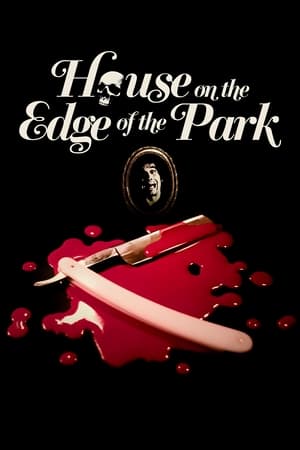
The House on the Edge of the Park demonstrates that Deodato’s interest in extreme violence did not depend on exotic landscapes or recovered footage. The film confines much of its action to an affluent domestic environment after two violent outsiders enter a social gathering. David Hess and Giovanni Lombardo Radice play the principal intruders.
The change of setting exposes another aspect of Deodato’s horror. Violence can emerge inside an apparently controlled modern environment just as easily as in a remote jungle. Social class, humiliation and the changing balance of power among characters become more important than the relationship between civilization and wilderness that dominated the cannibal films.
Human cruelty as Deodato’s principal horror subject
Deodato’s strongest horror rarely requires an elaborate mythology explaining evil. He repeatedly focused on ordinary or socially recognizable people whose behavior becomes violent when authority, opportunity or pressure changes. This interest connects films that otherwise look very different.
In Cannibal Holocaust, documentary filmmakers manufacture violence for professional advantage. In The House on the Edge of the Park, aggression develops through domination and humiliation within a private gathering. Even later supernatural or slasher assignments often remain focused strongly on physical behavior rather than on extensive mythology.
Changing horror markets during the 1980s
Deodato did not attempt to reproduce the cannibal cycle indefinitely. As international horror changed during the 1980s, he accepted projects reflecting different commercial trends. This flexibility was characteristic of the Italian genre industry in which he had been trained and allowed his horror filmography to expand beyond the identity created by the Amazon productions.
Body Count placed him within the slasher tradition, while later productions moved toward giallo, supernatural horror and psychological violence. The results vary significantly in importance, but they demonstrate that Deodato remained willing to alter his method rather than turn one notorious success into a permanent formula.
Body Count and the slasher cycle
Body Count gave Deodato an opportunity to work within the conventions of the 1980s campsite slasher. The film was inherited during production after development under another director and required Deodato to adapt himself to a project whose basic commercial form was already established.
This kind of assignment illustrates the difference between Deodato as an auteur figure in retrospect and Deodato as a working Italian director. Not every horror production originated from a deeply personal concept. Professional survival frequently meant taking existing projects and applying enough technical control to complete them effectively.
Phantom of Death and bodily degeneration
Phantom of Death reunited Deodato with Gianfranco Clerici and moved into a giallo structure built around murder, investigation and a protagonist suffering from an accelerated-aging condition. Michael York, Donald Pleasence and Edwige Fenech gave the production an unusually recognizable cast.
The film provided Deodato with a form of bodily horror different from the wounds and physical assaults for which he was best known. The killer’s deterioration is tied to disease and loss of bodily control, making the condition of the protagonist himself part of the horror mechanism.
Dial: Help and supernatural horror
Dial: Help represents one of Deodato’s clearest movements into overt supernatural horror. The narrative centers on telephone technology becoming associated with lethal paranormal activity. Unlike his principal cannibal films, the danger cannot be explained solely through human cruelty or realistic social behavior.
The project is useful precisely because it shows the limits of any attempt to define one permanent Deodato horror formula. His reputation came from realism, but his professional curiosity allowed him to direct material based on explicitly impossible phenomena when the Italian market provided that opportunity.
The Washing Machine and the later giallo period
The Washing Machine arrived during a period when the Italian genre-film industry had contracted dramatically. Deodato shot the production in Budapest with a substantially international working environment and returned to murder, erotic tension and unreliable accounts of events.
The film demonstrates the continued adaptability of a director whose career had begun in a far healthier domestic production system. By the 1990s, filmmakers from Deodato’s generation could no longer assume the regular cycle of internationally exportable Italian genre pictures that had supported their careers during previous decades.
Television, advertising and the disappearance of the old genre industry
As theatrical opportunities diminished, Deodato increasingly returned to television and advertising. The shift was practical rather than a formal retirement from genre filmmaking. He had always treated directing as a profession broader than theatrical cinema and continued working wherever viable production existed.
The decline nevertheless changed his relationship with horror. During the 1970s and 1980s he could move rapidly between commercial features because producers continually generated new projects for international markets. By the 1990s that industrial ecosystem had largely disappeared, making extended gaps between theatrical horror films increasingly normal.
Cult rediscovery and a new international audience
Home video, DVD and specialist festivals produced another major change in Deodato’s career. Films that had previously circulated in censored versions or through exploitation distribution became available in restorations accompanied by interviews, documentaries and production material. Deodato began appearing regularly at horror festivals and conventions around the world.
This gave him a second public career as the historical representative of a period of Italian horror that younger audiences had discovered retrospectively. The director who had originally made films within a competitive commercial market increasingly found himself discussing them as artifacts of a production culture that no longer existed.
Eli Roth and recognition from later horror filmmakers
A younger generation of horror directors openly acknowledged Deodato’s influence. Eli Roth became particularly associated with this reassessment, casting Deodato in a self-referential cannibal role in Hostel: Part II and later dedicating The Green Inferno to him. Quentin Tarantino and other filmmakers interested in exploitation cinema also contributed to renewed attention toward his work.
These relationships helped transform Deodato from a controversial European exploitation director into an acknowledged ancestor of later extreme horror. The process did not remove the ethical problems of his films, but it changed the cultural context in which they were discussed.
Ballad in Blood and a late return to horror direction
Deodato returned to feature directing with Ballad in Blood in 2016 after more than two decades without directing a theatrical feature. The project drew loose inspiration from a widely publicized murder case involving international students in Perugia and allowed him to return to familiar concerns involving sexuality, violent behavior, voyeurism and competing accounts of what occurred.
The production was made under circumstances radically different from those of Cannibal Holocaust. Deodato was now an elderly cult filmmaker working in an Italian industry where independent genre financing was considerably more difficult. The return therefore functioned as both a new production and evidence of the longevity of his desire to direct horror.
Deodato’s directing method
Across interviews, Deodato repeatedly described directing in practical rather than theoretical terms. He loved cameras, locations and the process of discovering how scenes could be photographed. He could modify planned staging quickly when a location presented a more effective possibility and often valued physical immediacy over visual perfection.
This flexibility should not be mistaken for lack of technical knowledge. Years as an assistant director, commercial filmmaker and television director gave him the experience necessary to understand how improvisation would affect continuity and editing. The roughness associated with his most influential horror was frequently a controlled aesthetic decision supported by conventional production skills.
Realism as both achievement and problem
Deodato’s pursuit of realism produced the central achievement of his horror and its greatest ethical difficulty. Real environments, imperfect camerawork and physical performance could make fiction feel unusually immediate. Cannibal Holocaust demonstrated how powerfully audiences could react when the visual grammar of documentary recording was applied to fabricated violence.
The same pursuit also encouraged decisions that remain indefensible to many viewers and historians, most clearly the real animal killings. Deodato’s career therefore provides an important example of the difference between making fiction appear authentic and making actual suffering part of the production. His work repeatedly forces those two categories uncomfortably close together.
Death and historical reassessment
Ruggero Deodato died in Rome on December 29, 2022 at the age of eighty-three. By then the international perception of his work had changed substantially from the period of its original release. Cannibal Holocaust remained controversial, but it was also studied routinely within histories of found footage, Italian exploitation and extreme horror.
The restoration of Jungle Holocaust and its inclusion in Venice Classics in 2023 illustrated this transition clearly. A film produced within the commercial cannibal cycle had entered an institutional program devoted to the restoration and historical preservation of cinema, confirming that Deodato’s work had become part of the documented history of Italian genre filmmaking rather than remaining only an object of censorship notoriety.
Ruggero Deodato’s place in horror history
Deodato’s principal contribution to horror was his understanding that credibility itself could become frightening. By combining real environments, physically demanding production, documentary conventions and deliberately imperfect images, he created fictional events that appeared less protected by the normal visual distance of commercial filmmaking. Cannibal Holocaust carried that method furthest by making the camera and the people operating it part of the horror.
His legacy remains inseparable from contradiction. Deodato expanded the formal vocabulary later associated with found footage and became a major reference for extreme horror filmmakers, yet some of his methods crossed ethical boundaries that modern assessments cannot dismiss as simple products of their era. That tension is central to his historical importance: the same obsession with authenticity that produced his most influential cinematic language also exposed the dangers of pursuing realism without a clear boundary between represented violence and real harm.
Photos (2)
Images: TMDB
Selected Work
Notable Horror Collaborators
Notable collaborators and creative partners throughout Ruggero Deodato's horror career.
GC
Gianfranco Clerici
Director / Screenwriter Collaborator
Clerici collaborated with Deodato on Jungle Holocaust, Cannibal Holocaust, The House on the Edge of the Park and Phantom of Death. Their four shared horror films span the cannibal cycle, home-invasion horror and Deodato’s later giallo period, making Clerici his most substantial recurring horror screenwriting collaborator.
 Claudio Simonetti
Director / Composer Collaborator
Simonetti composed the music for Deodato horror productions including Body Count, Dial: Help, The Washing Machine and Ballad in Blood. Their recurring relationship extended from the director’s 1980s slasher and supernatural work to his late return to feature horror.
 Sergio D'Offizi
Director / Cinematographer Collaborator
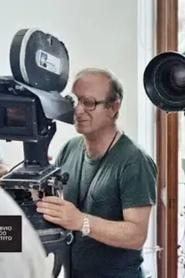
D’Offizi photographed Cannibal Holocaust, The House on the Edge of the Park and The Washing Machine for Deodato. Their three shared horror productions cover the director’s most controversial extreme period and his later return to giallo filmmaking.
Claudio Simonetti
Director / Composer Collaborator
Simonetti composed the music for Deodato horror productions including Body Count, Dial: Help, The Washing Machine and Ballad in Blood. Their recurring relationship extended from the director’s 1980s slasher and supernatural work to his late return to feature horror.
Sergio D'Offizi
Director / Cinematographer Collaborator
D’Offizi photographed Cannibal Holocaust, The House on the Edge of the Park and The Washing Machine for Deodato. Their three shared horror productions cover the director’s most controversial extreme period and his later return to giallo filmmaking.
Ruggero Deodato Horror Movies
Directing (12 credits)
2016
2013
1993
1988
1988
1986
1985
1980
1980
1977
1964
Acting (16 credits)
2021
2018
2016
2016
2015
2015
2014
2013
2011
2010
2007
2003
1993
1988
1988
1980
Writing (3 credits)
2016
2013
1988