


2007
Riz Ortolani
Horror Music & Sound · Biography · Horror Filmography · Collaborators · Credits
Horror subgenres & themes
Most represented across this person's horror filmography:
ANIMAL
• CANNIBAL
• FOLK
• HAUNTED HOUSES
Biography
Riz Ortolani and music for Italian horror
Riz Ortolani was one of the most prolific Italian composers for film and television of the second half of the twentieth century. His career extended through comedy, documentary, westerns, crime cinema, erotic films and international productions, but horror and thriller music produced some of his most distinctive work. Scores for Castle of Blood, Don’t Torture a Duckling, Seven Blood-Stained Orchids, Cannibal Holocaust, The House on the Edge of the Park and Zeder demonstrate how readily Ortolani could move between Gothic orchestration, popular melody, jazz, electronics and deliberately disturbing contrasts between music and image.
Ortolani’s importance to horror lies partly in his refusal to assume that frightening images always require conventionally frightening music. Several of his most effective genre scores use melodies of striking clarity and warmth alongside violence, decay or psychological disturbance. This distance between musical tone and screen content can make disturbing material more difficult to absorb because the score does not provide the expected emotional instruction. The principle became particularly famous through Cannibal Holocaust, although it had roots in Ortolani’s documentary and mondo work many years earlier.
Pesaro and formal musical education
Riziero Ortolani was born in Pesaro, Italy, on March 25, 1926. His father encouraged musical education from childhood. Ortolani initially studied violin, but a serious injury to his left elbow following an automobile accident forced him to change instrument. He subsequently concentrated on flute and composition.
He studied at the Conservatorio Gioachino Rossini in Pesaro and graduated while still young. The conservatory background gave him a strong foundation in orchestration and written composition before he entered radio, popular music or cinema. This training remained useful throughout a career requiring him to move quickly among ensembles of radically different size and instrumentation.
Flute, radio and jazz-symphonic orchestration
Ortolani worked professionally as a flautist before moving increasingly toward arrangement and conducting. After relocating to Rome he became active within radio music and eventually directed a jazz-symphonic orchestra for RAI. This combination of orchestral writing and popular or jazz vocabulary became an important part of his later film work.
His scores rarely treat classical orchestration and contemporary popular music as mutually exclusive systems. Strings can coexist with electric guitar, percussion, jazz harmony or electronic texture according to the needs of a scene. The flexibility was especially valuable within Italian cinema, where composers regularly moved among genres with very short production schedules.
Katyna Ranieri and the relationship between film score and song
Singer Katyna Ranieri became both Ortolani’s wife and an important musical collaborator. Their relationship connected his work as an orchestral composer with popular song performance. Ranieri interpreted several pieces associated with his film music and contributed to the wider circulation of melodies originally created for cinema.
Ortolani’s capacity to write themes that could survive outside their films became one of his most recognizable professional characteristics. A melody could function dramatically within a soundtrack and later be arranged as a song, instrumental recording or concert piece without depending entirely on the original images.
Mondo Cane and an international breakthrough
The decisive international breakthrough came with Mondo Cane in 1962. Ortolani worked with Nino Oliviero on music for the documentary, whose succession of shocking, comic and exoticized images required a score capable of connecting material filmed in very different locations. The theme that became internationally known as More developed an independent life far beyond the film.
The song received an Academy Award nomination and became a widely recorded standard. The success gave Ortolani access to international productions and established his name outside Italy. More importantly for his later horror work, Mondo Cane demonstrated how elegant music could operate against disturbing imagery rather than simply reproducing its surface violence.
Musical contrast as a dramatic strategy
Ortolani repeatedly used contrast between image and music. A lyrical theme can make screen violence appear more clinical or emotionally disorienting because the soundtrack refuses to respond in the expected manner. This technique does not require the melody itself to contain obvious signs of horror.
The effectiveness depends on placement. A theme must be memorable enough for the audience to recognize when it returns, while changes in instrumentation or harmony can gradually alter its emotional meaning. Ortolani used this approach across documentary, thriller and horror rather than treating it as a device invented for one famous score.
Antonio Margheriti and entry into Gothic horror
Ortolani’s important early horror relationship developed with Antonio Margheriti. He scored The Virgin of Nuremberg in 1963 and continued with Castle of Blood and later Seven Deaths in the Cat’s Eye. The films allowed him to work within Gothic settings very different from the contemporary Italian comedies and documentaries that occupied much of his career.
The collaboration required a more atmospheric vocabulary while preserving Ortolani’s interest in melody. Haunted architecture, ancestral violence and mystery could be supported through orchestral color rather than through continuous musical aggression. Margheriti’s films consequently became an early demonstration of Ortolani’s ability to adapt his existing musical language to horror.
Writing for Gothic space
Gothic horror gave Ortolani the opportunity to use sustained orchestral texture, recurring themes and changes in register to distinguish physical spaces and emotional states. Music could enlarge inexpensive sets by giving them a sense of historical weight that production resources alone could not provide.
This function was particularly important in Italian genre cinema, where composers often supplied a significant portion of a film’s perceived scale. A carefully orchestrated score could give small productions a sonic richness disproportionate to their budgets.
The giallo and a different musical vocabulary
As the Italian thriller changed during the late 1960s and early 1970s, Ortolani adapted to urban settings, sexuality and increasingly explicit violence. Giallo scores required a different relationship with rhythm and popular music from the Gothic films of the previous decade. Jazz, electric instruments and contemporary song could exist beside orchestral suspense.
Ortolani’s versatility made him particularly suited to this environment. The composer could supply immediately recognizable melodic material while still creating abrupt textures for murder, pursuit or psychological disturbance. This ability allowed him to work with directors whose films differed substantially in tone.
Lucio Fulci and moral unease in Don’t Torture a Duckling
Ortolani worked with Lucio Fulci on projects including One on Top of the Other and Don’t Torture a Duckling. The latter places child murders inside a southern Italian community marked by superstition, suspicion, sexuality and religious authority. The story required music capable of moving between rural environment, emotional vulnerability and violent revelation.
Ortolani’s score includes Quei giorni insieme a te, performed by Ornella Vanoni, alongside darker instrumental material. The use of song contributes to the film’s contrast between familiar emotional language and brutal events. It also demonstrates how Ortolani could integrate popular vocal music into a horror narrative without reducing the score to one continuous mood.
Umberto Lenzi and Seven Blood-Stained Orchids
Ortolani worked with Umberto Lenzi during the director’s thriller period, including So Sweet... So Perverse and Seven Blood-Stained Orchids. These productions required polished contemporary scoring suitable for urban mystery while retaining enough musical tension to support serial murder.
The main material of Seven Blood-Stained Orchids demonstrates Ortolani’s ability to build suspense from elegant melodic and rhythmic construction rather than from harsh sound alone. The score belongs comfortably within the sophisticated surface of early-1970s European thrillers while remaining capable of changing rapidly when the narrative turns violent.
Genre versatility and the economics of Italian film composition
Ortolani worked at a time when Italian composers regularly moved through many genres within the same year. A long-term career required speed, technical fluency and an ability to understand the narrative conventions of comedy, western, thriller and horror without losing individual musical judgment.
This industrial context helps explain the breadth of his catalogue. Horror represents a significant strand rather than an isolated specialization. The same composer who wrote music for disturbing genre films could work immediately afterward on comedy or historical drama because professional identity was based on compositional adaptability rather than one market category.
Cannibal Holocaust and Ruggero Deodato
Ortolani’s most internationally discussed horror score was written for Ruggero Deodato’s Cannibal Holocaust in 1980. The film combines staged documentary material, extreme violence and a narrative concerning exploitation by a film crew. Ortolani responded with a main theme based on acoustic guitar, strings and synthesizer whose melodic calm contrasts sharply with much of the imagery.
This contrast became central to the film’s identity. The music can initially appear almost detached from violence, yet repetition causes the melody to accumulate associations with what the viewer has seen. The result demonstrates how a score can change meaning through context without altering its basic thematic material.
Music and the pseudo-documentary structure of Cannibal Holocaust
The film contains different layers of supposed recorded reality, requiring the soundtrack to navigate material presented as documentary evidence and material belonging to the surrounding narrative. Ortolani’s music helps organize these levels while avoiding the impression that every violent event needs an aggressive musical equivalent.
The soundtrack’s later independent popularity has sometimes separated it from the film’s production history. Within the picture, however, the central themes participate directly in the critique of images and spectatorship by creating an emotional response that does not match the crude sensationalism of the footage.
The House on the Edge of the Park and a second Deodato collaboration
Ortolani worked again with Deodato on The House on the Edge of the Park, another violent production released around the same period. The film is structured largely around an extended assault inside an affluent home and therefore requires a score operating within a confined dramatic space rather than the geographic movement of Cannibal Holocaust.
The collaboration shows that Deodato did not approach Ortolani solely for one accidental contrast of melody and violence. Ortolani’s ability to create memorable themes while supporting exploitation material made him suitable for more than one kind of extreme horror narrative.
Sergio D’Offizi and the relationship between image and score
Cinematographer Sergio D’Offizi worked on several horror and thriller productions scored by Ortolani, including Don’t Torture a Duckling, Cannibal Holocaust and The House on the Edge of the Park. Their roles were separate during production, but the finished films place D’Offizi’s images and Ortolani’s music in direct relationship.
The repeated pairing is particularly useful when examining the difference between visual and musical tone. D’Offizi could photograph harsh violence or bright landscapes while Ortolani supplied music whose emotional temperature moved independently from what appeared on screen.
Pupi Avati and a major later-career partnership
Pupi Avati became one of Ortolani’s most important long-term collaborators from the 1980s onward. Their work covered many genres and produced some of Ortolani’s major Italian awards. Within horror, Zeder remains the essential collaboration.
The breadth of the Avati relationship matters because the two men developed a musical understanding extending far beyond one genre. When Avati returned to supernatural material, Ortolani could draw from an established knowledge of the director’s pacing and preference for gradual unease rather than composing for him as an unfamiliar client.
Zeder and restrained supernatural horror
Zeder concerns the discovery of so-called K Zones in which the dead may be capable of returning to life. The film develops through investigation and accumulated evidence rather than through continuous visible monstrosity. Ortolani’s score supports this structure with music that can remain controlled while the implications of the investigation become increasingly disturbing.
The approach differs from the violent contrasts associated with the Deodato films. It demonstrates why Ortolani should not be reduced to the melodic irony of Cannibal Holocaust. He could build supernatural atmosphere through restraint when the narrative demanded it.
Orchestration, electronics and changes in film sound
Ortolani’s career lasted long enough to encompass significant technological changes in film music. Large studio orchestras, jazz ensembles, popular recording methods, electric instruments and synthesizers all became available during different phases of his professional life.
He generally treated these resources as additions to a broad musical vocabulary rather than replacements for one another. Electronic texture could sit beside strings or guitar. Jazz harmony could appear within a thriller without requiring the entire score to become jazz. This adaptability helped his music survive changing fashions in Italian genre production.
Melody as professional identity
Strong melodic construction remained one of Ortolani’s most consistent characteristics. Even scores created for disturbing films often contain material capable of being remembered outside the narrative. This distinguishes him from composers whose horror work depends primarily on texture or dissonance.
Memorability also contributed to the later rediscovery of his music. Themes could be reissued, performed and reused because they maintained musical identity independently of the scenes for which they had originally been written.
International work beyond Italian horror
The success of Mondo Cane expanded Ortolani’s career into British and American productions. He wrote for westerns, war films, dramas and international co-productions while continuing to work extensively in Italy. His professional identity therefore cannot be confined to the cult genre films through which many modern horror audiences discovered him.
This wider work strengthened his horror scoring because he could draw upon musical traditions associated with several genres. A suspense cue could borrow rhythmic confidence from crime cinema, while a melodic horror theme might possess the formal clarity of his mainstream dramatic scores.
Quentin Tarantino and the rediscovery of Ortolani’s catalogue
Later filmmakers contributed to renewed international interest in Ortolani. Quentin Tarantino used existing Ortolani music in films including the Kill Bill cycle and Django Unchained. The reuse introduced older Italian soundtrack material to audiences who had not encountered the original productions.
The process was especially appropriate to Ortolani because many of his compositions already possessed an independent musical life. Removing a piece from its first film and placing it inside a new narrative changes its dramatic meaning while preserving the recognizable structure of the composition.
Recognition and later career
Ortolani received major Italian awards throughout his later career, including David di Donatello and Nastro d’Argento recognition, particularly through his collaboration with Pupi Avati. His standing therefore did not depend solely on retrospective cult appreciation of exploitation cinema.
He continued composing into the twenty-first century and remained active as a conductor. The longevity of the career allowed several generations of Italian filmmakers to work with a composer whose professional beginnings predated the major genre cycles for which international collectors later celebrated him.
Death and continuing circulation of the music
Riz Ortolani died in Rome on January 23, 2014 at the age of eighty-seven. By that time his soundtrack catalogue had undergone extensive reissue and rediscovery through collectors, filmmakers and specialist labels. Music originally written for relatively short-lived commercial films had become part of an international history of Italian film composition.
His horror scores remain particularly instructive because they demonstrate several different ways of accompanying disturbing material. Gothic atmosphere, jazz-inflected thriller writing, electronic unease and lyrical counterpoint all appear within the same career. Ortolani approached horror as one dramatic problem among many rather than as a genre requiring one predetermined musical language.
Riz Ortolani’s contribution to horror music
Ortolani’s principal contribution to horror is the expressive freedom he brought from a broader career in orchestral, popular and jazz-influenced film music. He could support fear directly when necessary, but he was equally willing to place beautiful or accessible themes beside horrific images and allow the contradiction to create its own response.
This approach reached its most famous form in Cannibal Holocaust, yet the larger horror filmography shows considerable range. From Margheriti’s Gothic cinema through Fulci and Lenzi’s thrillers, Deodato’s extreme horror and Avati’s supernatural investigations, Ortolani continually adjusted musical form to the dramatic structure in front of him. His work remains one of the clearest examples of melody functioning as a complex horror device rather than simply as relief from fear.
Photos (2)
Images: TMDB
Selected Work
Notable Horror Collaborators
Notable collaborators and creative partners throughout Riz Ortolani's horror career.
 Antonio Margheriti
Composer / Director Collaborator
Ortolani scored several of Margheriti’s horror productions, including The Virgin of Nuremberg, Castle of Blood and Seven Deaths in the Cat’s Eye. Their collaboration gave Ortolani one of his strongest recurring relationships within Italian Gothic horror.
 Ruggero Deodato
Composer / Director Collaborator
Ortolani composed the music for Cannibal Holocaust and The House on the Edge of the Park, two of Deodato’s most controversial horror films. The collaboration is limited to two principal horror titles but produced the best-known horror score of Ortolani’s career.
 Lucio Fulci
Composer / Director Collaborator
Ortolani worked with Fulci on One on Top of the Other and Don’t Torture a Duckling. Their two-film relationship falls below the usual three-title threshold but includes one of the most important early works in Fulci’s transition toward increasingly violent horror and thriller cinema.
 Umberto Lenzi
Composer / Director Collaborator
Lenzi and Ortolani worked together during the director’s thriller period on films including So Sweet... So Perverse and Seven Blood-Stained Orchids. The collaboration connected Ortolani’s melodic and jazz-influenced writing with the evolving visual and narrative conventions of the Italian giallo.
 Pupi Avati
Composer / Director Collaborator
Avati became one of Ortolani’s most important long-term directors across many genres. Within horror their key collaboration is Zeder, where an already mature professional relationship supported one of the most distinctive supernatural scores of Ortolani’s later career.
 Sergio D'Offizi
Composer / Cinematographer Collaborator
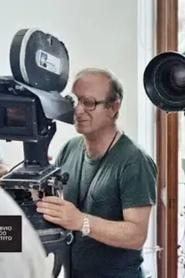
D’Offizi photographed Don’t Torture a Duckling, Cannibal Holocaust and The House on the Edge of the Park, all scored by Ortolani. Their three shared horror productions provide especially strong examples of the deliberate relationship between disturbing imagery and music that often moves in a contrasting emotional direction.
Riz Ortolani Horror Movies
Music & Sound (24 credits)
2003
1990
1989
1983
1981
1981
1980
1980
1980
1978
1978
1977
1977
1973
1972
1972
1972
1972
1971
1971
1966
1964
1962
Acting (2 credits)
2019
2003