



2025
Clive Barker
Horror Writer · Biography · Horror Filmography · Collaborators · Credits
Horror subgenres & themes
Most represented across this person's horror filmography:
BODY HORROR
• MEDICAL
• CANNIBAL
• HALLOWEEN
Biography
Clive Barker and British horror fiction
Clive Barker emerged during the 1980s as one of the most important new writers in British horror and quickly developed a career extending through fiction, theatre, cinema, visual art, comics and other forms of fantastic storytelling. The six volumes of Books of Blood established his reputation through stories characterized by graphic physical horror, sexuality, supernatural transformation and an unusually broad range of settings and narrative forms. He subsequently created several major screen properties, most prominently Hellraiser, Nightbreed and the story that became Candyman.
Barker’s horror differs substantially across his bibliography. Some stories are directly violent and contemporary, while others move toward dark fantasy, theological speculation or elaborate secondary worlds. His fiction frequently examines bodies altered by supernatural forces and characters attracted to experiences outside ordinary social boundaries. These subjects became increasingly visible in later critical discussion of Barker, especially in relation to sexuality and queer identity, but they were present from his early theatre work and first published fiction rather than being additions imposed retrospectively on his career.
Liverpool, theatre and early creative work
Clive Barker was born in Liverpool on October 5, 1952. He studied English and Philosophy at the University of Liverpool and became heavily involved in theatre during the 1970s. His work with experimental theatre groups, including the Dog Company, brought him into long-term collaboration with performers and writers such as Doug Bradley, Peter Atkins and Simon Bamford. Several of these collaborators later appeared in or contributed to Barker’s horror films.
The theatre period is important to his later fiction because Barker was already exploring religious imagery, physical transformation, sexuality and grotesque performance before becoming known as a prose writer. Plays including The History of the Devil and Frankenstein in Love demonstrate interests that later reappeared in fiction and film. He also made experimental short films including Salome and The Forbidden, establishing an early connection between his writing and visual art.
Books of Blood and Barker’s literary breakthrough
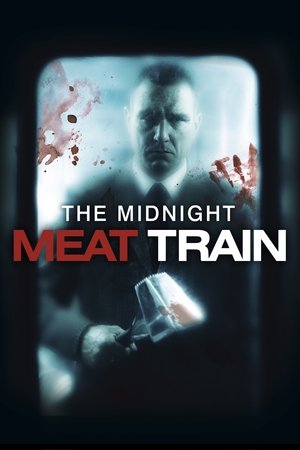
The six volumes of Books of Blood, published during 1984 and 1985, established Barker internationally. The stories cover a wide range of horror forms and include The Midnight Meat Train, The Yattering and Jack, In the Hills, the Cities, Dread, Rawhead Rex, The Forbidden and The Last Illusion. Several later became the basis for feature films, television episodes or other adaptations.
The collection was notable for the confidence with which Barker moved between supernatural horror, psychological terror and fantastic imagery. Physical transformation appears repeatedly, sometimes as violence and sometimes as a change in identity or perception. Sexuality also enters the stories more directly than was common in much mainstream horror publishing of the period. The combination gave Barker a recognizable literary identity while allowing individual stories to differ substantially in tone and structure.
In the Hills, the Cities and Barker’s use of the fantastic
In the Hills, the Cities became one of the most discussed stories from the collection. Two Yugoslav communities bind their inhabitants together to form enormous human figures used in a traditional ritual contest. Barker later described the central image as particularly important because it offered readers something they had not encountered before. The story demonstrates his willingness to build horror around concepts that exceed ordinary physical plausibility while still grounding events through individual observers.
This willingness became increasingly important as Barker’s career moved toward dark fantasy. His horror fiction often treats the impossible as an opportunity to construct another social or biological order rather than merely as a temporary threat to normal reality. The same principle later shaped Midian in Cabal and Nightbreed, the Cenobite mythology and the large secondary worlds of his fantasy novels.
Dread and psychological horror
Dread demonstrates another side of Barker’s early fiction. The story concerns an experiment in fear conducted by Quaid, who attempts to identify and exploit the deepest fears of people around him. Its horror is based principally on psychological coercion rather than supernatural mythology, showing that Barker’s reputation for elaborate creatures and transformations represents only part of his range.
The story also establishes a recurring interest in characters who attempt to cross ethical boundaries in pursuit of knowledge or experience. Similar figures appear throughout Barker’s fiction, although the circumstances vary considerably. The 2009 film adaptation altered elements of the original but preserved the central concern with fear used deliberately as an experimental tool.
The Damnation Game and the move into novels
Barker’s first published novel, The Damnation Game, appeared in 1985. The book expanded themes already visible in the short stories into a longer narrative involving supernatural debt, corruption and the consequences of attempts to evade mortality. Its publication demonstrated that Barker could sustain the intensity of the Books of Blood within a much larger narrative structure.
The novel also marks the beginning of a steady movement beyond conventional horror classification. Barker’s later books increasingly incorporated fantasy and elaborate supernatural cosmologies. This expansion did not remove horror from his work, but it changed the scale on which violent and supernatural events operated.
The Hellbound Heart and the Cenobites
The Hellbound Heart, published in 1986, introduced the mythology that became Barker’s most widely recognized creation. Frank Cotton obtains a puzzle box capable of opening contact with the Cenobites, beings devoted to extreme sensory experience in a realm where familiar distinctions between pleasure and pain have little meaning. Frank actively seeks the encounter because ordinary experience no longer satisfies him.
The novella connects supernatural horror with desire and curiosity rather than accidental haunting. Julia’s continuing attraction to Frank drives much of the human violence after his partial return, while Kirsty becomes involved only after discovering the secret developing inside the house. The Cenobites occupy relatively little of the narrative, yet their ritualized appearance and behavior suggest a larger system extending beyond the immediate story.
Hellraiser and Barker’s first feature as director
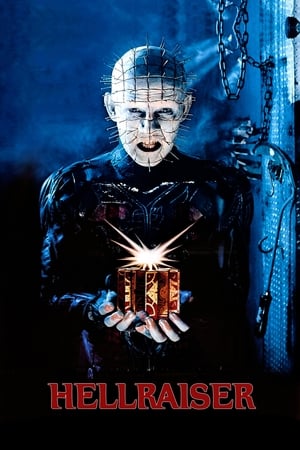
Barker adapted The Hellbound Heart himself as Hellraiser in 1987. His decision to direct was influenced partly by dissatisfaction with earlier screen adaptations of his work. The production was made on a limited budget and concentrated much of its action within a domestic setting, with practical makeup effects providing the physical reconstruction of Frank and the designs of the Cenobites.
Doug Bradley, a longtime collaborator from Barker’s theatre years, played the Lead Cenobite. Bob Keen and Image Animation handled the extensive makeup effects. The film’s success created a franchise whose later development increasingly centered on Bradley’s character, eventually known universally as Pinhead, although the original story gives Frank and Julia far more narrative importance than the Cenobite leader.
The visual design and mythology of Hellraiser
The Cenobite designs combined modified human anatomy with leather clothing, surgical imagery and formal behavioral rules. Barker’s original conception treated them as members of an order devoted to experience rather than as conventional demons operating through Christian morality. Their visual presentation nevertheless makes use of religious and ritual associations, contributing to the ambiguity of their place within the film’s supernatural system.
The success of the designs had long-term consequences for Barker’s career. Pinhead became one of the most recognizable horror characters created during the 1980s, while the puzzle box and Cenobite mythology continued through numerous sequels, novels, comics and other media. Barker’s own direct involvement varied substantially over the history of the franchise.
Hellbound and the expansion of the mythology
Hellbound: Hellraiser II in 1988 expanded the supernatural environment beyond the domestic setting of the first film. Tony Randel directed from a screenplay by Peter Atkins, with Barker providing the story and remaining closely connected with the production. The sequel introduced Leviathan and developed the labyrinth in which the Cenobites exist, while also revealing the human origin of Bradley’s character as Elliott Spencer.
The film established several elements that later entries would continue using even when Barker’s involvement diminished. Peter Atkins subsequently became especially important to the screen mythology through his writing on additional sequels. The early Hellraiser films therefore developed through a network of collaborators originating partly in Barker’s theatre years and partly in the practical-effects culture of British horror production.
Cabal and the creation of Midian
Barker published Cabal in 1988 and adapted it as Nightbreed, which he directed in 1990. The story follows Boone, a man manipulated by psychiatrist Decker into believing he may be responsible for murders that Decker himself has committed. Boone eventually discovers Midian, an underground community inhabited by supernatural beings with different physical forms and abilities.
The structure reverses several established monster-film conventions. Midian’s inhabitants form a community with rules and history, while human characters become responsible for organized violence against them. Barker has connected the Nightbreed explicitly with experiences of social exclusion and with the idea of people finding a community in which difference is accepted. These themes later became particularly important to queer readings of the film and novella.
Nightbreed, production problems and later restoration
Nightbreed had a difficult post-production history. Barker’s intended mixture of horror and fantasy was altered substantially during editing and marketed in a manner emphasizing conventional slasher imagery. The theatrical release performed poorly, and Barker discussed his dissatisfaction with the finished version for many years.
Interest in surviving workprint material eventually led to efforts to reconstruct a longer version of the film. Restored editions allowed more of Midian’s community structure and Boone’s relationship with the Nightbreed to be seen. The film’s later cult reputation also developed alongside changing critical attitudes toward monster narratives centered on persecution and outsider identity.
The Forbidden and the creation of Candyman
Barker’s The Forbidden, originally published in the Books of Blood, examines urban legend, deprived housing and the relationship between belief and storytelling. Bernard Rose adapted the story as Candyman in 1992 and relocated the narrative from Liverpool to Chicago. This change allowed the film to engage with American racial history and the Cabrini-Green housing development while preserving the central idea of a legendary figure sustained through repeated stories.
Tony Todd’s performance as Daniel Robitaille gave the film a character history absent from Barker’s original story and became the foundation of the screen franchise. Virginia Madsen played graduate student Helen Lyle. The adaptation demonstrates the flexibility of Barker’s concepts because Rose changed setting, background and cultural context while retaining the relationship between rumor, belief and supernatural manifestation.
Urban legend and the later Candyman series
The mirror ritual associated with Candyman became one of the best-known invented legends in modern horror cinema. Repeating the name functions as a challenge that characters can understand immediately, giving the mythology a simple rule capable of surviving across sequels and retellings. Barker’s original story provided the conceptual basis while the films developed a specifically American history around the character.
The 2021 Candyman, directed by Nia DaCosta and co-written with Jordan Peele and Win Rosenfeld, returned to the Chicago setting and extended the mythology into another generation. Barker remained the credited source author, demonstrating the long screen life of an idea originating in a relatively short piece of fiction.
Lord of Illusions and Harry D’Amour
Barker returned to feature directing with Lord of Illusions in 1995, adapting material connected with his recurring occult investigator Harry D’Amour. Scott Bakula plays D’Amour in a story involving stage magician Philip Swann and the legacy of cult leader Nix. The film combines detective narrative with supernatural horror and an interest in the difference between theatrical illusion and genuine occult power.
As with Nightbreed, the theatrical release underwent changes and a longer director’s cut later restored additional material. Lord of Illusions became Barker’s third and final feature as director, leaving a compact directorial filmography compared with his much larger body of writing and producing work.
Harry D’Amour across Barker’s fiction
Harry D’Amour originated in the short story The Last Illusion and later appeared in other Barker writing, eventually becoming involved with the mythology of The Scarlet Gospels. The character gave Barker a recurring human investigator capable of moving through different supernatural systems without requiring those systems to become parts of one simple mythology.
D’Amour’s continued presence also illustrates Barker’s interest in connections among works published years apart. These links remain less structurally dominant than the interconnected world of Stephen King’s Dark Tower, yet they give recurring readers additional continuity across Barker’s fiction.
Weaveworld and the movement toward dark fantasy
Weaveworld, published in 1987, marked an important expansion of Barker’s literary range. The novel concerns a magical civilization concealed within a carpet and combines large-scale fantasy with horror imagery and contemporary Britain. It demonstrated that the imaginative scope of the Books of Blood could be developed into elaborate secondary worlds rather than remaining within short-form horror.
Later novels including The Great and Secret Show, Everville and Imajica continued this expansion. The shift led publishers and critics increasingly to describe Barker as a writer of dark fantasy as well as horror. His continued use of physical transformation and supernatural violence, however, preserved clear connections with the work that established his reputation.
Imajica and Barker’s large-scale fantastic fiction
Imajica, published in 1991, became one of Barker’s most ambitious novels. It constructs a cosmology involving multiple dominions, religious systems and transformed identities across an extensive narrative. The scale is far removed from the contained horror of The Hellbound Heart, yet several familiar Barker concerns remain present within the fantasy structure.
The novel is particularly important to understanding Barker as a writer whose career cannot be summarized through Hellraiser. By the early 1990s he was working across genres and developing projects whose narrative ambitions extended beyond the commercial expectations attached to his reputation as a horror author.
Sexuality and queer identity in Barker’s work
Barker has discussed his sexuality publicly and has addressed queer identity in interviews and fiction. This biographical context is relevant to works in which transformed bodies, forbidden relationships and communities outside conventional society play central roles. Nightbreed is the clearest example because Barker himself described Midian through the experience of belonging among people who differ from the surrounding world.
Critical discussion has consequently treated Barker as an important figure in queer horror. The subject is most useful when connected with specific works and statements rather than applied indiscriminately to every monster or transformation he created. His fiction contains a broad range of sexualities and identities, and the relationship between sexuality and horror varies considerably across individual stories and novels.
Painting and visual art
Barker has worked continuously as a painter and illustrator alongside his writing. His visual art has appeared in exhibitions and publications, and he has frequently developed creatures and fantastic environments through drawing before or alongside prose. This activity provides important context for the strong visual conception of many figures in his fiction.
His involvement with comics also allowed characters and settings from Hellraiser, Nightbreed and other works to expand beyond prose and film. Barker later developed original comic projects as well, demonstrating that graphic storytelling remained a substantial part of his creative career rather than a secondary licensing activity.
Adaptations from the Books of Blood
Numerous stories from the Books of Blood have been adapted independently of Barker’s own directing. Films include Rawhead Rex, The Midnight Meat Train, Book of Blood and Dread, while other stories have appeared in anthology television and film projects. The adaptations vary considerably in their relationship with the original texts.
This continuing screen activity reflects the structural variety of the collection. Barker’s short fiction often provides a strong central image or supernatural rule while leaving filmmakers room to expand character and setting. As a result, stories written during a brief period in the early 1980s have continued producing adaptations decades later.
The later Hellraiser franchise and Barker’s return as producer
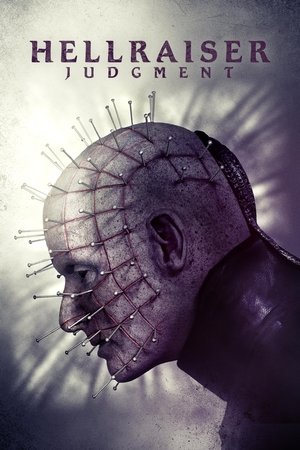
The Hellraiser franchise continued long after Barker ceased directing or writing the sequels directly. Doug Bradley remained Pinhead through eight installments, while later productions changed performers and creative teams. The uneven history of the series led to repeated discussion of how closely individual films reflected Barker’s original conception of the Cenobites and the puzzle box.
Barker returned in a producing capacity for the 2022 Hellraiser, directed by David Bruckner. Jamie Clayton played the Hell Priest in a new interpretation of the mythology. The film redesigned the Cenobites while restoring considerable attention to the relationship between desire, choice and supernatural consequence that had been central to The Hellbound Heart.
Clive Barker’s influence on horror
Barker’s influence is visible in both literature and screen horror. The Books of Blood demonstrated that contemporary horror fiction could combine explicit physical violence with ambitious fantasy concepts and adult sexuality while remaining commercially successful. Hellraiser introduced a screen mythology whose visual design differed substantially from the masked slashers dominating much of 1980s horror, while Nightbreed helped develop a tradition of monster narratives centered on persecuted communities.
His career also contributed to broader critical discussions of sexuality and identity within horror. Later writers and filmmakers inherited an environment in which transformed bodies and monstrous identities could be examined from the perspective of the person undergoing the change rather than solely from the perspective of frightened observers. Barker’s own fiction remains more varied than any single critical interpretation, but this shift is an important part of his historical position.
Clive Barker’s historical position
Barker entered horror during a period dominated internationally by established American writers and quickly developed a distinct British voice with a strong visual identity. His reputation rests on a relatively concentrated group of early horror works as well as on the larger fantasy career that followed. The Books of Blood, The Hellbound Heart, Cabal and the films Hellraiser and Nightbreed remain the principal works through which his contribution to horror is usually assessed.
His importance also comes from the movement between media. Barker wrote fiction, directed films, created visual art and participated in comics and theatre, allowing ideas to develop in different forms over several decades. That interdisciplinary career produced some of the most recognizable creatures and concepts in modern horror while establishing Barker as a writer whose work consistently extended beyond the limits of one genre or medium.
Photos (1)
Images: TMDB
Selected Work
Notable Horror Collaborators
Notable collaborators and creative partners throughout Clive Barker's horror career.
 Doug Bradley
Writer-Director / Actor Collaborator
Bradley worked with Barker from their early theatre and experimental-film period through Hellraiser, Hellbound and Nightbreed. His portrayal of the Lead Cenobite became the principal screen interpretation of Barker’s most famous horror character and continued through numerous later sequels.
 Peter Atkins
Writer Collaborator
Atkins belonged to Barker’s early creative circle and became a major writer within the Hellraiser series. His work on Hellbound, Hellraiser III and Hellraiser: Bloodline developed mythology introduced by Barker and helped maintain continuity during the franchise’s early expansion.
 Bob Keen
Makeup Effects Collaborator
Keen and Image Animation created practical makeup and creature effects for Barker productions including Hellraiser, Hellbound and Nightbreed. Their work translated Barker’s written and visual concepts into the physical designs that became central to his early horror cinema.
 Simon Bamford
Writer-Director / Actor Collaborator
Bamford worked with Barker from the theatre period and later appeared as Butterball in Hellraiser and Hellbound and as Ohnaka in Nightbreed. His career provides a direct connection between Barker’s early collaborative work and his first major horror films.
 Nicholas Vince
Writer-Director / Actor Collaborator
Vince appeared as the Chatterer Cenobite in Hellraiser and Hellbound and later played Kinski in Nightbreed. His three major Barker horror appearances made him one of the recurring performers associated with the practical creature ensemble of Barker’s early cinema.
 Ashley Laurence
Writer-Director / Actor Collaborator
Laurence played Kirsty Cotton in Hellraiser and returned in Hellbound, becoming the principal human protagonist of Barker’s original Cenobite films. Although the direct collaboration is concentrated in two films, her role is central to the screen mythology created from The Hellbound Heart.
Clive Barker Horror Movies
Writing (34 credits)
2022
2021
2020
2020
2018
2011
2009
2009
2009
2008
2006
2006
2005
2005
2002
2002
2000
1999
1997
1996
1995
1995
1992
1992
1990
1988
1987
1987
1986
1985
1984
1978
1973
Directing (5 credits)
1995
1990
1987
1978
1973
Acting (9 credits)
2015
2006
2004
1997
1997
1992
1992
1978
1973
Production (13 credits)
2025
2022
2009
2009
2008
2006
2002
1996
1995
1995
1992
1992
1988
Animation (1 credits)
1987
Other Crew (1 credits)
2023