




2010
John Landis
Horror Director · Biography · Horror Filmography · Family · Collaborators · Credits
Horror subgenres & themes
Most represented across this person's horror filmography:
HORROR ANTHOLOGY
• WEREWOLVES
• ANIMAL
• BODY HORROR
Biography
John Landis and the Collision of Horror and Comedy
John Landis occupies an unusual place in horror cinema because he repeatedly refused to treat fear and comedy as opposing forces. His most important genre work allows the two reactions to exist simultaneously: a joke can lead directly into mutilation, a grotesque corpse can continue an ordinary conversation and a supernatural transformation can be horrifying precisely because the person experiencing it remains recognizably human. This approach reached its fullest expression in An American Werewolf in London, but its roots are visible in his first feature, Schlock, and continued through Michael Jackson's Thriller, Innocent Blood and his later contributions to Masters of Horror.
Landis is not primarily a horror director, yet the relatively small horror portion of his filmography had an unusually large influence. An American Werewolf in London became a landmark of modern werewolf cinema and helped demonstrate how practical makeup could show transformation in unprecedented physical detail. Thriller transferred the visual language of monster movies into popular music on an enormous cultural scale. Together those works created a horror legacy far larger than the number of genre films he actually directed.
Schlock and the Beginning
Landis made his feature directing debut with Schlock, shot while he was still in his early twenties and released in 1973. He wrote, directed and played the title creature, a prehistoric ape-like monster wandering through Southern California while the film parodies monster movies, television reporting and low-budget exploitation.
The production was deliberately comic, but horror was already functioning as Landis' preferred structure for absurdity. Bodies accumulate, the creature terrorizes a community and familiar monster-movie situations are repeatedly undermined by jokes without the film abandoning its affection for the genre it is mocking.
Schlock also created two professional relationships that would become central to Landis' later horror work. George Folsey Jr. edited the film, while a very young Rick Baker handled the special makeup and realization of the creature. Both men would eventually return when Landis attempted a far more ambitious monster film.
Rick Baker and the Monster Partnership
Rick Baker became the most important horror collaborator of Landis' career. Their relationship began on Schlock, where Baker's talent convinced Landis that the title monster could be treated as a more convincing physical creature rather than merely a deliberately poor gorilla costume.
The collaboration reached a completely different level with An American Werewolf in London. Landis had conceived the story years earlier, but by the time the film entered production Baker had developed into one of cinema's most ambitious makeup-effects artists.
The werewolf transformation required the human body to change visibly in front of the audience. Rather than hiding the metamorphosis in darkness or relying primarily on cuts between different stages, Baker constructed mechanical appliances that stretched the face, altered the hands and feet and gave the impression that bones themselves were changing shape.
The achievement earned Baker the first competitive Academy Award for Makeup after the category was introduced. His work with Landis became one of the defining demonstrations of practical transformation effects in horror cinema.
An American Werewolf in London
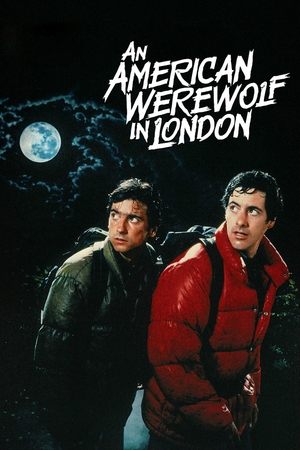
An American Werewolf in London (1981) follows American backpackers David Kessler and Jack Goodman as they travel through rural England. After leaving an isolated pub on the Yorkshire moors, they are attacked by a creature. Jack is killed and David survives, only to discover that the attack has transmitted a werewolf curse.
The premise follows classical lycanthropic mythology, but Landis alters the tone through character behavior. David and Jack speak like ordinary young friends rather than Gothic protagonists. Their jokes do not disappear when horror enters the film, which makes the supernatural material feel as though it has invaded an otherwise recognizable world.
This combination became central to the film's identity. Landis does not use comedy to announce that the horror is fake. The attack on the moors is violent, David's transformation is painful and his eventual killings are bloody. The humor exists beside those events rather than neutralizing them.
David Naughton and the Body of the Werewolf
David Naughton plays David Kessler and carries the transformation from ordinary traveler to supernatural predator. His performance is essential because the audience spends significant time with David as a recognizable young man before his body becomes monstrous.
The famous transformation occurs inside an ordinary London apartment and largely in bright light. David begins experiencing pain before understanding what is happening, and the scene gradually dismantles the human body through practical effects.
Naughton's performance sells the physical suffering surrounding Baker's mechanical work. The transformation is not presented as an empowering release. Bones appear to extend, hands change shape and the character reacts as though the body he has inhabited his entire life has suddenly turned against him.
The result helped redefine cinematic werewolf transformation. The monster does not simply appear after the human disappears. The audience is forced to witness the process connecting them.
Griffin Dunne and the Walking Dead
Griffin Dunne provides one of the film's most distinctive ideas as Jack Goodman. Jack dies during the opening attack but soon begins appearing to David as a progressively decomposing ghost.
His function is simultaneously horrifying and comic. Jack calmly explains that David must die before the next full moon while his own body displays increasingly severe evidence of violent death and decomposition.
This creates the tonal mixture that defines Landis' horror. Jack remains conversational even as makeup effects transform him into a walking corpse. The grotesque image becomes funnier because the character refuses to behave according to the emotional expectations normally attached to it.
As David kills more people, additional victims appear in the same supernatural condition and eventually discuss possible methods of suicide with him. Death becomes both physically horrific and absurdly bureaucratic.
Jenny Agutter and the Human Center
Jenny Agutter plays nurse Alex Price, whose relationship with David gives the film an emotional life beyond monster mythology. She initially cares for him after the attack and later allows him into her home, where their relationship develops while David's supernatural condition becomes increasingly impossible to ignore.
Alex is important because she gives David something recognizably human to lose. Without that relationship, the transformation could function primarily as an effects showcase. Landis instead places romance directly beside bodily horror.
The final confrontation consequently retains tragedy even after the film has spent long stretches moving between comedy and gore. The werewolf may have replaced David physically, but Alex still sees the person who existed before the transformation.
George Folsey Jr. and the Production Partnership
George Folsey Jr. became one of Landis' most important production collaborators and is particularly significant to his horror career. He edited Schlock and later produced An American Werewolf in London.
The relationship continued into Michael Jackson's Thriller, where Folsey again served as producer. He therefore connects Landis' first monster film, his defining werewolf feature and the horror-themed short that became one of the most famous music productions ever made.
This continuity is important because Landis' horror work depended upon increasingly complicated physical production. Makeup transformations, large crowd scenes, creature attacks and elaborate choreography required collaborators who understood both his comic timing and the technical demands of the spectacle.
Horror and Comedy Without Parody
An American Werewolf in London became influential partly because it demonstrated that horror-comedy did not have to choose whether the audience should laugh or be frightened. Landis allows a scene to be funny and then refuses to protect the viewer when physical violence arrives.
The approach differs from conventional parody. The werewolf is real within the story. David's victims remain dead. Jack's decomposing body is genuinely grotesque. Comedy comes primarily from character reactions, incongruity and the persistence of ordinary conversation inside impossible situations.
This became one of Landis' clearest contributions to horror. A film could respect monster mythology while also recognizing that human beings might behave absurdly when confronted with it.
Twilight Zone: The Movie
Landis returned to anthology horror as one of the directors of Twilight Zone: The Movie (1983). He directed the opening sequence and the segment commonly identified as “Time Out,” concerning a bigoted man who is forced into experiences of persecution across different historical settings.
The production is also inseparable from one of the darkest events in Hollywood production history. During filming of Landis' segment in July 1982, actor Vic Morrow and child performers Myca Dinh Le and Renee Chen were killed when a helicopter crashed during a special-effects sequence.
Landis and four other production personnel were later tried on involuntary manslaughter charges and acquitted. The accident permanently altered the historical context surrounding the film and became an important case in discussions of safety practices on motion-picture sets.
Michael Jackson's Thriller
Landis' next major horror project reached an audience far beyond conventional genre cinema. Michael Jackson contacted him after seeing An American Werewolf in London, particularly admiring Rick Baker's transformation effects. The resulting Michael Jackson's Thriller was designed not simply as a performance video but as a short horror film surrounding the song.
Landis and Jackson developed a narrative in which apparently familiar romantic situations repeatedly transform into monster cinema. Jackson first becomes a werewolf-like creature inside a 1950s-styled movie sequence and later leads a group of zombies through the streets.
The production deliberately invokes classical horror imagery while using dance and music as part of the supernatural spectacle. Zombies do not simply emerge from graves to attack. They become a choreographed ensemble.
This merging of horror makeup, narrative filmmaking, music and dance became one of the most influential audiovisual productions of its era. The Library of Congress added Thriller to the National Film Registry in 2009.
Michael Jackson and Horror as Transformation
Jackson is therefore one of Landis' defining horror collaborators despite their work together belonging primarily to music rather than conventional feature cinema. Landis later recalled that Jackson had been fascinated by An American Werewolf in London and specifically wanted to transform into a monster on screen.
That desire makes Thriller a natural continuation of Landis' werewolf interests. Transformation becomes performance. Jackson shifts from romantic lead to creature and from pop star to zombie figure while never completely disappearing beneath the horror iconography.
The collaboration also demonstrates how easily monster imagery could move outside theatrical horror. Landis and Jackson helped introduce werewolf transformations, zombie makeup and graveyard horror to an audience vastly larger than the traditional market for genre films.
Rick Baker Returns for Thriller
Rick Baker returned to design the makeup effects for Thriller, giving the Landis-Baker collaboration another major cultural landmark only two years after An American Werewolf in London.
The challenge differed significantly. The creatures needed to remain frightening enough to communicate horror while also functioning inside elaborate choreography. Zombie faces therefore had to possess individual visual identities while allowing performers enough movement to dance.
The project reinforced Baker and Landis as one of the important director-effects partnerships of modern monster cinema. Their collaboration had begun with the tiny production of Schlock and now existed inside one of the most elaborate short-form productions of the period.
Innocent Blood and the Vampire Gangster Film
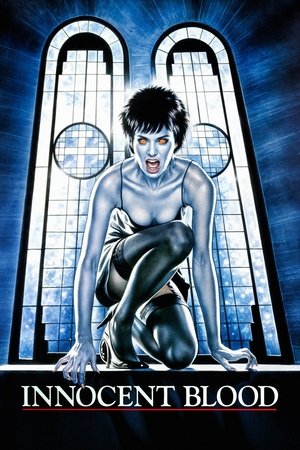
Landis returned to feature horror with Innocent Blood (1992), a vampire film built around the collision between supernatural predation and organized crime. Anne Parillaud plays Marie, a vampire who attempts to feed only on people she considers deserving victims.
The premise turns vampirism into a form of criminal contamination when Marie attacks mob boss Sal Macelli but fails to complete the kill properly. Macelli becomes a vampire himself, creating the possibility that an entire organized-crime network may acquire supernatural power.
Landis again approaches horror through genre collision. The film is simultaneously vampire movie, gangster story, romance and black comedy. Rather than constructing a Gothic vampire world separate from ordinary society, he introduces vampirism directly into contemporary urban crime.
The film also continues his fascination with physical transformation. Victims do not enter an elegant supernatural aristocracy. Vampirism disrupts existing personalities and power structures, making already dangerous people significantly more difficult to kill.
Anne Parillaud and the Vampire Protagonist
Anne Parillaud gives Innocent Blood its central horror perspective as Marie. Unlike many vampire films built around human characters discovering a hidden predator, Landis begins with the vampire herself and asks the audience to accept her rules before those rules begin failing.
Marie attempts to maintain a moral distinction between herself and the people she kills. The horror becomes more complicated when one unfinished feeding allows another predator to become supernatural.
Parillaud's performance therefore prevents the film from becoming simply a gangster comedy with vampires added. Marie experiences hunger, attraction and responsibility as biological realities, giving the supernatural premise an emotional center.
Masters of Horror: Deer Woman
Landis returned explicitly to television horror through the anthology series Masters of Horror. His first contribution, Deer Woman (2005), was co-written with Max Landis and follows a detective investigating a series of bizarre deaths that may be connected to a mythological creature appearing as an attractive woman.
The episode gives Landis another opportunity to mix police investigation, folklore, graphic death and humor. The protagonist struggles to accept an explanation that becomes increasingly absurd according to normal investigative logic but increasingly plausible according to the physical evidence.
The structure recalls Landis' earlier horror in which rational people are forced to accept supernatural rules without losing their ordinary personalities. Comedy grows from resistance to the impossible rather than from denying that the impossible is dangerous.
Masters of Horror: Family
Landis returned to Masters of Horror with Family (2006), a darker story centered on an apparently friendly suburban man whose private life reveals a violent obsession with creating his own idealized household.
George Wendt plays Harold Thompson, whose pleasant exterior conceals murder and grotesque domestic ritual. Unlike the supernatural threat of Deer Woman, the horror here comes from human behavior hidden inside an ordinary neighborhood.
The episode again demonstrates Landis' attraction to tonal contradiction. Familiar suburban politeness exists directly beside corpses and murder without requiring a gradual transition into a separate Gothic world.
Burke and Hare and the Return to Macabre Comedy
Burke and Hare (2010) returned Landis to explicitly macabre material through a black comedy based on the historical body-snatching murders associated with William Burke and William Hare in nineteenth-century Edinburgh.
The film treats murder, anatomy and the commercial demand for cadavers through comedy rather than conventional Gothic terror. Its subject nevertheless reconnects Landis with one of the oldest horror traditions: the human body turned into merchandise for medicine and scientific study.
The production also illustrates the continuity of his approach. Decades after Schlock and An American Werewolf in London, death could still become comic without ceasing to be physically grotesque.
Transformation as the Central Landis Horror Image
Transformation connects much of Landis' horror work. Schlock places the filmmaker himself inside creature makeup. An American Werewolf in London turns transformation into painful anatomical spectacle. Thriller converts metamorphosis into musical performance. Innocent Blood uses vampirism to infect an existing criminal hierarchy.
The transformation is rarely purely visual. Characters also change social roles. David Kessler moves from tourist to predator. Michael Jackson moves from romantic protagonist to monster and zombie leader. Marie attempts to remain morally distinct from the people she feeds upon while her actions accidentally create another vampire.
Landis is therefore interested not simply in seeing a monster but in watching the unstable moment when a familiar human identity becomes something else.
John Landis' Horror Legacy
John Landis directed relatively few horror features compared with filmmakers who devoted their careers to the genre, yet several of those projects became unusually influential. An American Werewolf in London remains a central modern werewolf film because it combines tragic supernatural horror, black comedy and Rick Baker's groundbreaking practical transformation effects without requiring any of those elements to cancel the others.
Rick Baker is the essential creative connection running from Schlock through An American Werewolf in London to Thriller. George Folsey Jr. provides another line of continuity across those same stages as editor and producer. David Naughton and Griffin Dunne give American Werewolf the human relationship that allows its gore and comedy to coexist, while Michael Jackson transformed Landis' monster imagery into one of popular culture's most famous short films.
Innocent Blood later allowed Anne Parillaud to lead Landis into vampire horror from the monster's own perspective, while Masters of Horror demonstrated that he remained interested in supernatural and macabre storytelling decades after his defining werewolf film.
The connecting principle is tonal freedom. Landis never accepted that audiences must stop laughing before horror can become serious or stop being frightened before something can become funny. His most successful horror work occupies the unstable territory where both responses arrive together.
Photos (1)
Images: TMDB
Selected Work
Notable Horror Collaborators
Notable collaborators and creative partners throughout John Landis's horror career.
 Rick Baker
Defining Horror Effects Collaborator
Baker worked with Landis from Schlock through An American Werewolf in London and Thriller, creating the practical transformations that became central to Landis' horror legacy.
GJ
George Folsey Jr.
Defining Horror Production Collaborator
Folsey connected several crucial stages of Landis' horror career, editing Schlock, producing An American Werewolf in London and producing Michael Jackson's Thriller.
 Deborah Nadoolman
Recurring Horror Costume Designer
Nadoolman collaborated repeatedly with Landis across his horror work, including An American Werewolf in London, Thriller and Burke and Hare, helping define the visual identity of several distinct phases of his genre career.
RP
Robert Paynter
Defining Horror Cinematographer
Paynter photographed both An American Werewolf in London and Thriller, giving two of Landis' most important horror productions a crucial shared visual identity.
 David Naughton
Defining Horror Lead
Naughton carried An American Werewolf in London from ordinary traveler to tragic lycanthrope, giving Landis' defining horror film its human and physical center.
 Griffin Dunne
Defining Horror Co-Star
Dunne's progressively decomposing Jack Goodman became essential to the unique collision of grotesque horror and conversational comedy in An American Werewolf in London.
John Landis Horror Movies
Directing (11 credits)
2008
2008
2006
2006
2005
1992
1983
1983
1981
1973
Acting (20 credits)
2026
2024
2021
2018
2018
2015
2012
2009
2009
2008
2000
1997
1997
1996
1994
1992
1990
1989
1981
1973
Writing (7 credits)
2006
2005
1997
1983
1983
1981
1973
Production (6 credits)
2020
2011
1996
1995
1983
1983
Other Crew (1 credits)
2012