



2017
José Mojica Marins
Horror Director · Biography · Horror Filmography · Collaborators · Credits
Horror subgenres & themes
Most represented across this person's horror filmography:
CHRISTMAS
• HORROR ANTHOLOGY
• CANNIBAL
• MONSTER
Biography
José Mojica Marins and the Birth of Coffin Joe
José Mojica Marins occupies a singular place in horror history because he created not only a series of films but an entire screen identity. As Zé do Caixão, known internationally as Coffin Joe, Marins transformed himself into one of the most recognizable figures in Brazilian genre cinema: black clothes, top hat, cape, long fingernails and an obsessive philosophy built around blood, heredity, superiority and contempt for organized religion.
Coffin Joe is not a conventional supernatural monster. In his earliest appearances he is human, but his worldview makes him monstrous. He rejects the morality of the community surrounding him, dismisses religious belief and pursues the idea of producing a perfect child who will continue his bloodline. Violence becomes an extension of that philosophy rather than an accidental feature of the character.
Marins repeatedly blurred the boundary between filmmaker and creation. He directed the films, wrote or co-wrote them, played Coffin Joe and later allowed the character to invade television, public appearances and other films. Over time, Zé do Caixão became inseparable from Marins' public identity even though his career extended beyond the character.
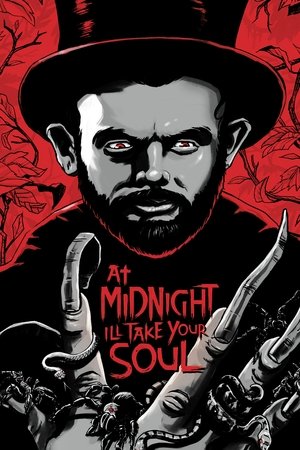
At Midnight I'll Take Your Soul
At Midnight I'll Take Your Soul established Coffin Joe in 1964 and became a foundational work of Brazilian horror cinema. Marins plays an undertaker convinced that only the continuation of his blood matters. His wife cannot provide the child he desires, so he turns his attention toward another woman and eliminates anyone who interferes with his plans.
The film combines physical cruelty, blasphemy, superstition and psychological intimidation with a visual style created under highly limited production conditions. Coffin Joe mocks the beliefs of the villagers around him while simultaneously moving through a world in which curses, spirits and supernatural punishment may actually exist.
That contradiction became central to the character. Joe insists that fear and religion are weaknesses, yet the films repeatedly confront him with visions and events that threaten his certainty. The horror therefore develops not only from what Joe does to others but from the possibility that the universe itself may eventually answer him.
Magda Mei and the First Coffin Joe Film
Magda Mei occupies an important place in the creation of the original Coffin Joe film. She co-wrote At Midnight I'll Take Your Soul with Marins and Waldomiro França and also appeared as Terezinha, the woman Joe desires as the possible mother of his future child.
The collaboration matters because the film establishes almost every essential element of the Coffin Joe mythology: the fixation on heredity, hostility toward conventional religion, physical cruelty and the conflict between Joe's rationalist contempt for superstition and the supernatural punishment closing around him.
Terezinha is central to that conflict. She is not merely another victim but part of the bloodline obsession that gives Joe's violence a personal ideology rather than random motivation.
Giorgio Attili and the Visual Language of Early Coffin Joe
Cinematographer Giorgio Attili became one of the key technical collaborators of Marins' early horror period. He photographed At Midnight I'll Take Your Soul and returned for This Night I'll Possess Your Corpse, helping establish the stark black-and-white visual world associated with the original Coffin Joe films.
The photography relies heavily on contrast, close faces, theatrical compositions and enclosed spaces. Limited resources become part of the atmosphere rather than something the films attempt completely to hide.
Attili also photographed later material connected to Marins, including The Strange World of Coffin Joe and Awakening of the Beast. His recurring involvement makes him one of the collaborators most closely tied to the visual construction of Mojica's formative horror period.
Luiz Elias and the Rhythm of the Early Films
Editor Luiz Elias worked on both At Midnight I'll Take Your Soul and This Night I'll Possess Your Corpse. His contribution helped shape films that frequently move between dialogue-heavy confrontations, sudden physical cruelty and increasingly surreal passages.
Editing is particularly important in Marins' horror because the films often operate through escalation rather than conventional naturalism. A scene may begin as an argument, become an act of violence and then move into imagery that feels closer to nightmare or punishment.
Elias also worked on other Marins material during the period, making him part of the small group of technicians who helped turn limited production resources into a recognizable horror language.
This Night I'll Possess Your Corpse
This Night I'll Possess Your Corpse continued Coffin Joe's search for the woman capable of giving him the perfect child. The sequel expands the physical scale and visual ambition of the first film while making Joe's cruelty even more elaborate.
The film is especially famous for breaking out of its black-and-white photography during a vision of Hell. Color suddenly enters the film as Joe is forced to confront a grotesque supernatural environment, creating a visual rupture between his ordinary world and the possibility of eternal punishment.
The sequence is important because it directly attacks Joe's philosophy. A man who insists there is no supernatural order is confronted with imagery designed to make disbelief physically impossible.
Yet Coffin Joe remains resistant. The character's fascination comes partly from his ability to continue asserting his worldview even when the films themselves increasingly suggest that his certainty may be wrong.
Nivaldo Lima and the Recurring Early Ensemble
Nivaldo Lima appeared in the original At Midnight I'll Take Your Soul as Antônio and returned within Marins' early horror circle. He also appears in This Night I'll Possess Your Corpse and material associated with The Strange World of Coffin Joe.
His recurrence illustrates how Marins often worked with a comparatively small pool of performers and technicians during the formative years of his cinema. These repeated collaborators created continuity even when characters and stories changed.
This repertory quality became especially useful in productions made outside the resources of Brazil's larger commercial film structures. Familiar collaborators understood the speed, physical demands and stylistic eccentricity of Marins' work.
Rubens Francisco Luchetti and the Expansion of Mojica's Horror
Rubens Francisco Luchetti became one of the most important writers in Marins' career after the two were introduced during the 1960s. Their collaboration extended across numerous films and helped move the director beyond the initial Coffin Joe narratives into anthology horror, occult stories and increasingly self-referential work.
Luchetti wrote The Strange World of Coffin Joe and later collaborated on films including Black Exorcism, Inferno Carnal and Hallucinations of a Deranged Mind, among other projects associated with Marins.
The relationship was especially valuable because both men were interested in horror as a broad cultural language rather than one fixed formula. Coffin Joe could exist beside demonic possession, sadism, psychological collapse and stories that blurred cinema, nightmare and public mythology.
Luchetti therefore became more than a writer attached to one production. He helped expand the conceptual territory around Marins' horror persona.
The Strange World of Coffin Joe
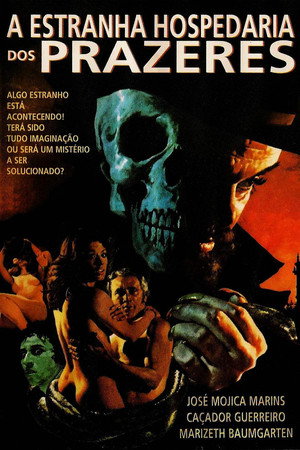
The Strange World of Coffin Joe is an anthology rather than a direct chapter in the main Coffin Joe narrative. Marins introduces a series of macabre stories dealing with cruelty, obsession and extreme human behavior.
The structure demonstrates how quickly the Coffin Joe identity had become larger than a single fictional continuity. Marins could use the character as a host and emblem of horror even when the stories themselves were not about Joe.
Luchetti's participation as screenwriter and Attili's cinematography connect the anthology directly with the creative network surrounding Marins' earlier films.
The film also shows how Mojica increasingly treated his own public image as part of the horror experience. Zé do Caixão was no longer only a protagonist. He was becoming a figure capable of introducing and legitimizing an entire macabre universe.
Awakening of the Beast and Coffin Joe as Cultural Infection
Awakening of the Beast pushed Marins toward one of his most self-reflexive horror experiments. The film examines drugs, sexuality and social panic through a structure in which the image of Coffin Joe itself becomes capable of influencing the minds of people exposed to it.
The character therefore operates less as an ordinary person than as a cultural object. Participants under the influence of LSD encounter visions connected to Zé do Caixão, allowing Marins to examine the reputation surrounding his creation.
The movie mixes documentary-style discussion, exploitation imagery, hallucination and horror. Rather than simply producing another Coffin Joe adventure, Marins turns public anxiety about the character into the subject of the film.
This was one of the clearest signs that filmmaker and monster had begun to merge culturally. The audience is no longer asked only what Coffin Joe does inside a story, but what the image of Coffin Joe does to people outside it.
Black Exorcism and the Director Inside His Own Nightmare
Black Exorcism places Marins himself inside a supernatural story involving his fictional creation. The director appears as a version of José Mojica Marins and becomes confronted by forces connected with Coffin Joe.
The structure intensifies the breakdown between author and character. Marins can no longer remain safely outside the monster he created because the movie treats Zé do Caixão as something capable of escaping fictional boundaries.
The film also reflects the popularity of demonic-possession horror during the 1970s while filtering the material through Marins' existing mythology. Religious conflict, occult threat and the Coffin Joe persona become parts of the same nightmare.
Hallucinations of a Deranged Mind
Hallucinations of a Deranged Mind developed the self-referential approach even further. The film incorporates footage from earlier Marins productions into a story about a psychiatrist tormented by visions of Coffin Joe.
Existing horror imagery is therefore recycled as evidence of the character's psychological power. Scenes originally created for separate films become memories, hallucinations and attacks occurring inside another narrative.
The technique converts Marins' own filmography into raw horror material. Coffin Joe no longer needs a completely new story because the accumulated archive of previous images has itself become threatening.
This self-mythologizing distinguishes Marins from many directors associated with recurring horror characters. He did not merely revisit Coffin Joe through sequels; he repeatedly questioned the boundary between character, filmmaker and audience.
Censorship and the Survival of Coffin Joe
Marins worked through periods of severe censorship in Brazil, and several of his films encountered restrictions, delays or difficulties reaching audiences in their intended form. His mixture of blasphemy, explicit cruelty, sexuality and attacks on conventional morality made the work especially vulnerable to official interference.
The pressure affected more than individual scenes. It shaped when films could be released and how Marins navigated the commercial environment surrounding Brazilian exploitation and genre cinema.
Coffin Joe nevertheless survived those changes. Even when Marins moved into other forms of filmmaking, the character remained available for television appearances, later productions and public performance.
The persistence helped transform Zé do Caixão from one movie villain into a national horror icon.
The Long Absence of the Final Coffin Joe Film
The main Coffin Joe story remained unfinished for decades after This Night I'll Possess Your Corpse. Marins continued working, and the character continued appearing in other contexts, but the narrative built around Joe's obsession with producing the perfect descendant did not receive its direct conclusion until the twenty-first century.
The enormous gap became part of the mythology. By the time Marins returned to the role in a major feature, both the filmmaker and Brazilian horror cinema belonged to a radically different industrial environment.
This made the eventual return more than an ordinary sequel. It became a confrontation between a character created in the 1960s and a new generation of filmmakers, effects artists and horror audiences.
Dennison Ramalho and Embodiment of Evil
Dennison Ramalho became a key collaborator in the final phase of the Coffin Joe trilogy. He co-wrote Embodiment of Evil with Marins, helping construct the return of Zé do Caixão after approximately four decades.
The film begins with Joe released after years of imprisonment and immediately returning to the obsession that defined the earliest films: finding the woman capable of continuing his bloodline.
Ramalho belonged to a younger generation of Brazilian horror filmmakers deeply aware of Mojica's importance. The collaboration therefore linked the original Coffin Joe mythology with filmmakers who had grown up after the character had already become a cult figure.
The partnership allowed the final film to retain the philosophical obsessions of the earlier work while embracing far more explicit modern effects and production resources.
Embodiment of Evil and the Return of Coffin Joe
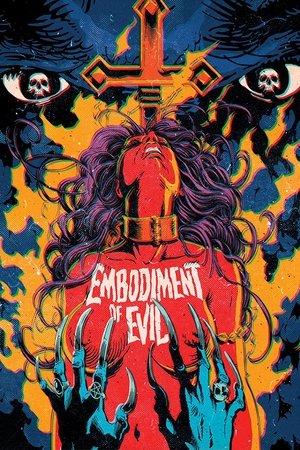
Embodiment of Evil finally completed the central Coffin Joe trilogy in 2008. Marins returned physically to the role as an older Zé do Caixão entering a São Paulo radically different from the world in which the character first appeared.
Age does not soften Joe's beliefs. He remains obsessed with bloodline, superiority and the search for the woman capable of bearing his ideal child. The persistence makes the character disturbing because decades of time have altered almost everything around him except the worldview driving his violence.
The film also allows modern practical effects to visualize brutality at a level the early productions could not technically achieve. Torture, bodily damage and grotesque imagery become more explicit while still serving the same basic Coffin Joe philosophy.
The return demonstrated that the character could survive outside the visual limitations of the 1960s. The top hat, nails and rhetoric remained recognizable even when the filmmaking technology changed completely.
The Coffin Joe Persona
The extraordinary durability of Coffin Joe comes from the fact that he is simultaneously simple and ideologically specific. His silhouette can be recognized immediately, but the character is more than costume.
Joe believes in the superiority of his own blood and treats conventional morality as an obstacle invented by weaker people. Religion becomes his principal philosophical enemy because it proposes a moral authority above the individual.
This gives his crimes a consistency absent from killers motivated only by sadism. Coffin Joe does terrible things because he believes they prove the correctness of his worldview.
The films then undermine that certainty by surrounding him with supernatural events. The horror repeatedly asks whether the man who mocks belief may eventually discover that the beliefs he rejected were true.
José Mojica Marins and Brazilian Horror
Marins became historically important not simply because Coffin Joe was memorable but because he demonstrated that explicitly Brazilian horror could develop around local culture, superstition, religion and social conflict rather than merely imitate foreign monsters.
At Midnight I'll Take Your Soul is widely identified as a foundational Brazilian horror feature, and the films that followed created a body of work whose imagery became recognizable internationally despite production conditions far removed from Hollywood or European studio horror.
His collaborators were essential to that process. Giorgio Attili and Luiz Elias helped establish the visual and editorial language of the earliest films. Magda Mei participated directly in writing and performing the first Coffin Joe story. Nivaldo Lima belonged to the recurring early ensemble. Rubens Francisco Luchetti expanded the written mythology across multiple later horrors, while Dennison Ramalho helped bring Coffin Joe into the twenty-first century.
The resulting legacy belongs simultaneously to underground cinema, exploitation, supernatural horror and auteur filmmaking. Marins turned resource limitations into an identity and then turned that identity into a monster capable of surviving for more than four decades.
José Mojica Marins' Horror Legacy
Few horror filmmakers have fused themselves with a fictional creation as completely as José Mojica Marins. Coffin Joe began as the protagonist of a low-budget Brazilian horror film and eventually became a public persona, television figure, cultural symbol and international cult icon.
The character's longevity depended upon more than visual design. His philosophy gives the films an argument that can continue indefinitely: individual will against religion, bloodline against morality, human arrogance against the possibility of supernatural judgment.
That conflict powers the original films, the experimental and self-reflexive work of the following decades and the final return in Embodiment of Evil. Technology, collaborators and Brazilian cinema changed enormously around him, but Coffin Joe continued asking the same question: what happens when a man refuses to accept any authority beyond himself?
Marins spent much of his career answering that question through horror, and in doing so created one of the genre's most distinctive monsters without ever needing to make him anything other than human.
Photos (2)
Images: TMDB
Selected Work
Notable Horror Collaborators
Notable collaborators and creative partners throughout José Mojica Marins's horror career.
RL
Rubens Francisco Luchetti
Defining Horror Screenwriter
Luchetti became one of Marins' most important writing partners, collaborating across The Strange World of Coffin Joe, Black Exorcism, Inferno Carnal and other horror projects.
GA
Giorgio Attili
Defining Horror Cinematographer
Attili photographed the first two Coffin Joe films and other early Marins horror, helping establish the stark visual identity of his formative genre period.
LE
Luiz Elias
Defining Horror Editor
Elias edited At Midnight I'll Take Your Soul and This Night I'll Possess Your Corpse, shaping the rhythm of the films that established Coffin Joe.
 Dennison Ramalho
Late-Career Horror Collaborator
Ramalho co-wrote Embodiment of Evil with Marins, helping bring Coffin Joe back after four decades and complete the central trilogy.
 Magda Mei
Foundational Horror Collaborator
Mei co-wrote At Midnight I'll Take Your Soul and played Terezinha, contributing directly to the film that introduced Coffin Joe to horror cinema.
NL
Nivaldo Lima
Recurring Early Horror Performer
Lima appeared across Marins' formative Coffin Joe period, including At Midnight I'll Take Your Soul and later early horror productions.
Dennison Ramalho
Late-Career Horror Collaborator
Ramalho co-wrote Embodiment of Evil with Marins, helping bring Coffin Joe back after four decades and complete the central trilogy.
Magda Mei
Foundational Horror Collaborator
Mei co-wrote At Midnight I'll Take Your Soul and played Terezinha, contributing directly to the film that introduced Coffin Joe to horror cinema.
NL
Nivaldo Lima
Recurring Early Horror Performer
Lima appeared across Marins' formative Coffin Joe period, including At Midnight I'll Take Your Soul and later early horror productions.
José Mojica Marins Horror Movies
Directing (24 credits)
2015
2015
2013
2008
2008
2007
2004
1986
1980
1979
1979
1978
1978
1978
1977
1976
1974
1972
1970
1968
1968
1967
1964
Acting (33 credits)
2024
2022
2017
2015
2015
2015
2012
2009
2008
2008
2008
2008
2007
2007
2004
2002
2002
1996
1993
1986
1982
1979
1979
1978
1978
1977
1976
1974
1972
1970
1968
1967
1964
Writing (14 credits)
2008
2008
1980
1979
1979
1978
1977
1976
1974
1972
1970
1968
1967
1964
Production (7 credits)
1980
1978
1977
1976
1970
1968
1967
Other Crew (2 credits)
2024
2022