



1992
John Ireland
Horror Actor · Biography · Horror Filmography · Collaborators · Credits
Horror subgenres & themes
Most represented across this person's horror filmography:
CANNIBAL
Biography
John Ireland and the Darker Edge of the American Character Actor
John Ireland brought something unusually hard and unsentimental to horror cinema. Long before he became associated with haunted houses, demonic forces, slashers and vampires, he had already built a reputation playing soldiers, gunmen, policemen, criminals and morally compromised men across westerns, film noir and prestige drama. That background gave his later horror roles a different texture from performers who entered the genre primarily through fantasy or Gothic cinema. Ireland often looked as though he had arrived from a harsher, more ordinary world, which made the supernatural and grotesque events around him feel more immediate.
His horror filmography stretches across several very different periods of genre history. He worked with William Castle in I Saw What You Did, appeared in Lucio Fulci's early giallo One on Top of the Other, entered American drive-in horror through The House of Seven Corpses, Welcome to Arrow Beach and Satan's Cheerleaders, then continued into supernatural horror with The Incubus, vampire comedy with Sundown: The Vampire in Retreat and late slasher territory with Terror Night. Few actors of his generation crossed so many changing forms of horror while maintaining such a consistent screen identity.
Vancouver, New York and the Road to Acting
John Benjamin Ireland was born in Vancouver, British Columbia, on January 30, 1914, and was raised largely in New York City. Before acting became his profession, he held a variety of jobs and developed as a performer through stage work rather than through the Hollywood studio system. His physical presence was immediately distinctive, tall, lean and angular, with a face capable of suggesting intelligence and threat at the same time. Those qualities eventually made him especially useful in roles where trust could never be taken for granted.
Ireland worked in theatre before establishing himself in film during the 1940s. The stage gave him the discipline to handle long passages of dialogue and characters whose personalities depended less on outward charm than on tension, calculation and control. When he moved into cinema, directors frequently cast him as men who seemed slightly removed from the emotional center of the group. That ability to remain watchful and difficult to read would become increasingly useful once horror entered his career.
A Walk in the Sun and the Arrival in Hollywood
Ireland's major film breakthrough came with A Walk in the Sun (1945), Lewis Milestone's war drama about American soldiers advancing through Italy during the Second World War. The role helped establish him as a serious screen actor capable of functioning within large ensembles without disappearing into them. His characters often possessed an interior life visible through small reactions rather than constant dialogue, a quality that distinguished him from more conventionally heroic performers. Hollywood quickly recognized that this reserve could be used in westerns, crime films and psychologically darker material.
Throughout the late 1940s, Ireland appeared in important productions including My Darling Clementine, Red River and Joan of Arc. The western in particular became one of the genres most closely associated with him, because his physical appearance could suggest both frontier toughness and moral uncertainty. He rarely needed to dominate a scene through volume. Ireland's strength came from creating the impression that his characters were always evaluating what the people around them might do next.
All the King's Men and the Oscar Nomination
Ireland received an Academy Award nomination for Best Supporting Actor for All the King's Men (1949), in which he played journalist Jack Burden. The film follows the rise and corruption of politician Willie Stark, using Burden as an observer whose relationship with power becomes increasingly complicated. Ireland's performance showed that he could handle moral ambiguity on a level far beyond the villains and gunfighters that often surrounded him in popular cinema. The nomination placed him among the most respected supporting actors working in Hollywood at the end of the decade.
This part of his career matters when considering his later horror work because Ireland never entered genre cinema as an unknown performer searching for legitimacy. By the time horror began taking a larger place in his filmography, he had already worked in major productions, received an Oscar nomination and established a recognizable identity across American cinema. His later appearances in lower-budget horror therefore carried the accumulated history of an actor audiences had seen in very different surroundings. That contrast often made his presence more interesting than the size of the role itself.
Villains, Westerns and the Development of Menace
During the 1950s and early 1960s, Ireland moved constantly between westerns, crime pictures, television and larger productions. He appeared in films such as Vengeance Valley, Gunfight at the O.K. Corral and Spartacus, frequently playing characters whose motives remained uncertain or whose loyalty could shift according to circumstance. Directors learned how effectively his features could communicate suspicion without requiring elaborate explanation. A long stare or controlled pause often did more work than overt aggression.
This was ideal preparation for horror. Genre cinema frequently depends upon uncertainty about whether a character represents protection or danger, and Ireland could inhabit that ambiguity naturally. Even when playing a policeman or authority figure, he rarely projected uncomplicated reassurance. There was usually enough severity in his performance to make the audience wonder what else might be happening behind the professional surface.
I Saw What You Did and the Murderer on the Telephone
William Castle's I Saw What You Did (1965) became one of Ireland's earliest major connections with American horror. He plays Steve Marak, a man who murders his wife and then receives a prank telephone call from teenage girls who jokingly tell strangers that they have seen what they did. The girls have no idea they have contacted an actual murderer, but Marak assumes that his crime has been discovered. A childish joke therefore becomes the mechanism that places them in genuine danger.
Ireland's performance is effective because Steve is not presented as a flamboyant monster. He appears capable of moving through ordinary suburban life, which makes the violence more disturbing. Castle's film turns the telephone, one of the most familiar domestic objects in American life, into a bridge between teenage play and adult homicide. Ireland anchors that shift by behaving like a man responding logically to a threat, even though the logic begins with murder.
The role anticipates later home-invasion and stalker horror because danger arrives through ordinary communication rather than through a Gothic setting. Steve becomes frightening precisely because nothing about him requires supernatural explanation. Ireland's controlled manner gives the character a disturbing plausibility, and the film demonstrates how easily his screen persona could move from crime cinema into horror without requiring substantial alteration.
Day of the Nightmare and Psychological Horror
The same period saw Ireland involved in Day of the Nightmare (1965), another low-budget production operating around murder, psychological disturbance and police investigation. Ireland plays Sergeant Dave Harmon, placing him on the investigative side of a story in which identity and violence become increasingly unstable. The role is less iconic than his work for William Castle, but it shows how quickly darker genre material was becoming a regular part of his filmography. Ireland could move from perpetrator to investigator without losing the severity that made both positions believable.
This flexibility became characteristic of his horror career. He was not confined to one recurring type such as doctor, priest or monster. Depending on the production, he could become the killer, the sheriff, the detective, the director of a doomed film crew or an older authority figure confronting something supernatural. The consistency came from his personality rather than from the job assigned to the character.
Lucio Fulci and One on Top of the Other
In 1969 Ireland entered Italian genre cinema through Lucio Fulci's One on Top of the Other, also known internationally as Perversion Story. The film belongs to Fulci's early giallo period, years before the director became internationally identified with the extreme gore of Zombie, City of the Living Dead and The Beyond. Ireland plays Inspector Wald, becoming part of an elaborate mystery involving death, sexual deception, mistaken identity and manipulation.
The film is important within both men's careers because it captures Fulci at a transitional point. The director was moving toward increasingly elaborate thrillers built around visual style, eroticism and unstable identity, while Ireland was becoming more active in European productions. His familiar authority fits the investigative structure well because the audience already associates his face with crime cinema. That recognizability allows Fulci to use him as a stabilizing presence while the central plot becomes progressively more deceptive.
One on Top of the Other also connects Ireland to a strand of Italian genre filmmaking that would become essential to international horror during the following decade. Although the film is primarily a giallo rather than supernatural horror, its obsession with identity, death and erotic manipulation belongs to the same evolving ecosystem. Ireland's presence therefore places him unusually early inside a movement that would soon become one of European horror's most important forms.
The House of Seven Corpses and Horror About Making Horror
The House of Seven Corpses (1974) gave Ireland one of his most substantial horror roles. He plays Eric Hartman, a film director leading a production inside an old house associated with a history of violent deaths. The crew attempts to exploit that history while shooting a horror movie, but the decision to use genuine occult material within the production begins collapsing the distinction between staged horror and actual supernatural danger. The premise gives Ireland an unusual position as a director inside a horror film about the process of manufacturing horror.
The film also reunited him with Faith Domergue, with whom he had already appeared in Fulci's One on Top of the Other. John Carradine adds another veteran genre presence, creating a cast that bridges several generations of horror and exploitation cinema. Ireland receives much more than a ceremonial veteran appearance, because Hartman is directly involved in the decisions that bring the characters into dangerous territory. His professional confidence gradually becomes less useful as the production enters a situation no filmmaker can control.
The meta-horror element is especially interesting in retrospect. The characters are deliberately constructing artificial death inside a location connected with real death, then introduce occult ritual into the performance. Ireland's character therefore becomes someone who believes he understands the difference between simulation and reality until that distinction disappears. The concept anticipates later horror films fascinated by cursed productions, dangerous locations and cinema itself becoming part of the supernatural mechanism.
The Phantom of Hollywood and a Studio Becoming a Haunted Place
The television film The Phantom of Hollywood (1974) again placed Ireland inside a story where the entertainment industry itself becomes a horror environment. He plays Lieutenant Gifford in a mystery centered on a figure haunting an aging film-studio backlot that is about to be demolished. The production used the real MGM backlot during a period when portions of the historic studio landscape were disappearing, giving the film an unusual relationship with actual Hollywood history. Fictional haunting and industrial decline occupy the same physical space.
Ireland's role as a police lieutenant is familiar territory, but the environment makes the character function differently from a conventional crime-film investigator. The backlot is filled with false streets, obsolete buildings and abandoned cinematic spaces, making it difficult to separate the practical geography of the studio from the fantasy worlds once created there. Ireland's grounded performance helps the television film maintain a connection with procedural investigation while the story moves through increasingly Gothic imagery. The result is another example of his usefulness as the rational figure entering a place that refuses to remain rational.
Welcome to Arrow Beach and the Cannibal Horror of the 1970s
Welcome to Arrow Beach, directed by Laurence Harvey, moved Ireland into a much darker form of 1970s horror. He plays Sheriff Duke Bingham, the local authority investigating events surrounding a coastal mansion inhabited by a Korean War veteran and his sister. The story gradually develops around murder and cannibalistic horror, giving the seemingly peaceful California setting an increasingly diseased atmosphere. Ireland again functions as the representative of ordinary law trying to understand violence hidden beneath an apparently respectable surface.
The film belongs to a period when American horror was becoming more interested in human monstrosity, trauma and physical degradation than in classical supernatural creatures. The isolated house and family secrets retain Gothic elements, but the violence itself is rooted in damaged people. Ireland's sheriff therefore operates at the boundary between older crime-film investigation and the more disturbing horror cinema developing during the decade.
His presence is particularly effective because he had spent decades playing lawmen and authority figures. Audiences did not need extensive explanation to understand what his character represented. Horror could then concentrate on demonstrating how inadequate ordinary authority becomes when confronted with a private world organized around extreme violence.
Satan's Cheerleaders and Drive-In Occult Horror
Satan's Cheerleaders (1977) places Ireland directly inside the drive-in exploitation culture of the period. He plays the sheriff at the center of a satanic group whose activities collide with a group of cheerleaders. The film combines occult horror, sexploitation, black comedy and deliberately outrageous situations, existing at almost the opposite end of the production spectrum from the prestigious films that had established Ireland's career decades earlier. Yet he approaches the material with the same professional seriousness he brought to more conventional dramatic roles.
This ability became one of the reasons veteran actors were so valuable to low-budget horror. A performer such as Ireland could give a bizarre premise immediate authority simply by refusing to treat it as disposable. His sheriff does not behave as though he knows he is appearing in camp entertainment. The contrast between the actor's severe screen identity and the absurdity surrounding him becomes part of the film's peculiar energy.
The production also reunited Ireland with John Carradine after The House of Seven Corpses. Both men had careers stretching back into classical Hollywood, yet by the 1970s they were equally willing to appear in drive-in genre material. Their presence demonstrates how exploitation cinema absorbed performers from earlier eras and converted their accumulated screen histories into part of its appeal.
The Incubus and Supernatural Violence
The Incubus (1982) gave Ireland another substantial horror role, this time opposite John Cassavetes. He plays Hank Walden, a law-enforcement figure investigating a series of brutal attacks that gradually appear connected with a demonic force. The film combines police investigation, sexual violence and supernatural horror, forcing characters accustomed to physical evidence to consider an explanation that does not fit conventional criminal logic.
Ireland's role is especially suited to his established screen identity because he once again represents institutional authority without becoming a source of complete reassurance. Walden can investigate scenes, question witnesses and attempt to construct a rational pattern, but the nature of the attacks pushes the case beyond normal procedure. The tension comes from watching experienced adults discover that professional competence may not be enough.
The presence of Cassavetes adds another layer of seriousness to a production that could easily have become purely sensational. Both actors bring decades of screen experience into a story about demonic assault, giving the film a weight its premise might not otherwise possess. Ireland's contribution belongs to a recurring pattern in his horror career: the older authority figure discovering that the world contains something his previous experience has not prepared him to explain.
Miami Golem and Science Fiction Horror
During the 1980s Ireland continued accepting genre roles as horror increasingly overlapped with science fiction, direct-market filmmaking and international co-production. Miami Golem placed him in a hybrid world far removed from the classical Hollywood productions of his early career. By this stage Ireland had become the kind of veteran performer whose presence could immediately give low-budget material a recognizable center. His age and screen history became assets rather than limitations.
This period of his career also illustrates how genre cinema preserves actors after mainstream Hollywood has changed around them. Horror, science fiction and exploitation frequently offered substantial roles to performers whose names already carried decades of association. Ireland could therefore continue moving between television, thrillers and increasingly eccentric genre projects while retaining the same professional identity. The films changed, but the qualities directors wanted from him remained remarkably consistent.
Terror Night and the Killer as an Actor
Terror Night, also circulated as Bloody Movie, gave Ireland one of his most unusual late horror roles. He plays Lance Hayward, a vanished silent-film star inhabiting an old mansion and murdering intruders while adopting costumes and identities associated with his former screen roles. The concept turns an actor's own history into the mechanism of a slasher film, making performance itself part of the killer's method. Ireland therefore becomes both murderer and performer within a story explicitly fascinated by old cinema.
The role is especially appropriate for someone with Ireland's long career because the character's menace depends partly upon accumulated screen identity. Hayward belongs to another era of filmmaking and refuses to disappear quietly when that era has passed. Each new disguise transforms cinematic nostalgia into violence, suggesting that the past survives by physically attacking the present. Ireland's own status as a veteran actor gives the idea an authenticity a younger performer could not have supplied.
The production history was complicated, with multiple filmmakers associated with the finished movie, but Ireland's presence remains one of its strongest defining elements. He brings seriousness to a premise that could otherwise operate only as gimmick. By making the aging actor himself the monster, Terror Night turns one of Ireland's greatest professional strengths, the history visible in his face, into the central source of horror.
Sundown: The Vampire in Retreat and Horror Comedy
Anthony Hickox's Sundown: The Vampire in Retreat (1989) allowed Ireland to enter a much lighter form of horror. The film imagines a desert community populated by vampires attempting to survive on artificial blood rather than feeding on humans, combining western imagery, vampire mythology and comedy. Ireland appears as Ethan Jefferson, joining a cast that includes David Carradine, Bruce Campbell, Maxwell Caulfield and M. Emmet Walsh. The production deliberately mixes veteran genre personalities with younger cult performers, creating a world built partly from recognition.
The film's western environment also suits Ireland particularly well because it reconnects his late horror career with the genre that had defined so much of his earlier work. Vampires inhabit a landscape visually associated with frontier cinema, allowing the actor's history in westerns to become an unspoken part of the joke. Ireland no longer needs to play a conventional cowboy for that association to function. Simply placing him inside the desert setting activates decades of cinematic memory.
Sundown demonstrates another side of his genre usefulness. Ireland did not require horror to remain solemn or psychologically severe. He could function equally well inside a self-aware hybrid where vampire mythology, gunfights and comedy share the same world. His presence again provides credibility without preventing the film from enjoying its own absurdity.
The Graveyard Story and Late-Career Gothic Mystery
Near the end of his career, Ireland appeared as Doctor McGregor in The Graveyard Story, a supernatural mystery centered on a grave, a missing girl and an investigation into events that refuse to remain comfortably explained. The role returns him to a familiar position as an older professional whose knowledge becomes relevant to a mystery involving death. By this stage, his age gave such characters immediate authority because audiences could read decades of experience in his physical presence.
The film belongs to a quieter and more modest form of horror than the occult excess of Satan's Cheerleaders or the demonic violence of The Incubus. Ireland's restrained style suits that atmosphere because he does not need constant action to maintain interest. A late-career performance could rely increasingly on voice, expression and accumulated gravitas rather than physical threat. The same qualities that once made him convincing as a dangerous young man now made him effective as a witness to the strange.
Waxwork II and a Final Connection to Horror
One of Ireland's final screen appearances came in Anthony Hickox's Waxwork II: Lost in Time (1992), where he appears as King Arthur. The film moves through different cinematic and literary worlds, mixing horror, fantasy, parody and time-travel adventure while filling its supporting cast with recognizable genre actors. Ireland's appearance is relatively brief, but it functions as another example of horror cinema using the history attached to veteran performers as part of its texture. A face associated with decades of cinema enters a film literally built around moving between fictional histories.
The role also creates a late connection with Hickox after Sundown: The Vampire in Retreat. By the beginning of the 1990s, Ireland belonged to a generation whose careers had crossed nearly the entire postwar history of American popular filmmaking. His presence in a self-aware genre sequel therefore feels strangely appropriate. The actor who had begun in wartime drama and classical westerns ended his career inside cinema that openly treated older genres as material to be revisited, combined and transformed.
John Ireland and European Genre Cinema
Ireland's willingness to work internationally was an important part of his longevity. During the late 1960s and 1970s he appeared frequently in European productions, particularly Italian and Spanish films, moving between westerns, thrillers, war films and exploitation. This flexibility placed him inside an international genre economy where familiar American actors could give productions immediate recognition beyond their home markets. Ireland was particularly well suited to that system because his face communicated authority and danger even when audiences were unfamiliar with the details of his earlier career.
His collaboration with Lucio Fulci remains the most important connection to Italian horror, but it was part of a broader pattern rather than an isolated detour. Ireland belonged to the generation of Hollywood performers who helped connect American star recognition with the increasingly international genre cinema of the period. That circulation between industries eventually made his horror filmography far more varied than it would have been had he remained tied exclusively to mainstream American studio production.
Authority Figures Who Never Feel Completely Safe
One recurring pattern across Ireland's horror roles is institutional authority. He plays inspectors, sheriffs, detectives, police officers and other men whose jobs supposedly place them between ordinary citizens and danger. Yet Ireland rarely projects the comforting stability associated with the traditional cinematic policeman. His characters often seem tired, suspicious, severe or morally ambiguous before the horror has even fully revealed itself.
This creates useful tension because the audience cannot relax simply because Ireland's character has arrived. Sometimes he is genuinely attempting to solve the problem, as in The Incubus or Welcome to Arrow Beach. Elsewhere authority itself becomes corrupted, as in Satan's Cheerleaders. The same screen qualities can therefore represent protection or threat depending upon the film, allowing directors to use audience expectations against them.
The Face of Experience
Ireland's appearance changed in a way particularly useful to his later horror work. The lean severity of his younger years gradually became the weathered authority of an older character actor, but the intensity in his face remained recognizable. He could look exhausted without appearing weak and threatening without needing obvious physical violence. Aging therefore expanded rather than reduced the kinds of horror characters he could play.
By the 1980s and early 1990s, filmmakers could cast Ireland and receive decades of screen history automatically. Viewers familiar with classical westerns, noir or television brought those associations into the horror film with them. Genre cinema often thrives on this process because a veteran performer can communicate a lifetime before the screenplay explains anything. Ireland became especially effective at carrying that invisible history into modest productions.
From Classical Hollywood to Exploitation Cinema
Few elements of Ireland's career are more striking than the distance between All the King's Men and films such as Satan's Cheerleaders or Terror Night. Yet treating the later work simply as decline misses what makes his filmography interesting. Ireland continued acting across whatever forms of production remained available, and genre cinema gave him opportunities to play characters that mainstream filmmaking increasingly reserved for younger stars. Horror benefited directly from his willingness to keep working.
The result is a career that connects cinematic worlds often discussed separately. Ireland belongs to classical Hollywood, postwar westerns, film noir, prestige drama, European exploitation, giallo, occult drive-in horror, supernatural cinema and the late slasher cycle. The continuity between those worlds is the actor himself. His filmography demonstrates how genre history is often carried not only by directors and franchises but by working performers who move continuously through changing industrial landscapes.
John Ireland's Horror Legacy
John Ireland was never defined exclusively by horror, which is precisely what makes his relationship with the genre so interesting. He arrived with a fully developed screen identity established through westerns, crime films and major dramatic productions, then allowed horror filmmakers to reshape that identity over several decades. I Saw What You Did turned him into an ordinary murderer terrified that teenagers had discovered his crime. One on Top of the Other placed him inside Fulci's developing giallo language, while The House of Seven Corpses made him a filmmaker confronting genuine occult horror inside his own production.
The later films continued transforming the same basic authority. In Welcome to Arrow Beach and The Incubus, Ireland represents law confronting forms of violence it cannot easily classify. Satan's Cheerleaders corrupts that authority completely, while Terror Night transforms the actor himself into the monster through the figure of an aging screen star who kills while performing old roles. Sundown: The Vampire in Retreat then folds Ireland's western history back into horror comedy, demonstrating how flexible his persona remained near the end of his career.
His importance therefore lies less in one iconic monster or franchise than in continuity. Ireland carried the severity of classical American character acting into increasingly strange corners of horror cinema without changing himself into a conventional genre personality. The films around him could become occult, supernatural, grotesque or openly absurd, but his performances continued to provide a recognizable human center. That consistency allowed him to make bizarre situations feel temporarily plausible.
John Ireland died in Santa Barbara, California, on March 21, 1992, at the age of seventy-eight. His career had lasted for roughly half a century and extended from major studio productions to the constantly changing world of independent genre filmmaking. Within horror, he remains a particularly valuable example of the veteran character actor whose accumulated history becomes part of the atmosphere itself. He did not need to become a horror icon in the conventional sense because by the time he entered a room, the audience already knew that trouble could follow.
Known Among Horror Fans For
Notable Horror Collaborators
Notable collaborators and creative partners throughout John Ireland's horror career.
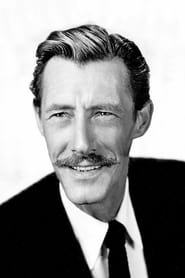 John Carradine
Recurring Horror Co-Star
Carradine shared The House of Seven Corpses and Satan's Cheerleaders with Ireland, linking two distinct phases of his 1970s horror work.
 William Castle
Defining Horror Director
Castle directed Ireland as murderer Steve Marak in I Saw What You Did, one of the most significant horror roles of Ireland's career.
John Ireland Horror Movies
Acting (17 credits)
1991
1991
1989
1985
1983
1982
1977
1974
1974
1974
1972
1969
1965
1965
1960
1955