
1999
Roman Polanski
Horror Director · Biography · Horror Filmography · Family · Collaborators · Credits
Horror subgenres & themes
Most represented across this person's horror filmography:
VAMPIRE
Biography
Roman Polanski and the Architecture of Psychological Horror
Roman Polanski occupies a distinctive position in horror cinema. He has never been primarily a horror director, and the majority of his filmography belongs to other genres, yet a relatively small group of films had an influence far greater than their number suggests. Repulsion, Rosemary's Baby and The Tenant transformed the apartment into one of modern horror's most threatening environments. The Fearless Vampire Killers approached Gothic traditions through black comedy and affectionate parody, while The Ninth Gate returned decades later to occult horror through books, collectors and the possibility of supernatural knowledge.
Across these films, Polanski repeatedly removes the security normally associated with private space. Bedrooms, bathrooms, hallways and neighboring apartments cease to protect their inhabitants and instead become sources of surveillance, intrusion and psychological pressure. His protagonists frequently occupy unstable positions between legitimate danger and subjective paranoia, and the audience is denied the comfort of knowing exactly where one ends and the other begins. Horror does not simply arrive from outside. It develops inside places that should have been safe.
This approach distinguishes Polanski from directors whose horror is built primarily around monsters or physical spectacle. Violence can be sudden and severe in his films, but sustained anxiety usually develops first through framing, sound, architecture, social behavior and uncertainty. A neighbor heard through a wall, an object moved from its expected position or a person standing slightly too close can become more disturbing than an explicit supernatural effect. That ability to make ordinary environments gradually intolerable became one of his most important contributions to psychological horror.
Paris, Kraków and a Childhood During the Holocaust
Roman Polanski was born in Paris on August 18, 1933, into a Polish family that returned to Kraków while he was still a young child. The German invasion of Poland radically transformed his childhood. His family was confined in the Kraków ghetto under Nazi occupation, and Polanski eventually escaped and survived by living under dangerous and unstable circumstances outside it. His mother was deported to Auschwitz and murdered there. His father was deported and survived imprisonment in a concentration camp.
These experiences belong to the historical record of Polanski's life, but they should not be used as a simplistic psychological explanation for every film he later made. The recurring claustrophobia, suspicion and fear of hostile communities in his cinema can invite biographical interpretation, yet films are produced through many influences and creative decisions. Polanski himself has nevertheless spoken about his wartime memories and about the importance cinema acquired for him during childhood. The act of entering a movie theatre offered access to another world at a period when ordinary existence was extraordinarily dangerous.
The direct relationship between those childhood experiences and his filmmaking became especially visible much later with The Pianist, although that film is not horror. Its recreation of occupied Poland drew upon memories that Polanski had carried since childhood. For an understanding of his horror work, the more useful connection is not to claim that the Holocaust explains individual monsters or plots, but to recognize how frequently his cinema is concerned with people trapped inside systems they do not control and surrounded by others whose intentions cannot safely be read.
Film School, Short Films and Knife in the Water
Polanski developed first as an actor and then as a filmmaker in postwar Poland. He studied at the film school in Łódź and made a series of short films in which absurdity, cruelty and black humor already coexisted. Works such as Two Men and a Wardrobe demonstrated an attraction to characters who find apparently ordinary social environments irrationally hostile. That mixture of comedy and menace would remain important throughout his career.
His first feature, Knife in the Water, released in 1962, is not a horror film, but it established several ideas that would become fundamental to his horror cinema. Almost the entire story revolves around three people confined together on a yacht. Physical space is restricted, relationships constantly shift and apparently minor gestures acquire threatening implications. Rather than depending on an external villain, tension grows from proximity and uncertainty about what the characters may do to one another.
The international success of Knife in the Water gave Polanski opportunities to work outside Poland. More importantly for his development as a horror filmmaker, it demonstrated that suspense could be intensified by restricting rather than expanding space. The principle would become central to Repulsion, Rosemary's Baby and The Tenant, where an apartment can contain an entire psychological universe.
Repulsion and the Interior of Fear
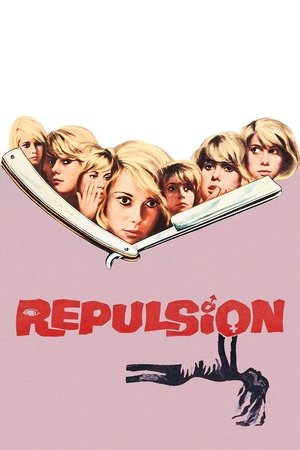
Repulsion, released in 1965, was Polanski's first English-language feature and his first sustained engagement with horror. Catherine Deneuve plays Carol Ledoux, a young Belgian woman living in London with her sister. When she is left alone in their apartment, her already evident psychological instability intensifies. Everyday objects become threatening, cracks appear in walls, spaces seem to change dimensions and hallucinated hands emerge from surfaces. The distinction between the physical apartment and Carol's perception of it becomes increasingly impossible to maintain.
The film is important because Polanski does not merely show a psychologically disturbed protagonist from a safe external perspective. The filmmaking progressively adopts her unstable relationship with the world. Sounds become disproportionately intrusive. Ordinary men acquire threatening dimensions. Food decays. Time loses reliability. The apartment that should isolate Carol from unwanted contact instead becomes the material expression of everything she fears.
The black-and-white cinematography of Gilbert Taylor plays a central role in this transformation. Wide-angle lenses and altered spatial relationships make familiar rooms appear increasingly distorted. A corridor can seem longer than before without the film stopping to announce that anything supernatural has happened. Polanski allows perception itself to become unreliable, requiring the audience to experience the environment rather than simply diagnose the character occupying it.
Repulsion also demonstrates the importance of sound to Polanski's horror. The noises of neighbors, bells, footsteps and sexual activity cross walls and violate privacy long before the apartment becomes visually impossible. Silence can be equally oppressive. Instead of using music continuously to indicate fear, the film allows mundane noises to acquire enormous psychological force through repetition and isolation.
Sexual Fear, Violence and Subjective Reality in Repulsion
Carol's relationship with sexuality is central to Repulsion, but Polanski avoids providing a complete clinical explanation for her behavior. The film contains suggestions about trauma and repression without constructing a neat diagnostic solution. This refusal is essential to its horror. The audience receives enough information to search for causes but not enough to reduce Carol to a single explanation.
Her encounters with men become increasingly unbearable, yet the film complicates the boundary between genuine intrusion and hallucinated assault. Some threats are unquestionably real, while others emerge from Carol's perception. Because Polanski moves between those categories without clearly announcing each transition, the viewer gradually loses the stable distinction that conventional suspense normally provides.
The violence that eventually occurs is shocking partly because the film has spent so much time on internal pressure rather than action. When physical aggression finally breaks through, it does not resolve the tension. It demonstrates how completely Carol's private world has collapsed. This combination of subjective perception, sexual unease and unstable domestic space became one of the most important models for later psychological horror.
The Fearless Vampire Killers and Gothic Horror as Black Comedy
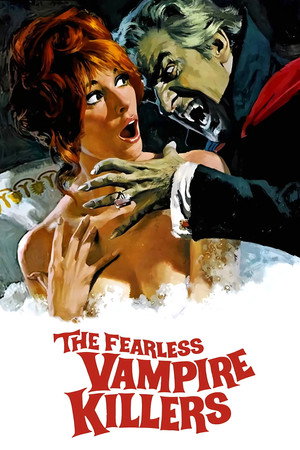
Polanski changed direction dramatically with The Fearless Vampire Killers. Rather than continuing the contemporary psychological horror of Repulsion, he entered the traditional landscape of Gothic vampire cinema: snow, remote inns, castles, coffins, aristocratic monsters and inexperienced vampire hunters. The film is comedic, but its relationship with Gothic horror is more affectionate and visually elaborate than simple parody.
Polanski plays Alfred, the nervous assistant to Professor Abronsius, portrayed by Jack MacGowran. Their pursuit of vampires leads them into the castle of Count von Krolock, where genre conventions are simultaneously reproduced and undermined. Polanski understands the visual pleasures of Gothic horror too well simply to destroy them for a joke. The castle is allowed to be genuinely atmospheric, the snowy landscape genuinely beautiful and the vampires genuinely uncanny even while the characters behave absurdly.
The film also introduced Sharon Tate into the central period of Polanski's life and career. She plays Sarah, the innkeeper's daughter whose disappearance motivates the journey into the vampire castle. Polanski and Tate later married. The film therefore became inseparable retrospectively from events outside cinema, although its significance within his horror work remains independent of that tragedy.
The production history also illustrates the vulnerability of directors working within international commercial filmmaking. The American release was altered without Polanski's approval, including substantial cutting and changes to voices. His dispute over the altered version reinforced a problem that would recur throughout genre cinema: the difference between the film completed by the director and the version distributors believed could be sold most effectively.
Gérard Brach and the Construction of Polanski's Horror Worlds
One of the most important creative relationships in Polanski's horror career was with screenwriter Gérard Brach. Their collaboration extended far beyond horror, but within the genre Brach co-wrote Repulsion, The Fearless Vampire Killers and The Tenant. These three films are radically different in tone, yet all display an interest in characters whose relationship with their environment becomes increasingly unstable.
The importance of Brach is particularly clear because Polanski's horror films are often discussed primarily through visual style. Their effectiveness also depends on carefully designed narrative situations in which ordinary social interactions become increasingly difficult to interpret. Conversations rarely exist only to transmit information. They create pressure, embarrassment, suspicion or misunderstanding, gradually isolating the central character from everyone around them.
With Repulsion and The Tenant, Brach and Polanski built stories in which psychological disintegration is inseparable from physical space. With The Fearless Vampire Killers, the same partnership redirected its taste for absurdity toward Gothic comedy. Brach therefore represents one of the clearest continuities across Polanski's otherwise relatively small horror filmography.
Rosemary's Baby and the Reinvention of Occult Horror
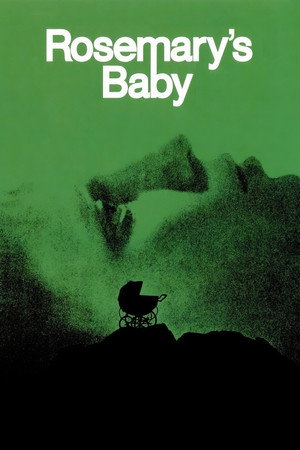
Rosemary's Baby, released in 1968, was Polanski's first Hollywood feature and became the most influential horror film of his career. Adapted from Ira Levin's novel, it follows Rosemary Woodhouse, played by Mia Farrow, after she and her husband Guy move into a New York apartment building. Their elderly neighbors initially appear intrusive but essentially harmless. As Rosemary becomes pregnant, however, the apparently benign attention surrounding her becomes increasingly controlling.
The film's greatest achievement is the gradual conversion of social behavior into horror. Minnie and Roman Castevet do not initially behave like conventional occult villains. They behave like neighbors who cross boundaries, ask personal questions and insist on helping. Guy's ambitions as an actor initially seem unrelated to Rosemary's growing anxiety. Doctors possess institutional authority and therefore appear trustworthy. Polanski constructs terror from the possibility that every ordinary social relationship around Rosemary has been reorganized without her knowledge.
The apartment setting is again essential. Walls allow conversations to be heard without revealing their source. Doors separate rooms without guaranteeing privacy. Neighbors possess access that becomes increasingly difficult for Rosemary to control. Unlike the increasingly impossible apartment of Repulsion, the physical architecture of Rosemary's Baby remains largely plausible. What changes is Rosemary's understanding of the people occupying it.
This distinction makes the film especially unsettling. The horror does not require the environment to visibly become supernatural. The apartment can remain elegant and materially ordinary while every relationship inside it becomes threatening. Polanski thereby modernized occult horror by placing satanic conspiracy inside recognizable metropolitan domestic life rather than remote ruins or obviously Gothic environments.
Pregnancy, Bodily Autonomy and Institutional Control
The pregnancy at the center of Rosemary's Baby gives the film a form of horror that is simultaneously physical, social and psychological. Rosemary's body becomes the subject of decisions made increasingly by other people. What she eats, which doctor she sees, what pain should be considered normal and whose advice she should trust are all gradually removed from her control.
The medical dimension is particularly important because the conspiracy does not operate outside respectable institutions. Authority itself becomes part of the trap. Rosemary repeatedly encounters situations in which her fear is dismissed, interpreted for her or converted into evidence that she is behaving irrationally. The structure makes the audience share a familiar problem from Repulsion in reverse. In the earlier film, viewers cannot safely trust the protagonist's perception. In Rosemary's Baby, the horror increasingly comes from realizing that the protagonist may be correct when everyone around her insists otherwise.
Mia Farrow's performance gives that process its emotional center. Rosemary changes physically and psychologically throughout the pregnancy, becoming increasingly isolated even while other people surround her constantly. Polanski frequently frames her as though she is attempting to understand a conversation that has begun before she entered the room. The possibility that everyone else knows more than she does becomes one of the film's principal sources of fear.
William Castle, Paramount and a Horror Film Without Gimmicks
The path to Rosemary's Baby is also significant within horror history because producer and director William Castle originally controlled the screen rights to Ira Levin's novel. Castle had become famous through films promoted with theatrical gimmicks, but Paramount executive Robert Evans wanted a different filmmaker for the adaptation and brought Polanski into the project. Castle remained producer while Polanski directed and wrote the screenplay.
The combination was unexpectedly productive. Castle represented a tradition of American horror built around overt audience attraction, while Polanski brought methods developed in European psychological cinema. The resulting film contains supernatural material but avoids the sort of visible monster spectacle that might have been expected from the premise. The conspiracy is frightening because it remains embedded in ordinary faces and spaces.
Polanski adapted Levin's novel with unusual fidelity. Rather than radically reconstructing the book, he preserved extensive narrative detail and allowed its accumulation of apparently minor incidents to control the film's rhythm. That patience became essential to the final effect. The horror works because the audience has spent so much time learning the routine of Rosemary's life before fully understanding what that routine contains.
Krzysztof Komeda and the Sound of Rosemary's Baby
Polish composer Krzysztof Komeda was one of Polanski's most important early musical collaborators. Their work together extended beyond horror, and Komeda composed the scores for both The Fearless Vampire Killers and Rosemary's Baby. His contribution to the latter became inseparable from the film's identity.
The central lullaby associated with Rosemary creates an immediate contradiction between maternal intimacy and menace. A lullaby normally suggests protection and sleep, but within the film it acquires an increasingly disturbing meaning. The music does not simply announce that something evil is approaching. It makes tenderness itself uncertain.
This corresponds closely to Polanski's broader method. Horror is most effective when familiar systems remain recognizable while their meaning changes. An apartment remains an apartment, neighbors continue smiling, doctors continue giving advice and a lullaby remains gentle. The terror comes from discovering that none of those familiar forms guarantee safety.
The Murder of Sharon Tate and the Break in Polanski's American Life
In August 1969 Sharon Tate, then eight months pregnant, was murdered at the couple's Los Angeles home along with Jay Sebring, Wojciech Frykowski, Abigail Folger and Steven Parent by members of the group directed by Charles Manson. Polanski was outside the United States at the time. The murders became one of the most notorious crimes of the era and inevitably altered the public context surrounding both Polanski and Rosemary's Baby.
The proximity of a film about pregnancy, occult conspiracy and violence to the murder of its director's pregnant wife encouraged sensational attempts to connect fiction and reality. Such retrospective mythology should be resisted. Rosemary's Baby had been adapted from Ira Levin's novel and completed before the murders. The tragedy belongs to Polanski's biography, not to a hidden explanation of the film.
Polanski eventually resumed filmmaking and returned to major international productions. The event nevertheless divided his life and career in a way that cannot reasonably be omitted from an extended biography. It also contributed to the intense public mythology that surrounded him long before the later criminal case that would permanently alter his relationship with the United States.
Macbeth and Horror at the Edge of Shakespeare
Polanski returned to filmmaking with Macbeth in 1971. The film is not principally classified as horror, but its witches, apparitions, murders and physical brutality bring it unusually close to horror imagery. Polanski refuses to romanticize the violence of Shakespeare's tragedy. Bodies are vulnerable, killing is awkward and bloody, and the supernatural appears within a world already defined by human cruelty.
The film is relevant to his horror work because it demonstrates how little separation Polanski maintained between psychological and physical violence. His earlier films had shown apartments becoming intolerable through perception and social pressure. Macbeth places similar pessimism inside a historical world where political ambition produces direct bodily destruction.
In Macbeth, witches and graphic violence appear within a historical tragedy, while Polanski's use of psychological unease connects the film to techniques developed in his horror work.
The Tenant and the Completion of the Apartment Trilogy
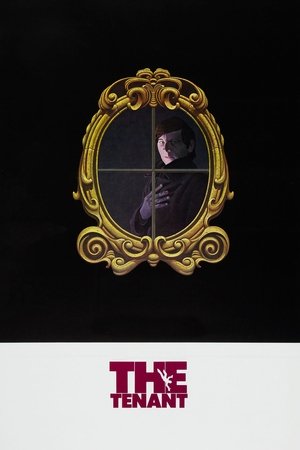
The Tenant, released in 1976 and adapted from Roland Topor's novel, returned Polanski directly to the enclosed psychological territory of Repulsion and Rosemary's Baby. Polanski himself plays Trelkovsky, a quiet man who rents a Paris apartment after its previous occupant, Simone Choule, attempts suicide. What begins as anxiety about neighbors and acceptable behavior develops into a far more disturbing crisis of identity.
The building imposes a dense network of social rules. Noise becomes an offense, neighbors watch one another and apparently insignificant habits acquire enormous importance. Trelkovsky increasingly suspects that the residents are not merely hostile but actively attempting to transform him into the previous tenant. Clothing, cigarettes, chocolate, physical gestures and bodily identity become pieces of a pattern whose objective reality remains difficult to establish.
Polanski's own performance makes Trelkovsky simultaneously sympathetic and uncomfortable. He appears timid enough to be victimized, yet the audience is never given complete access to a stable version of events. As in Repulsion, perception becomes increasingly unreliable. As in Rosemary's Baby, the neighbors may constitute an organized force. The Tenant refuses to stabilize itself entirely within either explanation.
Sven Nykvist's cinematography and Philippe Sarde's score support a style less overtly aggressive than the breakdown of Repulsion. The apartment building initially appears coherent and almost mundane. Its strangeness accumulates through repetition, perspective and the behavior of its inhabitants until architecture becomes inseparable from Trelkovsky's disintegrating sense of self.
The Apartment Trilogy
Repulsion, Rosemary's Baby and The Tenant are now commonly grouped as Polanski's Apartment Trilogy. They are not narratively connected, and the term describes thematic and spatial relationships rather than a conventional series. Each film, however, converts urban domestic space into a mechanism of psychological pressure.
In Repulsion, the apartment becomes increasingly indistinguishable from Carol's disturbed perception. In Rosemary's Baby, the apartment remains materially stable while the surrounding community becomes conspiratorial. In The Tenant, both possibilities are kept in tension as Trelkovsky struggles to determine whether the building's inhabitants are transforming him or whether his identity is collapsing from within.
The trilogy also changes the conventional meaning of privacy. Modern urban housing promises an individual space inside a community of strangers, but Polanski repeatedly demonstrates how fragile that promise can be. Walls transmit sound. Doors can be crossed. Neighbors observe behavior. Landlords establish rules. Medical and social authorities can enter the most intimate parts of life. The private room becomes dependent upon a surrounding network that may be indifferent, invasive or openly hostile.
This concept became enormously influential because it allowed psychological horror to operate without remote Gothic locations. Terror could exist in London, New York or Paris and could be generated by the same architectural arrangements experienced every day by millions of people. The haunted castle had not disappeared. It had been reorganized into the apartment block.
Paranoia as a Narrative System
Polanski's horror repeatedly places the audience in a difficult position regarding paranoia. Conventional narratives often solve the problem by establishing either that the protagonist is irrational or that the conspiracy is real. Polanski is more interested in the period before certainty, when every piece of evidence can support several incompatible explanations.
This structure is already present in Knife in the Water and continues outside horror in films such as Chinatown. Characters attempt to interpret systems whose true dimensions remain hidden from them. The difference in the horror films is that uncertainty becomes connected to the body, supernatural possibility or loss of identity.
Polanski frequently restricts information to what the protagonist can perceive while avoiding complete identification with that perception. The camera can remain objective enough to make viewers question a character and subjective enough to make dismissal impossible. The result is a particular form of suspense in which interpretation itself becomes dangerous. Every attempt to understand the situation may push the protagonist further into it.
Architecture, Neighbors and the Destruction of Privacy
Architecture in Polanski's horror films is rarely neutral. Corridors determine what can be seen. Walls establish intimacy while transmitting evidence of other lives. Windows expose private rooms to the exterior. Stairways and elevators control encounters between people who may prefer not to meet. Even when buildings do not physically transform, camera position can make them feel increasingly restrictive.
The neighbor therefore becomes one of Polanski's characteristic figures of anxiety. Neighbors possess a peculiar social status because they are strangers who live close enough to hear, observe and interfere. In Rosemary's Baby, excessive friendliness becomes threatening. In The Tenant, complaints about behavior evolve into what may be collective persecution. In Repulsion, sounds from adjoining lives invade Carol's isolation.
This recurring attention to proximity distinguishes Polanski's urban horror from stories built around complete physical isolation. His protagonists are rarely alone in the conventional sense. They are surrounded by people. The horror comes from discovering that the presence of other human beings does not necessarily provide safety.
The Ninth Gate and the Return to Explicit Occult Horror
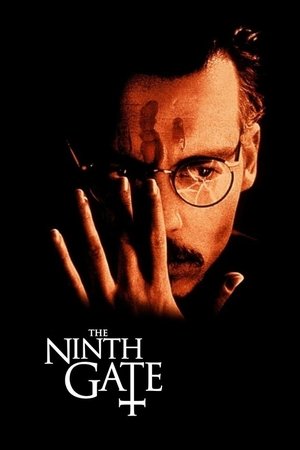
More than two decades after The Tenant, Polanski returned directly to supernatural horror with The Ninth Gate, released in 1999. Adapted from Arturo Pérez-Reverte's novel The Club Dumas, the film stars Johnny Depp as Dean Corso, a dealer specializing in rare books who is hired by wealthy collector Boris Balkan to authenticate copies of a seventeenth-century volume supposedly connected with the Devil.
The film approaches occultism through scholarship, commerce and collecting rather than the domestic vulnerability of Rosemary's Baby. Books are physical objects whose paper, engravings, printing history and ownership can be examined, compared and priced. Corso begins as a professional accustomed to treating rare literature as merchandise. His investigation gradually forces him into a world in which the differences between editions may encode something beyond financial value.
Polanski deliberately avoids transforming the story into continuous supernatural spectacle. Much of the film consists of travel, conversation, examination of books and increasingly suspicious encounters with collectors. The restrained pace allows occult possibility to accumulate around apparently rational research. Even when deaths begin surrounding the investigation, Corso continues approaching the problem as though enough evidence will make it understandable.
The strategy recalls earlier Polanski films despite the radically different setting. Once again, a protagonist enters a system without recognizing its full dimensions. Once again, other people seem to know more than they reveal. And once again, the distinction between curiosity and entrapment gradually disappears.
Books, Images and Knowledge in The Ninth Gate
The engraved illustrations within The Ninth Gate provide the film with one of its most effective structures. Corso must identify subtle differences between apparently identical images, turning observation itself into the principal investigative tool. Details that initially appear trivial become evidence of a hidden design.
This is particularly suited to Polanski because his horror has always depended on spectators examining space for information. In the Apartment Trilogy, viewers watch doors, hallways and neighboring rooms. In The Ninth Gate, the same interpretive anxiety is transferred to printed images. Looking carefully is necessary, but greater knowledge does not necessarily provide greater safety.
The film also differs from Rosemary's Baby in the protagonist's relationship with the occult. Rosemary desperately attempts to escape knowledge that others have imposed upon her. Corso actively seeks knowledge because he is being paid to find it and eventually continues beyond the requirements of ordinary professional investigation. The movement toward danger is therefore driven partly by curiosity and desire rather than victimization alone.
Horror Without Constant Shock
Across Polanski's horror work, the amount of explicit supernatural spectacle is comparatively small. Repulsion contains startling hallucinations, Rosemary's Baby culminates in open occult revelation and The Ninth Gate gradually introduces events that resist rational explanation, but none of these films depends upon an uninterrupted succession of shocks.
Instead, Polanski frequently constructs fear through delay. A viewer is given enough time to become familiar with an environment before its meaning changes. Characters repeat routines. Rooms are established spatially. Social relationships acquire recognizable patterns. Horror becomes more effective because the audience understands what normality looked like before it began to fail.
This method also explains his interest in black humor. Anxiety and comedy are not opposites within his cinema. Both depend on timing, social discomfort and the gap between what a character expects and what actually occurs. The Fearless Vampire Killers makes this connection explicit, but uncomfortable humor also exists throughout Rosemary's Baby and The Tenant.
Performers Inside Polanski's Horror
Polanski's horror films depend heavily on central performances capable of sustaining ambiguity. Catherine Deneuve must remain psychologically inaccessible enough for Repulsion to resist easy explanation. Mia Farrow must allow Rosemary to appear vulnerable without making her suspicions seem immediately irrational. Polanski himself plays Trelkovsky with a combination of timidity, anxiety and increasing instability that makes the character difficult to classify simply as victim or unreliable observer.
The surrounding actors are equally important because much of the threat comes from apparently ordinary behavior. Ruth Gordon's Minnie Castevet in Rosemary's Baby can be intrusive, comic and terrifying without requiring a change of basic personality. The effectiveness lies precisely in the fact that the same social energy that initially appears irritating later becomes evidence of something far more organized.
Polanski often directs horror performances toward controlled discomfort rather than immediate monstrosity. Characters interrupt one another, stand too close, offer help that has not been requested or respond to fear with an inappropriate degree of calm. These details make social interaction itself part of the mise-en-scène of horror.
Sound, Off-Screen Space and Things Heard Through Walls
Sound is fundamental to Polanski's construction of enclosed space. A wall is visually opaque but acoustically porous, which means that characters can know something is happening nearby without being able to see it. This problem becomes particularly important in apartments, where ordinary life is filled with evidence of unseen neighbors.
In Repulsion, noises enter Carol's increasingly unstable consciousness and lose any simple distinction between external stimulus and psychological distortion. In Rosemary's Baby, voices and activity beyond walls provide fragments of a conspiracy that Rosemary cannot initially understand. In The Tenant, sounds produced by other residents reinforce the sense that Trelkovsky is being observed and judged.
Polanski therefore uses off-screen space not merely to conceal a monster but to create an entire social world that remains partially inaccessible. The viewer hears evidence without possessing the visual information necessary to interpret it completely. Suspicion occupies the gap.
The 1977 Criminal Case and Exile from the United States
Any substantial biography of Polanski also requires acknowledgment of the criminal case that permanently altered his life and career. In 1977 he was prosecuted in Los Angeles following the sexual assault of a 13-year-old girl. As part of a plea agreement, Polanski pleaded guilty to unlawful sexual intercourse with a minor. He left the United States in 1978 before sentencing and subsequently continued his filmmaking career primarily in Europe.
The case has remained a major part of public discussion surrounding Polanski and has repeatedly affected attempts to separate consideration of his films from consideration of his conduct. Additional women later made allegations of sexual assault against him, allegations that Polanski has denied. The legal and ethical controversies surrounding him have consequently remained active long after the period in which his most influential horror films were made.
An encyclopedic assessment of Polanski cannot reasonably erase this history, but neither should it be retroactively converted into an explanation for individual films. His influence on horror and the facts of his personal and legal history are separate subjects that coexist within the biography of the same filmmaker.
Beyond Horror and the Continuity of Polanski's Themes
Polanski's major films outside horror help demonstrate why his contributions to the genre were so distinctive. Chinatown, Frantic and Death and the Maiden all operate through uncertainty, concealed information and characters attempting to understand systems larger than themselves. These are not horror films, but the mechanisms overlap with those found in his genre work.
The Pianist represents a very different application of confinement, vulnerability and survival, rooted in historical reality and connected indirectly with Polanski's own childhood. Its success, including major international awards, reinforced his status as a filmmaker whose career could not be contained within a single genre.
That breadth is precisely why Polanski's horror filmography should not be inflated artificially. He did not spend his career making dozens of horror films. His importance comes from the concentration of several works that changed how psychological and occult horror could operate.
Influence on Psychological and Urban Horror
The Apartment Trilogy provided later filmmakers with a model for horror in which isolation does not require wilderness, abandoned houses or physical distance from civilization. A person can be profoundly isolated while living in the middle of London, New York or Paris. Crowds, neighbors and institutions can intensify vulnerability rather than reduce it.
This model became especially important to films concerned with psychological instability, unreliable perception and domestic invasion. The influence extends beyond works that directly imitate specific scenes. Polanski helped establish a broader grammar in which architecture can function almost as a character and in which uncertainty about the protagonist's perception becomes a sustained source of horror rather than a puzzle quickly solved by the narrative.
Rosemary's Baby also became one of the foundational works of modern occult horror. Its success demonstrated that satanic material could operate inside contemporary domestic realism and contributed to the commercial environment in which later films involving demonic or religious horror could reach mass audiences. Its influence is visible not merely in stories about Satanism but in countless films about pregnancy, bodily control and conspiracies hidden behind respectable social surfaces.
Roman Polanski's Place in Horror Cinema
Roman Polanski's importance to horror rests on a concentrated group of films rather than a career devoted to the genre. Repulsion transformed psychological disintegration into physical space. The Fearless Vampire Killers demonstrated his understanding of Gothic tradition by simultaneously reproducing and parodying it. Rosemary's Baby relocated occult horror into the routines of marriage, pregnancy, medicine and apartment life. The Tenant pushed the apartment motif toward the dissolution of personal identity, while The Ninth Gate returned to supernatural material through occult scholarship and obsessive investigation.
Together these films reveal a consistent method. Polanski rarely begins by asking the audience to accept the impossible. He begins with recognizable rooms, social customs, professional relationships and ordinary objects. The horror emerges when those familiar structures stop providing reliable information about the world.
For that reason, his most enduring contribution to the genre is not a particular monster or visual icon. It is a method of constructing uncertainty through space and behavior. Modern psychological horror repeatedly returns to protagonists who cannot prove what is happening, buildings that destroy rather than protect privacy and communities whose apparently normal behavior may conceal something organized and hostile. Polanski's principal horror films remain major reference points for that tradition.
Photos (6)
Images: TMDB
Selected Work
Notable Horror Collaborators
Notable collaborators and creative partners throughout Roman Polanski's horror career.
 Gérard Brach
Screenwriter
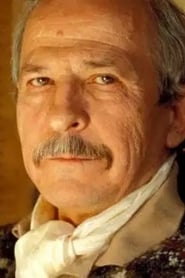
Polanski's principal recurring horror writing collaborator. Brach co-wrote Repulsion, The Fearless Vampire Killers and The Tenant, three major works spanning psychological horror, Gothic horror and the Apartment Trilogy.
GG
Gene Gutowski
Producer
Gutowski produced Repulsion and The Fearless Vampire Killers, two important early horror collaborations that helped establish Polanski internationally across psychological and Gothic horror.
AM
Alastair McIntyre
Editor
McIntyre edited Repulsion and The Fearless Vampire Killers, collaborating with Polanski on two sharply different horror films built respectively around psychological confinement and Gothic black comedy.
KK
Krzysztof Komeda
Composer
Komeda scored The Fearless Vampire Killers and Rosemary's Baby, forming a particularly important director-composer partnership across Gothic and occult horror.
Roman Polanski Horror Movies
Directing (5 credits)
1976
1968
1967
1965
Writing (6 credits)
2002
1999
1976
1968
1967
1965
Acting (6 credits)
1992
1978
1976
1974
1967
1965
Production (1 credits)
1999