



2026
Lloyd Kaufman
Horror Actor · Biography · Horror Filmography · Family · Collaborators · Credits
Horror subgenres & themes
Most represented across this person's horror filmography:
SPLATTER
• BODY HORROR
• SLASHER
• CHRISTMAS
Biography
Lloyd Kaufman and the Horror of Tromaville
Lloyd Kaufman built one of independent horror cinema's most recognizable universes by treating bad taste, graphic gore, mutation, monsters and political satire as parts of the same filmmaking language. Through Troma Entertainment, the company he founded with Michael Herz, Kaufman developed a form of horror deliberately positioned outside polished studio production. Toxic waste, corrupt corporations, mutated bodies, incompetent institutions and grotesque violence became recurring components of a cinema in which horror and comedy were almost impossible to separate.
The defining creation was The Toxic Avenger, the story of a bullied janitor transformed by toxic waste into a hideously deformed vigilante. The film established Tromaville as both a fictional New Jersey town and a broader comic-horror universe where environmental contamination, civic corruption and extreme physical violence could be exaggerated until they became absurd. Toxie eventually became Troma's central icon and provided the foundation for sequels, merchandising and an unusually durable cult identity.
Kaufman's horror is rarely interested in restraint. Bodies rupture, mutate, explode and leak with deliberately excessive physicality. Yet the gore is normally attached to satire. The monsters of Troma may be literal mutants or zombies, but corporations, schools, politicians and consumer culture frequently behave just as grotesquely.
Michael Herz and the Creation of Troma
Michael Herz is the most important long-term collaborator in Kaufman's horror career. Kaufman and Herz founded Troma Entertainment during the 1970s and gradually developed a production and distribution system built around films that major studios were unlikely to make.
Their partnership became especially important when Troma moved decisively toward horror and splatter. Herz co-directed The Toxic Avenger with Kaufman, helping establish the film that would ultimately define the company. They also collaborated on later productions connected to the Toxic Avenger and the radioactive world of Tromaville.
The relationship was not simply director and producer. Troma's identity developed through decades of shared production decisions, low-budget problem solving and a willingness to keep exploiting characters and concepts that had initially seemed too strange or extreme for conventional commercial cinema.
The Toxic Avenger and the Birth of Toxie
The Toxic Avenger begins with Melvin Junko, a physically weak janitor tormented by customers at a health club. After a cruel prank sends him through a window and into a barrel of toxic waste, his body undergoes an extreme transformation. The timid victim becomes a grotesquely powerful vigilante who begins punishing criminals throughout Tromaville.
The transformation establishes the basic logic of Kaufman's horror. Toxic contamination is horrifying, but mutation also gives the victim power. The new body is hideous according to ordinary standards yet morally more useful than the supposedly normal society surrounding it.
The violence follows the same contradiction. Criminals are dispatched through elaborate practical gore, but the brutality is pushed so far beyond realistic proportion that disgust frequently becomes laughter. Kaufman treats splatter almost like slapstick performed with prosthetics, blood and crushed anatomy.
The result created a monster hero who could function simultaneously as parody and genuine cult superhero. Toxie became the center of Troma's horror identity because the character contains nearly everything Kaufman repeatedly returned to: bodily mutation, environmental contamination, outsider heroism, corrupt authority and excessive practical violence.
Mark Torgl: Melvin Before the Mutation
Mark Torgl plays Melvin Junko before the toxic transformation. His performance is essential because the later monster works only if the audience understands how powerless and humiliated Melvin was before falling into the waste.
Torgl exaggerates Melvin's awkwardness without turning him into a conventional horror protagonist. He belongs to Kaufman's world of grotesque caricature, surrounded by people whose cruelty is often as exaggerated as the eventual gore.
The character's transformation therefore becomes both horrific and liberating. Melvin effectively disappears inside the mutation, but the new body possesses the strength required to confront a town that previously treated him as disposable.
Torgl may occupy only the human side of the original transformation, yet that role makes him inseparable from the creation of the Toxic Avenger mythology.
Mitch Cohen and the Physical Creation of the Toxic Avenger
Once Melvin mutates, Mitch Cohen becomes the physical performer inside the Toxic Avenger. The change of performer emphasizes how complete the transformation has become. Toxie is not simply Melvin wearing scars; his entire body, silhouette and physical behavior have been reconstructed.
Cohen gives the monster weight and movement while extensive makeup turns him into a deliberately grotesque figure. The effect is central to Kaufman's approach because practical transformation allows the creature to occupy the same physical environment as the actors, props and gore surrounding him.
The Toxic Avenger is monstrous in appearance but behaves according to a crude moral code. Kaufman repeatedly exploits the contradiction between the horrifying body and heroic function, reversing the traditional assumption that physical deformity must represent evil.
Cohen's performance therefore became one of the foundations of Troma iconography. The character's later incarnations could change performers, but the original physical identity established the visual language that audiences recognized as Toxie.
Class of Nuke 'Em High and Radioactive Teenage Horror
Class of Nuke 'Em High expanded Troma's radioactive horror beyond one mutant vigilante. A nuclear power facility located beside a high school contaminates the surrounding environment, turning ordinary adolescent problems into mutations, violent behavior and grotesque biological consequences.
The film turns the high-school movie into a radioactive nightmare. Teenage cliques, drugs, authority figures and educational institutions are pushed into the same exaggerated world already established in Tromaville.
Kaufman's horror again treats environmental contamination as both literal mechanism and satirical device. Industrial negligence does not remain an invisible political problem. It enters bodies and transforms them.
The resulting mixture of creature effects, adolescent comedy and splatter became another durable Troma property, eventually generating sequels and a later return to the Nuke 'Em High universe.
Toxic Avenger Sequels and the Expansion of Tromaville
The success of Toxie allowed Kaufman and Herz to expand the character into sequels rather than leave him as the accidental hero of a single film. The Toxic Avenger Part II and The Toxic Avenger Part III: The Last Temptation of Toxie pushed Tromaville further toward comic-book logic while retaining the mutation, gore and anti-corporate satire associated with the original.
The sequels demonstrate how Troma's horror mythology differs from conventional continuity. Characters and situations can become increasingly absurd without requiring the world to return to realism. Tromaville exists according to its own exaggerated social and physical rules.
The monster therefore becomes less frightening in the traditional sense while the world surrounding him becomes more grotesque. Toxie remains the deformed hero attempting to protect a community whose institutions are frequently more corrupt than the creatures inhabiting it.
Debbie Rochon and the Troma Repertory Company
Debbie Rochon became one of the performers most strongly associated with Kaufman's later Troma period. Her appearances across productions including Terror Firmer, Citizen Toxie and Poultrygeist placed her inside several different phases of the company's horror-comedy output.
Rochon represents an important aspect of Kaufman's production culture: Troma repeatedly brings back performers who understand the company's peculiar combination of low budgets, practical effects, explicit comedy and physical chaos.
Actors in these productions frequently need to perform around fluids, prosthetics, grotesque props and deliberately excessive material without distancing themselves from the joke. The horror works because the performers commit to a world that is already absurd.
Rochon's repeated presence consequently became part of Troma's repertory identity rather than a series of unrelated casting decisions.
Terror Firmer and Horror About Making Horror
Terror Firmer turned Kaufman's own filmmaking environment into material for splatter horror. Inspired by his experiences and writing about independent production, the film takes place around a chaotic low-budget movie crew while a killer begins attacking people connected to the production.
Kaufman himself plays the blind director Larry Benjamin, creating a deliberately exaggerated version of the independent filmmaker attempting to maintain control while everything around him collapses.
The horror becomes reflexive. Practical gore, incompetent crew members, production disasters and murder occupy the same fictional space. Instead of hiding the difficulties of low-budget filmmaking, Kaufman turns them into the movie.
The result is one of his most personal horror-comedies because the filmmaking process itself becomes grotesque spectacle. Troma is simultaneously mocking independent production and celebrating the chaos required to complete it.
Trent Haaga and the Next Troma Generation
Trent Haaga emerged directly from this environment through Terror Firmer and became one of the important younger collaborators associated with Kaufman's later horror work.
Haaga subsequently contributed to Citizen Toxie: The Toxic Avenger IV both as performer and screenwriter, demonstrating the fluidity of roles inside Troma productions. Actors, writers and crew members frequently move between responsibilities rather than remaining inside rigid studio categories.
This relationship is significant because Kaufman's influence on horror has always extended beyond the films he personally directs. The Troma system repeatedly became a practical training ground for people who later continued working independently in horror and exploitation cinema.
Haaga embodies that continuity particularly clearly: performer, writer and filmmaker developing inside the same low-budget culture that Kaufman had spent decades promoting.
Citizen Toxie and the Return of the Toxic Avenger
Citizen Toxie: The Toxic Avenger IV returned Kaufman directly to the franchise after the earlier sequels and deliberately pushed the mythology toward even greater excess. An explosion creates a connection between Tromaville and the alternate world of Amortville, allowing Toxie to confront an evil counterpart.
The alternate-world structure gives Kaufman an excuse to multiply characters, violence and grotesque variations on established Troma ideas. Rather than attempting to modernize Toxie through realism, the film embraces the ridiculousness that had accumulated around the character.
The production also became a meeting point for longtime Troma performers and newer collaborators. The result resembles a repertory reunion as much as a conventional sequel.
By this stage, the Toxic Avenger was no longer simply the protagonist of one cult horror film. He had become the organizing symbol of Troma itself.
Joe Fleishaker and the Recurring Troma Body
Joe Fleishaker became another recurring physical presence throughout Kaufman's horror-comedy universe. His work across productions including Terror Firmer, Citizen Toxie and Poultrygeist made him part of the familiar ensemble surrounding later Troma.
Kaufman frequently casts performers for immediately recognizable physical and comic qualities, then places those qualities inside situations involving gore, mutation and bodily humiliation. Fleishaker became especially memorable because Troma treated his physical presence as part of the company's deliberately confrontational visual language.
The collaboration lasted across different films and characters, turning him into one of the faces audiences could associate with the broader Tromaville universe even when narrative continuity was absent.
His recurrence also reinforces the repertory-company quality of Kaufman's cinema. Troma films often feel connected because the same performers return to be killed, transformed, humiliated or recast in completely different forms.
Poultrygeist and the Fast-Food Zombie
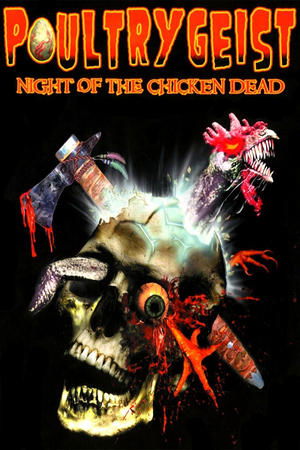
Poultrygeist: Night of the Chicken Dead represents one of Kaufman's clearest combinations of horror monster, political satire and musical absurdity. A fast-food restaurant is constructed on a burial ground, and supernatural contamination eventually produces chicken zombies among workers and customers.
The premise allows Kaufman to attack corporate food culture through literal bodily corruption. Consumption, contamination and industrial production collapse into one grotesque system.
The film contains elaborate practical gore and creature transformations but repeatedly uses them as punch lines inside a broader satire. Bodies become the place where the consequences of commercial exploitation are made visible.
Like The Toxic Avenger, the movie turns an environmental or social problem into physical mutation. Kaufman's horror does not leave corruption abstract. It makes corruption leak, explode and grow feathers.
Returning to Nuke 'Em High
Decades after the original Class of Nuke 'Em High, Kaufman returned to the radioactive school mythology with Return to Nuke 'Em High. The project demonstrates how freely Troma revisits its own history without treating earlier films as untouchable canon.
The newer films update the targets of satire while preserving the company's basic horror language: contaminated institutions, mutated bodies, young protagonists and deliberately excessive practical effects.
They also reconnect newer performers with veterans of earlier Troma productions, reinforcing the sense that Tromaville is less a tightly controlled fictional continuity than a recurring ecosystem.
Practical Gore as Comedy
Kaufman's horror depends heavily on the physicality of effects. Blood sprays onto performers, prosthetic bodies are crushed, mutants occupy real sets and actors must interact directly with deliberately grotesque objects.
The effects do not necessarily pursue invisible realism. Their artificiality can become part of the humor. Kaufman often extends a violent gag beyond the moment when a more conventional horror film would cut away, allowing the excess itself to become funny.
This places Troma within a tradition of splatter comedy where the body operates like slapstick material. A head, limb or organ can function almost like a prop in physical comedy, except that the impact is delivered through gore.
The technique creates a distinctive relationship with the audience. Viewers are invited to be disgusted and amused simultaneously rather than choosing one response.
Horror as Satire
The grotesque surfaces of Kaufman's films frequently conceal straightforward satirical targets. Toxic pollution creates Toxie. Nuclear contamination corrupts a high school. Corporate fast food produces undead chickens. Institutions repeatedly fail because the people operating them are venal, incompetent or indifferent.
Kaufman rarely approaches these ideas through subtle realism. Political and social anxieties are exaggerated until they become monsters, bodily fluids and mutant bodies.
This exaggeration is central to the Troma identity. The horror is not designed to resemble ordinary life closely. It distorts ordinary life until the underlying absurdity becomes impossible to ignore.
Lloyd Kaufman's Horror Legacy
Lloyd Kaufman's place in horror is inseparable from Troma and from the production culture he built with Michael Herz. Their partnership created a space where extreme low-budget horror could develop an identity independent of mainstream studio expectations.
The Toxic Avenger remains the central achievement. Mark Torgl supplied the humiliated human Melvin, Mitch Cohen embodied the transformed Toxie and Kaufman and Herz created the radioactive world surrounding them. The character became the visual symbol through which Troma could connect decades of independent horror production.
Later collaborators expanded that world. Debbie Rochon became one of its recurring performers. Trent Haaga moved between acting and writing. Joe Fleishaker became a familiar physical presence across multiple productions. Together they reinforced the repertory culture that makes Troma films feel connected even when characters and stories change.
Kaufman's horror ultimately survives because its cheapness was transformed into style rather than concealed as failure. Practical gore, uncontrolled energy, satire and deliberate vulgarity became the language of Tromaville. Instead of attempting to imitate polished studio horror with fewer resources, Kaufman built a form of horror that depended upon looking like nothing else.
Photos (2)
Images: TMDB
Selected Work
Notable Horror Collaborators
Notable collaborators and creative partners throughout Lloyd Kaufman's horror career.
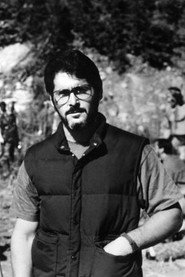 Michael Herz
Defining Horror Partner
Herz co-founded Troma with Kaufman and co-directed The Toxic Avenger, making their partnership fundamental to the creation of Tromaville and Troma's horror identity.
MC
Mitch Cohen
Defining Horror Performer
Cohen physically embodied the original Toxic Avenger after Melvin's mutation, helping create the monster hero who became the central icon of Troma horror.
MT
Mark Torgl
Defining Horror Performer
Torgl played Melvin Junko before his transformation in The Toxic Avenger, establishing the human victim whose mutation created Troma's most enduring horror character.
 Debbie Rochon
Recurring Horror Performer
Rochon became one of the recurring faces of Kaufman's later Troma period through films including Terror Firmer, Citizen Toxie and Poultrygeist.
TH
Trent Haaga
Recurring Horror Collaborator
Haaga emerged through Terror Firmer and later contributed to Citizen Toxie as both performer and screenwriter, becoming part of the next generation of Troma horror.
JF
Joe Fleishaker
Recurring Horror Performer
Fleishaker became a familiar presence across Kaufman's later horror-comedies, including Terror Firmer, Citizen Toxie and Poultrygeist.
Lloyd Kaufman Horror Movies
Acting (222 credits)
2026
2026
2026
2026
2026
2026
2026
2025
2025
2025
2025
2025
2025
2025
2025
2025
2025
2025
2025
2024
2024
2024
2024
2024
2024
2024
2024
2024
2024
2024
2024
2024
2024
2023
2023
2023
2023
2023
2023
2023
2022
2022
2022
2022
2022
2022
2022
2022
2022
2022
2022
2022
2021
2021
2021
2021
2021
2021
2020
2020
2020
2020
2020
2020
2020
2020
2020
2020
2019
2019
2019
2019
2019
2019
2019
2019
2018
2018
2018
2018
2018
2018
2018
2017
2017
2017
2017
2017
2017
2017
2017
2017
2017
2017
2017
2017
2017
2017
2016
2016
2016
2016
2016
2016
2016
2016
2016
2016
2016
2015
2015
2015
2015
2015
2015
2015
2015
2015
2015
2014
2014
2014
2014
2014
2014
2014
2014
2014
2013
2013
2013
2013
2013
2013
2012
2012
2012
2012
2012
2012
2012
2012
2012
2012
2011
2011
2011
2011
2011
2011
2011
2010
2010
2010
2010
2010
2010
2010
2010
2010
2010
2010
2010
2010
2010
2009
2009
2009
2009
2009
2009
2008
2008
2008
2008
2008
2008
2008
2007
2007
2007
2007
2007
2007
2006
2006
2006
2006
2006
2006
2006
2006
2006
2006
2005
2005
2005
2005
2005
2004
2004
2004
2004
2004
2003
2003
2003
2003
2003
2003
2002
2002
2001
2001
2001
2001
2001
2000
1999
1989
1971
Directing (17 credits)
2025
2020
2017
2017
2016
2013
2006
2006
2004
2003
2001
1999
1989
1989
1988
1986
1984
Production (44 credits)
2026
2025
2025
2025
2024
2024
2023
2022
2021
2020
2019
2017
2016
2015
2013
2012
2011
2011
2011
2010
2006
2006
2004
2003
2001
1999
1997
1994
1991
1989
1989
1988
1988
1987
1987
1987
1986
1986
1986
1985
1984
1973
1972
1971
Writing (17 credits)
2026
2025
2025
2020
2017
2017
2013
2006
2001
1994
1991
1989
1989
1988
1986
1984
1973
Other Crew (12 credits)
2026
2023
2012
2007
2006
2006
2005
2005
2002
1987
1984
1976
Cinematography (2 credits)
2006
1984
Editing (1 credits)
1988