




2026
Leigh Whannell
Horror Writer · Biography · Horror Filmography · Collaborators · Credits
Horror subgenres & themes
Most represented across this person's horror filmography:
HAUNTED HOUSES
• HOME INVASION
• EVIL DOLL
• WEREWOLVES
Biography
Leigh Whannell and the development of twenty-first-century horror
Leigh Whannell has occupied several important positions in twenty-first-century horror as screenwriter, actor, producer and director. His partnership with James Wan produced Saw and Insidious, two independently conceived films that became long-running international franchises and influenced separate areas of commercial horror. Saw placed moral tests, mechanical traps and an expanding serial narrative at the center of one of the defining horror series of the 2000s. Insidious helped strengthen the theatrical revival of supernatural horror at the beginning of the following decade. Whannell later established himself as a director through Insidious: Chapter 3, The Invisible Man and Wolf Man.
His career is especially significant because these projects emerged from a consistent interest in making ambitious genre material within controlled production limits. Saw originated from Whannell and Wan trying to devise a film they could make with almost no money after leaving film school. Years later, after frustrating experiences in development, they approached Insidious with a similar desire to recover independence through a contained supernatural production. Whannell’s later directing has retained that preference for focused premises while developing a stronger interest in bodily vulnerability, perception and relationships affected by physical or technological threat.
Melbourne, film school and the partnership with James Wan
Whannell was born in Melbourne on January 17, 1977 and met James Wan while studying filmmaking in Australia. Their professional partnership developed after film school, when both faced the practical problem common to young filmmakers without access to significant financing. Whannell has recalled that the early concept for Saw emerged from thinking specifically about what could be made cheaply. A story centered on two actors chained inside one room offered a production model small enough to imagine financing independently while still allowing a complicated narrative to develop around the situation.
Before the feature was financed, Wan and Whannell created a short presentation based around the reverse bear trap sequence. Whannell performed the victim, giving potential financiers a direct demonstration of the tone and visual possibilities of the project. The proof of concept helped move Saw from an Australian low-budget plan toward production in Los Angeles, where the filmmakers suddenly had access to performers such as Cary Elwes and Danny Glover and to 35mm photography. Whannell has described the resulting feature as still inexpensive by Hollywood standards while feeling enormous compared with what he and Wan had originally expected to make.
Saw and the construction of a contained horror narrative
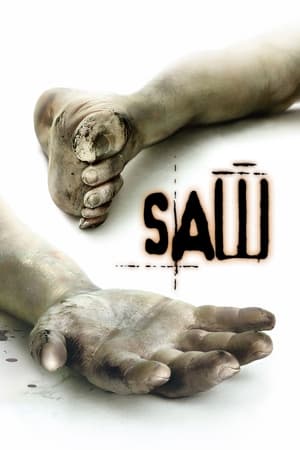
Saw, released in 2004 after premiering at Sundance, is built around Adam Stanheight and Dr. Lawrence Gordon waking in a disused bathroom with their ankles chained at opposite ends of the room. Whannell wrote the screenplay and played Adam, placing him at the center of the story both as author and performer. The structure gradually reveals information through recordings, flashbacks and evidence discovered inside the room. The restrictions of the location become part of the dramatic design because the characters have little ability to act until they understand why they have been placed there.
John Kramer’s philosophy gave the story a framework capable of continuing beyond the first film. Jigsaw presents his traps as tests intended to force people into demonstrating a renewed appreciation for life. The ethical logic is deeply distorted, yet it distinguishes the character from a conventional killer acting only from immediate appetite or revenge. Whannell’s screenplay uses that philosophy to organize the traps around information about their subjects. The mechanical device becomes part of characterization because each test refers to a perceived failure or weakness in the person forced to undergo it.
The influence and expansion of Saw
The commercial success of Saw led quickly to annual sequels. Whannell remained directly involved during the formative period, co-writing Saw II and writing Saw III while continuing to receive production and character credits as the series expanded. These sequels developed Kramer’s history, introduced Amanda Young as an apprentice and established the serialized continuity that distinguished Saw from horror franchises built around largely self-contained encounters with the same killer. Later films repeatedly returned to information and relationships created during Whannell’s early involvement.
The franchise became associated publicly with increasingly elaborate bodily violence and contributed substantially to debates surrounding the term torture porn during the 2000s. The original film itself is more dependent on confinement, mystery and accumulated revelation than that reputation sometimes suggests. Its most important industrial lesson was also broader than gore. Wan and Whannell had demonstrated that a tightly designed independent horror concept could generate a theatrical franchise whose mythology expanded far beyond its original physical limits.
Adam Stanheight and Whannell as horror performer
Whannell’s acting in Saw matters because Adam supplies much of the immediate human reaction to the elaborate mystery. His fear, irritation and sarcastic responses contrast with Gordon’s more controlled manner and prevent the bathroom sequences from functioning only as exposition. The character became important enough to the franchise that archive footage and references continued appearing after the first film, while Whannell remained strongly identified with the role despite developing a career primarily through writing and directing.
This dual perspective as writer and actor continued in Insidious, where Whannell played Specs alongside Angus Sampson’s Tucker. His genre writing frequently makes room for humor inside frightening situations, and performing such material gave him direct experience of how tonal changes function inside a scene. The humor around Specs and Tucker does not require the supernatural events to become false within the story. Their characters believe in the phenomena they investigate and provide a different human response to the same threat.
Dead Silence and the decision to return to smaller productions
Wan and Whannell followed Saw with Dead Silence in 2007, a supernatural horror story involving ventriloquist Mary Shaw, dolls and a curse attached to the town of Ravens Fair. The film gave them greater studio resources and a more elaborate Gothic setting than their debut. Its production was also less creatively satisfying for the pair, who later discussed frustration with the development and studio process surrounding the project.
That experience contributed to the logic behind Insidious. Whannell and Wan had spent several years with projects moving slowly through development and decided to reproduce the basic independence that had characterized the beginnings of Saw. Whannell later described the process as returning to their roots, this time with the intention of making a supernatural film. The production remained deliberately inexpensive, allowing the filmmakers to pursue stranger elements of the story without a budget large enough to demand broad commercial compromise.
Insidious and the creation of the Further
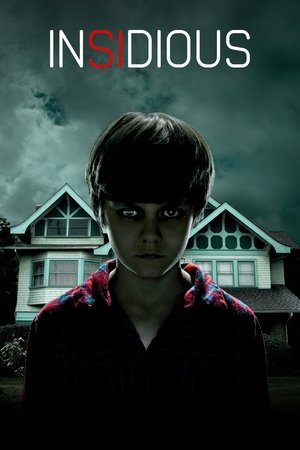
Insidious begins with the conventions of haunted-house cinema before revealing a different structure. Josh and Renai Lambert initially believe their home is responsible for the frightening events surrounding their family, but their son Dalton has actually entered a state of astral projection and become trapped in a realm called the Further. Hostile entities are attracted to his vacant body. The shift means that relocation cannot solve the problem because the supernatural connection belongs to Dalton rather than to one building.
Whannell’s screenplay uses this concept to move gradually from domestic haunting toward a more elaborate supernatural cosmology. Elise Rainier, played by Lin Shaye, becomes the character capable of explaining the phenomenon and guiding the family into the Further. Specs and Tucker provide technical assistance. The characters proved durable enough that the franchise eventually shifted much of its attention from the Lambert family toward Elise and her history, allowing a supporting psychic investigator to become the central figure of later films.
Insidious as a second franchise
The success of Insidious gave Whannell and Wan a second major horror franchise created from an initially inexpensive production. Whannell wrote Insidious: Chapter 2, which continues directly from the first film and expands the history behind Josh Lambert’s supernatural experiences. Patrick Wilson, Rose Byrne, Lin Shaye, Angus Sampson and Whannell returned, giving the sequel unusual cast continuity. Whannell later explained that knowing viewers already understood the Further allowed the second screenplay to enter the mythology more rapidly.
The series continued through prequels centered increasingly on Elise. Whannell wrote Insidious: Chapter 3 and Insidious: The Last Key, while later films retained characters and concepts originating in his work. His credits on subsequent installments include story work on Insidious: The Red Door and acknowledgment as creator of the characters used in Insidious: Out of the Further. His association with the franchise therefore extends across more than fifteen years even though his creative role changed considerably after the early films.
Insidious: Chapter 3 and the move into directing
Insidious: Chapter 3 in 2015 became Whannell’s feature directorial debut. The film is set before the Lambert haunting and follows teenager Quinn Brenner, whose attempt to contact her dead mother exposes her to a dangerous spirit. Elise initially resists returning to supernatural investigation because of her own fear and grief, giving Lin Shaye a more central dramatic role than she had received in the first two films. Whannell’s direction remains connected with the visual and tonal language Wan established, while the prequel structure gives him enough distance from the earlier family to reshape the emphasis.
Quinn’s physical injuries after a traffic accident also anticipate an interest that becomes stronger in Whannell’s subsequent directing. Her restricted mobility changes how supernatural danger can reach her and how she can respond. Bodily limitation becomes part of suspense rather than simply an incidental character condition. Whannell would develop that relationship between body, agency and external control much further after leaving the immediate Insidious framework.
Upgrade and the development of Whannell’s directing style
Upgrade in 2018 sits between science fiction, action and body horror and serves as an important bridge between Whannell’s franchise work and his later Universal monster films. Logan Marshall-Green plays Grey Trace, a quadriplegic man implanted with an artificial-intelligence system capable of controlling his body. The technology restores extraordinary physical ability while gradually raising the question of who actually owns the body when the system can act independently of the conscious person inhabiting it.
The film allowed Whannell to refine a visual approach based on subjective bodily experience. Camera movement changes when STEM assumes control, making the difference between Grey’s intention and physical action visible. The story also gave him greater independence as writer-director and demonstrated that the tightly controlled production model associated with his earlier horror could support formally ambitious filmmaking without abandoning practical effects or direct physical violence.
The Invisible Man and the reinvention of a Universal monster
The Invisible Man in 2020 became Whannell’s most acclaimed horror film as director and screenwriter. Instead of organizing the story around the scientist who discovers invisibility, the film centers Cecilia Kass, played by Elisabeth Moss, after she escapes an abusive relationship with technology entrepreneur Adrian Griffin. When Adrian apparently dies, Cecilia begins experiencing events that convince her he has found a way to remain physically present without being seen. The classic horror property is therefore reconstructed through the experience of the person being observed and controlled.
This change in viewpoint alters the basic function of invisibility. Adrian’s technology allows him to manipulate the physical environment while making Cecilia’s account appear impossible to everyone around her. The supernatural appearance of the premise is ultimately technological, but the dramatic effect depends on a familiar pattern of coercive abuse: the victim knows who is responsible while the surrounding social world demands evidence she cannot initially provide. Whannell builds much of the suspense through empty areas of the frame, making viewers examine apparently unoccupied rooms because Cecilia’s experience has taught them that absence of visible evidence does not guarantee absence of a person.
Space, surveillance and credibility in The Invisible Man
The film’s visual strategy depends heavily on composition. Whannell and cinematographer Stefan Duscio frequently place Cecilia beside unused portions of the frame or allow the camera to look toward spaces that contain no immediately visible action. The technique gives negative space a narrative function. Viewers search the image for a body that the film’s premise makes impossible to see, reproducing Cecilia’s vigilance rather than merely observing it from outside.
The result also shows how Whannell’s experience with low-budget horror informed a larger studio property. The central effect does not require a visible monster in every scene. Suspense comes from actor performance, framing and the possibility of physical presence. This approach allowed a Universal monster associated historically with optical-effects spectacle to become the basis of a contemporary psychological horror story whose most effective images often contain very little obvious visual information.
Wolf Man and bodily transformation
Whannell returned to Universal monster mythology with Wolf Man in 2025. He co-wrote the film with Corbett Tuck and directed Christopher Abbott as Blake, a father who returns with his family to the rural property associated with his childhood and undergoes a progressive transformation following an attack. The film was developed partly during the COVID-19 period, and Whannell has explained that anxiety surrounding infection and isolation entered the screenplay indirectly. His experience of parenting during lockdown also contributed to the story’s concern with a father who fears that he is failing to protect his children.
The physical transformation allowed Whannell to pursue a subject he has identified as a recurring personal fear: the possibility that the body can suddenly cease functioning as expected. He has connected this concern with experiences of illness among people he knew and with the basic vulnerability of biological systems. Wolf Man therefore emphasizes progressive physical deterioration and altered perception alongside the traditional werewolf premise. The protagonist remains aware of his family while becoming increasingly dangerous to them, making bodily transformation a problem of family responsibility as well as creature horror.
Practical effects and the influence of 1980s body horror
For Wolf Man, Whannell drew openly on his admiration for practical makeup effects and filmmakers associated with the major transformation sequences of 1980s horror. He has cited artists such as Rick Baker, Rob Bottin, Stan Winston and Dick Smith as formative figures. The production consequently relied heavily on prosthetic work to make Blake’s changing body physically present alongside the other actors rather than treating the transformation solely as a digital-effects sequence.
This interest connects Whannell’s recent directing with a broader pattern visible throughout his career. Mechanical traps in Saw, bodily occupation in Insidious, technological control in Upgrade, unseen physical domination in The Invisible Man and infection in Wolf Man all place pressure on the relationship between consciousness and the body. The specific genre changes, while the problem of personal agency remains remarkably persistent.
Whannell, James Wan and collaborative horror authorship
The partnership with James Wan remains foundational to Whannell’s historical importance. Their work together developed from film-school friendship into two major horror franchises with very different identities. Whannell has described a clear division of trust during their early career, with him concentrating heavily on writing while Wan directed. Years spent on Wan’s sets also became a practical education in direction, and Whannell later recalled Wan bringing him to the monitor and explaining choices when he knew his collaborator wanted eventually to direct.
The relationship demonstrates how collaborative authorship operates in commercial horror. Saw and Insidious are associated with both men because concept, writing, performance and direction developed through a long-standing creative partnership. Their later careers moved in separate directions, but the films they created together continued generating sequels under other filmmakers and remained central to the production histories of Lionsgate and Blumhouse horror.
Leigh Whannell’s contribution to modern horror
Whannell’s contribution extends across two distinct phases. As a writer working with Wan, he helped establish the narrative foundations of Saw and Insidious, franchises that affected the commercial direction of horror during consecutive decades. The first demonstrated the durability of contained independent horror built around a strong mechanical premise and serialized mythology. The second helped restore supernatural horror to a prominent theatrical position while developing a mythology that could shift from one family to a recurring group of investigators.
As a director, Whannell has become increasingly focused on subjective vulnerability and control. The Invisible Man and Wolf Man approach famous Universal properties through contemporary human experiences rather than reconstructing earlier films scene by scene. His career now connects the micro-budget ingenuity of early twenty-first-century independent horror with the reinterpretation of characters originating in classical studio horror. That range, combined with his influence as writer, actor and producer, places him among the major horror filmmakers to emerge from the generation that transformed the genre during the 2000s.
Selected Work
Notable Horror Collaborators
Notable collaborators and creative partners throughout Leigh Whannell's horror career.
 James Wan
Writer-Actor / Director Collaborator
Wan is the defining collaborator of Whannell’s early horror career. Their work together includes Saw, Dead Silence, Insidious and Insidious: Chapter 2, alongside the broader Saw and Insidious mythologies they created. The partnership developed from film school and produced two of the major horror franchises of the twenty-first century.
 Jason Blum
Writer-Director / Producer Collaborator
Blum worked with Whannell throughout the Insidious franchise and later produced The Invisible Man and Wolf Man. Their repeated collaboration gave Whannell a low-to-mid-budget production framework in which he could move from franchise screenwriting into increasingly personal horror direction while maintaining wide theatrical distribution.
 Lin Shaye
Writer-Director / Actor Collaborator
Shaye appeared as Elise Rainier in Insidious, Chapter 2, Chapter 3 and The Last Key, all built from material written or developed by Whannell. Whannell also directed her in Chapter 3, where Elise moved decisively toward the central position she would occupy in the franchise’s prequel cycle.
 Angus Sampson
Writing / Acting Collaborator
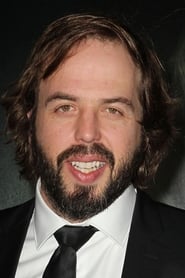
Sampson and Whannell developed the recurring Tucker and Specs partnership across multiple Insidious films. Their characters provide the franchise with technical investigation and controlled comic relief while remaining fully committed to the reality of the supernatural events surrounding Elise and the families they assist.
 Patrick Wilson
Writer / Actor Collaborator
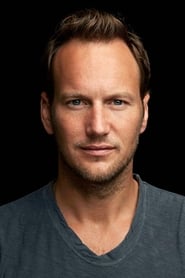
Wilson’s Josh Lambert appears in Insidious, Insidious: Chapter 2 and Insidious: The Red Door, all connected directly with characters and mythology created by Whannell. The three films follow the consequences of astral projection and possession across different periods in the Lambert family’s history.
 Rose Byrne
Writer / Actor Collaborator
Byrne’s Renai Lambert appears in Insidious, Chapter 2 and The Red Door. Her recurring role keeps the supernatural mythology grounded in the family consequences of Josh and Dalton’s relationship with the Further and provides continuity across more than a decade of the franchise.
Leigh Whannell Horror Movies
Writing (22 credits)
2025
2023
2023
2021
2020
2018
2017
2015
2014
2013
2011
2010
2009
2008
2007
2006
2006
2005
2005
2004
2003
Acting (24 credits)
2026
2025
2025
2023
2018
2018
2017
2017
2015
2015
2015
2014
2013
2013
2011
2010
2008
2006
2006
2005
2004
2003
2003
1998
Production (16 credits)
2026
2025
2023
2023
2021
2020
2018
2017
2016
2014
2010
2009
2008
2007
2006
2005
Directing (3 credits)
2025
2020
2015
Other Crew (3 credits)
2017
2015
2006