





2025
David Cronenberg
Horror Director · Biography · Horror Filmography · Family · Collaborators · Credits
Horror subgenres & themes
Most represented across this person's horror filmography:
BODY HORROR
Biography
David Cronenberg and the Horror of Becoming Something Else
David Cronenberg built one of horror cinema's most distinctive bodies of work around a fear more intimate than death: the possibility that the human body, mind and identity are never as stable as they appear. In his films, transformation does not usually arrive from an ancient curse or an external supernatural evil. It emerges through infection, surgery, sexuality, technology, medicine, desire and evolution. Flesh changes because something inside it has discovered a new possibility, and the most disturbing question is often not whether the transformation can be stopped, but whether it should be understood as disease at all.
This approach made Cronenberg one of the central filmmakers associated with body horror, yet the label describes only the most visible layer of his cinema. His films are filled with wounds, parasites, mutations, organs, surgical instruments and bodies behaving in impossible ways, but physical change almost always leads toward a larger philosophical problem. What happens to identity when the body changes? Where does technology end and biology begin? Can desire be separated from the forms through which it expresses itself? Is mutation necessarily degeneration, or can it represent adaptation to a world human beings themselves have altered?
From the sexual parasites of Shivers to the diseased media reality of Videodrome, the molecular catastrophe of The Fly, the surgical identity crisis of Dead Ringers and the evolving bodies of Crimes of the Future, Cronenberg repeatedly returned to these questions without reducing them to simple warnings. His monsters are rarely just monsters. They are often people becoming something they do not yet have the language to understand.
Science, Literature and the Origins of the Cronenberg Body
David Paul Cronenberg was born in Toronto on March 15, 1943. Long before becoming a filmmaker, he was drawn both to science and to writing, two interests that would eventually converge inside his cinema. At the University of Toronto he initially studied science before moving toward English language and literature, graduating in 1967. The combination is unusually revealing in retrospect. Cronenberg's films often approach the impossible with the vocabulary of biology and medicine while constructing stories around metaphor, ambiguity and the transformation of language into physical form.
His interest in filmmaking developed while he was at university. Early shorts including Transfer and From the Drain were followed by the experimental features Stereo (1969) and Crimes of the Future (1970), films made before the commercial horror career for which he would become famous. Even in these early works, institutions, sexuality, scientific experimentation and altered human behavior already occupy the territory that Cronenberg would continue exploring for decades.
These films also reveal something fundamental about his later approach. Cronenberg rarely treats science as a neutral force standing outside human desire. Laboratories and research institutions may appear rational, but the people inside them are motivated by curiosity, ambition, sexuality, fear and obsession. Scientific knowledge therefore becomes another form of human behavior, capable of producing consequences that cannot be controlled simply because they were created intentionally.
Shivers: Infection Inside the Modern World
Shivers (1975) gave Cronenberg his first major commercial feature and established many of the ideas that would define his early horror. The setting is a modern high-rise apartment complex designed to provide residents with comfort, convenience and isolation from the disorder of the outside world. Into this apparently controlled environment comes a genetically engineered parasite capable of transforming its hosts into violently sexual beings. The infection spreads through the building until architecture designed to organize modern life becomes a closed biological system.
The horror operates through a characteristic Cronenberg reversal. The parasite is disgusting, but its effect is not simply to destroy the body. It changes behavior by releasing impulses that civilization has attempted to regulate. Sexuality becomes contagious, aggressive and collective, turning the residents into something closer to a new social organism than conventional zombies. The film therefore makes it difficult to separate disease from liberation. The infected are dangerous, but they also appear to have crossed a boundary that the uninfected characters still believe must remain intact.
The production generated controversy in Canada partly because public film financing had helped support a movie filled with sexual infection, parasites and grotesque imagery. Yet the controversy helped reveal what was already unusual about Cronenberg's horror. He was not using exploitation elements as decoration around a conventional story. Sex, disease and the breakdown of social order were the story, and the body was the place where social ideas became physically visible.
Rabid and the Body as an Epidemic
Rabid (1977) expanded the idea of infection beyond a single building. After experimental medical treatment following a motorcycle accident, a young woman named Rose develops a new organ that allows her to feed on the blood of others. Her victims become violently infected, and the condition spreads until individual bodily transformation produces a public health catastrophe. Cronenberg turns surgical intervention into the origin of an epidemic, connecting medicine, sexuality and contagion in a way that would become increasingly recognizable across his work.
The film is significant because the transformation is neither magical nor easily classified. Rose has not simply become a traditional vampire. Her body has produced a new biological mechanism, and the horror comes partly from the inability of existing categories to explain it. The medical system that altered her cannot fully control what it created, while the wider society responds with increasingly severe containment measures as infection moves beyond any single patient.
Rabid also demonstrates Cronenberg's preference for treating impossible biological events with an almost clinical seriousness. Characters may confront grotesque phenomena, but the films themselves rarely behave as though those phenomena belong to another universe. The impossible is photographed as part of ordinary physical reality. A new organ, a parasite or a mutation may be horrifying, but Cronenberg wants the audience to consider what it does before dismissing it as something that should not exist.
The Brood: Emotion Becomes Flesh
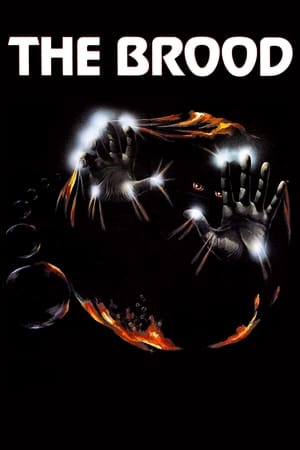
The Brood (1979) brought the psychological and biological sides of Cronenberg's cinema into even more direct contact. Samantha Eggar plays Nola Carveth, a woman undergoing an experimental form of psychotherapy developed by Dr. Hal Raglan, played by Oliver Reed. The treatment encourages patients to express psychological trauma through their bodies, transforming emotional states into visible physical symptoms. Nola's rage eventually takes a far more extreme form, producing childlike creatures that act upon emotions she cannot resolve through conventional language.
The concept is pure Cronenberg because metaphor becomes anatomy. Psychological pain does not merely symbolize bodily illness; it creates bodies. Anger develops organs, trauma produces offspring and therapy becomes a biological process. The line between mind and flesh disappears because the film refuses to accept that they were truly separate in the first place. Criterion has described the film's mixture of psychological and body horror as foundational to much of the work that followed, and Cronenberg himself connected its emotional intensity to experiences surrounding a difficult divorce and custody struggle.
The result is one of his most personal early films, but it is not simple autobiography disguised as horror. The Brood transforms domestic conflict into a grotesque theory of embodiment. Families do not merely pass emotional damage from one generation to another through memory or behavior. In Cronenberg's nightmare, trauma can reproduce itself physically, creating new bodies designed to continue the conflict.
Scanners and the Violence Inside the Mind
Scanners (1981) moved Cronenberg toward a larger science-fiction framework while preserving his obsession with altered human biology. The scanners are people with extraordinary telepathic and telekinetic abilities, created through prenatal exposure to an experimental drug. Their powers allow the mind to invade other bodies, disrupt nervous systems and, in the film's most famous image, cause a human head to explode during a demonstration.
The sequence became one of the defining special-effects images of early 1980s horror, but reducing Scanners to the exploding head misses how closely the film belongs to Cronenberg's developing ideas about evolution. The scanners are dangerous because they are different, yet they may also represent the emergence of a new form of humanity. Corporate power attempts to identify, organize and control them, while the scanners themselves divide over what their difference should mean.
This ambiguity would remain central to Cronenberg. Mutation is rarely presented as a simple mistake that can be reversed without consequence. Once the human organism changes, the question becomes political and philosophical as well as medical. Who has the right to define the new body as diseased? Who controls the technology that produced it? What happens when the supposed abnormality develops abilities unavailable to the people trying to cure it?
Videodrome: Technology Enters the Flesh
Videodrome (1983) represents one of the decisive moments in Cronenberg's career because media technology and biological transformation become inseparable. James Woods plays Max Renn, the operator of a Toronto television station searching for increasingly extreme programming. He becomes fascinated by a mysterious broadcast apparently consisting of real torture and gradually discovers that watching the signal can produce hallucinations, tumors and physical changes in the viewer.
The film begins with television as something people watch and ends in a world where the distinction between screen, mind and body has become impossible to maintain. Videocassettes appear to breathe, television screens become organic, wounds function like technological interfaces and Max's own body begins accepting objects in ways anatomy should not permit. Cronenberg does not simply imagine technology invading humanity from outside. The human body adapts itself to technology until the two become part of the same system.
This is the meaning behind the film's idea of the "new flesh." Technology changes perception, and perception changes the body that experiences it. The media conspiracy surrounding Videodrome wants to use this process politically, but Cronenberg is interested in something larger than manipulation. Once media has entered human consciousness deeply enough, asking whether it is natural or artificial may no longer make sense. The television is no longer an object across the room because its images have already entered the nervous system.
Rick Baker's special makeup effects give these ideas a tactile physical reality, while Howard Shore's score moves between orchestral and electronic textures in a way that mirrors the film's fusion of organic and technological forms. Videodrome remains one of Cronenberg's most influential films because the technology that inspired it has become obsolete while its central anxiety has become more familiar. Screens changed, networks changed and distribution changed, but the idea that media can reshape the people consuming it became increasingly difficult to dismiss as science fiction.
The Dead Zone and Horror Without Transformation
Later in 1983, Cronenberg directed The Dead Zone, adapted from Stephen King's novel. Christopher Walken plays Johnny Smith, a teacher who awakens from a coma with the ability to perceive hidden truths and possible futures through physical contact. The film contains supernatural ability rather than the biological mutation most strongly associated with Cronenberg, yet it remains closely connected to his interest in unwanted transformation. Johnny gains extraordinary knowledge, but the knowledge separates him from the ordinary life he might otherwise have lived.
The horror comes from responsibility as much as power. Seeing the future creates an obligation to respond to it, especially when Johnny discovers a possible political catastrophe involving Greg Stillson. Knowledge therefore becomes another irreversible alteration. Johnny cannot return to ignorance once the future has entered his consciousness, just as Cronenberg's physically transformed characters cannot simply pretend their bodies have remained unchanged.
The film also demonstrated Cronenberg's ability to work successfully with material he had not written himself. His direction is restrained compared with the visceral extremity of Scanners or Videodrome, but the emotional bleakness fits naturally into his cinema. Transformation does not need to produce visible mutation in order to destroy the continuity of a person's identity.
The Fly: Transformation as Tragedy
The Fly (1986) brought Cronenberg's body horror to its most emotionally direct form. Jeff Goldblum plays scientist Seth Brundle, whose teleportation experiment accidentally combines his genetic material with that of a housefly. At first the change seems beneficial. Brundle becomes stronger, more energetic and sexually confident, interpreting the transformation as an improvement. Only gradually does he understand that his body is not being enhanced but reorganized according to a biological process he can no longer control.
The film's power comes from allowing transformation to unfold as experience rather than simple spectacle. Brundle observes himself scientifically even while becoming the subject of his own experiment. Teeth loosen, skin changes, behavior becomes unstable and familiar anatomy gives way to something new. Chris Walas's effects make the process increasingly grotesque, but the emotional center remains the relationship between Brundle and Veronica Quaife, played by Geena Davis. She must watch a person she loves become physically and psychologically unrecognizable while fragments of the original man remain visible inside the creature replacing him.
Cronenberg turns the familiar monster-movie premise into a story about illness, decay and mortality without reducing it to a single allegorical interpretation. The transformation has been associated with disease, aging and the fear of losing bodily autonomy, but the film remains powerful because none of these readings completely contains it. Brundle's tragedy is that consciousness survives long enough to understand what is happening. He is both scientist and specimen, intellectually capable of describing a process that his intelligence cannot stop.
The Fly became one of Cronenberg's greatest commercial successes and remains one of the most accessible entrances into his cinema. It contains everything associated with his body horror, yet the grotesque imagery never overwhelms the human loss underneath it. The film made mutation tragic because the person disappearing inside it mattered before the transformation began.
Dead Ringers: Two Bodies, One Identity
Dead Ringers (1988) moved Cronenberg away from overt monsters without abandoning the body. Jeremy Irons plays twin gynecologists Beverly and Elliot Mantle, physically identical men whose personalities, relationships and professional lives have become dangerously interdependent. The horror develops through identity itself. The twins exchange places with patients and lovers, share experiences and gradually become unable to maintain a stable distinction between what belongs to one brother and what belongs to the other.
Medicine again occupies an unstable position. The Mantles are accomplished doctors, but professional expertise cannot protect them from psychological disintegration. Beverly's increasingly disturbed perception of female anatomy leads to the creation of bizarre surgical instruments designed for bodies he imagines are mutating. Cronenberg reverses the relationship between body and mind seen in films such as The Brood. Here the bodies may remain anatomically ordinary while perception becomes so distorted that ordinary anatomy can no longer be trusted.
The film also marked a transition in Cronenberg's career. The explicit transformations of his earlier work began giving way to increasingly psychological forms of bodily unease. The famous monsters did not disappear so much as move inward. The possibility that a person could become alien to himself remained central even when prosthetic mutation was no longer required to show it.
Naked Lunch and the Biology of Writing
Adapting William S. Burroughs's Naked Lunch presented an apparently impossible problem because the novel resists conventional cinematic narrative. Cronenberg's 1991 film responds by combining elements of Burroughs's writing with aspects of the author's life and the process of writing itself. Typewriters become insect-like creatures, secretions become narcotics and literary production turns into another form of biological transformation.
The result returns Cronenberg to one of his most persistent ideas: tools do not remain separate from the people using them. The typewriter becomes organic because writing has become inseparable from the writer's body, habits and desires. Language behaves like infection, altering perception and producing an unstable world in which authorship, addiction, sexuality and espionage collapse into one another.
Naked Lunch also makes visible the literary dimension that had always existed beneath Cronenberg's body horror. His cinema was never interested only in physical shock. He repeatedly takes abstract ideas that might belong to philosophy, psychology or literature and gives them a body. In this film, the act of writing itself becomes flesh, appetite and secret anatomy.
Crash: Technology, Desire and the Wounded Body
Crash (1996), adapted from J. G. Ballard's novel, pushed Cronenberg toward one of the most controversial explorations of sexuality in his career. The characters become sexually fascinated by automobile accidents, injuries, scars and the collision between human flesh and automotive technology. Instead of treating this desire as a mystery that must be diagnosed and cured, the film observes it with the same clinical calm Cronenberg had previously brought to parasites, mutations and experimental medicine.
The automobile becomes another extension of the body. Metal, skin, wounds and sexual desire form a system in which technology no longer functions merely as a tool for transportation. The characters search for new forms of sensation through collisions that physically mark them, turning scars into records of experiences that ordinary sexuality can no longer provide. The disturbing quality of the film comes partly from Cronenberg's refusal to tell the audience exactly how it should judge them.
The controversy surrounding Crash demonstrated how far Cronenberg had moved from conventional horror while remaining inside the same conceptual universe. There are no zombies, parasites or transforming insects, yet the central question remains recognizably his: what happens when the human body discovers a new relationship with a technology designed for another purpose? The horror lies not in technology corrupting innocent people but in the possibility that people might willingly evolve their desires around it.
eXistenZ and the Body as Interface
eXistenZ (1999) returned Cronenberg directly to biological technology. Its virtual-reality game systems are accessed through ports implanted into human bodies, while the gaming devices themselves resemble living organs rather than conventional machines. Players physically connect to technology through flesh, making the relationship between user and interface explicit in a way that extends the ideas of Videodrome.
The film repeatedly destabilizes the boundary between reality and simulation. Characters enter game worlds, perform actions they do not completely understand and begin questioning whether they have ever actually left the system. Cronenberg uses the structure not simply to ask whether reality is fake, but to examine what happens when technology begins producing desires and behaviors inside the people using it. The game becomes persuasive because the body participates in it.
Once again, technological advancement is imagined as biological adaptation. Cronenberg's machines rarely remain clean metal objects standing outside humanity. They become soft, penetrable, diseased and organic because technology matters to him most when it enters the body. eXistenZ therefore feels less like a prediction of specific virtual-reality hardware than another stage in his larger argument that tools eventually become extensions of human anatomy and consciousness.
Leaving Visible Body Horror Without Leaving the Body
During the 2000s, Cronenberg moved further away from the explicit biological grotesquerie that had defined his international reputation. Films including Spider (2002), A History of Violence (2005), Eastern Promises (2007) and A Dangerous Method (2011) appeared, on the surface, to represent a departure from body horror. Yet the body remained central even when mutation disappeared. Violence leaves marks, identity is performed physically and psychological conflict continues to express itself through gesture, sexuality and damage.
A History of Violence is particularly revealing because it treats identity as something the body remembers even when a person attempts to construct an entirely different life. Viggo Mortensen's Tom Stall appears to be an ordinary family man until sudden violence reveals abilities connected to another identity. The transformation is therefore reversed. Nothing new enters the body; instead, the body reveals something the character has tried to bury.
Eastern Promises continues the idea through bodies marked by tattoos, wounds and institutional violence. Identity becomes literally inscribed on skin. These films demonstrate why describing Cronenberg's later work as an abandonment of his earlier concerns can be misleading. The exploding heads and biological machines became less frequent, but the relationship between flesh and identity remained one of the foundations of his cinema.
Howard Shore and the Sound of Transformation
Composer Howard Shore became one of Cronenberg's most important long-term collaborators, beginning with The Brood and continuing through most of the director's subsequent career. Their collaboration gave Cronenberg's images a musical identity capable of moving between clinical restraint, emotional tragedy and something far more unstable. Shore's scores rarely treat the grotesque as an excuse for simple musical shock. They often give transformation weight and seriousness, reinforcing the sense that Cronenberg's impossible events belong to coherent emotional worlds.
Videodrome offers one of the clearest examples. Shore combined orchestral material with electronic processing so that acoustic and synthetic sound became increasingly difficult to separate, reflecting a film in which body and technology undergo the same fusion. In The Fly, the music becomes more openly tragic and operatic, allowing Brundle's transformation to feel like the destruction of a human relationship rather than only a sequence of special-effects set pieces.
The collaboration continued even as Cronenberg moved away from conventional horror, which reveals how much continuity exists beneath the surface changes in his filmography. Whether the subject is bodily mutation, organized crime, psychoanalysis or grief, Shore's music helps preserve the controlled unease that makes a Cronenberg film recognizable long before anything visibly monstrous appears.
Crimes of the Future: Surgery Becomes Performance
After an eight-year absence from feature filmmaking, Cronenberg returned with Crimes of the Future (2022), using the title of his 1970 film for an otherwise different work. Viggo Mortensen plays Saul Tenser, a performance artist whose body spontaneously develops new organs. With his partner Caprice, played by Léa Seydoux, he removes those organs in public surgical performances while institutions and underground groups attempt to understand what his changing body might represent.
The film reconnects directly with the biological obsessions of Cronenberg's early work, but the perspective has changed. Surgery is no longer automatically horrifying because physical pain itself is becoming obsolete for parts of the population. Cutting the body can become art, intimacy and entertainment. Humanity is also adapting to a synthetic environment, with some people developing the ability to consume plastics and artificial materials that ordinary bodies cannot process.
Cronenberg described the film as a meditation on human evolution and asked whether the body might evolve in response to environments humanity itself has created. This question places the film beside Shivers, Rabid and Videodrome while also revealing how his perspective has matured. Mutation is still disturbing, but the possibility that it may represent necessary adaptation has become increasingly explicit. The old human body may not be the final standard against which every new form should be judged.
Crimes of the Future therefore feels less like a nostalgic return to body horror than a continuation of an argument Cronenberg had been developing for decades. The body is not betraying humanity by changing. It may simply be responding to a world that has already changed around it.
The Shrouds: Death, Technology and the Body That Remains
The Shrouds (2024) extends Cronenberg's fascination with technology into one of the most personal subjects of his career: grief. Vincent Cassel plays Karsh, a businessman who creates GraveTech, a system allowing bereaved people to observe the bodies of loved ones decomposing inside their graves. When several graves are vandalized, including that of his wife, the technology designed to maintain a connection with the dead becomes part of a larger mystery involving surveillance, intimacy and obsession.
Cronenberg developed the project after the death of his wife, Carolyn Zeifman, and described the film as deeply personal. That autobiographical origin gives the technology a different emotional function from the machines of Videodrome or eXistenZ. GraveTech does not promise immortality and does not prevent physical decay. It allows the living to continue looking at decay, turning mourning into an act of observation.
The idea is unmistakably Cronenberg because death remains physical. The deceased does not escape into a comforting spiritual abstraction; the body continues changing underground. Technology creates intimacy with that material process instead of concealing it. After decades spent imagining bodies mutating, merging with machines and producing new organs, Cronenberg confronts the final transformation that no technology can eliminate. Decomposition itself becomes the ultimate body horror because it is the one transformation every body eventually undergoes.
David Cronenberg's Style and Legacy
Cronenberg's importance to horror comes partly from the images he created: the parasites of Shivers, the exploding head in Scanners, the breathing technology of Videodrome, Brundle's disintegrating body in The Fly and the surgical instruments of Dead Ringers. These images helped define body horror as a recognizable cinematic mode, influencing generations of filmmakers interested in mutation, infection, biotechnology and the vulnerability of flesh. Yet the ideas surrounding those images are what gave them lasting power.
His cinema consistently rejects the comforting assumption that there is a stable human body to which everything abnormal can simply be compared. Bodies develop parasites, produce organs, merge with technology, express psychological trauma, become sexually attached to machines or adapt to synthetic environments. The change may be destructive, but Cronenberg rarely allows the audience to dismiss it without examining what the transformation reveals. Normality itself becomes a temporary biological arrangement rather than a permanent law.
This is also why his transition away from explicit horror never represented a complete break with his earlier films. Dead Ringers, Crash, A History of Violence and Eastern Promises continue examining the ways identity becomes visible through bodies, wounds, sexuality and behavior. The surface genre changes, but the philosophical problem remains remarkably consistent. Cronenberg keeps asking where the self is located when flesh, memory, technology and desire refuse to remain separate.
His later return to overt biological transformation with Crimes of the Future, followed by the technologically mediated decomposition of The Shrouds, makes that continuity especially clear. Cronenberg did not return to body horror because he had never truly left the body behind. Across more than half a century of filmmaking, he has treated human flesh as unstable territory where science, psychology, technology, sexuality and mortality meet. What makes his horror distinctive is not simply that bodies change, but that Cronenberg remains curious about what those changes might mean long after most horror films would have decided they were monsters.
Known Among Horror Fans For
Notable Horror Collaborators
Notable collaborators and creative partners throughout David Cronenberg's horror career.
 Howard Shore
Composer Collaborator
Cronenberg's longest-running major creative collaborator. Shore has scored most of his films since The Brood, including Scanners, Videodrome, The Fly, Dead Ringers, Crash, eXistenZ, A History of Violence and Crimes of the Future.
CS
Carol Spier
Production Design Collaborator
One of the central architects of Cronenberg's visual world. Spier has worked with him across most of his career, helping shape the physical environments of films including Videodrome, Dead Ringers, Naked Lunch, Crash and Crimes of the Future.
RS
Ronald Sanders
Editing Collaborator
One of Cronenberg's longest-running creative collaborators. Sanders edited Scanners, Videodrome, The Dead Zone, The Fly, Dead Ringers, Naked Lunch and eXistenZ, continuing to work with the director throughout much of his later career.
 Robert A. Silverman
Frequent Horror Collaborator
A recurring performer in Cronenberg's genre films, appearing in Rabid, The Brood, Scanners, Naked Lunch and eXistenZ across more than two decades of the director's career.
 Peter Suschitzky
Cinematography Collaborator
Cronenberg's principal cinematography collaborator for much of his later career, beginning with Dead Ringers and continuing through films including Naked Lunch, Crash, eXistenZ, A History of Violence, Eastern Promises and Maps to the Stars.
MI
Mark Irwin
Cinematography Collaborator
The cinematographer who defined the visual language of Cronenberg's formative horror period, shooting The Brood, Scanners, Videodrome, The Dead Zone and The Fly.
David Cronenberg Horror Movies
Directing (16 credits)
2023
2022
2013
2000
1999
1988
1987
1986
1983
1983
1981
1979
1977
1975
1967
Writing (19 credits)
2025
2023
2022
2019
2013
2000
1999
1995
1994
1992
1991
1988
1986
1983
1981
1979
1977
1975
1967
Acting (13 credits)
2026
2024
2023
2013
2001
2000
1999
1995
1990
1988
1986
1983
1975
Other Crew (5 credits)
2019
2014
2011
2010
1967
Production (3 credits)
2013
1999
1988
Editing (1 credits)
1967