


2024
Tiffany Shepis
Horror Actor · Biography · Horror Filmography · Collaborators · Credits
Horror subgenres & themes
Biography
Tiffany Shepis and the Independent Horror Underground
Tiffany Shepis became one of the most prolific faces of American independent horror by building a career almost entirely outside the conventional route to movie stardom. Beginning with Troma while still a teenager, she moved through micro-budget splatter, creature films, supernatural horror, slashers, anthology films and increasingly polished independent productions without abandoning the low-budget genre community that first gave her an opportunity. Her filmography is unusually valuable as a map of independent horror itself: filmmakers, performers and effects artists recur across different projects, turning what might appear from outside to be dozens of unrelated productions into a dense network of long-term creative relationships.
Shepis has often been described as a scream queen, but the label only partially explains her position within horror. She has certainly played victims and survivors, yet she has also appeared as killers, possessed women, monsters, police officers, unstable outsiders and characters positioned deliberately between exploitation and black comedy. The consistency comes less from one recurring type than from her willingness to commit fully to extreme material. Whether the production is polished or deliberately rough, Shepis tends to treat the strange world around her as completely real, which is one reason filmmakers repeatedly returned to her across decades of independent horror.
Troma and the Beginning of a Horror Career
Shepis entered professional filmmaking through Troma Entertainment after auditioning for Tromeo and Juliet. She later recalled that she had already been a fan of Troma and horror movies before the audition and that receiving a role from Lloyd Kaufman was the moment she first understood acting could become an actual career. The experience was therefore more important than a simple early credit. Troma gave a teenage horror fan direct access to independent production and exposed her to a kind of filmmaking in which limited resources were compensated for through invention, practical effects, aggressive humor and a willingness to ignore conventional taste.
That environment suited Shepis because Troma productions rarely required performers to protect a polished screen image. Actors might be covered in blood, placed inside absurd situations or asked to move rapidly between slapstick and physical horror. Shepis learned within a filmmaking culture where enthusiasm and adaptability mattered as much as formal industry experience. The relationship with Kaufman continued beyond that first production and became one of the foundations of her later identification with independent horror.
Lloyd Kaufman and Terror Firmer
Lloyd Kaufman directed Shepis in Terror Firmer, one of Troma's most self-referential productions. The film takes place around a chaotic low-budget movie crew being targeted by a killer, allowing Kaufman to turn the practical disorder of independent filmmaking itself into the setting for splatter comedy. Shepis appears inside a cast that includes Debbie Rochon and Trent Haaga, two performers who would remain part of her wider horror network long after the production ended.
The significance of Kaufman to Shepis extends beyond the number of films they share. He belongs to the beginning of her professional identity. Troma demonstrated that horror could sustain careers outside major studios and that performers could move repeatedly through productions aimed directly at genre audiences. Shepis later carried that lesson into an enormous number of independent films, making Kaufman one of the most consequential connections in her career even when they were not constantly working together.
Scarecrow and the Direct-to-Video Horror Era
Scarecrow represents the kind of early-2000s direct-to-video horror in which Shepis became increasingly visible. The film turns a murdered outsider into a supernatural scarecrow killer and combines slasher structure with low-budget creature effects. Shepis plays Judy within a production whose pleasures depend much more upon practical genre mechanics than prestige presentation. Films such as this allowed her to build recognition among horror audiences through frequency, video-store circulation and convention culture rather than through one large theatrical breakthrough.
This period is essential to understanding Shepis because independent horror careers were increasingly being constructed through DVD distribution, specialty labels and direct relationships with fans. A performer could become extremely familiar to horror viewers while remaining almost invisible to mainstream audiences. Shepis became one of the clearest examples of that alternative star system, accumulating enough genre work that her presence itself eventually became part of a film's appeal.
The Ghouls and Trent Haaga
Trent Haaga became one of Shepis's recurring collaborators beginning within the Troma world and continuing into independent horror such as The Ghouls. Chad Ferrin's film follows a video journalist who discovers something far worse than ordinary urban violence while searching Los Angeles for increasingly sensational footage. Shepis appears within the same grimy independent environment that allowed Haaga to move between acting, writing, producing and directing across numerous horror projects.
Haaga and Shepis represent a particular generation of independent horror workers whose careers cannot be reduced to one production role. Both emerged from filmmaking environments where actors frequently became writers, producers or directors and where collaborators crossed repeatedly between projects. Their shared work in Terror Firmer, The Ghouls, Tales of Halloween and other anthology or ensemble productions reflects the interconnected character of the horror underground more clearly than a single conventional actor-director partnership would.
Nympha and Ivan Zuccon
Italian director Ivan Zuccon gave Shepis one of her most substantial European horror roles with Nympha. She plays Sarah, an American woman who travels to Italy intending to enter a cloistered religious order and encounters a regime of physical suffering, religious obsession and supernatural darkness. Zuccon later explained that the project offered him the opportunity to work with Shepis after wanting to collaborate with her, and the film was conceived with significant attention toward the international horror market.
The production places Shepis in a very different register from the comic excess of Troma. Much of Nympha depends upon confinement, religious imagery and the progressive erosion of Sarah's security. Physical suffering remains important, but the horror increasingly connects bodily punishment with belief, memory and the possibility that evil exists within the human structures surrounding the convent. Shepis carries the film through that escalation, demonstrating why filmmakers could use her for more than the energetic splatter roles with which she was already strongly associated.
Wrath of the Crows and the Return to Zuccon
Zuccon later brought Shepis back for Wrath of the Crows, an ensemble horror film set around prisoners trapped inside an oppressive and increasingly unreal institution. The cast also includes Debbie Rochon, bringing two of the most recognizable performers from the independent horror circuit into the same European production. Zuccon described the film as an attempt to move beyond a conventional prison-horror structure by introducing metaphysical elements and building the narrative around character as well as brutality.
The second collaboration makes Zuccon especially relevant among Shepis's key connections. Nympha and Wrath of the Crows use her differently, but both give her substantial roles inside films driven by punishment, confinement and unstable reality. Their work together also demonstrates the international reach of the scream-queen identity Shepis had developed through American independent cinema. By the time of these productions, her name could help position a European horror film directly toward an established international genre audience.
Debbie Rochon and a Parallel Horror Career
Debbie Rochon is one of the strongest recurring performer connections in Shepis's career. Their paths cross through Terror Firmer, Wrath of the Crows, Death House, She Wolf Rising and other independent productions, creating a relationship built across years rather than around one franchise. Both became recognizable to audiences through an enormous volume of low-budget horror work, and their repeated appearances together reveal how small and interconnected the independent genre community could become.
The relationship changed significantly when Rochon moved behind the camera for Model Hunger. Shepis plays Debbie Lombardo in Rochon's directorial debut, a film centered on former model Ginny Reilly and the violence produced by years of resentment toward an industry obsessed with appearance. Shepis later spoke positively about being directed by Rochon, noting the advantage of working with a filmmaker who understood actors from her own extensive performing career. The collaboration therefore evolved from recurring co-star relationship into actor-director partnership.
Night of the Demons and Adam Gierasch
Adam Gierasch directed Shepis in the 2009 remake of Night of the Demons, where she plays Diana among the group trapped inside a New Orleans mansion during a Halloween party. The film deliberately embraces demonic possession, sexual aggression, practical makeup and the party atmosphere associated with the original 1988 cult film while updating the setting and visual style for a new generation. Shepis joins performers including Shannon Elizabeth, Monica Keena, Diora Baird and Edward Furlong in a production openly designed around horror recognition.
The collaboration is important because Night of the Demons places Shepis inside a recognizable established horror property rather than an entirely original micro-budget production. Gierasch later participated alongside her in Tales of Halloween, the anthology that brought together numerous filmmakers and performers associated with contemporary horror. Their overlapping work therefore connects Shepis with another network of genre professionals operating between independent and more commercially visible horror.
The Violent Kind and Mitchell Altieri
Mitchell Altieri and Phil Flores, working as the Butcher Brothers, cast Shepis as Michelle in The Violent Kind. The film begins around a Northern California biker gathering before Michelle appears covered in blood and increasingly behaves as though something has entered or transformed her. From that point the story collides possession horror, biker cinema, home invasion and deliberately strange retro imagery. Shepis becomes one of the principal mechanisms through which the film changes genre because Michelle's transformation signals that the apparently grounded criminal world is no longer operating according to normal rules.
Altieri later worked with Shepis again on Star Light, where she appears as Dorothy in another supernatural horror production. The two films are separated by a decade and differ significantly in scale and tone, which makes the recurrence more meaningful than a single casting choice. Altieri belongs to the group of independent directors who returned to Shepis after already understanding what her genre experience could contribute to a production.
Tales of Halloween and the Horror Community as Ensemble
Tales of Halloween may be one of the clearest demonstrations of Shepis's position inside modern horror culture. The anthology brings together multiple directors, writers and performers whose careers already intersected elsewhere in the genre. Shepis appears in the segment “Trick” alongside Trent Haaga, while the larger production includes filmmakers and actors connected with numerous other parts of her career. Rather than functioning as one isolated anthology credit, the film almost resembles a gathering point for the independent horror community that had developed across the previous two decades.
This kind of production benefits especially from performers whose names already carry genre associations. Shepis does not need extensive exposition for horror audiences to understand why she belongs in the film. Her presence contributes accumulated history: Troma, direct-to-video slashers, international horror and years of convention culture arrive with her before the segment begins. The anthology therefore reflects the point at which Shepis herself had become part of the genre vocabulary.
Death House and the Assembly of Horror Veterans
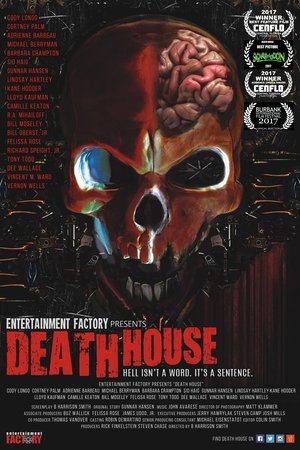
Death House takes the idea of horror recognition even further by assembling a large number of performers associated with different periods and franchises. Shepis appears alongside Kane Hodder, Barbara Crampton, Tony Todd, Bill Moseley, Dee Wallace, Debbie Rochon and numerous other genre veterans inside a story about a secret prison containing exceptionally dangerous inmates. The production was intentionally built around horror personalities, making casting history part of the attraction.
For Shepis, the film confirms how dramatically her position had changed from the teenager auditioning for Troma. She now belonged naturally in an ensemble constructed from people audiences recognized specifically because of their horror careers. That progression illustrates the cumulative nature of genre identity: dozens of independent credits eventually become cultural capital, allowing a performer's appearance to carry meaning before the new character has even been explained.
Victor Crowley and the Hatchet Generation
Shepis also appears in Adam Green's Victor Crowley, connecting her with the practical-effects slasher revival represented by the Hatchet franchise. Kane Hodder's Victor Crowley was designed as a new monster consciously informed by older American slasher traditions, while Green surrounded the films with performers strongly associated with horror history. Shepis fits naturally into that world because her career developed alongside the same independent fan culture that helped turn Hatchet into a modern cult franchise.
Although her role is not one of the central dramatic relationships of the series, the film matters within the larger shape of her career. It places Shepis inside another project where casting functions partly as a celebration of horror continuity. The performers are not merely hired for individual characters; they bring decades of genre associations into the production with them.
From Actress to Producer
Shepis gradually expanded her involvement behind the camera as well. She received producing credits on independent projects and became increasingly familiar with the practical realities of assembling horror productions beyond performance alone. On Model Hunger, for example, she served as an associate producer in addition to acting, reflecting the broader pattern through which long-term independent performers often become involved in development, financing, casting or production logistics.
This progression is consistent with the filmmaking culture in which her career began. Troma and low-budget horror rarely maintain rigid barriers between artistic departments, and people who remain in that environment for decades inevitably accumulate knowledge far beyond their original job description. Shepis's career therefore represents not simply an enormous acting filmography but sustained participation in the infrastructure that allows independent horror to continue being made.
Tiffany Shepis's Horror Legacy
Tiffany Shepis occupies a distinctive place in horror because her career was built through accumulation rather than one dominant franchise. Lloyd Kaufman and Troma provided the beginning, showing her that independent genre filmmaking could become a profession. Trent Haaga belongs to the same formative underground and continued crossing paths with her through later films. Ivan Zuccon gave her substantial European horror roles in Nympha and Wrath of the Crows, while Debbie Rochon evolved from frequent co-star into director on Model Hunger. Adam Gierasch brought her into Night of the Demons, and Mitchell Altieri used her across two different periods of independent supernatural horror.
The result is a filmography that documents how horror culture actually survives below the largest franchises. Directors return to performers they trust, actors become producers, scream queens direct other scream queens and familiar faces migrate between tiny productions, festival films, remakes and anthology projects. Shepis became important within that ecosystem because she remained willing to move through all of those levels without treating independent horror as a temporary stage before something supposedly more respectable arrived.
Her longevity consequently tells a larger story about the genre. Horror audiences learned to recognize Tiffany Shepis not because one mask, monster or studio campaign made her famous, but because she kept appearing wherever independent horror was being made. Over time, repetition became identity. The teenage Troma performer became one of the faces through which several decades of low-budget American horror can be traced.
Photos (3)
Images: TMDB
Selected Work
Notable Horror Collaborators
Notable collaborators and creative partners throughout Tiffany Shepis's horror career.
 Lloyd Kaufman
Formative Horror Director
Kaufman and Troma gave Shepis her earliest professional opportunity and later directed her in Terror Firmer, establishing the independent horror environment from which her career developed.
 Debbie Rochon
Defining Horror Collaborator
Rochon repeatedly shared independent horror productions with Shepis before directing her in Model Hunger, turning a long-running co-star relationship into an actor-director collaboration.
IZ
Ivan Zuccon
Recurring Horror Director
Zuccon directed Shepis in Nympha and Wrath of the Crows, giving her substantial leading roles in two distinct periods of his Italian independent horror cinema.
TH
Trent Haaga
Recurring Horror Co-Star & Filmmaker
Haaga shared Terror Firmer, The Ghouls, Tales of Halloween and other independent horror projects with Shepis, connecting several stages of her genre career.
AG
Adam Gierasch
Recurring Horror Director
Gierasch directed Shepis in Night of the Demons and later crossed paths with her again in Tales of Halloween, linking her with two ensemble-driven modern horror productions.
MA
Mitchell Altieri
Recurring Horror Director
Altieri directed Shepis in The Violent Kind and later Star Light, working with her across two supernatural horror productions separated by a decade.
Tiffany Shepis Horror Movies
Acting (89 credits)
2024
2023
2023
2021
2021
2020
2020
2020
2020
2020
2020
2020
2019
2019
2019
2018
2018
2018
2018
2018
2018
2017
2017
2017
2017
2017
2016
2015
2015
2015
2014
2014
2014
2014
2013
2013
2013
2013
2013
2012
2012
2011
2011
2011
2011
2011
2010
2010
2010
2010
2010
2010
2010
2009
2009
2009
2008
2008
2008
2008
2008
2008
2008
2008
2008
2008
2007
2007
2007
2006
2006
2006
2006
2004
2004
2004
2004
2003
2003
2003
2003
2003
2002
2002
2002
2002
2001
1999
Production (3 credits)
2010
2008
2004