




2026
Robert Eggers
Horror Director · Biography · Horror Filmography · Collaborators · Credits
Horror subgenres & themes
Most represented across this person's horror filmography:
VAMPIRE
• WEREWOLVES
• WITCHCRAFT
Biography
Robert Eggers and the Horror of Believing the Past
Robert Eggers became one of the defining horror filmmakers of his generation by rejecting one of the assumptions most common in historical cinema: that the past should be translated into modern emotional language before an audience can enter it. His films do the opposite. They attempt to reconstruct not only the clothes, buildings, tools and speech of earlier periods, but the beliefs through which people living in those periods understood reality. Witches, demons, mermaids, prophetic visions and vampires are therefore not decorative intrusions into otherwise modern worlds, but forces that belong naturally inside cultures already equipped to believe in them.
This principle gives Eggers's horror its unusual weight. The Witch does not ask whether a seventeenth-century Puritan family is foolish for believing in Satan, but places the audience inside a world where Satan is part of the family's explanation for existence. The Lighthouse treats maritime superstition, isolation and classical mythology as parts of the same psychological landscape, while The Northman allows prophecy and fate to exist within a Viking worldview without separating neatly into fantasy and reality. Nosferatu returns the vampire to a world of plague, religion, sexuality and folk belief where the undead can feel ancient rather than fashionable.
New England, Theatre and an Early Attraction to the Macabre
Robert Eggers was born in New York City on July 7, 1983. During childhood he moved with his family through Wyoming before eventually growing up in Lee, New Hampshire, where the New England environment became particularly important to his imagination. Colonial architecture, forests, old cemeteries, local history and the cultural memory of witchcraft surrounded the landscape in which he grew up. Eggers has described an early fascination with witches, fairy tales and supernatural folklore, interests that would later become central to his filmmaking rather than remaining decorative childhood obsessions.
He visited Salem as a child and developed an attraction to the darker mythology of New England long before directing became a professional possibility. At the same time, he became heavily involved in theatre, acting, directing and designing productions while still young. He was particularly drawn to constructing the visual world around a performance, which eventually led him toward professional work as a production designer and designer-director. The combination of folklore and theatrical design became the foundation of the method later visible in his films, where historical environment and supernatural belief are inseparable.
Nosferatu Before Cinema
The relationship between Eggers and Nosferatu began unusually early. As a teenager, he helped stage a theatrical version based on F. W. Murnau's 1922 silent film and played Count Orlok himself. The production attempted to reproduce aspects of the original imagery, demonstrating that his fascination with the film was already tied to reconstruction rather than simple fandom. Long before he possessed the resources to make his own feature version, the vampire, the castle and the plague-haunted European world had already become part of his creative vocabulary.
This early project also revealed a pattern that would continue through his career. Eggers rarely begins from the desire to modernize old material or make it more accessible by stripping away historical strangeness. He is more interested in discovering what made the original mythology powerful inside its own cultural context and then rebuilding enough of that context that a modern audience can experience some version of the same fear. The eventual Nosferatu therefore emerged not as an isolated remake project, but as the culmination of an obsession that had followed him for decades.
New York, Theatre Design and Learning to Build Worlds
Eggers moved to New York in the early 2000s and studied at the American Musical and Dramatic Academy. His professional development continued primarily through theatre, where he worked as a director and designer rather than moving immediately into feature filmmaking. He designed sets and costumes and worked in environments where visual ideas had to be created with limited resources, often forcing him to understand how materials, space and performance interact. This experience became essential to his later cinema because Eggers approaches locations less like a director looking for attractive backgrounds and more like a designer constructing systems in which actors must physically live.
Rooms in his films are therefore never generic containers for dialogue. Their dimensions, construction methods, furniture, fabrics, tools and sources of light affect how characters move and behave inside them. Historically accurate clothing and architecture are not simply there to impress specialists with research. They alter posture, movement, hierarchy and psychology, turning production design into part of the performance itself.
The Tell-Tale Heart and Hansel and Gretel
Before his first feature, Eggers directed short films that already demonstrated his attraction to older forms of storytelling. His adaptation of Edgar Allan Poe's The Tell-Tale Heart approached the familiar story through deliberately stylized imagery, while his version of Hansel and Gretel moved toward the dark fairy-tale territory that would later become central to The Witch. These projects allowed him to test how historical or folkloric material could be made cinematic without translating it into contemporary visual language. They also gave him an environment in which to develop the precision that would later define his feature work.
The short-film period also established his collaboration with cinematographer Jarin Blaschke. Their relationship eventually became one of the defining creative partnerships of Eggers's career, extending through his feature films and developing a visual language built around precise framing, controlled camera movement and a willingness to adapt photographic techniques to the historical period being represented. By the time The Witch entered production, the director and cinematographer had already spent years developing not merely a look, but a shared method.
The Witch and the Construction of a Seventeenth-Century Nightmare
The Witch became Eggers's feature debut and immediately established nearly all of the concerns that would define his cinema. Set in New England during the seventeenth century, decades before the Salem witch trials, the film follows a Puritan family expelled from its community and forced to establish a farm beside an isolated forest. Rather than beginning with a supernatural event and asking skeptical characters to accept it, Eggers places the audience among people who already believe deeply in Satan, witchcraft and divine punishment. Their religion determines how they understand misfortune, sexuality, parenthood, guilt and death.
This makes every unexplained event dangerous. A failed crop can imply divine judgment, a missing child can become evidence of supernatural attack and adolescent sexuality can become associated with corruption. The family's belief system provides explanations for the horror before anyone has enough information to know what is actually happening. Eggers never ridicules those beliefs from a modern position, and that refusal is crucial because the supernatural becomes frightening precisely when the worldview is allowed to function seriously.
Historical Language as Horror Technique
One of the most distinctive elements of The Witch is its dialogue. Eggers drew heavily from period documents, journals, religious writings and accounts connected with witchcraft in order to create speech substantially removed from contemporary English. The result requires concentration from the audience, but that difficulty becomes part of the immersion because the characters do not sound like modern people wearing historical costumes. Their language constantly reinforces the fact that they understand family, religion and morality according to assumptions different from those of a contemporary viewer.
Eggers's later films would continue this practice in different forms. Dialogue becomes another production element requiring research, like architecture or clothing, and the objective is not absolute linguistic reconstruction but enough specificity to prevent the past from sounding comfortably modern. Words themselves become part of the horror because belief is embedded in the language through which characters describe what is happening to them. The more historically distant the speech feels, the harder it becomes for the audience to impose completely modern explanations on the story.
The Family at the Center of The Witch
Although The Witch is remembered for Black Phillip, the forest and its supernatural imagery, the family remains the dramatic center. Ralph Ineson gives William physical authority and religious seriousness but also profound insecurity, while Kate Dickie's Katherine carries grief until suspicion overwhelms maternal trust. Harvey Scrimshaw and Ellie Grainger create children whose behavior can appear innocent, mischievous or sinister depending upon the family's changing psychological state. The horror succeeds because these characters initially possess love and mutual dependence, so their destruction becomes emotionally meaningful rather than merely occult spectacle.
At the center is Anya Taylor-Joy as Thomasin, whose movement toward adulthood becomes inseparable from the family's collapse. Her sexuality, independence and resistance to accusation are interpreted through a religious structure already prepared to identify female disobedience with spiritual danger. The witch may exist physically, but the family's fears and beliefs provide much of the mechanism through which she destroys them. Eggers therefore constructs a supernatural film in which theology, adolescence and domestic breakdown are impossible to separate cleanly.
Black Phillip and the Power of Restraint
Black Phillip became one of the most recognizable horror images of the 2010s despite spending much of the film as an apparently ordinary goat. Eggers understands that the animal's power depends upon delay, giving the audience enough information to suspect significance without providing complete confirmation until the story is almost finished. This restraint reflects one of his core ideas about horror: viewers should participate in constructing fear rather than receiving every answer immediately. The filmmaker provides the structure, but the imagination of the audience completes part of the threat.
The eventual transformation of Black Phillip works because the film has already spent so long teaching viewers to look at the animal as though something might be concealed behind it. By the time he finally speaks, the voice confirms a possibility the audience has been imagining rather than introducing an entirely new idea. Eggers uses exactly the same principle later with Count Orlok, delaying full visual information so that anticipation can become part of the monster. What is unseen remains active in the mind long before it becomes visible on screen.
The Witch and the Birth of an Auteur
The Witch premiered at the Sundance Film Festival in 2015, where Eggers received the directing award in the U.S. dramatic competition. The film's theatrical success and critical attention immediately established him as a distinctive filmmaker rather than simply the director of an effective low-budget horror feature. Its success was especially significant because the film rejects several conventional commercial shortcuts, using archaic language, deliberate pacing and restrained supernatural imagery instead of constant explanation. It demonstrated that historical detail and atmospheric horror could support a theatrical film without being simplified into generic period spectacle.
Jarin Blaschke and a Visual Partnership
Cinematographer Jarin Blaschke became one of Eggers's essential collaborators. On The Witch, the pair used restrained compositions and naturalistic lighting to create images that feel austere without becoming visually empty, while trees dominate vertical space and interiors remain oppressively dark. The family frequently appears physically small against the landscape surrounding them, reinforcing the sense that the wilderness exists according to rules beyond their control. The photography therefore participates directly in the story rather than simply creating attractive historical images.
The collaboration became more technically radical with The Lighthouse, then expanded into epic scale with The Northman and elaborate Gothic imagery with Nosferatu. These films look very different from one another, but all share an insistence that camera language must emerge from the specific world being created. Blaschke's importance to Eggers resembles the great recurring cinematographer-director partnerships in genre cinema because their collaboration is based not on one visual formula but on shared precision.
The Lighthouse and the Horror of Two Men in a Box
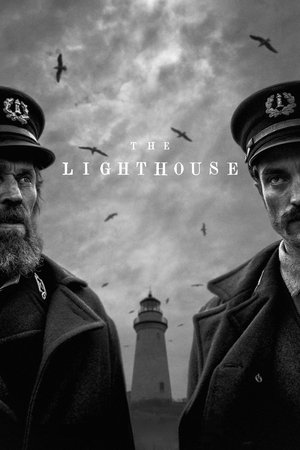
The Lighthouse (2019) reduced Eggers's world dramatically after The Witch. Willem Dafoe and Robert Pattinson play two lighthouse keepers stationed together on an isolated island during the late nineteenth century, where an unequal working relationship gradually becomes impossible to separate from personal domination. Thomas Wake controls the lighthouse and guards access to its upper chamber, while Ephraim Winslow performs exhausting labor and becomes increasingly obsessed with whatever his superior appears to be hiding. Isolation removes ordinary social structures until the two men become almost the entire universe available to one another.
They argue, drink, confess, fight and depend upon each other while the island seems increasingly disconnected from ordinary time. The horror does not arrive through one simple external monster but develops from the possibility that mythology, hallucination and physical reality may all be operating simultaneously. Eggers uses confinement to make personality itself dangerous, and the island becomes a psychological pressure chamber. The supernatural imagery matters, but the primary terror comes from two men who can no longer escape either the place or each other.
Black and White, 1.19:1 and the Image as Historical Object
Eggers and Blaschke designed The Lighthouse around black-and-white 35mm photography and the extremely narrow 1.19:1 aspect ratio. The format creates vertical pressure, particularly appropriate for a story dominated by the tower itself and by two men trapped within cramped interiors. Blaschke used vintage lenses and specialized filtration to reproduce qualities associated with older photographic processes, giving skin, skies and architecture unfamiliar tonal relationships. The image feels less like contemporary cinema converted into monochrome and more like something displaced from another photographic era.
This technical choice illustrates Eggers's broader method perfectly. Historical authenticity does not mean merely placing correct objects in front of a modern camera. The recording technology itself can become part of the reconstruction, shaping how the audience perceives faces, architecture and light. The result is not literal documentary authenticity but an invented historical memory, created through technical decisions capable of making the past feel materially different from the present.
Willem Dafoe and the Power of Theatrical Performance
Willem Dafoe became one of Eggers's most important recurring actors beginning with The Lighthouse. As Thomas Wake, he delivers theatrical speeches filled with maritime vocabulary, superstition and biblical intensity, yet the performance never feels disconnected from the harsh physical environment around him. Dafoe's theatre experience allows him to handle elaborate language without flattening it into exposition, so words become physical performance rather than information. Wake's stories, curses and complaints fill the tiny space until language itself becomes another form of pressure.
Eggers would later cast Dafoe again in The Northman, Nosferatu and Werwulf, demonstrating how valuable the actor became to his particular combination of historical specificity and heightened performance. Each role is radically different, but all benefit from Dafoe's ability to make archaic or ritualized language feel immediate. The relationship gradually became one of the clearest recurring actor-director partnerships in Eggers's filmography.
Robert Pattinson and the Collapse of Identity
Robert Pattinson's performance gives The Lighthouse its gradual psychological descent. His character initially appears more restrained than Wake, but the film systematically reveals instability beneath that surface as his name, past and reasons for taking the job become increasingly uncertain. His physical performance changes as isolation deepens, with exhaustion, alcohol, sexual frustration and resentment eroding the controlled laborer introduced at the beginning. By the final passages, his body has become as unstable as his identity.
The dynamic between Pattinson and Dafoe allows Eggers to construct horror from performance rather than effects. The supernatural imagery matters, but the primary danger remains the fact that two men have become trapped inside a relationship neither can escape. Their conflict grows until emotional, physical and mythological boundaries begin collapsing together. Eggers turns personality itself into a haunted environment.
Prometheus, Proteus and Maritime Superstition
The Lighthouse combines nineteenth-century maritime culture with mythology far older than the period itself. Images associated with mermaids, sea gods, forbidden knowledge and punishment emerge gradually without producing a single clean symbolic explanation. Winslow's desire to reach the light can evoke Prometheus, while Wake's relationship with the sea suggests Proteus and other maritime traditions, but Eggers refuses to reduce the film to one correct interpretation. The mythology accumulates rather than resolves.
This is characteristic of Eggers's approach to folklore. Myths are not puzzles containing one answer but cultural structures capable of surviving because multiple meanings coexist within them. The film therefore becomes more powerful when the audience cannot fully decide whether it is watching supernatural punishment, psychological collapse or mythological transformation. Eggers allows all three possibilities to remain active at once.
The Northman and the Expansion to Epic Scale
The Northman (2022) gave Eggers resources vastly larger than those available on his first two features. Co-written with Icelandic writer Sjón, the film adapts the Scandinavian legend of Amleth, the medieval story that later helped inspire Shakespeare's Hamlet. Alexander Skarsgård plays Amleth, a Viking prince whose life becomes organized around revenge after the murder of his father. The larger budget changed the physical scale but not the underlying method, and Eggers again worked with historians, archaeologists and specialists to reconstruct material culture in extraordinary detail.
Weapons, buildings, clothing, ships, rituals and decorative objects are treated as parts of a coherent world rather than interchangeable Viking imagery. More importantly, the film reconstructs a worldview in which fate, honor, ritual violence and supernatural experience are inseparable. Amleth does not behave like a modern man temporarily living among Vikings because his entire understanding of self is shaped by obligations his culture treats as absolute. The historical setting therefore determines psychology rather than simply decorating it.
The Supernatural Inside The Northman
The Northman contains prophetic visions, ritual transformations and encounters with figures who may be supernatural, but Eggers again refuses to divide the material neatly between fantasy and reality. A seeress gives Amleth a prophecy, warriors participate in rituals that collapse the distinction between men and animals, and a sword must be obtained through an encounter resembling myth more than ordinary physical reality. None of these elements is framed as an interruption of history because the characters themselves do not necessarily recognize the same boundary between natural and supernatural experience.
This approach allows mythology to emerge from cultural psychology. The question of whether the visions are objectively real matters less than the fact that Amleth experiences them as real and organizes his choices around them. Eggers repeatedly uses this strategy to prevent modern skepticism from becoming the default perspective. The audience is encouraged to inhabit belief before judging it.
Violence as Ritual and Destiny
The violence of The Northman differs from the intimate family destruction of The Witch and the psychological aggression of The Lighthouse. Here violence becomes social structure, because raiding, revenge and ritual combat are mechanisms through which the characters understand status and destiny. Eggers presents this world without romanticizing its brutality, allowing heroic mythology and physical horror to coexist. Amleth's pursuit of vengeance gives the film classical narrative momentum, but the same code that gives his life purpose also destroys almost every possibility of escape from violence.
The result is a revenge story in which heroic mythology becomes both empowering and imprisoning. Amleth believes he is fulfilling destiny, but destiny functions partly as a cultural machine that keeps reproducing bloodshed. Eggers therefore refuses the simple modern fantasy of the noble Viking warrior without reducing the culture to barbarism. The characters remain trapped inside a moral universe that makes their actions meaningful to them even when those actions lead directly toward destruction.
Historical Accuracy as Emotional Strategy
Eggers's reputation for historical accuracy can create the misleading impression that factual correctness is the primary purpose of his films. In practice, accuracy is useful because it helps create emotional transportation. A correct sword, chair, textile or piece of architecture matters because the accumulation of correct details allows actors and audiences to stop seeing the production as a modern reconstruction. Once that happens, characters can begin behaving as though the world around them is the only reality available.
The objective is therefore experiential rather than academic. A viewer does not need to recognize the historical accuracy of every object consciously because the detail contributes to a larger sensation of coherence. Eggers also accepts controlled compromises when filmmaking requires them, since historical reconstruction always involves interpretation. What distinguishes his method is the insistence that invention should emerge from research rather than convenience whenever possible.
Nosferatu and the Project That Followed Him for Decades
Nosferatu (2024) brought Eggers back to material that had fascinated him since adolescence. His version follows the essential structure inherited from Murnau's Nosferatu: A Symphony of Horror, itself an unauthorized adaptation of Bram Stoker's Dracula, but Eggers reconstructs the story through his own interests in folklore, historical psychology and physical corruption. Lily-Rose Depp plays Ellen Hutter, whose connection with Count Orlok gives the film an emotional center built around desire, repression, illness and supernatural obsession. Nicholas Hoult plays Thomas Hutter, whose journey into Orlok's territory leads him into a world where business, aristocratic authority and ancient evil become inseparable.
Bill Skarsgård's Count Orlok rejects the romanticized vampire image that dominated many later interpretations of Dracula. Eggers instead draws from older Eastern European vampire folklore, presenting the creature more like a reanimated noble corpse than an elegant immortal seducer. The result brings the vampire back toward death, allowing sexuality and decomposition to exist together rather than cancelling each other out. Orlok becomes desirable and repulsive through the same physical presence.
Count Orlok as a Folk Vampire
Eggers wanted Orlok to resemble something that people living within the historical world might actually have identified as a vampire. In older folk traditions, the vampire was frequently imagined not as a pale aristocrat with perfect features but as a dead body that had returned physically from the grave. This decision fundamentally changes the character because Orlok's power no longer depends upon conventional beauty. He represents diseased aristocratic authority, ancient appetite and the persistence of death inside the social world of the living.
Bill Skarsgård's performance emphasizes voice and physical control as much as appearance. Eggers also delays clear visual access to the vampire, allowing shadows, distance and partial visibility to preserve uncertainty before the character is fully revealed. The technique returns to the same principle already visible in The Witch: an image gains power when the audience spends time imagining what remains hidden. By the time Orlok is fully visible, the audience has already constructed several versions of him internally.
Ellen and the Center of Nosferatu
Eggers's Nosferatu gives Ellen enormous dramatic importance. Rather than existing primarily as the object threatened by the vampire, she becomes the emotional and supernatural center around which the story turns. Her connection with Orlok predates much of the visible action and is tied to loneliness, desire and forces she does not fully understand. Lily-Rose Depp's performance requires extreme physical commitment, including states of possession, convulsion and psychological distress that move continuously between supernatural horror and bodily experience.
Eggers treats these episodes as both supernatural events and manifestations of a society unable to understand the nature of Ellen's experience. The film therefore combines Gothic horror with questions of repression, because Ellen's desires and fears cannot be comfortably expressed within the social structures surrounding her. That inability creates an opening through which Orlok's presence becomes simultaneously terrifying and intimate. The supernatural relationship is dangerous partly because it gives physical form to emotions the human world cannot accommodate.
Plague, Rats and the Vampire as Contamination
Eggers also restores the association between Orlok and plague that was fundamental to Murnau's film. Rats, disease and death spread through the city as the vampire arrives, making supernatural evil function like contamination rather than an isolated series of attacks. Orlok therefore threatens not merely one household but the physical condition of an entire community, overwhelming institutions and converting private horror into public catastrophe.
The imagery connects perfectly with Eggers's interest in historical mentality because disease in the nineteenth century still existed within overlapping scientific, religious and superstitious explanations. The vampire can therefore occupy several categories of fear simultaneously. He is corpse, disease, aristocrat, sexual threat and supernatural force, allowing the film to connect personal obsession with collective disaster.
Willem Dafoe Returns as Professor von Franz
Willem Dafoe returned for Nosferatu as Professor Albin Eberhart von Franz, a character occupying the unstable territory between scientific investigator, occult scholar and social outsider. The role gives Eggers another authority figure whose knowledge appears questionable until ordinary explanations begin failing. Dafoe's theatrical intensity again fits Eggers's historical dialogue and heightened atmosphere, allowing von Franz to sound ridiculous to more conventional characters while becoming increasingly necessary because he is willing to consider possibilities respectable institutions reject.
The performance also creates a link with the earlier Eggers films without repeating Thomas Wake. Dafoe remains unmistakably himself, yet the director uses an entirely different mixture of humor, intellect and obsession. His recurring presence helps create a repertory feeling across films whose historical settings otherwise have little in common. Eggers uses familiarity with the actor while constantly changing the cultural role he occupies.
Recurring Actors and the Eggers Repertory Company
As Eggers's filmography expanded, a recognizable group of performers began returning across projects. Willem Dafoe became the clearest example, while Ralph Ineson moved from The Witch into The Northman and Nosferatu, and Anya Taylor-Joy returned from The Witch for The Northman. This recurrence resembles Eggers's technical collaborations because familiarity allows him to work with people who already understand the precision of his process. His films require unusual dialogue, difficult weather, extensive rehearsal, historically restrictive costumes and carefully choreographed camera movement.
Returning collaborators already know the level of preparation expected. The result gives his cinema a repertory quality inherited partly from theatre, where different historical worlds are populated by some of the same artistic personalities without reducing them to repeated character types. Eggers uses continuity behind the camera and within the cast to make increasingly ambitious productions possible. The worlds change, but the working language remains familiar.
Craig Lathrop and Material History
Production designer Craig Lathrop became another foundational collaborator, working with Eggers across the director's feature career. His sets are crucial because Eggers's historical method requires environments that can withstand scrutiny from both camera and performers. The family farm in The Witch, the lighthouse station, the Viking settlements of The Northman and the Gothic interiors of Nosferatu each depend upon a different architecture of fear. None functions simply as background because buildings influence movement, hierarchy and psychology.
The relationship between director and production designer is especially important because Eggers often wants environments constructed according to historical methods or dimensions that create practical problems for filmmaking. The challenge is preserving enough authenticity without making the location impossible to light or photograph. Lathrop's work therefore becomes part historical research, part engineering and part dramatic design. The environment must be accurate enough to feel real and functional enough to support performance and camera movement.
Linda Muir and Costume as Social Structure
Costume designer Linda Muir has also been essential to the physical credibility of Eggers's worlds. Her work does more than reproduce period silhouettes because clothing communicates class, profession, religion and the physical restrictions imposed upon characters by their culture. In The Witch, Puritan clothing reinforces severity and social control, while in The Northman, textiles, armor and jewelry express status within Viking society. In Nosferatu, nineteenth-century dress creates a physical relationship between repression, sexuality and the body.
Actors do not simply look historical when wearing these costumes. They stand, walk and sit differently because clothing changes movement. This again demonstrates Eggers's belief that research should affect performance rather than remain visible only to specialists examining production stills. Costume becomes another mechanism through which the historical world enters the actor's body.
Louise Ford and the Rhythm of Eggers's Worlds
Editor Louise Ford became another major recurring collaborator. Eggers's films often appear visually formal and carefully preplanned, but editing remains crucial to controlling how long the audience remains inside an image before information changes. The rhythms are particularly important because Eggers frequently resists rapid cutting, allowing scenes to unfold through sustained compositions where the edit must arrive at the precise moment when tension shifts.
This approach places unusual pressure on preparation. When scenes are constructed through elaborate camera movement and limited coverage, the director cannot assume problems will be solved later through conventional editing. Performance, blocking and camera choreography need to function together during production. Ford's editing therefore reinforces the discipline already built into the shooting method rather than rescuing scenes assembled from large quantities of coverage.
Folklore Rather Than Modern Fantasy
Eggers repeatedly distinguishes his interest in folklore from contemporary fantasy world-building. His supernatural creatures rarely arrive with complete rule systems explained for the audience because they exist inside stories, beliefs and traditions accumulated over generations. A witch, vampire or prophetic vision does not need to obey standardized franchise mythology. Its behavior emerges from the cultural material Eggers is adapting, which allows contradictions and ambiguity to survive.
Different historical sources may describe the same supernatural figure in incompatible ways, and Eggers can use that instability creatively rather than treating it as a continuity problem. The result is horror that feels older than the screenplay. The audience has the sense that the story existed before the film began and will continue after it ends, making the supernatural feel culturally inherited rather than mechanically invented.
The Fear of the Forest
Forests recur through Eggers's work because they represent spaces where human systems lose authority. In The Witch, the family's farm is an attempt to impose religious and agricultural order upon wilderness, while the forest begins only a short distance away yet represents another world entirely. The distinction is cultural as much as geographic because the family reads cleared land as civilization and the forest as uncertainty.
Once children begin crossing that boundary, the separation between controlled domestic space and supernatural wilderness becomes increasingly unstable. Eggers's childhood in New England gives this imagery personal depth, but the fear is also historically grounded. Early colonial communities depended upon transforming unfamiliar landscapes into organized agricultural territory, making the forest simultaneously a practical danger and a symbolic resistance to human control.
Religion Without Modern Distance
Religion is central to Eggers because historical belief systems determine how characters interpret horror. The Puritans of The Witch do not possess a secular framework waiting to replace religion when events become frightening, so their theological worldview organizes every explanation available to them. Nosferatu operates differently but still places spiritual belief beside medical and rational interpretations, while The Northman treats ritual and mythology as cultural reality rather than symbolic ornament.
Eggers does not require the audience to share these beliefs. He requires the audience to understand what it means for the characters to believe them completely. This distinction is one of the reasons his historical horror feels unusually immersive. The supernatural becomes credible because the characters never step outside their culture to explain it with modern skepticism.
Horror Through Authenticity
Eggers often describes his objective as transportation. Historical detail exists so that viewers can temporarily feel they have entered another reality rather than watching contemporary actors surrounded by antique objects. Once the physical world becomes convincing, supernatural events acquire greater force because they violate a reality the audience has already accepted. The witch feels more frightening because the farm feels real, the mermaid feels stranger because the lighthouse feels materially authentic and Orlok becomes more disturbing because nineteenth-century Germany exists around him with convincing specificity.
Historical research therefore functions almost like special effects. It constructs the reality that the monster must later disturb. Eggers's obsession with objects, language and material culture is not separate from horror technique but one of its foundations. The more convincingly the ordinary world has been built, the more disruptive the impossible can become.
Long Takes, Blocking and Controlled Movement
Eggers frequently favors carefully choreographed shots over conventional coverage. Characters move through environments while the camera tracks, pans or holds according to patterns established before filming, and the method can produce images that appear simple even though their execution requires extensive rehearsal. The Northman expanded this technique dramatically through battle scenes containing large numbers of performers, animals, fire and stunt choreography.
Instead of fragmenting everything through rapid editing, Eggers often allows action to remain spatially legible. The audience understands where bodies exist in relation to architecture, landscape and danger rather than receiving only isolated pieces of movement. This reinforces immersion because the environment remains continuous and physically meaningful. Space itself becomes part of the storytelling rather than something reconstructed afterward through editing.
Violence Without Contemporary Coolness
Violence in Eggers's films is rarely presented as modern action spectacle even when the scale becomes large. It tends to feel ritualistic, ugly or culturally specific, and characters may consider it honorable, necessary or divinely sanctioned while the films allow the physical consequences to remain disturbing. This is particularly clear in The Northman, where heroic mythology and brutality coexist without one cancelling the other.
Eggers does not need to announce a modern moral judgment in every scene because the historical world itself contains the contradiction. Glory and horror can occupy the same act. The same refusal of easy distance appears in Nosferatu, where sexual obsession and death can be visually beautiful while beauty never completely cleans the material of decay.
Werwulf and the Continuing Return to Folklore
Eggers's next feature, Werwulf, continues his fascination with historical horror and European folklore. Written by Eggers with Sjón and scheduled for theatrical release on December 25, 2026, the film again places supernatural terror inside a world shaped by older systems of belief rather than modern genre conventions. The project reunites Eggers with important collaborators including Willem Dafoe, Lily-Rose Depp and Aaron Taylor-Johnson while continuing his relationship with Focus Features.
At this stage of Eggers's career, the werewolf is an especially natural subject. Folklore surrounding transformation, animal identity, sin and community fear connects directly with themes already present in his previous films. Because the film had not yet reached theaters as of October 2026, its final place within his filmography remained to be determined, but the thematic continuity was already evident. After witches, maritime superstition, Viking prophecy and vampirism, lycanthropic folklore represents another branch of the same larger investigation into the historical imagination of fear.
A Filmmaker Who Refuses the Present
Eggers has become notable for how rarely his major films enter contemporary settings. The attraction to the past is not nostalgic in a simple sense because his historical worlds are frequently violent, oppressive, dirty, superstitious and physically difficult. What interests him is their difference, the possibility of using cinema to enter systems of meaning that no longer organize ordinary modern life.
This refusal of the present also makes his horror distinctive. Many contemporary horror films frighten audiences by placing supernatural forces inside familiar modern life, while Eggers removes that familiarity first and asks viewers to become comfortable enough inside another world for its fears to begin feeling natural. Once that process succeeds, the audience loses the protective distance created by historical difference.
Robert Eggers and Modern Folk Horror
The Witch became one of the films most strongly associated with the renewed international interest in folk horror during the 2010s. Yet Eggers's relationship with the category is more specific than simply placing horror in rural landscapes. His films are interested in the belief systems through which communities create supernatural meaning, allowing religion, oral tradition, ritual, taboo and landscape to interact until horror becomes part of culture rather than an external invader.
This distinguishes his work from films that borrow folk imagery primarily for atmosphere. Eggers wants to understand what the image meant to the people who originally feared it and what social structures allowed that fear to function. Folklore therefore becomes psychological and political reality rather than decorative mythology.
The Past as a Psychological Reality
The most important achievement of Eggers's historical method is the way external detail gradually becomes psychology. At first an audience may notice costumes, dialects or architecture consciously, but as the film continues those details begin determining how characters think. Thomasin cannot simply reject Puritan theology and become a modern teenager, Amleth cannot decide revenge is emotionally unhealthy and seek another purpose, and Thomas Hutter cannot enter Orlok's castle with the cultural vocabulary of a contemporary tourist.
The characters remain trapped inside the possibilities their worlds provide. That limitation produces much of the tragedy and much of the horror because escape requires more than physically leaving a location. It would require access to ideas the characters do not possess. Eggers makes history frightening by treating culture itself as part of the enclosure.
Robert Eggers's Horror Legacy
Robert Eggers established an unusually coherent body of work within only a small number of feature films. The Witch transformed seventeenth-century New England belief into family horror, while The Lighthouse combined maritime labor, myth and psychological collapse inside a confined black-and-white nightmare. The Northman expanded the same commitment to historical mentality onto epic scale, and Nosferatu returned one of cinema's foundational vampires to a world shaped by plague, folklore and bodily corruption.
Across these films, historical reconstruction is never merely an aesthetic signature. It is the mechanism through which the supernatural becomes credible. Eggers understands that people fear according to the stories available to them, and that witches, gods, vampires and werewolves become most powerful when a culture already possesses a place for them. His recurring collaborators are essential to that achievement because cinematography, design, costume, editing and performance all participate in constructing the historical reality before horror enters it.
Most importantly, Eggers has demonstrated that historical precision and supernatural horror do not compete with one another. The more convincing the ordinary world becomes, the more disruptive the impossible can feel. A goat can become Satan, a lighthouse can become forbidden knowledge, a Viking vision can become destiny and an ancient corpse can enter a bedroom as a vampire precisely because everything surrounding those events has been constructed with enough conviction to make belief possible.
Eggers's horror ultimately depends upon that act of belief. He does not ask modern audiences to become seventeenth-century Puritans, nineteenth-century sailors or medieval Scandinavians, but to spend enough time inside those worlds that their fears stop appearing primitive or distant. Once that happens, history is no longer protection. The witch, the god, the vampire and the beast can become frightening again.
Known Among Horror Fans For
Notable Horror Collaborators
Notable collaborators and creative partners throughout Robert Eggers's horror career.
 Jarin Blaschke
Defining Cinematography Collaborator
Blaschke is Eggers' defining cinematography collaborator, photographing The Witch, The Lighthouse and Nosferatu and helping create the historically specific visual language that became central to Eggers' horror cinema.
CL
Craig Lathrop
Production Design Collaborator
Lathrop designed the physical worlds of The Witch, The Lighthouse and Nosferatu, building historically grounded environments that became an essential part of Eggers' horror style.
LM
Linda Muir
Costume Design Collaborator
Muir designed the costumes for The Witch, The Lighthouse and Nosferatu, using historically researched clothing to reinforce the social structure and physical reality of Eggers' period horror.
 Louise Ford
Editing Collaborator
Ford edited The Witch, The Lighthouse and Nosferatu, shaping the deliberate pacing and controlled visual rhythm that became a defining element of Eggers' horror filmmaking.
KC
Kharmel Cochrane
Casting Collaborator
Cochrane served as casting director on The Witch, The Lighthouse and Nosferatu, helping assemble three of the principal horror ensembles in Eggers' feature career.
 Chris Columbus
Producing Collaborator
Columbus supported three major Eggers horror films, serving as executive producer on The Witch and The Lighthouse and as producer on Nosferatu.
Robert Eggers Horror Movies
Directing (6 credits)
2024
2019
2015
2009
2007
Writing (6 credits)
2026
2024
2019
2015
2009
2007
Special FX / Practical FX (3 credits)
2010
2009
2007
Production Design / Art Department (4 credits)
2015
2013
2009
2007
Production (3 credits)
2026
2024
2019
Editing (1 credits)
2007