

2021
Sergio Stivaletti
Horror Special Effects · Biography · Horror Filmography · Collaborators · Credits
Horror subgenres & themes
Biography
Sergio Stivaletti: Special Effects, Creatures and the Physical Horror of Italian Cinema
Sergio Stivaletti occupies a fundamental position in modern Italian horror because many of the genre's most memorable images from the mid-1980s onward were not merely photographed in front of him but physically constructed by him. Creatures, mutilated bodies, demonic transformations, animatronic heads, prosthetic wounds and early digital effects became the vocabulary through which Stivaletti helped filmmakers including Dario Argento, Lamberto Bava and Michele Soavi turn imaginative horror concepts into material objects that could exist on a film set. His work connects the artisanal traditions of Italian special effects with a period in which increasingly sophisticated mechanical, prosthetic and digital techniques were beginning to transform genre production.
Unlike a director whose horror identity can be measured primarily through a series of films bearing a single authorial signature, Stivaletti's contribution runs across the work of several filmmakers. His career forms a network through Italian horror itself. Phenomena, Demons, Opera, The Church, The Sect, Cemetery Man and The Stendhal Syndrome all required different kinds of physical illusion, but they share an understanding that horror becomes especially powerful when impossible events seem to occupy the same space as the performers. Stivaletti became one of the central technicians responsible for creating that illusion.
From Handmade Effects to Professional Horror
Stivaletti entered filmmaking through an interest in objects, mechanisms and visual illusion rather than through a conventional route toward directing. His early work included the construction of props and stop-motion material while he was still developing the technical skills that would later define his career. The transition toward professional special effects occurred during a period when Italian cinema still possessed a strong tradition of craftsmen capable of designing solutions specifically for individual shots rather than depending on standardized commercial effects systems.
This background is essential to understanding his later horror work. Stivaletti approached effects as constructed problems. A transformation might require prosthetics, mechanical movement, sculpting, puppetry, optical work or eventually digital manipulation. The desired image determined the technique. That flexibility became increasingly valuable as Italian horror moved away from the relatively straightforward makeup effects of earlier decades and toward films demanding creatures whose faces moved, bodies that transformed on camera and supernatural events requiring combinations of practical and visual techniques.
Phenomena and the Beginning of the Dario Argento Partnership
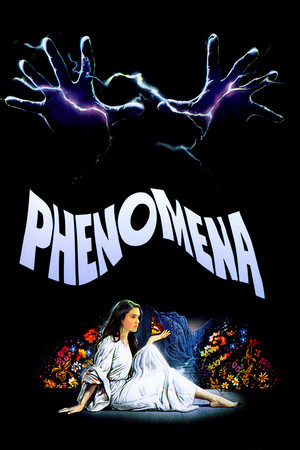
Stivaletti's major breakthrough in horror came through Dario Argento's Phenomena in 1985. The film combines murder mystery, supernatural communication with insects and grotesque family secrets inside a narrative that ultimately requires the revelation of a physically abnormal child. Stivaletti was responsible for important makeup work associated with that creature, helping turn an idea that could easily have appeared ridiculous into one of the film's most disturbing physical presences.
Phenomena began a professional relationship with Argento that would extend across decades. The importance of that collaboration lies partly in Argento's particular demands on effects. His cinema frequently isolates a wound, weapon, body or unusual object and places it at the visual center of a sequence. An effect therefore cannot remain hidden at the edge of the frame. It often has to survive close inspection while functioning inside elaborate camera movement and lighting.
For Stivaletti, this environment encouraged the development of increasingly sophisticated solutions. Argento's horror was interested in images whose artificiality could become part of their fascination, while Stivaletti was interested in the mechanisms that could give those images a convincing physical presence. Their collaboration became one of the defining director-effects relationships of later Italian horror.
Demons and the Art of Physical Transformation
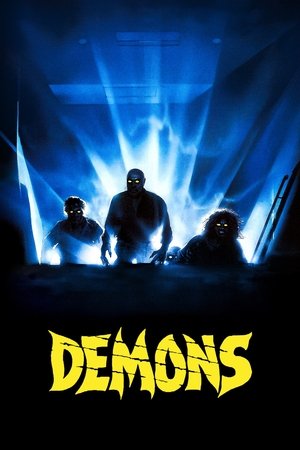
The same year brought another decisive project with Lamberto Bava's Demons. Produced by Dario Argento, the film traps an audience inside a cinema where a supernatural infection transforms spectators into violent demonic creatures. The premise depends heavily on transformation effects because ordinary human faces and bodies must visibly become something monstrous.
Stivaletti's work is central to the identity of the film. Teeth, skin, claws and facial structures change as the demonic infection progresses, giving the transformations a tactile brutality. Rather than conceal the metamorphosis through quick cutting alone, the production allows the audience to watch physical change occur. The effects turn possession into a biological event.
This approach helped distinguish Demons from horror in which supernatural corruption remains invisible until a fully transformed creature appears. Transformation is itself spectacle. The body becomes a battlefield where the supernatural is expressed through prosthetics, mechanical elements and makeup. Stivaletti's contribution therefore extends beyond creating individual monsters. He helped establish the visual rules through which the film communicates what becoming a demon actually means.
The project also initiated an extended relationship with Lamberto Bava. Their work together moved through different forms of horror, from demonic infection to vampires and supernatural reinterpretations of classic material. Bava's willingness to foreground practical spectacle gave Stivaletti repeated opportunities to design effects whose mechanics were inseparable from the films' identities.
Opera and Dario Argento's Mechanical Violence
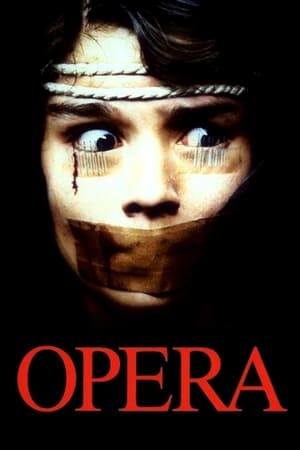
Stivaletti reunited with Argento for Opera in 1987. The film's violence requires a different kind of effects work from the creature transformations of Demons. Here the emphasis falls on mechanical precision, physical injury and the relationship between the human body and objects designed to inflict pain.
The famous device that prevents the protagonist from closing her eyes encapsulates the film's central concern with forced spectatorship. Stivaletti's effects exist inside a cinematic world in which looking is dangerous but unavoidable. Needles, wounds and violent mechanisms become extensions of Argento's obsession with what the viewer is permitted or compelled to see.
The film also demonstrates Stivaletti's ability to adapt to a director whose horror could move rapidly between realistic violence and highly stylized imagery. Effects had to remain convincing enough to produce physical discomfort while also fitting compositions designed around color, architecture and elaborate camera movement. The relationship between design and execution became particularly important because the violence in Opera is frequently displayed rather than merely implied.
Specters and the Expansion of Italian Creature Effects
During the same period Stivaletti contributed to Specters, Marcello Avallone's supernatural horror film involving archaeological discovery and ancient evil beneath Rome. The project demanded effects connected to buried bodies, creatures and physical manifestations of forces emerging from the past.
Films such as Specters demonstrate how Stivaletti's reputation spread beyond a small circle of major horror directors. Italian genre production repeatedly required specialists capable of creating ambitious images within relatively limited budgets. Stivaletti's ability to combine sculptural work, makeup and mechanical effects made him particularly valuable in productions where an entire supernatural mythology might depend on a few crucial practical sequences.
Dinner with a Vampire and The Mask of Satan
Stivaletti's continuing collaboration with Lamberto Bava included Dinner with a Vampire and The Mask of Satan. These projects returned him to traditional horror subjects while allowing modern effects techniques to interact with imagery rooted in the Gothic tradition associated with Italian cinema.
Vampires, transformations and supernatural faces require a different design philosophy from the industrial gore of Demons. Effects must communicate age, decay or monstrous identity while remaining connected to recognizable human anatomy. Stivaletti's work repeatedly operates in this transitional space between actor and creature, preserving enough of a performer's face for emotion to survive while altering it enough to produce horror.
The relationship with Bava became particularly significant because it connected Stivaletti directly to a filmmaking tradition inherited from Mario Bava, whose own career had combined directing, cinematography and practical visual invention. Stivaletti approached the tradition from another generation and with different technology, but the fundamental principle remained similar: effects were created as part of filmmaking itself rather than treated as a separate industrial service.
The Church and Michele Soavi
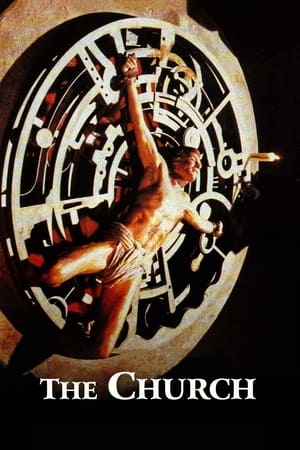
Stivaletti's collaboration with Michele Soavi became another central component of his horror career. The Church in 1989 provided an especially demanding environment. The film begins from Gothic architecture and buried medieval violence before expanding into possession, demonic imagery and increasingly surreal physical horror.
The cathedral setting allows supernatural transformations to emerge directly from stone, bodies and religious iconography. Stivaletti's effects contribute to a world in which human anatomy and demonic imagery increasingly overlap. Rather than presenting a single monster that can be isolated and defeated, the film creates the impression that the entire building contains the possibility of transformation.
Soavi's visual style required effects capable of surviving elaborate compositions. The horror frequently appears through carefully arranged images rather than purely functional attack scenes. This made Stivaletti's design work particularly important. A creature or mutilated body had to operate as part of the composition, not merely provide a brief shock.
The Sect and Supernatural Body Horror
Stivaletti continued with Soavi on The Sect in 1991. The film combines occult conspiracy, possession and surreal imagery, again demanding effects that could move between recognizable physical reality and supernatural transformation.
The horror of The Sect frequently comes from the invasion of ordinary bodies and domestic spaces by forces whose logic remains uncertain. Stivaletti's effects help make that invasion visible. Mechanical and prosthetic elements allow impossible events to appear materially present rather than purely symbolic.
The collaboration reinforces a pattern visible throughout his career. Stivaletti rarely imposed one creature design philosophy on every filmmaker. Argento, Bava and Soavi required different visual worlds, and his work changed accordingly. His identity as an effects artist therefore comes less from repeating one recognizable monster style than from solving the specific visual problems created by different directors.
Cemetery Man and Grotesque Horror
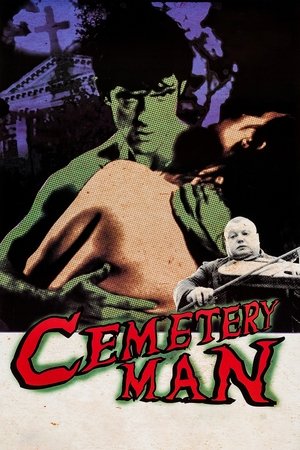
Cemetery Man in 1994 became one of the most internationally celebrated horror films associated with Stivaletti's effects work. Directed by Michele Soavi and adapted from Tiziano Sclavi's novel, the film follows cemetery caretaker Francesco Dellamorte as the dead begin returning from their graves. Horror, romance, black comedy and existential absurdity coexist throughout the story.
The film requires effects capable of participating in that tonal instability. Corpses return in various states of decay, bodies are destroyed and supernatural events move between grotesque horror and comedy without changing technical language. Stivaletti's practical work allows the dead to remain tangible even when the narrative becomes increasingly surreal.
This is crucial to the film's effect. Cemetery Man can move into philosophical or dreamlike territory because its physical horror remains grounded. Decomposing bodies, damaged heads and reanimated corpses give the audience material reference points while the narrative itself becomes less stable. Stivaletti's craftsmanship provides physical reality inside a film increasingly interested in whether reality has any stable meaning at all.
The Stendhal Syndrome and Early Digital Effects
Stivaletti returned to Argento for The Stendhal Syndrome in 1996, a project that marked an important technological development in his career. While he had built his reputation through practical effects, the film gave him an opportunity to work with digital imagery at a time when computer-generated effects were still relatively unusual within Italian production.
The film follows police detective Anna Manni through trauma, sexual violence and psychological transformation. Some of its most unusual sequences visualize her overwhelming response to works of art, requiring images that could not be produced through traditional prosthetics alone. Stivaletti's move into digital effects therefore did not replace his practical background but expanded the range of problems he could solve.
This transition is important in the history of his work. Effects artists who emerged from physical techniques sometimes found themselves separated from the digital revolution. Stivaletti instead treated computer imagery as another tool. Sculpting, animatronics, prosthetics and digital manipulation could coexist depending on what a sequence required.
The Wax Mask and the Move into Horror Direction
In 1997 Stivaletti made his feature directing debut with The Wax Mask, a project whose history connects several generations of Italian horror. The film originated from a story associated with Lucio Fulci and was produced by Dario Argento. After Fulci's death during pre-production, Stivaletti took over the direction.
The project was an appropriate directorial debut because its horror depends strongly on effects. Wax figures, mechanical processes, mutilated bodies and elaborate transformations place physical illusion at the center of the narrative. Stivaletti could therefore approach direction from the perspective of someone accustomed to understanding exactly how a horrific image would have to be constructed before it could be photographed.
The Wax Mask also links Stivaletti symbolically to two of the most important Italian horror filmmakers of the previous generation. Fulci's connection to the story and Argento's role as producer placed the film within a tradition Stivaletti had already served technically. Directing allowed him to move from building individual effects inside another filmmaker's vision to organizing an entire feature around his own understanding of horror spectacle.
The Three Faces of Terror and Anthology Horror
Stivaletti returned to feature direction with The Three Faces of Terror, an anthology structured around a series of nightmare stories. Co-written with Antonio Tentori, the project openly embraces the tradition of episodic horror and allows Stivaletti to move between different monsters, transformations and practical set pieces inside a single film.
The anthology format is especially compatible with an effects artist because every segment can develop its own visual identity. Instead of sustaining one monster throughout an entire feature, the film can move rapidly between creatures, bodies and mechanisms. Stivaletti used the structure as an opportunity to celebrate the traditions of low-budget Italian and international horror that had influenced his career.
The film also demonstrates his continuing interest in horror craftsmanship at a time when Italian genre production had changed dramatically from the industrial conditions of the 1980s. Making independent horror had become more difficult, but Stivaletti continued treating practical effects and creature design as viable foundations for new productions rather than relics of an earlier period.
Later Independent Horror and a New Generation
As mainstream Italian horror production declined, Stivaletti increasingly worked with independent filmmakers attempting to continue the genre outside the industrial structures that had supported Argento, Bava and Soavi. His later credits include The Last House in the Woods, In the Market, Symphony in Blood Red, Morituris, Bed Number 6, Everybloody's End and The Crypt Monster.
These productions vary greatly in scale and style, but Stivaletti's participation gives them a direct technical connection to the earlier tradition of Italian practical horror. Younger filmmakers could work with an artist who had created effects for some of the films that had inspired them. His presence therefore became a form of continuity between generations.
The Last House in the Woods is especially representative of this transition. The film belongs to a younger wave of Italian filmmakers influenced by exploitation and extreme horror, while Stivaletti contributes practical makeup that connects their contemporary violence to techniques developed during the previous genre boom.
Morituris and the Persistence of Physical Gore
Stivaletti's work on Morituris demonstrates the continued relevance of practical gore inside twenty-first-century extreme horror. The film is built around brutality, bodily damage and resurrected violence, requiring effects capable of sustaining close and explicit representation.
In this context, practical makeup carries a different cultural meaning from the one it possessed in the 1980s. By the 2010s digital effects had become common enough that visible physical fabrication could itself function as a stylistic choice. Stivaletti's methods therefore connected contemporary horror not only technically but aesthetically to an earlier tradition in which blood, prosthetics and mechanical bodies physically occupied the set.
The Profane Exhibit and Short-Form Extreme Horror
Stivaletti participated as a director in the international horror anthology The Profane Exhibit. The project brought together filmmakers associated with different forms of extreme and underground horror, giving Stivaletti another opportunity to work within the compact structure of an anthology segment.
His contribution emphasizes the visual qualities most closely associated with his career: bodies, transformation and explicit practical spectacle. Short-form horror removes much of the narrative distance between setup and effect, making the construction of memorable individual images especially important.
Il signor Diavolo and Continuing Italian Horror Craft
Stivaletti's involvement in Pupi Avati's Il signor Diavolo returned him to a very different strain of Italian horror, one rooted in rural superstition, Catholic fear and historical atmosphere rather than graphic creature spectacle. His effects work operates within a film whose terror depends heavily on memory, belief and disturbing physical details.
The project illustrates the breadth of his technical usefulness. Stivaletti's reputation may be closely connected to demons, gore and animatronics, but special effects in horror often work most effectively when they are integrated into a larger atmosphere rather than displayed as isolated attractions. His ability to adapt to that requirement has allowed him to remain active across multiple generations and styles of genre filmmaking.
Animatronics, Prosthetics and the Importance of Physical Presence
Stivaletti's most important contribution to horror lies in his understanding of physical presence. A practical creature exists under the same lighting as the actor touching it. A prosthetic wound changes the surface of a real body. An animatronic head occupies actual space and can be photographed from multiple angles. These qualities create imperfections and limitations, but they also create interaction.
His career developed during a period when those techniques were increasingly sophisticated. Mechanical components allowed faces and creatures to move beyond static masks, while improved materials permitted prosthetics to integrate more convincingly with actors. Stivaletti's studio became particularly associated with combining sculptural design and mechanical engineering to create creatures capable of performing in front of the camera.
This approach does not imply hostility toward digital effects. Stivaletti was also an early adopter of digital techniques within Italian cinema. The important principle is that the technique should serve the image. Practical and digital methods can reinforce one another rather than exist as ideological opposites.
Sergio Stivaletti and the Italian Horror Tradition
Stivaletti's place in horror history is unusual because he stands simultaneously inside several major Italian genre traditions. Through Dario Argento he became connected to giallo, supernatural horror and the director's increasingly elaborate visual experimentation. Through Lamberto Bava he worked on demonic transformation and Gothic television horror. Through Michele Soavi he contributed to films that pushed Italian supernatural horror toward surrealism, black comedy and increasingly ambitious visual design.
His career therefore provides a different map of Italian horror from one based only on directors. Following Stivaletti's credits reveals how technical knowledge travels between productions. The same craftsman can move from Phenomena to Demons, from Opera to The Church, and from The Sect to Cemetery Man, carrying techniques and experience while adapting them to different filmmakers.
This is particularly important in a genre where physical imagery often determines what audiences remember decades later. A director may conceive a transformation, but someone must determine how skin will tear, how a creature will move, how blood will flow or how an impossible body can survive long enough to be photographed. Stivaletti spent much of his career occupying precisely that space between imagination and material execution.
A Lasting Legacy in Horror Effects
Sergio Stivaletti's horror legacy cannot be reduced to a single monster or franchise. Its importance comes from accumulation. The deformed child of Phenomena, the transformations of Demons, the mechanical violence of Opera, the demonic imagery of The Church, the supernatural bodies of The Sect, the returning dead of Cemetery Man and the elaborate mechanisms of The Wax Mask belong to different fictional worlds, yet all demonstrate his ability to make horror physically present.
His later work with independent filmmakers also prevented that expertise from remaining confined to the period in which Italian horror enjoyed its greatest international commercial visibility. Stivaletti continued creating effects, directing horror and transmitting practical knowledge long after the production landscape had changed.
For that reason his importance to the genre is both artistic and technical. He belongs to the lineage of horror craftsmen whose work is inseparable from the images audiences remember, while his collaborations with Argento, Bava and Soavi place him directly inside several of the most important Italian horror films produced from the mid-1980s onward.
Selected Work
Notable Horror Collaborators
Notable collaborators and creative partners throughout Sergio Stivaletti's horror career.
 Dario Argento
KEY HORROR DIRECTOR
Stivaletti's defining directorial partnership, spanning Phenomena, Opera, The Stendhal Syndrome and Giallo in the iHorrorDB horror catalogue and establishing him as a central effects artist in Argento's later cinema.
 Lamberto Bava
HORROR DIRECTOR
A major recurring partnership across Demons, Dinner with a Vampire and The Mask of Satan, with Stivaletti creating transformations, creatures and practical effects throughout Bava's supernatural horror.
 Michele Soavi
HORROR DIRECTOR
Worked with Stivaletti on The Church, The Sect and Cemetery Man, three major Italian horror films in which his practical creatures, prosthetics and animatronics became integral to Soavi's imagery.
 Franco Ferrini
HORROR SCREENWRITER
Their shared horror work includes Phenomena, Demons, Opera, The Church and The Stendhal Syndrome, linking Stivaletti's physical effects to several of Ferrini's key Italian genre screenplays.
Sergio Stivaletti Horror Movies
Special FX / Practical FX (22 credits)
2020
2019
2019
2011
2010
2010
2009
2006
1997
1994
1993
1991
1989
1989
1988
1988
1987
1987
1985
1985
1985
Directing (5 credits)
2018
2013
2009
2004
1997
Visual Effects (6 credits)
2023
2001
2001
1997
1996
1994
Acting (4 credits)
1997
1997
1995
1985
Writing (2 credits)
2018
2009
Production (3 credits)
2018
2009
2006
Other Crew (1 credits)
2024