




2023
Alexandra Daddario
Horror Actor · Biography · Horror Filmography · Family · Credits
Horror subgenres & themes
Most represented across this person's horror filmography:
CANNIBAL
• NECROPHILIA
• SLASHER
Biography
Alexandra Daddario and a Career Repeatedly Drawn Back to Horror
Alexandra Daddario has never built her career exclusively around horror, yet the genre has repeatedly marked important stages of her development as an actress. From an early supporting appearance in The Attic and her first major feature lead in Bereavement to Texas Chainsaw 3D, Burying the Ex, American Horror Story: Hotel, We Have Always Lived in the Castle, We Summon the Darkness and the leading role of Rowan Mayfair in Anne Rice's Mayfair Witches, Daddario has moved through slasher cinema, serial-killer horror, supernatural stories, Gothic fiction, horror comedy and occult television.
Her relationship with the genre is particularly interesting because Daddario has openly described herself as someone who is easily frightened by horror movies. That personal response never prevented her from returning to horror as a performer. Instead, she has emphasized the acting possibilities created by extreme situations. Horror allows characters to move rapidly between fear, physical exhaustion, panic, violence and emotional transformation, experiences that gave several of Daddario's early performances a level of intensity very different from her work in comedy or mainstream drama.
The Attic and an Early Encounter with Supernatural Horror
One of Daddario's earliest horror credits came with Mary Lambert's The Attic, a supernatural thriller centered on a family whose new home appears to contain a threatening presence. Daddario plays Ava Strauss in a supporting role opposite a cast led by Elisabeth Moss. The film belongs to the haunted-house tradition, using the upper spaces of the family home, doubles and psychological uncertainty to turn domestic architecture into a source of danger.
The role was relatively small and arrived before Daddario became widely recognized, but it established an early connection with horror. More importantly, it placed her inside a genre that would soon give her one of the first demanding opportunities of her screen career. Rather than remaining an isolated early credit, The Attic became the beginning of a recurring pattern in which Daddario would leave horror for larger mainstream projects and then return when the genre offered an unusually physical or psychologically heightened role.
Bereavement and Daddario's First Feature Lead
Stevan Mena's Bereavement became a much more significant step. A prequel to Malevolence, the film follows the childhood of Martin Bristol, a boy abducted by serial killer Graham Sutter and forced to witness years of murder. Daddario plays Allison Miller, a young woman who moves to the area and becomes increasingly drawn toward the abandoned slaughterhouse where Sutter carries out his crimes.
Daddario later described Bereavement as her first lead role in a feature film and remembered the production as an important experience despite difficult conditions. Much of the film was shot during cold Pennsylvania nights, and the story required sustained fear and physical distress. The performance gave her a central place inside an uncompromising horror narrative rather than simply using her as a supporting victim.
Allison functions partly as the audience's route into the hidden violence surrounding Martin. Her curiosity leads her closer to a situation whose outcome has already been made grim by the film's status as a prequel. The result differs from a conventional slasher heroine narrative because the story is structured around inevitability. The audience understands that the child at the center of Bereavement is being shaped into the damaged figure associated with Malevolence, making Allison's attempt to intervene part of a larger tragedy.
The experience also changed Daddario's relationship with horror as an acting form. Although she has said that she was not naturally a horror viewer and was easily frightened by frightening films, she enjoyed the intensity of the work. That contradiction would continue throughout her career: she could find horror difficult to watch while appreciating how much freedom it gave her as a performer.
Texas Chainsaw 3D and Entering an Established Horror Franchise
Daddario entered one of American horror's most recognizable franchises with Texas Chainsaw 3D. Directed by John Luessenhop, the film positions itself as a direct continuation of Tobe Hooper's original The Texas Chain Saw Massacre, using the aftermath of the 1974 story to create a new branch of the Sawyer family mythology.
Daddario plays Heather Miller, later revealed to have been born Edith Rose Sawyer. She begins the film believing she is traveling to Texas simply to investigate an unexpected inheritance. The discovery that she belongs to the same family as Leatherface fundamentally changes her position inside the story. She is initially constructed as the apparent final girl fleeing a familiar slasher monster, but the narrative eventually forces her to reconsider who the true enemies are and what family identity means within the violent history surrounding the Sawyer clan.
Daddario was not deeply familiar with the franchise when she received the role. In preparation she watched Hooper's original film and became more conscious of the historical weight attached to Leatherface. She later spoke about respecting the original film and about being excited that the new story connected directly with its mythology rather than treating the property as completely detached source material.
The production was physically demanding. Daddario performed extended sequences involving running, climbing, confined spaces and sustained panic while filming in intense Louisiana heat. She prepared partly through physical training and has described horror acting as an unusually extreme form of performance because the actor must create believable emotional responses to situations that are almost impossible to experience in ordinary life.
One of the most difficult sequences involved Heather and Nikki trapped inside an overturned vehicle while Leatherface attacks them with a chainsaw. Daddario recalled feeding off Tania Raymonde's fear and energy inside the cramped space. The scene illustrates something that became characteristic of her horror work: physical circumstances help generate the performance rather than functioning merely as technical obstacles.
Texas Chainsaw 3D remains Daddario's most direct connection to a classic slasher franchise. Heather is unusual within the series because her relationship to Leatherface changes from victim to family member. That transformation allowed Daddario to play both the expected fear of a Chainsaw protagonist and the more complicated recognition that the monster pursuing her belongs to the hidden history of her own identity.
Burying the Ex and Horror Comedy with Joe Dante
After the physical brutality of Texas Chainsaw 3D, Daddario moved toward horror comedy with Joe Dante's Burying the Ex. Written by Alan Trezza, the film follows Max, whose controlling girlfriend Evelyn dies before he can end their relationship and later returns from the grave as a zombie. Daddario plays Olivia, a woman whose interests and personality make her a much more natural partner for Max, only for the resurrected Evelyn to turn a difficult breakup into a supernatural problem.
The film gave Daddario a lighter position inside horror. Olivia is not primarily constructed as a frightened victim. She belongs naturally to the genre-conscious world of the story and becomes part of a romantic comedy whose emotional problems are literalized through the undead. The central idea takes the familiar feeling of being unable to escape an unhealthy relationship and converts it into physical horror: even death cannot end the attachment.
Daddario was attracted to the combination of humor and horror and later spoke positively about working with Dante. The director's career had long depended on balancing genre affection with comedy, and Burying the Ex continues that tradition through zombie imagery, movie references and an exaggerated premise grounded in recognizable relationship anxiety.
The project also introduced an important recurring creative connection with screenwriter Alan Trezza. Several years later, Trezza would bring Daddario another horror script that allowed her to occupy a much darker and more deceptive role.
American Horror Story: Hotel and Hollywood's Dead
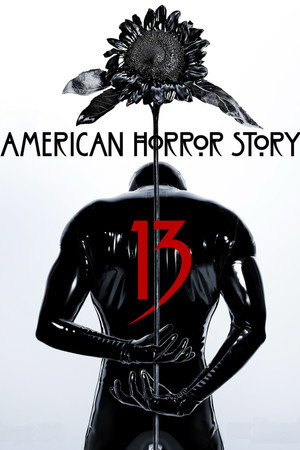
Daddario entered television anthology horror through American Horror Story: Hotel, playing Natacha Rambova, the silent-film actress and designer historically associated with Rudolph Valentino. Within the series, Valentino and Rambova are reimagined through the supernatural mythology of the Hotel Cortez and its blood-drinking inhabitants.
The role is limited in screen time but fits the season's obsession with old Hollywood, immortality and the transformation of celebrity into Gothic legend. Daddario's appearance connects a real figure from early cinema history with the exaggerated supernatural reality of the series, in which vanished stars and historic personalities can become part of an ongoing horror mythology.
We Have Always Lived in the Castle and Shirley Jackson
Daddario moved into literary Gothic horror with We Have Always Lived in the Castle, adapted from Shirley Jackson's final novel. She plays Constance Blackwood opposite Taissa Farmiga as Merricat. The sisters live in isolation after most of their family died from poisoning, surrounded by hostility from the nearby town and protected by the fragile routines they have built inside the family estate.
Constance differs sharply from the physically endangered heroines of Daddario's earlier horror films. She is quiet, domestic and psychologically enclosed. Much of the horror comes not from a visible monster but from family history, social persecution, suspicion and the poisonous relationship between the Blackwoods and the outside world. The arrival of their cousin Charles destabilizes the carefully maintained isolation and exposes tensions that the sisters have attempted to keep contained.
The film allowed Daddario to participate in a Gothic tradition where the house itself functions as psychological territory. Constance's attachment to the home is both protective and imprisoning, and her apparently gentle personality exists beside the disturbing history surrounding the family. It is one of the clearest examples of Daddario working in horror without relying on chase sequences or conventional supernatural threats.
We Summon the Darkness and the Satanic Panic
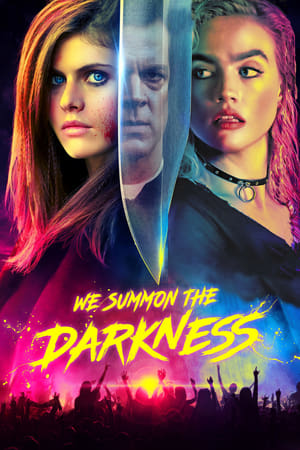
We Summon the Darkness became one of Daddario's most active horror projects because she participated not only as lead actress but also as a producer. Directed by Marc Meyers from Alan Trezza's screenplay, the film is set during the cultural anxiety surrounding heavy metal and supposed Satanic activity in the late 1980s. Daddario plays Alexis, who attends a metal concert with Val and Beverly before the night develops into violence and deception.
The film initially invites the audience to interpret its characters through familiar Satanic Panic assumptions, then repeatedly shifts who appears to be victim, believer and predator. Daddario was attracted to Trezza's mixture of horror, humor and heightened characters after their earlier collaboration on Burying the Ex. She also helped the film through her producer role, reflecting a point in her career when she had enough industry visibility to assist projects in obtaining support and financing.
Daddario has explained that horror comedy appeals to her because the genre allows actors to abandon normal behavioral limits. She also recognized that horror frequently uses exaggerated situations to examine larger social fears. In We Summon the Darkness, the hysteria surrounding heavy metal provides exactly that structure. The public needs an explanation for violence and creates an imagined Satanic enemy, while the actual threat develops from people capable of exploiting that fear.
Mayfair Witches and Rowan Fielding
Daddario's largest and most sustained horror role began with AMC's Anne Rice's Mayfair Witches. Based on Rice's Lives of the Mayfair Witches novels and developed as part of AMC's larger Anne Rice Immortal Universe, the series casts Daddario as neurosurgeon Rowan Fielding, a woman who gradually discovers that her unusual abilities connect her to an old New Orleans family of witches.
Rowan begins from a rational and medical understanding of the world. Her profession depends on anatomy, diagnosis and physical causation, making the discovery of supernatural inherited power particularly disruptive. As she learns more about the Mayfair family, she is drawn into a history shaped by witchcraft, secrecy, generational trauma and Lasher, the mysterious entity attached to successive women in the bloodline.
The role gives Daddario considerably more time to develop a horror character than any of her earlier films. Rowan does not simply discover that supernatural forces exist and spend the remainder of the story fleeing from them. Her relationship with power changes as the series progresses. Fear gradually gives way to curiosity, anger and eventually a willingness to test what she is capable of doing.
The New Orleans setting also returns Daddario to a Gothic form of horror built around houses, bloodlines and inherited secrets, but on a larger scale than We Have Always Lived in the Castle. The Mayfair home contains generations of family history, while the supernatural threat cannot easily be separated from the family itself. Rowan's struggle therefore concerns identity as much as survival.
The series continued through a second season in 2025, with Daddario remaining at its center as Rowan's connection to the Mayfair legacy deepened. In 2026 AMC presented the third season under the expanded title Anne Rice's Mayfair Witches: Salem Coven. The new chapter moves the story toward Salem, Massachusetts, introduces additional magical families and places Rowan amid a broader mythology of witchcraft. AMC scheduled the season to premiere on December 30, 2026.
Alexandra Daddario's Place in Modern Horror
Daddario should not be described as a performer whose career belongs primarily to horror. Large portions of her public profile came from fantasy, television drama, comedy and mainstream studio films. What makes her relevant to the genre is the consistency with which horror has returned at important moments. Bereavement gave her one of her first major opportunities to carry a feature. Texas Chainsaw 3D connected her to one of the foundational American slasher franchises. Burying the Ex allowed her to work with Joe Dante. We Summon the Darkness expanded her involvement into producing. Mayfair Witches eventually gave her a continuing supernatural lead.
Her horror roles also display unusual variety. Allison Miller belongs to bleak serial-killer horror. Heather Miller occupies a franchise slasher narrative that gradually changes into a story about family identity. Olivia exists inside romantic zombie comedy. Constance Blackwood belongs to literary Gothic isolation. Alexis weaponizes the cultural assumptions of Satanic Panic horror. Rowan Mayfair moves through inherited witchcraft, supernatural seduction and generational power.
Daddario's own unease with watching horror adds another dimension to that body of work. She has repeatedly acknowledged that frightening films affect her strongly, yet she has also described horror as one of the genres that gives actors the greatest opportunity to push themselves physically and emotionally. Her career supports that observation. The genre has repeatedly asked her to do something different, whether surviving a slaughterhouse, confronting Leatherface, navigating the undead, inhabiting Shirley Jackson's Gothic world or becoming the heir to Anne Rice's dynasty of witches.
Selected Work
Alexandra Daddario Horror Movies
Acting (8 credits)
2023
2020
2015
2014
2013
2011
2010
2007