



2025
Pupi Avati
Horror Director · Biography · Horror Filmography · Family · Collaborators · Credits
Horror subgenres & themes
Most represented across this person's horror filmography:
FOLK
• NECROPHILIA
• ZOMBIE
Biography
Pupi Avati and the Birth of the Po Valley Gothic
Pupi Avati occupies a unique position in Italian horror. Rather than building his most frightening films around the metropolitan violence, elaborate murders and highly stylized killers associated with much of the Italian giallo tradition, he repeatedly found horror in provincial landscapes, rural Catholic culture, old houses, isolated communities and stories passed from one generation to another. This approach became widely identified as the gotico padano, or Po Valley Gothic, a distinctly Italian form of horror in which familiar countryside can conceal histories of violence, superstition and supernatural belief.
Avati has directed many films outside horror, but his relatively concentrated body of genre work contains several of the most distinctive Italian horror films made from the 1970s onward. La casa dalle finestre che ridono became the central expression of his rural horror style, while Zeder transformed apparently ordinary locations into the setting for a mystery involving the resurrection of the dead. L'arcano incantatore returned to a more explicitly historical Gothic environment, Il nascondiglio carried his approach into an American setting, and Il signor Diavolo and L'orto americano demonstrated that Avati continued returning to horror decades after the films that originally established his reputation within the genre.
The constant element is not a particular monster but a conception of fear. Avati's horror frequently begins with something almost believable: a provincial legend, an old religious story, a building with a disturbing history, a scientific theory or the memory of something adults once told children to frighten them. The supernatural becomes frightening because it seems to grow from a culture that already existed before the protagonist arrived.
Balsamus and the Grotesque Origins of Avati Horror
Avati's first feature, Balsamus, l'uomo di Satana, emerged at the end of the 1960s and already contained elements that would recur throughout his darker cinema. The film is difficult to classify strictly as conventional horror because grotesque comedy and regional eccentricity are equally important, yet its interest in superstition, abnormal bodies, sexuality, supposed supernatural power and provincial characters places it at the beginning of the horror-grotesque strand of his filmmaking.
Bob Tonelli plays Balsamus, a physically unusual figure credited with extraordinary powers. The film does not yet possess the controlled terror Avati would achieve later, but its mixture of the ridiculous and the sinister is significant. In Avati's cinema, grotesque people and situations do not necessarily neutralize fear. Comedy can exist directly beside something disturbing, making it difficult to predict when eccentricity will become genuine menace.
The film also established a group of performers who would recur through Avati's early work, including Gianni Cavina, Giulio Pizzirani and Tonelli. This repertory quality became important to the formation of his provincial world. The same faces could return in different roles, creating the impression of a regional cinema populated by people who seemed to belong naturally to the places Avati was filming.
Thomas... gli indemoniati and the Supernatural
Thomas... gli indemoniati developed the supernatural dimension more directly. A troubled theatrical company participates in a séance and encounters a mysterious child identified as Thomas. What begins around theatre, performance and personal frustration gradually moves into material involving spiritualism, uncertainty and the possibility that the characters have crossed a boundary they do not understand.
The film is unstable by design, combining drama, fantasy, grotesque elements and horror rather than settling completely into one genre. Its treatment of the séance is especially important in the context of Avati's later work. The supernatural is not presented as a fully organized mythology with clear rules. Instead, ordinary people invite something into their lives and are left unable to determine exactly what they have encountered.
That uncertainty became increasingly central to Avati. His most effective horror rarely explains the supernatural completely. Characters gather fragments, stories and testimony, but knowledge often makes their position more dangerous rather than safer. The mystery is not necessarily solved simply because the narrative reaches its ending.
La casa dalle finestre che ridono
La casa dalle finestre che ridono, released in 1976, became the defining work of Avati's horror cinema and one of the most important Italian horror films of its period. Lino Capolicchio plays Stefano, a restorer who travels to a small community in the Po Valley to work on a disturbing church fresco depicting the martyrdom of Saint Sebastian. The painting was created by the deceased Buono Legnani, an artist remembered locally for his fascination with people in the process of dying.
Stefano gradually discovers that the history surrounding the painter is far more disturbing than the apparently quiet community wishes to admit. Information arrives through rumors, suspicious behavior, fragmented testimony and people who seem determined to prevent the past from being investigated. The protagonist effectively enters a social system whose members know something he does not.
The structure gives the film some characteristics of the giallo, including investigation, concealed identity and violent death, but Avati moves the material toward something more specifically provincial and Gothic. The danger does not feel imported into the village by an isolated killer. It seems to belong to the landscape and community itself. Houses, churches, waterways and rural roads become parts of a closed world in which secrecy has survived because everyone has learned how to live around it.
The Horror of the Familiar Landscape
The setting of La casa dalle finestre che ridono is fundamental to Avati's contribution to horror. He has explained that he wanted to create fear using places he already knew, environments that did not require elaborate artificial scenery to become disturbing. The Po Valley countryside could generate its own Gothic atmosphere through isolation, old buildings, fog, water, silence and the histories attached to local communities.
This was different from simply relocating conventional Gothic monsters to rural Italy. Avati's landscapes carry the memory of Catholic ritual, agricultural life and stories used to frighten children. The supernatural and the criminal can therefore appear to belong to the same cultural environment. A religious image may conceal something obscene, a priest may be connected with a secret, and a peaceful country house may contain evidence of violence that has remained hidden for decades.
The effect became central to what would later be called the gotico padano. Avati demonstrated that Italian horror did not need castles, metropolitan killers or exotic locations. The flat countryside of Emilia-Romagna and the Po Delta could become a Gothic environment precisely because audiences were not accustomed to treating such places as cinematic territories of terror.
Religion, Folklore and the Fear of What Adults Believe
Religion in Avati's horror rarely operates simply as protection against supernatural evil. Catholic imagery, clerical authority and popular superstition frequently coexist in uneasy ways. Characters may sincerely believe in religious doctrine while simultaneously accepting folk explanations, local legends or the possibility that evil can possess a physical presence in ordinary life.
This is particularly important because many of Avati's horror stories are set in periods when religious belief was deeply embedded in everyday provincial culture. Fear of the Devil does not need to be introduced as an exotic occult idea. It already exists in sermons, family warnings and stories told to children. The horror emerges when a belief normally confined to imagination begins to acquire evidence.
Avati has repeatedly connected this conception of horror with childhood fear, describing a world in which frightening stories possessed greater power because children were surrounded by adults who themselves acknowledged ideas of sin, evil and supernatural punishment. His later horror would return explicitly to this lost cultural environment.
Tutti defunti... tranne i morti and Horror Comedy
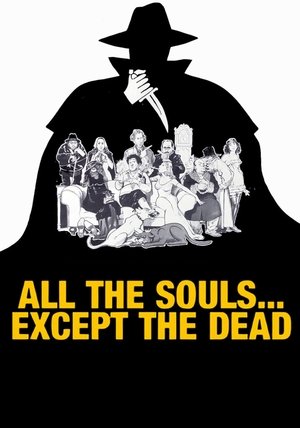
After the severity of La casa dalle finestre che ridono, Avati approached murder and Gothic mystery from a more comic direction with Tutti defunti... tranne i morti. The story brings a group of eccentric characters into an aristocratic environment where death and suspicion accumulate, combining the structure of a murder mystery with grotesque humor.
The film demonstrates an important aspect of Avati's relationship with horror. Comedy does not exist outside his darker imagination. Provincial characters, family rituals, absurd behavior and death can occupy the same narrative. The result is less terrifying than La casa dalle finestre che ridono, but it belongs to the same cultural universe of old families, inherited secrets and enclosed communities.
Gianni Cavina, Giulio Pizzirani and Bob Tonelli again appear within the ensemble, reinforcing the repertory feeling of Avati's early cinema. The recurrence of these performers helped create a recognizable human landscape around his genre work, one in which grotesque comedy could easily darken into menace.
Zeder and the Possibility of Resurrection
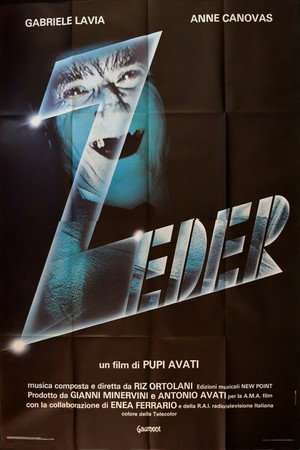
Zeder, released in 1983, became the other essential pillar of Avati's classic horror period. Gabriele Lavia plays Stefano, a writer who receives a used typewriter from his wife. By examining traces left on its ribbon, he discovers fragments of a text concerning the research of Paolo Zeder and the existence of so-called K Zones, areas of land supposedly possessing properties connected with the return of the dead.
The typewriter provides an ideal Avati horror object. It is completely ordinary, yet it contains evidence left unintentionally by somebody else. The mystery begins not with a visible supernatural event but with information. Stefano follows the traces because he wants to understand what they mean, gradually discovering a network of people whose interest in the K Zones is far more organized than he initially realizes.
This investigative structure allows the supernatural to emerge slowly. Resurrection first exists as a theory, then as a historical claim, then as the subject of secret experimentation. Avati avoids immediately providing the viewer with a complete explanation. The possibility becomes frightening because serious people have apparently devoted considerable effort to proving that it works.
The K Zones and Avati's Horror of Forbidden Knowledge
The K Zones are one of the strongest concepts in Avati's horror. Their effectiveness comes from the attempt to give supernatural resurrection a quasi-scientific structure without explaining it enough to make it comfortable. Certain areas of land may somehow suspend the ordinary relationship between life and death. The concept is specific enough to encourage investigation but mysterious enough to remain disturbing.
Like the investigation in La casa dalle finestre che ridono, Stefano's search becomes dangerous because knowledge is controlled by people who do not want an outsider to understand what they are doing. Avati again builds horror around the protagonist entering a system already in operation. The nightmare did not begin when Stefano discovered it. He simply became the latest person to notice it.
Zeder also demonstrates Avati's ability to make contemporary and even brightly lit environments disturbing. The horror does not depend on permanent darkness. Ordinary streets, coastal areas, institutional buildings and apparently normal landscapes become threatening because Stefano now possesses information that changes their meaning.
Macabro and Avati as Horror Screenwriter
Avati's contribution to Italian horror also extends beyond the films he personally directed. He and Antonio Avati collaborated with Lamberto Bava and Roberto Gandus on the story and screenplay of Macabro, Lamberto Bava's feature directing debut. The film centers on obsession, death and a relationship with the preserved remains of a dead lover, developing a claustrophobic form of psychological and physical horror.
The collaboration is significant because it demonstrates that Avati's connection to horror during this period was not limited to his own directorial projects. His interest in death, abnormal attachment and apparently ordinary environments concealing extreme behavior could move into another filmmaker's work while taking a very different stylistic form.
Voci notturne and Esoteric Horror on Television
In 1995 Avati created and wrote Voci notturne, a five-part television miniseries directed by Fabrizio Laurenti. The story begins with an apparently criminal mystery and expands into a complex network involving strange communications, ancient legends, esoteric groups and events that resist conventional explanations.
The series became a cult title among Italian genre audiences and represents an important extension of Avati's horror ideas into television. Once again, investigation does not reduce mystery. Every discovery creates additional questions, and rational inquiry gradually encounters a territory whose rules cannot be understood through ordinary logic.
Voci notturne is particularly representative of Avati's conception of the supernatural because it treats mystery as something that may become more impenetrable as characters approach it. The objective is not simply to identify a monster. The frightening possibility is that reality contains systems whose meaning remains inaccessible even after their existence has become impossible to deny.
L'arcano incantatore and Historical Gothic Horror
L'arcano incantatore in 1996 returned Avati to explicitly Gothic territory. Set in the eighteenth century, the film follows Giacomo Vigetti, who becomes secretary to the mysterious Achille Ropa Sanuti, a cleric living in isolation after accusations involving forbidden and esoteric studies. Books, religious belief, magic and the possibility of supernatural forces gradually turn intellectual curiosity into terror.
The historical setting allows Avati to remove many of the modern protections that normally separate educated characters from superstition. Theology, occult study and early scientific inquiry coexist without clear boundaries. A person can investigate the supernatural without possessing a modern framework capable of safely categorizing what he discovers.
The film also returns to one of Avati's favorite structures: a young outsider enters an isolated environment controlled by an older figure who possesses knowledge that is revealed only gradually. Like the restorer in La casa dalle finestre che ridono or the writer investigating the K Zones in Zeder, Giacomo becomes endangered through curiosity.
The Gothic imagery is more traditional than in Avati's rural contemporary horror, but the underlying mechanism remains recognizably his. Evil is connected with knowledge, belief and concealed history rather than simply physical attack.
Il nascondiglio and the Haunted Building
Il nascondiglio in 2007 brought Avati back to dark mystery with a story set largely in the United States. Laura Morante plays a woman who attempts to rebuild her life by reopening an old building as a restaurant, only to discover that the property carries a violent and disturbing history.
The American setting changes the geography but not the essential Avati method. An apparently usable building contains traces of events that other people either do not understand or would prefer to leave undisturbed. The protagonist gradually reconstructs the past through investigation, and physical space becomes increasingly inseparable from the violence that occurred there.
Avati again avoids making the building frightening only through conventional haunted-house imagery. Its power comes from history. Rooms and hidden spaces become threatening because they preserve evidence of human actions that were never properly resolved. The supernatural, where it enters, develops from the persistence of that buried history.
Il signor Diavolo and the Return to Po Valley Horror
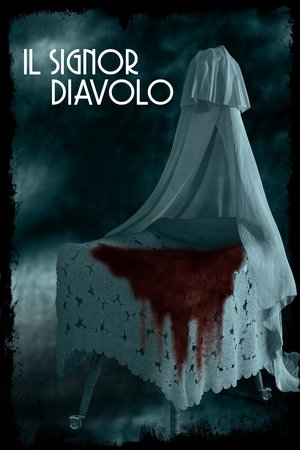
Il signor Diavolo in 2019 represented a deliberate return to the horror world most closely associated with Avati. Set in the early 1950s, the film follows a government official investigating a case in which a young boy has killed another child while claiming that his victim was the Devil. The case becomes entangled with religious belief, local superstition and institutions anxious to control the political consequences.
The premise allows Avati to return directly to the fear culture of his childhood. The central question is powerful because the adults cannot dismiss the child's belief as easily as a modern secular environment might. The idea of the Devil already belongs to the religious language surrounding the community. The horror begins when people are forced to consider whether something they officially recognize as spiritual doctrine could also possess a material presence.
The film reconnects Avati with several important figures from his earlier genre cinema. Gianni Cavina appears again, while Lino Capolicchio returns more than four decades after starring in La casa dalle finestre che ridono. Amedeo Tommasi, composer of several of Avati's earliest dark films, also returned to provide the score.
This continuity reinforces the sense that Il signor Diavolo is not merely a late filmmaker attempting a genre he once visited. It consciously reopens the same cultural territory: northern Italian countryside, Catholic fear, children confronted with evil and adults whose institutions cannot comfortably explain what has happened.
L'orto americano and the Persistence of Gothic Horror
With L'orto americano, presented at the Venice Film Festival in 2024 and released theatrically afterward, Avati again identified his work explicitly with Gothic horror. The story begins around the end of the Second World War and follows a troubled young writer whose obsession with an American nurse eventually takes him to the rural Midwest, where a house and the neighboring garden become connected with her disappearance.
The American setting does not represent an abandonment of Avati's Gothic identity. Avati himself drew a connection between rural America and the landscapes of Emilia-Romagna that had been so important to his earlier horror. The implication is central to his entire genre career: Gothic fear is not dependent on one national architecture. It can emerge wherever isolated communities, old houses and unresolved histories allow the past to remain active.
L'orto americano is therefore particularly significant because it demonstrates the persistence of Avati's horror imagination across more than half a century. The filmmaker who had explored séances and grotesque supernatural material at the beginning of his career was still returning to Gothic narrative, mysterious houses and rural landscapes in his eighties.
Children, Stories and the Reality of the Devil
Children occupy an important position in Avati's conception of horror because childhood represents a period in which stories can possess the force of reality. A frightening tale told by an adult is not merely entertainment when the child lives within a culture that reinforces its supernatural assumptions.
Il signor Diavolo makes this especially explicit, but the principle extends throughout Avati's horror. Local legends and inherited beliefs matter because the characters live among people who remember them. Fear can therefore survive for decades without requiring documentary evidence.
This is one of the major differences between Avati and horror based primarily on mythology invented for a single film. His stories often feel as though they have been discovered rather than created. The audience enters after the legend has already existed for years, exactly as the protagonist does.
The Outsider Who Asks Too Many Questions
A recurring protagonist in Avati's horror is the outsider who arrives with a practical task and gradually becomes an investigator. Stefano comes to restore a painting in La casa dalle finestre che ridono. The Stefano of Zeder follows the traces left on a typewriter. Giacomo enters the isolated world of an enigmatic scholar in L'arcano incantatore. The protagonist of Il nascondiglio investigates the history of a building.
These characters are endangered by curiosity. They could remain safe by accepting what the community tells them, abandoning the investigation or simply leaving. Instead they insist on understanding. Horror begins to close around them because every answer leads further inside a system that existed long before they arrived.
This structure gives Avati's films their characteristic slow accumulation of dread. The protagonist rarely begins in immediate physical danger. Danger increases in proportion to knowledge.
Fear Without Excessive Spectacle
Avati's strongest horror is generally restrained in its use of explicit spectacle. Violent or shocking images can be important, particularly at climactic moments, but the films rarely depend on a continuous succession of murders or effects. Much of their power comes from anticipation.
An unanswered telephone call, an old recording, an abandoned building, a local story or a person who refuses to answer a question can occupy the viewer's imagination long before anything overtly supernatural occurs. Avati allows information to function as a horror effect. Knowing that something may exist can be more disturbing than seeing it immediately.
This restraint also makes his occasional revelations more effective. The audience has spent much of the film constructing possibilities, so the final image does not arrive alone. It carries all the stories and suspicions accumulated before it.
Pupi Avati's Horror Legacy
Pupi Avati's importance to horror rests on the creation of a recognizably personal territory. La casa dalle finestre che ridono demonstrated that rural northern Italy could sustain a Gothic tradition entirely its own. Zeder transformed resurrection into a mystery hidden inside contemporary provincial life. L'arcano incantatore explored forbidden knowledge through historical Gothic horror, while Voci notturne extended his fascination with esoteric mystery into television.
Later films confirmed that this was not merely an early phase of his career. Il nascondiglio returned to buildings contaminated by hidden histories, Il signor Diavolo reconstructed the religious fear and supernatural belief of postwar provincial Italy, and L'orto americano carried the Gothic imagination into an American landscape while retaining the emotional geography of Avati's earlier work.
The phrase gotico padano has become inseparable from Avati because he demonstrated that horror could grow from places usually treated as ordinary. The Po Valley, village churches, abandoned institutions, provincial houses and country roads did not need to imitate Transylvania or classical English Gothic landscapes. Their own histories, beliefs and silences were enough.
That remains Avati's central contribution to the genre. His horror suggests that the most frightening stories are often already present inside a community before anyone decides to investigate them. The protagonist arrives believing that the mystery has begun. Avati gradually reveals that it began many years earlier and that the surrounding world has simply learned how to keep living beside it.
Photos (3)
Images: TMDB
Selected Work
Notable Horror Collaborators
Notable collaborators and creative partners throughout Pupi Avati's horror career.
 Maurizio Costanzo
Screenwriter
Costanzo co-wrote three important Pupi Avati horror films: La casa dalle finestre che ridono, Tutti defunti... tranne i morti and Zeder, contributing to the writing of both Avati's defining Po Valley Gothic and his later supernatural horror.
CB
Cesare Bastelli
Cinematographer / Assistant Director
A long-running horror collaborator across several periods of Avati's career. Bastelli appeared in Tutti defunti... tranne i morti, worked as assistant director on Zeder and later photographed L'arcano incantatore, Il nascondiglio, Il signor Diavolo and L'orto americano.
AT
Amedeo Tommasi
Composer
A defining musical collaborator in Avati's horror cinema. Tommasi scored Balsamus, Thomas... gli indemoniati, La casa dalle finestre che ridono, Tutti defunti... tranne i morti and, decades later, Il signor Diavolo.
 Gianni Cavina
Actor / Screenwriter
A key member of Avati's early horror repertory, appearing in Balsamus, Thomas... gli indemoniati, La casa dalle finestre che ridono, Tutti defunti... tranne i morti and Il signor Diavolo. Cavina also co-wrote La casa dalle finestre che ridono and Tutti defunti... tranne i morti.
BT
Bob Tonelli
Horror Co-Star
One of the most persistent performers in Avati's early genre cinema, appearing in Balsamus, Thomas... gli indemoniati, La casa dalle finestre che ridono, Tutti defunti... tranne i morti and Zeder.
GP
Giulio Pizzirani
Horror Co-Star
A recurring presence in Avati's formative horror and grotesque cinema, appearing in Balsamus, Thomas... gli indemoniati, La casa dalle finestre che ridono and Tutti defunti... tranne i morti.
Pupi Avati Horror Movies
Directing (11 credits)
2019
2007
1996
1994
1983
1979
1977
1976
1970
1970
Writing (15 credits)
2025
2019
2007
1996
1994
1994
1991
1983
1980
1979
1977
1976
1975
1974
1970
Acting (1 credits)
2020
Other Crew (1 credits)
1975