




2018
Mick Garris
Horror Director · Biography · Horror Filmography · Family · Collaborators · Credits
Horror subgenres & themes
Most represented across this person's horror filmography:
BODY HORROR
• CANNIBAL
• CHRISTMAS
• HALLOWEEN
Biography
Mick Garris and American horror television
Mick Garris developed a career in horror that extends across directing, screenwriting, producing, television anthology, fiction and long-form interviews with other filmmakers. He became particularly associated with Stephen King through Sleepwalkers, The Stand, The Shining, Riding the Bullet, Desperation and Bag of Bones, establishing one of the most sustained relationships between King and a screen director. Garris also created Masters of Horror, the Showtime anthology that brought established genre directors into a production structure designed to give each filmmaker substantial control over an hour-long horror film.
His professional history differs from that of many directors identified with the genre. Garris entered the film business after working as a teenage journalist, musician, publicist and television interviewer. Long before he directed a feature, he was interviewing filmmakers about their methods and producing behind-the-scenes material for genre productions. That continuing interest in how other people make films later became visible in Post Mortem and in the large archive of interviews he conducted with directors, writers, actors and technicians. His contribution to horror therefore includes both his own screen work and a substantial body of recorded conversations preserving the working histories of other genre filmmakers.
Growing up in Southern California and discovering movies
Garris was born in Santa Monica, California, and grew up in the San Fernando Valley. He began making home movies when he was twelve and developed an early interest in horror, science fiction and fantasy cinema. The films that impressed him included the Universal monster cycle, Alfred Hitchcock, the increasingly explicit American horror of the 1960s and 1970s and filmmakers whose work treated the genre as a serious visual form rather than simply as disposable exploitation.
His early involvement with film culture was largely self-directed. Garris did not begin his career through a studio training program or a technical department. He watched films extensively, wrote about them and sought direct contact with the people who made them. This habit of asking filmmakers about process remained constant even after he became professionally established as a director himself.
Music journalism and the first professional interviews
While still a teenager, Garris worked as a freelance music and film journalist. He wrote for publications including the San Diego Door, where Cameron Crowe was also writing about music during his youth. Garris interviewed musicians including Janis Joplin, Jimi Hendrix and Frank Zappa, gaining professional experience in long-form conversation before he entered motion-picture production.
Music remained part of his life during the 1970s. He became the lead singer of the band Horsefeathers and continued performing until the group ended in 1977. The experience later informed his screen work in less obvious ways, particularly his interest in composers and in the relationship between soundtrack, period music and narrative atmosphere. His later collaborations with composer Nicholas Pike developed from an appreciation for full orchestral scoring at a time when inexpensive electronic scores were common in low-budget genre films.
Avco-Embassy and learning the film industry through publicity
Garris’s first sustained job inside the film industry came through publicity work for Avco-Embassy Pictures. Rather than joining principal production crews, he produced promotional and behind-the-scenes documentaries associated with films distributed by the company. The work gave him direct access to sets, filmmakers and the practical organization of commercial motion pictures.
Publicity was also a useful education in the relationship between a completed film and its audience. Garris had to understand what made a production distinctive enough to explain it to viewers and exhibitors. He later described his move from promoting other people’s films into making films himself as an important professional relief, but the earlier work supplied knowledge of how productions were discussed, marketed and remembered after shooting ended.
The Fantasy Film Festival and Z Channel
In 1979 Garris began hosting The Fantasy Film Festival on Z Channel, the influential Los Angeles subscription television service. The program concentrated on science fiction, fantasy and horror and gave him the opportunity to conduct extended interviews with established filmmakers and performers. The surviving conversations include people whose careers reached back through several generations of genre production.
The format differed from conventional publicity interviews because Garris approached guests as a knowledgeable viewer interested in process. Camera placement, special effects, adaptation and production experience could be discussed in detail. Decades later, when he created Post Mortem, he returned to many of the same subjects as a fellow filmmaker rather than as the young interviewer he had been during the Z Channel period.
Writing and the move from publicity into production
Garris gradually moved into screenwriting and development during the early 1980s. His work included television and feature projects at a time when anthology formats were returning to American television. The professional transition was important because writing gave him direct responsibility for constructing stories rather than documenting projects already created by other filmmakers.
His later credits would include work on *batteries not included, The Fly II and Hocus Pocus. These films vary widely in tone, and not all are conventional horror, but they demonstrate a continuing interest in fantasy and genre storytelling. The Fly II also connected Garris directly with the body-horror property established through David Cronenberg’s 1986 film, although another director ultimately made the sequel.
Steven Spielberg and Amazing Stories
Garris received a major professional opportunity when Steven Spielberg hired him as a writer and story editor on Amazing Stories, the anthology series launched in 1985. The program allowed different filmmakers to work within fantasy, horror and science fiction while operating under a major television production structure. Spielberg subsequently asked Garris to direct an episode based on one of Garris’s own stories.
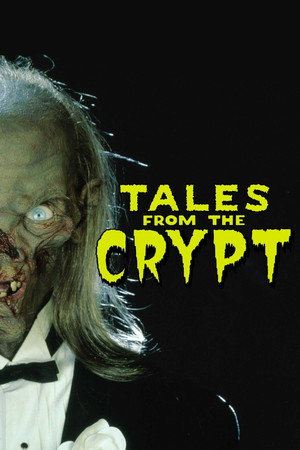
The assignment gave him practical directing experience within a professional environment before his first feature. Garris later worked on other genre television, including Freddy’s Nightmares and Tales from the Crypt. Television became central to his career because anthology episodes and miniseries could accommodate types of horror that were difficult to finance as theatrical features.
Critters 2 and the first feature as director
Garris made his feature-directing debut with Critters 2: The Main Course in 1988. The film continued the story of the extraterrestrial creatures introduced in the first Critters while adding more elaborate creature effects and comedy. Garris co-wrote the screenplay with David Twohy and approached the project as his first opportunity to manage a complete theatrical production rather than as an attempt to transform the franchise into an entirely different kind of film.
The production also began one of his most durable technical relationships. Composer Nicholas Pike submitted music for the project when he had very limited feature experience. Garris responded to Pike’s preference for orchestral scoring and subsequently brought him back repeatedly. Their later horror work included Sleepwalkers, The Shining, Riding the Bullet and Garris’s episode of Masters of Horror.
Learning feature direction through practical genre production
Garris later described Critters 2 as a film made while he was still learning feature direction. The relatively modest budget required close attention to shooting time, creature effects and comedy timing. Creature films also demand substantial coordination with effects crews because performers must react to puppets and mechanisms whose reliability can determine whether a planned scene is possible on schedule.
This production experience became useful during Garris’s later television miniseries, where the volume of material could be far greater even though individual shooting days remained tightly controlled. His career developed around projects in which ambitious genre concepts frequently had to be realized within budgets below those of major theatrical spectacle.
Psycho IV: The Beginning and the history of Norman Bates
Garris directed Psycho IV: The Beginning for television in 1990. The project returned Anthony Perkins to Norman Bates while using Henry Thomas as the younger Norman in extended flashbacks. Joseph Stefano, who had written Alfred Hitchcock’s original Psycho, supplied the screenplay, while Hilton A. Green, Hitchcock’s first assistant director on the 1960 film, served as executive producer.
The concentration of personnel connected directly with the original film gave Garris access to unusual first-hand production history. Perkins was particularly important because he had inhabited Norman Bates for decades and had himself directed Psycho III. Garris later described Perkins as the most valuable source of information available on the character and the earlier productions.
Henry Thomas and the younger Norman Bates
Henry Thomas plays Norman during the period in which his relationship with his mother Norma, played by Olivia Hussey, shapes the psychological history later associated with the Bates Motel murders. The flashback material required Thomas to develop a character whose adult screen identity was already exceptionally familiar to audiences.
Garris subsequently worked with Thomas again on the Masters of Horror episode Chocolate and on Desperation. The repeated casting reflects a broader tendency in Garris’s career to return to performers with whom he had established a productive working relationship.
Psycho IV and the beginning of the Stephen King relationship
Psycho IV unexpectedly became important to Garris’s later association with Stephen King. When Columbia was considering directors for King’s original screenplay Sleepwalkers, King possessed approval over the choice. Garris later recalled that King watched Psycho IV and was surprised by how effectively a fourth entry in an established horror property had been handled. His response helped secure Garris’s appointment.
The connection demonstrates how professional relationships in genre filmmaking often develop through previous work rather than through formal specialization. Garris did not obtain Sleepwalkers because he had already adapted King. A film connected with Hitchcock’s most famous horror property provided the evidence King needed when evaluating him.
Sleepwalkers and Stephen King’s original screenplay
Sleepwalkers, released in 1992, was written by Stephen King directly for the screen rather than adapted from a published novel. Brian Krause and Alice Krige play Charles and Mary Brady, shape-changing creatures whose relationship combines family dependence, predation and incest. Mädchen Amick plays Tanya Robertson, the young woman Charles targets after the pair arrives in a new town.
Garris has been careful in interviews to distinguish King’s authorship from his own contributions. He made occasional adjustments and wrote particular scenes, but King remained the screenwriter and approved revisions. This respect for source authorship became one of the foundations of their later relationship. Garris approached adaptation as a process of finding a cinematic form for the writer’s intentions rather than using the author’s name as a loose basis for unrelated material.
The horror-filmmaker cameos in Sleepwalkers
Sleepwalkers also contains brief appearances by several prominent figures in horror, including Stephen King, Clive Barker, Tobe Hooper, Joe Dante and John Landis. Garris organized the sequence because many of the filmmakers were already friends or professional acquaintances. Barker and King met during the filming despite Barker’s career having been famously promoted earlier by King’s public praise of his fiction.
The sequence anticipates another aspect of Garris’s career: his unusual ability to maintain social and professional relationships across a wide network of horror filmmakers. More than a decade later, those relationships would become part of the practical foundation for Masters of Horror.
Stephen King’s response and the move to The Stand
After Sleepwalkers was completed, Garris screened his cut privately for Stephen King and Tabitha King. He later recalled King responding enthusiastically throughout the screening and subsequently supporting him as director of The Stand. The miniseries represented a dramatic increase in scale compared with Garris’s previous feature work.
King’s involvement was considerably greater than a conventional source author’s. He wrote the teleplay and spent substantial time around production. Garris consequently developed a working relationship in which the author remained accessible during filming rather than handing over material and leaving the adaptation entirely to a separate production team.
The Stand and the scale of long-form television
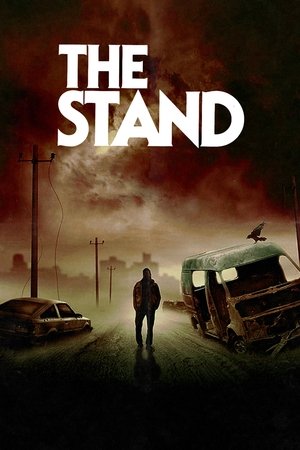
The Stand was broadcast in 1994 as a four-part miniseries adapting King’s large apocalyptic novel. The story begins with the release of a lethal engineered influenza virus and follows survivors as new communities form around the opposing figures of Mother Abagail and Randall Flagg. Gary Sinise, Jamey Sheridan, Molly Ringwald, Ruby Dee, Miguel Ferrer and Matt Frewer were among the large ensemble cast.
The physical scale of production was exceptional for Garris’s career. He later recalled shooting for approximately five months across six states with 126 speaking roles after a lengthy preparation period in Salt Lake City. Post-production then continued in New York. Garris spent more than a year away from his normal home base, giving the production demands closer to a group of features made consecutively than to a conventional television film.
Adapting a very large Stephen King novel for network television
The challenge of The Stand involved compression as well as scale. King’s novel contains a large number of characters, extensive travel across the United States and a transition from realistic pandemic catastrophe into explicitly supernatural conflict. Television allowed substantially more running time than a theatrical feature, but the adaptation still required entire strands of the novel to be simplified or removed.
Network standards imposed additional restrictions on violence and language. Garris later contrasted those limitations with the greater freedom he experienced on later cable projects. Despite the restrictions, the miniseries reached a very large television audience and became one of the productions most strongly associated with his name.
Matt Frewer and recurring ensemble casting
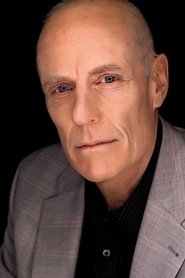
Matt Frewer played Trashcan Man in The Stand, beginning one of Garris’s most persistent actor-director relationships. Frewer later appeared in Quicksilver Highway, Riding the Bullet, Garris’s Masters of Horror episode Chocolate, Desperation and Bag of Bones.
The repeated casting is characteristic of Garris’s working method. He frequently returned to actors and technicians he trusted, especially on television productions where schedules left limited time for discovering working relationships during shooting. Frewer’s ability to move between eccentricity, comedy and disturbing material made him particularly useful across projects with very different tones.
Stephen King’s The Shining
After the success of The Stand, ABC asked King what he wanted to adapt next. He chose The Shining, producing a three-part television version directed by Garris and written by King himself. The project inevitably existed in relation to Stanley Kubrick’s 1980 film, which had become one of the most famous horror films in cinema while departing substantially from elements King considered essential to his novel.
Garris deliberately avoided attempting to compete with Kubrick on Kubrick’s own terms. He described the task as making Stephen King’s version of The Shining, concentrating on material from the novel involving Jack Torrance’s alcoholism, guilt, history of violence and gradual deterioration. Steven Weber played Jack, Rebecca De Mornay played Wendy and Courtland Mead played Danny.
The Stanley Hotel and returning to the novel’s geographical origin
Much of the 1997 Shining was filmed at the Stanley Hotel in Estes Park, Colorado, the hotel that had helped inspire King’s original novel after he stayed there during the 1970s. Garris and producer Mark Carliner visited the location during preparation and concluded that it could function as the screen Overlook.
The use of the Stanley gave the production a direct physical relationship with the history of the book. King also spent substantial time around filming and was writing The Green Mile during the production period. Garris later estimated that King was present for a significant portion of both The Stand and The Shining, making these adaptations unusually collaborative compared with projects in which the author remains distant from production.
Television as a format for long horror novels
Garris became strongly associated with television partly because long-form broadcasting solved structural problems presented by large novels. The Stand and The Shining could preserve character relationships and narrative episodes that would have been difficult to accommodate within a two-hour feature. The advantage came with network censorship, commercial interruptions and budgets that remained limited relative to theatrical productions of comparable length.
Garris has discussed commercial breaks as a particular problem for horror because tension built over several minutes can be destroyed when the program stops for advertising. Directing network horror therefore required constructing individual acts with their own rhythm while keeping the longer dramatic movement intact across several nights of broadcast.
Quicksilver Highway and adaptation of King and Clive Barker
Quicksilver Highway in 1997 allowed Garris to combine work by Stephen King and Clive Barker within one anthology film. Christopher Lloyd plays storyteller Aaron Quicksilver, who introduces adaptations of King’s Chattery Teeth and Barker’s The Body Politic. Garris wrote, directed and produced the project.
The film connects two authors central to modern horror but with very different literary identities. The framing structure allowed Garris to preserve the short-story form instead of expanding one narrative artificially into feature length. Matt Frewer and Cynthia Garris appear in the production, while Barker and John Landis make brief cameos.
Riding the Bullet and a more personal approach to adaptation
Garris returned to King with Riding the Bullet, adapted from a relatively short work first published electronically. Because the source was much smaller than The Stand or The Shining, Garris had to expand rather than compress. He moved the story into 1969 and introduced autobiographical material concerning his own relationship with his mother and his experience growing up after his parents separated.
Garris later explained that only part of the finished feature derives directly from King’s original narrative. The adaptation therefore represents a different kind of fidelity from his earlier miniseries. Instead of preserving as much plot as possible, he attempted to extend themes already present in the source through material drawn from his own life.
Desperation and continuing collaboration with Stephen King
Desperation returned Garris to a large ensemble and an explicitly supernatural King narrative. King wrote the screenplay from his novel, while Garris directed a cast including Ron Perlman, Tom Skerritt, Steven Weber, Annabeth Gish, Matt Frewer and Henry Thomas. The story follows travelers imprisoned by a sheriff in an isolated Nevada community where an ancient entity has begun using human bodies.
King publicly praised Garris’s production before its broadcast, describing the version he had seen as graphic and frightening while expressing concern that network television might cut material before transmission. The comment provides unusually direct evidence of the confidence King continued to place in Garris more than a decade after their first collaboration.
Bag of Bones and the later King adaptations
Garris directed and produced the television adaptation of Bag of Bones in 2011, with Pierce Brosnan as novelist Mike Noonan. The story concerns bereavement, a haunted property and historical violence surrounding a Maine community. Matt Frewer again appeared, continuing his recurring collaboration with Garris.
By this stage Garris had worked with King across original screenwriting, enormous network miniseries, short fiction and later novels. The projects received different critical responses, but together they form one of the largest bodies of adaptation made by a single director from King’s work.
How Garris approached Stephen King adaptation
Garris has repeatedly argued that successful King adaptation depends on understanding why the original story was worth adapting before making necessary changes for the screen. He does not regard literal transcription as possible because prose contains interior narration and structural freedoms unavailable to cinema. His emphasis is on maintaining characters, emotional relationships and the central reason readers respond to the source.
This approach explains his preference for King adaptations such as The Dead Zone and Misery, which alter material while preserving the dramatic identity of the books. It also explains the clear distinction he makes between admiring Kubrick’s The Shining as a Kubrick film and regarding it as a substantially different interpretation from King’s novel.
The Masters of Horror dinners
During the early 2000s Garris began organizing informal dinners for horror filmmakers who repeatedly encountered one another at festivals, conventions and professional events. Participants included directors such as John Carpenter, Tobe Hooper, John Landis, Joe Dante, Stuart Gordon, Don Coscarelli, Guillermo del Toro and others. The gatherings were social rather than formal production meetings.
The name arose as a joke when Guillermo del Toro announced to another table celebrating a birthday that the Masters of Horror wished them well. The group continued using the self-mocking name afterward. As the dinners continued, conversation increasingly included the difficulty experienced directors faced when trying to make personal horror within conventional financing structures.
Turning the dinners into Masters of Horror
Garris developed the gatherings into the concept for an anthology series in which established horror directors would each make a self-contained film of approximately one hour. He became the principal architect of Masters of Horror, which eventually reached Showtime in 2005. The directors received severe limits in money and schedule but unusually broad creative authority.
That arrangement was fundamental to the project. Garris wanted the episodes to reflect each filmmaker rather than forcing John Carpenter, Dario Argento, Joe Dante, Tobe Hooper or Takashi Miike into one standardized house style. John Carpenter later credited Garris directly with doing the practical work required to turn the dinners into a produced series.
Creative control and cable horror
Showtime gave Masters of Horror freedoms unavailable on broadcast television. Violence, sexuality and language could be treated with fewer restrictions, and directors accustomed to years of studio negotiation were offered a compact production in which their individual choices were central. The result was deliberately uneven because stylistic uniformity was not the objective.
The most visible test of those limits came with Takashi Miike’s Imprint, which Showtime declined to broadcast even though it was released through the series on home video. The episode demonstrated that the promised freedom was substantial but not literally unlimited. The controversy also reinforced the anthology’s reputation as a place where established directors could work outside ordinary television boundaries.
Chocolate and Garris as a Masters of Horror director
Garris directed Chocolate for the first season from his own short story. Henry Thomas plays a man who begins experiencing the sensory perceptions of a woman he has never met, while Matt Frewer appears as his colleague. The story is smaller and more psychological than many episodes in the series and gave Garris an opportunity to adapt his own fiction rather than King or another established horror author.
Nicholas Pike composed the score, continuing a collaboration dating back to Critters 2. The episode illustrates how Masters of Horror also functioned as a network of recurring professional relationships. The series gathered famous directors, but each director remained free to bring familiar actors and technicians into the individual production.
Valerie on the Stairs and Clive Barker
For the second season Garris directed Valerie on the Stairs, adapted from material by Clive Barker. The production returned him to an author whose work he had previously incorporated into Quicksilver Highway and with whom he had maintained a personal relationship for years.
Barker and King occupy different positions in Garris’s career. King became the source of a long sequence of major adaptations, while Barker’s work appeared more selectively. Both relationships reflect Garris’s broader place within a generation of horror writers and filmmakers who remained in regular professional and social contact from the 1980s onward.
Fear Itself and the continuation of the anthology concept
After Masters of Horror, Garris developed Fear Itself for NBC. The new anthology retained the principle of giving different filmmakers individual horror stories but operated under broadcast-network restrictions and a different industrial environment.
The move illustrates how much Masters of Horror had depended on cable freedom. Material intended for NBC had to function within advertising breaks and content standards that Showtime did not impose in the same way. The anthology concept survived, but the conditions affecting production and finished episodes changed substantially.
Post Mortem and the preservation of horror filmmaking history
Garris returned directly to interviewing with Post Mortem, initially produced for Fearnet and later continued in podcast form. The program developed the approach he had used decades earlier on Z Channel: extended conversations with filmmakers about their careers and working methods rather than brief interviews tied only to current publicity.
The historical value of these interviews increased as many subjects reached the later stages of their careers or died. Garris spoke with directors, screenwriters, performers and effects artists whose first-hand memories cover major periods of modern horror. Some guests had already appeared on his television interviews around 1979, allowing the archive to document the same filmmakers at very different points in their professional lives.
Garris as an interviewer inside the horror community
Garris’s experience as a director changes the nature of these conversations. He can ask about network standards, effects schedules, coverage, adaptation and producer relationships from direct professional knowledge. Guests are speaking with someone who understands the mechanics behind the situations being described.
This interviewing work has made Garris a frequent participant in documentaries and retrospectives about horror cinema. His visibility in genre history programs is therefore connected with a professional activity that began before his directing career rather than with a later attempt to become a commentator on the field.
Fiction and writing beyond the screen
Garris has also published fiction, including the collection A Life in the Cinema, the novel Development Hell and later prose works. Writing fiction gave him an additional relationship with adaptation because he could experience the movement from prose to screen as an author as well as a filmmaker.
His own stories frequently use the entertainment industry or creative professions as settings. This material draws on decades spent inside film and television production and differs from his King adaptations, where the responsibility is to interpret another writer’s fictional world.
Nightmare Cinema and later anthology work
Garris returned to the multi-director horror anthology format with Nightmare Cinema, working alongside filmmakers including Joe Dante, David Slade, Ryūhei Kitamura and Alejandro Brugués. The project continued his interest in allowing recognizable directors to contribute separate stories within one shared presentation.
The return demonstrates the persistence of the anthology idea throughout his career. Garris encountered the format as a writer and director on earlier television, transformed it into a filmmaker-driven production model with Masters of Horror and later adapted it again for feature exhibition.
Television, censorship and the practical limits of horror directing
A large proportion of Garris’s most ambitious work was produced for television. He has discussed both the advantages and restrictions of that format. Long running times made complex literary adaptation possible, while broadcast standards could restrict language and violence. Commercial interruptions could disrupt sustained suspense, requiring tension to be reconstructed at the beginning of each act.
Cable television changed part of that equation by removing some content restrictions. Streaming later altered it again. Garris’s career therefore crosses several distinct phases of American horror television, from network anthology and miniseries through premium cable and digital distribution.
Recurring collaborators and production continuity
Garris repeatedly returned to a relatively small group of performers and technicians. Cynthia Garris appeared in productions including Critters 2, Psycho IV, Sleepwalkers, The Stand, The Shining, Quicksilver Highway and Riding the Bullet. Matt Frewer became a recurring actor across King adaptations and Masters of Horror. Nicholas Pike provided music for projects spanning more than fifteen years. Henry Thomas moved from the young Norman Bates to later supernatural television roles for Garris.
These collaborations gave continuity to a career divided among theatrical features, television films, miniseries and anthology episodes. Garris’s production circumstances changed frequently, but familiar collaborators reduced uncertainty within schedules that were often demanding.
Mick Garris’s place in horror history
Garris occupies a position in horror history that cannot be assessed solely through theatrical filmography. Much of his most important work happened in television, where he helped demonstrate that large horror novels could sustain multi-night adaptations and later created a cable anthology specifically around director autonomy. His association with Stephen King became one of the longest screen relationships in the author’s career.
His parallel work as an interviewer gives that career an additional historical dimension. Garris documented filmmakers before he became a director, continued interviewing them after joining their professional community and preserved those conversations through television, home video, online archives and podcasting. The combination of filmmaking and oral history makes him an unusually connective figure within modern horror, linking the genre’s older studio and independent generations with the television and cable culture in which much of his own directing career developed.
Selected Work
Notable Horror Collaborators
Notable collaborators and creative partners throughout Mick Garris's horror career.
 Stephen King
Director-Writer / Author Collaborator
King and Garris developed one of the most sustained author-director relationships in modern horror. Their shared screen work includes Sleepwalkers, The Stand, The Shining, Quicksilver Highway, Riding the Bullet, Desperation and Bag of Bones, with King participating directly as screenwriter or source author across several different production formats.
 Cynthia Garris
Director / Actor Collaborator
Cynthia Garris appeared repeatedly in horror directed by Mick Garris, including Critters 2, Psycho IV: The Beginning, Sleepwalkers, The Stand, The Shining, Quicksilver Highway and Riding the Bullet. Their long professional relationship extends across theatrical features, television films and major Stephen King adaptations.
 Matt Frewer
Director / Actor Collaborator
Frewer became one of Garris’s most frequent horror performers through The Stand, Quicksilver Highway, Riding the Bullet, the Masters of Horror episode Chocolate, Desperation and Bag of Bones. The collaboration covers much of Garris’s mature television and Stephen King work.
 Nicholas Pike
Director / Composer Collaborator
Pike began working with Garris on Critters 2 and returned for projects including Sleepwalkers, The Shining, Riding the Bullet and Chocolate. Garris has specifically identified Pike’s orchestral approach as the reason he repeatedly brought the composer back across different stages of his genre career.
 Henry Thomas
Director / Actor Collaborator
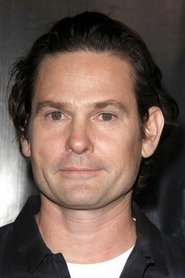
Thomas first worked with Garris as the young Norman Bates in Psycho IV: The Beginning and later returned as the lead of the Masters of Horror episode Chocolate and as Peter Jackson in Desperation. The three projects span sixteen years of Garris’s horror directing.
MC
Mark Carliner
Director / Producer Collaborator
Carliner produced The Stand and The Shining with Garris, two of the largest and most important long-form Stephen King adaptations in the director’s career. The relationship falls below the normal three-title threshold, but the scale and historical importance of those two miniseries make Carliner a significant Garris collaborator.
Mick Garris Horror Movies
Directing (21 credits)
2016
2013
2011
2006
2006
2006
2005
2004
2000
1997
1997
1994
1992
1990
1989
1988
1988
1985
1982
1981
Acting (27 credits)
2026
2026
2025
2024
2024
2024
2022
2022
2021
2020
2020
2019
2018
2016
2015
2015
2012
2011
2010
2009
2008
2005
2004
1997
1994
1983
1981
Writing (17 credits)
2018
2008
2008
2008
2006
2006
2006
2006
2005
2004
1997
1997
1989
1988
1986
1985
1982
Production (25 credits)
2018
2011
2007
2007
2007
2006
2006
2006
2006
2006
2006
2006
2006
2006
2006
2006
2005
2005
2005
2005
2005
2004
1997
1982
1981
Other Crew (7 credits)
2008
2007
2006
2006
2005
2005
2005
Creator (2 credits)
2005
1990