




2027
Alexandre Aja
Horror Director · Biography · Horror Filmography · Family · Collaborators · Credits
Horror subgenres & themes
Most represented across this person's horror filmography:
ANIMAL
• CANNIBAL
• CHRISTMAS
• HOME INVASION
Biography
Alexandre Aja: High Tension, Survival Horror and Modern Genre Cinema
Alexandre Aja has spent more than two decades moving through different forms of horror without abandoning the intensity that first brought him international attention. From the brutal pursuit structure of High Tension and the irradiated desert of The Hills Have Eyes to the supernatural spaces of Mirrors, the creature carnage of Piranha 3D, the flooded house of Crawl and the psychological isolation of Never Let Go, his films repeatedly reduce characters to situations in which ordinary protection disappears. Aja's horror is rarely passive. It is built around bodies under pressure, environments that become traps and protagonists who must improvise a way through escalating physical danger.
That survival structure has remained remarkably consistent even as the subgenres have changed. Aja has worked with slashers, cannibal horror, supernatural horror, killer animals, psychological confinement and remakes, yet many of his films return to the same fundamental question: what remains when a person can no longer rely on society, institutions or the physical safety of a familiar environment? His protagonists frequently begin as ordinary people and are forced into increasingly extreme acts of endurance. This focus, combined with a taste for practical gore and strong visual set pieces, has made Aja one of the most recognizable European filmmakers to build a sustained career inside international horror.
High Tension and the Breakthrough of French Extreme Horror
High Tension in 2003 transformed Aja's career and became one of the key films associated with the renewed international visibility of extreme French horror. Co-written with Grégory Levasseur, the film follows Marie and Alexia as they travel to Alexia's family home in the countryside, where their isolation is shattered by the arrival of a killer. Once the attack begins, Aja strips the story down to pursuit, concealment and survival. The house, surrounding roads and service stations become parts of a continuous nightmare in which safety is repeatedly temporary.
The film's power comes from its direct physicality. Aja does not treat violence as something that disappears when a scene ends. Blood remains in the environment, bodies are damaged in explicit detail and the protagonist's ability to survive depends on understanding the spaces around her. Maxime Alexandre's cinematography gives the night exteriors and interiors a hard, controlled darkness, while the editing pushes sequences forward without allowing much recovery once the central attack has begun.
The film also established several of Aja's most important horror collaborators. Levasseur was not simply a co-writer but part of the creative structure of the film, while cinematographer Maxime Alexandre and editor Baxter would return repeatedly. Franck Khalfoun also appeared in the film before later directing horror projects written or produced with Aja and Levasseur. This recurring group became one of the foundations of Aja's later genre career.
High Tension became strongly associated with the wave later described as New French Extremity, but its construction also reveals Aja's long-standing fascination with American survival and slasher cinema. The film takes recognizable genre mechanics and intensifies them through visual aggression and physical detail. Its controversial narrative revelation has remained divisive, yet the film's importance to Aja's horror career is unquestionable. It demonstrated that he could take a stripped-down premise and create sustained pressure through bodies, architecture and movement.
The Hills Have Eyes and the Move into American Horror
The success of High Tension brought Aja to the attention of Wes Craven, leading to the 2006 remake of The Hills Have Eyes. Aja and Levasseur approached Craven's original through a contemporary lens while retaining the essential survival structure: a family becomes stranded in an isolated desert region and discovers that they are being hunted by people transformed by generations of exposure to nuclear testing.
The desert becomes a form of confinement despite its apparent openness. The Carter family can see enormous distances, yet help remains unreachable. Broken vehicles, heat and the surrounding landscape leave them exposed before the attackers fully reveal themselves. Once the assault begins, Aja escalates quickly from tension to graphic violence, turning the family's journey into a process of forced adaptation.
The remake also deepened Aja's commitment to practical effects. Greg Nicotero, Howard Berger and the KNB effects team contributed extensively to the mutants, wounds and physical gore. The creatures are not treated merely as digital threats inserted into the environment. Their bodies occupy the same spaces as the actors, giving confrontations weight and immediacy. This preference for tangible horror effects became an important element of Aja's work during the following years.
The film's strongest character movement belongs to people who initially appear least prepared for violence. Survival changes them physically and psychologically. Aja repeatedly returns to this idea across his horror filmography: pressure reveals capacities that ordinary life has never required. The Hills Have Eyes established that theme on a larger American production while preserving much of the brutality associated with his breakthrough.
P2 and the Expansion of the Aja-Levasseur-Khalfoun Horror Circle
Aja did not need to direct a film personally to remain creatively involved in horror. P2, released in 2007, was written by Aja, Grégory Levasseur and Franck Khalfoun and directed by Khalfoun, with Aja and Levasseur also producing. The film follows Angela, a woman trapped in an underground parking garage on Christmas Eve and targeted by a security guard whose apparent helpfulness rapidly gives way to obsession and violence.
The premise fits Aja's recurring interest in confinement almost perfectly. A parking garage is an ordinary urban environment, but after hours it becomes a maze of concrete levels, locked doors, surveillance cameras and empty corridors. The protagonist is physically close to the outside world while being effectively separated from it. The setting converts a familiar workplace environment into an isolated survival space.
P2 is also important because it demonstrates the continuity of Aja's horror group. Khalfoun had appeared in High Tension, Levasseur again contributed to the writing and production, and Maxime Alexandre photographed the film. The project extended a collaborative network that would later return around Maniac and other horror productions.
Mirrors and Supernatural Horror
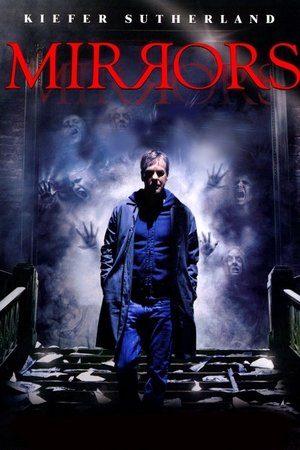
With Mirrors in 2008, Aja moved from human predators and survival horror into explicitly supernatural territory. Adapted from the South Korean film Into the Mirror, the project was substantially rewritten by Aja and Levasseur. Kiefer Sutherland plays Ben Carson, a former police officer working as a night security guard inside a fire-damaged department store where mirrors begin behaving independently of the people reflected in them.
Aja was attracted to the idea that reflective surfaces could become threatening because mirrors are impossible to avoid completely. The film extends the danger beyond the central building into homes, bathrooms and ordinary objects, turning reflection itself into a possible point of attack. The concept allows Aja to take a familiar element of supernatural horror and connect it directly to everyday perception.
The abandoned department store provides another characteristic Aja environment. Large enough to explore yet sufficiently enclosed to become oppressive, it allows the film to move through burnt interiors, abandoned displays and vast reflective surfaces. Maxime Alexandre's cinematography, Baxter's editing and the practical effects work of artists including Greg Nicotero and Howard Berger continued the creative relationships developed on earlier films.
The violence remains considerably more graphic than the restrained approach often associated with studio supernatural horror of the period. Aja was not interested in reducing the film to suggestion simply because the threat was supernatural. Bodies are still vulnerable, and some of the film's most memorable sequences depend on the collision between impossible supernatural control and explicit physical damage.
Piranha 3D and Horror as Spectacle
Piranha 3D in 2010 gave Aja the opportunity to move toward horror comedy and large-scale creature spectacle. An underwater disturbance releases prehistoric piranhas into a lake filled with spring-break tourists, creating a premise built almost entirely around the anticipation of mass carnage. Aja openly embraced the excessive nature of the material rather than attempting to transform it into restrained animal horror.
The film is structurally simple and intentionally so. The audience understands the danger early, while much of the suspense comes from waiting for the predators and thousands of potential victims to occupy the same space. Once the central attack begins, the film becomes an extended practical and digital effects showcase. Bodies are bitten, torn apart and destroyed in increasingly exaggerated ways.
Aja described the project as an opportunity to explore the fun side of horror after the severity of High Tension, The Hills Have Eyes and Mirrors. The change in tone is significant. Gore no longer serves only dread; it can become grotesque comedy and audience spectacle. Yet the technical interest in physical effects remains recognizable. Nicotero and Berger again contributed to the makeup effects, while Baxter returned as editor.
Franck Khalfoun also appears in the film, extending a horror collaboration that had begun with High Tension. The recurring presence of familiar collaborators reinforces one of the defining characteristics of Aja's career: despite moving between countries, studios and subgenres, he has frequently carried a core group of people with him.
Maniac and Horror from the Killer's Perspective
Aja returned to producing and screenwriting with Maniac in 2012, directed by Franck Khalfoun and co-written with Grégory Levasseur. A remake of William Lustig's 1980 film, the project radically changes the spectator's relationship with the killer by presenting much of the story through his visual perspective. Elijah Wood plays Frank, a murderer whose obsession with women, mannequins and scalping develops through a camera strategy that places the audience uncomfortably close to his acts.
The project is important within Aja's horror work because it demonstrates how the creative group could reinterpret existing material without simply reproducing its original form. The first-person structure turns identification into a source of discomfort. The viewer is not positioned safely outside the violence but forced to occupy the killer's perceptual space for long stretches of the film.
Maxime Alexandre photographed the film, again connecting the project to the visual team behind several earlier Aja horrors. Khalfoun's direction, Levasseur's writing and Aja's production role make Maniac one of the clearest examples of the collaborative horror unit that developed around them after High Tension.
Horns and Supernatural Transformation
Horns in 2013 expanded Aja's horror into dark supernatural fantasy. Daniel Radcliffe plays Ig Perrish, a man accused of murdering his girlfriend who suddenly develops horns capable of drawing hidden truths and impulses from the people around him. The transformation gives the film a different rhythm from Aja's survival horror, but the story still depends on an ordinary person becoming physically and socially separated from the world around him.
The horns are both supernatural power and visible contamination. They change how Ig sees other people while also changing how he understands himself. Horror emerges less from immediate pursuit than from the revelation of private desires, guilt and violence concealed beneath apparently normal relationships.
Aja's attraction to the material demonstrates that his horror interests are not limited to gore or physical survival. He is equally interested in transformation when it destabilizes identity. The supernatural becomes a mechanism for exposing what characters would ordinarily hide, giving the film a moral and psychological dimension distinct from his earlier work.
The Pyramid and Continuing Horror Production
Aja produced The Pyramid in 2014, marking Grégory Levasseur's feature directorial debut. The found-footage-influenced horror story follows an archaeological team entering a newly discovered pyramid and encountering a structure that becomes increasingly impossible to escape. The project returned Aja and Levasseur to one of their most familiar narrative structures: characters enter a confined space believing they can understand it, only to discover that the environment operates according to rules they cannot control.
The film is significant primarily as an extension of their long-term horror partnership. Levasseur had spent years writing, producing and working alongside Aja before moving into directing. Aja's involvement as producer allowed the collaboration to continue in reversed form, with Levasseur occupying the directorial position while Aja supported the project from production.
Crawl and the Return to Pure Survival Horror
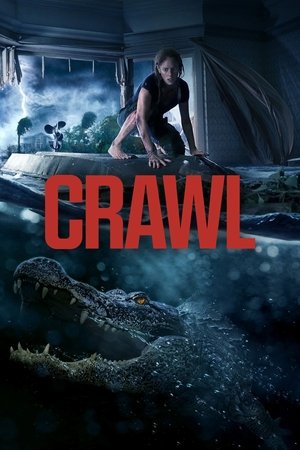
Crawl in 2019 marked one of Aja's strongest returns to stripped-down survival horror. Kaya Scodelario plays Haley, who enters an evacuation zone during a hurricane to find her injured father. She discovers him trapped beneath the family house, where rising floodwater and large alligators transform the crawlspace into an increasingly lethal environment.
Aja has described the film as closely related to the survival logic of High Tension. The objective is simple: survive the storm and escape the house. The flooded structure becomes a maze whose rules change continuously as water rises and the animals gain access to new spaces. The threat comes simultaneously from predators and environment, making escape more difficult every time the characters appear to make progress.
The film also returns to the idea of home invasion in an unusual form. No human killer breaks into the house. Water, weather and alligators take over the domestic environment. Rooms that should provide shelter become traps, while the crawlspace beneath the house functions like the interior of a creature-filled labyrinth.
Maxime Alexandre returned as cinematographer, while Grégory Levasseur served as executive producer. Sam Raimi also produced the film, creating a collaboration Aja had nearly begun many years earlier before choosing to make The Hills Have Eyes with Wes Craven. The connection between those two horror traditions places Crawl within a lineage of filmmakers interested in combining physical suspense with direct audience pleasure.
The film's effectiveness comes from refusing to overcomplicate the premise. Aja treats the alligators seriously while allowing the accumulation of impossible obstacles to create a form of dark excitement. The result is creature horror reduced to movement, injury, flooding and survival, a format particularly suited to his strengths.
Oxygen and Claustrophobic Psychological Horror
Oxygen in 2021 takes confinement to its most extreme form in Aja's filmography. Mélanie Laurent plays a woman who awakens inside a sealed medical cryogenic unit with no memory of how she arrived there. Her oxygen supply is running out, and nearly the entire film takes place inside a space barely larger than her body.
The film removes many of the external elements normally associated with Aja's horror. There is no desert, flooded house or large physical environment to explore. Instead, the enclosure itself becomes the central threat. Information must be gathered through an artificial intelligence system, fragmented memories and limited communication with the outside world.
This reduction demonstrates how fundamental confinement is to Aja's cinema. Even without an attacker physically occupying the same space, the structure remains a survival film. The protagonist must understand the rules of her environment before time and oxygen disappear. Each revelation changes the meaning of the situation without changing the physical dimensions of the chamber.
Maxime Alexandre again photographed the film, extending a horror collaboration that had begun with High Tension nearly two decades earlier. Their ability to create visually dynamic horror inside such a limited setting demonstrates how far the partnership had developed from the dark rural landscapes of their earliest work.
Night of the Hunted and the Return of Franck Khalfoun
Aja served as producer on Night of the Hunted in 2023, directed by Franck Khalfoun. The film centers on a woman trapped at an isolated gas station and targeted by an unseen sniper. The premise returns to the survival minimalism that has characterized much of the Aja-Khalfoun collaboration: limited space, an apparently simple threat and a protagonist forced to solve an immediate physical problem while under constant danger.
The project continues a horror partnership that stretches back to Khalfoun's appearance in High Tension, through P2, Piranha 3D and Maniac. Few collaborators in Aja's career have moved through as many different positions within the same horror circle, from actor to writer and director.
Never Let Go and Psychological Survival Horror
Never Let Go in 2024 returned Aja to family-centered horror in an isolated environment. Halle Berry plays a mother living with her two sons in a remote house while insisting that an evil force has consumed the world outside. Their safety depends on remaining physically connected to the home by ropes whenever they leave it. The system provides security only as long as everyone believes in the danger.
The film turns uncertainty into the principal source of fear. The children must decide whether the rules protecting them are genuine or whether their understanding of the world has been shaped entirely by their mother's perception. Aja described the story as a dark fairy tale capable of functioning as a psychological tool for confronting monsters, emphasizing the ambiguity between external supernatural threat and internal fear.
The project also reunited Aja with Maxime Alexandre. Rather than returning to the explicit gore of High Tension or Piranha 3D, Aja pursued a more psychological nightmare. Yet the fundamental structure remains recognizable: a family is confined to a supposedly safe location, the outside world is dangerous or believed to be dangerous, and survival depends on understanding rules that may themselves be unstable.
Grégory Levasseur and Aja's Central Horror Partnership
No collaborator is more important to Aja's horror career than Grégory Levasseur. Their work together spans writing, production, second-unit direction, art direction and the development of projects across different stages of both careers. High Tension, The Hills Have Eyes, P2, Mirrors, Maniac, The Pyramid and Crawl all demonstrate different forms of that partnership.
The collaboration is significant because it extends beyond a repeated credit. Aja and Levasseur developed a shared approach to genre built around direct premises, physical danger and the reinvention of familiar horror material. Their projects move between original stories and remakes while repeatedly searching for a new formal angle rather than reproducing an existing film scene for scene.
The BFI has identified Levasseur as one of the recurring creative figures central to Aja's approach, and their partnership remains one of the clearest examples of sustained collaboration in contemporary French horror filmmaking.
Practical Gore, Survival and the Aja Horror Method
Aja's horror changes subgenre frequently, but the mechanics remain surprisingly consistent. Characters are isolated, environments become mazes and bodily survival becomes the immediate objective. High Tension turns a rural house and roads into a pursuit system. The Hills Have Eyes uses the desert. P2 uses a parking garage. Mirrors makes reflective surfaces dangerous. Crawl transforms a flooded family home into an animal-infested trap, while Oxygen reduces the entire system to a sealed chamber.
His protagonists are rarely superheroes. They become capable because circumstances demand it. Aja has repeatedly cited the survival model represented by characters such as Ripley in Alien: an ordinary person who discovers the ability to continue fighting because stopping means death. This helps explain why his films frequently concentrate on endurance rather than mythology.
The same physical emphasis appears in his approach to effects. Practical gore, creature work and makeup remain important even when digital effects are also required. Collaborations with artists including Greg Nicotero and Howard Berger gave The Hills Have Eyes, Mirrors and Piranha 3D a tactile horror vocabulary in which bodily damage is meant to occupy the screen rather than remain abstract.
Alexandre Aja's Place in Contemporary Horror
Aja's career is unusual because he moved from the French extreme-horror wave into American studio filmmaking without abandoning the genre that established him. Rather than treating High Tension as a temporary route toward mainstream cinema, he continued exploring different branches of horror for more than two decades.
The Hills Have Eyes proved that he could reinterpret an American horror classic without neutralizing its violence. Mirrors moved into supernatural horror, Piranha 3D embraced grotesque creature spectacle, Maniac experimented with killer subjectivity, Crawl returned to elemental survival and Oxygen reduced the horror environment almost to the dimensions of a coffin. Never Let Go continued that progression through psychological and supernatural uncertainty.
The continuity across these projects explains why Aja has become one of the most durable horror filmmakers to emerge from Europe in the early twenty-first century. His films may differ radically in tone and scale, but they remain connected by pressure, confinement, physical vulnerability and the persistent need to survive until the environment finally releases its characters.
Selected Work
Notable Horror Collaborators
Notable collaborators and creative partners throughout Alexandre Aja's horror career.
GL
Grégory Levasseur
KEY HORROR PARTNER
Aja's defining creative partner across High Tension, The Hills Have Eyes, P2, Mirrors, Maniac, The Pyramid and Crawl, working through writing, producing, art direction and second-unit filmmaking.
 Franck Khalfoun
HORROR FILMMAKER
Part of Aja's horror circle since High Tension, later directing P2 and Maniac and returning through Piranha 3D and Night of the Hunted across more than twenty years of genre collaboration.
 Maxime Alexandre
HORROR CINEMATOGRAPHER
Aja's principal visual partner on High Tension, The Hills Have Eyes, Mirrors, Crawl, Oxygen and Never Let Go, shaping the darkness, confinement and physical immediacy of his horror cinema.
BA
Baxter
HORROR EDITOR
Edited High Tension, The Hills Have Eyes, Mirrors and Piranha 3D, helping define the aggressive rhythm, escalating suspense and sudden bursts of violence associated with Aja's early horror.
 Gregory Nicotero
MAKEUP FX ARTIST
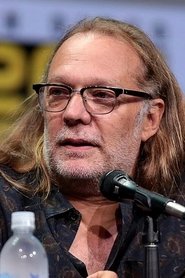
Worked on The Hills Have Eyes, Mirrors and Piranha 3D, providing mutant designs, physical injuries and practical gore across three of Aja's most effects-driven horror productions.
 Howard Berger
MAKEUP FX ARTIST
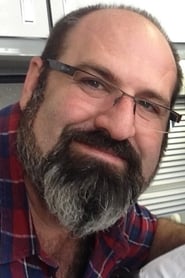
Collaborated on The Hills Have Eyes, Mirrors and Piranha 3D, contributing practical creature and makeup effects to three major stages of Aja's survival, supernatural and creature horror.
Franck Khalfoun
HORROR FILMMAKER
Part of Aja's horror circle since High Tension, later directing P2 and Maniac and returning through Piranha 3D and Night of the Hunted across more than twenty years of genre collaboration.
Maxime Alexandre
HORROR CINEMATOGRAPHER
Aja's principal visual partner on High Tension, The Hills Have Eyes, Mirrors, Crawl, Oxygen and Never Let Go, shaping the darkness, confinement and physical immediacy of his horror cinema.
BA
Baxter
HORROR EDITOR
Edited High Tension, The Hills Have Eyes, Mirrors and Piranha 3D, helping define the aggressive rhythm, escalating suspense and sudden bursts of violence associated with Aja's early horror.
Gregory Nicotero
MAKEUP FX ARTIST
Worked on The Hills Have Eyes, Mirrors and Piranha 3D, providing mutant designs, physical injuries and practical gore across three of Aja's most effects-driven horror productions.
Howard Berger
MAKEUP FX ARTIST
Collaborated on The Hills Have Eyes, Mirrors and Piranha 3D, contributing practical creature and makeup effects to three major stages of Aja's survival, supernatural and creature horror.
Alexandre Aja Horror Movies
Directing (11 credits)
2024
2021
2019
2017
2013
2010
2009
2008
2006
2003
Writing (8 credits)
2027
2017
2012
2009
2008
2007
2006
2003
Production (12 credits)
2027
2024
2023
2021
2019
2017
2014
2013
2012
2010
2009
2007
Acting (5 credits)
2019
2015
2014
2013
2010