

2020
Gaspar Noé
Horror Director · Biography · Horror Filmography · Family · Collaborators · Credits
Horror subgenres & themes
Most represented across this person's horror filmography:
RAPE AND REVENGE
• WITCHCRAFT
Biography
Gaspar Noé: Extreme Cinema, Climax and Horror as Sensory Assault
Gaspar Noé occupies an unusual position in contemporary horror. He is not a genre specialist in the conventional sense, and several of his most famous films resist clean classification as horror, drama, crime or experimental cinema. Yet fear, bodily vulnerability, death, psychological collapse and extreme sensory experience recur throughout his work with such persistence that his influence on modern arthouse and extreme horror is difficult to separate from the rest of his career. Carne, I Stand Alone, Irréversible, Enter the Void, Climax and Lux Æterna all approach terror differently, but each transforms physical or psychological distress into something the viewer is encouraged to experience rather than merely observe.
Noé's horror does not depend primarily on supernatural monsters or traditional suspense structures. It is created through bodies trapped inside violence, consciousness altered by drugs or trauma, environments that become impossible to escape and filmmaking techniques designed to destabilize perception. Cameras rotate, images flicker, sound becomes physically aggressive and narrative structures deny the viewer conventional orientation. The resulting cinema frequently occupies the border between horror and other genres, but its methods have made Noé an important reference point for filmmakers interested in horror as a visceral and confrontational experience.
Carne and the Origins of Gaspar Noé's Extreme Cinema
Noé's early short film Carne established many of the obsessions that would remain visible throughout his later work. Philippe Nahon plays a butcher whose relationship with his daughter exists inside a world of frustration, violence and social isolation. The film presents ordinary urban existence as something already contaminated by aggression, resentment and the possibility of sudden brutality.
The butcher is not constructed as a conventional horror villain. Noé instead forces the audience into proximity with a consciousness marked by anger and alienation. Violence becomes both physical act and psychological environment. The aggressive editing, abrupt sound and graphic imagery anticipate a filmmaking style in which form itself participates in the assault on the viewer.
Carne also began Noé's long association with Nahon, whose imposing physical presence became inseparable from the director's early cinema. The character would return in expanded form in I Stand Alone, allowing Noé to transform the shorter film's bleak world into a feature-length study of isolation and violent thought.
I Stand Alone and Psychological Horror Without a Monster
I Stand Alone continues the butcher's story after his release from prison and follows his attempt to rebuild a life while becoming increasingly consumed by resentment. Although structured more as psychological drama than conventional horror, the film operates through a sustained atmosphere of threat. The protagonist's internal monologue gradually turns ordinary encounters into expressions of hatred, humiliation and imagined violence.
Noé uses the audience's access to the butcher's thoughts as a form of confinement. There is little distance from his bitterness, and the possibility that thought will become action remains present throughout the film. Sudden visual and sonic shocks interrupt scenes without warning, turning editing into something resembling a physical blow. The effect anticipates the director's later interest in making spectators feel trapped inside a character's perception.
The film also demonstrates Noé's refusal to provide a reassuring moral perspective. The butcher is neither redeemed nor transformed into a simple cinematic monster. Instead, the audience is forced to remain close to a person whose worldview becomes increasingly unbearable. Horror emerges from the recognition that the threat is human, internal and capable of existing inside environments that otherwise appear completely ordinary.
Irréversible and the Horror of Irreversible Violence
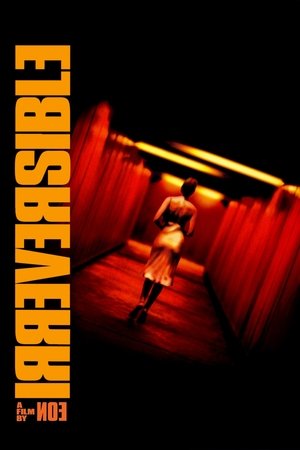
Irréversible in 2002 pushed Noé's confrontational filmmaking to international prominence. The film follows Marcus, Pierre and Alex through a story of violence and revenge presented in reverse chronological order. Beginning with the consequences and moving backward toward moments of ordinary happiness, the structure turns time itself into the film's central mechanism of cruelty. The audience knows what will happen long before the characters do.
The notorious violence of Irréversible is essential to its reputation, but the film's impact also depends on how Noé constructs physical disorientation. Benoît Debie's camera moves through spaces with unusual freedom, rotating and drifting through the nightclub and surrounding streets while low-frequency sound contributes to a sense of nausea and instability. The technique makes the viewer's body part of the experience.
The reverse chronology produces a form of existential horror. Scenes that would normally offer emotional relief become increasingly painful because the audience already knows the future waiting for the characters. Happiness is not presented as recovery after trauma but as something that existed before catastrophe and cannot be restored. The title's central idea, that time destroys everything, therefore operates not as an abstract statement but as the structural logic of the film.
Noé's approach influenced the broader conversation around extreme cinema by demonstrating how graphic violence could be integrated with formal experimentation rather than presented merely as exploitation spectacle. Whether classified primarily as crime, drama or extreme cinema, Irréversible remains deeply relevant to horror because its most disturbing force comes from helplessness, bodily violation and the impossibility of undoing what has occurred.
Enter the Void and Horror Beyond the Body
Enter the Void expanded Noé's interest in subjective cinema into a hallucinatory meditation on death. Set largely in Tokyo, the film follows Oscar, a young drug dealer whose consciousness appears to continue after he is killed. The camera moves between first-person perception, memory, aerial observation and increasingly impossible viewpoints, turning death into an extended visual journey rather than a single narrative event.
The film draws on ideas of reincarnation and altered consciousness while refusing to establish a stable boundary between spiritual experience, hallucination and cinematic invention. Death does not provide certainty. Instead, it produces another unstable state in which memory, desire and trauma continue circulating.
Noé and cinematographer Benoît Debie created an environment dominated by artificial light, saturated color and continuous movement. Tokyo becomes less a realistic city than an enormous nervous system through which the camera travels. Visual effects allow perspective to detach from the human body entirely, reinforcing the feeling that normal physical rules no longer apply.
Although Enter the Void often sits closer to experimental drama and psychedelic fantasy than conventional horror, its treatment of mortality remains profoundly unsettling. The viewer is repeatedly forced to cross boundaries between living bodies, corpses, memories and sexual reproduction. Noé transforms one of horror's most fundamental subjects, death, into a prolonged experience of consciousness losing its physical anchor.
Climax and the Transformation of Dance into Horror
Climax in 2018 represents Noé's clearest feature-length engagement with horror. A group of dancers gathers in an isolated school to rehearse and celebrate. Someone has secretly placed LSD in the communal sangria, and the party gradually collapses into paranoia, violence, sexual aggression and psychological disintegration. Nothing supernatural is required. A familiar social gathering becomes a closed environment in which perception itself can no longer be trusted.
The film begins with disciplined bodies performing a complex group choreography. This order is essential because the remainder of the film systematically destroys it. The dancers initially move as an organized collective; after intoxication takes hold, the same bodies become unpredictable, isolated and dangerous. Dance and horror therefore emerge from the same physical vocabulary. Movement can express control in one sequence and complete psychological collapse in another.
Noé shot Climax rapidly and relied heavily on performers with professional dance backgrounds rather than a conventional ensemble of dramatic actors. The method gives the film a physical immediacy that becomes increasingly disturbing as choreography gives way to uncontrolled behavior. Long takes trap the audience inside rooms and corridors while the camera moves among simultaneous crises without offering a stable position of safety.
The influence of horror cinema is openly embedded in the film. Early images place works including Suspiria and Possession within the cultural environment surrounding the dancers, while the later descent into red lighting, bodily contortion and collective hysteria transforms those references into part of the film's own language. The horror is psychological, but it is expressed through bodies and space with the intensity of a possession film.
The isolated school becomes another of Noé's enclosed systems. Once the drug takes effect, there is effectively no external authority capable of restoring order. Accusations spread, personal tensions become violent and ordinary judgment disappears. The characters are surrounded by people yet increasingly unable to trust anyone around them.
Climax therefore functions as both psychological horror and body horror without relying on physical mutation. The human body itself becomes unstable under intoxication. Dancers bend, crawl, convulse and move through increasingly unnatural positions, allowing choreography to produce images that resemble supernatural possession even though the cause remains chemical and human.
Benoît Debie and the Visual Language of Noé's Horror
Cinematographer Benoît Debie became one of Noé's most important creative partners beginning with Irréversible. Their collaboration developed around an unusually mobile camera, saturated color and the willingness to treat cinematography as a physical experience rather than simply a means of recording performance.
On Irréversible, camera movement contributes directly to nausea and disorientation. Enter the Void pushes movement beyond realistic physical possibility, while Climax uses long takes and increasingly inverted perspectives to accompany the dancers' psychological collapse. The films look very different from one another, but the underlying collaboration depends on the same desire to make camera position emotionally and physically significant.
Noé has described his relationship with Debie as particularly close and collaborative, with the two sometimes sharing camera responsibilities. Their work demonstrates that the visual extremity associated with Noé cannot be reduced to provocative subject matter. Light, movement and framing are central to the way fear and discomfort are produced.
Lux Æterna and Horror on a Film Set
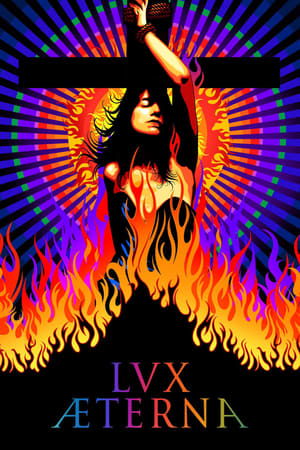
Lux Æterna in 2019 compresses many of Noé's interests into approximately fifty minutes. Béatrice Dalle and Charlotte Gainsbourg play versions of themselves during the chaotic production of a film about witches. What begins as conversation and backstage tension gradually becomes an assault of conflicting personalities, malfunctioning production systems and increasingly aggressive visual effects.
The witch-burning imagery places horror directly inside the fictional film being produced, but Noé's larger subject is the violence of filmmaking itself. Gainsbourg's character is tied to a stake while the production around her loses control. Creative conflict, technical failure and psychological pressure become indistinguishable from the horror scene supposedly being staged.
Split-screen allows multiple forms of chaos to occur simultaneously. The viewer must choose where to look while conversations and crises overlap. Noé then intensifies the film toward sustained flickering colors and high-frequency sound, creating a finale intended to produce an almost physiological response.
The technique transforms cinematic technology into the source of terror. There is no need for the witches being filmed to become literally supernatural. Lights, sound, cameras and production hierarchies are sufficient to create an environment in which the distinction between performance and real distress begins to collapse.
Horror References and the Cinema That Shaped Noé
Noé has consistently displayed a strong relationship with horror and extreme cinema even when his own films operate outside conventional genre boundaries. His references include filmmakers whose work emphasizes physical experience, taboo imagery and psychological destabilization. Dario Argento is particularly important to the visual vocabulary surrounding Climax and later projects, while Andrzej Żuławski's Possession provides another obvious reference for bodies expressing psychological breakdown through extreme movement.
These influences do not result in straightforward imitation. Noé absorbs horror techniques into films that may otherwise belong to crime drama, experimental cinema or psychological tragedy. Sudden sound, extreme color, physical distortion, enclosed spaces and prolonged dread become tools that can be detached from traditional monsters and applied to human behavior.
This approach helps explain why his films frequently circulate within horror culture despite genre ambiguity. Noé often produces the emotional and physiological effects associated with horror even when the narrative itself cannot easily be categorized as a horror story.
Sound, Image and Sensory Horror
Noé's contribution to horror is particularly connected to the idea that cinema can affect the spectator physically. Low-frequency sound, flashing light, disorienting camera movement and long uninterrupted sequences are not decorative techniques. They are methods for reducing the distance between the viewer and the distress taking place on screen.
Irréversible uses sound and movement to create nausea before the narrative has fully established itself. Enter the Void turns light and perspective into an altered state. Climax traps the audience inside a collective drug nightmare, while Lux Æterna makes flicker and noise the climax of the film itself. The progression demonstrates Noé's increasing willingness to treat sensory overload as a narrative event.
This makes his cinema relevant to horror beyond the question of genre labels. Horror has always depended on controlling what spectators see, hear and anticipate. Noé extends that principle by manipulating the conditions under which seeing and hearing remain comfortable in the first place.
Extreme Cinema and the Fear of Human Behavior
Another constant throughout Noé's darker work is the absence of a stable supernatural explanation. The horror usually comes from people, bodies, drugs, violence, mortality or failures of perception. Even when Enter the Void moves beyond ordinary physical reality, its supernatural possibilities remain connected to death and consciousness rather than conventional monsters.
This focus makes human behavior itself unpredictable. The butcher in I Stand Alone turns resentment into an entire worldview. The men of Irréversible allow rage to drive them toward further violence. The dancers in Climax rapidly abandon social restraint once fear and intoxication destroy their ability to interpret one another.
Noé's films rarely suggest that civilization is permanently stable. Social order can be destroyed by a single act, a drug, an injury or an emotional impulse. Once that order disappears, the characters discover how little protection conventional behavior actually provides.
Gaspar Noé's Place in Modern Horror
Gaspar Noé should not be described simply as a horror director. Doing so would flatten a filmography deliberately built around movement between genres and forms. His importance to horror comes instead from the intensity with which he has explored several of the genre's fundamental subjects without accepting its conventional structures.
Irréversible confronts the horror of violence and irreversible time. Enter the Void turns death into an extended subjective state. Climax converts intoxication and collective hysteria into a body-horror nightmare, while Lux Æterna transforms a film production into a sensory assault structured around witches and simulated burning.
Among these works, Climax provides the clearest point of entry into Noé as a horror filmmaker. Its isolated location, escalating paranoia, physical distortion and explicit dialogue with films such as Suspiria and Possession place it directly inside arthouse horror. Yet its strongest techniques originate elsewhere in his career, demonstrating how thoroughly horror methods have circulated through his cinema even when he has resisted belonging to the genre exclusively.
Noé's contribution is therefore less a catalogue of conventional horror films than a sustained investigation into how cinema can make violence, death, panic and bodily instability feel immediate. His work helped reinforce a modern form of extreme and arthouse horror in which discomfort is not simply represented on screen but built into the act of watching.
Selected Work
Notable Horror Collaborators
Notable collaborators and creative partners throughout Gaspar Noé's horror career.
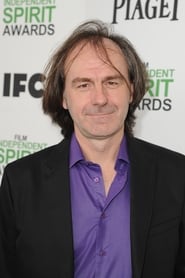 Benoît Debie
KEY VISUAL PARTNER
Shot Irréversible, Climax and Lux Æterna, giving three of Noé's horror works their extreme camera movement, saturated lighting and deliberately disorienting visual identity.
BC
Brahim Chioua
HORROR PRODUCER
Produced Irréversible and Climax, supporting two of Noé's most confrontational horror works and their uncompromising treatment of violence, panic and psychological collapse.
 Richard Grandpierre
HORROR PRODUCER
Worked as producer on Irréversible and Climax, spanning two very different periods of Noé's horror cinema from brutal human violence to hallucinatory collective breakdown.
CM
Claude Gajan Maude
RECURRING ACTRESS
Appeared in both Climax and Lux Æterna, connecting Noé's dance-driven descent into hysteria with his later film-set nightmare of witchcraft, chaos and sensory overload.
Gaspar Noé Horror Movies
Directing (3 credits)
2018
2002
Writing (3 credits)
2020
2018
2002
Editing (2 credits)
2018
2002
Acting (2 credits)
2002
1996
Production (3 credits)
2020
2018
2002
Cinematography (1 credits)
2002
Other Crew (1 credits)
2022