
2018
William Friedkin
Horror Director · Biography · Horror Filmography · Family · Collaborators · Credits
Horror subgenres & themes
Most represented across this person's horror filmography:
ANIMAL
• CHRISTMAS
• POSSESSION
Biography
William Friedkin and the Horror of Believing the Impossible
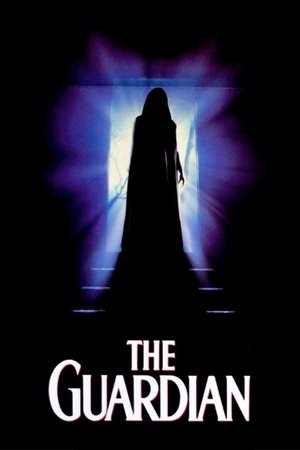
William Friedkin directed relatively few films that belong unambiguously to horror, yet his influence on the genre is enormous. The Exorcist changed supernatural horror by refusing to treat demonic possession as a distant Gothic fantasy. Friedkin placed the impossible inside contemporary Washington, surrounded it with doctors, psychiatrists, medical machinery, domestic routines and people initially determined to find rational explanations. More than three decades later, Bug approached horror from the opposite direction: instead of asking whether the supernatural might be real, it traps two people inside a motel room where paranoia becomes so complete that the distinction between reality and delusion begins to lose practical meaning. Between those landmarks, The Guardian returned Friedkin to supernatural horror through ancient mythology, bodily threat and the corruption of supposedly safe domestic space.
The connection between these films is Friedkin's insistence that horror must feel physically present. He was rarely interested in creating a protective distance between audience and subject. Medical procedures in The Exorcist are uncomfortable because they are presented with procedural detail; the motel room in Bug becomes frightening because every alteration to the space appears to emerge from recognizable human behavior; the tree-centered mythology of The Guardian gains force from the collision between ancient supernatural ideas and an ordinary modern family. Friedkin repeatedly places characters inside systems that should provide explanations and then shows those systems becoming inadequate.
The Exorcist and the Destruction of Rational Security
The Exorcist follows actress Chris MacNeil as her daughter Regan begins displaying physical and behavioral changes that cannot be comfortably explained. Friedkin deliberately spends a substantial portion of the film inside hospitals, clinics and consultations before religion becomes a serious possibility. Regan undergoes invasive tests, physicians discuss neurological explanations and the family moves through the machinery of modern medicine searching for something that can account for what is happening. The supernatural becomes frightening precisely because the film has worked so hard to establish a world that initially expects every symptom to have a material cause.
This structure allows Friedkin to make the eventual exorcism feel like a genuine collapse of the explanatory systems surrounding the family. Medicine has not been mocked or casually dismissed; it has been given time, expertise and technology and still failed to restore Regan. Father Damien Karras is himself trained in psychology and initially approaches possession with skepticism rather than unquestioning certainty. By the time Father Merrin arrives at the MacNeil house, the ritual does not feel like the first explanation the characters wanted to believe. It feels like the remaining possibility after everything else has become insufficient.
William Peter Blatty and the Seriousness of Evil
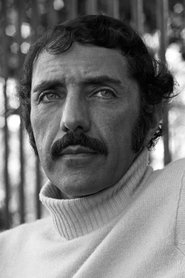
William Peter Blatty is the most important creative collaborator in Friedkin's horror career. Blatty wrote the novel The Exorcist, adapted it for the screen and produced the film, giving the project a theological and emotional structure that Friedkin could approach with unusual seriousness. Blatty's story is not simply about a demon attacking a child. It is also about faith under pressure, parental desperation, guilt and the possibility that evil may reveal itself most forcefully to people who are least prepared to believe in it.
Friedkin and Blatty were not identical in temperament or interpretation, but that tension helped create the finished film. Blatty brought a strong concern with faith and the possibility of transcendent good, while Friedkin concentrated on making events feel immediate and observable. The combination prevents The Exorcist from becoming either a purely theological argument or a collection of supernatural shocks. The spiritual questions matter because the physical horror feels real, and the physical horror becomes more disturbing because the film insists that the characters must decide what it means.
Linda Blair and the Transformation of Regan
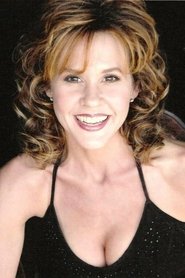
Linda Blair gives The Exorcist its most unforgettable human image as Regan MacNeil. The role requires the audience to recognize a normal child before the process of possession makes that familiarity progressively unstable. Friedkin establishes Regan through ordinary domestic behavior and her relationship with Chris, allowing the later changes in voice, movement, appearance and language to feel like an invasion of a specific personality rather than the arrival of an abstract monster.
The possessed Regan seen on screen is created through the interaction of Blair's performance with makeup, mechanical effects, vocal work and editing, but the child performer remains the physical center of the illusion. Friedkin repeatedly places the camera close enough that the transformation cannot be dismissed as something occurring safely in the distance. Regan's face, body and bedroom become the primary territory of the horror. The audience watches a familiar human form remain visible while the identity apparently occupying that form becomes increasingly uncertain.
Dick Smith and the Physical Face of Possession
Makeup artist Dick Smith was essential to Friedkin's attempt to make possession physically convincing. Regan's deterioration needed to appear severe enough to suggest that something impossible was occurring without turning the character into a conventional fantasy creature. Smith developed stages of damage, discoloration, wounds and facial transformation that allowed the possession to progress visually throughout the film. The makeup works because it remains attached to a recognizable human face even when that face begins to look profoundly wrong.
Smith also transformed Max von Sydow, who was much younger than Father Merrin, into an elderly priest whose face already suggests years of confrontation with death and spiritual exhaustion. That transformation is important to the film's dramatic balance. Merrin enters relatively late, yet the audience needs to believe immediately that this man carries a history Karras does not possess. Smith's aging work helps give von Sydow the physical past the screenplay requires before the character has explained very much about himself.
Jason Miller and the Crisis of Father Karras
Jason Miller's Father Damien Karras is the emotional and intellectual center through which Friedkin connects psychological realism with religious horror. Karras is a Jesuit priest and psychiatrist struggling with guilt over his mother's death and with the weakening of his own faith. This makes him the ideal character to investigate Regan because he understands both the religious language of possession and the modern psychological explanations that might account for apparently supernatural behavior.
Friedkin does not allow Karras to become an uncomplicated man of faith waiting for an opportunity to confront the Devil. His skepticism is essential. He asks for evidence, studies Regan's behavior and initially resists conclusions that would require him to abandon ordinary explanations. The eventual decision to participate in the exorcism therefore carries more weight because Karras reaches it through doubt rather than certainty. Miller's restrained performance keeps the film grounded even when the manifestations surrounding Regan become increasingly extreme.
Father Merrin and the Recognition of Evil
Max von Sydow's Father Merrin provides the opposite form of knowledge. Where Karras spends much of the film asking whether possession is real, Merrin arrives already understanding the kind of confrontation he has entered. Friedkin introduces him earlier at an archaeological site in Iraq, where ancient objects and the image of Pazuzu connect the modern events in Washington with something much older than the MacNeil family.
The contrast between the priests gives the exorcism its dramatic structure. Merrin possesses belief but a physically weakened body; Karras possesses physical strength but damaged faith. Neither man alone is presented as completely sufficient. Friedkin uses their differences to prevent the climax from becoming a simple supernatural action sequence. The ritual is simultaneously a confrontation with the demon, a test of Karras's belief and an ordeal for two men whose vulnerabilities are very different.
The Bedroom as a Horror Environment
One of Friedkin's greatest achievements in The Exorcist is turning Regan's bedroom into one of horror cinema's defining spaces. It begins as an ordinary room inside an affluent Georgetown home and gradually becomes physically separated from the rest of the house. The temperature drops, the bed moves, voices emerge from Regan and visitors enter knowing that normal rules may stop applying as soon as the door closes behind them.
The room functions almost like a laboratory in which every assumption is tested and destroyed. Doctors cannot explain what happened there. Karras initially enters looking for signs of fraud or psychiatric illness. Merrin finally enters knowing that explanation is no longer the immediate purpose. Friedkin repeatedly uses the doorway between the hallway and bedroom to mark a transition from recognizable domestic reality into a concentrated zone of supernatural violence.
Sound, Silence and the Refusal of Constant Music
Friedkin's use of sound contributes enormously to the film's realism. The soundtrack contains voices, breathing, mechanical noise, violent impacts and moments of unnerving quiet without relying upon a continuous conventional horror score to tell the audience when to become frightened. Familiar music associated with the film, including Mike Oldfield's Tubular Bells, appears selectively rather than functioning as an uninterrupted musical explanation of the action.
This restraint makes individual sounds inside Regan's room more disturbing. A change in voice or an unexpected noise becomes an event because the soundtrack has not been saturated with constant musical warnings. Friedkin treats sound almost like physical evidence, another element the characters must interpret while attempting to determine what is happening around them.
The Exorcist as Modern Religious Horror
The extraordinary success of The Exorcist transformed possession into one of modern horror's most durable structures. Later films repeatedly adopted combinations already central to Friedkin's approach: a child or vulnerable person displaying impossible behavior, medical professionals failing to provide adequate explanations, priests or religious specialists entering only after rational systems have been exhausted, and domestic spaces becoming battlegrounds between ordinary family life and supernatural threat.
Its influence extends beyond imitation of specific scenes. Friedkin demonstrated that religious horror could become more frightening when treated with the visual seriousness of contemporary drama. The demon did not need a castle, ancient village or visibly fantastical world. Possession could occur in a modern bedroom surrounded by telephones, hospitals and professional institutions. That relocation made supernatural evil feel frighteningly compatible with ordinary life.
The Guardian and Domestic Folk Horror
Friedkin returned directly to supernatural horror with The Guardian in 1990. The story follows a young family that hires a nanny whose connection with an ancient tree gradually reveals a much darker system of sacrifice and supernatural allegiance. The film moves away from the Catholic framework of The Exorcist toward pagan and nature-based mythology, but it preserves Friedkin's interest in allowing horror to enter spaces associated with safety and trust.
The nanny is frightening because she is admitted voluntarily into the home. The threat does not break through a window or emerge from a distant wilderness; it enters through an ordinary relationship of dependence between parents and caregiver. Friedkin then connects that domestic vulnerability with an older supernatural force rooted in the natural environment. The resulting mixture of family anxiety, bodily violence and pagan imagery makes the film an unusual bridge between studio supernatural horror and themes that would later become increasingly visible in modern folk and eco-horror.
Bug and the Horror of Shared Paranoia
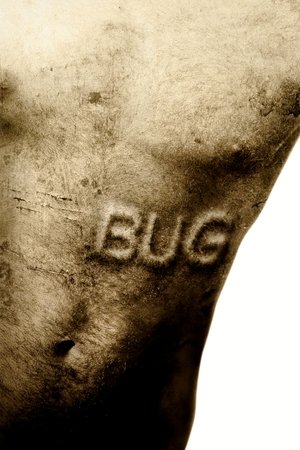
Bug brought Friedkin back to horror in a radically different form. Adapted from Tracy Letts's play, the film centers on Agnes White, a lonely woman living in a rundown motel, and Peter Evans, a quiet stranger who gradually reveals an elaborate belief that insects and government experimentation are operating inside and around his body. What begins as an uneasy relationship becomes a closed psychological system in which Peter's explanations increasingly reorganize the reality shared by both characters.
Friedkin avoids giving the audience a comfortable external authority capable of explaining every event. The motel room changes as Agnes and Peter change. Ordinary surfaces become evidence, small sensations become signs of infestation and attempts to protect themselves produce an increasingly sealed environment. The horror lies in watching an interpretation of reality become self-sustaining. Every new piece of information can be absorbed into the theory, meaning contradiction no longer has the power to disprove anything.
Tracy Letts and the Architecture of Paranoia
Tracy Letts wrote both the stage play and screenplay of Bug, providing Friedkin with material built around language, confinement and psychological escalation rather than conventional supernatural mechanics. The story gives paranoia a dramatic structure: Peter introduces an explanation, Agnes begins finding reasons it might be true, and the two characters gradually create an enclosed worldview that becomes more powerful because they reinforce one another.
Friedkin recognized that the strength of the material depended upon preserving that claustrophobic pressure. Rather than opening the story into a conventional conspiracy thriller, he keeps returning to the motel room and allows speech itself to become dangerous. The characters talk their environment into a different reality. By the final stages, the physical transformation of the room mirrors the complete transformation of their shared belief.
Michael Shannon and Peter Evans
Michael Shannon is fundamental to Bug because he had already played Peter Evans on stage and understood the character's escalating paranoia before Friedkin brought the story to film. Friedkin specifically wanted to retain Shannon rather than replace him with a more conventional movie star, recognizing that Peter's intensity needed to grow from an internally coherent performance rather than from obvious villainy.
Shannon begins quietly enough that Peter can appear fragile, socially awkward and even protective. The danger develops as his certainty becomes more elaborate. He does not behave like a man inventing lies for Agnes; he behaves like someone desperately explaining a reality he already experiences as undeniable. That conviction is what makes the relationship frightening. Agnes is not simply deceived by Peter. She becomes capable of inhabiting the same system of belief because Shannon makes Peter's fear feel emotionally authentic even when the conclusions become increasingly extreme.
Ashley Judd and the Contagion of Belief
Ashley Judd's Agnes gives Bug its necessary second half. The film would be far simpler if Peter remained an isolated paranoid figure observed from outside. Agnes transforms the story because she is emotionally vulnerable enough to find connection in Peter and eventually begins participating in his interpretation of events. Friedkin stages their relationship as a form of contagion in which intimacy makes belief transferable.
As the film progresses, Agnes does not merely agree with Peter. She begins contributing to the system herself, finding patterns and explanations that deepen the shared paranoia. Friedkin therefore creates psychological horror from collaboration. Two people can build a reality strong enough to overpower evidence because each person becomes confirmation for the other.
From Demonic Possession to Psychological Possession
The Exorcist and Bug appear radically different, yet they form a revealing pair inside Friedkin's horror career. In the first film, characters resist belief in the supernatural until accumulating evidence makes disbelief increasingly difficult. In Bug, characters move in the opposite direction, constructing a belief system so complete that almost anything can become evidence supporting it. Both films are therefore concerned with the terrifying moment when a person's understanding of reality changes and cannot easily be restored.
Friedkin does not treat belief as an abstract philosophical issue. It changes bodies, rooms and relationships. Regan's possession transforms a family and forces Karras to confront his faith. Peter's paranoia transforms a motel room and pulls Agnes into a mutually reinforcing nightmare. The mechanisms differ, but Friedkin repeatedly asks what happens when people encounter an explanation powerful enough to reorganize everything they previously believed was real.
William Friedkin's Horror Legacy
William Friedkin's contribution to horror rests primarily on three very different approaches to fear. The Exorcist makes supernatural possession terrifying by surrounding it with documentary-like realism and institutional skepticism. The Guardian moves ancient supernatural mythology into the modern family home and turns trust itself into an entry point for danger. Bug removes the need for a confirmed external monster and allows paranoia, intimacy and interpretation to become the mechanisms through which reality collapses.
The collaborators surrounding these films were crucial. William Peter Blatty supplied the theological and narrative foundation that Friedkin transformed into The Exorcist. Linda Blair gave possession a recognizable human body, Jason Miller gave the film its crisis of faith and Dick Smith made supernatural corruption physically convincing. Decades later, Tracy Letts provided the psychological architecture of Bug, while Michael Shannon gave its paranoia a human intensity Friedkin considered inseparable from the character.
Friedkin's horror ultimately depends less upon monsters than upon certainty. The frightening moment arrives when a character becomes certain that the accepted explanation is wrong, whether that means recognizing a demon or believing that invisible organisms have invaded the body. His films then remove every stable position from which the audience might safely judge that certainty. That is why his relatively small horror filmography continues to feel so powerful: Friedkin did not merely ask viewers to look at frightening things. He asked them to experience the collapse of the systems normally used to decide what is real.
Photos (8)
Images: TMDB
Selected Work
Notable Horror Collaborators
Notable collaborators and creative partners throughout William Friedkin's horror career.
 William Peter Blatty
Defining Horror Writer & Producer
Blatty wrote the novel and screenplay of The Exorcist and produced the film, providing the theological and dramatic foundation for Friedkin's defining horror work.
 Linda Blair
Defining Horror Lead
Blair played Regan MacNeil in The Exorcist, giving Friedkin's possession horror its central human body and one of the most recognizable performances in the genre.
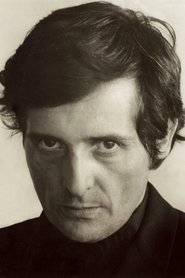 Jason Miller
Defining Horror Lead
Miller played Father Damien Karras in The Exorcist, grounding Friedkin's supernatural horror in psychological skepticism, guilt and a crisis of faith.
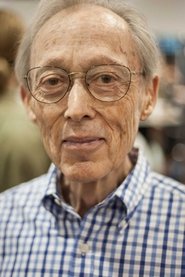 Dick Smith
Defining Horror Makeup Collaborator
Smith created the makeup transformations that made Regan's possession physically convincing and aged Max von Sydow into Father Merrin for The Exorcist.
William Friedkin Horror Movies
Directing (8 credits)
2006
1990
1989
1987
1985
1973
1962
Acting (4 credits)
2024
2019
2018
1998
Writing (3 credits)
2018
1990
1987
Production (1 credits)
1987
Other Crew (1 credits)
1998