


2026
Stephen King
Horror Writer · Biography · Horror Filmography · Family · Collaborators · Credits
Horror subgenres & themes
Most represented across this person's horror filmography:
FOLK
• SLASHER
• HORROR ANTHOLOGY
• ANIMAL
Biography
Stephen King and modern horror fiction
Stephen King became one of the central figures in modern horror through a body of fiction that brought supernatural and psychological terror into recognizable American settings and gave unusual narrative weight to families, communities and everyday social life. Since the publication of Carrie in 1974, his novels and short stories have reached an audience far beyond specialist horror readership and have supplied material for an exceptionally large number of film and television adaptations. His work also crosses into crime fiction, fantasy, science fiction and non-supernatural drama, yet horror remains fundamental to his literary identity and to his influence on popular culture.
King’s contribution to the genre developed from an extensive knowledge of earlier horror literature, radio, comics and cinema. He has written directly about writers including Shirley Jackson, Richard Matheson, H. P. Lovecraft and Ray Bradbury and has repeatedly acknowledged the importance of popular storytelling traditions that preceded him. His own fiction adapted those traditions to the social geography of late twentieth-century America. Schools, hotels, small towns, working-class homes, highways and hospitals became environments in which supernatural events could develop alongside familiar pressures involving money, marriage, addiction, childhood and work. This attention to ordinary life became an important part of his influence on later horror writers and filmmakers.
Early life, education and the beginning of a writing career
Stephen Edwin King was born in Portland, Maine, on September 21, 1947. His father left the family when King was young, and his mother, Nellie Ruth Pillsbury King, raised Stephen and his brother David while the family lived in several locations before settling in Maine. King developed an interest in horror, fantasy and popular fiction during childhood and began writing at an early age. He studied English at the University of Maine, where he also contributed to the student newspaper and met Tabitha Spruce, whom he married in 1971.
After graduation King held several jobs and later taught English at Hampden Academy while continuing to write fiction during evenings and weekends. He had already begun selling short stories professionally before his first novel was accepted. The years preceding commercial success were financially difficult and later informed his detailed treatment of households in which employment, debt and economic insecurity shape daily behavior. Teachers, writers, mechanics and other working people would become common protagonists because King wrote about social environments he understood closely rather than separating horror from ordinary economic life.
Carrie and the breakthrough of 1974
Doubleday accepted Carrie for publication in 1973, and the novel appeared the following year. Its success allowed King to leave teaching and write full-time. The story follows Carrie White, a teenager subjected to severe bullying at school and religious abuse at home while developing telekinetic abilities. King organized the novel partly through reports, articles and retrospective testimony, giving the disaster surrounding Carrie the form of an event already being investigated and interpreted by a larger society.
The supernatural premise is closely tied to adolescent experience. Carrie’s lack of knowledge about menstruation, her mother’s religious extremism and the cruelty of her classmates establish the social circumstances in which telekinesis becomes dangerous. The novel demonstrated a method King would use repeatedly: supernatural ability or threat develops inside an extensively described human environment. Brian De Palma’s 1976 adaptation, starring Sissy Spacek and Piper Laurie, gave the story an additional cultural life and helped establish King’s fiction as a major source for American horror cinema.
’Salem’s Lot and the American small town
King’s second published novel, ’Salem’s Lot, brought vampire fiction into a contemporary Maine town. The supernatural threat develops gradually through the disappearance and transformation of individual residents, while the novel devotes considerable attention to the relationships and routines of Jerusalem’s Lot before the scale of the invasion becomes clear. This community-based structure became one of the most recognizable features of King’s later fiction.
The novel draws openly on the vampire tradition associated with Bram Stoker while moving the setting away from nineteenth-century Europe. Its importance lies partly in the level of detail given to the town itself. Residents have separate histories and conflicts, so the spread of vampirism can be understood as the deterioration of an existing community. The 1979 television adaptation directed by Tobe Hooper became another important early translation of King’s work to the screen and introduced a generation of television viewers to the story.
The Shining, family violence and addiction
The Shining, published in 1977, established several themes that remained important throughout King’s career. Jack Torrance accepts work as winter caretaker of the isolated Overlook Hotel while attempting to recover from alcoholism and professional failure. His wife Wendy and son Danny accompany him, and Danny’s psychic ability makes him particularly receptive to the hotel’s supernatural history. The building gradually exploits tensions that already exist within the family, especially Jack’s addiction, resentment and previous violence.
King’s treatment of Jack gives the novel a strong domestic foundation. The supernatural events matter because the Torrance family enters the Overlook with existing problems that isolation makes more dangerous. Danny’s psychic ability also develops King’s recurring interest in children who perceive threats that adults cannot easily understand or accept. Stanley Kubrick’s 1980 film became one of the most influential horror films of its period, although King publicly disagreed with several of its major choices, particularly the treatment of Jack and Wendy. Mick Garris later directed a 1997 television adaptation written by King that followed the novel more closely.
The Stand and horror on an apocalyptic scale
The Stand, first published in 1978 and later restored in an expanded edition, demonstrated King’s ability to combine horror with large-scale speculative fiction. A weaponized strain of influenza escapes containment and destroys most of the population, leaving survivors to rebuild social structures while increasingly supernatural forces gather around Mother Abagail and Randall Flagg. The novel moves across a large group of characters rather than organizing the apocalypse around one protagonist.
The early sections devote considerable attention to the practical collapse produced by mass death. Hospitals fail, transportation becomes dangerous and ordinary communication disappears. King then shifts toward the formation of new communities and the moral decisions involved in rebuilding after catastrophe. Randall Flagg later became connected with other parts of King’s fiction, especially The Dark Tower, making The Stand an important component of the interconnected mythology that developed across his career.
Night Shift and King’s importance to short horror fiction
The 1978 collection Night Shift gathered stories written across the previous decade and established the short form as a major component of King’s career. The collection includes vampire stories, creature horror, psychological terror and premises built around ordinary objects or workplaces. Stories such as Jerusalem’s Lot, Graveyard Shift, Children of the Corn and The Boogeyman later generated film adaptations, while others remained important examples of his ability to build complete horror narratives within relatively limited space.
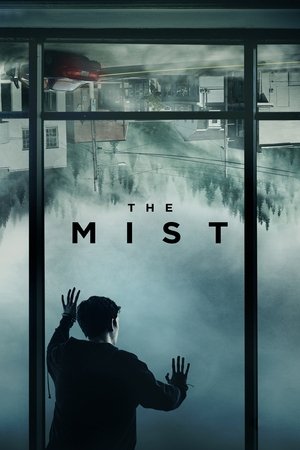
Later collections including Skeleton Crew, Nightmares & Dreamscapes, Everything’s Eventual and You Like It Darker continued this work. Short fiction allowed King to experiment with concepts that did not require the social scale of his novels. It also became particularly important to cinema because filmmakers could expand compact premises into feature-length narratives. The Mist, 1408, The Monkey and many other adaptations emerged from stories or novellas rather than novels.
The Dead Zone and the burden of supernatural knowledge
The Dead Zone in 1979 follows Johnny Smith, who awakens from a coma with an ability to perceive information about people through physical contact. King uses the psychic premise to create moral problems rather than conventional superhero empowerment. Johnny’s knowledge isolates him socially and eventually confronts him with a vision involving politician Greg Stillson and a possible future catastrophe.
David Cronenberg’s 1983 film adaptation concentrated the novel into a restrained supernatural drama starring Christopher Walken. The material suited Cronenberg because the psychic ability functions as a condition imposed on the protagonist rather than a source of uncomplicated power. The story reflects a recurring pattern in King’s work in which extraordinary perception creates responsibility and personal cost.
Firestarter, government power and children with dangerous abilities
Firestarter returned to the idea of a child possessing extraordinary abilities, this time within a story about government experimentation and institutional control. Charlie McGee can create fire through psychokinesis, while her parents developed psychic abilities following participation in an experimental drug program. The Shop, the government agency responsible for the experiment, attempts to capture Charlie and study or weaponize her ability.
The novel differs from Carrie because Charlie’s family understands her power and attempts to protect her. Institutional authority becomes the principal danger surrounding the supernatural child. This interest in government and scientific systems also appears elsewhere in King’s fiction and contributes to the broader political background of works such as The Stand and several Richard Bachman novels.
Cujo, Christine and horror without a distant supernatural world
During the early 1980s King continued finding horror within familiar objects and situations. Cujo centers on a Saint Bernard infected with rabies and requires no supernatural explanation for its principal threat. Much of the novel’s tension develops from a mother and child trapped inside a failing car while the diseased dog prevents them from leaving. Domestic problems and mechanical failures contribute directly to the danger.
Christine, published in 1983, takes the opposite approach by giving supernatural qualities to an ordinary consumer object. The 1958 Plymouth Fury acquired by Arnie Cunningham gradually affects his personality and relationships. John Carpenter directed the film adaptation the same year. Together, Cujo and Christine illustrate King’s ability to work with both realistic and supernatural horror while keeping the threat close to recognizable American life.
Pet Sematary and the treatment of grief
Pet Sematary, published in 1983, became one of King’s most severe treatments of death and bereavement. Dr. Louis Creed moves with his family to rural Maine and discovers a burial ground capable of returning the dead in altered form. The danger of the site is established before Louis experiences the loss that eventually drives him to use it despite knowing the consequences.
The supernatural mechanism is effective because the novel concentrates on the psychology of bereavement. Louis understands that resurrection has already produced disturbing results, yet grief changes the value he places on that knowledge. King has discussed the book as material that disturbed him because of its treatment of childhood death and parental fear. Mary Lambert directed the 1989 adaptation from a screenplay by King, while a new film version appeared in 2019.
It, childhood and the history of Derry
It, published in 1986, is one of King’s largest and most influential horror novels. The narrative alternates between the childhood and adulthood of a group of friends who confront an ancient entity inhabiting Derry, Maine. The creature most frequently appears as Pennywise the Dancing Clown but takes many forms derived from the fears of individual victims. The structure connects supernatural horror with childhood memory and the long-term effects of traumatic experience.
Derry is developed through extensive historical sections describing fires, murders and episodes of racial and communal violence. The town therefore acquires a history independent of the main characters. King uses the recurring cycle of Pennywise to connect personal fear with events extending across generations. The Losers’ Club also became one of his best-known examples of childhood friendship functioning as a source of resistance to both supernatural and human violence.
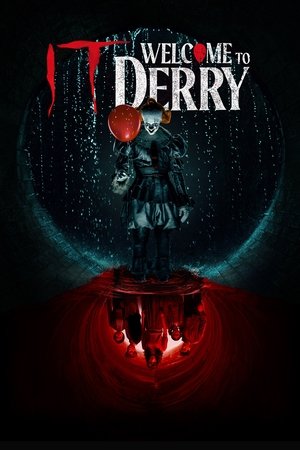
The story has had an especially large screen history. Tommy Lee Wallace directed the 1990 television adaptation with Tim Curry as Pennywise. Andy Muschietti later directed It in 2017 and It Chapter Two in 2019, with Bill Skarsgård in the role. The later television project IT: Welcome to Derry expanded the screen mythology into earlier periods of the town’s history, demonstrating the amount of narrative material contained in King’s fictional geography.
Misery and the relationship between writer and reader
Misery in 1987 removes the supernatural entirely. Novelist Paul Sheldon is rescued after a car accident by Annie Wilkes, a former nurse who describes herself as his greatest fan. Annie imprisons Paul after discovering that he has killed the central character of his popular romance series and forces him to write another novel restoring the character to life. The story turns the relationship between writer and audience into physical captivity.
The novel also reflects King’s recurring interest in writing as labor. Paul must produce fiction under conditions of pain, surveillance and coercion while recognizing that the act of writing remains psychologically important to him. Rob Reiner’s 1990 adaptation concentrated the story around James Caan and Kathy Bates, whose performance as Annie earned the Academy Award for Best Actress. The film became one of the most critically successful adaptations of King’s work.
Richard Bachman and a parallel body of darker fiction
King published several novels under the name Richard Bachman, initially allowing him to release books more frequently and to test whether work could find an audience without his established name. The Bachman novels include Rage, The Long Walk, Roadwork, The Running Man and Thinner. They frequently emphasize social pressure, authoritarian systems and economic desperation more directly than his supernatural horror novels.
The Long Walk is particularly important within this body of work. Young participants enter a state-controlled walking competition in which falling below the required pace ultimately results in death. The premise uses speculative authoritarianism rather than supernatural horror and demonstrates how early King was interested in public spectacle and institutional violence. The Bachman identity was eventually exposed, after which King continued occasionally to publish work connected with the pseudonym.
Addiction, recovery and autobiographical context
Alcohol and drug addiction affected King during a substantial period of his career. His family and friends intervened in the late 1980s, and he subsequently entered recovery. King has discussed this history publicly, particularly in On Writing, and the subject is relevant because addiction appears repeatedly in his fiction before and after his own recovery. Jack Torrance in The Shining is the most famous example, while later characters including the adult Danny Torrance in Doctor Sleep address recovery more explicitly.
King’s treatment of addiction usually concentrates on its effect on relationships as well as on the person using alcohol or drugs. Family members learn to respond to changes in behavior, while shame and denial complicate attempts at recovery. This autobiographical context should not be used to reduce fictional characters directly to King’s own life, but his published memoir makes clear that addiction and sobriety became important parts of his personal experience and later writing.
The Dark Tower and the interconnected King universe
The Dark Tower series occupied King for decades and became the most extensive expression of connections among his fictional worlds. Beginning with The Gunslinger, the series follows Roland Deschain through a setting combining western, fantasy, science fiction and horror. Later volumes establish links with characters and events from books including The Stand, ’Salem’s Lot and Hearts in Atlantis.
These connections encouraged readers to view recurring names, locations and supernatural concepts across King’s bibliography as parts of a broader fictional structure. The approach developed gradually rather than through a rigid franchise plan established at the beginning of his career. As a result, individual novels generally remain readable independently while long-term readers can recognize additional relationships among them.
Danse Macabre and King as a critic of horror
King has also contributed directly to horror criticism. Danse Macabre, published in 1981, surveys horror across literature, film, radio and television and discusses the cultural conditions that shape particular fears. The book is valuable because it documents King’s own understanding of the traditions from which his fiction developed and identifies writers and filmmakers he regarded as important.
His criticism and public recommendations have had practical effects on genre readership. King has frequently written introductions, blurbs and essays supporting other writers, and his popularity gives such endorsements unusual visibility. His role within horror culture therefore extends beyond his own fiction into the circulation and discussion of work by earlier and contemporary authors.
On Writing and the professional practice of authorship
On Writing: A Memoir of the Craft, published in 2000, combines autobiography with practical discussion of writing. King describes childhood, early publication, addiction, recovery and the 1999 accident in which he was struck by a van while walking near his Maine home. He also explains his approach to drafting, revision, reading and daily work habits.
The book became influential far beyond horror because it presents writing as sustained professional practice. Its autobiographical sections provide important context for King’s career without turning the book into a conventional memoir. The discussion of craft also helps explain his extraordinary productivity and the importance he places on narrative clarity and character observation.
Stephen King and film adaptation
King’s relationship with cinema began almost immediately after his success as a novelist and developed into one of the largest bodies of screen adaptation associated with a modern writer. Different filmmakers have approached the material in markedly different ways. Brian De Palma emphasized visual tragedy in Carrie; Stanley Kubrick substantially reinterpreted The Shining; David Cronenberg concentrated The Dead Zone around Johnny Smith’s personal burden; John Carpenter approached Christine as a supernatural automobile story; Rob Reiner focused Misery around performance and confinement; Frank Darabont gave The Mist a famously severe cinematic ending.
The variety of these adaptations reflects the breadth of the source material. King’s stories frequently contain enough character development and social detail for filmmakers to emphasize different aspects without following the same visual model. His screen history also includes unsuccessful productions and adaptations he disliked, yet the continued return to the same novels demonstrates that the literary works retain value independently of any single film version.
George A. Romero and Creepshow
George A. Romero became one of King’s closest filmmaking collaborators and friends. Their best-known direct collaboration is Creepshow in 1982, written by King specifically for the screen and directed by Romero as an anthology inspired by EC horror comics. King also appears as Jordy Verrill in one of the segments. The project allowed both filmmakers to work openly with the visual and narrative traditions of comic-book horror rather than adapting an existing King novel.
Romero later directed The Dark Half, and he was involved with Creepshow 2 as screenwriter from stories by King. Their relationship connected two major strands of modern American horror: King’s literary success and Romero’s independent filmmaking. Romero at various times developed other King projects that did not reach production, further demonstrating the extent of their professional relationship.
Mick Garris and long-form television adaptations
Mick Garris developed the most sustained direct screen collaboration with King. Their work includes Sleepwalkers, an original screenplay by King, followed by major television adaptations such as The Stand and The Shining. Garris later directed Riding the Bullet, Desperation and Bag of Bones. Television miniseries were particularly useful for King’s longer novels because they allowed considerably more narrative space than conventional feature films.
Garris’s adaptations generally maintained a closer relationship with King’s characterization and narrative structure than many earlier film versions. The 1997 Shining miniseries is the clearest example because King wrote the teleplay and used the project to restore elements from the novel that had been changed substantially in Kubrick’s film.
Later horror fiction and continuing screen adaptation
King remained highly productive into the twenty-first century. Works including Doctor Sleep, Revival, The Outsider, Later and the stories collected in You Like It Darker show continued engagement with supernatural and horror material alongside crime fiction and other genres. Doctor Sleep is especially significant because it returns to Danny Torrance as an adult and addresses both psychic ability and recovery from alcoholism decades after The Shining.
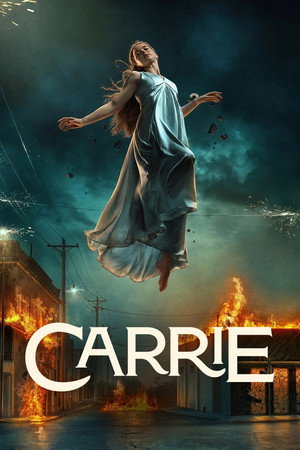
Screen adaptations also continued at a rapid rate. Mike Flanagan directed Gerald’s Game and Doctor Sleep before developing a television adaptation of Carrie. Andy Muschietti directed the two-part theatrical adaptation of It and remained involved with IT: Welcome to Derry. Other recent productions have returned to short stories and less frequently adapted novels, confirming that King’s catalogue continues to function as an active source for contemporary horror production rather than solely as a body of work associated with the 1970s and 1980s.
Recognition and influence on horror literature
King’s commercial success was accompanied gradually by broader institutional recognition. The National Book Foundation awarded him its Medal for Distinguished Contribution to American Letters in 2003, and he received the National Medal of Arts in 2014. These honors reflected a significant change in the critical position occupied by a writer who had long been identified strongly with popular horror. His fiction has also generated a large academic literature examining subjects including class, childhood, masculinity, addiction and the representation of American communities.
His influence on horror is difficult to isolate to one stylistic feature because it operates through publishing, film, television and popular culture. Later writers inherited his use of detailed small-town communities and ordinary domestic settings, while filmmakers repeatedly adapted his treatment of childhood groups, supernatural contamination and family breakdown. His public advocacy for horror and fantasy writers also helped connect large mainstream audiences with authors who might otherwise have remained within specialist readerships.
Stephen King’s historical position in horror
King’s place in horror history rests on the scale and continuity of his work. He entered the field during the 1970s, became one of the world’s most widely read novelists and continued publishing substantial new fiction for more than five decades. During that period his characters and locations entered popular culture through both books and adaptations, while his fiction remained closely associated with the genre even when he worked extensively in crime, fantasy and non-supernatural drama.
His most important contribution is the sustained integration of horror with detailed social and domestic life. Supernatural events in King’s fiction usually affect characters who already possess work histories, family conflicts and recognizable communities. That method gave modern horror a particularly expansive form in which a monster or haunting could occupy hundreds of pages without displacing the ordinary life surrounding it. The continued publication, adaptation and critical study of his work has made that approach part of the established language of contemporary horror fiction.
Photos (5)
Images: TMDB
Selected Work
Notable Horror Collaborators
Notable collaborators and creative partners throughout Stephen King's horror career.
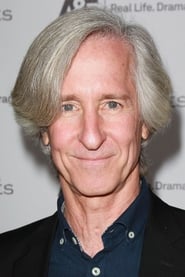 Mick Garris
Writer / Director Collaborator
Garris developed the longest sustained screen collaboration with King. Their horror work includes Sleepwalkers, The Stand, The Shining, Riding the Bullet, Desperation and Bag of Bones, covering original screenwriting, feature adaptation and long-form television.
 George A. Romero
Writer / Director Collaborator
Romero and King worked together on Creepshow, Creepshow 2 and The Dark Half and maintained a long personal and professional relationship. Creepshow was written directly for the screen by King and became their most important joint contribution to American horror cinema.
 Richard P. Rubinstein
Writer / Producer Collaborator
Rubinstein participated in several major screen productions based on King’s work, including projects connected with Creepshow and long-form television adaptations. His producing career formed an important link between King’s fiction, George A. Romero and the expansion of King adaptations for television.
CB
Craig R. Baxley
Writer / Director Collaborator
Baxley directed Storm of the Century, Rose Red and Kingdom Hospital from material written or developed directly by King. The three television productions gave King substantial room to create supernatural narratives specifically for serialized screen storytelling.
 Mike Flanagan
Author / Director Collaborator
Flanagan became a major contemporary interpreter of King through Gerald’s Game, Doctor Sleep and the later television adaptation of Carrie. His work has concentrated strongly on character, trauma and recovery while adapting material from different periods of King’s career.
 Andy Muschietti
Author / Director-Producer Collaborator
Muschietti directed It and It Chapter Two and remained involved in the expansion of Derry through IT: Welcome to Derry. Their shared screen work brought one of King’s largest horror novels to a new theatrical and television audience.
Stephen King Horror Movies
Writing (304 credits)
2026
2026
2025
2025
2025
2025
2025
2025
2025
2024
2024
2024
2024
2024
2024
2023
2023
2023
2023
2023
2023
2023
2023
2023
2023
2023
2023
2023
2023
2023
2023
2022
2022
2022
2022
2022
2022
2022
2022
2022
2021
2021
2021
2021
2021
2021
2021
2021
2021
2021
2020
2020
2020
2020
2020
2020
2020
2020
2020
2020
2019
2019
2019
2019
2019
2019
2019
2019
2019
2019
2019
2019
2019
2019
2019
2019
2019
2019
2019
2019
2019
2019
2018
2018
2018
2018
2018
2018
2018
2018
2018
2018
2018
2018
2018
2018
2017
2017
2017
2017
2017
2017
2017
2017
2017
2017
2017
2017
2017
2017
2016
2016
2016
2016
2016
2016
2016
2016
2016
2016
2016
2016
2016
2015
2015
2015
2015
2015
2015
2015
2015
2015
2014
2014
2014
2014
2014
2014
2014
2014
2013
2013
2013
2013
2013
2013
2013
2013
2013
2013
2013
2013
2013
2013
2013
2013
2013
2013
2013
2012
2012
2012
2012
2012
2012
2012
2012
2012
2012
2012
2012
2012
2012
2012
2012
2011
2011
2011
2011
2011
2011
2011
2011
2010
2010
2010
2010
2010
2010
2010
2010
2010
2010
2010
2010
2010
2010
2010
2010
2009
2009
2009
2009
2009
2009
2008
2008
2008
2008
2007
2007
2007
2007
2007
2007
2007
2006
2006
2006
2006
2006
2006
2005
2005
2005
2005
2005
2004
2004
2004
2004
2004
2004
2004
2003
2003
2003
2003
2002
2002
2002
2002
2001
2001
2001
2000
1999
1999
1999
1998
1998
1997
1997
1997
1997
1997
1996
1996
1996
1996
1996
1995
1995
1995
1995
1994
1994
1993
1993
1993
1992
1992
1992
1992
1991
1991
1990
1990
1990
1990
1989
1988
1987
1987
1987
1986
1985
1985
1985
1985
1985
1984
1984
1984
1984
1983
1983
1983
1983
1982
1982
1980
1979
1976
Acting (23 credits)
2025
2021
2019
2018
2013
2008
2005
2004
2002
2002
1999
1997
1996
1995
1995
1994
1992
1991
1991
1989
1987
1986
1982
Creator (11 credits)
2011
2006
2004
2002
1999
1995
1994
1993
1991
1990
1984
Production (15 credits)
2026
2025
2024
2022
2019
2018
2006
2004
2004
2003
2002
1999
1997
1994
1991
Other Crew (4 credits)
2023
2007
2002
1979
Directing (1 credits)
1986