




2009
Bruno Mattei
Horror Director · Biography · Horror Filmography · Collaborators · Credits
Horror subgenres & themes
Biography
Bruno Mattei: Zombies, Rats and the Extreme Edge of Italian Horror
Bruno Mattei occupies a singular position in Italian horror cinema. His films were rarely prestigious productions, and he never cultivated the kind of immediately recognizable visual authorship associated with filmmakers such as Dario Argento, Mario Bava or Lucio Fulci. Instead, Mattei built his reputation through speed, adaptability and an extraordinary willingness to work inside whatever form of exploitation cinema could be produced with the resources available. Within horror, that approach produced zombie outbreaks, satanic convents, killer rats, cannibal nightmares, grotesque prisons and late-career digital-video films that continued the traditions of Italian exploitation long after the industrial system that had created them had largely disappeared.
Mattei's horror career is therefore inseparable from the economics of low-budget filmmaking. He repeatedly worked with limited schedules, recycled materials, international casts, pseudonyms and collaborators who could move quickly between projects. What could appear from the outside as opportunism became a consistent filmmaking method. His movies openly absorbed successful trends, sometimes borrowing structures, imagery or even footage from better financed productions, yet the resulting films developed a personality of their own through excess, abrupt tonal changes, practical gore and a refusal to behave with conventional good taste. For horror audiences, that combination transformed Mattei from a marginal exploitation craftsman into a cult figure.
From Editing to Exploitation Filmmaking
Born in Rome in 1931, Mattei entered the Italian film industry through technical work and editing before establishing himself as a director. That background remained important throughout his career. Even when his productions were chaotic or severely constrained by budget, Mattei understood how films could be assembled in the editing room and how existing material might be repurposed to create scale that had not actually been photographed for the production. This pragmatism became one of the defining characteristics of his later genre work.
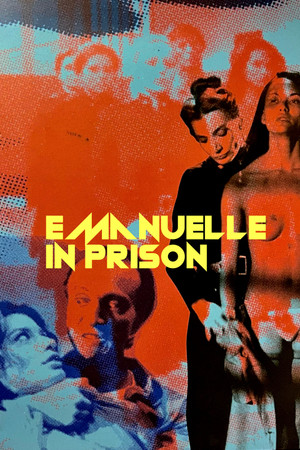
During the 1970s he directed material across erotic cinema, mondo-style productions, Nazisploitation and other commercial forms, frequently using pseudonyms. The practice was common within Italian genre cinema, particularly when producers wanted films to appear more international, but Mattei used an unusually large number of aliases. The name most strongly associated with his horror work became Vincent Dawn, adopted for Hell of the Living Dead and retained on several later productions. The pseudonym became so closely identified with Mattei that it eventually functioned almost as a second directorial identity.
His movement into horror came during a period when Italian producers were rapidly responding to international successes. Zombie films, supernatural horror and violent exploitation could be produced for export using Italian crews, multinational casts and English-language pseudonyms. Mattei was particularly suited to this environment because he was willing to work quickly, adapt material during production and treat severe limitations as practical problems rather than reasons not to make the film.
Hell of the Living Dead and the Italian Zombie Boom
Hell of the Living Dead, released in 1980 and also circulated under titles including Virus and Zombie Creeping Flesh, became one of Mattei's defining horror films. The story begins with a scientific accident that releases a substance capable of turning the dead into flesh-eating zombies. A military unit and a television crew eventually travel through a devastated environment where the outbreak has overwhelmed local communities and ordinary social structures.
The film appeared during the intense Italian response to the international success of George A. Romero's zombie cinema and Lucio Fulci's Zombi 2. Mattei did not disguise those influences. The production uses familiar zombie imagery, epidemic catastrophe and a soundtrack containing music previously recorded by Goblin. It also incorporates documentary material into its representation of New Guinea, creating one of the most controversial examples of Mattei's willingness to combine footage from different sources in pursuit of production value.
What distinguishes the film today is not originality of premise but the extremity with which familiar ingredients collide. Military action, political commentary, documentary imagery, broad performances and graphic zombie violence occupy the same film without being smoothed into a consistent tone. The resulting instability became characteristic of Mattei's horror. He was less interested in protecting stylistic purity than in keeping images, attacks and spectacle moving across the screen.
The film also established one of the most important creative partnerships of Mattei's career. Claudio Fragasso contributed heavily to the screenplay and production, while Rossella Drudi participated in developing the material. Their collaboration would continue through several of Mattei's most important horror and exploitation projects. Fragasso in particular became more than a conventional screenwriter or assistant, functioning as a close creative partner during a period when the boundaries between writing, second-unit direction and co-direction could be unusually fluid.
The Other Hell and Nunsploitation Horror
Mattei moved from zombies to supernatural horror with The Other Hell, a film set inside a convent plagued by murder, corruption and apparent demonic forces. Written with Claudio Fragasso, the film combines Catholic imagery, possession, gore and nunsploitation elements inside a production whose atmosphere often matters more than narrative coherence. Mattei later acknowledged the influence that Dario Argento's cinema exerted on Italian filmmakers of the period while rejecting the idea that The Other Hell was simply a copy of Inferno.
The convent gives Mattei an environment ideally suited to low-budget horror. Corridors, cells, underground rooms and religious objects can be reused repeatedly while still suggesting an enclosed world with its own history. Violence erupts inside an institution theoretically associated with discipline and spiritual order, allowing the film to derive much of its energy from desecration. Murder, sexuality and supernatural imagery repeatedly violate the space's supposed sanctity.
Franco Garofalo became one of the memorable performers associated with this period of Mattei's work. After appearing in Hell of the Living Dead, he returned in The Other Hell, bringing an intense physical presence well suited to the director's preference for heightened rather than restrained performances. Mattei's horror rarely depends on naturalistic behavior. Characters frequently exist at the same exaggerated level as the violence surrounding them.
Rats: Night of Terror and Mattei's Personal Horror Favorite
Rats: Night of Terror in 1984 represents one of the clearest expressions of Mattei's horror personality. Set after a nuclear catastrophe, the film follows a group of survivors who enter an apparently abandoned settlement and discover that it has been overrun by aggressive rats. The premise combines post-apocalyptic cinema with animal-attack horror and turns a limited location into a siege environment.
Mattei later identified Rats as his favorite film among those he directed. He had wanted more time for both actors and effects, but the production was forced into a far shorter schedule. The finished film reflects precisely the kind of practical limitations that shaped his career. Rather than hide the artificiality of the situation, Mattei embraces it. Rooms become increasingly crowded with rodents, bodies and improvised defensive measures as the survivors lose control of the environment.
The film reunites Mattei with Claudio Fragasso and Rossella Drudi, while actors including Ottaviano Dell'Acqua, Massimo Vanni and Franco Garofalo became part of the broader network of performers associated with Italian genre production. Rats are placed directly on sets and performers, giving the attacks a physical immediacy that could not be reproduced through later digital techniques. The effects range from crude to memorably grotesque, particularly when bodies become containers for the animals attacking the survivors.
The final revelation pushes the film from straightforward animal horror into the kind of absurd conceptual twist that helped make Mattei a cult director. The ending does not attempt realism. Instead, it reframes the entire conflict through an image that is simultaneously grotesque, comic and bizarre. That combination of horror and involuntary or deliberate absurdity became central to the later appreciation of Mattei's films.
Claudio Fragasso, Rossella Drudi and a Horror Partnership
Any assessment of Mattei's horror work during the 1980s requires particular attention to Claudio Fragasso and Rossella Drudi. Their involvement was not limited to isolated credits. Fragasso worked with Mattei across writing, direction and production, while Drudi contributed to screenplays and dialogue for several projects. The three formed one of the recurring creative units of low-budget Italian exploitation during the period.
Hell of the Living Dead, Rats: Night of Terror and Zombi 3 are particularly important to this relationship because they connect different stages of Mattei's zombie and post-apocalyptic horror. Fragasso and Drudi supplied narrative material that Mattei translated into films constrained by budgets far below the scale suggested by their premises. Rather than eliminating ambitious ideas, the productions frequently attempted them anyway, creating the unusual mixture of aspiration and visible limitation that defines much of Mattei's cult reputation.
The partnership also illustrates why directorial authorship around some Italian exploitation films can be difficult to reduce to a single conventional credit. Fragasso has described substantial participation in productions officially identified primarily with Mattei, while Mattei himself often operated as editor, problem-solver and practical organizer. Their films emerged from collaboration under production conditions where responsibilities could overlap significantly.
Zombi 3 and Completing Lucio Fulci's Film
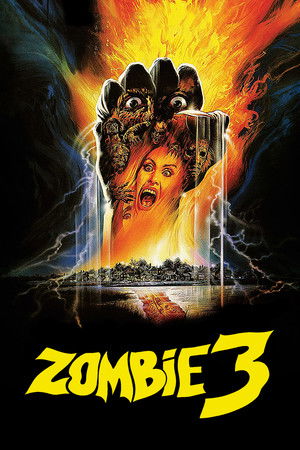
Zombi 3 brought Mattei into one of the strangest production histories of late Italian zombie cinema. The project began under Lucio Fulci, but Fulci left the Philippines-based production before all required material had been completed. Mattei and Claudio Fragasso were brought in to finish the film, working from the screenplay associated with Fragasso and Rossella Drudi and shooting additional scenes needed to construct a releasable feature.
Mattei later described the sections he personally completed, including material involving the stolen biological agent, soldiers in protective clothing and additional zombie sequences. He estimated that his contribution amounted to a substantial portion of the finished film. The result inevitably bears the traces of multiple filmmakers. Tone, rhythm and characterization shift, while the outbreak narrative moves between Fulci-style zombie imagery and the more frantic action associated with Mattei and Fragasso.
For Mattei's horror history, Zombi 3 is significant precisely because his role reflects his reputation as someone producers could call when a troubled genre production needed to be completed. His practical experience in editing and low-budget filmmaking made him suited to repairing or extending material under difficult circumstances. The film therefore represents Mattei not only as director but as an industrial craftsman capable of finishing a project that had become unstable.
The collaboration also reunited several figures associated with Mattei's broader exploitation circle. Massimo Vanni and Ottaviano Dell'Acqua appeared in the film, while Fragasso and Drudi handled central writing responsibilities. The production therefore connects the Fulci zombie tradition with the network of filmmakers and performers surrounding Mattei during the 1980s.
Horror, Imitation and the Mattei Method
Mattei's reputation has always been tied to imitation. His films frequently responded directly to successful international productions, sometimes so openly that the relationship became part of their identity. For some viewers this has made his cinema synonymous with copying, but imitation alone does not explain why his films developed such persistent cult followings. Many low-budget productions copied popular films; fewer became recognizable through the particular way those borrowed elements were recombined.
Mattei's method was fundamentally practical. If a particular genre was commercially viable, he could work inside it. If an existing set could represent another location, it could be reused. If footage could expand the apparent scale of a production, it might be incorporated. If performers and crew members were already available from another project, they could move directly into the next one. The result was cinema created through accumulation and adaptation rather than through the pursuit of purity.
Within horror, this produced films that often feel simultaneously familiar and unpredictable. Viewers may recognize the source of an idea but cannot necessarily predict what Mattei will do with it. Conventional suspense can suddenly become extreme gore, military action, nudity or bizarre comedy. Narrative logic may weaken while individual sequences become more excessive. This instability is a large part of the experience of watching his horror films.
From The 1980s to a Changing Italian Horror Industry
The commercial environment that had supported Italian exploitation changed dramatically toward the end of the 1980s and during the 1990s. The international market for inexpensive Italian genre imitations weakened, theatrical distribution contracted and many filmmakers associated with the previous cycle found fewer opportunities to work in horror. Mattei continued directing across different forms, but the industrial system surrounding him was no longer the one that had produced Hell of the Living Dead or Rats.
His continued willingness to work cheaply nevertheless allowed him to survive longer than many contemporaries within low-budget production. Video distribution eventually offered another route. Rather than treat direct-to-video filmmaking as a major decline from prestige cinema, Mattei approached it as another practical production environment. This attitude became crucial to his unexpected late-career return to explicit horror.
The Tomb and a Return to Direct-to-Video Horror
In the 2000s Mattei entered a final period of filmmaking built largely around inexpensive digital-video productions. The Tomb returned him to supernatural horror through a story involving archaeology, ancient curses and reanimated bodies. The production was written with collaborators including Giovanni Paolucci and continued Mattei's long-established practice of constructing genre films around recognizable international models using substantially smaller resources.
The digital format changed the visual texture of his work but not its underlying philosophy. Mattei was still interested in monsters, bodies, violent spectacle and stories that could be produced economically in locations available to the production. The difference was technological rather than conceptual. Digital video allowed him to keep making features at a point when the infrastructure that had supported his earlier exploitation work no longer existed in the same form.
The Jail: The Women's Hell and Late Exploitation Horror
The Jail: The Women's Hell returned Mattei to women-in-prison material but pushed the production toward the violence and degradation associated with his horror reputation. Yvette Yzon leads a cast trapped inside an abusive jungle prison where institutional authority becomes a mechanism for humiliation and physical cruelty. Antonio Tentori and Giovanni Paolucci collaborated on the screenplay, while Paolucci also produced the film.
The film demonstrates how little Mattei's fundamental instincts had changed. Decades after his earliest exploitation work, he remained willing to combine sex, violence, confinement and grotesque behavior without attempting to make the material respectable. The digital production is visibly modest, yet the director treats that limitation as normal rather than apologizing for it.
The collaboration with Yzon, Tentori and Paolucci became important to Mattei's final period because the same group would continue into his last zombie projects. In this late phase, Mattei effectively developed another small repertory company comparable in function, though not scale, to the recurring network around Fragasso and Drudi during the 1980s.
Island of the Living Dead and the Return to Zombies
Island of the Living Dead brought Mattei fully back to zombie horror more than twenty-five years after Hell of the Living Dead. A group of treasure hunters reaches an isolated island populated by the undead and encounters a mythology assembled from zombies, ghosts, cursed history and other supernatural ingredients. The film openly revisits imagery associated with earlier Italian horror while also borrowing from more contemporary genre cinema.
Yvette Yzon plays Sharon, the principal survivor, while Giovanni Paolucci produced and co-wrote the film with Mattei and Antonio Tentori. This collaboration gave the director a stable creative framework during his last productions. Tentori later recalled working closely with Mattei and emphasized the older director's ability to continue solving filmmaking problems despite extremely limited means.
The film is particularly revealing because Mattei does not attempt to modernize himself through restraint. The production uses digital video, but his taste remains rooted in practical gore, reanimated corpses, sudden violence and shameless borrowing. The result functions almost as a continuation of the industrial mentality of 1980s Italian horror created in a completely different technological era.
Zombies: The Beginning and Mattei's Final Film
Mattei's final film, Zombies: The Beginning, continued directly from Island of the Living Dead. Yvette Yzon returned as Sharon, while Antonio Tentori and Giovanni Paolucci again handled the screenplay and Paolucci produced. The story sends another team into a zombie-infested environment and increasingly adopts the structure of military science-fiction horror.
The film is characteristic of Mattei to the end. Rather than disguise its debt to existing genre cinema, it embraces recognizable situations and reconstructs them with the resources available. Soldiers, laboratories, genetic experiments and undead creatures collide in a production whose ambitions exceed its budget but never prevent the film from attempting spectacle.
Mattei completed the film shortly before his death in 2007. That fact gives the project unusual significance within his career. He did not end as a retired filmmaker looking back at exploitation cinema from a distance. He was still directing zombies, gore and low-budget genre material using a new production technology while remaining essentially faithful to the methods that had defined him decades earlier.
Recurring Actors and the Mattei Horror Company
Mattei's career was sustained by recurring collaborators as much as by recurring genres. During the early horror period, Claudio Fragasso and Rossella Drudi were crucial creative partners, while performers such as Franco Garofalo repeatedly appeared within the same production network. Garofalo's roles in Hell of the Living Dead, The Other Hell and Rats: Night of Terror make him one of the clearest recurring faces of Mattei's early horror.
Later productions developed another group around Giovanni Paolucci, Antonio Tentori and Yvette Yzon. Their work on The Jail: The Women's Hell, Island of the Living Dead and Zombies: The Beginning created continuity across Mattei's final horror cycle. These relationships were particularly important because low-budget filmmaking depends heavily on collaborators who understand the conditions under which a director works.
The two periods are separated by decades, yet the underlying production logic is remarkably similar. Mattei preferred collaborators capable of moving quickly, adapting to limited resources and treating genre filmmaking as practical work. His horror career can therefore be understood through these recurring groups as much as through individual films.
Practical Gore, Excess and Cult Appeal
Mattei's strongest horror imagery is rarely subtle. Zombies tear flesh, rats crawl across bodies, convents become sites of demonic violence and late films return repeatedly to mutilation and reanimated corpses. Effects budgets could be small, but the productions seldom responded by hiding violence completely. Mattei frequently preferred showing the effect even when its artificiality remained visible.
This approach became more appealing to cult audiences as mainstream horror moved toward increasingly polished visual effects. Mattei's films preserve the textures of handmade exploitation: rubber wounds, physical props, large quantities of artificial blood and performers interacting directly with effects that occupy the same space. Imperfection becomes part of the experience rather than something that can be separated from it.
His films also invite a complicated relationship between horror and comedy. Some moments are intentionally grotesque or absurd, while others become funny because the production attempts something far beyond its technical capacity. Mattei's cult reputation depends partly on the impossibility of separating these reactions completely. Viewers can appreciate an effect, laugh at its execution and still respond to the energy with which the scene is delivered.
Bruno Mattei's Place in Italian Horror
Bruno Mattei does not occupy the same historical position as the most internationally celebrated Italian horror auteurs, and treating him as though he did would misunderstand what makes his work important. His contribution lies elsewhere. He represents the industrial underside of Italian genre filmmaking: the filmmakers who could take a marketable concept, limited financing and a small group of collaborators and turn them into exportable horror with remarkable speed.
Hell of the Living Dead, The Other Hell and Rats: Night of Terror preserve the energy of the early 1980s exploitation cycle. Zombi 3 demonstrates his role as a practical problem-solver capable of entering another director's troubled production. His later digital films show him continuing the same tradition after the original Italian exploitation industry had effectively disappeared.
The result is a body of horror work whose influence is cultural rather than conventionally prestigious. Mattei became a recognizable name among viewers attracted to Eurocult, zombie cinema, video nasties and extreme low-budget horror. Labels such as incompetent imitator or exploitation opportunist describe aspects of his career but fail to explain why audiences continue to seek out the films decades later.
A Lasting Exploitation Horror Legacy
Mattei died in 2007 at the age of seventy-five, only a short time after completing Zombies: The Beginning. His final years therefore closed his career with the same genre that had produced several of his most enduring cult films. The distance between Hell of the Living Dead and his final zombie productions covers enormous changes in both horror cinema and filmmaking technology, yet his approach remained recognizable across that span.
He continued to believe that films could be made through improvisation, resourcefulness and an acceptance of limitations. Sets could be reused, ideas could be borrowed, collaborators could perform several functions and genre conventions could be pushed into new combinations. This method produced films that were often rough, sometimes chaotic and rarely refined, but also unmistakably connected to a mode of filmmaking that vanished as international exploitation production changed.
For horror history, Mattei remains important precisely because he represents that tradition without embarrassment. His zombies, demonic nuns, killer rats and late digital-video monsters form a career built not around critical respectability but around the determination to keep making genre cinema. The films survive as artifacts of an exploitation industry and, at their most effective, as energetic demonstrations of how much horror could be created with very little except practical experience, collaborators willing to participate and an absolute refusal to stop shooting.
Selected Work
Notable Horror Collaborators
Notable collaborators and creative partners throughout Bruno Mattei's horror career.
 Claudio Fragasso
KEY CREATIVE PARTNER
Mattei's essential horror partner across Hell of the Living Dead, The Other Hell, Rats: Night of Terror and Zombi 3, collaborating through writing, direction and hands-on production.
 Rossella Drudi
HORROR SCREENWRITER
A central writer within Mattei's horror circle, contributing to Hell of the Living Dead, Rats: Night of Terror and Zombi 3 and helping shape their outbreaks, violence and exploitation excess.
 Franco Garofalo
RECURRING HORROR ACTOR
A memorable recurring performer in Hell of the Living Dead, The Other Hell and Rats: Night of Terror, linking three of the films that established Mattei's early horror identity.
 Yvette Yzon
LATE-CAREER HORROR LEAD
Led Mattei's final horror cycle through The Jail: The Women's Hell, Island of the Living Dead and Zombies: The Beginning, becoming the principal screen presence of his digital-video period.
 Antonio Tentori
HORROR SCREENWRITER
Worked closely with Mattei on The Jail: The Women's Hell, Island of the Living Dead and Zombies: The Beginning, helping construct the violent horror stories of his final filmmaking period.
 Giovanni Paolucci
HORROR PRODUCER
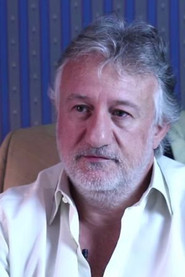
Produced and co-wrote The Jail: The Women's Hell, Island of the Living Dead and Zombies: The Beginning, providing the production backbone for Mattei's last sustained cycle of horror films.
Bruno Mattei Horror Movies
Directing (20 credits)
2007
2007
2006
2006
2004
2004
2004
1995
1994
1990
1989
1988
1984
1983
1982
1981
1980
1977
1977
Editing (11 credits)
2004
2004
1995
1994
1990
1988
1982
1976
1976
1970
1969
Writing (10 credits)
2007
2004
2004
2004
1995
1984
1981
1977
1977
1975
Acting (4 credits)
2007
1990
1988
1980
Music & Sound (1 credits)
2004
Production (1 credits)
1983
Other Crew (1 credits)
1984