



2012
Jonathan Frid
Horror Actor · Biography · Horror Filmography · Collaborators · Credits
Horror subgenres & themes
Most represented across this person's horror filmography:
VAMPIRE
Biography
Jonathan Frid and the Transformation of the Television Vampire
Jonathan Frid occupies an unusually important position in the history of television horror because one role changed both his career and the identity of the series that employed him. When he joined Dark Shadows in 1967 as Barnabas Collins, the ABC daytime serial had already been running for more than two hundred episodes. Its Gothic atmosphere had gradually moved toward ghosts and other supernatural material, but Barnabas transformed that tendency into the central engine of the series. Frid's vampire was initially conceived as a dangerous temporary character, yet audience fascination with him changed those plans. Barnabas survived, became increasingly central to the narrative and eventually emerged as the public face of Dark Shadows.
The significance of the performance goes beyond the popularity of a single television character. Frid helped establish a form of vampire that could be threatening, romantic, guilty, lonely and emotionally vulnerable at the same time. Barnabas kills and manipulates people, but his violence is increasingly connected to a curse he experiences as a form of imprisonment. Frid resisted playing him simply as a conventional monster. His grave voice, theatrical control and visible anxiety gave Barnabas the sense of a man trying to maintain dignity while living with impulses and supernatural conditions he cannot completely master. Long before the conflicted vampire became a familiar figure in television and popular fiction, Dark Shadows placed one at the center of an ongoing daily narrative.
Classical Training and an Unexpected Route into Horror
Frid was born in Hamilton, Ontario, in 1924 and entered professional acting through an extensive theatrical education rather than through horror cinema. He studied at the Royal Academy of Dramatic Art in London and later earned a graduate degree in directing at the Yale School of Drama. His stage experience included repertory companies, Shakespeare and regional American theatre. That background became crucial when he was unexpectedly asked to play a vampire on daytime television. Frid later recalled that Barnabas incorporated qualities he had developed through many earlier roles and that his classical experience helped him approach a character who needed to appear larger than ordinary life.
He did not initially consider himself naturally suited to the assignment. Frid remembered wondering how an actor was supposed to play a vampire and feeling intimidated by the part. Instead of constructing Barnabas from a catalogue of monster gestures, he gradually concentrated on the character's human contradictions. This approach became more effective as the writers expanded Barnabas from a short-term threat into a tragic protagonist. Frid's theatrical voice and formal bearing made the vampire convincing as a man displaced from another century, while his occasional nervousness and intensity could become expressions of Barnabas' guilt and internal instability.
Dark Shadows and the Arrival of Barnabas Collins
Barnabas Collins entered Dark Shadows in April 1967 after being released from a chained coffin in the Collins family crypt. He had been imprisoned for generations and returned to the twentieth century pretending to be a distant relative of the Collins family. Beneath that cultivated exterior he was a vampire attempting to rebuild a life that had effectively ended centuries earlier. The initial storyline presented him as a direct threat. Willie Loomis becomes his terrified servant, local women become his victims and Maggie Evans attracts his obsession because she resembles Josette, the woman Barnabas loved in his original lifetime.
What might have remained a conventional Gothic-villain storyline changed because Barnabas generated a response far greater than expected. The series had been struggling, but Frid's arrival dramatically increased interest in the program. Rather than eliminate Barnabas after a short arc, the writers began developing his history and internal conflict. The vampire gradually shifted from predator toward antihero, although the earlier violence was never completely erased. This tension became fundamental to the character. Barnabas could attempt to protect the Collins family in one storyline while remaining haunted by the crimes, compulsions and supernatural curse that had defined him in another.
The daily format gave Frid an opportunity unavailable to most earlier screen vampires. Instead of appearing for ninety minutes and being destroyed at the conclusion of a film, Barnabas could evolve across hundreds of episodes. Viewers watched him fail, regret his actions, form alliances, fall in love, return to violence and attempt repeatedly to escape vampirism. The soap-opera structure allowed horror characterization to accumulate over time. A monster initially constructed around secrecy and predation could acquire relationships, memories and moral contradictions without ceasing to be dangerous.
Angelique, Josette and the Origin of the Curse
The expansion of Barnabas became inseparable from the series' movement through time. Dark Shadows eventually returned to 1795 and dramatized the events that created the vampire. Lara Parker's Angelique, a witch whose love Barnabas rejected, curses him after discovering his devotion to Josette DuPrés. Kathryn Leigh Scott, already central to the twentieth-century story as Maggie Evans, played Josette and gave the series a direct emotional bridge between Barnabas' lost past and his obsessive behavior in the present.
This history changed the meaning of the vampire. Barnabas had not chosen immortality as an expression of power. His condition originated in revenge, romantic failure and supernatural punishment. Angelique therefore became much more than a recurring adversary. Her relationship with Barnabas provided one of the franchise's central horror conflicts, repeatedly mixing desire, hatred, witchcraft and revenge. The possibility that either character might temporarily need the other prevented their conflict from functioning as a simple hero-versus-villain structure.
Josette provided the opposite emotional force. Barnabas' inability to recover the life he lost made her memory a source of both tragedy and dangerous obsession. Maggie becomes threatened precisely because Barnabas attempts to force the present to reproduce the past. Frid could therefore move between sympathy and menace without requiring the series to choose permanently between them. The audience could understand his grief while recognizing that the actions produced by that grief were often horrifying.
Julia Hoffman, Willie Loomis and the Human World Around Barnabas
Two other relationships became essential to Frid's version of Barnabas. Grayson Hall's Dr. Julia Hoffman begins by investigating the vampire scientifically and attempting to cure his condition. Over time she becomes one of his closest allies. Their relationship allows Barnabas to discuss vampirism almost as an illness, reinforcing the idea that his supernatural condition is something he wants, at least intermittently, to escape. Julia's knowledge of his secret also creates an unusual partnership in which medical experimentation, friendship, jealousy and shared danger overlap.
John Karlen's Willie Loomis represents another side of the character. Willie releases Barnabas from the coffin and becomes his servant under violent circumstances. Their relationship begins through fear and domination, but its continuation gives the audience a recurring human witness to Barnabas' behavior. Willie knows both the cultivated gentleman and the monster hidden beneath that identity. Because he lives inside Barnabas' secret world, his reactions often reveal how frightening the vampire remains even when the larger narrative is encouraging sympathy for him.
Nancy Barrett's Carolyn Stoddard also became part of the web surrounding Barnabas, and the feature-film version would intensify their relationship into explicit vampire horror. The strength of the Dark Shadows ensemble allowed Frid's character to change depending on who stood opposite him. With Maggie or Josette he could become obsessive and romantic. With Angelique he became trapped in an ancient supernatural war. With Julia he could appear vulnerable and dependent. With Willie he remained capable of intimidation and cruelty. These relationships prevented the sympathetic development of Barnabas from making him harmless.
House of Dark Shadows
The success of the television series led Dan Curtis to direct House of Dark Shadows for MGM in 1970. The film condensed major elements of the Barnabas storyline into a theatrical Gothic horror narrative. Frid returned as Barnabas alongside Grayson Hall, Kathryn Leigh Scott, Nancy Barrett, John Karlen and other members of the television ensemble. Freed from the requirements of an ongoing daily serial, the film could give the vampire story a self-contained structure and a definitive climax.
The basic conflict remains recognizable. Barnabas is released from confinement, becomes obsessed with Maggie Evans and attempts to overcome his vampirism so that he can build a life with her. Julia Hoffman investigates him and develops a treatment, while Willie Loomis remains trapped within the vampire's orbit. Carolyn becomes one of Barnabas' victims, allowing the feature to foreground the contagious and destructive nature of vampirism more directly than the continuing series could afford to do with permanent characters.
The film is particularly important to Frid's horror legacy because it preserves Barnabas in a concentrated cinematic form. The television character could survive changes in morality and storyline because the series needed to continue. House of Dark Shadows instead allows the consequences of Barnabas' violence to accumulate toward destruction. The result shows another aspect of Frid's performance: the romantic and wounded qualities remain visible, but the narrative is less able to protect the vampire from the consequences of being a monster.
The Devil's Daughter and Occult Television Horror
After Dark Shadows, Frid remained connected to supernatural material through the 1973 television film The Devil's Daughter. Directed by Jeannot Szwarc, the story follows a young woman who discovers that a Satanic cult has regarded her since childhood as part of a demonic destiny arranged before she was old enough to understand it. Frid plays Mr. Howard within an ensemble that includes Shelley Winters, Belinda Montgomery, Robert Foxworth, Joseph Cotten and Diane Ladd.
The role is secondary compared with Barnabas, but the production kept Frid inside the wave of occult television horror that flourished during the period. Its Satanic conspiracy, inherited supernatural fate and apparently respectable adults hiding allegiance to a cult occupy a different branch of horror from the Gothic romanticism of Dark Shadows. Frid did not attempt to reproduce Barnabas, allowing the film to remain a separate genre credit rather than an extension of his vampire persona.
Seizure and Oliver Stone's First Feature
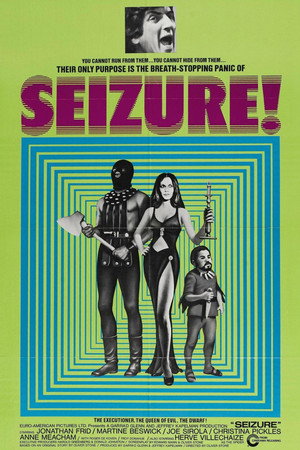
Frid received his most substantial post-Dark Shadows horror film role in Seizure, released in 1974. The film marked Oliver Stone's feature directorial debut and originated from a nightmare Stone had experienced. Frid plays Edmund Blackstone, a horror novelist whose recurring nightmare begins invading reality during a gathering at his isolated home. Three figures associated with his imagination appear to take control of the house and subject the people inside to an escalating series of psychological and physical ordeals.
The casting was particularly effective because the film uses Frid's established Gothic authority while giving him a character far removed from Barnabas Collins. Edmund is not the supernatural monster controlling the story. He is a creator of frightening fiction who discovers that the boundary between imagination and physical reality has collapsed around him. The role therefore reverses part of Frid's established screen identity. Instead of embodying the nightmare, he becomes a man forced to confront one.
Seizure mixes psychological horror, nightmare logic and home-invasion structure, with uncertainty over whether the events represent external reality or the violent workings of Edmund's mind. The film did not produce another sustained movie career for Frid, but it remains a significant horror credit because it gave him a leading role outside the Dark Shadows universe and connected him to the beginning of Oliver Stone's filmmaking career.
Leaving the Screen and the Persistence of Barnabas
Frid increasingly returned to theatre and performance work rather than building a long filmography from his television fame. For years he maintained some distance from the celebrity attached to Barnabas. The role had arrived unexpectedly and had consumed an enormous part of his professional identity during the intense production schedule of Dark Shadows. Yet the character never disappeared from horror culture. Fan conventions, reruns, home-video releases and continued interest in the franchise kept Barnabas visible long after the original series ended in 1971.
Frid eventually became more comfortable engaging with that legacy. He participated in Dark Shadows events and performed material for the franchise's fan community. The change is significant because Barnabas had become more than an old television role. The character represented a particular moment in American horror television when a daytime soap could suddenly become dominated by vampires, witches, ghosts, werewolves, possession, time travel and parallel realities without abandoning the emotional structures of serial drama.
The Night Whispers and the Return of Barnabas
In 2010 Frid returned to Barnabas Collins for the first time since 1971 in the Big Finish dramatic reading Dark Shadows: The Night Whispers. John Karlen returned alongside him, with Barbara Steele also appearing. The story presents an older Barnabas who has long since been freed from the vampire curse but remains haunted by memories of his supernatural past. A storm over Collinsport and a mysterious presence force those memories back into his life.
The project was an appropriate late return because it did not attempt to pretend that no time had passed. Frid's older voice becomes part of a story about memory, guilt and the continuing shadow of experiences that Barnabas thought he had escaped. It reconnects the actor with the character through atmosphere and narration rather than trying to reproduce the production conditions of 1960s daytime television. John Karlen's involvement also restored one of the most important relationships from the original series.
Dark Shadows in 2012 and the Final Screen Appearance
Frid made his final screen appearance in Tim Burton's 2012 film adaptation of Dark Shadows. Johnny Depp assumed the role of Barnabas Collins, while Frid appeared briefly at a party together with original cast members Kathryn Leigh Scott, Lara Parker and David Selby. The cameo created a direct visual connection between the modern reinterpretation and the performers who had built the franchise during its original television run.
The moment carries particular significance because Frid died shortly before the film reached theaters. His final appearance was therefore inside the fictional world that had defined his relationship with horror for more than four decades. He did not need to play Barnabas again for the connection to be clear. Depp's presence as the new Barnabas made Frid's brief appearance function almost as a transfer between generations of the franchise.
Jonathan Frid's Place in Vampire Horror
Jonathan Frid's horror filmography is small compared with performers who spent decades moving from one genre production to another, but the historical weight of Barnabas Collins gives him an importance that cannot be measured simply by counting titles. Dark Shadows demonstrated that a vampire could sustain an ongoing television narrative not merely as an antagonist but as a contradictory central character. Barnabas could inspire fear and sympathy within the same episode because Frid treated the supernatural condition as one element of a psychologically unstable man rather than the complete definition of the character.
That approach helped create a model that later vampire fiction would repeatedly revisit: the immortal predator burdened by memory, desire, guilt and an inability to live normally among human beings. Barnabas was not the first sympathetic vampire in literature or cinema, but television allowed Frid to develop those contradictions with unusual duration and intimacy. Viewers did not simply encounter the vampire. They followed him daily, learned his history and watched the monster repeatedly attempt to become something else.
Frid's classical training gave the role Gothic authority, but its enduring power came from vulnerability. His Barnabas could appear commanding while visibly afraid of losing control, romantic while behaving obsessively, remorseful while remaining capable of violence. That instability turned a character intended as a temporary supernatural threat into the defining figure of Dark Shadows and one of television horror's earliest enduring vampire antiheroes.
Selected Work
Notable Horror Collaborators
Notable collaborators and creative partners throughout Jonathan Frid's horror career.
 Dan Curtis
Creator / Director Collaborator
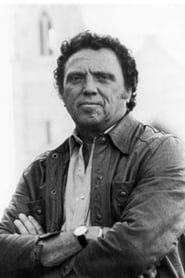
The creative architect of Dark Shadows and the filmmaker who placed Frid at the center of its transformation into Gothic horror. Curtis created the world in which Barnabas became an icon and later directed Frid again in House of Dark Shadows.
 Kathryn Leigh Scott
Acting Collaborator
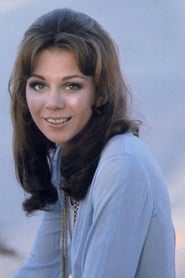
Frid's central romantic screen partner in the Dark Shadows mythology. Scott played Maggie Evans and Josette DuPrés opposite Barnabas in the original series, returned in House of Dark Shadows and shared Frid's final screen cameo in the 2012 film.
 Grayson Hall
Acting Collaborator
As Dr. Julia Hoffman, Hall became one of Frid's most important partners in the Dark Shadows universe. Julia investigates Barnabas, attempts to cure his vampirism and evolves into a close ally, a relationship also recreated in House of Dark Shadows.
 Lara Parker
Acting Collaborator
Parker's Angelique is the supernatural adversary most deeply connected to Barnabas. Her curse creates his vampirism and their recurring conflict drives some of Dark Shadows' most important witchcraft and vampire storylines. Parker later shared Frid's 2012 cameo.
 John Karlen
Acting Collaborator
Karlen's Willie Loomis releases Barnabas from his coffin and becomes his frightened servant and recurring confidant. The relationship continued through the original series and House of Dark Shadows, and the actors reunited for The Night Whispers in 2010.
 Nancy Barrett
Acting Collaborator
Barrett was part of the core Collins family ensemble throughout Frid's Dark Shadows years. As Carolyn Stoddard she repeatedly crossed Barnabas' supernatural storylines and became one of his most consequential victims in House of Dark Shadows.
Jonathan Frid Horror Movies
Acting (5 credits)
1974
1973
1970
1966