


2025
Bela Lugosi
Horror Actor · Biography · Horror Filmography · Family · Collaborators · Credits
Horror subgenres & themes
Most represented across this person's horror filmography:
VAMPIRE
• ANIMAL
• MEDICAL
• WEREWOLVES
Biography
Bela Lugosi and the development of screen horror
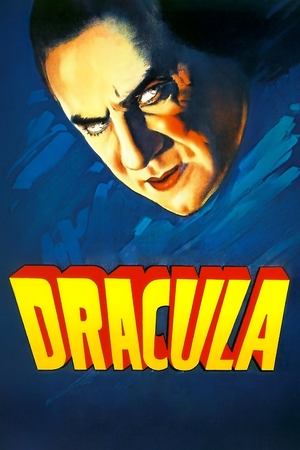
Bela Lugosi became one of the defining actors of early sound horror through his portrayal of Count Dracula in Tod Browning’s 1931 film. His performance established a screen version of the vampire that influenced acting, stage revivals, advertising and popular representations of Dracula for decades. The role also determined the direction of much of Lugosi’s American career. Hollywood repeatedly cast him as vampires, occult figures, scientists and foreign villains even though his theatrical career before Dracula had included a considerably broader range of parts.
Lugosi worked during both major phases of Universal’s original horror cycle and also appeared in important genre productions for independent companies, MGM, Paramount, Columbia and Monogram. White Zombie, Island of Lost Souls, The Black Cat, The Raven, Son of Frankenstein and The Return of the Vampire gave him characters very different from Dracula while preserving the vocal and physical authority that American producers increasingly associated with horror. His later career declined sharply as the studio system changed, but renewed interest in Universal horror and his final association with Edward D. Wood Jr. ensured that his work remained a significant part of horror history after his death.
Hungary, the stage and the creation of Bela Lugosi
Béla Ferenc Dezső Blaskó was born on October 20, 1882 in Lugos, then part of Austria-Hungary and now Lugoj in Romania. He adopted a professional surname derived from his birthplace and built a substantial stage career in Hungary before working in film. His early professional life developed within European theatre rather than within horror, and the experience gave him the strong vocal projection and carefully controlled gestures that later became conspicuous features of his American screen performances.
Political upheaval following the First World War contributed to Lugosi’s departure from Hungary. He worked in Germany before eventually reaching the United States, where he became active in Hungarian-language theatre and gradually entered English-language productions. His accent limited some opportunities but also became part of the distinctive stage presence that eventually brought him to the role that defined his career.
Dracula on Broadway
Lugosi’s decisive American stage role came with the Broadway production of Dracula, adapted from Bram Stoker’s novel through the stage version developed by Hamilton Deane and revised by John L. Balderston. The production opened in New York in 1927 with Lugosi as Count Dracula. The role required an approach suitable for live theatre rather than the physically grotesque monster acting associated with some silent horror films. Lugosi’s Dracula appeared formally dressed, socially composed and capable of moving through an upper-class domestic environment before his supernatural identity was fully understood.
The success of the production and subsequent touring work made Lugosi closely associated with the character before Universal prepared its screen adaptation. His theatrical experience also established the basic interpretation he carried into the film. Speech, eye contact and controlled movement became more important than elaborate transformation makeup. The resulting characterization would strongly influence the public image of Dracula even though many elements of Stoker’s novel were absent from both the stage production and the film.
Dracula and the beginning of Universal horror
Universal released Dracula in February 1931 with Tod Browning directing and Lugosi repeating the title role. The film became a major commercial success and helped convince the studio that horror could support a sustained production cycle during the early sound period. Dwight Frye played Renfield, Edward Van Sloan appeared as Van Helsing and Helen Chandler played Mina, creating an ensemble whose performances remained closely associated with the early development of the Universal horror style.
Lugosi’s interpretation depended heavily on voice. Sound cinema allowed the stage actor’s Hungarian accent, deliberate pauses and unusual rhythm to become part of the character’s identity. His Dracula speaks with formality and rarely needs overt physical aggression to dominate a scene. Jack Pierce’s makeup work remained restrained compared with the transformations he soon created for Frankenstein and The Mummy, leaving Lugosi’s face available for a performance based primarily on expression and gaze.
The screen image of Count Dracula
The appearance and behavior established in the 1931 film became influential well beyond Universal’s immediate cycle. Evening clothes, a cape, carefully arranged hair and aristocratic manners became standard visual shorthand for Dracula in advertising, parody and popular entertainment. Several of these features came through the theatrical tradition rather than directly from Stoker’s novel, demonstrating how strongly stage and cinema reshaped the public conception of the character.
Lugosi’s performance also helped move the screen vampire away from the visibly diseased or animalistic appearance represented by Max Schreck in Nosferatu. Dracula could enter polite society and converse with his intended victims before revealing his predatory nature. Later vampire films repeatedly returned to this model, even when performers and directors altered the character substantially.
Frankenstein and the complicated casting history
Lugosi’s relationship with Frankenstein has often been reduced to the claim that he rejected the Monster and thereby allowed Boris Karloff to become a star. The production history was more complicated. Lugosi was attached to an early version of the project when Robert Florey was expected to direct and participated in a screen test as the creature. That version was abandoned as Universal changed the production and James Whale became director.
Whale ultimately cast Boris Karloff, whose performance and collaboration with Jack Pierce produced the Monster that became another major Universal icon. The success of Frankenstein immediately changed the hierarchy of horror performers at the studio. Karloff became the company’s most heavily promoted monster star, while Lugosi continued working in horror for several studios without receiving an equally secure sequence of major Universal vehicles.
Murders in the Rue Morgue
Lugosi remained at Universal for Murders in the Rue Morgue in 1932, directed by Robert Florey. He plays Dr. Mirakle, a scientist conducting violent experiments in nineteenth-century Paris. The film is only loosely connected with Edgar Allan Poe’s story and gives Lugosi a role based on scientific obsession rather than supernatural aristocracy.
The production demonstrates Universal’s early effort to find another horror identity for an actor whose success had become closely attached to Dracula. Charles D. Hall handled the art direction, Jack Pierce provided makeup and John P. Fulton worked on visual effects, placing Lugosi within the same production infrastructure that was developing the studio’s other horror films. The picture did not reproduce the commercial impact of Dracula, and Universal’s attention increasingly shifted toward Karloff.
White Zombie and independent horror
White Zombie, directed by Victor Halperin in 1932, became one of Lugosi’s most important films outside Universal. He plays Murder Legendre, a plantation owner and practitioner of supernatural control who commands a group of zombie laborers in Haiti. The film emerged during American popular interest in Haitian religion and the recently published accounts of William Seabrook and became the first feature-length American film constructed explicitly around zombies.
The production had a much smaller budget than Lugosi’s Universal films and reused sets and resources available from other studios. His performance nevertheless dominates the film, particularly through hand gestures, eye contact and the vocal manner already familiar from Dracula. Clarence Muse later recalled that Lugosi exercised unusual influence over scenes during production, suggesting that his involvement extended beyond the minimum requirements of a hired actor.
Island of Lost Souls and another form of screen monstrosity
Lugosi appeared as the Sayer of the Law in Paramount’s Island of Lost Souls, adapted from H. G. Wells’s The Island of Doctor Moreau. Charles Laughton plays Moreau, while Lugosi is heavily transformed as one of the animal-human beings created through experimentation. The supporting role allowed him to work under substantial makeup rather than relying on the elegant appearance associated with Dracula.
The film occupies an important place in pre-Code horror because its cruelty, scientific experimentation and treatment of forced biological transformation produced material that encountered censorship problems in several territories. Lugosi’s presence linked him with another major strand of early sound horror while showing that his genre work could include physically transformed characters as well as hypnotists, vampires and scientists.
The Black Cat and the partnership with Boris Karloff
Universal paired Lugosi with Boris Karloff for the first time in Edgar G. Ulmer’s The Black Cat in 1934. Lugosi plays Dr. Vitus Werdegast, a former prisoner of war seeking revenge against Karloff’s Hjalmar Poelzig. The story bears little relationship to Edgar Allan Poe despite the title and instead develops around wartime trauma, murder and an occult ceremony inside Poelzig’s modernist residence.
The film established the commercial value of placing the two principal Universal horror stars together. Lugosi is unusually sympathetic for much of the narrative, giving him material far removed from the straightforward villain roles to which Hollywood increasingly confined him. His confrontations with Karloff depend on dialogue and personal history, allowing both actors to perform characters with motivations that extend beyond generic monster functions.
The Raven and the consolidation of the Karloff-Lugosi pairing
Lugosi and Karloff were reunited in The Raven in 1935. Lugosi plays Dr. Richard Vollin, a brilliant surgeon obsessed with Edgar Allan Poe and increasingly willing to use torture devices against people he believes have wronged him. Karloff plays Edmond Bateman, a criminal whose face Vollin surgically disfigures. The balance of the two roles differs markedly from The Black Cat, with Lugosi receiving the more verbally dominant and openly sadistic character.
The picture arrived during growing public criticism of violent horror films and belongs to the end of Universal’s first major cycle before the studio temporarily reduced genre production. For Lugosi, the period confirmed both his value within horror and the industrial limitations produced by that success. Producers increasingly regarded him as a specialist even while he continued seeking a broader range of roles.
Typecasting and Lugosi’s position in Hollywood
Lugosi spoke publicly about typecasting as early as the mid-1930s. Before Dracula, his theatrical career had included leading roles and conventional drama, while Hollywood increasingly offered characters defined by foreignness, scientific obsession or supernatural menace. His accent reinforced the industry’s assumption that he belonged in exotic or threatening parts at a time when studio casting frequently depended on rigid national and ethnic types.
The problem was intensified by the instability of his studio relationships. Karloff developed a stronger position at Universal and could move more readily between prestige horror, historical films and other character roles. Lugosi often worked from picture to picture across different companies, making it harder to establish a comparable career outside the specific image producers already expected from him.
Son of Frankenstein and the creation of Ygor
Universal revived its major horror properties after the successful late-1930s reissue of Dracula and Frankenstein. Son of Frankenstein in 1939 brought Karloff back as the Monster and gave Lugosi the role of Ygor, a broken-necked former blacksmith who lives near the ruins associated with the Frankenstein family. Director Rowland V. Lee and screenwriter Willis Cooper expanded the part considerably during production.
Ygor became one of Lugosi’s strongest film performances because the character bears little resemblance to Dracula. The beard, damaged neck and physical posture alter his appearance, while his speech is rougher and less ceremonious. Ygor has survived execution and manipulates the Monster for revenge against the men who condemned him. The role demonstrated how effective Lugosi could be when given a fully developed horror character outside the vampire image that had restricted much of his career.
The second Universal horror cycle
The success of Son of Frankenstein helped launch a new period of Universal monster production. Lugosi returned as Ygor in The Ghost of Frankenstein in 1942, now opposite Lon Chaney Jr. as the Monster. He later played the Monster himself in Frankenstein Meets the Wolf Man, reversing the casting history that had surrounded the 1931 film.
His performance as Frankenstein’s Monster was affected substantially during post-production. Dialogue explaining that Ygor’s brain now occupied the Monster’s body was removed, leaving Lugosi’s movements and expressions without much of the intended narrative explanation. The episode contributed to the uneven quality of his later Universal assignments, where recognizable star value did not always correspond with carefully developed roles.
Night Monster and collaborations with Universal regulars
Lugosi also appeared in Night Monster in 1942 alongside Lionel Atwill. The film belongs to the studio’s lower-budget mystery-horror production rather than one of its major monster franchises. Lugosi plays the butler Rolf, a supporting role marketed prominently because his name had retained strong genre recognition.
The picture illustrates an important aspect of his 1940s career. Lugosi could receive conspicuous billing even when his role was limited because distributors understood the commercial value of his association with horror. This gap between advertising prominence and narrative importance became increasingly common as his career moved toward lower-budget productions.
The Return of the Vampire
Columbia’s The Return of the Vampire in 1943 gave Lugosi one of his most substantial later vampire roles. He plays Armand Tesla, a vampire destroyed during the First World War and accidentally revived during the bombing of London in the Second. Although Universal controlled its own Dracula property, the character and performance deliberately draw on the screen identity Lugosi had established in 1931.
The film provided a more serious horror vehicle than many of his contemporary assignments and paired the vampire with a werewolf servant, anticipating the multi-monster combinations increasingly common at Universal. Tesla allowed Lugosi to return to the type of commanding supernatural role that had made him famous without formally repeating Count Dracula.
Monogram and low-budget horror production
During the 1940s Lugosi became a frequent presence in films produced outside the major studios. Monogram pictures such as The Corpse Vanishes, Bowery at Midnight, The Ape Man and Voodoo Man were made quickly and inexpensively for the lower end of the theatrical market. Several were produced by Sam Katzman and used Lugosi as the primary recognizable name.
The quality and resources varied, but these films occupy an important place in Lugosi’s career because they kept him continuously employed in horror while major studios offered fewer leading roles. Wallace Fox directed several of these productions, creating one of Lugosi’s most sustained director-actor relationships outside Universal. The films also demonstrate how thoroughly Lugosi’s professional identity had become linked with the genre by the middle of the decade.
Abbott and Costello Meet Frankenstein
Universal brought Lugosi back as Count Dracula in Abbott and Costello Meet Frankenstein in 1948. It was only his second feature-film performance as Dracula despite the lasting association between actor and character. Lon Chaney Jr. returned as Larry Talbot and Glenn Strange played Frankenstein’s Monster, giving the comedy direct continuity with the studio’s established monster cycle.
Director Charles Barton required the monsters to be played seriously while Bud Abbott and Lou Costello supplied the comedy through their reactions. This approach allowed Lugosi to perform Dracula without parodying his own 1931 interpretation. The film became his final production for a major Hollywood studio and later acquired an important position as the effective conclusion of Universal’s original monster ensemble period.
Stage work and declining film opportunities
As substantial screen work became less frequent, Lugosi returned to the stage and touring productions. Dracula remained an obvious source of employment because audiences continued associating him directly with the character. He also appeared in touring theatrical work outside horror, although such engagements offered less financial security than his earlier Hollywood career.
By the early 1950s his film opportunities were concentrated increasingly in inexpensive independent productions and novelty projects that used his name and horror reputation. These circumstances later became central to the popular narrative surrounding his final years, but they should be understood within the broader collapse of the studio horror system that had employed many genre specialists during the 1930s and 1940s.
Chronic pain, morphine dependence and treatment
Lugosi developed serious problems with morphine after receiving the drug for chronic sciatic pain. The dependence lasted for years and intersected with declining income, health problems and reduced professional opportunities. In 1955 he voluntarily entered Los Angeles County General Hospital for treatment, and his admission received extensive press coverage.
The episode is biographically important because Lugosi spoke publicly about the addiction rather than concealing the treatment. Accounts of his final years have sometimes used the subject sensationally, particularly after fictionalized portrayals of his life. Contemporary documentation establishes both the medical dependence and his decision to seek treatment, and it is more useful to present those facts directly than to treat addiction as an explanation for every difficulty in his late career.
Edward D. Wood Jr. and the final films
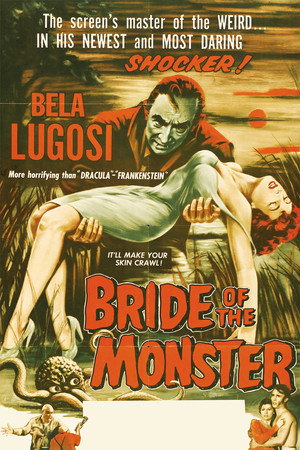
Edward D. Wood Jr., an admirer of Lugosi, cast him in Glen or Glenda in 1953 and later gave him a central role as Dr. Eric Vornoff in Bride of the Monster. Wood’s productions operated at a level far below the resources Lugosi had known at Universal, but they gave the actor substantial dialogue and prominent billing during a period when larger companies had little interest in employing him.
Wood also filmed brief silent footage of Lugosi outside a house and in a cemetery setting shortly before the actor’s death. The material was subsequently incorporated into Plan 9 from Outer Space, with another performer used for additional scenes. The unusual production history made the film part of Lugosi’s posthumous reputation even though he never performed within the completed narrative as finally assembled.
Death and posthumous reputation
Bela Lugosi died in Los Angeles on August 16, 1956 at the age of seventy-three. He was buried wearing a Dracula cape, a decision made by his family and consistent with the role that had remained inseparable from his public identity for nearly three decades. His death occurred shortly before television syndication and repertory screenings introduced Universal’s classic horror films to new audiences.
The revival of interest in the Universal monsters during the following decades substantially improved the historical visibility of his work. Films that had once been regarded largely as commercial genre entertainment became central texts in histories of American horror. Lugosi’s work in Dracula, White Zombie, The Black Cat and Son of Frankenstein received particular reassessment because those films show considerably more range than the simplified image of Lugosi as a performer capable only of variations on Dracula.
Bela Lugosi’s place in horror history
Lugosi’s historical importance begins with Dracula, but his career within horror extends well beyond that single performance. He participated in the establishment of sound-era Gothic horror, worked through Universal’s first cycle and its 1940s revival and remained active as the genre moved toward lower-budget independent production. His collaborations with Karloff, Lon Chaney Jr., Lionel Atwill and the technical personnel of Universal place him directly inside the development of the American studio monster tradition.
The limitations imposed by typecasting also form an important part of that history. The performance that gave Lugosi international fame narrowed the parts Hollywood was willing to offer him, and his accent reinforced industry assumptions about the roles he could play. The strongest films outside Dracula demonstrate the cost of those assumptions. Ygor, Werdegast and Murder Legendre are sufficiently different characters to show that Lugosi’s contribution to horror depended on more than one famous vampire.
Selected Work
Notable Horror Collaborators
Notable collaborators and creative partners throughout Bela Lugosi's horror career.
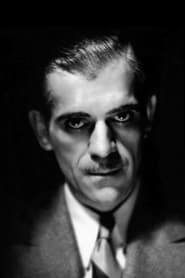 Boris Karloff
Acting Collaborator
Lugosi and Karloff formed the most important recurring star pairing of 1930s American horror. Their shared genre films include The Black Cat, The Raven, The Invisible Ray, Son of Frankenstein, Black Friday and The Body Snatcher, with their roles ranging from direct antagonists to unequal supporting partnerships.
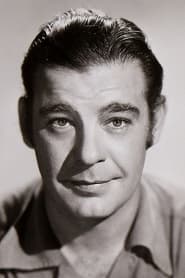 Lon Chaney Jr.
Acting Collaborator
Lugosi and Chaney worked together in The Wolf Man, The Ghost of Frankenstein and Frankenstein Meets the Wolf Man, among other later genre connections. Their shared films link Universal’s Dracula-era star with the actor who became the central monster performer of the studio’s 1940s horror cycle.
 Lionel Atwill
Acting Collaborator
Atwill and Lugosi shared several important horror productions, including Son of Frankenstein, Night Monster and Frankenstein Meets the Wolf Man. Both became recurring members of Universal’s horror repertory, although Atwill generally played scientists or authority figures while Lugosi moved between villains and monsters.
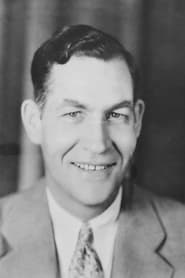 Wallace Fox
Actor / Director Collaborator
Fox directed Lugosi in a group of low-budget horror productions including The Corpse Vanishes, Bowery at Midnight and Black Dragons. Their collaboration belongs to the period when Lugosi’s career moved increasingly toward independent and Poverty Row genre production outside the major studios.
 Tod Browning
Actor / Director Collaborator
Browning directed Lugosi in Dracula and later in Mark of the Vampire, giving the actor two of the most important vampire-associated films of his career. Their relationship falls below the usual three-title collaborator threshold, but Dracula alone makes Browning indispensable to any account of Lugosi’s horror career.
 Edward D. Wood Jr.
Actor / Director Collaborator
Wood employed Lugosi during the final phase of his career in Glen or Glenda and Bride of the Monster and filmed material later incorporated into Plan 9 from Outer Space. The relationship falls below the normal shared-horror threshold but is historically important because Wood provided Lugosi with substantial late-career screen work.
Bela Lugosi Horror Movies
Acting (65 credits)
2015
2014
2013
2007
2007
2006
2005
2000
2000
1992
1992
1992
1991
1986
1959
1956
1955
1952
1952
1949
1949
1948
1947
1945
1945
1944
1944
1944
1943
1943
1943
1943
1942
1942
1942
1942
1942
1941
1941
1941
1941
1940
1940
1940
1939
1939
1939
1939
1936
1936
1935
1935
1935
1935
1934
1934
1933
1932
1932
1932
1931
1931
1929
1920
Other Crew (1 credits)
2023