F. W. Murnau and the foundations of cinematic horror
F. W. Murnau (1888–1931) was a German director whose work helped establish the visual foundations of cinematic horror. His reputation rests on a broader body of silent films, but Nosferatu (1922) and Faust (1926) occupy a central position in the history of the genre. The first gave the screen one of its most disturbing vampires and developed an approach to supernatural fear rooted in physical locations, disease, shadow and the passage of time. The second expanded demonic horror into an elaborate system of optical effects, architectural design and dramatic contrasts of scale. Together they demonstrated that the fantastic could be communicated through the organization of images rather than through dialogue or explanatory spectacle alone.
Born Friedrich Wilhelm Plumpe in Bielefeld on December 28, 1888, Murnau studied literature and art history before entering the theatrical world of Max Reinhardt. He adopted the name Murnau during his early artistic career and served in the First World War before beginning to direct films in 1919. Theatre taught him to arrange performers within expressive environments, while his knowledge of painting informed the relationship between figures, landscape and light. These interests remained evident in his dramas and literary adaptations, but they acquired particular force when his subjects involved vampires, transformations, sinister doubles and the intervention of supernatural powers.
Early films and the emergence of a horror director
Murnau entered the German film industry as directors, writers and designers were experimenting with visual means of representing unstable identity and extraordinary experience. His early productions included lost works, making it impossible to reconstruct every stage of his development. The most significant for horror history is The Head of Janus (Der Januskopf, 1920), an unlicensed adaptation of Robert Louis Stevenson’s Strange Case of Dr. Jekyll and Mr. Hyde. Conrad Veidt played the divided protagonist, Bela Lugosi appeared in a supporting role, Hans Janowitz wrote the screenplay and Karl Freund worked on the cinematography. Although the film no longer survives, its subject establishes Murnau’s engagement with bodily transformation and the divided self before Nosferatu.
The loss of The Head of Janus is important to the limits of any assessment of his horror career. Surviving production information identifies the literary source and personnel, but it cannot support a detailed description of scenes that can no longer be viewed. What can be established is Murnau’s early interest in a central horror problem: how cinema might make an alteration of identity visible. His subsequent work addressed related questions by changing the viewer’s perception of a body, a location or a seemingly familiar object rather than relying solely on the appearance of a monster.
The Haunted Castle (Schloß Vogelöd, 1921) further demonstrates the distinction between supernatural horror and the techniques used to evoke it. Despite its English title and isolated setting, the film is primarily a mystery structured around accusation, suspicion and concealed history, not a ghost story. Its enclosed interiors and atmosphere of apprehension nonetheless anticipate Murnau’s concern with the threatening possibilities of physical space. In these early projects, fear emerges from what a character or audience cannot yet see or understand. That principle becomes the organizing force of his next major film.
Nosferatu (1922): the creation of a cinematic vampire
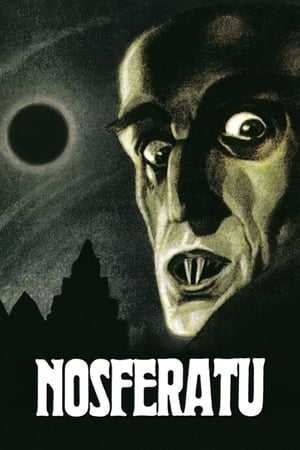
Nosferatu: A Symphony of Horror was produced by Prana-Film, the company formed by Albin Grau and Enrico Dieckmann. Henrik Galeen wrote the screenplay from Bram Stoker’s Dracula without securing adaptation rights. Grau, whose interests included occultism, supplied important visual ideas and design work; Fritz Arno Wagner photographed the film; Max Schreck performed the role of Count Orlok. Murnau directed this collaboration and gave its disparate elements a disciplined visual form. Distinguishing these contributions matters because the film’s iconography was a collective achievement, even as its treatment of duration, movement and spatial relationships bears the unmistakable influence of the director.
The change from Dracula to Orlok was more than a matter of names. Schreck’s vampire is emaciated, bald and unnaturally elongated, with conspicuous ears, teeth and hands. The figure appears closer to a cadaver or parasite than to the cultivated aristocrat who would dominate later screen versions of the character. Murnau makes this anatomy effective through staging: Orlok is observed at a distance, revealed in doorways, placed against austere walls or allowed to approach with an alarming deliberation. The horror depends on the spectator being given sufficient time to register that the figure belongs to the photographed world but violates ordinary expectations of human movement and appearance.
One of Murnau’s most consequential decisions was to use recognizable landscapes and architecture for much of the film. Location photography in German towns and in regions now belonging to Slovakia gives the journey and the vampire’s arrival a geographic substance. Unlike the aggressively artificial settings associated with The Cabinet of Dr. Caligari (1920), Murnau’s streets, buildings and natural surroundings often retain their everyday appearance. The supernatural threat enters a world that the camera has already persuaded the viewer to accept. The result is a distinctive form of Expressionist horror in which unusual composition and lighting disturb apparently credible environments rather than replacing them entirely with distorted scenery.
The journey toward Orlok’s castle demonstrates Murnau’s control of anticipation. Mountain roads, remote buildings and the growing isolation of the traveller establish a transition from familiar society into territory governed by different rules. The vampire’s castle is frightening partly because of how bodies move through its doors and passageways: an entrance can become a trap, while a static figure acquires force through the interval before it advances. Murnau constructs suspense by controlling when danger becomes visible and how long the camera permits the audience to contemplate it. These decisions are as important to the film as costume or makeup.
Shadow provides the most enduring example of that approach. Orlok’s silhouette, especially as it climbs a staircase and reaches toward Ellen, extends the creature beyond the limits of Schreck’s physical body. The threatening image is a projection that can advance across architecture while the vampire himself remains unseen. Light and darkness therefore serve precise dramatic functions: they indicate the position of an approaching force, separate its apparent presence from its source and make an ordinary wall part of the action. The sequence became an enduring model for suggesting supernatural intrusion without repeatedly displaying the creature.
Murnau also gives vampirism a collective dimension. Orlok’s voyage brings rats, sickness and death to the town of Wisborg, transforming a private threat into a public calamity. The emptied streets and signs of widespread mortality connect the figure of the vampire with epidemic catastrophe. The film was made in a Europe still marked by war and disease, circumstances that give its plague imagery a powerful historical resonance without reducing it to a single allegorical interpretation. The monster’s influence can be perceived even when he is absent from the frame: a town’s changing condition becomes evidence of an unseen destructive presence.
This association between the vampire and contagion distinguishes Nosferatu from many later adaptations of Stoker’s novel. The creature endangers households and civic life, while the narrative repeatedly treats doors, windows, streets and thresholds as boundaries through which corruption passes. Murnau makes these boundaries visually legible. A body framed inside a doorway, an approaching ship or a shadow advancing across a bedroom can communicate the arrival of danger before the story describes its cause. Such scenes made the vampire adaptable to horror cinema’s basic resources: performance, framing, editing, lighting and movement.
Ellen’s role in the ending further defines the film’s particular mythology. She knowingly exposes herself to Orlok, who remains with her until daylight destroys him. The climax joins sacrifice, erotic threat and the passage from darkness into morning. It helped establish the fatal power of sunlight as a familiar element of cinematic vampire storytelling, although later films would develop the convention in different ways. For Murnau, the conclusion also resolves the story through visual change: the monster disappears in the light, following a confrontation that is staged around a room, a window and the duration of his presence.
The film’s production history became inseparable from its survival. Florence Stoker successfully challenged the unauthorized adaptation, and a court order called for the destruction of copies. Prints already circulating beyond the producers’ control allowed the film to survive. Later archives and restorers had to work from materials with differences in completeness and presentation, including tinting and intertitles. The continued preservation of Nosferatu makes possible the study of its visual decisions and reveals how precarious the survival of early horror cinema could be. The image of Orlok is now familiar, but the work itself came close to disappearance.
Faust (1926): demons, plague and the architecture of the supernatural
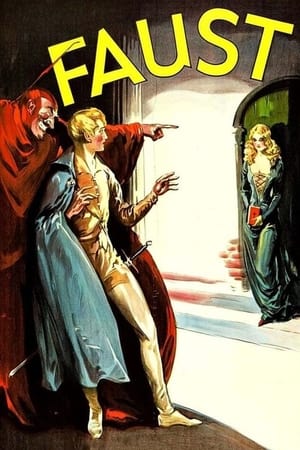
Four years later, Faust allowed Murnau to revisit supernatural material with resources far greater than those available for Nosferatu. Produced by Erich Pommer for UFA, the film was adapted by Hans Kyser from the Faust legend and its literary traditions. Gösta Ekman played the scholar Faust, Emil Jannings portrayed Mephisto and Camilla Horn appeared as Gretchen. Cinematographer Carl Hoffmann and production designers Robert Herlth and Walter Röhrig were central to its elaborate visual construction. The project became Murnau’s last German film before his move to Hollywood and one of the silent era’s most ambitious achievements in fantastic filmmaking.
The opening establishes a different scale of horror from that of Nosferatu. Mephisto, appearing as a gigantic winged figure, presides over a town and spreads plague as part of his attempt to corrupt Faust. Human buildings and populations are reduced beneath the apparent size of the demonic presence. Where Orlok’s arrival gradually contaminates a community, Mephisto can turn that community’s suffering into a deliberate instrument of temptation. The contrast reveals the range of Murnau’s horror: supernatural power may take the form of a cadaverous intruder or an immense figure capable of dominating an entire landscape.
The film combines constructed sets, controlled illumination and photographic effects to give supernatural events a consistent physical impact. Murnau organizes mist, shadows, changes in scale and layered imagery around the dramatic relationship between Faust and Mephisto. The infernal figure is often defined by a disproportion between his body and the surrounding environment; elsewhere, threatening spaces become cramped and oppressive. These effects are integrated with performance and architecture rather than isolated as technical demonstrations. Their effectiveness depends on the apparent transformation of the world around the characters.
Mephisto’s changing appearance also shows Murnau’s capacity to move between grotesque performance and monumental menace. Jannings can present the demon as a persuasive, almost comic companion while the film’s larger compositions reveal the same character as a destructive supernatural force. Murnau controls those shifts through costume, camera distance and the spaces assigned to the actor. The distinction is important to his horror direction: the demonic need not remain visually monstrous in every scene, because the audience already understands the power concealed behind an approachable human appearance.
The tragedy of Gretchen gives this spectacle a human consequence. Faust’s bargain creates conditions under which seduction, social disgrace and death become inseparable from Mephisto’s manipulations. Murnau repeatedly arranges individuals within settings that restrict their freedom and amplify vulnerability. The supernatural premise therefore shapes both the large-scale images of plague and the intimate images of personal suffering. Horror in Faust is not confined to the apparition of a demon; it lies in the ability of a malignant power to alter the circumstances in which ordinary people live.
The film’s pictorial construction has received sustained critical attention, notably in Éric Rohmer’s study of the organization of space in Faust. Surviving production drawings and photographs, including materials assembled by Herlth, also document the demanding coordination behind its illusions. These sources make clear that Murnau’s spectacular images were planned through relationships among architecture, lighting, photographic technique and performance. With Nosferatu, he had demonstrated how to place a supernatural entity inside recognizable locations; with Faust, he showed how to build an entire environment around the operation of supernatural power.
Horror influence, later career and legacy
Murnau’s contribution to horror cannot be measured simply by the number of films he made within the genre. His directing established methods for transforming what an audience sees into what it fears. He could render a body disturbing through position and movement, turn a real street into a space of impending catastrophe, or make a shadow perform the actions of an unseen figure. In Faust, he extended these methods to transformations of scale and to demonic spectacle whose meaning depended on the precise organization of the frame. The techniques became part of a wider cinematic vocabulary shared by Gothic horror, supernatural fantasy and psychological suspense.
His work also requires a more precise description than the label German Expressionism alone allows. Murnau drew on Expressionist theatre and design, but he combined those influences with natural locations, German Romantic painting and a sustained interest in the credible arrangement of physical space. The difference matters especially in Nosferatu: its menace often comes from the intrusion of an impossible figure into a recognizably ordinary setting. This ability to unsettle familiar environments remains one of its central lessons for filmmakers working with monsters, haunted places and the suggestion of invisible danger.
Later films outside the horror genre strengthened the formal resources associated with his name. In The Last Laugh (1924), his collaboration with cinematographer Karl Freund advanced mobile, subjective camerawork; Sunrise: A Song of Two Humans (1927) carried his visual experimentation into Hollywood drama. Both films demonstrate Murnau's use of camera movement, lighting and space to convey perception, emotional disturbance and impending danger, techniques that also shaped his horror cinema. Murnau continued working through the late silent era and died following an automobile accident in California on March 11, 1931, shortly before the release of his final film, Tabu.
The continuing life of Nosferatu offers a particularly direct measure of his influence. Werner Herzog’s Nosferatu the Vampyre (1979) revisited its story and imagery, while Robert Eggers’s Nosferatu (2024) returned to the same cinematic lineage. These films differ in emphasis, yet both acknowledge that the Orlok tradition was established through a particular combination of performance, atmosphere and visual design. Murnau’s vampire continues to represent an alternative to the urbane, seductive figure associated with other branches of screen vampirism: a creature whose appearance suggests death and whose presence threatens an entire community.
Historical study of Murnau also depends on the preservation of the films and documents that remain. The loss of The Head of Janus and other early productions limits claims about the development of particular techniques, while the survival and restoration of Nosferatu and Faust allow their construction to be examined in detail. The Friedrich-Wilhelm-Murnau-Stiftung and other film institutions have played an important role in keeping that evidence accessible. Murnau remains foundational to horror because his surviving work provides concrete, still influential examples of how cinema can give physical form to supernatural fear.