

1996
Peter Jackson
Horror Director · Biography · Horror Filmography · Family · Collaborators · Credits
Horror subgenres & themes
Biography
Peter Jackson and the Horror of Excess
Long before Peter Jackson became associated with Middle-earth and some of the largest productions in modern cinema, he built his reputation by destroying bodies. Heads were split open, intestines became props, aliens harvested human flesh and zombies were reduced to torrents of blood. His early films were made with tiny crews, improvised equipment and an enthusiasm for practical effects that treated technical limitations as opportunities for invention rather than obstacles.
Jackson's horror was never especially interested in restraint. Where other filmmakers used darkness to hide what they could not afford to show, he often moved in the opposite direction, revealing the effect, extending the gag and then escalating it until disgust became comedy. The result was a form of horror in which gore operated almost like physical slapstick. Violence could be revolting and funny at the same time because Jackson treated the human body as an unstable object capable of being stretched, crushed, dismembered and reconstructed according to the logic of the joke.
That approach reached its purest expression in Braindead, but the foundations were visible from the beginning. Jackson's early career demonstrates how horror can function as a laboratory for filmmakers interested in effects, camera movement, editing and spectacle. Many of the techniques later associated with his enormous fantasy productions were developed while he was still trying to make monsters, explosions and bodily destruction believable with almost no money.
Pukerua Bay and a Childhood Built Around Movies
Peter Jackson was born in Wellington, New Zealand, on October 31, 1961, and grew up in the nearby coastal community of Pukerua Bay. He became fascinated with filmmaking at a young age, using a Super 8 camera to create short films with friends and constructing effects from whatever materials were available. War movies, stop-motion animation and monster imagery were already part of this private filmmaking world long before he had access to professional equipment.
The 1933 King Kong was especially important to him. Jackson has repeatedly described seeing the film as a formative experience, particularly because its visual effects revealed that impossible creatures could be created through craft and technique. He even attempted his own version as a child. The fascination was not simply with the giant ape as a character. It was with the possibility of manufacturing an entire cinematic reality through models, animation, makeup and camera tricks.
This helps explain why Jackson's horror films are so effects-driven without feeling like demonstrations detached from character or comedy. He learned filmmaking by solving practical problems. How can a miniature building look convincing? How can a fake head burst? How can an actor appear to lose part of his body? These questions became part of his directing language before conventional dramatic filmmaking entered the equation.
Bad Taste and the Do-It-Yourself Horror Film
Bad Taste began as a short project and gradually expanded into Jackson's first feature. Production stretched across roughly four years, with filming largely taking place on weekends around the schedules of a tiny group of friends. Jackson served as director, producer, writer, editor, effects creator, cinematographer and actor, playing both the unstable government agent Derek and an alien named Robert.
The story is intentionally ridiculous. Aliens arrive in a small New Zealand town and begin processing human beings as meat for an intergalactic fast-food business. A small government team discovers the operation and responds with increasingly destructive violence. The premise gives Jackson an excuse to combine science fiction, splatter and comedy without pretending that any of them should behave politely around the others.
The homemade quality became part of the film's personality. Weapons, masks, prosthetics and miniature effects were constructed with limited money but enormous persistence. Jackson understood that an inexpensive effect did not necessarily need to look completely realistic if the sequence surrounding it was inventive enough. The energy of the filmmaking could carry the audience through imperfections that a more conventional production might have tried to conceal.
One of the defining images is Jackson's own Derek attempting to hold pieces of his damaged skull together after a fall. The gag summarizes much of the filmmaker's early philosophy. Bodily injury is treated simultaneously as something disgusting, technically amusing and absurdly practical. Derek does not stop to contemplate the medical impossibility of his condition. He simply tries to repair himself and continue fighting.
Splatter as Comedy
Bad Taste established the relationship between gore and laughter that would dominate Jackson's early cinema. He rarely builds horror around prolonged psychological dread in these films. Instead, he creates escalation. A violent event happens, then something worse happens, then the consequences become so excessive that the audience is pushed beyond ordinary revulsion into disbelief and laughter.
This is closer to slapstick than to conventional slasher violence. The body becomes an object subjected to increasingly impossible punishment, much like performers in silent comedy survive falls and collisions that should destroy them. Jackson simply replaces bruises and broken furniture with blood, exposed organs and severed limbs.
The technique requires rhythm. A gore effect shown once may simply be disgusting. Jackson often extends the moment, introduces another complication or returns to the same physical idea until the audience understands that excess itself is the joke. The violence becomes funny because the film refuses to recognize any reasonable stopping point.
That method would become far more sophisticated by the time of Braindead, but Bad Taste already demonstrates the basic structure. Jackson was learning how to direct action and effects by using horror as a playground where almost any visual idea could be justified.
Meet the Feebles and the Destruction of Innocence
Jackson's second feature, Meet the Feebles, moved away from conventional horror but retained the grotesque spirit of his debut. The entire world is populated by puppets, initially suggesting children's entertainment before the film reveals a backstage environment filled with addiction, pornography, disease, jealousy, exploitation and violence.
The comedy depends upon contaminating something culturally associated with innocence. Friendly animal puppets behave according to the worst impulses of human beings, creating a constant collision between visual familiarity and adult degradation. The result is not a traditional horror film, but its commitment to disgust, bodily fluids and grotesque transformation belongs naturally beside Jackson's splatter work.
The production was also technically important. Jackson and his collaborators had to develop puppet construction, miniature environments, mechanical effects and elaborate staging on a limited budget. Richard Taylor became increasingly central during this period, and the work contributed to the network of artists and technicians that would eventually evolve into Wētā Workshop.
Jackson was therefore improving the same fundamental skills through increasingly different forms. Bad Taste had forced him to solve problems involving live-action gore and homemade prosthetics. Meet the Feebles expanded that knowledge into puppetry, miniatures and controlled artificial environments. The films were crude in subject matter but increasingly ambitious in construction.
Braindead and the Maximum Possible Amount of Blood
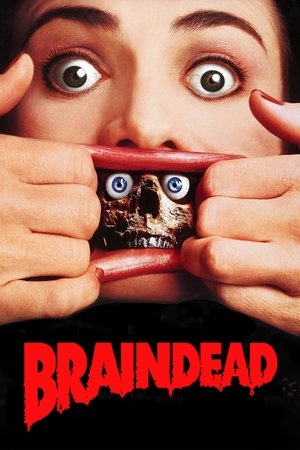
Braindead (1992), released in North America as Dead Alive, represents the climax of Jackson's splatter period. Set in 1950s Wellington, the film follows Lionel Cosgrove, a timid young man dominated by his mother Vera. When Vera is bitten by a diseased creature and begins transforming into a zombie, Lionel attempts to conceal the problem rather than confront it, allowing the infection to spread until his family home becomes the center of an escalating undead catastrophe.
The film's emotional structure is surprisingly important. Lionel's relationship with his mother is already unhealthy before she becomes a monster. Vera controls his life, undermines his relationship with Paquita and treats independence as betrayal. Zombie transformation therefore exaggerates something that already exists. The supernatural horror makes emotional domination physically visible.
Jackson surrounds this relationship with a level of gore that becomes almost mathematical. Every attempt to contain the outbreak produces more bodies, more blood and more complicated practical effects. Zombies are mutilated, reanimated, dismembered and combined into increasingly impossible forms. The film constantly searches for another way to destroy a body after apparently exhausting every available method.
The famous lawnmower sequence turns this escalation into pure splatter choreography. Lionel holds a running lawnmower in front of himself and walks through a crowd of zombies, reducing them to an enormous spray of blood and tissue. The scene is not constructed primarily to frighten. It functions as a spectacular physical payoff after the film has spent much of its running time making Lionel increasingly incapable of keeping the situation under control.
Practical Effects as Performance
The effectiveness of Braindead depends heavily on the interaction between actors and physical effects. Blood is not simply added to an image. Performers slip in it, become covered by it, collide with prosthetics and react to creatures occupying the same physical space. The mess becomes part of the performance.
This gives the comedy a tactile quality that would be difficult to achieve if every element existed only digitally. A rubbery creature may look deliberately artificial, but its weight and physical presence allow the actor to fight with it. A prosthetic head can be struck, crushed or pulled apart in a way that creates its own rhythm. Jackson understands these objects as performers rather than decorations.
Richard Taylor and the effects team were essential to this process. The collaboration between Jackson and Taylor would later become famous through Wētā and the Middle-earth films, but its roots belong partly to grotesque low-budget cinema. The technical culture that eventually produced sophisticated fantasy creatures developed through years of solving problems involving puppets, wounds, monsters and exploding bodies.
This connection is central to understanding Jackson's career. The move from splatter filmmaker to blockbuster director was not a rejection of his early methods. It was an expansion of them. The scale changed, but the underlying fascination with manufactured worlds and physical transformation remained remarkably consistent.
Heavenly Creatures and Horror Without a Horror Film
Heavenly Creatures (1994) marked an enormous change in Jackson's public reputation. Based on the Parker-Hulme murder case, the film follows Pauline Parker and Juliet Hulme, two teenage girls whose intense friendship develops into a shared imaginative world and eventually leads to the murder of Pauline's mother. The film is primarily a psychological drama rather than a horror film, yet Jackson's genre instincts remain visible throughout it.
The fantasy sequences demonstrate his continuing interest in creatures, artificial environments and subjective reality. Figures from the girls' imaginary kingdom become physically present, allowing the audience to experience fantasy as they experience it rather than treating imagination as something merely described through dialogue. The same filmmaker who once used effects to materialize aliens and zombies now uses them to visualize emotional obsession.
The murder sequence is especially revealing. Jackson does not turn the girls into conventional screen monsters, but the approach to violence retains the physical directness of his earlier work. The brutality of the act contrasts sharply with the richness of the fantasy world that has preceded it, forcing imagination and real consequence into the same narrative.
The film received major international recognition and earned Jackson and Fran Walsh an Academy Award nomination for their screenplay. More importantly for his development as a filmmaker, it demonstrated that his visual energy could support serious drama. The director previously known primarily for extreme splatter suddenly appeared capable of moving into international studio filmmaking without abandoning the techniques developed in horror.
Wētā and the Industrialization of Homemade Effects
The period around Heavenly Creatures was also crucial to the development of Wētā. Richard Taylor and Tania Rodger were involved in practical effects, while George Port handled early digital work. What had once been an informal network of New Zealand filmmakers and craftspeople was becoming an increasingly sophisticated effects infrastructure.
Jackson had always been interested in controlling the technical process as closely as possible. Developing effects capabilities locally allowed him to continue making films in New Zealand while attempting projects that would previously have required established American or British facilities. This would become one of the defining practical decisions of his career.
The shift toward digital technology did not eliminate Jackson's affection for physical effects. Instead, practical and digital methods increasingly became complementary. Models, prosthetics, miniatures and computer-generated imagery could all be used according to the requirements of a particular shot.
The origins of this approach remain connected to horror. A director who had once fabricated alien masks and exploding heads because nobody else was available had developed an entire production philosophy around solving visual problems internally. Wētā transformed that improvised instinct into industrial capability.
The Frighteners and the Ghost Story Becomes a Studio Film
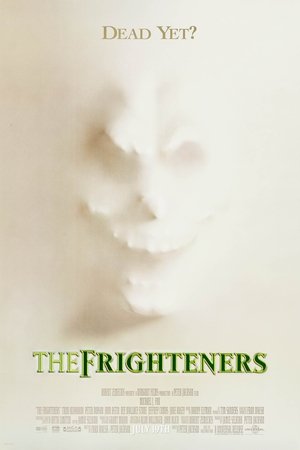
The Frighteners (1996) brought Jackson back directly into supernatural horror while also becoming his first feature backed by a major American studio. Michael J. Fox plays Frank Bannister, a man who can see ghosts after surviving the car accident that killed his wife. Instead of treating the ability as a spiritual gift, Frank collaborates with friendly ghosts to stage fake hauntings and then charges homeowners to remove them.
The premise begins as supernatural comedy but gradually becomes much darker. A series of mysterious deaths reveals the presence of a murderous supernatural force, while Frank's personal history connects him to an earlier killing spree. Jackson moves between comedy, ghost effects, serial murder and psychological trauma without completely separating these tones.
The ghosts provided a major opportunity for digital effects. Characters had to move through walls, deform their bodies and interact with physical environments in ways that would have been impossible through the practical techniques used in Braindead. The film therefore became a significant test of the emerging Wētā digital infrastructure.
Yet the basic Jackson approach remained recognizable. Death is physical, bodies behave unpredictably and supernatural events are staged with kinetic camera movement rather than distant restraint. The technology is more sophisticated, but the director is still fascinated by the spectacle of impossible things happening to flesh and architecture.
The Frighteners and the Return of the Serial Killer
The darker side of The Frighteners distinguishes it from Jackson's earlier splatter comedies. The story of Johnny Bartlett and Patricia Bradley introduces a human history of murder underneath the supernatural plot. The ghosts are not frightening simply because they are dead. The real horror comes from people whose desire to kill persists beyond death.
Jeffrey Combs also gives the film one of its most aggressively strange performances as FBI agent Milton Dammers. The character behaves as though years of occult investigations have damaged his ability to function normally, giving Jackson another opportunity to combine menace and absurdity within the same figure.
The film did not become the commercial breakthrough its scale suggested, but it was enormously important to Jackson's development. He had demonstrated that a New Zealand production base could support a technically ambitious American-backed genre film. The effects pipeline, production experience and large-scale coordination required for The Frighteners pointed directly toward what would become possible only a few years later.
In this sense, The Frighteners forms a bridge between two versions of Peter Jackson. One is the filmmaker of zombies, puppets and homemade gore. The other is the director capable of coordinating enormous effects-driven worlds. Both exist inside the same film.
Leaving Horror Without Abandoning Monsters
After The Frighteners, Jackson's directing career moved away from conventional horror. The change was dramatic in scale but less dramatic in imagination. The Lord of the Rings trilogy contains monsters, undead armies, giant creatures, mutilated bodies and environments influenced by Gothic and horror imagery, even though the films are fundamentally epic fantasy rather than horror.
The transformation of Gollum, the Ringwraiths, Shelob, the Army of the Dead and the corrupted landscapes of Middle-earth all reflect a filmmaker who had spent years thinking about creature design and physical decay. Jackson simply placed those interests inside a much larger mythological structure.
His experience with practical horror effects also shaped the production culture surrounding the trilogy. Wētā Workshop created prosthetics, armor, creatures, weapons and miniatures on a scale that would have been unimaginable during Bad Taste, while digital effects expanded the possible size of armies and environments. The philosophy remained based on building as much of the fictional world as necessary to make actors appear physically embedded within it.
The enormous success of the trilogy permanently changed Jackson's place in the industry. Yet for horror audiences, the strange fact remained visible: one of the most powerful blockbuster filmmakers in the world had learned how to make movies by manufacturing alien vomit, zombie wounds and exploding heads with his friends.
King Kong and the Monster That Started Everything
Jackson's 2005 version of King Kong brought him directly back to the film that had inspired his childhood fascination with filmmaking. Although the remake is primarily an adventure and fantasy epic, its creature sequences reveal how naturally Jackson's horror instincts survived inside blockbuster cinema.
Skull Island is filled with oversized predators, insects and prehistoric creatures whose design emphasizes physical threat. The sequence inside the insect pit is especially close to horror, trapping human characters among enormous crawling organisms in an environment where survival becomes increasingly unpleasant and bodily vulnerability is impossible to ignore.
Jackson's affection for monsters prevents these creatures from functioning merely as obstacles. Kong himself becomes emotionally expressive and ultimately tragic, demonstrating another development from the filmmaker's splatter years. The man who once destroyed bodies for comic effect had become equally interested in creating digital creatures capable of sustaining emotional identification.
The project therefore closes an important circle. The childhood viewer inspired by stop-motion monsters eventually gained access to enormous resources while retaining the same basic fascination with making impossible creatures occupy believable cinematic space.
The Lovely Bones and the Uneasy Return to Death
The Lovely Bones (2009) brought Jackson back to a story centered on murder and the supernatural, although the film is more accurately described as fantasy drama and thriller than horror. A murdered teenage girl observes her family and killer from an imagined afterlife, creating a narrative in which death becomes the gateway to elaborate visual spaces.
The film shares certain qualities with Heavenly Creatures. Both stories involve young women, violent death and subjective fantasy worlds, and both use visual effects to make interior states physically visible. Yet the tone is markedly different from Jackson's early horror. The supernatural imagery is often beautiful rather than grotesque, and grief is more important than bodily destruction.
The killer, however, introduces an unmistakable element of horror. Jackson builds several sequences around confined space, predatory observation and the possibility of violence occurring beneath ordinary suburban surfaces. These moments demonstrate that he had not lost the ability to construct direct suspense even after years of fantasy spectacle.
The film did not mark a return to the genre in the sense many early fans had hoped for, but it confirmed that death, transformation and imagined worlds remained recurring elements of Jackson's cinema even when the surrounding genre changed.
Producing Horror and Protecting New Zealand Genre Filmmaking
Jackson's importance to horror extends beyond the films he personally directed. The technical infrastructure developed around his productions helped transform New Zealand into a major center for effects-driven filmmaking. Artists and technicians who had gained experience through Jackson's films later contributed to horror, fantasy and science-fiction productions made by other directors.
Wētā became particularly important because its development preserved the relationship between practical fabrication and digital effects that had characterized Jackson's own evolution. Creature suits, prosthetics, miniatures and physical props continued to exist beside increasingly sophisticated computer-generated imagery.
Jackson also remained culturally connected to the genre filmmakers and effects artists who had emerged from the same New Zealand environment. His early films became reference points for later horror comedies and splatter productions, especially filmmakers attempting to combine extreme gore with a deliberately playful tone.
The influence is therefore broader than direct imitation. Jackson demonstrated that a filmmaker working far from Hollywood could use horror as a training ground, develop local technical expertise and eventually scale those methods into internationally competitive production.
Fran Walsh and the Evolution of Jackson's Horror Storytelling
Fran Walsh became one of Jackson's most important creative collaborators beginning with Meet the Feebles. Their partnership became increasingly central through Braindead, Heavenly Creatures and later projects, helping Jackson move from the loose anarchic structure of his earliest work toward narratives with stronger emotional foundations.
Braindead is a good example of this development. Beneath the zombie comedy lies a coherent story about Lionel's inability to separate himself from his controlling mother. Paquita is not simply another character waiting to be attacked by zombies. She represents the possibility that Lionel might develop an independent adult life.
This emotional structure makes the splatter more effective because the final confrontation is not only about killing a giant monster. Lionel must symbolically break free from the maternal relationship that has controlled him throughout the film. The grotesque physical transformation of Vera therefore completes an emotional idea already present long before the outbreak begins.
Jackson's later films would increasingly rely on this combination of spectacle and emotional motivation. The effects became larger and more sophisticated, but spectacle was most effective when attached to a character relationship the audience could understand.
Richard Taylor and the Physical Construction of Jackson's Worlds
Richard Taylor became equally important on the technical side of Jackson's development. Their collaboration grew from the crude effects culture of the early films into one of the most significant filmmaker-effects partnerships in modern genre cinema. Taylor and the teams that eventually formed Wētā Workshop helped Jackson maintain a tactile relationship with fantasy even when digital imagery became increasingly important.
In the horror films, this meant creatures, wounds, puppets and prosthetic bodies. Later it meant Orcs, armor, weapons, miniature cities and enormous numbers of physical design elements. The objects changed, but the underlying relationship between filmmaking and fabrication remained.
This is one reason Jackson's early horror work cannot be dismissed simply as an embarrassing prelude to a more serious career. Those films created the working relationships and technical instincts that later made his enormous productions possible. Bad Taste and Braindead were not detours from the path toward Middle-earth. They were part of the path.
Peter Jackson's Style and Horror Legacy
Peter Jackson's importance to horror comes primarily from a relatively small number of films, but their influence is disproportionate to their quantity. Bad Taste demonstrated how ambition and ingenuity could compensate for almost nonexistent resources. Braindead pushed splatter comedy toward an extreme that few films have attempted to surpass. The Frighteners showed how the same anarchic instincts could survive inside a technically sophisticated studio production.
His approach to gore also helped redefine what practical effects could accomplish within comedy. Jackson does not merely use blood to prove that violence has occurred. He turns blood, organs and prosthetics into elements of choreography. Horror becomes an engineering problem in which the question is not simply how to kill a character, but how many increasingly absurd physical consequences can emerge from the same event.
The influence can be seen in later filmmakers who treat gore with similar enthusiasm, particularly in horror comedies where practical effects become part of the entertainment rather than something hidden behind darkness and rapid editing. Jackson demonstrated that audiences could laugh because an effect was extreme without ceasing to appreciate the technical work required to create it.
His later career also gives the early films an unusual historical importance. Very few directors have moved from homemade splatter to productions operating at the highest financial and technical level of international cinema. Jackson did so without completely abandoning the instincts developed in horror. His fascination with monsters, artificial worlds, bodily transformation, miniature construction and visual escalation remained visible even when the blood disappeared.
For horror cinema, Peter Jackson therefore represents more than the director of several cult splatter films. His career demonstrates what can grow from them. The same filmmaker who once spent weekends manufacturing alien corpses with friends eventually commanded some of the largest effects operations in cinema, and the distance between those two achievements is smaller than it appears. Both began with the same question: how can an impossible image be built well enough that an audience wants to believe it?
Photos (5)
Images: TMDB
Selected Work
Notable Horror Collaborators
Notable collaborators and creative partners throughout Peter Jackson's horror career.
 Jamie Selkirk
Editing Collaborator
One of Jackson's longest-running early collaborators. Selkirk co-edited Bad Taste, edited and associate produced Braindead, and later edited and produced The Frighteners.
 Fran Walsh
Writing Collaborator
Walsh co-wrote Braindead and The Frighteners, becoming one of Jackson's central creative partners as his horror filmmaking developed from splatter comedy into supernatural studio cinema.
TH
Tony Hiles
Early Horror Collaborator
Hiles co-wrote Bad Taste and later appeared in Braindead as the zoo keeper, linking two key stages of Jackson's early New Zealand horror career.
CR
Christian Rivers
Effects Collaborator
Rivers worked on creature and gore effects for Braindead and later contributed character animation to The Frighteners, spanning Jackson's transition from practical splatter effects to digital supernatural horror.
MH
Marjory Hamlin
Makeup Effects Collaborator
Hamlin worked on the prosthetic and makeup effects of Braindead and later served in the makeup department on The Frighteners, contributing to two of Jackson's major horror productions.
GP
George Port
Effects Collaborator
Port worked as a puppeteer and performer on Braindead and later as an on-set visual effects supervisor and performer on The Frighteners, connecting Jackson's practical and digital horror periods.
Peter Jackson Horror Movies
Directing (3 credits)
1992
1987
Writing (3 credits)
1996
1992
1987
Acting (3 credits)
1996
1992
1987
Other Crew (3 credits)
2017
2012
1994
Cinematography (1 credits)
1987
Production (2 credits)
1996
1987
Editing (1 credits)
1987