


2010
Rick Baker
Horror Special Effects · Biography · Horror Filmography · Collaborators · Credits
Horror subgenres & themes
Most represented across this person's horror filmography:
BODY HORROR
• ANIMAL
• WEREWOLVES
• GHOST
Biography
Rick Baker and the Anatomy of Modern Horror Makeup
Rick Baker (born December 8, 1950) is an American special makeup effects artist whose work changed the representation of bodily transformation in horror cinema. He developed creatures for independent productions during the 1970s, became internationally known for the werewolf metamorphosis in An American Werewolf in London (1981), and built the organic machinery of Videodrome (1983). His achievements involve precise changes to recognizable anatomy: faces stretch, skin opens, injured bodies retain speech, and artificial organisms exhibit distinct behavior. The importance of those images comes from their execution within photographed performances. The camera can remain close enough to reveal texture and movement at moments when the audience expects an illusion to fail.
Baker's horror contributions span miniature puppets, full-body costumes, articulated heads, and appliances worn directly by actors. Each form has a different expressive capacity. A performer inside a suit supplies posture and timing; a mechanical replica can perform actions beyond human physical limits; a small facial application can alter character without interfering with dialogue. He learned to select among these possibilities while working on productions whose demands ranged from a murderous newborn to a television set that appears alive. His seven Academy Awards recognize a wider career across several genres, yet his most consequential technical experiments originated in monster films. An American Werewolf in London earned him the first competitive Oscar presented for Makeup.
Monster Films, Dick Smith and the First Workshop Assignments
Born in Binghamton, New York, Baker developed his interest in screen monsters through classic horror films, television screenings, model kits, and Famous Monsters of Filmland. The appearance of Boris Karloff as Frankenstein's creature was especially influential. As a teenager, he began building masks and filming experiments on 8 mm, discovering that drawing a character and producing a wearable version raised different problems. Mold seams, ventilation, eye placement, and the weight of materials could undermine an otherwise successful sculpture. His first professional work included puppet construction for the stop-motion television series Davey and Goliath, an experience that gave him practical familiarity with fabricated characters before his major film assignments.
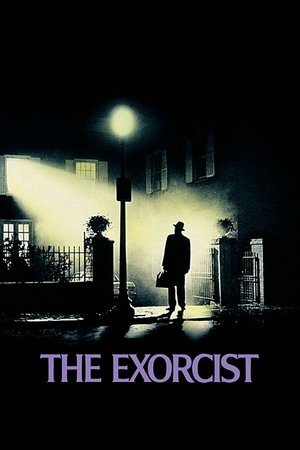
He wrote to Dick Smith, whose work established advanced methods of sectional prosthetic makeup. Smith invited the young artist to his workshop and shared information about sculpture, molds, adhesives, and appliances. Their association eventually brought Baker onto The Exorcist (1973) as an assistant. Smith directed the film's principal makeup work; Baker's own recollection emphasizes that his participation was modest, including assistance with Max von Sydow's aged hands. The assignment nevertheless provided direct experience with effects carefully integrated into sustained dramatic performances. Smith's openness about methods subsequently shaped Baker's own relationships with younger technicians.
One of his early creature jobs involved Octaman (1971), whose rubber monster was built with Doug Beswick. For John Landis's Schlock (1973), Baker devised an ape costume and played the title character himself. Performing inside his own creation exposed practical shortcomings that studio photographs might conceal. The face needed to register intent through limited mechanical movement, and the suit had to endure prolonged action. The film's comedy depended on a physically present creature capable of interacting with people and objects. Baker carried that understanding into subsequent assignments even when the monsters became much less sympathetic.
It's Alive: Designing a Mutant Infant for Larry Cohen
Larry Cohen's It's Alive (1974) presented a creature-design problem with unusually sensitive proportions. Its antagonist is an infant born with dangerous physical abnormalities, and the horror depends upon the disturbing resemblance between a newborn child and a predatory organism. Baker constructed a small artificial figure whose face and hands could communicate the mutation without requiring extensive, prolonged views of its entire body. Cohen frequently stages attacks through fragments of movement and the reactions of nearby adults. The puppet therefore operates within an economy of revelation: the audience learns what the baby can do before obtaining a complete impression of its anatomy.
The film places the creature within a family relationship. Its parents' response has to remain intelligible even when the infant's actions become lethal, so the makeup carries more than a conventional shock function. Baker retained enough familiar bodily detail for the monster to register as a child. This ambiguity differs from the anonymous threats of contemporary giant-animal pictures; the menace has a name, a birthplace, and a recognizable human connection. The artificial form makes the narrative's biological anxiety immediate without supplying a medical explanation that the production cannot substantiate.
Baker's involvement continued with It Lives Again (1978), which required additional mutant-infant material and expanded the original premise. Working at modest budgets demanded solutions that could be photographed reliably within short schedules. His work in this period established a pattern of designing for the shot actually needed: detailed heads for close examination, simpler portions for motion, and selective framing to protect fragile mechanisms. These limitations encouraged attention to camera distance and duration, both of which later became central when he worked with filmmakers seeking uninterrupted transformations.
The Incredible Melting Man and Unstable Human Anatomy
William Sachs's The Incredible Melting Man (1977) gave Baker a protagonist whose damaged body grows less stable throughout the picture. The astronaut played by Alex Rebar suffers grotesque deterioration after exposure to radiation. Baker's makeup had to depict an escalating condition during scenes in which the actor walked, attacked victims, and occupied ordinary locations. Its appearance combines distorted facial contours with moist, irregular surfaces intended to suggest tissue collapsing under its own weight. The materials could not literally melt during normal performance; texture, applied substances, and successive stages create that impression.
The production called for several progressively damaged versions of the same face and body. That continuity is essential to the monster's identity. The makeup makes an otherwise human figure visibly different on each return, while remaining sufficiently recognizable to connect later encounters with the earlier astronaut. Such a design creates its own editing possibilities. A close view of damaged flesh establishes the current condition, then a broader shot permits the performer to move through the location. The construction also had to tolerate heat, moisture, and repeated handling during filming.
Rob Bottin worked alongside Baker on the picture and developed his own skills in sculpting and application. The connection is supported by contemporary production credits and subsequent accounts of the artists' careers. Baker's contributions to The Fury (1978), Brian De Palma's film about destructive psychic powers, further exposed him to the challenge of representing extreme bodily damage. Those assignments helped establish an effects culture in which anatomical changes could be planned as discrete physical events, each requiring its own fabrication and camera strategy.
The Howling: Baker's Departure and Rob Bottin's Completed Effects
Joe Dante originally hired Baker to develop werewolf material for The Howling (1981). The project offered an opportunity to put mechanical facial transformations before the camera, and preliminary design work began. John Landis then obtained financing for his long-planned An American Werewolf in London, to which Baker had previously committed. Baker moved to the Landis production, leaving Dante's film in the hands of Rob Bottin, who completed its major transformation effects. This distinction is crucial: the creature scenes seen in the released version of The Howling should primarily be attributed to Bottin and his team.
The simultaneous productions exposed the different directions available to werewolf makeup at the beginning of the 1980s. Dante's film employed a progressively enlarging humanoid monster whose face and limbs could visibly alter during a confrontation. Landis called for a final animal that moved on four legs. That fundamental difference determined the construction of each project's intermediate stages and the physical relationship between the actor and the finished creature. It also explains why the resemblance between their technical ambitions should not be mistaken for a shared completed effects crew.
In a later interview, Dante recalled hiring Baker and subsequently losing him when Landis's picture became viable. The episode demonstrates how closely the practical horror effects community was connected: artists who had trained together were suddenly responsible for competing productions. Their work appeared within the same release year, but each film established its own imagery and production history.
An American Werewolf in London: Building a Transformation in Plain Sight
Landis imposed a decisive requirement on the werewolf sequence in An American Werewolf in London: David Kessler's body had to change while clearly visible in an illuminated room. Earlier lycanthropy films had frequently used dissolves or concealed cuts between successive makeup stages. Baker's assignment was to make individual anatomical changes occur within shots long enough for viewers to follow them. A concealed mechanism could move a muzzle forward, another could extend the fingers, and a separate artificial section could represent the changing angle of a leg. No single appliance could produce the complete event.
The team constructed several versions of particular body parts, tailored to the perspective and motion of each setup. Flexible coverings hid mechanical supports until they were activated. A forward-reaching head required a different arrangement from a jaw photographed from the side; extended feet and altered hands were built to match specified compositions. The apparent continuity resulted from coordinated photography and editing, but the characteristic movements were recorded physically. Their credibility depends on an exact relationship between the position of David Naughton, the substitute anatomy, and the lens.
Naughton's performance gives the scene its disturbing character. David reacts as though his bones and muscles are being forcibly rearranged, and the visible mechanisms track those moments of pain. Baker had to ensure that fabricated extremities belonged to the same individual who had occupied the room seconds earlier. The sequence is therefore organized around a human experience of involuntary change. The final animal is the destination, but the extended ordeal of becoming that creature supplies the principal horror.
Landis wanted a quadrupedal predator, a choice Baker later recalled as one of the few firm restrictions placed upon his design. It separated the completed monster from the upright Wolf Man tradition associated with Lon Chaney Jr. The animal's broad body and elongated muzzle demanded operating methods different from those of an ordinary performer in a human-shaped suit. Creature footage was assembled from practical constructions suited to specific angles. The resulting silhouette supplied a clear endpoint for David's alteration and matched the physical violence attributed to the unseen attacker earlier in the film.
The work was planned over months although individual mechanical actions could be photographed quickly once prepared. Baker described the disproportion between lengthy fabrication and brief screen time when discussing the production decades later. The movie received the inaugural competitive Academy Award for Makeup in 1982, bringing official recognition to a kind of monster work long associated with independent specialists and studio workshops. Its significance lies in the precision with which the practical method serves the emotional progression of the scene, in the planned relationship of the individual elements.
Jack Goodman's Corpse and Horror Makeup That Preserves Performance
The ghost of Jack Goodman, played by Griffin Dunne, posed a different problem within the same film. After the opening attack, Jack continues speaking to David while displaying increasingly severe injuries. Baker prepared appearances that register the consequences of death without depriving the actor of recognizable expression. Torn tissue and exposed structures frame Dunne's face, leaving enough movement for extended conversations. The makeup also changes across his appearances, making the passage of time legible through the condition of a body that can no longer heal.
Jack's behavior is matter-of-fact and often comic, while his physical state belongs to the imagery of corpse horror. This discrepancy is essential to the scenes. A damaged face must be sufficiently credible for the audience to register its injuries, yet the performer still needs to deliver precise reactions and dialogue. Baker's prosthetic decisions accommodate both demands; the apparition does not depend on a puppet that could replace Dunne's performance. Through this character, the film examines the persistence of personality after bodily destruction with a degree of visual explicitness unavailable to conventional ghost makeup.
The contrast with David's transformation is instructive because the two characters require opposite results. The living man's anatomy ceases to resemble a human body, while the dead friend's facial identity survives catastrophic damage. Baker treated those dramatic conditions as separate design briefs. Together they explain why the film's horror makeup extends beyond its celebrated werewolf scene.
Videodrome: The Torso, the Living Television and Organic Technology
David Cronenberg's Videodrome (1983) shifted Baker's work from animal metamorphosis toward an uneasy fusion of the human body with electronic devices. Max Renn, played by James Woods, begins experiencing alterations that make his flesh behave like equipment. The screenplay demanded images whose logic could scarcely be tested against everyday anatomy. Baker's responsibility was to give those ideas photographed substance: an abdominal opening that accepts objects, a television with a breathing surface, and violent growths associated with a weapon.
For the cavity in Max's abdomen, a false torso provided the necessary internal space. Baker later explained that Woods's limbs could be positioned inside furniture while an artificial body projected forward, permitting the actor to insert a hand into a compartment that could not exist within his real stomach. Other shots employed fabricated body sections to maintain the illusion during movement. The method depended on the precise concealment of real anatomy, supplemented by convincing skin texture at the junctions between performer and replica.
Photography introduced its own difficulties. Cinematographer Mark Irwin described the challenge of matching the reflective qualities of different surfaces under close lighting. Materials that looked convincing on a workshop table could appear artificial when placed beside living skin. A similar problem occurred when foam components changed dimensions during construction: Baker later recalled that some arms looked unexpectedly thin because of shrinkage. Those imperfections offer a useful record of the limits under which such ambitious effects were photographed.
The pulsating television was built from a flexible urethane casting fitted with inflatable bladders. Baker has explained that its image was rear-projected onto a dental-dam screen capable of expansion and contraction. The device seemed to inhale and exhale, allowing a technological object to occupy the same sensory territory as living flesh. Its effect depends on the contradiction between recognizable household equipment and unfamiliar biological movement, a central concern of Cronenberg's film.
Baker also recalled revising a scripted gun effect after experiments with a growth spreading over a victim's face failed to produce satisfactory images. His alternative made the abnormal tissue develop within the body and erupt outward. Cronenberg accepted the proposal. The episode documents genuine creative participation beyond the execution of a fixed design: an effects artist changed how a violent event would be represented because the available technique suggested a more effective physical action.
These constructions distinguish Videodrome from a conventional creature picture. A monster never has to enter the room. Max's own flesh and the objects surrounding him become unreliable, making intimate surfaces the location of the threat. Baker's work translates the film's concerns about perception and technological influence into material events that can be seen, touched, and photographed.
The Funhouse and Ghost Story: Deformity, Apparitions and Accurate Credits
Tobe Hooper's The Funhouse (1981) called for the revelation of a killer whose Frankenstein disguise conceals a severely altered face. Baker received the special makeup design credit; Craig Reardon executed the final makeup. Production records preserved by the American Film Institute indicate that the script originally described the figure as a troll and that Baker advanced the appearance toward a more overtly fantastic creature. The result occupies an ambiguous place between congenital deformity and carnival folklore. That ambiguity serves the setting, in which a visitor's expectations about fabricated attractions are overturned by an actual dangerous individual.
Reardon's responsibility for execution matters because the finished appliance is frequently treated as an undifferentiated Baker effect. The credited division of labor separates the sculptural conception from its production and application during filming. The creature appears in revealing close shots, so the design needed enough surface detail to sustain inspection after the disguise was removed. Its unusual mouth and facial structure also had to accommodate the performance beneath the makeup.
Ghost Story (1981), directed by John Irvin, required decaying supernatural figures based on a recognizable human performer. Dick Smith directed its principal effects and fabricated head-and-shoulder apparitions for the film; Baker was associated with the makeup team. The ghost's disturbed anatomy is integral to a narrative about a concealed death and the return of a victim. Smith's leadership should remain clear when discussing this assignment. The production belongs to Baker's professional connection with his mentor, although its signature effects are best understood within Smith's work.
Thriller: Making Zombies Perform Choreography
Michael Jackson's Thriller (1983), directed by John Landis, brought professional horror makeup into the form of a narrative music video. The short invokes familiar werewolf and zombie imagery while placing the creatures within musical performance. Baker designed the transformation of Jackson into a feline predator and supervised the zombie appearances used in the celebrated street sequence. Those assignments presented difficulties different from the physical breakdown depicted in his feature films: the characters had to execute repeated choreography under lighting that exposed both facial makeup and costumes.
The team varied stages of deterioration and individual facial characteristics. Performers needed enough freedom around their mouths, eyes, and necks to convey expression during coordinated movement. The monster work had to survive repeated takes without visible damage, because a broad ensemble could not be reconstructed between every pass. This made consistency across the dancers as important as the detail of any single face.
Jackson's opening metamorphosis also required maintaining the singer's recognizability while introducing pointed ears, altered features, and animal hair. It reflects the same concern with performer identity that shaped Baker's cinematic transformations, but the intended emotional register is playful and theatrical. Thriller's international popularity exposed a wide audience to detailed practical monster makeup and helped make Baker's authorship familiar outside specialist film circles.
Gremlins 2: New Creatures for Joe Dante's Horror Comedy
Gremlins 2: The New Batch (1990) placed Baker in charge of an unusually diverse creature population. Joe Dante's sequel moves the Gremlins into a modern commercial building containing a genetic laboratory. That premise gave Baker a reason to alter the anatomy of existing characters, originally designed for the first film by Chris Walas. Different substances and experimental conditions could produce organisms with conspicuous mutations, each displaying its own proportions and physical capabilities.
The results include the batlike, spiderlike, and intellectually enlarged Gremlins, as well as a vegetable-faced design inspired by the painted portraits of Giuseppe Arcimboldo. Baker later described that visual reference in an interview. Such variations required fresh mechanical solutions; changes to a creature's outline also affect where operators can fit their hands, cables, and supporting structures. The Brain Gremlin needed expressive facial movement for dialogue, whereas the more extravagant mutants depended on the immediate readability of their altered shapes.
The movie's comic approach did not make its fabrication simple. Puppets had to perform actions across crowded scenes, interact with props, and retain enough continuity for rapid editing. Baker's supervision involved combining distinctive sculptural identities with the requirements of a production in which several effects might be operating simultaneously. The genetic-laboratory concept also turned mutation itself into a running visual idea, connecting the film's creature comedy with the transformation traditions of body horror.
Dante had previously employed Baker during the early development of The Howling, making the sequel a renewed association after their interrupted werewolf project. Here the collaboration reached completion, with the director allowing substantial freedom to propose bizarre anatomical variants. Gremlins 2 remains an instructive case of practical horror effects used for caricature, where the difference between grotesque and amusing is largely determined by timing and performance.
Wolf, Cursed and the Difficult Return of the Werewolf
Mike Nichols's Wolf (1994) gave Baker a lycanthropy story grounded in gradual changes to adult behavior. Jack Nicholson's character becomes more predatory after being bitten, and the makeup develops alongside changes in his senses, posture, and confidence. Baker adjusted hair growth, facial contours, and other features while keeping Nicholson's identity visible through long dramatic scenes. A complete animal transformation would have undermined the film's emphasis on a man whose shifting instincts alter his relationships and judgment.
This approach offered a marked change from the violent metamorphosis he devised for Landis. The effects in Wolf are often cumulative, readable through small differences between appearances without a single extended mechanical spectacle. The restrained design suits Nichols's treatment of a supernatural premise within contemporary social settings. It also demonstrates how Baker's understanding of the actor's face could be used to suggest an extraordinary condition with comparatively limited intervention.
Wes Craven's Cursed (2005) had a troubled production history that sharply restricted Baker's presence in the released film. He prepared werewolf designs and practical material during an earlier version of the project, but script changes and reshoots led to substantial replacement. KNB EFX Group took over later effects work. Interviews and production reporting document the abandonment of much of Baker's original material. For that reason, the final screen creatures cannot be presented as an uncomplicated demonstration of his completed design.
The episode illustrates a production risk specific to elaborate prosthetics. A mechanical creature needs to be planned for particular performances and camera setups long before the finished sequence can be evaluated. Radical revisions can leave carefully built figures without any place in the new footage. Baker's experience on Cursed became part of his growing dissatisfaction with an industry in which the effects design could change after extensive preparation.
The Wolfman: Jack Pierce's Legacy and Modern Prosthetic Design
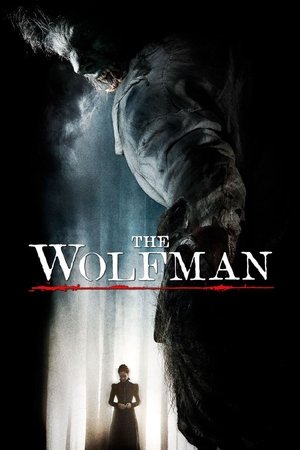
The Wolfman (2010), directed by Joe Johnston, returned Baker to one of the figures that had inspired his childhood interest in makeup. Universal's original Wolf Man (1941) was associated with Jack Pierce's distinctive facial design for Lon Chaney Jr. Baker and Dave Elsey developed a new appearance for Benicio Del Toro that retained the recognizable upright werewolf silhouette. This was a different assignment from the four-legged animal constructed for An American Werewolf in London: the creature needed to retain the face, stature, and acting presence of its human performer.
The makeup used applied fur, altered facial contours, teeth, and carefully fitted prosthetic sections. Close views reveal a character who is visibly changed but remains connected to Del Toro's features. Hair placement and the relationship between muzzle and jaw were particularly consequential because the design had to suggest animal characteristics without eliminating speech and expression. Baker's interest in Pierce's earlier methods supplied a historical reference, although the new production had very different photographic and technical resources.
Digital artists created substantial portions of the transformation sequences, while Baker's studio provided practical designs and makeup. He later expressed disappointment that the material changes were largely realized through computer imagery, having hoped for a stronger physical component. The Academy awarded Baker and Elsey the 2011 Oscar for Makeup. That distinction recognizes the prosthetic work they delivered, even though the feature's finished transformations involve other effects departments as well.
The production completes an unusually direct comparison within Baker's horror work. In 1981 he helped make an upright human transform into a quadrupedal predator through mechanical photography. Nearly three decades later, his designs returned to a humanoid wolf under a production model combining physical appliances with digital animation. Each film offers a record of the different decisions available to creature artists working with a human performer.
The Ring, Spectral Injury and Later Horror Assignments
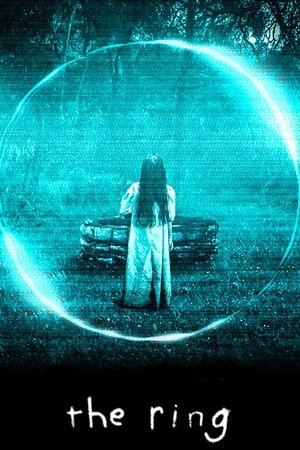
For Gore Verbinski's The Ring (2002), Baker supplied special makeup work associated with Samara, whose appearances depend on images of death and unnatural decay. Surviving production appliances include silicone facial pieces made for Daveigh Chase. Their sculptural texture could be inspected in close photography without requiring an animated creature. The distinction is important to the film's particular mode of horror: Samara remains a childlike figure, and the damage to her face suggests the consequences of a violent history that the investigation gradually uncovers.
Baker returned to the character's practical makeup for The Ring Two (2005), directed by Hideo Nakata. Production artifacts document a series of facial appliances for Kelly Stables, who played Samara in certain scenes. These pieces covered separate areas of the head and neck, allowing localized alteration while preserving the performer's underlying proportions. The construction is an example of his later work relying on carefully designed static makeup in combination with the surrounding film's other photographic methods.
His involvement in horror continued alongside a growing range of assignments outside the genre, but the Ring productions are especially relevant because they demanded recognizable human figures affected by death. The solution is far removed from a mechanical werewolf or a speaking mutant puppet. Decayed surfaces, restrained movement, hair, and framing carry the visual threat. Baker's career repeatedly returned to this question of how much physical information a character needs to become disturbing.
Workshop Practice, Mentorship and the Preservation of Horror Effects
Baker's professional practice brought together sculptors, painters, mold makers, mechanical technicians, and makeup applicators. A complex transformation was divided into separate constructions according to the movements required on camera. Full-body casts established precise measurements; test photographs exposed unsuitable texture or mismatched coloration; rehearsals revealed whether an actor could safely perform inside the equipment. Long preparation could result in a few seconds of footage, making practical effects unusually dependent on advance decisions about shot composition.
His influence also passed through younger artists who worked in his shop. Rob Bottin and Steve Johnson later established distinct reputations in horror effects, while Baker has publicly described his satisfaction in having helped other technicians enter the profession. He traced that openness to Dick Smith, who had shared specialized knowledge when Baker was starting out. These relationships form a concrete chain of professional training within American creature filmmaking, especially during the decades when sophisticated prosthetics began receiving major studio budgets.
As digital methods became common, Baker continued to advocate for the value of a physical character that actors and cinematographers could interact with. His objections concerned practical planning and creative control as much as the presence of computer imagery. During interviews after winding down his large-scale studio work, he described a production culture in which too many late approvals and revisions could weaken the original conception. He effectively retired from major Hollywood makeup assignments after Maleficent (2014), although he continued sculpting and supporting younger artists. The distinction between professional retirement and the end of his interest in monsters is important, given his ongoing workshop activity.
His horror work survives through finished films and through models, molds, and other materials preserved by collectors and institutions. The objects document the physical engineering behind effects sometimes mistaken for purely photographic tricks. A transformation can be studied through its successive artificial body parts; a decaying face reveals where the actor's own features remained visible; a puppet shows what motion the filmmakers expected it to perform. Those records are central to understanding Baker's place in horror history, from the inexpensive monsters of the early 1970s to the ambitious transformation sequences and creature workshops that followed.
Selected Work
Notable Horror Collaborators
Notable collaborators and creative partners throughout Rick Baker's horror career.
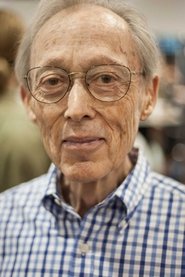 Dick Smith
Mentor / Special Makeup Effects Artist
Smith taught Baker prosthetic methods and employed him as an assistant on The Exorcist (1973). Their professional association also intersected with the effects work on The Fury (1978) and Ghost Story (1981); the principal makeup designs on The Exorcist and Ghost Story were Smith's.
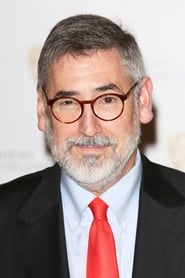 John Landis
Director / Creature Makeup Artist
Landis directed Baker's creature performance and makeup in Schlock (1973), commissioned the mechanical werewolf transformation for An American Werewolf in London (1981), and reunited with him for the horror-themed short Thriller (1983).
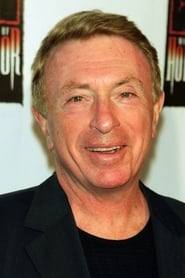 Larry Cohen
Director / Creature Designer
Cohen commissioned Baker's mutant-infant creature for It's Alive (1974) and brought him back for effects work on It Lives Again (1978). Their collaboration was formative in low-budget American biological horror.
 Joe Dante
Director / Creature Effects Designer
Dante originally engaged Baker for The Howling (1981), although Rob Bottin completed its principal werewolf effects after Baker departed. They later worked together on the creature designs for Gremlins 2: The New Batch (1990).
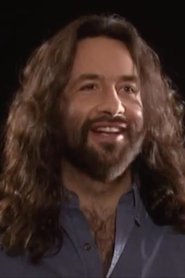 Rob Bottin
Special Makeup Effects Artist / Early Colleague
Bottin worked with Baker on The Incredible Melting Man (1977) and was associated with his early horror effects circle. He subsequently completed the werewolf work on The Howling (1981) after Baker left the production.
 Steve Johnson
Special Makeup Effects Artist / Workshop Collaborator
Johnson trained in Baker's professional circle and worked on An American Werewolf in London (1981) and Videodrome (1983). Those assignments connected him to landmark practical transformations before his independent effects career.
Rick Baker Horror Movies
Special FX / Practical FX (26 credits)
2005
2002
1998
1997
1996
1994
1990
1983
1983
1981
1981
1981
1981
1980
1978
1978
1977
1976
1976
1976
1974
1973
1973
1972
1971
Acting (12 credits)
2025
2025
2024
2023
2019
2018
2009
2008
2006
1983
1976
1972
Visual Effects (1 credits)
1985
Production (1 credits)
1990
Other Crew (1 credits)
2004