





2024
Xavier Gens
Horror Director · Biography · Horror Filmography · Collaborators · Credits
Horror subgenres & themes
Most represented across this person's horror filmography:
ANIMAL
• CANNIBAL
• HORROR ANTHOLOGY
Biography
Xavier Gens: Frontier(s), Extreme Horror and Modern Creature Cinema
Xavier Gens has maintained a persistent relationship with horror throughout a career that also includes action, crime and television. His reputation within the genre was established by Frontier(s), the brutal 2007 survival horror film that placed him within the international conversation surrounding the new wave of extreme French cinema. He subsequently returned to horror through the apocalyptic confinement of The Divide, the self-mutilation of his ABCs of Death segment X Is for XXL, demonic possession in The Crucifixion, aquatic humanoids in Cold Skin and the giant-shark catastrophe of Under Paris. Across these films, Gens repeatedly combines physical danger with social collapse, hostile environments and bodies pushed beyond ordinary limits.
Although his horror films differ considerably in setting and scale, they share an interest in what happens when civilized structures fail. A remote inn conceals ideological and physical barbarity, a nuclear shelter becomes a laboratory for human degradation, a woman's relationship with her own body becomes an act of violent destruction, an isolated island becomes the site of a war between species, and the Seine becomes the setting for an ecological creature feature. Gens often begins with characters who believe that the rules of the surrounding world still function, then strips those assumptions away until survival becomes the only remaining structure.
From Genre Apprenticeship to Frontier(s)
Before directing feature films, Gens worked in several production roles and gained experience on international action productions. That background gave him practical familiarity with large crews, stunt work and physical filmmaking, but his first major personal statement as a feature director came through horror. Frontier(s) was written and directed by Gens and developed from anxieties surrounding contemporary French politics, combining social unrest with a deliberately confrontational survival narrative.
The film begins in a France destabilized by political violence. A group of young criminals flee Paris after a robbery and eventually seek refuge at an isolated inn near the border. Their supposed sanctuary is controlled by a violent neo-Nazi family whose ideology, cannibalism and sadism transform the escape into a struggle for survival. The premise allows Gens to connect political extremism with exploitation-horror imagery without reducing the film to a straightforward political allegory.
Frontier(s) is frequently discussed alongside the cycle of French films associated with New French Extremity, particularly because of its graphic violence, bodily suffering and willingness to push its protagonist through an escalating series of physical ordeals. Yet its influences also belong openly to older horror traditions. The isolated family, industrial spaces, slaughterhouse imagery and repeated pursuit of a young woman recall survival horror and rural nightmare films extending back through the 1970s and 1980s.
Karina Testa's Yasmine becomes the emotional and physical center of the film. Gens places her through confinement, pursuit, injury and repeated encounters with a family that attempts to control both her body and her future. The violence is extreme, but the film's structure ultimately depends on Yasmine refusing the identity assigned to her by her captors. Her survival gives the otherwise bleak narrative a clear point of resistance.
Frontier(s) and the Horror of Political Extremism
The political background of Frontier(s) is not incidental decoration. Gens has connected the original conception of the film to the shock surrounding the success of the French far right in the 2002 presidential election. The urban unrest of the opening therefore establishes a society already under pressure before the protagonists encounter the openly fascist family at the center of the horror.
Gens does not turn the film into a realistic political drama. Instead, he pushes political fear into grotesque genre territory. The family represents an enclosed ideology that has become physically monstrous, combining authoritarian hierarchy, racial obsession and reproductive control. Their remote environment allows those beliefs to operate without meaningful outside resistance, converting the inn and surrounding industrial spaces into a private state governed by brutality.
This fusion of contemporary anxiety and exploitation cinema became one of the distinguishing features of the film. The horror is designed to be immediate and visceral, but its villains are not arbitrary killers. Their violence emerges from a worldview. That gives Frontier(s) a specific identity within the wave of European extreme horror and established Gens as a filmmaker willing to connect genre spectacle with social hostility.
The Divide and Horror After the End of the World
Gens returned to sustained horror with The Divide, released in 2011. The film begins with a nuclear attack on New York and follows survivors who escape into the basement shelter of their apartment building. Rather than focusing primarily on the catastrophe outside, Gens confines almost the entire narrative to the bunker and studies the deterioration of the people trapped inside it.
The setting transforms an apocalyptic science-fiction premise into psychological and physical horror. Food becomes scarce, authority breaks down and relationships become increasingly defined by domination, humiliation and fear. The survivors initially share a common need to remain alive, but the conditions inside the shelter steadily destroy the social rules that once connected them.
Gens shot the film in a way intended to intensify the performers' sense of deterioration, and the production became closely associated with the increasingly exhausted physical appearance of the cast. That process suits a story in which time and confinement alter the characters visibly. The bunker does not merely protect them from the apocalypse. It becomes another form of danger.
The Divide develops one of the clearest recurring ideas in Gens's horror: the external monster is not always the final threat. Nuclear destruction creates the situation, but much of the film's cruelty emerges from human behavior once accountability disappears. The characters become capable of acts that the world outside the shelter had previously restrained.
X Is for XXL and Body Horror
Gens contributed X Is for XXL to the 2012 anthology The ABCs of Death. The segment compresses his interest in bodily extremity into a short and exceptionally graphic form. Its protagonist is an overweight woman subjected to ridicule and surrounded by idealized images of thin female bodies. Her response becomes an act of catastrophic self-mutilation as she attempts to remove her own body fat physically.
The horror operates through both gore and social pressure. The violence is self-directed, but the segment presents it within an environment of humiliation, advertising and judgment. Gens turns the pursuit of an imposed physical ideal into literal destruction of the body. What might begin as grotesque exaggeration reaches an ending in which the attempt to become socially acceptable has eliminated the person herself.
The segment demonstrates that Gens's attraction to extreme imagery is not restricted to killers and external attacks. The body can become its own site of horror, particularly when violence is produced through the internalization of expectations imposed from outside.
The Crucifixion and Demonic Horror
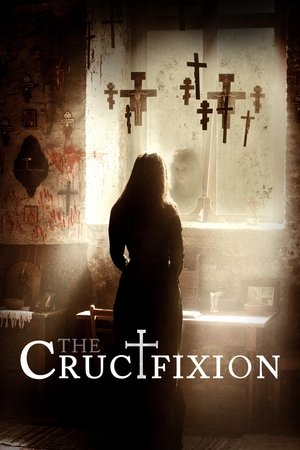
The Crucifixion in 2017 moved Gens toward supernatural and religious horror. Inspired by a real Romanian case but heavily fictionalized into a demonic narrative, the film follows journalist Nicole Rawlins as she investigates the death of a nun following an exorcism. Her attempt to determine whether the event resulted from religious abuse or genuine possession gradually draws her toward experiences that undermine her initial skepticism.
The project differs considerably from the physical survival horror of Frontier(s). Churches, monasteries, ritual and belief replace the industrial environments and human predators of the earlier film. Yet Gens again constructs horror around a character entering a system whose rules she initially believes she understands. Nicole approaches the story as an investigation, but the assumptions supporting that investigation become increasingly unreliable.
The film also placed Gens inside a more conventional international supernatural-horror production structure. He has discussed the difference between his own instincts and some decisions made during post-production, particularly the greater emphasis on commercial jump scares. That distinction is useful in understanding his broader career: Gens has alternated between personal genre projects and productions in which the final shape is influenced strongly by external commercial expectations.
Cold Skin and Horror at the Edge of the World
Released in the same period, Cold Skin was a much more personal project for Gens. Adapted from Albert Sánchez Piñol's novel, the film takes place on an isolated island near the Antarctic Circle. A young man arrives to work as a weather observer and discovers that the previous occupant is missing. His only apparent neighbor is Gruner, the lighthouse keeper, who has transformed his position into a fortress against amphibious humanoid creatures that emerge from the sea.
The initial structure resembles siege horror. Night after night the creatures attack, forcing the men into defensive violence. Yet the apparent division between human defenders and monstrous attackers becomes progressively unstable. The presence of Aneris, an amphibious female kept by Gruner, reveals that the relationship between the species is far more complicated than the protagonist initially understands.
Gens uses the isolated island to remove most of the social frameworks that normally determine behavior. The characters are left with fear, possession, prejudice and survival. Gruner's insistence on treating the creatures solely as enemies begins to appear less like practical necessity and more like a worldview that perpetuates the conflict.
The film consequently moves from creature feature toward moral horror. The creatures remain physically threatening, but human violence becomes increasingly difficult to justify as simple self-defense. The protagonist must decide whether he will inherit Gruner's hatred or recognize that the conflict has been maintained by assumptions that neither side is required to accept.
Cold Skin also demonstrates Gens's continuing attraction to tactile monsters and physical environments. The remote landscape, practical creature presence and repeated night attacks give the film an old-fashioned adventure-horror quality even as its central conflict becomes increasingly concerned with empathy and dehumanization.
La Horde, Cell and Gens as a Horror Producer
Gens's connection with horror has also extended beyond directing. He was involved as a producer on La Horde, the French zombie film directed by Yannick Dahan and Benjamin Rocher. The film combines criminal violence, police conflict and a rapidly expanding undead outbreak, fitting naturally beside the harsher strain of French genre cinema with which Gens had become associated after Frontier(s).
He later served as an executive producer on Cell, adapted from Stephen King's novel and directed by Tod Williams. These production roles are secondary to his work as a director, but they reinforce the continuity of his involvement with horror during periods when his own directing career moved between different genres.
Under Paris and the Return to French Creature Horror
With Under Paris in 2024, Gens returned to French horror on a large commercial scale. The film stars Bérénice Bejo as Sophia, a scientist whose traumatic history with a shark resurfaces when an abnormally dangerous specimen is discovered in the Seine. The threat becomes particularly urgent because Paris is preparing to host an international triathlon in the river.
The premise openly embraces creature-feature tradition. A dangerous animal enters a populated environment, authorities face pressure to protect a major public event and scientific warnings compete with political and institutional priorities. Gens relocates shark horror away from beaches and open ocean into one of the world's most recognizable cities, using the Seine as both ecological environment and urban artery.
The film's connection with Jaws is inevitable at the level of genre structure, but Gens places the material within contemporary environmental anxiety. The shark is not simply an isolated predator wandering into human territory. Mutation, pollution and changing ecosystems become part of the conditions that make the threat possible. The creature feature therefore functions alongside an ecological warning without ceasing to deliver large-scale attack sequences.
The Paris setting allows Gens to create images fundamentally different from conventional shark cinema. Divers descend beneath a dense urban landscape, attacks occur below bridges and monuments, and the climax transforms the Seine itself into an unstable zone of destruction. The contrast between familiar city geography and an animal associated with the open sea gives the film much of its immediate horror identity.
Netflix categorized Under Paris as both horror and creature feature, and its global streaming exposure brought Gens's genre work to an audience significantly larger than that reached by his earlier independent films. Nearly two decades after Frontier(s), he had returned to French-language horror with a project whose scale was radically different but whose central concern with survival inside a collapsing system remained recognizable.
Violence, Confinement and Survival in Xavier Gens's Horror
Confinement is one of the strongest recurring structures across Gens's horror films. The protagonists of Frontier(s) enter a remote property controlled by their captors. The survivors of The Divide are physically sealed inside a bunker. Cold Skin isolates its characters on an island surrounded by hostile creatures. The Crucifixion repeatedly places its investigation inside religious spaces where ordinary rational explanations seem increasingly inadequate.
Even Under Paris, despite operating on a much larger urban canvas, creates forms of enclosure beneath the city. Divers enter underwater environments from which escape is difficult, while the enormous public event above them prevents authorities from treating the danger as a simple problem that can be isolated from society.
Gens also repeatedly uses violence as a process of transformation. Yasmine in Frontier(s) is physically altered by everything she survives. The inhabitants of The Divide become almost unrecognizable through deprivation and cruelty. The protagonist of X Is for XXL deliberately destroys her body. The creatures and humans of Cold Skin force each other into increasingly entrenched forms of aggression. Survival is rarely clean. Characters emerge from Gens's horror physically and psychologically changed by the environments through which they have passed.
Practical Horror and Physical Filmmaking
Gens's background in action filmmaking has consistently influenced the way he approaches horror. Violence is frequently staged around bodies interacting directly with locations rather than existing only through abstract suggestion. Chases move through tunnels, corridors, bunkers, industrial rooms, towers and underwater spaces. Characters collide with the architecture around them, making setting an active component of the threat.
This physical approach is particularly visible in Frontier(s) and The Divide, where cramped spaces intensify confrontations and prevent easy escape. In Cold Skin, repeated attacks against the lighthouse and weather station turn architecture into defensive machinery. Under Paris expands the same instinct through underwater action and large-scale creature sequences.
Gens has also demonstrated an interest in practical makeup and creature work even when digital effects are necessary. His films often depend on the audience feeling the weight and physical presence of damaged bodies or nonhuman beings. That emphasis connects his work to the horror films he has cited as formative influences and distinguishes his strongest genre sequences from horror built primarily around atmosphere without bodily consequence.
Xavier Gens and Modern French Horror
Gens emerged during a period in which French horror was attracting renewed international attention through filmmakers willing to combine graphic violence with strong formal identities. Frontier(s) remains the film most closely associated with that moment in his career. Its survival structure, political anger and extreme physical violence gave it a recognizable place beside other confrontational French genre films of the period without making Gens stylistically identical to the directors around him.
His later career shows why reducing him entirely to New French Extremity would be misleading. The Divide is an English-language apocalyptic chamber piece. The Crucifixion belongs to supernatural possession horror. Cold Skin combines creature cinema with philosophical science fiction. Under Paris is a large-scale French shark movie built for an international streaming audience. The common thread is not a single national movement but Gens's repeated interest in testing human behavior under extreme conditions.
Xavier Gens's Horror Legacy
Xavier Gens's position in horror rests on a concentrated but varied body of work. Frontier(s) gave him an immediate identity within European extreme horror, while The Divide demonstrated that his interest in brutality could be redirected toward psychological collapse rather than external killers. X Is for XXL reduced body horror to an exceptionally direct expression of social self-destruction, and The Crucifixion moved him into religious supernatural horror.
Cold Skin broadened that identity through a morally ambiguous creature narrative, while Under Paris returned him to French horror through a commercially scaled shark film that still preserved themes of institutional failure, environmental instability and physical survival. His production involvement in films including La Horde and Cell further demonstrates that horror has remained a recurring part of his professional life even when he has worked extensively outside the genre.
The result is a horror career defined less by a single franchise or monster than by recurring pressure on people, bodies and social structures. Whether the threat comes from fascist killers, nuclear annihilation, demonic possession, another species or a predator beneath Paris, Gens repeatedly asks what remains when ordinary systems can no longer protect the people who depend on them.
Selected Work
Notable Horror Collaborators
Notable collaborators and creative partners throughout Xavier Gens's horror career.
 Iván González
RECURRING ACTOR
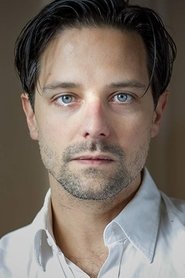
Appeared in The Divide, Cold Skin and The Crucifixion, spanning three distinct phases of Gens' horror career from apocalyptic confinement to creature horror and supernatural possession.
LB
Laurent Barès
CINEMATOGRAPHER
Shot Frontier(s) and The Divide, giving two of Gens' harshest horror films their oppressive visual character across rural slaughterhouse spaces and a deteriorating nuclear shelter.
CR
Carlo Rizzo
EDITOR
Edited Frontier(s) and The Divide, shaping the escalating violence and claustrophobic rhythm of two films central to Gens' reputation for physically intense survival horror.
JT
Jean-Pierre Taïeb
HORROR COMPOSER
Scored Frontier(s) and The Divide, providing the musical identity for Gens' breakthrough extreme horror film and his later descent into post-apocalyptic psychological brutality.
DA
Daniel Aranyó
CINEMATOGRAPHER
Photographed Cold Skin and The Crucifixion, moving with Gens between the isolated landscapes of creature horror and the darker religious spaces of demonic supernatural horror.
ES
Eron Sheean
SCREENWRITER
Co-wrote The Divide and Cold Skin, connecting two of Gens' most severe stories of isolated communities, collapsing human behavior and survival under hostile conditions.
Xavier Gens Horror Movies
Directing (6 credits)
2017
2017
2013
2011
2007
Acting (6 credits)
2025
2024
2019
2012
2010
2008
Writing (2 credits)
2024
2007
Production (3 credits)
2024
2018
2016