


1991
Arthur Malet
Horror Actor · Biography · Horror Filmography · Credits
Horror subgenres & themes
Biography
Arthur Malet and the Character Actors of Classic Horror
Arthur Malet was an English character actor whose long American career moved across theatre, television, comedy, drama and family cinema, but who also accumulated a small and unusually varied group of horror and horror-adjacent roles. He was never a genre specialist and rarely occupied the center of a horror narrative. Instead, Malet belonged to the tradition of supporting performers whose distinctive faces and precise character work could give a strange encounter, an eccentric authority figure or a brief ominous scene an immediate personality. His best-known contribution to horror came in John Carpenter's Halloween, where his appearance as the graveyard keeper forms part of one of the film's crucial early transitions from Michael Myers' past into the threat developing in Haddonfield.
Born in Lee-on-Solent, England, on September 24, 1927, Malet established himself first on the American stage after moving to the United States. His theatre work brought major early recognition, including awards for performances in productions such as Volpone and The Misanthrope. That background helps explain a screen career frequently built around compact supporting roles. Malet could establish age, nervousness, authority or eccentricity with relatively little screen time, and filmmakers repeatedly cast him as clerks, doctors, attendants, officials, servants and elderly figures. He often played characters older than he actually was, a quality that became especially useful when horror and fantasy required someone who seemed to belong naturally to an older or stranger world.
Night Gallery and Early Television Horror
One of Malet's earliest sustained connections with fantastic television came through Rod Serling's Night Gallery. He appeared in two segments of the anthology. In The Little Black Bag, adapted by Serling from the story by C. M. Kornbluth, Malet played Ennis in a tale about advanced medical technology falling into the hands of people living nearly a century earlier. The story mixes speculative science with the fatalistic structure characteristic of Serling's television work, moving from the possibility of miraculous healing toward an abrupt and darker conclusion.
Malet returned to Night Gallery in Camera Obscura, playing Abel Joyce. Based on a story by Basil Copper, the segment centers on a ruthless moneylender confronted by an apparently impossible optical device that ultimately becomes an instrument of supernatural justice. Malet's two appearances are useful in understanding his place within genre television. He was not cast as a recurring monster or hero. He was a dependable character performer who could enter a strange premise briefly and help make its world feel inhabited and credible.
Young Frankenstein and Comic Gothic Horror
Malet appeared as a village elder in Mel Brooks' Young Frankenstein in 1974. The role was small, but the film placed him inside one of the most enduring comic reinterpretations of Universal-style Gothic horror. Brooks and Gene Wilder constructed the film as both parody and affectionate recreation, using black-and-white photography, castle laboratories, villagers, graveyards and electrical experiments to reproduce the visual vocabulary of classic Frankenstein cinema. Malet's presence among the villagers suited the kind of old-world character work that had already become one of his screen specialties.
The part also illustrates an important distinction in Malet's genre career. He was comfortable moving between genuine horror and comic versions of horror iconography. He had already appeared in Munster, Go Home!, a feature extension of the television horror-comedy world built around the Munster family, and later guest-starred as the Wizard in the 1976 television series Monster Squad. In that series, Dracula, Frankenstein's monster and the Wolf Man were transformed into heroic figures battling exaggerated villains. Malet's Wizard, a Merlin-like antagonist capable of miniaturizing monuments, placed him again inside a playful version of familiar supernatural imagery.
Halloween and the Graveyard Keeper
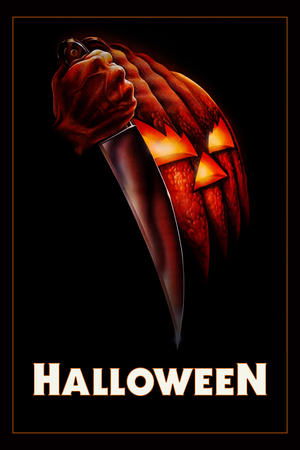
Malet's most important horror appearance came in Halloween in 1978. John Carpenter's film uses him as the graveyard keeper who leads Dr. Sam Loomis to the burial place of Judith Myers. The scene is brief but structurally important. Loomis has already understood that Michael Myers is returning toward Haddonfield, but the missing headstone provides physical evidence that Michael's escape is not simply a flight from confinement. He has deliberately returned to the site of his original crime and removed his sister's grave marker.
Malet's character belongs to the ordinary world surrounding the supernatural-seeming presence of Michael Myers. He does not confront the killer and is not part of the later siege around Laurie Strode. Instead, his matter-of-fact presence at the cemetery helps Carpenter ground the discovery in mundane reality. The keeper leads Loomis through rows of graves before they find Judith Myers' stone missing. The contrast is important to the film's method: extraordinary evil is gradually revealed through ordinary suburban streets, schools, houses and public spaces.
The sequence also places Malet opposite Donald Pleasence, whose performance as Loomis supplies much of Halloween with its language of absolute evil. Malet's restrained supporting role works as a counterweight. The graveyard keeper treats the cemetery as a workplace until the desecrated grave transforms the scene into evidence of something far more threatening. Although Malet appears only briefly, the role became his clearest connection to horror history because of the enormous influence Halloween subsequently exerted on the slasher film and independent American horror.
Savage Harvest and Natural Horror
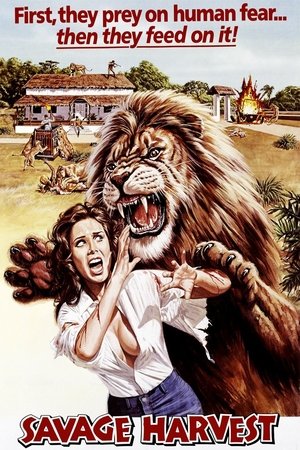
Malet returned to direct physical danger in Savage Harvest in 1981, playing MacGruder. The film follows a family in Africa threatened by lions driven into increasingly aggressive behavior by drought and scarcity. Rather than supernatural horror, the premise belongs to the tradition of animal-attack and survival films in which human characters become vulnerable once the apparent separation between civilization and the natural world collapses.
The film expanded Malet's horror-related work beyond the Gothic and supernatural associations of his earlier roles. His supporting presence again fitted a story built around a group of characters confronting an environment that has become hostile. Savage Harvest is considerably less historically important than Halloween, but it demonstrates the range of genre material in which Malet appeared during this period.
Hotline, Serial-Killer Suspense and The Runestone
In the 1982 television film Hotline, Malet played Hooten. The story follows a woman working at a crisis hotline who becomes connected to a serial killer using phone calls and cryptic riddles to announce his crimes. The production sits on the border between thriller and horror, using anonymous communication and the vulnerability of the telephone to create the sense that violence can invade an apparently safe professional environment. Malet again appears in a supporting capacity inside a narrative driven by fear rather than as one of its central protagonists.
His later genre work included The Runestone in 1991, in which he played Stoddard. The film combines adventure, fantasy and horror around the discovery of an ancient Norse runestone connected to Fenrir and the prophecy of Ragnarök. Its monster-driven mythology represents another distinct branch of Malet's genre filmography, far removed from the minimal realism of Halloween or the psychological threat of Hotline. By this stage his ability to appear naturally within eccentric or fantastical settings had become one of the recognizable features of his screen persona.
Arthur Malet's Place in Horror Cinema
Arthur Malet should not be described as a horror actor in the same sense as performers whose careers were built predominantly inside the genre. His broader work included major family films, animation, comedy, drama and decades of television. What makes him relevant to horror history is instead the concentration of memorable genre intersections across that larger career. Night Gallery connected him to anthology horror and supernatural television. Young Frankenstein and Monster Squad placed him inside comic transformations of classic monster traditions. Savage Harvest moved toward natural horror, Hotline toward serial-killer suspense and The Runestone toward mythological monster cinema.
Above them all remains Halloween. Malet's graveyard keeper occupies only a small portion of the film, yet the scene he shares with Donald Pleasence helps confirm Michael Myers' return and supplies one of the earliest concrete signs that the events of Halloween night are being deliberately connected to the murder committed fifteen years earlier. It is a characteristic Arthur Malet role: brief, precise and apparently ordinary, but positioned inside a film whose significance became much larger than anyone involved in that small cemetery scene could have predicted.
Selected Work
Arthur Malet Horror Movies
Acting (9 credits)
1982
1981
1978
1976
1972
1970
1962
1955