



2021
Bruce Campbell
Horror Actor · Biography · Horror Filmography · Collaborators · Credits
Horror subgenres & themes
Biography
Bruce Campbell and the Horror Hero Who Was Never Meant to Be a Hero
Bruce Campbell became one of horror cinema's most enduring cult figures by playing a hero who was never designed to look heroic. Ash Williams begins as an ordinary young man trapped in a cabin, frightened, overwhelmed and often several steps behind the supernatural forces attacking him. Across the Evil Dead series he gradually becomes louder, tougher and more absurd, but the essential quality remains the same: Ash survives not because he is uniquely prepared for horror, but because he keeps fighting after preparation has become impossible.
This made Campbell's screen identity very different from the traditional horror star. He did not become famous by playing a monster like Boris Karloff, Christopher Lee or Robert Englund, and he was not primarily the dignified investigator confronting evil from a position of knowledge. Campbell became the man horror repeatedly humiliates before allowing him to win. He is injured, possessed, covered in blood, attacked by his own hand, thrown across rooms and forced to improvise weapons from whatever remains available. The comedy comes from exaggeration, but the physical commitment underneath it is real.
That relationship between suffering and bravado became one of the foundations of modern horror comedy. Campbell's Ash helped create a model of the genre protagonist who can move from terror to slapstick to action without leaving the same fictional world. The chainsaw hand, shotgun, torn shirt and increasingly ridiculous confidence became iconic, but the character worked because Campbell never allowed Ash to become completely competent. Even at his most heroic, there is always something slightly desperate underneath the pose.
Michigan, Sam Raimi and Filmmaking Before Hollywood
Bruce Lorne Campbell was born in Royal Oak, Michigan, on June 22, 1958. His connection with Sam Raimi began long before either man had a professional film career. They met while young and became part of a group of friends who spent years making short films, experimenting with Super 8 and learning filmmaking through direct practice rather than through an established studio system. Campbell later described Raimi as one of the hardest-working directors he had known, and their early collaboration developed through repeated experimentation rather than a single fortunate meeting.
The group also included Robert Tapert, who would become another essential figure in Campbell's career. Together they created the production structure that eventually became Renaissance Pictures, but the important point was not simply the company name. Raimi, Campbell and Tapert developed a working method based on pooling resources, asking friends and relatives for help, performing multiple jobs and treating filmmaking as something that could be constructed locally rather than waiting for permission from Hollywood.
Campbell was therefore involved in production from the beginning, not only acting. His later public image would center almost completely on Ash, but the origins of his career were much broader. He helped raise money, participated in the practical side of production and understood the financial problems involved in making an independent feature. That experience explains why he remained closely involved with the Evil Dead series not only as its star but later as a producer and guardian of the franchise.
Within the Woods and the Prototype for Evil Dead
Before The Evil Dead, Raimi and his collaborators made Within the Woods (1978), a short horror film intended largely to demonstrate that they could create an effective feature. Campbell played one of the central characters and also served as an executive producer. Shot cheaply in Michigan, the film allowed the group to experiment with possession, woodland horror, sudden attacks and the aggressive camera techniques that would later become much more elaborate.
The project was not conceived as a finished commercial product in the normal sense. It functioned as evidence. Raimi, Campbell and Tapert needed potential investors to see that a group of extremely young filmmakers could create something frightening with limited resources. The strategy worked well enough to help them raise money for the feature that eventually became The Evil Dead.
This origin is important because Campbell's horror career did not begin when a professional casting director selected him for a role. He was already part of the filmmaking apparatus that created the role. Ash Williams emerged from a group whose members had been making films together for years, and that shared history would make the character unusually connected to the actor playing him.
The Evil Dead and the Making of Ash Williams
The Evil Dead was shot primarily in Tennessee under conditions that became part of the film's legend. The production lasted far longer than expected, money repeatedly became a problem and the physical demands placed on the cast were severe. Campbell later recalled that the shoot stretched across roughly twelve weeks even though the filmmakers had initially expected a much shorter schedule. The film had to be completed in stages as additional money became available.
Campbell's Ash is not yet the character audiences would later recognize from the sequels. In the first film he is cautious, frightened and reactive. He watches stronger personalities take control before gradually becoming the final survivor. There are few jokes and almost none of the exaggerated confidence that would later define him. Ash survives because events eliminate every alternative rather than because he appears destined to become a hero.
This vulnerability gives the original film much of its intensity. When demons possess Ash's friends one after another, Campbell is required to respond physically to an environment that seems determined to assault him from every direction. Doors, windows, furniture and bodies all become unstable. Raimi's camera attacks from impossible perspectives while Campbell provides the human figure onto which the chaos is repeatedly inflicted.
The famous ending reinforces the point. Ash has apparently survived the night and emerged from the cabin, only for the unseen evil to race toward him again. The film refuses to give him the conventional reward of survival. Even before the sequels transformed Ash into a continuing character, Hooper-like physical punishment and Raimi's refusal to respect bodily comfort had already established the terms of Campbell's relationship with horror.
A Cult Film Built Through Survival
The Evil Dead did not immediately become a conventional mainstream success, but its reputation grew through theatrical screenings, home video and controversy. In Britain it became associated with the video nasty panic, which simultaneously restricted access to the film and strengthened its reputation as something unusually dangerous. The extreme gore, aggressive camera work and almost relentless escalation helped the film develop a cult identity that continued long after its original release.
Campbell became inseparable from that cult even though Ash was not yet the wisecracking icon later audiences remembered. Fans discovered the film repeatedly through home video, midnight screenings and later restorations, creating a relationship with the series that was more intense than its original commercial scale might suggest. Campbell himself has often emphasized that Evil Dead fandom was never necessarily the largest in horror, but it was exceptionally persistent.
That persistence became crucial because the series developed slowly. There was no rapid succession of annual sequels designed to exploit the first film immediately. Years passed between installments, and each new film changed tone dramatically. As a result, Campbell was able to evolve Ash rather than simply repeat him.
Evil Dead II and the Birth of Splatstick
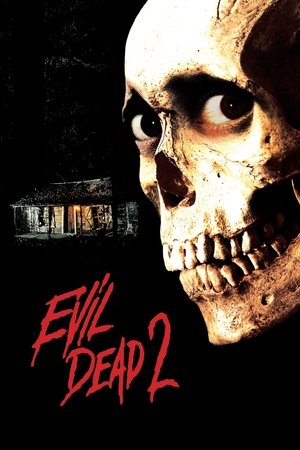
Evil Dead II (1987) transformed both the franchise and Campbell's performance. Raimi returned to the central idea of a cabin, demonic possession and Ash fighting for survival, but the tone became much more elastic. Horror and slapstick no longer existed in separate scenes. They collided inside the same action, creating a form of splatter comedy in which extreme physical violence could suddenly become a joke without completely losing its grotesque force.
Campbell became the center of that transformation. One of the film's most famous sequences leaves Ash alone inside the cabin while his own body and the surrounding environment seem to turn against him. He fights his possessed hand, smashes plates over his own head, is thrown through rooms and gradually loses any stable distinction between terror and physical comedy. The performance requires the precision of slapstick but retains the desperate energy of horror.
The possessed hand sequence is especially important because Campbell effectively performs against himself. The hand becomes a separate character, forcing his entire body into an argument between control and rebellion. The situation is ridiculous, but the violence remains surprisingly brutal. When Ash eventually cuts off the hand and replaces it with a chainsaw, the character crosses a threshold from victim toward something closer to an action hero.
Campbell later described Evil Dead II as a particularly satisfying entry because the filmmakers had more experience and enough resources to execute ideas that would have been impossible on the first film. The result also established the form of Ash most audiences remember: increasingly sarcastic, physically capable and capable of responding to supernatural horror with aggression rather than only fear.
Ash Becomes a Horror Hero
The evolution of Ash is unusual because competence does not replace absurdity. By the end of Evil Dead II, he has assembled the visual elements of an action icon, but Raimi and Campbell constantly undermine the pose. The chainsaw hand and shotgun look heroic, yet Ash has reached that point only after spending much of the film screaming, hallucinating and fighting pieces of his own body.
Campbell has explained that the character became progressively more confident across the series. In the first film Ash is essentially an ordinary man. In the second he has experience and becomes more willing to fight. By the time of Army of Darkness, confidence has grown into arrogance. That progression works because the audience remembers how much punishment produced the attitude.
The performance also depends heavily on Campbell's ability to shift between facial exaggeration and physical commitment. Raimi often pushes the camera extremely close, forcing Campbell to respond with expressions large enough to match the visual style. In another context the acting might appear excessive, but inside Evil Dead the excess becomes part of the world itself.
Crimewave and the Difficult Transition Toward Studios
Between the first two Evil Dead films, Campbell appeared in Sam Raimi's Crimewave (1985), a chaotic mixture of comedy, crime and cartoon violence produced with studio involvement. Campbell had originally expected a larger role, but the production became a difficult experience for the filmmakers and demonstrated how different conventional studio filmmaking could be from the independence of their early work.
The film is not central to Campbell's horror identity, but the experience matters because it reinforced the value he and Raimi placed on creative independence. The Evil Dead films had been extraordinarily difficult to make, but the people creating them retained a degree of control that became harder to preserve when larger industrial structures entered the process.
Campbell would continue working throughout Hollywood, but he rarely developed the conventional leading-man career his appearance and charisma might have suggested. Instead, he became increasingly comfortable operating between studio supporting roles, television, independent cinema and low-budget genre work. That flexibility would ultimately prove more important to his longevity than a brief attempt to become a traditional star.
Maniac Cop and Horror Outside Evil Dead
Maniac Cop (1988) demonstrated that Campbell's horror career could exist independently of Raimi and Ash. Directed by William Lustig and written by Larry Cohen, the film follows a series of murders apparently committed by a uniformed police officer. Campbell plays Jack Forrest, a New York policeman who becomes entangled in the investigation and initially appears connected to the crimes.
The performance is far more restrained than Ash. Campbell plays inside a grim urban horror environment where the humor and cartoon physicality of Evil Dead II would be inappropriate. His presence therefore shows that the increasingly exaggerated Ash persona had not consumed his ability to function as a conventional dramatic actor.
Maniac Cop also became another cult horror title whose reputation grew beyond its initial release. Campbell returned in Maniac Cop 2, connecting him to a second horror franchise even though his role there was much smaller. The films reinforced his growing status as an actor whose appearance could attract a genre audience independent of Evil Dead.
Army of Darkness and the Full Transformation of Ash
Army of Darkness pushed Ash further away from the terrified survivor of the original film than anyone could have predicted. Thrown into a medieval world following the ending of Evil Dead II, he becomes the central figure in an adventure filled with skeleton armies, sorcery, slapstick, sword fights and deliberate echoes of classical fantasy cinema.
Campbell described this version of Ash as an ugly American, and the description captures the character perfectly. He is loud, arrogant, impatient and convinced that his twentieth-century knowledge makes him superior to everyone around him. The confidence is entertaining precisely because the film repeatedly demonstrates how often Ash misunderstands situations or creates new problems through his own carelessness.
The miniature Ash sequence pushes Campbell's physical comedy into openly cartoon territory. He is attacked by tiny versions of himself, abused by his own reflections and eventually confronted by an evil duplicate. Raimi uses effects, editing and performance to divide Campbell's body into multiple comic threats, expanding the idea of self-conflict already present in the possessed-hand sequence of Evil Dead II.
The film also completed Ash's transformation into an icon. The chainsaw, shotgun, mechanical hand and exaggerated one-liners gave Campbell a silhouette and personality recognizable even outside horror fandom. Yet the film was not a major theatrical success on its original release, and for years the franchise seemed unlikely to continue with another Campbell-led feature.
Leaving Ash Without Leaving Sam Raimi
Campbell's collaboration with Raimi continued even when Evil Dead appeared dormant. He became a recurring presence throughout Raimi's career, sometimes in substantial roles and sometimes in brief appearances designed partly for audiences familiar with their shared history. The connection moved through television, fantasy and eventually large studio productions such as the Spider-Man trilogy.
Those appearances were not horror, but they reveal how deeply the two men's careers remained connected. Campbell could enter a Raimi film for only a few minutes and immediately create a recognizable rhythm of irritation, arrogance or comic authority. Their collaboration had developed over such a long period that Raimi understood exactly how to use Campbell's timing without needing him to play Ash.
The relationship also preserved the possibility of returning to Evil Dead. Campbell, Raimi and Robert Tapert remained connected to the property, and their long-term involvement prevented the franchise from becoming completely detached from the group that had created it.
Bubba Ho-Tep and the Aging Horror Hero
Bubba Ho-Tep (2002) gave Campbell one of the most important performances of his career outside Evil Dead. Directed by Don Coscarelli from a story by Joe R. Lansdale, the film casts him as an elderly man living in a Texas nursing home who claims to be the real Elvis Presley. According to his story, he exchanged identities with an impersonator years earlier and then lost the documentation that could prove who he actually was.
The premise initially appears designed for absurd comedy, especially when Elvis joins another resident who believes he is John F. Kennedy in fighting an ancient Egyptian mummy. Yet Campbell plays the role with surprising melancholy. His Elvis is physically weakened, sexually frustrated, forgotten by the world and forced to confront the possibility that his greatest achievements are behind him.
The mummy eventually gives him something he has lacked: a reason to act. The battle is ridiculous, but the emotional structure is sincere. Campbell turns the idea of the aging hero into a story about recovering dignity at a point when physical strength has largely disappeared. The role therefore offers an unexpected counterpart to Ash. Both characters face monsters with limited resources, but Elvis does so while painfully conscious that his own body is failing.
The film became another cult favorite and demonstrated that Campbell could carry horror comedy without relying on the familiar gestures of Ash Williams. His performance is quieter, sadder and more reflective, while still retaining the ability to make absurd genre material emotionally convincing.
My Name Is Bruce and the Actor Becomes the Joke
Campbell took his own cult reputation apart in My Name Is Bruce (2007), which he directed and in which he plays an intentionally unpleasant fictional version of himself. A fan kidnaps Campbell because he believes the actor's experience fighting monsters on screen will make him capable of defeating a real supernatural threat attacking a small town.
The central joke depends entirely upon the distance between actor and icon. The fictional Bruce Campbell is selfish, cowardly and far less useful than the characters audiences associate with him. The townspeople expect Ash Williams and receive an actor whose knowledge of horror mostly comes from pretending to fight it.
The film therefore turns Campbell's career into horror material. Fans, low-budget movies, conventions and genre celebrity become part of the story, while Campbell willingly exaggerates the least flattering possible version of his own public persona. The result belongs to a tradition of self-aware horror comedy but has unusual authenticity because the person being parodied is also controlling the performance.
Like Bubba Ho-Tep, the film shows Campbell understanding that his cult status could be used rather than resisted. He did not need to pretend that audiences had forgotten Ash. He could make their expectations part of the next character.
Evil Dead 2013 and Becoming a Guardian of the Franchise
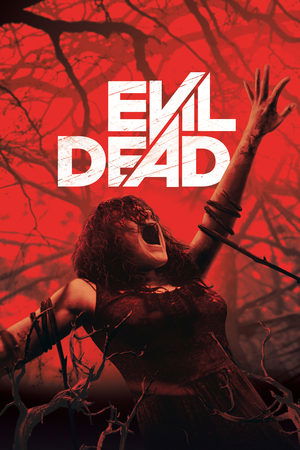
The 2013 Evil Dead film represented an important change in Campbell's relationship with the series. Fede Álvarez directed a new story that returned to the cabin structure while moving away from the increasingly comic version of Ash. Campbell did not serve as the main actor. Instead, he produced the film alongside Sam Raimi and Robert Tapert, demonstrating that his role within Evil Dead had expanded beyond performance.
The film emphasized extreme physical horror, practical gore and a more serious tone, reconnecting the franchise with aspects of the original 1981 film. Campbell appears only briefly in an uncredited post-credits moment as Ash, but his larger contribution exists behind the camera. The character could disappear from the central narrative while Campbell remained involved in deciding how Evil Dead would continue.
This distinction became increasingly important. Campbell had spent decades as the public face of the franchise, but Evil Dead no longer needed to be exclusively the story of Ash Williams. The property could expand to other protagonists and other filmmakers while Campbell, Raimi and Tapert maintained continuity at the production level.
Ash vs Evil Dead and the Return of the Aging Ash
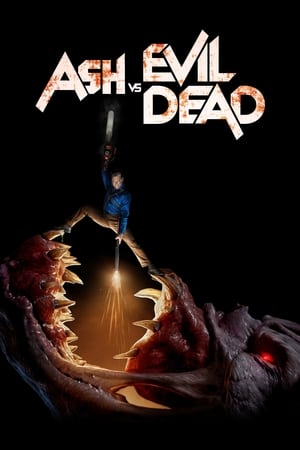
Ash vs Evil Dead finally returned Campbell to Ash as a central character in 2015, more than two decades after Army of Darkness. The television format allowed the series to explore something the films had largely avoided: what kind of life Ash had actually built after surviving all those supernatural battles.
The answer is deliberately unimpressive. Ash is older but not wiser, living a small life while continuing to behave as though confidence can substitute for maturity. Campbell described the character as being on the downslope, a man who still considers himself heroic despite substantial evidence that the rest of his life has not developed accordingly. The joke works because the audience remembers the younger Ash and can see exactly how little emotional growth accompanied the physical survival.
The series also gave Campbell far more time to explore the character than the films ever could. New allies, including Pablo and Kelly, challenge the idea that Ash must remain a solitary hero, while recurring characters connect his history with a larger supernatural mythology. Lucy Lawless's Ruby and Ted Raimi's Chet also expand the world around Campbell through performers with long connections to the Raimi production network.
Most importantly, the series restored the combination of extreme gore and comedy associated with Evil Dead II. Campbell was older, but the production continued asking him to endure slime, blood, physical punishment and grotesque situations. The aging body became part of the humor without reducing Ash to a joke about age. He could still fight, but every victory now carried additional physical cost.
Retiring Ash Without Abandoning Evil Dead
After Ash vs Evil Dead ended in 2018, Campbell announced that he was retiring from playing Ash in live action. The decision did not mean abandoning the franchise. He continued to participate in Evil Dead projects behind the scenes, preserving the unusual relationship in which an actor remained creatively connected to a horror property even after stepping away from the role that defined him.
Evil Dead Rise (2023), directed by Lee Cronin, demonstrated the strength of that arrangement. Campbell served as an executive producer alongside Raimi, while Robert Tapert remained the principal producer. The film abandoned both Ash and the traditional cabin for most of its story, relocating the Deadite nightmare to an apartment building and proving that the mythology could survive without recreating Campbell's character.
Campbell also provided an uncredited voice heard on a recording within the film, a small connection rather than an attempt to make Ash the center of the story. The choice reflects the broader direction of the franchise. Campbell's presence remains part of Evil Dead history, but new films do not need to depend upon nostalgia for Ash in order to justify themselves.
Horror Beyond Evil Dead
Although Evil Dead dominates Campbell's horror identity, his genre career contains a wide range of smaller projects. Sundown: The Vampire in Retreat placed him inside a supernatural western-comedy environment, while Waxwork II: Lost in Time used his cult presence within another film built around horror history. Later titles such as Alien Apocalypse and Black Friday continued using his ability to move naturally between monster material, comedy and low-budget genre production.
Campbell's television work also periodically returned to horror or supernatural material. His appearance in The X-Files allowed him to play a far darker and more tragic character than audiences expected, demonstrating again that his genre identity did not require the broad comedy of Ash. More recently, projects such as Hysteria! have continued taking advantage of the cultural associations attached to his presence.
The consistency is striking. Campbell has never needed to deny the B-movie and horror reputation that followed him. Instead, he has treated genre work as part of a larger career that also includes westerns, comedy, fantasy and mainstream television. Horror remains the foundation, but not a prison.
The Physical Comedy Behind Ash
Campbell's performance style deserves attention because Ash would not have survived as a character through dialogue alone. Much of the role depends upon Campbell's willingness to use his body as a prop. He allows himself to be thrown, struck, drenched, dismembered symbolically and repeatedly humiliated by objects that seem to possess more control over the scene than he does.
This connects Evil Dead directly with traditions of physical comedy. Raimi has openly referenced the Three Stooges, and Campbell's performance often follows the same basic principle: pain becomes funny when rhythm, exaggeration and reaction are precisely controlled. The difference is that Evil Dead surrounds the slapstick with blood, possession and mutilation. A gag can end with an eye flying across the room or a chainsaw becoming attached to the hero's arm.
Campbell understands that the comedy only works if Ash continues believing in his own suffering. He rarely plays the joke as though the character knows he is inside a comedy. Ash screams because the pain is real to him, boasts because he genuinely thinks he looks impressive and panics when the world refuses to behave according to his assumptions. The audience laughs at the distance between Ash's self-image and reality.
Bruce Campbell's Style and Legacy
Bruce Campbell occupies an unusual position in horror because he became iconic without playing either a traditional monster or a conventional final hero. Ash is both victim and action figure, coward and survivor, comic idiot and genuinely capable fighter. The contradictions are not problems to be solved. They are the reason the character remains interesting after decades of repetition.
Campbell also helped establish a model for the cult horror actor whose relationship with the audience becomes part of the work. Fans do not simply recognize him from a famous series. They recognize a performance style, a tone and a history of low-budget filmmaking. Films such as Bubba Ho-Tep and My Name Is Bruce could build entire stories around that accumulated cultural identity because Campbell had spent years allowing the line between actor and genre persona to remain visible.
His partnership with Sam Raimi remains central to that legacy. Few actor-director relationships in horror have evolved across such a long period while allowing the central character to change so dramatically. Raimi repeatedly discovered new ways to punish Campbell physically and visually, while Campbell found new stages in Ash's transformation from frightened survivor to grotesque action hero and eventually aging legend.
At the same time, Campbell's continuing involvement as a producer helped Evil Dead outgrow the character that made the series famous. The franchise survived the transition from Ash-led horror comedy to new protagonists because Campbell did not insist that his own screen presence remain indispensable. That may be one of the most important parts of his contribution. He helped create one of horror's most recognizable heroes, spent decades turning that hero into a cultural icon and then remained involved long enough to help the world continue after Ash stepped aside.
Known Among Horror Fans For
Notable Horror Collaborators
Notable collaborators and creative partners throughout Bruce Campbell's horror career.
 Sam Raimi
Defining Director
Campbell's most important creative collaborator. Raimi directed him in Within the Woods, The Evil Dead, Evil Dead II and Army of Darkness, then reunited with him on Ash vs Evil Dead.
 Robert Tapert
Producing Collaborator
A foundational partner throughout Campbell's horror career. Tapert worked with him from Within the Woods and The Evil Dead through Evil Dead II, Army of Darkness and Ash vs Evil Dead.
 Ted Raimi
Frequent Horror Co-Star
A recurring collaborator across Campbell's horror career. Raimi appeared with him in The Evil Dead, Evil Dead II, Army of Darkness, Ash vs Evil Dead and My Name Is Bruce.
JL
Joseph LoDuca
Musical Collaborator
LoDuca provided the musical identity for much of Campbell's Evil Dead career, scoring The Evil Dead, Evil Dead II, Army of Darkness and Ash vs Evil Dead.
 Scott Spiegel
Writing and Horror Collaborator
A collaborator dating back to Campbell's earliest horror work. Spiegel participated in Within the Woods and The Evil Dead, co-wrote Evil Dead II and later directed Campbell in Intruder.
 Ellen Sandweiss
Frequent Horror Co-Star
Sandweiss shares three key Evil Dead productions with Campbell: Within the Woods, The Evil Dead and Ash vs Evil Dead, returning decades later as Cheryl Williams.
Bruce Campbell Horror Movies
Acting (37 credits)
2020
2020
2018
2018
2015
2014
2014
2013
2007
2007
2006
2005
2005
2002
2002
2002
1999
1995
1995
1992
1992
1992
1991
1991
1990
1989
1989
1989
1988
1987
1985
1985
1981
1981
1978
1974
Production (13 credits)
2028
2026
2022
2013
2007
2005
2002
1992
1991
1985
1981
1981
1978
Directing (2 credits)
2007
2005
Writing (2 credits)
2005
1985
Other Crew (1 credits)
1979