


1993
Aldo Lado
Horror Director · Biography · Horror Filmography · Collaborators · Credits
Horror subgenres & themes
Most represented across this person's horror filmography:
RAPE AND REVENGE
Biography
Aldo Lado: Giallo, Horror and the Dark Side of 1970s Italian Cinema
Aldo Lado occupies a distinctive place in Italian horror despite directing relatively few films that belong unequivocally to the genre. His reputation rests principally on three works made during the 1970s: Short Night of Glass Dolls, Who Saw Her Die? and Night Train Murders. Together they demonstrate a filmmaker interested not simply in murder and suspense but in the structures surrounding violence: social privilege, institutional secrecy, sexual exploitation and the vulnerability of individuals confronted by forces more powerful than themselves. Lado worked during the peak period of the Italian giallo, yet his strongest genre films rarely behave like straightforward exercises in the formula.
Where many gialli organize themselves around the pursuit of an anonymous killer, Lado repeatedly expands the threat beyond a single criminal. His protagonists encounter closed systems, hidden interests and forms of violence protected by social structures. This gives his horror and thriller work an unusually pessimistic quality. Lado himself resisted describing that outlook simply as nihilistic, instead relating it to his conviction that powerful perpetrators frequently escape consequences. That perspective helps explain why even his most sensational genre films contain a strong current of social anger beneath their murder mysteries, violent set pieces and exploitation elements.
From Assistant Director to Italian Genre Filmmaker
Born in Fiume in 1934 and raised partly within the cultural environment of northeastern Italy, Lado entered cinema through a variety of production roles before becoming a director. His early professional experience included assistant-directing work, notably on Bernardo Bertolucci's The Conformist. He also contributed to the story of The Designated Victim, placing him close to the development of Italian thriller cinema before he directed his own first feature.
That background is significant because Lado entered the giallo at a moment when the form was becoming one of the most commercially visible areas of Italian genre production. Rather than simply imitate the visual patterns already associated with it, he approached his first film through political paranoia, Central European atmosphere and an unusually elaborate narrative structure. The resulting Short Night of Glass Dolls immediately established the concerns that would distinguish his most important horror-related work.
Short Night of Glass Dolls and a Different Kind of Giallo
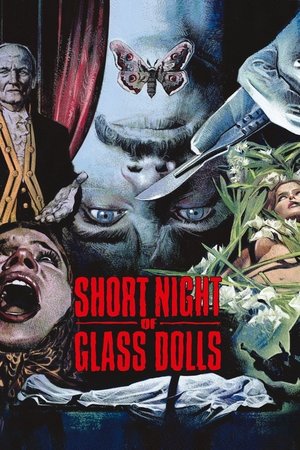
Short Night of Glass Dolls begins with an image that immediately destabilizes the normal relationship between viewer and protagonist. Journalist Gregory Moore is discovered apparently dead, yet he remains conscious inside a body that cannot communicate with the people preparing to examine it. From that state of paralysis, the film reconstructs the events that led to his condition, particularly his attempt to discover what happened to his missing girlfriend Mira.
The structure transforms investigation into a race against an outcome the audience already knows is catastrophic. Gregory remembers his search while lying unable to intervene in what is happening around his body. This framing device gives the film a sense of entrapment that goes beyond the mechanics of its mystery. The protagonist is not merely pursuing danger. He is recounting, internally and helplessly, the process through which danger has already defeated him.
Lado surrounds this story with a Central European atmosphere shaped by his own experiences and cultural background. He later described Prague and the broader Mitteleuropean environment as essential inspirations for the film's mysterious and ambiguous character. The locations, clubs, political tensions and austere urban spaces create a world in which personal disappearance seems connected to something much larger than an individual crime.
As Gregory's investigation progresses, the film moves increasingly away from the expectation of a conventional serial murderer. The disappearances point toward an organization associated with influential older figures, ritual and the exploitation of younger people. Horror emerges from the suggestion that the people responsible are protected precisely because they occupy positions of authority. This transforms the mystery into a broader nightmare of institutional power.
The film consequently occupies an unusual position within the giallo tradition. It contains investigation, murder, sexuality and elaborate suspense, but its most disturbing idea is not the identity of a masked killer. It is the possibility that violence is systemic and that exposing it may accomplish nothing. Lado's pessimistic ending reinforces that principle with unusual severity, denying the comforting assumption that knowledge inevitably gives the protagonist the power to survive.
Ennio Morricone and the Sound of Lado's Early Horror
Ennio Morricone became an important creative presence across Lado's three major horror and thriller films of the decade. His music for Short Night of Glass Dolls contributes to the film's mixture of melancholy, mystery and psychological unease rather than simply announcing violent moments. The collaboration continued with Who Saw Her Die? and later Night Train Murders, giving three otherwise very different films a connection through one of Italian cinema's most distinctive composers.
This continuity is important because Lado's films depend heavily on atmosphere. Their horror frequently develops before the full nature of the threat is understood, and Morricone's music allows uncertainty to persist without forcing the films into a single emotional register. Beauty, melancholy and menace can coexist, particularly in the two early gialli, where urban environments and personal grief are as important to the mood as the murders themselves.
Who Saw Her Die? and a Venice of Death
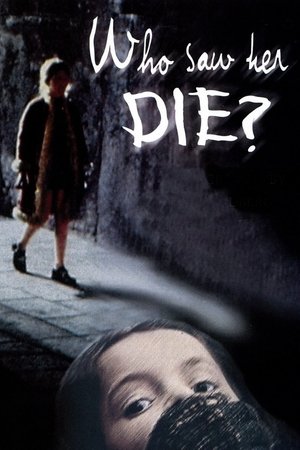
Lado followed his debut with Who Saw Her Die?, starring George Lazenby and Anita Strindberg as separated parents confronted with the murder of their young daughter. The film is more recognizably connected to the murder-mystery conventions of the giallo than Short Night of Glass Dolls, but Lado again uses the form to explore institutions and environments that conceal corruption.
Venice is fundamental to the film's identity. Lado had grown up in the city and later explained that the opportunity to use Venice was one of the reasons the project interested him. Rather than present it principally through its familiar romantic imagery, the film emphasizes narrow passages, canals, deteriorating buildings and cold open spaces. The city becomes a labyrinth in which visibility does not provide security and where the investigation repeatedly uncovers relationships that are more disturbing than they initially appear.
The murder of a child gives the film an emotional severity unusual even within a genre known for stylized killing. Lazenby's Franco Serpieri begins investigating after the authorities fail to provide a satisfying explanation, moving through a network of acquaintances, religious figures and possible witnesses. Lado repeatedly contrasts the vulnerability of children with adults whose respectability cannot be taken at face value.
The director later discussed his interest in addressing sexual abuse connected to religious authority, an issue that was far less openly confronted in mainstream public discussion when the film was produced. The resulting material gives the mystery a layer of institutional threat beyond the identity of the murderer. As in Short Night of Glass Dolls, danger exists within structures that should theoretically provide stability or protection.
Who Saw Her Die? also strengthened several collaborations established during Lado's first film. Producer Enzo Doria, co-producer Dieter Geissler, production designer Gisella Longo, writer Rüdiger von Spies and composer Ennio Morricone all returned, giving the two films a notable creative continuity despite their different stories and settings. Actors including Piero Vida also moved between the productions.
Night Train Murders and a Move Toward Exploitation Horror
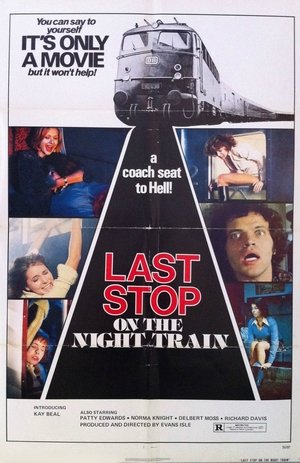
With Night Train Murders, Lado moved away from the structure of the giallo and into a more confrontational form of exploitation horror. The film follows two young women travelling by train who encounter violent men and an apparently respectable woman whose presence proves crucial to the escalating abuse. The enclosed railway compartments turn the journey into a moving trap, while the social identities of aggressors and victims become increasingly important to the film's view of violence.
The film is often discussed in relation to Wes Craven's The Last House on the Left, itself connected to Ingmar Bergman's The Virgin Spring. Lado adopts the basic progression from assault to parental retaliation but changes the environment and social emphasis. The train allows different classes and types of passengers to occupy the same temporary space while remaining divided by conventions of appearance and respectability.
The most disturbing figure is not necessarily the obviously aggressive criminal. The sophisticated woman who encourages and participates in the violence complicates the assumption that brutality belongs only to visibly marginal or delinquent characters. Lado uses her to connect cruelty with social privilege and concealment, extending the concern with protected forms of violence already visible in his earlier films.
The first portion of the film gradually removes the two women from safety as they travel, creating dread through encounters that initially appear merely unpleasant before becoming dangerous. Once violence begins, Lado avoids the playful tonal release sometimes found in exploitation cinema. The assault is presented as degrading and destructive, and its consequences determine the entire second half of the film.
The eventual revenge does not restore moral order cleanly. The parents act without initially understanding every element of what happened, while appearances continue to obscure responsibility. The film's class dimension becomes particularly bitter because respectable behavior and outward refinement provide camouflage for one of the people most responsible for the crime.
Night Train Murders, Censorship and the Video Nasty Era
Night Train Murders developed a particularly complicated reputation in Britain. The BBFC found the film unsuitable for classification when it was submitted in 1976, and it later became associated with the wider history of controversial horror and exploitation films targeted during the video nasty period. Decades later it could be reassessed and released within a very different censorship environment.
The controversy is understandable given the film's sustained sexual violence, but focusing only on extremity can obscure Lado's social construction of the story. The violence is connected to class hypocrisy, the difference between outward respectability and private behavior, and the ability of certain people to avoid immediate suspicion because society reads them as belonging to the correct social category. The BFI has specifically highlighted this dimension when discussing the film in the context of video nasties.
Morricone's score again provides a significant contrast to the brutality on screen. Rather than relying exclusively on abrasive music, the film uses melodic material that can make the journey feel vulnerable and melancholy before the violence fully emerges. This tension between music and imagery links Night Train Murders to Lado's earlier collaborations with Morricone even though the film belongs to a harsher branch of horror.
Power, Institutions and Pessimism in Aldo Lado's Horror
The strongest connection between Lado's major horror films is not a recurring monster or visual gimmick but a distrust of power. In Short Night of Glass Dolls, the protagonist discovers a hidden organization whose influence makes conventional justice almost meaningless. In Who Saw Her Die?, murder intersects with respected social and religious environments. In Night Train Murders, social appearance helps disguise complicity in extreme violence.
Lado's own comments about his films support this interpretation. He rejected the idea that their endings were simply exercises in fashionable nihilism, arguing instead from a view of society in which powerful people often remain protected. Horror therefore becomes political without turning the films into explicit ideological lectures. The audience experiences the imbalance through characters who discover that recognizing evil does not automatically give them the ability to defeat it.
This pessimism differentiates Lado from directors whose gialli end primarily with the intellectual satisfaction of identifying the killer. Investigation in his cinema frequently reveals a larger problem than the protagonist expected. Even when an individual criminal can be identified, the social environment that allowed the crime may remain intact.
Aldo Lado and the Italian Giallo
Lado's place in giallo history rests principally on Short Night of Glass Dolls and Who Saw Her Die?. The two films appeared during an extraordinarily productive period for the form, alongside work by filmmakers including Dario Argento, Sergio Martino, Lucio Fulci and others. Yet Lado's films remain immediately distinguishable because their mysteries are closely tied to location and social atmosphere.
The Central European unease of Short Night of Glass Dolls and the wintry Venice of Who Saw Her Die? do more than provide attractive backgrounds. They shape the psychology of the stories. Characters move through cities that seem simultaneously open and enclosed, surrounded by other people while increasingly isolated from anyone capable of helping them.
Lado also avoids making stylistic murder sequences the sole attraction. His films certainly participate in the violence and visual sophistication of the genre, but suspense often comes from helplessness, surveillance and the fear that the protagonist has entered a system whose dimensions remain invisible. This gives his strongest gialli an atmosphere closer to conspiracy horror than to a simple succession of killings.
A Concentrated but Lasting Horror Legacy
Lado continued directing films and television in other genres, but his historical position in horror remains concentrated around the work of the 1970s. That relatively small body of genre filmmaking explains why his contribution differs from prolific horror specialists who returned to monsters, supernatural stories or murder films throughout their careers. Lado did not need a large horror filmography to leave several highly distinctive works.
Short Night of Glass Dolls remains one of the more unusual mutations of the classic giallo, combining murder mystery with cataleptic nightmare, conspiracy and social paranoia. Who Saw Her Die? transforms Venice into an environment of grief, child murder and concealed corruption. Night Train Murders abandons the detective structure almost completely and confronts sexual violence, class and revenge with a severity that made the film notorious for decades.
Together these films reveal a consistent view of horror in which the greatest threat is rarely a completely isolated monster. Violence survives because people, institutions and systems permit it to survive. That idea gives Aldo Lado's genre work an identity that remains distinct within the crowded landscape of 1970s Italian horror and thriller cinema.
Photos (2)
Images: TMDB
Selected Work
Notable Horror Collaborators
Notable collaborators and creative partners throughout Aldo Lado's horror career.
 Ennio Morricone
HORROR COMPOSER
Scored Short Night of Glass Dolls, Who Saw Her Die? and Night Train Murders, creating the strongest recurring creative partnership across the films that define Lado's contribution to Italian horror and giallo.
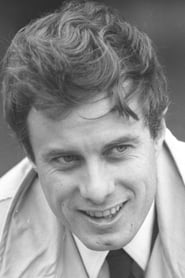 Enzo Doria
GIALLO PRODUCER
Produced Short Night of Glass Dolls and Who Saw Her Die?, supporting the two atmospheric early gialli through which Lado established his distinctive approach to paranoia, murder and institutional corruption.
DG
Dieter Geissler
CO-PRODUCER
Co-produced Short Night of Glass Dolls and Who Saw Her Die?, helping sustain the international production framework behind Lado's two most important and stylistically distinctive giallo films.
GL
Gisella Longo
PRODUCTION DESIGNER
Worked on Short Night of Glass Dolls and Who Saw Her Die?, helping shape the unsettling Central European atmosphere of the first and the cold, labyrinthine Venice of the second.
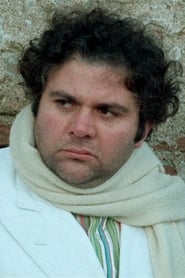 Piero Vida
RECURRING ACTOR
Appeared in both Short Night of Glass Dolls and Who Saw Her Die?, making him one of the recurring performers directly connecting Lado's two foundational giallo productions of the early 1970s.
Aldo Lado Horror Movies
Directing (6 credits)
1990
1980
1975
1972
1971
Writing (6 credits)
1993
1990
1980
1975
1972
1971