



2025
Boris Karloff
Horror Actor · Biography · Horror Filmography · Collaborators · Credits
Horror subgenres & themes
Most represented across this person's horror filmography:
MEDICAL
• EVIL DOLL
• MONSTER
• PSYCHOLOGICAL
Biography
Boris Karloff and the Face of Classical Horror
Boris Karloff became one of the foundational figures of screen horror by giving monsters something more complicated than menace. His characters could be violent, grotesque or supernatural, yet Karloff repeatedly found vulnerability inside them. The Monster in Frankenstein does not simply threaten the people around him; he is frightened, confused and painfully aware of rejection. Imhotep in The Mummy is a supernatural killer driven by an ancient emotional obsession. Even the corrupt or sadistic characters of his later films often contain moments of intelligence, dignity or melancholy that prevent them from becoming simple caricatures.
That ability made Karloff essential to the development of classical horror. During the 1930s he became one of Universal's defining stars alongside Bela Lugosi, helping establish a visual and performance vocabulary that remained attached to Frankenstein monsters, mummies, mad scientists and Gothic villains for generations. Yet his horror career extended far beyond Universal. He worked with Val Lewton at RKO, Roger Corman and the American International Pictures circle, British genre filmmakers and eventually Peter Bogdanovich, whose Targets used Karloff's own status as an ageing horror legend to examine the changing nature of fear itself.
From William Henry Pratt to Boris Karloff
Karloff was born William Henry Pratt in Camberwell, London, in 1887. He came from a well-established British family but moved away from the expected path of government or diplomatic work and eventually emigrated to Canada. There he worked a variety of manual jobs while attempting to establish himself as an actor with touring theatrical companies.
He adopted the professional name Boris Karloff during this period and gradually built experience through stage work before entering the American film industry. His early screen career was far from glamorous. Throughout the silent era and the first years of sound cinema he appeared in numerous small roles, frequently as criminals, exotic villains, servants or threatening supporting characters.
The years of anonymity ultimately became useful training. Karloff learned how to communicate character physically even when dialogue was limited and how to make relatively small roles visible without overwhelming a scene. Those abilities became crucial when his face was eventually hidden beneath one of the most famous makeup designs in film history.
Frankenstein and the Creation of the Monster
James Whale's Frankenstein (1931) transformed Karloff's career. Universal had already achieved enormous success with Dracula, and the studio quickly continued developing literary horror properties. Whale's adaptation of Mary Shelley's story required a performer capable of embodying the Creature without relying heavily on dialogue. Karloff, still largely unknown to general audiences, became the Monster.
The performance depends upon physical detail. Karloff moves with enormous weight while simultaneously suggesting that the Creature does not completely understand his own body. His hands reach outward cautiously. His expression changes rapidly between curiosity, fear and aggression. The violence is real, but it often emerges after confusion or mistreatment rather than from uncomplicated evil.
The sequence with the young girl beside the lake became especially important to the character's emotional complexity. The Monster briefly encounters someone who does not immediately respond to him with horror. Their interaction begins gently before ending tragically because he does not understand the consequences of his actions. Karloff turns what could have been a purely monstrous figure into a being capable of producing both fear and pity.
Jack Pierce and the Physical Construction of an Icon
Makeup artist Jack Pierce was essential to the image that made Karloff internationally recognizable. The flattened head, heavy brow, scarred forehead and neck electrodes of the Frankenstein Monster created a silhouette that became almost inseparable from the character in popular culture. Karloff's performance supplied the humanity, but Pierce provided the physical architecture through which audiences first encountered it.
The collaboration continued through several of Universal's most important horror films. For The Mummy, Pierce transformed Karloff first into the desiccated ancient Imhotep and then into the comparatively human-looking Ardath Bey. Later Frankenstein films required repeated recreation and adjustment of the Monster makeup as Karloff returned to the role.
The relationship between actor and makeup artist became one of the defining collaborations of classical horror. Pierce's work could radically alter Karloff's face, but the actor learned to perform through rather than against the prosthetics. The makeup established the first visual impression; Karloff's eyes, posture and movement made the design emotionally legible.
The Old Dark House
Karloff reunited with James Whale for The Old Dark House (1932), but instead of repeating the Frankenstein Monster he played Morgan, the mute and threatening servant of the deeply unstable Femm household. Travellers forced to shelter from a storm gradually discover that the apparently safe house contains increasingly dangerous inhabitants.
Morgan allowed Karloff to use some of the physical menace audiences already associated with him without turning the character into a supernatural creature. The role helped demonstrate that his horror identity did not depend entirely upon one monster. Whale surrounds Karloff with eccentric performances and black comedy, creating a film in which grotesque personality is as important as conventional fear.
The collaboration also established a pattern that would recur throughout Karloff's career. Directors increasingly understood that simply placing him inside a horror environment created expectation. The audience entered the film already watching him differently, waiting to discover what kind of threat the familiar face might represent.
The Mummy and the Horror of Ancient Obsession
The Mummy (1932) gave Karloff another defining Universal role. He plays Imhotep, an ancient Egyptian priest resurrected after an archaeologist reads from a forbidden scroll. Unlike later popular images of a bandaged mummy slowly pursuing victims, much of Karloff's performance occurs as the human-looking Ardath Bey.
The restraint is essential. Karloff speaks quietly and moves minimally, using stillness to suggest enormous age and concentrated purpose. Imhotep's goal is rooted in his desire to reunite with the reincarnation of the woman for whom he was originally condemned. The film therefore transforms romantic obsession into supernatural horror.
The performance differs radically from Frankenstein's Monster. The Creature possesses immense physical strength but limited understanding; Imhotep possesses knowledge, patience and deliberate intention. Together the two roles established Karloff as an actor capable of representing entirely different kinds of screen monstrosity.
Bela Lugosi and The Black Cat
Boris Karloff and Bela Lugosi became the two names most strongly associated with Universal horror, and their repeated appearances together created one of the genre's most enduring screen relationships. Edgar G. Ulmer's The Black Cat (1934) provided their first major pairing and deliberately treated the encounter as an event.
Karloff plays architect Hjalmar Poelzig, whose modernist home has been constructed over the ruins of a wartime fortress. Lugosi is Dr. Vitus Werdegast, a former prisoner who arrives seeking revenge. Their conflict combines personal history, Satanic ritual, psychological cruelty and stylized architecture in a film far removed from a straightforward adaptation of Edgar Allan Poe.
The contrast between the actors became immediately useful. Lugosi's emotional intensity clashes with Karloff's icy control. Neither performer needs to dominate every moment because the tension comes from placing two established horror personalities opposite each other and allowing their different styles to collide.
The Raven, The Invisible Ray and a Horror Partnership
Karloff and Lugosi continued appearing together in films including The Raven (1935), The Invisible Ray (1936), Son of Frankenstein (1939), Black Friday (1940), You'll Find Out (1940) and The Body Snatcher (1945). The roles and balance of power changed repeatedly, preventing the pairing from becoming one fixed formula.
In The Raven, Lugosi occupies the dominant villain role as Dr. Richard Vollin while Karloff plays Edmond Bateman, a criminal whose face Vollin surgically disfigures. The Invisible Ray reverses the emphasis again, giving Karloff the increasingly unstable scientist Dr. Janos Rukh. Their screen relationship was therefore more flexible than the simplified idea of two rival horror stars competing for prominence.
Their final major pairing in The Body Snatcher demonstrates how far both careers had travelled from the Universal monster cycle. Karloff plays cabman and grave robber John Gray with quiet, calculated menace, while Lugosi appears in a smaller supporting role. The film ends their shared screen history on unusually dark and psychologically controlled ground.
Bride of Frankenstein
James Whale returned to the Frankenstein story with Bride of Frankenstein (1935), and Karloff returned to the role that had made him famous. The sequel expands the Monster's emotional and intellectual range, allowing him to speak and making his desire for companionship explicit.
The Monster's encounter with the blind hermit remains one of Karloff's most important sequences. For a brief period, he experiences kindness without fear or disgust. Food, music and simple companionship suggest the possibility that violence is not his natural state. The tragedy comes when the outside world intrudes and the relationship collapses.
By allowing the Monster to communicate verbally, the sequel makes Karloff's performance more overtly emotional without removing the physical qualities established in the original. His desire for a mate becomes the film's emotional foundation even while Whale surrounds the story with black humor, Gothic spectacle and Ernest Thesiger's extraordinary Dr. Pretorius.
The Bride herself rejects the Monster almost immediately after her creation. Karloff turns that rejection into the final confirmation that the Creature has no stable place among either humans or beings created like himself. The Monster's tragedy becomes inseparable from the very franchise that had transformed him into an icon.
Son of Frankenstein and the End of Karloff's Monster
Karloff played the Monster for the final time in a feature performance in Son of Frankenstein (1939). Basil Rathbone plays Wolf Frankenstein, the son of Henry Frankenstein, while Bela Lugosi delivers one of his strongest later horror performances as Ygor.
The Monster is less verbally developed than in Bride of Frankenstein, but Karloff retains the physical identity established across the trilogy. His relationship with Ygor becomes central, replacing the earlier emotional connections with Henry Frankenstein or the blind hermit.
By leaving the role after three films, Karloff avoided spending the remainder of his career repeating only the image that had made him famous. Other actors would subsequently play the Monster, while Karloff continued moving between mad scientists, supernatural villains, criminals and psychologically disturbing character roles.
Mad Scientists and the 1940s Horror Cycle
During the late 1930s and 1940s, Karloff increasingly moved from monster to scientist. Films such as The Man Who Lived Again, Black Friday, The Ape, Before I Hang and The Devil Commands repeatedly cast him as doctors or researchers whose experiments move beyond accepted scientific limits.
The roles allowed Karloff to reverse the relationship that had defined Frankenstein. Instead of embodying the created body, he could now play the intellectual figure responsible for dangerous experimentation. His naturally deliberate delivery made him particularly effective as a scientist whose calm explanation gradually reveals increasingly disturbing ideas.
Some of these films were produced quickly and on limited budgets, yet Karloff rarely treated them dismissively. Even when the premise was extravagant, he generally attempted to give the central character a serious emotional motivation. Scientific obsession might emerge from ambition, grief, desperation or an attempt to cure disease rather than simple theatrical madness.
House of Frankenstein and the Universal Monster Legacy
House of Frankenstein (1944) returned Karloff to the Universal monster universe without placing him back inside the Frankenstein makeup. He instead plays Dr. Gustav Niemann, a scientist obsessed with continuing Frankenstein's experiments who becomes involved with Dracula, the Wolf Man and Frankenstein's Monster.
The casting is historically significant because Karloff now stands outside the Creature he had made famous. He has become the scientist manipulating the monsters rather than the monster being manipulated. The film also reflects Universal's changing approach to its horror properties as previously separate creatures were increasingly combined within shared stories.
By the middle of the decade, Karloff's relationship with the classical Universal cycle had therefore become almost self-referential. His presence alone represented the studio's horror history even when he was no longer portraying its most famous creation.
Val Lewton and The Body Snatcher
Producer Val Lewton gave Karloff one of the most important later phases of his horror career. RKO initially valued Karloff partly because his name could provide recognizable horror star power, but the collaboration quickly developed into something more substantial. Lewton placed the actor inside films driven by atmosphere, psychology and suggestion rather than the elaborate monster imagery associated with Universal.
Robert Wise's The Body Snatcher (1945), based on Robert Louis Stevenson's story, gave Karloff the role of John Gray, a cabman who supplies medical students with corpses. Gray is intelligent, amused by the hypocrisy around him and increasingly threatening because he understands exactly how much the supposedly respectable Dr. MacFarlane depends upon him.
Karloff does not require makeup or supernatural powers. Gray controls scenes through conversation, implication and the certainty that he knows secrets other characters desperately want buried. The performance demonstrates how effectively Karloff could create horror when almost every external element associated with his Universal image had been removed.
Isle of the Dead and Bedlam
The collaboration with Lewton continued through Isle of the Dead (1945) and Bedlam (1946). Together with The Body Snatcher, the films formed a compact late-career cycle that gave Karloff some of his richest horror material.
In Isle of the Dead, Karloff plays General Nikolas Pherides, trapped with other characters on a Greek island during an epidemic and increasingly convinced that supernatural forces may be present. The film exploits uncertainty between rational disease and folklore, allowing Karloff to shift gradually from military authority toward obsession and fear.
Bedlam places him on the opposite side of sympathy as Master George Sims, the cruel administrator of the Bethlem asylum. Instead of portraying a misunderstood outsider, Karloff embodies institutional abuse. His polished manners make the brutality more disturbing because violence is protected by status and accepted social authority.
The Lewton films demonstrated that Karloff's greatest asset had never been the Monster makeup alone. By the mid-1940s he could create horror simply through voice, intelligence and controlled behavior, making him useful to a subtler form of genre filmmaking than the one that first made him famous.
Peter Lorre and Macabre Comedy
Peter Lorre became another recurring screen partner across a different branch of Karloff's horror career. The two appeared together in films including You'll Find Out, The Boogie Man Will Get You, The Raven and The Comedy of Terrors.
The partnership often relied upon audiences already knowing the actors' screen identities. Karloff brought the authority of classical monster cinema, while Lorre brought nervousness, unpredictability and a voice that had become instantly recognizable. Horror could therefore become comedy without completely losing its macabre quality.
Their later films together are especially interesting because both actors had survived long enough to parody reputations created decades earlier. The jokes work because audiences recognize the history behind the performers before the new characters have fully established themselves.
Roger Corman and the Poe Era
During the 1960s Karloff entered the world surrounding Roger Corman and American International Pictures. The Raven (1963) brought him together with Vincent Price and Peter Lorre in a comic fantasy loosely inspired by Edgar Allan Poe. Karloff plays Dr. Scarabus, a powerful magician whose confrontation with Price's Dr. Erasmus Craven turns Gothic horror into theatrical competition.
The film does not ask Karloff to reproduce the solemnity of his 1930s monsters. Instead, his accumulated horror history becomes part of the entertainment. Audiences are invited to enjoy Price, Lorre and Karloff precisely because each performer represents a different generation and style of macabre screen acting.
Karloff also appeared in The Terror, another Corman-associated Gothic production, and joined Price and Lorre again in The Comedy of Terrors. These films helped introduce Karloff to younger horror audiences at a moment when the visual language of the genre was changing rapidly.
Die, Monster, Die! and Late Gothic Horror
Die, Monster, Die! (1965), adapted from H. P. Lovecraft's The Colour Out of Space, returned Karloff to a more serious Gothic environment. He plays Nahum Witley, patriarch of a decaying English estate corrupted by a mysterious radioactive force.
The film combines traditional haunted-house imagery with science fiction and mutation, placing Karloff inside a form of horror that bridges his classical Gothic past and the increasingly biological anxieties of postwar genre cinema. The threat is not simply a ghost or monster but contamination capable of changing living matter.
Karloff's age becomes part of the atmosphere. Rather than hiding physical frailty, the film uses it to suggest a family and a house deteriorating together. His screen presence had changed, but vulnerability now added another dimension to the authority that had defined his earlier characters.
The Sorcerers and a New Generation of British Horror
Michael Reeves's The Sorcerers (1967) gave Karloff one of his strongest late roles. He plays Professor Marcus Monserrat, an elderly hypnotist who develops a method allowing him and his wife to experience the sensations of another person remotely.
The concept quickly turns sinister as the ability becomes addictive and increasingly violent. Karloff's performance is crucial because Monserrat begins as a sympathetic figure rather than an obvious villain. Scientific ambition gives him an extraordinary experience, but he gradually discovers that control over another human being carries consequences he cannot contain.
The film also demonstrates Karloff's ability to function inside the increasingly modern horror culture of the 1960s. Youth culture, psychological experimentation and contemporary London replace castles and laboratories without making his presence seem obsolete.
Targets and the End of an Era
Peter Bogdanovich's Targets (1968) gave Karloff one of the most remarkable roles of his final years. He plays Byron Orlok, an ageing horror star who believes the monsters that made his career no longer frighten contemporary audiences. Running parallel to his story is a seemingly ordinary young man preparing for a mass shooting.
The film deliberately uses Karloff's real screen history. Footage from The Terror appears within the story, and Orlok's weariness reflects the position of a performer whose classical monsters now coexist with frightening forms of real-world violence. The old Gothic horror represented by Karloff is contrasted with impersonal modern killing carried out without supernatural motivation.
The final drive-in sequence brings the two forms of horror together. Orlok appears both on the cinema screen and physically in front of it as the gunman confronts an image he cannot easily separate from the real man approaching him. Karloff's entire career becomes part of the scene: the supposedly obsolete monster star acquires moral and physical presence precisely when cinematic fantasy collides with contemporary violence.
Targets was not technically Karloff's final film, but it became an unusually appropriate late-career statement. Instead of merely celebrating the horror icon, Bogdanovich asks what such an icon means after the world around him has changed.
The Final Horror Films
Karloff continued working despite declining health. Several productions made during his final period were released after his death, including films connected with Mexican producer Luis Enrique Vergara such as Fear Chamber, Isle of the Snake People and related late projects.
These films varied considerably in quality and production circumstances, but Karloff remained professional even when working far from the prestige associated with his classical Universal period. His willingness to continue appearing in horror helped preserve a direct connection between the genre's early sound era and the increasingly international exploitation market of the late 1960s.
Karloff died on February 2, 1969. By then his screen career had stretched across silent cinema, the birth of talking horror, the Universal monster cycle, RKO psychological horror, postwar science fiction and Gothic revival, exploitation cinema and the beginning of the American New Wave.
Boris Karloff's Horror Legacy
Boris Karloff's place in horror history begins with Frankenstein's Monster but cannot be contained by it. James Whale gave him the opportunity to transform a largely nonverbal creature into a tragic figure. Jack Pierce supplied the physical design that made the performance instantly recognizable. Carl Laemmle Jr. and Universal placed him at the center of the studio's great horror cycle. Bela Lugosi became his recurring screen counterpart, creating a partnership that embodied the genre for an entire generation.
Later, Val Lewton proved that Karloff could be even more disturbing without monster makeup. Peter Lorre joined him in films that allowed both actors to turn their horror identities toward black comedy. Roger Corman and younger filmmakers used Karloff as a bridge to an earlier screen tradition, while Michael Reeves and Peter Bogdanovich demonstrated that his presence could still carry meaning inside radically different forms of modern horror.
The essential quality running through those performances was sympathy for the strange figure. Karloff rarely treated monstrosity as sufficient characterization. His creatures could feel abandoned, his scientists could be desperate, and his villains often understood more than the supposedly respectable people around them. Even when the story demanded fear, Karloff searched for the human impulse beneath it.
That is why his version of Frankenstein's Monster survived far beyond the film that introduced it. The flattened head and heavy boots became universal images, but the performance endured because Karloff gave the Monster a soul before popular culture turned him into a symbol. In doing so, Boris Karloff helped establish one of horror cinema's most enduring ideas: the monster may be frightening, but the tragedy begins when nobody is willing to see the person inside it.
Photos (9)
Images: TMDB
Selected Work
Notable Horror Collaborators
Notable collaborators and creative partners throughout Boris Karloff's horror career.
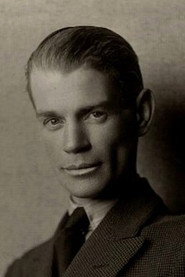 James Whale
Defining Horror Director
Whale transformed Karloff into a horror icon through Frankenstein and continued shaping his screen identity in The Old Dark House and Bride of Frankenstein.
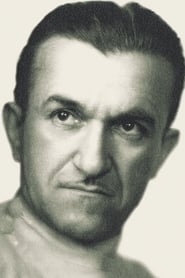 Jack Pierce
Defining Makeup Artist
Pierce created the physical transformations that made Karloff's Frankenstein Monster and Mummy among the most recognizable images in horror history.
 Bela Lugosi
Defining Horror Co-Star
Lugosi became Karloff's most iconic screen counterpart, repeatedly joining him in Universal horror from The Black Cat through The Body Snatcher.
 Carl Laemmle Jr.
Defining Universal Producer
Laemmle helped build the Universal horror cycle that turned Karloff from a character actor into one of the genre's defining stars.
 Val Lewton
Defining Late-Career Producer
Lewton gave Karloff a darker and more psychological second chapter through The Body Snatcher, Isle of the Dead and Bedlam.
 Peter Lorre
Recurring Horror Co-Star
Lorre shared Karloff's macabre screen world across several decades, from early horror comedy to the later Poe-inspired Gothic cycle.
Boris Karloff Horror Movies
Acting (80 credits)
2014
2007
2006
2000
2000
1998
1992
1991
1989
1974
1972
1971
1971
1970
1970
1968
1968
1968
1967
1967
1966
1966
1965
1964
1963
1963
1963
1962
1962
1961
1960
1958
1958
1958
1958
1958
1958
1957
1955
1953
1952
1951
1949
1949
1949
1946
1945
1945
1944
1944
1942
1941
1940
1940
1940
1940
1940
1940
1939
1939
1939
1936
1936
1936
1935
1935
1935
1934
1933
1932
1932
1932
1932
1932
1931
1931
1931
1929
1926