


2009
Nacho Cerdà
Horror Director · Biography · Horror Filmography · Collaborators · Credits
Horror subgenres & themes
Most represented across this person's horror filmography:
EXTREME
• HAUNTED HOUSES
• NECROPHILIA
Biography
Nacho Cerdà and a Cinema Built Around Death
Nacho Cerdà occupies an unusual position in Spanish horror cinema. His directing filmography is relatively compact, yet a small number of works gave him an international reputation far beyond their scale. The central films are the shorts The Awakening, Aftermath and Genesis, later grouped as a thematic trilogy about death, followed by the feature The Abandoned. Across those films Cerdà returned repeatedly to mortality, the physical vulnerability of the body, grief, religious imagery, isolation and the unstable boundary between life and death. His horror is often graphic, but its identity depends just as strongly on composition, sound, silence and carefully controlled movement. Even at his most extreme, he has generally approached disturbing material as a visual and emotional problem rather than simply as an opportunity for spectacle.
Cerdà's relationship with horror began as a spectator. He has repeatedly identified Steven Spielberg's Jaws, seen when he was six, as the experience that first made him conscious of filmmaking and of the director behind a film. Horror discovered through Super 8 and later home video expanded that education. David Cronenberg, John Carpenter, Tobe Hooper, Wes Craven, Dario Argento, Lucio Fulci, Mario Bava and Sam Raimi became important reference points, while supernatural films such as The Legend of Hell House and The Exorcist fed an early fear of ghosts, death and the possibility of an afterlife. Those influences did not lead him toward imitation of one particular filmmaker. Instead they reinforced an idea that would remain central to his own work: horror could produce an intense physical reaction while also addressing fears that were difficult to express directly.
The Awakening and the Beginning of the Death Trilogy
After studying journalism in Barcelona, Cerdà continued his film education at the University of Southern California in Los Angeles. There he made The Awakening in 1990, an eight-minute short about a student who suddenly discovers that time has stopped around him. His classmates and teacher remain motionless, and what initially seems like an inexplicable suspension of reality gradually becomes an encounter with death itself. The film already contains several characteristics that would become associated with Cerdà: minimal dialogue, a preference for storytelling through images, ordinary spaces transformed into disturbing environments and a fascination with the instant at which the living world becomes inaccessible.
The Awakening was not originally conceived as the opening chapter of a formal trilogy. Only later, after making Aftermath and developing Genesis, did Cerdà recognize that the three films could be understood together. Each approaches death from a different direction. The Awakening places a character at the threshold between life and whatever follows it. Aftermath concentrates on the body after consciousness has disappeared. Genesis reverses the process by imagining dead matter becoming alive while a living body is gradually petrified. Together they created the most distinctive part of Cerdà's horror career.
Aftermath and the Horror of the Human Body
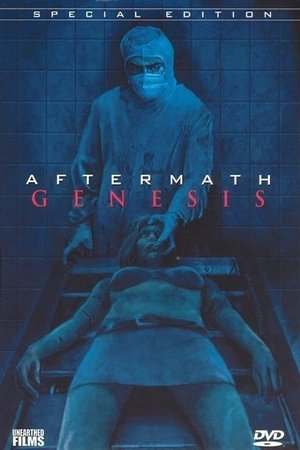
Aftermath, completed in 1994, transformed Cerdà from an emerging filmmaker into a cult name within international extreme horror. He conceived the project while in Los Angeles, fascinated by medicine, autopsy procedures, religious imagery and the question of what happens to the human body after death. Cerdà wanted to confront a subject he felt cinema rarely examined directly and also hoped the film could demonstrate his abilities as a director. Instead of approaching the mortuary material through fantasy, he conducted research into real autopsies and observed forensic procedures before production. The resulting film treats the morgue first as a workplace, establishing an atmosphere of clinical routine before its central character commits increasingly severe acts of desecration against a corpse.
The extremity of the subject made Aftermath notorious, but Cerdà's formal decisions are essential to its effect. There is no spoken dialogue. Classical music, environmental sound and the sounds associated with medical procedures replace conventional exposition. The camera frequently fragments the living pathologist, played by Pep Tosar, while granting the dead bodies unusually sustained visual attention. Cerdà described the idea as making the dead appear alive and the living appear dead. Tosar's character is therefore defined less through psychology than through movement, posture and repetitive physical behavior. The absence of an explanatory backstory prevents the film from making the character easier to understand or dismiss.
The practical makeup effects created by DDT Efectos Especiales were equally important. Cerdà's research supplied the effects team with anatomical references, and the mortuary environment allowed artificial bodies and practical effects to exist inside a convincing clinical context. David Martí and Montse Ribé were working during the formative years of DDT, long before their later international recognition, and Aftermath became an early demonstration of the company's ability to create disturbing physical realism. Guillermo del Toro encountered their work through the film at Sitges, an episode that later became part of DDT's own professional history.
Aftermath screened at Sitges in 1994 during a period when Spanish fantastic cinema was beginning to produce a new generation of filmmakers. Its international reputation grew more gradually. Videotapes circulated among horror audiences and specialist collectors, allowing the short to reach viewers far beyond its original festival screenings. A major moment came at Fantasia in Montreal in 1997, where its North American premiere became one of that edition's standout short-film events and received an audience award. The festival would later describe the film as having gone from unknown to legendary. Its reputation rested on an unusual contradiction: it was remembered as one of the most confronting examples of European extreme horror of its period, yet its images were constructed with an almost ceremonial visual control.
Genesis, Body Transformation and Grief
Cerdà returned to death from an almost opposite emotional perspective with Genesis in 1998. Pep Tosar plays a sculptor unable to recover from the death of his wife. He constructs a sculpture in her image, only to discover that the artificial figure is gradually becoming flesh while his own body begins transforming into stone. If Aftermath reduces the dead body to matter, Genesis imagines matter recovering life. The violence remains physical, but the emotional foundation is grief rather than violation.
The film also marked the beginning of Cerdà's major visual collaboration with cinematographer Xavi Giménez. Cerdà had already worked with Giménez through projects he produced, but he later described Genesis as their first true direct collaboration and one of the most rewarding filmmaking experiences of his career. The short replaces the forensic coldness of Aftermath with sculptural compositions, rich textures and an almost timeless atmosphere. Once again dialogue is unnecessary. Objects, bodies, surfaces and changes in physical texture carry the narrative, while the transformation of the characters turns an intimate story of mourning into body horror.
Genesis confirmed that Cerdà's reputation did not depend entirely on the transgressive material of Aftermath. Fantasia presented its world premiere in 1998 as the highly anticipated follow-up to the earlier film. That same year, Sitges awarded Genesis Best Short Film, and the Spanish Film Academy subsequently nominated it for the Goya for Best Fiction Short Film. The recognition was significant because the film retained Cerdà's interest in mutation and death while demonstrating a markedly different emotional and visual register. The three shorts could now be viewed together as variations on mortality rather than as repetitions of one horror formula.
Ataúdes de Luz and the Memory of Spanish Horror
Cerdà's interest in horror history also shaped the long-developing project Ataúdes de luz, also known as Coffin of Light. The project originated around the San Sebastián horror festival and was developed with filmmaker Karim Hussain. Its premise revolved around a supposedly cursed unfinished film and the mysterious death of its fictional filmmaker, allowing Cerdà to mix documentary forms with an invented mythology about dangerous images and lost cinema.
The project became especially relevant to horror culture because Cerdà interviewed major figures connected with Spanish fantastic cinema, including Paul Naschy, Jesús Franco, Narciso Ibáñez Serrador and Amando de Ossorio. The fictional mystery therefore existed alongside genuine testimony from filmmakers who had shaped Spanish horror. Rather than treating the national genre tradition only as background, Cerdà used it as the material from which a new horror narrative could be constructed. Karim Hussain co-wrote the project, while collaborators including Xavi Giménez and editor Jorge Macaya were involved during its development.
The Abandoned and Cerdà's Feature-Length Horror
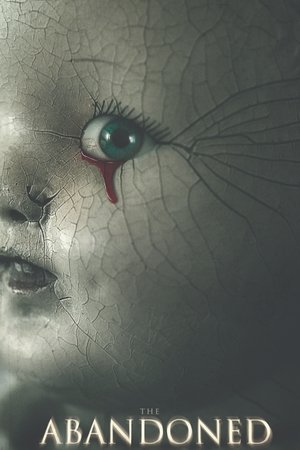
The Abandoned became Cerdà's principal feature-length horror film. Its origins lay in The Bleeding Compass, a screenplay written by Karim Hussain in 1999. Cerdà had met Hussain through Fantasia, and the two developed a friendship based partly on similar interests in disturbing and unconventional genre cinema. After another project, the apocalyptic Oblivion, failed to move forward at Filmax, Cerdà suggested reviving Hussain's script. He was attracted by its Russian setting, its doppelganger mythology and what he described as a Tarkovsky-like approach to horror. Richard Stanley later joined Cerdà and Hussain for an intensive rewrite shortly before production.
The story follows Marie, a woman who returns to Russia in search of information about her birth family and discovers an isolated house connected to her past. Doppelgängers representing approaching death transform the location into both a haunted space and a trap in which identity, destiny and family history become inseparable. Those themes connected the feature directly to Cerdà's earlier shorts. Death is again not simply an event that occurs to a character. It becomes a force that changes the meaning of physical space and the character's understanding of herself.
Xavi Giménez returned as cinematographer. Cerdà deliberately wanted The Abandoned to move away from the rigid visual precision associated with some of his shorts. The Bulgarian landscapes standing in for Russia encouraged widescreen compositions that emphasized isolation, while the camera becomes less stable as Marie's perception of reality deteriorates. Cerdà described an intended progression from relatively familiar imagery toward something dreamlike and increasingly dislocated before the film eventually completes its visual circle. That approach allowed the larger production to preserve the concern with subjective horror that had characterized his short films.
The Abandoned reached international genre audiences through festival exposure and the After Dark Horrorfest in the United States. It showed that Cerdà could extend his visual approach to feature length without simply reproducing Aftermath. The horror is supernatural rather than forensic, and the graphic body imagery is less central, yet the film still returns to his fundamental themes: death, doubles, physical spaces charged with memory, loss of control and characters confronted by forces that make ordinary identity unstable.
Nacho Cerdà's Horror Style and Influence
Cerdà's horror work is recognizable less through one repeated monster or subgenre than through a recurring relationship between bodies, images and mortality. He often minimizes dialogue because he considers the image more emotionally powerful than speech. The human body can become corpse, sculpture, double or supernatural warning. Architecture and physical environments carry psychological weight, from the institutional morgue of Aftermath to the sculptor's enclosed world in Genesis and the isolated farmhouse of The Abandoned. Music and sound are frequently used in contrast with disturbing imagery rather than merely to announce shocks.
His place within horror is also connected to the Spanish genre resurgence of the 1990s. Sitges itself has retrospectively situated Cerdà alongside figures such as Jaume Balagueró during a period when new Spanish fantastic filmmakers were emerging. Cerdà participated in that network not only as a director but also as a producer. He helped produce Balagueró's early dark short Días sin luz and served as executive producer on David Alcalde's horror comedy Dr. Curry, projects that involved several people who would continue working within Spanish fantastic cinema.
In later years Cerdà became increasingly associated with Phenomena Experience in Barcelona, shifting much of his energy from directing toward film exhibition. Even that work remained closely connected to the genre culture that formed him. He has described programming films by Carpenter, Argento, Raimi and other filmmakers he originally discovered as a young horror fan, attempting to reproduce the communal experience of seeing cult and fantastic cinema on a large screen. The transition from filmmaker to exhibitor therefore did not represent a rejection of horror so much as another way of maintaining contact with the films and audiences that had shaped his career.
Selected Work
Notable Horror Collaborators
Notable collaborators and creative partners throughout Nacho Cerdà's horror career.
XG
Xavi Giménez
Cinematography Collaborator
Cerdà's principal visual collaborator. Giménez photographed Genesis and The Abandoned after earlier working on the Cerdà-produced Dr. Curry, helping translate his horror from controlled short-film imagery to widescreen supernatural dread.
 Pep Tosar
Acting Collaborator
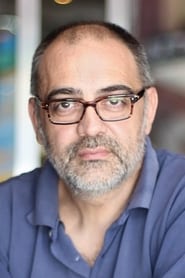
The performer most closely associated with Cerdà's early horror. Tosar played the pathologist in Aftermath and the grieving sculptor in Genesis, two radically different roles at the center of the Death Trilogy, and also appeared in the Cerdà-produced Dr. Curry.
 Karim Hussain
Writing Collaborator
A major creative partner from Cerdà's international horror period. Hussain co-wrote Ataúdes de luz and originated the screenplay that became The Abandoned; the pair also spent several years developing the unrealized apocalyptic horror project Oblivion.
JM
Jorge Macaya
Editing Collaborator
An important collaborator during Cerdà's move toward feature-length horror. Macaya worked on the long-developing Ataúdes de luz project and edited The Abandoned, shaping its transitions between physical reality, memory and supernatural disorientation.
 Jaume Balagueró
Spanish Horror Collaborator
Part of the same emerging Catalan horror generation. Cerdà helped produce Balagueró's early dark short Días sin luz, while Balagueró later appeared in the Cerdà-produced Dr. Curry, linking two filmmakers central to Spain's 1990s fantastic revival.
DM
David Martí
Effects Collaborator
A key figure behind the disturbing physical realism of Aftermath through DDT Efectos Especiales. Martí also appeared in the Cerdà-produced Dr. Curry, connecting Cerdà to the Barcelona practical-effects scene that would become internationally important.
Pep Tosar
Acting Collaborator
The performer most closely associated with Cerdà's early horror. Tosar played the pathologist in Aftermath and the grieving sculptor in Genesis, two radically different roles at the center of the Death Trilogy, and also appeared in the Cerdà-produced Dr. Curry.
Karim Hussain
Writing Collaborator
A major creative partner from Cerdà's international horror period. Hussain co-wrote Ataúdes de luz and originated the screenplay that became The Abandoned; the pair also spent several years developing the unrealized apocalyptic horror project Oblivion.
JM
Jorge Macaya
Editing Collaborator
An important collaborator during Cerdà's move toward feature-length horror. Macaya worked on the long-developing Ataúdes de luz project and edited The Abandoned, shaping its transitions between physical reality, memory and supernatural disorientation.
Jaume Balagueró
Spanish Horror Collaborator
Part of the same emerging Catalan horror generation. Cerdà helped produce Balagueró's early dark short Días sin luz, while Balagueró later appeared in the Cerdà-produced Dr. Curry, linking two filmmakers central to Spain's 1990s fantastic revival.
DM
David Martí
Effects Collaborator
A key figure behind the disturbing physical realism of Aftermath through DDT Efectos Especiales. Martí also appeared in the Cerdà-produced Dr. Curry, connecting Cerdà to the Barcelona practical-effects scene that would become internationally important.
Nacho Cerdà Horror Movies
Directing (4 credits)
2006
1998
1994
Writing (4 credits)
2009
2006
1998
1994
Production (1 credits)
1994