



1991
Joe D'Amato
Horror Director · Biography · Horror Filmography · Family · Collaborators · Credits
Horror subgenres & themes
Biography
Joe D’Amato and Italian horror production
Joe D’Amato was the best-known professional name of Aristide Massaccesi, a Roman filmmaker whose career covered cinematography, directing, screenwriting and production across several decades of Italian genre cinema. His output included westerns, adventure films, erotic cinema, fantasy, post-apocalyptic films and adult productions, while horror became one of the areas in which his work achieved its strongest international cult reputation. Films such as Death Smiles on a Murderer, Beyond the Darkness, Anthropophagous and Absurd established him as an important figure in the extreme wing of Italian horror around the turn of the 1980s.
D’Amato’s importance also extends beyond the films he directed personally. Through Filmirage he produced horror for filmmakers including Michele Soavi, Umberto Lenzi and Claudio Fragasso, contributing to the continuation of Italian genre production during the late 1980s and early 1990s. His technical background was unusually broad: he entered filmmaking through camera and electrical work, became a cinematographer and frequently continued operating the camera or supervising photography even after becoming a director and producer.
Aristide Massaccesi and the technical apprenticeship
Aristide Massaccesi was born in Rome on December 15, 1936. His father worked with equipment used in film production, giving him access to professional filmmaking while he was still young. Massaccesi later recalled beginning work during the 1950s and moving through several technical positions, including still photography, electrical work, camera assistance and camera operation. The progression gave him practical knowledge of production well before he began directing.
He worked on sets associated with established Italian and international directors and eventually became a director of photography. Massaccesi continued using his real name frequently on cinematography credits even when directing later films under pseudonyms. His background behind the camera remained important throughout his career, since he often photographed or operated on productions he directed and could organize low-budget shoots with direct knowledge of lighting, lenses and production logistics.
Cinematography and the transition to directing
Massaccesi worked extensively as a cinematographer from the late 1960s into the 1970s. His camera credits include productions in several commercial genres, reflecting the flexibility required within the Italian film industry of the period. He photographed giallo and horror material as well as erotic and adventure films, gaining experience in the visual conventions that later became part of his directing work.
He moved into directing during the early 1970s and used numerous pseudonyms throughout his career. Joe D’Amato eventually became the name most closely associated with his work internationally. The use of Anglo-American names was common in Italian genre production, especially for films intended for export, and Massaccesi employed the practice more extensively than many contemporaries because of the quantity and variety of his output.
Death Smiles on a Murderer
Death Smiles on a Murderer in 1973 is one of the earliest films in which D’Amato’s horror direction became clearly visible. Set in a period environment and starring Ewa Aulin and Klaus Kinski, the film combines Gothic horror with murder, resurrection and elements associated with the contemporary giallo. Its narrative structure and atmosphere differ substantially from the graphic exploitation films for which D’Amato later became better known.
The film is useful in assessing his development because it shows that his horror career was broader than splatter. Period settings, supernatural uncertainty and elaborate photography play a substantial role. D’Amato’s later work became increasingly direct in its use of gore, yet Death Smiles on a Murderer demonstrates an earlier interest in Gothic forms and visual atmosphere.
Erotic cinema and the Black Emanuelle period
During the 1970s D’Amato became closely associated with films starring Laura Gemser as Emanuelle. These productions were designed primarily as erotic exploitation and adventure, often using international locations and stories involving journalism, travel and sensational subjects. D’Amato directed several entries and worked repeatedly with Gemser, developing one of the longest collaborations of his career.
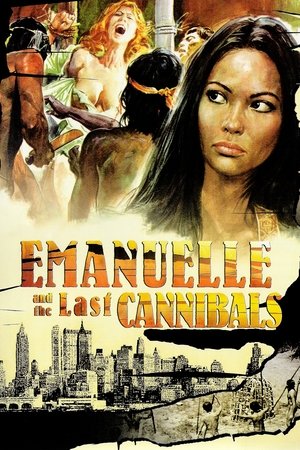
The cycle became relevant to horror when individual films incorporated increasingly violent or macabre material. Emanuelle in America includes simulated snuff-film imagery, while Emanuelle and the Last Cannibals in 1977 moves directly into the cannibal-film cycle developing within Italian exploitation cinema. The latter combines Gemser’s established character with jungle adventure and explicit violence and represents one of D’Amato’s earliest major attempts to merge commercially distinct genres within one production.
Emanuelle and the Last Cannibals
Emanuelle and the Last Cannibals follows Emanuelle from an investigation into apparent cannibalism toward an expedition searching for a supposedly surviving tribe. The film was produced during a period when Italian filmmakers were increasingly interested in cannibal subjects, several years before the international controversy surrounding Cannibal Holocaust. D’Amato uses the existing Emanuelle identity to introduce audiences familiar with erotic cinema to much more explicit horror material.
The production also demonstrates the efficiency of D’Amato’s working methods. Locations could represent environments far from Italy, and the film combined adventure, erotic sequences and horror without requiring the scale of a conventional international production. This ability to create exportable genre films with limited resources became central to D’Amato’s later work as both director and producer.
Beyond the Darkness
Beyond the Darkness, released in 1979 and also known as Buio Omega, became one of D’Amato’s principal horror films. The story concerns Frank, a young taxidermist who preserves the body of his dead girlfriend and commits further murders while living with his housekeeper Iris. The film stars Kieran Canter, Cinzia Monreale and Franca Stoppi and was photographed by D’Amato himself.
The film is notable for its sustained attention to physical processes involving corpses, taxidermy and body disposal. These sequences placed it among the more explicit European horror productions of its period. The soundtrack by Goblin added another connection with contemporary Italian horror. Beyond the Darkness later became a central title in the cult reputation surrounding D’Amato, especially through international home-video circulation.
Extreme violence and censorship
D’Amato’s horror films circulated in different versions according to national censorship and distribution requirements. He discussed shooting or preparing material with different markets in mind, particularly because levels of acceptable violence varied considerably across Europe, Japan and the United States. Beyond the Darkness, Anthropophagous and Absurd all became associated with cuts or censorship controversies.
This history is important because D’Amato worked primarily within an export-oriented genre industry. A film could be retitled, shortened or marketed differently depending on territory. His own use of multiple pseudonyms and international casts fitted the same commercial system, in which national origin was often deliberately obscured for foreign distributors.
Filmirage and independent production
Around 1980 D’Amato established Filmirage with Donatella Donati. Anthropophagous was among the company’s first productions and represented an important step because D’Amato was increasingly financing and controlling his own films rather than working solely for outside producers. The company later became a significant base for low-budget horror, thriller and erotic production aimed at international markets.
Filmirage gave D’Amato greater control over budgets and production schedules while also allowing him to employ other directors. The company’s later catalogue included work by Michele Soavi, Umberto Lenzi, Claudio Fragasso and other genre filmmakers. D’Amato’s role during this phase therefore expanded from prolific director into organizer and producer within the remaining infrastructure of Italian exploitation cinema.
Anthropophagous
Anthropophagous in 1980 became D’Amato’s most notorious horror film internationally. George Eastman, the professional name of Luigi Montefiori, co-developed the material, wrote the screenplay and played the cannibalistic killer. A group of travelers reaches an apparently deserted island and gradually discovers that its population has been destroyed by a man driven to cannibalism following earlier events involving his family.
The production used locations in Greece and Italy and was made inexpensively, with D’Amato later recalling that it was one of the cheapest films of his career. The deserted village and isolated coastal environments gave the production a larger visual scale than the budget might suggest. Its graphic effects became the principal source of notoriety, especially scenes involving a pregnant victim and the killer’s final self-mutilation.
George Eastman and the writing of Anthropophagous
The collaboration with George Eastman was fundamental to D’Amato’s horror work around this period. Eastman was already an established actor and screenwriter in Italian genre cinema and contributed directly to the narratives of Anthropophagous and Absurd. His height and physical presence also made him an unusually imposing screen antagonist.
The partnership was practical as well as creative. Both men understood the economics of low-budget production and could develop material around available locations and performers. Eastman’s participation as writer allowed D’Amato to concentrate heavily on direction, photography and production logistics while still working with a collaborator who knew what could be achieved within the available resources.
Absurd and the move toward the slasher format
Absurd, also known as Rosso sangue, followed in 1981. Although marketed in some territories as a continuation of Anthropophagous, it tells a separate story. Eastman plays Mikos, a man whose abnormal regenerative ability makes him extremely difficult to kill. The plot increasingly adopts a stalk-and-kill structure influenced by the international success of American slasher films.
The production again used Eastman as both principal performer and writer. D’Amato combined graphic violence with a domestic siege structure centered on a family threatened by the killer. The film became another important title in his international horror reputation and, together with Beyond the Darkness and Anthropophagous, formed the core group of extreme horror films most frequently associated with his name.
Erotic Nights of the Living Dead and horror-erotic hybrids
D’Amato also attempted direct combinations of explicit erotic production with supernatural horror. Erotic Nights of the Living Dead, made around the same period, uses Caribbean locations and zombie imagery while featuring several performers associated with his erotic work, including Laura Gemser and Mark Shannon. George Eastman also appears and contributed to the screenplay.
The film belongs to a commercially unusual period in which D’Amato experimented with combining audiences for adult cinema and horror. These productions have remained controversial and occupy a separate position from his more conventional horror films. They are nevertheless important to a complete account of his career because they demonstrate the extent to which he was willing to alter genre boundaries according to market opportunities.
D’Amato as cinematographer on his own horror films
D’Amato frequently retained direct responsibility for cinematography or camera operation while directing. His earlier technical career made this possible and reduced the separation between visual planning and practical production. In interviews he emphasized the importance of light and darkness to both horror and erotic cinema, reflecting a craftsman’s understanding developed through years of camera work.
This technical independence contributed to his speed. Productions could be reorganized quickly because the director understood the needs of the camera department directly. Several later collaborators described D’Amato as unusually efficient and capable of obtaining usable production value from limited time and money. This reputation became particularly important when he moved further into producing films for other directors.
Michele Soavi and StageFright
Michele Soavi worked within Italian genre cinema before becoming a director and crossed paths with D’Amato during the early 1980s. D’Amato later produced Soavi’s feature directing debut StageFright in 1987 through Filmirage, with Donatella Donati also producing. The film follows a theatre company trapped inside a building with a murderer and became one of the strongest Italian slasher productions of the late 1980s.
The project is important to D’Amato’s career because his principal contribution was industrial rather than directorial. Filmirage supplied a production framework through which a younger filmmaker could make a visually ambitious horror feature for international distribution. D’Amato’s influence on Italian horror therefore extended beyond his personal directing style.
Ghosthouse, Witchery and Filmirage horror
Filmirage continued producing horror during a period when theatrical opportunities for Italian genre cinema were contracting. Umberto Lenzi directed Ghosthouse and later Hitcher in the Dark within this production environment. Fabrizio Laurenti directed Witchery, starring David Hasselhoff and Linda Blair. These projects frequently used English dialogue, American or apparently American settings and international casts to improve their export potential.
D’Amato’s production methods during this period resembled the international exploitation practices in which he had worked for years. Titles and continuity could be adjusted for different markets, and unrelated films were sometimes sold as informal sequels to successful properties. Filmirage survived by remaining flexible about genre identity and distribution strategy.
Claudio Fragasso, Beyond Darkness and Troll 2
Claudio Fragasso became another important director within Filmirage. D’Amato produced Beyond Darkness and Troll 2, both made in English and designed strongly for international circulation. Fragasso later recalled D’Amato approaching him and Rossella Drudi with the request for a horror film that would avoid conventional blood effects, a production condition that contributed to the unusual concept developed for Troll 2.
Troll 2 had no narrative connection with John Carl Buechler’s Troll and originally centered on goblins. Its later reputation developed far beyond its initial commercial context, eventually becoming a widely discussed cult film. D’Amato’s role was primarily that of producer, placing the film within the same Filmirage strategy that supported other low-budget international genre projects.
Later horror direction and Frankenstein 2000
D’Amato continued directing horror intermittently while his career increasingly concentrated on erotic and adult production. Frankenstein 2000 in the early 1990s returned him to explicit horror through a contemporary variation on the Frankenstein tradition. By that stage Italian theatrical genre production had changed substantially from the period in which Anthropophagous and Absurd were made.
The film forms part of the later phase of his horror career rather than a major new direction. D’Amato remained far more active overall than many contemporaries because he adapted readily to video production and changing markets, but horror was no longer the dominant part of his directorial output.
Working methods and production efficiency
Accounts from collaborators consistently emphasize D’Amato’s technical competence and speed. His career had passed through enough production departments that he could assess practical problems directly and redesign a shoot according to budget or location. The same performers and technicians frequently returned because his productions relied on established working relationships.
This efficiency also explains the enormous size of his filmography and the difficulty of documenting it completely. Multiple pseudonyms, alternate versions, disputed directing credits and films assembled through overlapping production arrangements have complicated attribution. A reliable account of D’Amato therefore requires distinguishing confirmed roles from titles attached to his name through distribution or later publicity.
Critical reassessment and cult reputation
D’Amato received little institutional critical recognition during much of his career, particularly in Italy, where his association with pornography and low-budget exploitation often excluded him from serious discussion. International cult audiences preserved interest in films such as Beyond the Darkness and Anthropophagous through home video, specialty festivals and later restorations.
The critical position changed gradually. Retrospectives and documentaries began examining his work as part of the larger history of Italian genre production, and the 2021 Venice International Film Festival presented the documentary Inferno Rosso: Joe D’Amato on the Road of Excess. Such reassessment has concentrated particularly on his technical versatility, productivity and role within the production economy of exploitation cinema.
Joe D’Amato’s place in Italian horror
D’Amato died on January 23, 1999 after a career extending across nearly the entire post-war period of Italian commercial genre filmmaking. His horror reputation rests principally on a relatively small portion of an enormous output, especially Death Smiles on a Murderer, Beyond the Darkness, Anthropophagous and Absurd, together with the horror-erotic hybrids that pushed his work toward more extreme markets.
His historical importance is broader when production is considered alongside directing. Filmirage allowed D’Amato to remain active as Italian genre cinema changed and gave filmmakers including Michele Soavi, Umberto Lenzi and Claudio Fragasso access to internationally oriented productions. His career consequently provides an unusually complete example of the practical skills, economic pressures and export strategies that shaped Italian exploitation cinema from the 1960s through the 1990s.
Photos (1)
Images: TMDB
Selected Work
Notable Horror Collaborators
Notable collaborators and creative partners throughout Joe D'Amato's horror career.
 George Eastman
Director / Writer-Actor Collaborator
Eastman was one of D’Amato’s most important recurring collaborators. He wrote and starred in Anthropophagous and Absurd and also worked with D’Amato on other horror and exploitation productions, contributing substantially to the director’s early-1980s extreme-horror period.
 Laura Gemser
Director / Actor Collaborator
Gemser worked with D’Amato repeatedly during the Black Emanuelle period and appeared in horror-related productions including Emanuelle and the Last Cannibals and Erotic Nights of the Living Dead. Their wider collaboration extended across many years of Italian exploitation cinema.
DD
Donatella Donati
Director-Producer / Producer Collaborator
Donati worked closely with D’Amato in the production structure surrounding Filmirage and shared producing responsibility on major genre projects. Their collaboration was important to D’Amato’s transition from hired filmmaker to independent producer of his own horror and exploitation productions.
 Michele Soavi
Producer / Director Collaborator
Soavi worked within the Italian genre-production environment around D’Amato before directing StageFright for Filmirage. D’Amato’s production of Soavi’s feature debut became one of the company’s most important contributions to late-1980s Italian horror.
 Claudio Fragasso
Producer / Director Collaborator
Fragasso directed Filmirage productions including Troll 2 and Beyond Darkness for D’Amato. Their collaboration belongs to the period when D’Amato increasingly concentrated on producing English-language horror designed for international distribution.
AM
Alberto Moriani
Director / Editor Collaborator
Moriani edited several productions associated with D’Amato’s low-budget genre work, including Absurd. His recurring technical collaboration formed part of the small production network through which D’Amato was able to complete films quickly and economically.
Joe D'Amato Horror Movies
Directing (20 credits)
1991
1990
1988
1986
1983
1982
1981
1980
1980
1979
1978
1978
1977
1977
1977
1976
1975
1973
1973
Cinematography (18 credits)
1991
1990
1986
1982
1981
1980
1980
1979
1978
1977
1977
1977
1976
1975
1974
1973
1972
1969
Writing (9 credits)
1991
1983
1982
1980
1978
1977
1977
1976
1975
Production (11 credits)
1991
1991
1990
1989
1988
1988
1987
1986
1981
1980
1975
Acting (4 credits)
1995
1980
1977
1972
Other Crew (6 credits)
1988
1981
1978
1975
1973
1972
Editing (1 credits)
1986