



2026
Sam Raimi
Horror Director · Biography · Horror Filmography · Family · Collaborators · Credits
Horror subgenres & themes
Most represented across this person's horror filmography:
HAUNTED HOUSES
• GHOST
• HOME INVASION
• SLASHER
Biography
Sam Raimi and the Camera That Became a Monster
Sam Raimi changed horror cinema by refusing to let the camera remain a passive observer. In his early films it runs through forests, crashes through windows, follows invisible forces and attacks characters with the same aggression as the monsters themselves. This kinetic style, combined with extreme practical gore and a growing fascination with physical comedy, turned The Evil Dead, Evil Dead II and Army of Darkness into one of the most distinctive evolutions in modern horror.
Raimi's career eventually expanded far beyond the genre, through Darkman, A Simple Plan, the original Spider-Man trilogy and major studio fantasy productions. Yet horror remained the foundation of his visual language. Even when working with superheroes or enormous digital effects, his films continued to reveal the instincts developed while trying to make frightening images with friends, improvised equipment and almost no money.
His importance to horror also extends beyond directing. Together with longtime collaborator Robert Tapert, Raimi helped create a production infrastructure that supported later films including The Grudge, 30 Days of Night, Don't Breathe and new generations of Evil Dead. The filmmaker who began by raising money for a tiny independent feature eventually became one of the people capable of keeping theatrical horror franchises alive inside the studio system.
Michigan, Super 8 and the Beginning of a Film Family
Samuel Marshall Raimi was born in Michigan on October 23, 1959. Long before professional filmmaking became realistic, he was already making short films with friends and family using Super 8 cameras. Bruce Campbell became one of his closest creative partners, while Robert Tapert eventually joined the group and helped transform their amateur filmmaking into an actual production enterprise.
The early films were frequently comic, violent or deliberately absurd. Raimi was fascinated by the physical humor of the Three Stooges as much as by horror and suspense, an unusual combination that would later become central to his style. Characters could be injured horribly and still participate in elaborate visual jokes, while the camera behaved with a kind of manic enthusiasm normally associated with animation or slapstick.
Raimi also repeatedly involved his brothers Ivan and Ted. Ivan became a writing collaborator on several projects, while Ted Raimi developed into a recurring actor throughout Sam's career. This combination of friends, relatives and returning technicians created a creative environment closer to an independent theatre company than a conventional film production hierarchy.
Within the Woods and the Prototype for The Evil Dead
Before attempting a feature, Raimi and his collaborators made Within the Woods, an 8mm horror short designed partly to demonstrate what they could accomplish for potential investors. Bruce Campbell starred, and the basic situation already contained elements that would develop into The Evil Dead: young people isolated in the woods, supernatural possession and an environment that becomes actively hostile.
The short was not simply artistic practice. It functioned as proof that Raimi, Tapert and Campbell could create horror effects and sustain a genre premise despite having little professional experience. They screened it while seeking local investors, often approaching business owners, lawyers, dentists and other people who had no conventional connection with film financing.
This method shaped Raimi's understanding of independent cinema permanently. Before there could be a film, there had to be enough conviction to persuade strangers that an extremely unlikely project could actually be completed. The mythology surrounding The Evil Dead begins with horror imagery, but beneath it lies an equally important story about fundraising, endurance and practical organization.
The Evil Dead and the Cabin in Tennessee
The Evil Dead was shot primarily in Tennessee with a tiny crew and severe production limitations. Five young people travel to an isolated cabin, discover material connected with occult forces and accidentally unleash entities capable of possessing human bodies. The basic structure is simple, but Raimi approaches it with relentless visual invention.
The forest itself seems alive. An unseen force rushes between trees from a violently subjective point of view, turning movement into threat before the audience understands what is moving. The camera becomes an extension of the supernatural presence, and the technique allows Raimi to suggest something enormous and aggressive without needing to construct a visible monster.
Inside the cabin, possession destroys normal human behavior. Voices change, bodies become physically unstable and familiar people transform into mocking creatures. The Deadites do not simply attack. They torment the survivors psychologically, smiling and laughing while mutilation and dismemberment become increasingly necessary methods of survival.
The violence grows so extreme that realism eventually gives way to nightmare logic. Blood pours in impossible quantities, bodies disintegrate and the environment itself seems contaminated. Raimi discovered that limited resources could become an advantage if the film abandoned restraint completely.
Bruce Campbell and the Creation of Ash Williams
Bruce Campbell initially plays Ash Williams as one member of an ensemble rather than the unstoppable hero the character would later become. He is frightened, uncertain and frequently overwhelmed. This makes the transformation across the series especially important because audiences effectively watch an ordinary young man being reconstructed by repeated encounters with supernatural violence.
Raimi and Campbell had already worked together for years before The Evil Dead, allowing the director to demand an unusual degree of physical commitment. Campbell is thrown into furniture, covered in artificial blood and required to react to effects that frequently depend upon broad facial and bodily performance.
Their collaboration gradually develops Ash from victim into grotesque action hero. By Evil Dead II, his body itself becomes part of the comedy. By Army of Darkness, the frightened survivor has become an arrogant warrior whose confidence is almost as dangerous as the monsters around him.
This evolution would become one of horror cinema's most unusual character arcs. Ash does not become more sophisticated as trauma accumulates. He becomes louder, more physical and increasingly ridiculous, while simultaneously becoming much better at killing monsters.
Robert Tapert and the Production Structure Behind the Chaos
Robert Tapert became one of the most important collaborators in Raimi's career because the increasingly elaborate chaos visible on screen depended upon someone capable of organizing production behind it. Tapert produced The Evil Dead and remained connected with Raimi through sequels, television and later genre production.
The partnership divided responsibilities naturally. Raimi concentrated on staging, camera movement and performance, while Tapert became essential to the financial and logistical structure that allowed projects to exist. Their collaboration survived the transition from regional independent filmmaking to international studio productions.
That continuity eventually became especially important through the creation of Ghost House Pictures, which allowed Raimi and Tapert to support horror made by other filmmakers. Their professional relationship therefore extended from personally carrying equipment through difficult locations to overseeing multimillion-dollar genre productions decades later.
The Long Road to an Audience
Completing The Evil Dead did not guarantee distribution. The film's extreme violence and low-budget origins made American companies cautious, but international festival and market exposure gradually changed its reputation. It screened around the period of the Cannes film market and gained attention abroad before becoming easier to sell in the United States.
The film's reputation grew through reviews, theatrical bookings and eventually home video. Stephen King's enthusiastic response became particularly useful in its promotion, helping validate a production that could easily have been dismissed as another crude exploitation film.
What audiences discovered was crude in certain technical respects but unusually confident in others. Raimi could not disguise every budget limitation, yet his camera movements, editing and willingness to attack the viewer visually gave the film an identity that much more expensive horror frequently lacked.
The Evil Dead Camera and Visual Aggression
One of Raimi's greatest innovations was turning camera movement into a source of horror. The famous rushing point of view through the woods creates the impression that evil possesses velocity. Instead of waiting for a monster to enter the frame, the frame itself charges toward the victim.
Raimi and his collaborators developed inexpensive methods to achieve movements that would normally require more elaborate equipment. Cameras could be mounted to improvised rigs, carried rapidly through difficult terrain or placed extremely close to objects and performers. The technical roughness often increased the sense of danger because the movement felt unstable and uncontrolled.
This aggressiveness would remain central even when Raimi gained larger budgets. Whip pans, violent push-ins, extreme close-ups, tilted compositions and sudden changes in perspective became part of his visual vocabulary. A Raimi film often feels as though the camera has its own personality.
Evil Dead II and the Reinvention of the Original
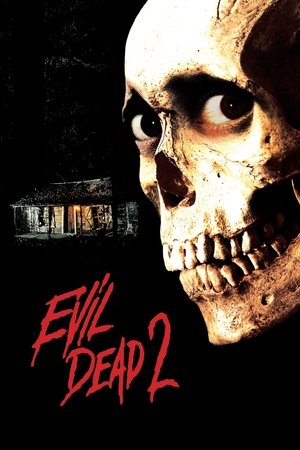
Evil Dead II (1987) did not simply continue the first film. Raimi reconsidered its entire tone. Horror remained essential, but slapstick became equally important, transforming Ash's battle against the Deadites into a collision between demonic possession and physical comedy.
The early section rapidly re-establishes Ash and the cabin, effectively reconstructing the premise before moving into new material. Once Ash becomes isolated, Raimi begins treating his psychological collapse as performance. Objects laugh at him, rooms distort and Campbell's body becomes another piece of unstable scenery.
The film is far more controlled than The Evil Dead technically, but it deliberately creates the impression of madness. Camera movement, stop-motion animation, prosthetics, mechanical effects and exaggerated sound combine into sequences where no single cinematic reality remains dominant.
This mixture transformed the identity of the series. The Evil Dead could be experienced as brutal supernatural horror. Evil Dead II demonstrated that the same mythology could sustain comedy without weakening the threat.
The Possessed Hand and Raimi's Slapstick Horror
The sequence in which Ash's own hand becomes possessed may be the purest expression of Raimi's comic horror. Ash fights part of his own body as though participating in a violent vaudeville routine. He smashes himself into furniture, loses control of weapons and eventually amputates the hand with a chainsaw.
The scene works because the physical comedy is treated with complete commitment. Campbell does not perform as though the situation is a joke. Ash genuinely believes his hand is trying to kill him, and the harder he fights it, the more ridiculous the choreography becomes.
Raimi's affection for the Three Stooges becomes unmistakable here. Impact, repetition and humiliation generate humor, but gore changes the stakes. A slap becomes mutilation and an argument between body parts ends in amputation.
This balance would influence generations of horror comedies. Raimi showed that slapstick could coexist with graphic effects without requiring the film to become a conventional spoof.
The Chainsaw, the Boomstick and the Transformation of Ash
By the climax of Evil Dead II, Ash has replaced his missing hand with a chainsaw and adopted a shotgun as his primary weapon. The image became inseparable from the character. Instead of simply surviving horror, Ash now physically modifies himself in order to fight it.
This transformation is both heroic and absurd. The chainsaw hand is visually magnificent but completely impractical outside the logic of the movie. Raimi understands that horror icons are often created through silhouette and gesture rather than psychological complexity.
Ash's identity becomes increasingly theatrical from this point forward. He poses, delivers exaggerated dialogue and treats monster fighting as performance. Campbell's physicality allows Raimi to move the character toward comic-book exaggeration without abandoning the battered survivor visible beneath it.
Darkman and Horror Inside the Superhero Film
Darkman (1990) allowed Raimi to move toward studio filmmaking while retaining many of the visual instincts developed in horror. Liam Neeson plays scientist Peyton Westlake, who is horribly injured and left for dead before using experimental synthetic skin to reconstruct temporary faces and pursue the criminals responsible.
The film combines superhero mythology with Gothic horror, revenge cinema and tragic romance. Westlake survives, but survival does not restore the man he was before the attack. His damaged body, altered nervous system and unstable emotions make the creation of Darkman inseparable from physical trauma.
Raimi uses exaggerated camera movement, distorted subjective imagery and comic-book compositions while preserving a melancholy center. The masks Westlake creates allow him to imitate other people, but they cannot permanently restore his own identity.
Darkman became an important bridge between Raimi's independent horror period and the large-scale superhero cinema he would later direct. It demonstrated that his aggressive visual style could survive inside a studio production.
Army of Darkness and Horror Becomes Fantasy Adventure
Army of Darkness, released theatrically in the early 1990s, follows the ending of Evil Dead II by transporting Ash into a medieval world threatened by the same supernatural forces. Raimi expands a cabin horror series into fantasy adventure without abandoning the grotesque humor that had come to define it.
Ash is now completely different from the young man who entered the Tennessee cabin. He is arrogant, impatient and convinced that technological knowledge makes him superior to the medieval people around him. His incompetence repeatedly undermines that confidence.
The film exchanges claustrophobic horror for skeleton armies, castles, miniature doubles and elaborate physical comedy. Ray Harryhausen-style fantasy imagery becomes as important as the demonic possession inherited from the previous films.
Although less frightening than its predecessors, Army of Darkness completed the transformation of Ash into a cult hero. Raimi had taken one horror protagonist through three increasingly different genres while maintaining enough visual and mythological continuity for the films to remain recognizably connected.
Ted Raimi and the Repertory Tradition
Ted Raimi became one of his brother's most frequent performers, appearing across horror, fantasy, superhero and television projects. His presence reinforces the sense that Sam Raimi prefers working with an informal repertory company rather than constructing every production from completely new collaborators.
In the Evil Dead world, Ted's involvement spans different characters and increasingly elaborate makeup. Outside the franchise, he continued appearing in Sam's work while also developing an independent acting career strongly associated with genre cinema.
The relationship illustrates something fundamental about Raimi's filmmaking culture. Loyalty and familiarity repeatedly matter. The same people return because the director already understands what they can do and because the shared history becomes part of the production process.
Horror Influence Inside Spider-Man
The enormous success of Spider-Man (2002) transformed Raimi into a major studio director, but the move into blockbuster filmmaking did not erase his horror instincts. His camera remained mobile, physical comedy remained important and villains were frequently introduced through scenes structured like miniature horror films.
Spider-Man 2 provides the clearest example during Doctor Octopus's hospital sequence. Mechanical arms awaken while surgeons attempt to remove them, and the scene suddenly adopts the visual language of supernatural horror. Shadows, screaming medical staff, violent point-of-view movement and rapid attacks turn a superhero film temporarily into something recognizably Raimi.
The sequence demonstrates how thoroughly horror had become embedded in his filmmaking grammar. Raimi did not need an Evil Dead title to return to the genre's techniques. He could insert them into a mainstream comic-book blockbuster without disrupting his larger visual identity.
Ghost House Pictures and Raimi as Horror Producer
Raimi and Robert Tapert formed Ghost House Pictures during the early 2000s, allowing them to develop and produce horror beyond Raimi's own directing schedule. The company became a major extension of their partnership and connected the filmmakers who had created The Evil Dead with a new generation of commercial horror.
The Grudge (2004), directed by Takashi Shimizu as an American adaptation of his Japanese horror series, became one of Ghost House's major early successes. The company later participated in films including 30 Days of Night, Drag Me to Hell, Evil Dead, Don't Breathe and Evil Dead Rise.
Raimi's role had therefore changed dramatically. During the production of The Evil Dead, he and his collaborators had struggled to convince individual investors that a single horror film could exist. Decades later, he possessed the infrastructure to finance and distribute genre films created by other directors.
The Grudge and a New Generation of Supernatural Horror
The American version of The Grudge allowed Raimi and Ghost House to participate directly in the international wave of Japanese supernatural horror that was reshaping the genre during the early 2000s. Rather than relocating the story completely to the United States, the production retained its Japanese setting and director Takashi Shimizu.
The film's commercial success demonstrated that Ghost House could operate on a scale much larger than the independent productions from which Raimi had emerged. Horror remained relatively inexpensive compared with superhero cinema, but global marketing could turn the right concept into a major studio release.
Raimi's importance here was less about imposing his own visual style than about creating production conditions for another filmmaker's approach. As producer, he increasingly became responsible for identifying concepts and directors rather than personally designing every scare.
30 Days of Night and the Producer's Horror Career
30 Days of Night (2007), directed by David Slade and based on the comic series, gave Ghost House another distinctive horror property. The premise places vampires inside an Alaskan town experiencing a prolonged period without sunlight, turning geography itself into a mechanism that removes one of the traditional weaknesses of the vampire.
The film's aggressive creatures differ greatly from Raimi's comic Deadites, demonstrating the range of horror his production company was willing to support. Ghost House did not need every film to resemble The Evil Dead. The common principle was strong genre identity.
This period made Raimi's influence on horror increasingly indirect but much broader. A single director can make only one film at a time, while a producer can help several different filmmakers bring projects into existence across the same period.
Drag Me to Hell and the Return to Directing Horror
Drag Me to Hell (2009) marked Raimi's major return to directing horror after years dominated by the Spider-Man films. Written with Ivan Raimi, it follows Christine Brown, a loan officer whose decision to deny an elderly woman an extension on her mortgage results in a supernatural curse.
The premise allowed Raimi to return immediately to the mixture of fear, humiliation and physical comedy associated with Evil Dead II. Christine is attacked by invisible forces, covered with disgusting substances, thrown through rooms and forced into increasingly desperate attempts to avoid damnation.
The film is structured like a morality tale. Christine's decision is understandable within the competitive environment of her job, but it is also motivated by personal ambition. Raimi does not allow her to escape the consequences simply because she later regrets them.
Released during a period of economic anxiety surrounding mortgages and financial institutions, the story acquired an accidental contemporary resonance. Raimi explained that the film had been conceived earlier, but its image of a bank employee condemning a desperate customer inevitably connected with the economic climate in which audiences encountered it.
Gross-Out Horror as Physical Comedy
Drag Me to Hell demonstrated that Raimi's taste for bodily humiliation had not softened during his years making blockbusters. Fluids, insects, dentures, corpses and food become weapons against the protagonist. Several scenes are designed so that the audience's disgust arrives almost simultaneously with laughter.
The attacks often concentrate on the face and mouth, violating the normal boundaries between bodies in deliberately excessive ways. Raimi understands that disgust becomes especially immediate when the audience can imagine texture, smell or contamination rather than simply observing blood from a distance.
The approach connects directly back to Evil Dead II. The protagonist is frightened, but the filmmaker keeps escalating the assault until terror becomes ridiculous without ceasing to be unpleasant.
Returning to Evil Dead as Producer
The Evil Dead mythology eventually returned to cinemas without Raimi directing. Fede Álvarez's Evil Dead (2013) reinterpreted the cabin premise with a much harsher emphasis on physical suffering and practical gore. Raimi, Tapert and Campbell served as producers, allowing a new filmmaker to reconstruct material that had defined their own careers.
The film avoids simply recreating Ash Williams. Instead, it builds a new group of characters and treats demonic possession with far less slapstick than Raimi's sequels. The approach demonstrated that Evil Dead could survive without requiring every installment to imitate Raimi's exact balance of comedy and horror.
For Raimi, producing the film represented a different relationship with his own mythology. He was no longer the young filmmaker attempting to prove the concept could work. He was one of the custodians deciding how another director could alter it.
Ash vs Evil Dead and the Return of Sam Raimi, Bruce Campbell and Robert Tapert
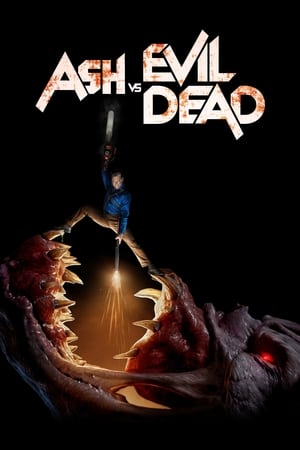
Ash vs Evil Dead brought the original creative team back together in television decades after Army of Darkness. Bruce Campbell again played Ash Williams, while Raimi and Robert Tapert served among the principal creative forces behind the series. Raimi also directed and co-wrote the first episode, returning personally to the visual world he had helped create.
The series accepted that Ash had aged without requiring him to become wiser. He remains irresponsible, boastful and capable of unleashing disaster through stupidity. This decision preserved the comedy because maturity would have destroyed much of the character's fundamental contradiction.
Television allowed the mythology to expand far beyond the isolated cabin. New characters, demons and supernatural rules could be introduced while retaining the gore, physical comedy and exaggerated action associated with the films.
The three-season run also confirmed the durability of the collaboration between Raimi, Campbell and Tapert. What began as regional independent filmmaking in Michigan and Tennessee had become a mythology capable of supporting international television production more than three decades later.
Don't Breathe and Supporting a Different Kind of Horror
Ghost House later produced Fede Álvarez's Don't Breathe (2016), a contained thriller built around young intruders trapped inside the home of a blind man they intended to rob. The film differs substantially from Raimi's supernatural work, relying on geography, silence and reversals of power rather than demonic spectacle.
Its success reinforced the idea that Raimi and Tapert's production activity did not depend exclusively upon established franchises. A relatively contained original concept could still become an international commercial horror film if the execution was strong enough.
The project also continued the relationship with Álvarez after Evil Dead, demonstrating the same preference for recurring creative partnerships that had characterized Raimi's own directing career.
Evil Dead Rise and the Franchise Beyond the Cabin
Evil Dead Rise (2023), directed by Lee Cronin and produced with the involvement of Raimi, Tapert and Campbell, pushed the franchise into an urban apartment building. The move was important because it demonstrated that Evil Dead no longer required the original cabin to remain recognizable.
The essential structure survived through possession, the Book of the Dead, bodily transformation and extreme violence. What changed was the social environment. Instead of a group of friends temporarily isolated in the woods, the film places supernatural infection inside a damaged family living in a dense residential building.
Raimi's continuing production role allowed the series to evolve without turning every new film into another attempt to reproduce his directing style. By this stage, Evil Dead had become a horror framework capable of supporting distinct filmmakers.
Doctor Strange and Raimi's Horror Grammar on a Blockbuster Scale
Doctor Strange in the Multiverse of Madness (2022) returned Raimi to large-scale superhero filmmaking while giving him unusually direct opportunities to use horror imagery. Possession, corrupted bodies, supernatural pursuit and reanimated flesh appear inside a Marvel production whose resources are vastly larger than anything available during his early career.
Certain sequences unmistakably carry Raimi's visual habits. The camera adopts aggressive perspectives, characters are framed through distorted compositions and supernatural forces attack with a physicality closer to horror than conventional superhero spectacle.
The film does not turn Raimi into a horror director exclusively again, but it demonstrates the persistence of the language he developed decades earlier. Techniques invented partly because he lacked money had become stylistic choices available even when money was no longer the primary limitation.
The Three Stooges, Comic Books and the Raimi Collision of Influences
Raimi's horror style cannot be explained through horror alone. The Three Stooges supplied a model for physical comedy in which bodies become instruments for impact, pain and rhythm. Comic books supplied exaggerated framing, visual momentum and heroes defined by iconic physical gestures.
These influences collided with horror rather than remaining separate from it. Ash can be tortured like a slapstick comedian while fighting supernatural creatures. Darkman can be simultaneously a tragic monster and a comic-book vigilante. A surgeon can be killed during a sequence staged like a miniature horror film inside Spider-Man 2.
This mixture explains why imitation of Raimi is difficult. Reproducing a rushing camera or gallons of blood captures only the surface. The deeper style depends upon controlling fear, physical comedy and melodrama at the same time.
The Raimi Camera as a Character
Few modern directors are as immediately recognizable through movement alone. Raimi frequently pushes the camera toward faces with violent speed, attaches perspective to invisible forces and allows objects to travel directly toward the lens. The viewer is not positioned at a safe observational distance.
His camera can also become comic. Sudden zooms and exaggerated angles function almost like reaction shots in a cartoon. A dramatic gesture can be amplified until it becomes absurd simply through framing and timing.
This creates unusual continuity across his career. The technical resources of The Evil Dead and Doctor Strange in the Multiverse of Madness could hardly be more different, yet certain movements remain recognizably the work of the same filmmaker.
Practical Gore and the Importance of Performance
Raimi's early horror depended heavily upon practical effects because no realistic alternative existed at the budget level available to him. Makeup appliances, mechanical effects, artificial blood and stop-motion techniques had to be physically integrated into performances.
This limitation contributed strongly to the texture of the films. Campbell and the other actors are not merely reacting to imaginary creatures. They are fighting objects, being struck by fluids and moving through sets designed to participate in the violence.
The practical nature of the effects also encouraged exaggeration. Once absolute realism became impossible, Raimi could pursue spectacle instead. Blood could behave like a fountain, corpses could deform grotesquely and the entire room could become part of the joke.
Sam Raimi's Horror Legacy
Sam Raimi's place in horror would be secure through the original Evil Dead trilogy alone. The three films demonstrate an extraordinary progression from independent supernatural terror through splatter comedy into fantasy adventure, all while maintaining the same central mythology, actor and visual personality.
His larger contribution is broader. Raimi helped establish a model in which horror could be ferocious and funny simultaneously without becoming detached parody. He demonstrated that aggressive camera movement could function like a monster, that practical gore could participate in slapstick and that a frightened protagonist could gradually transform into a grotesque action icon.
His partnership with Bruce Campbell and Robert Tapert also became one of the longest creative relationships in modern genre cinema. From Within the Woods and the fundraising campaign for The Evil Dead to Ash vs Evil Dead and later franchise productions, the same creative core repeatedly returned to material that had begun as an almost impossible independent project.
Through Ghost House Pictures, Raimi's influence expanded beyond his own directing. Films including The Grudge, 30 Days of Night, Don't Breathe and later Evil Dead entries allowed him to support filmmakers whose horror looked very different from his own. His career therefore evolved from personally inventing low-budget solutions to creating the production structures through which other directors could experiment.
The most enduring element remains movement. Raimi's horror never wants to sit still. Cameras accelerate, bodies collide, demons attack, objects fly and heroes survive by becoming almost as excessive as the forces pursuing them. What began as a practical solution to making an invisible evil frightening became one of the most recognizable visual signatures in genre cinema.
Known Among Horror Fans For
Notable Horror Collaborators
Notable collaborators and creative partners throughout Sam Raimi's horror career.
 Bruce Campbell
Defining Actor Collaborator
Campbell is Raimi's defining horror performer and one of his oldest creative partners, collaborating on Within the Woods, The Evil Dead, Evil Dead II, Army of Darkness and Ash vs Evil Dead.
 Robert Tapert
Defining Producing Partner
Tapert has been one of Raimi's principal creative and producing partners since their earliest horror work, collaborating across the Evil Dead franchise, Drag Me to Hell, Ash vs Evil Dead and later Ghost House productions.
JL
Joseph LoDuca
Musical Collaborator
LoDuca created the musical identity of Raimi's Evil Dead world, scoring The Evil Dead, Evil Dead II and Army of Darkness and later returning for Ash vs Evil Dead.
TS
Tom Sullivan
Special Effects Collaborator
Sullivan was fundamental to the physical identity of Raimi's early horror, creating effects and artwork for Within the Woods, The Evil Dead, Evil Dead II and Army of Darkness.
 Scott Spiegel
Writing and Early Horror Collaborator
Spiegel was part of Raimi's original Michigan filmmaking circle, appearing in Within the Woods, contributing to The Evil Dead and later co-writing Evil Dead II with Raimi.
BM
Bob Murawski
Editing Collaborator
Murawski became one of Raimi's closest editorial collaborators, cutting Army of Darkness, Drag Me to Hell and the Raimi-directed pilot of Ash vs Evil Dead.
Sam Raimi Horror Movies
Directing (12 credits)
2020
2017
2015
2009
2000
1992
1987
1985
1981
1978
1978
Writing (16 credits)
2028
2026
2022
2020
2015
2013
2009
2005
1996
1995
1992
1987
1985
1981
1978
1978
Production (29 credits)
2028
2026
2026
2025
2024
2022
2022
2021
2021
2021
2020
2020
2019
2016
2015
2013
2012
2010
2009
2007
2007
2005
2004
1996
1995
1995
1981
1978
1978
Acting (14 credits)
2009
2007
1997
1994
1993
1993
1992
1990
1989
1988
1985
1981
1979
1979
Creator (2 credits)
2020
2015
Other Crew (5 credits)
2023
2017
1997
1994
1979
Editing (2 credits)
1992
1978