
1936
Tod Browning
Horror Director · Biography · Horror Filmography · Family · Collaborators · Credits
Horror subgenres & themes
Biography
Tod Browning and the Dark Carnival of Early Horror
Tod Browning was one of the filmmakers who helped define American horror before the genre had fully established its classical studio identity. His cinema repeatedly returned to bodies considered unusual, performers living outside conventional society, criminal deception, obsessive desire and characters whose public identities conceal something darker underneath. Long before the Universal monster cycle became a recognizable institution, Browning had already developed a visual and thematic world populated by carnival performers, false identities, mutilation, hypnotism and apparent supernatural threats. That world reached its most influential forms in The Unknown, London After Midnight, Dracula, Freaks, Mark of the Vampire and The Devil-Doll.
What distinguishes Browning from many later horror directors is that monstrosity in his films is rarely simple. Physical difference does not automatically identify the dangerous character, while apparently respectable people may prove far more cruel than those society labels abnormal. Deception is equally important. Characters disguise bodies, identities and motives, and Browning repeatedly allows the audience to believe it is watching supernatural horror before revealing that performance itself has created the illusion. His films therefore exist at the intersection of horror, melodrama, crime and the culture of the circus, where transformation and spectacle are never far apart.
Lon Chaney and the Silent Horror Partnership
Lon Chaney was the defining performer of Browning's silent period and one of the most important collaborators in the director's entire career. Their work together repeatedly explored characters who manipulate appearance or endure extreme physical transformation. Chaney's mastery of makeup and bodily performance allowed Browning to build stories in which physical identity became unstable, threatening or tragically self-destructive. The collaboration was particularly suited to Browning because the director had direct familiarity with circus and carnival culture and understood the dramatic possibilities of performers whose public identity depended upon illusion.
In horror terms, The Unknown and London After Midnight provide two of the clearest surviving examples of that partnership. The first creates terror from a man who pretends to have no arms and eventually mutilates himself in order to make the deception permanent. The second uses Chaney's grotesque vampire-like appearance as part of a murder investigation built around staged supernatural fear. In both films the frightening image is inseparable from performance. Browning and Chaney repeatedly ask what happens when a disguise stops being temporary and begins consuming the person underneath it.
The Unknown and Horror Through Self-Mutilation
The Unknown (1927) remains one of Browning's most disturbing silent films. Chaney plays Alonzo, a criminal hiding inside a circus by pretending to be armless. Because Nanon recoils from the touch of men's hands, Alonzo gradually convinces himself that making his false disability permanent will allow him to possess her. He undergoes an operation to remove his arms, only to discover that the sacrifice has destroyed rather than secured the future he imagined.
The horror does not require the supernatural. Browning builds it through obsession, physical deception and the possibility of deliberately altering the body beyond repair. Alonzo is frightening because his intelligence allows him to rationalize increasingly extreme actions. The body becomes both disguise and prison. Merritt B. Gerstad's photography and Cedric Gibbons's settings place the story inside a circus world where unusual bodies are already part of public spectacle, making Alonzo's decision to manufacture physical difference even more grotesque.
Merritt B. Gerstad and Browning's Visual World
Cinematographer Merritt B. Gerstad became one of Browning's strongest recurring collaborators across the director's horror and macabre films. He photographed The Unknown, London After Midnight and Freaks, three productions that span Browning's silent period and his most controversial sound-era work. Gerstad's imagery is generally controlled rather than extravagantly expressionistic, which suits Browning's interest in presenting strange situations with enough visual clarity that the audience must confront them directly.
That directness is particularly important in Freaks. Browning does not need optical distortion to make the performers appear unusual because their bodies are already part of the film's reality. Gerstad photographs the circus community with a matter-of-fact visual style that allows daily routines, friendship and conflict to exist before the climactic revenge changes the tone completely. The same visual discipline had already served The Unknown, where horror grows from what Alonzo chooses to do to his own body rather than from a fantastical environment.
London After Midnight and the Vampire as Performance
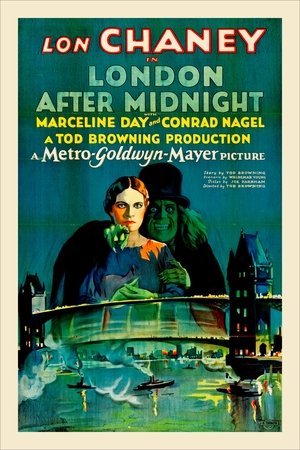
London After Midnight (1927) is now one of horror cinema's most famous lost films, surviving primarily through still photographs, scripts and production records after the known print was destroyed. Browning based the story on his own concept and cast Chaney in the dual role of an investigator and the grotesque vampire figure used within an elaborate deception. Chaney's top hat, sharp teeth and unnatural stare became iconic despite the film itself no longer surviving in complete motion-picture form.
The film is important within Browning's horror because it demonstrates how deeply he was already interested in the theatrical construction of supernatural fear. The vampire image is frightening even when the narrative eventually places it inside a human scheme. Browning understood that the audience's emotional reaction to an image occurs before the explanation arrives. That principle would return in Mark of the Vampire, where he revisited much of the same narrative machinery in the sound era.
Waldemar Young and Browning's Silent Horror Structure
Screenwriter Waldemar Young worked with Browning on both The Unknown and London After Midnight, making him a significant connection within the director's silent macabre period. Young helped translate Browning's interests in bodily deception, crime and staged supernatural imagery into tightly structured screen narratives. In The Unknown, psychological obsession leads directly toward physical mutilation; in London After Midnight, murder investigation becomes inseparable from the deliberate creation of vampire imagery.
The two films demonstrate how Browning's early horror often depends upon concealment rather than supernatural explanation. The viewer sees something strange and must determine whether the abnormality belongs to the body, the mind or an elaborate performance. Young's scenarios gave Browning the framework through which those uncertainties could gradually become more disturbing.
Dracula and the Birth of the Universal Vampire
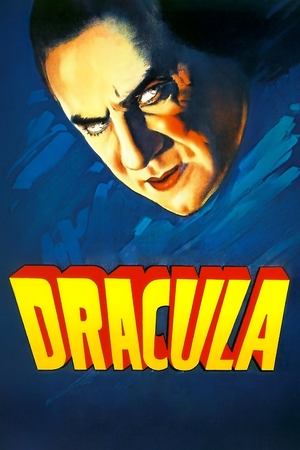
Dracula (1931) became Browning's most historically influential horror film and one of the central productions in the emergence of Universal horror. Bela Lugosi had already played Count Dracula on stage, but Browning's film transformed that performance into a screen image that would shape popular conceptions of the vampire for generations. The formal evening clothes, cape, controlled movement, hypnotic stare and distinctive voice became so influential that later vampire cinema often had to imitate or deliberately reject the model.
Browning's approach differs sharply from the physical horror associated with Chaney. Lugosi's Dracula is dangerous because he appears composed. His violence is frequently suggested through approach, gaze and the submission of the victim rather than through prolonged physical struggle. The Count moves through drawing rooms and bedrooms with aristocratic confidence, turning refinement into a form of predation. The film helped establish that horror could emerge from elegance as easily as from visible deformity.
Bela Lugosi and the Return of the Vampire Image
Bela Lugosi became a recurring horror collaborator when Browning cast him again in Mark of the Vampire four years after Dracula. The second film deliberately exploits the audience's memory of Lugosi as Dracula. His Count Mora visually recalls the earlier vampire while existing inside a very different narrative structure. Browning uses the established Lugosi image almost as a piece of cinematic shorthand: the audience sees the actor and immediately understands the supernatural threat the film wants them to believe in.
This makes the Browning-Lugosi relationship unusually interesting. Dracula helps create one of cinema's most enduring vampire icons, while Mark of the Vampire uses that icon as part of a deception. Browning first establishes Lugosi as the genuine supernatural Count and later turns the cultural memory of that performance into a tool for staging apparent vampirism.
Garrett Fort and Gothic Horror in the Sound Era
Garrett Fort wrote the screenplay for Dracula and later returned to Browning's horror world as one of the screenwriters of The Devil-Doll. These two films are extremely different in tone and scale, but both demonstrate Browning's transition from silent macabre melodrama into sound-era Gothic and science-fiction horror. Fort's Dracula screenplay adapts the stage version of Bram Stoker's story into a relatively concentrated structure centered on Dracula's arrival, predation and confrontation with Van Helsing.
The Devil-Doll combines revenge, miniaturization, disguise and scientific experimentation, reconnecting Browning with themes that had already defined his silent work. Human bodies once again become objects capable of alteration and manipulation. Fort's presence across both productions makes him an important link between Browning's most famous supernatural film and one of his final major excursions into horror.
Freaks and the Reversal of Monstrosity
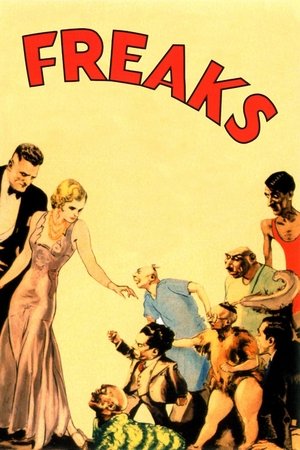
Freaks (1932) became Browning's most controversial film and eventually one of his most important. Set inside a travelling circus, it follows little person Hans as trapeze artist Cleopatra manipulates his affection after learning that he has inherited money. Cleopatra and strongman Hercules plan to poison him, while the sideshow performers gradually discover what is happening. Browning cast real performers with physical differences rather than using conventional actors hidden beneath elaborate makeup, a choice that radically changed the relationship between audience, spectacle and character.
The film's central horror lies in inversion. The people marketed within the circus as physical curiosities possess loyalty, relationships and a strong communal code, while Cleopatra and Hercules behave with calculated cruelty. Browning therefore separates physical difference from moral monstrosity. The revenge sequence eventually becomes frightening, but its power depends upon everything the film has already established about who has actually violated the social order of the community.
The Banquet and the Failure of Acceptance
The wedding banquet sequence is one of Browning's most important contributions to horror because it places acceptance and rejection at the center of the film's moral world. The performers attempt to welcome Cleopatra through a ritual declaring her one of them. Her disgust exposes the contempt that had previously remained beneath her manipulation of Hans. The scene becomes painful because the horror is not generated by the bodies surrounding the table but by Cleopatra's inability to recognize those people as equals.
The later revenge therefore emerges from a broken communal contract. Browning does not present the performers as harmless saints, but he makes their violence legible as a response to attempted murder and humiliation. This moral complexity is one reason Freaks remains difficult to classify comfortably. It can be exploitative and empathetic, grotesque and humane within the same film, forcing the viewer to confront the act of looking itself.
Cedric Gibbons and the Architecture of Browning Horror
Art director Cedric Gibbons worked with Browning across The Unknown, Mark of the Vampire and The Devil-Doll, giving him a recurring role in the physical construction of the director's horror spaces. His work spans three very different modes: circus melodrama, Gothic vampire imagery and miniature science-fiction horror. That range reflects the flexibility of Browning's cinema, which could move from intimate bodily obsession to elaborate supernatural atmosphere without abandoning its fascination with performance and transformation.
Mark of the Vampire especially benefits from Gothic production design filled with decaying interiors, crypts and environments designed to make staged vampirism appear completely convincing. The Devil-Doll requires another kind of visual problem, creating spaces in which miniature human beings can appear vulnerable inside ordinary rooms. Gibbons's recurring collaboration helped Browning turn psychological ideas into environments capable of sustaining them visually.
Mark of the Vampire and the Return to London After Midnight
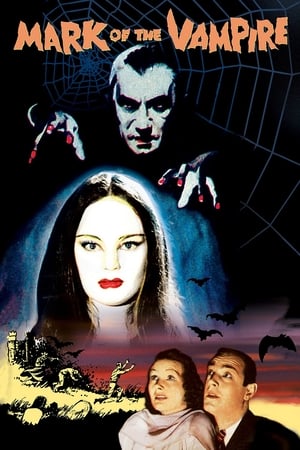
Mark of the Vampire (1935) revisits the central mechanism of London After Midnight in sound-era form. Bela Lugosi and Carroll Borland appear as apparently supernatural vampires haunting an old estate, while Lionel Barrymore's Professor Zelen investigates the mystery. Browning fills the film with fog, crypts, bats and elaborate Gothic imagery before revealing that the vampire spectacle has been constructed as part of a scheme to expose a murderer.
The film is therefore almost a commentary on Browning's own horror cinema. The supernatural atmosphere works even when the vampires are performers because the audience has already responded to the images as horror. Lugosi's presence strengthens the trick because Dracula had given viewers a powerful reason to believe the vampire image the moment he appears. Browning demonstrates again that horror can be generated through performance before truth has any opportunity to intervene.
The Devil-Doll and the Horror of Miniaturization
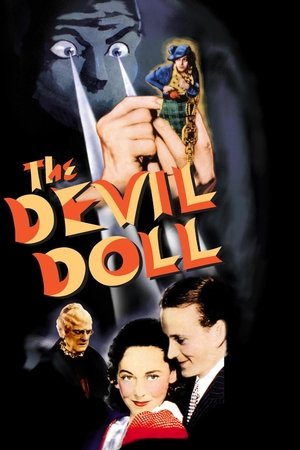
The Devil-Doll (1936) combines science fiction, disguise and revenge through a method capable of shrinking human beings to miniature size and reducing their independent will. Lionel Barrymore plays Paul Lavond, an escaped prisoner who adopts a female disguise and uses the miniature victims as instruments against the people responsible for his imprisonment. The premise returns Browning to one of his most persistent interests: the human body altered until identity itself becomes unstable.
The film also makes scale a source of horror. Ordinary furniture and domestic objects become threatening once human beings have been physically reduced, turning familiar environments into enormous landscapes. Browning again uses disguise on multiple levels. Lavond changes social identity while the victims lose control over their own bodies. What appears initially to be a strange scientific discovery becomes another mechanism through which one person can transform other people into objects.
Tod Browning's Horror Legacy
Tod Browning's importance to horror extends across the transition from silent cinema to the classical sound era. With Lon Chaney he developed a body of macabre cinema in which disguise, bodily transformation and criminal obsession could produce horror without relying upon conventional supernatural monsters. The Unknown remains one of the most extreme examples, while the lost London After Midnight demonstrates how effectively Browning could construct a vampire image even within a story based upon deception.
Dracula then helped establish the sound-era screen vampire through Bela Lugosi, creating an icon whose influence remains visible throughout popular culture. Freaks challenged the very meaning of monstrosity by placing physical difference and moral cruelty on opposite sides of the same story. Mark of the Vampire revisited Browning's fascination with staged supernatural fear, while The Devil-Doll returned to bodily manipulation and disguise through science-fiction horror.
The collaborators around these films reveal how consistent Browning's horror world remained despite changing technology. Lon Chaney gave physical form to the silent obsession with disguise and mutilation. Bela Lugosi supplied the definitive vampire image of Browning's sound period. Merritt B. Gerstad photographed several of the director's most important macabre films, Cedric Gibbons repeatedly constructed their strange environments, Waldemar Young helped shape the silent narratives and Garrett Fort connected Dracula with the later horror of The Devil-Doll. Together they helped Browning create a cinema in which the most frightening question is rarely whether a monster exists, but whether anyone can still tell where performance ends and monstrosity begins.
Photos (1)
Images: TMDB
Selected Work
Notable Horror Collaborators
Notable collaborators and creative partners throughout Tod Browning's horror career.
 Lon Chaney
Defining Silent Horror Actor
Chaney starred for Browning in The Unknown and London After Midnight, making bodily disguise, mutilation and performance central to the director's silent horror identity.
 Bela Lugosi
Defining Vampire Actor
Lugosi played Dracula for Browning and returned in Mark of the Vampire, allowing the director to first create and later deliberately reuse one of cinema's defining vampire images.
MG
Merritt B. Gerstad
Recurring Horror Cinematographer
Gerstad photographed The Unknown, London After Midnight and Freaks, giving three of Browning's central macabre films a recurring visual continuity.
 Cedric Gibbons
Recurring Horror Art Director
Gibbons worked on The Unknown, Mark of the Vampire and The Devil-Doll, helping construct Browning's circus, Gothic and miniature horror environments.
 Waldemar Young
Recurring Silent Horror Screenwriter
Young wrote The Unknown and London After Midnight, shaping two of Browning's defining silent stories of deception, bodily horror and staged monstrosity.
GF
Garrett Fort
Recurring Horror Screenwriter
Fort wrote Dracula and later The Devil-Doll, linking Browning's foundational sound-era vampire film with one of his final major horror productions.
Tod Browning Horror Movies
Directing (7 credits)
1935
1932
1931
1929
1927
1927
Writing (6 credits)
2002
1936
1935
1931
1927
1927
Production (6 credits)
1936
1935
1932
1931
1929
1927
Acting (1 credits)
1931