



2025
Paco Plaza
Horror Director · Biography · Horror Filmography · Collaborators · Credits
Horror subgenres & themes
Most represented across this person's horror filmography:
ZOMBIE
• CHRISTMAS
• HALLOWEEN
• HORROR ANTHOLOGY
Biography
Paco Plaza: [REC], Spanish Horror and the Reinvention of Found Footage
Paco Plaza has built one of the most sustained careers in contemporary Spanish horror, moving from occult mystery and historical lycanthropy to found footage, demonic infection, supernatural adolescence and the physical terror of ageing. His international reputation is inseparable from [REC], the 2007 film he co-directed with Jaume Balagueró, but Plaza's importance to the genre extends well beyond the success of that franchise. Second Name, Romasanta, A Christmas Tale, [REC]², [REC]³: Genesis, Verónica, The Grandmother, Sister Death and his later return to anthology horror reveal a filmmaker who has repeatedly used fear to explore bodies, families, religion and enclosed spaces.
Plaza's horror is particularly interested in situations where familiar environments stop behaving according to familiar rules. Apartment buildings, weddings, family homes, schools and convents become sealed systems in which characters gradually discover that the threat surrounding them cannot be explained through ordinary experience. His films frequently begin with a recognizable social reality and allow supernatural forces, infection, possession or bodily transformation to invade it. Even when the visual language changes dramatically, that movement from everyday order toward escalating instability remains one of the strongest connections across his horror work.
Second Name and an Early Commitment to Horror
Plaza's first feature as director, Second Name in 2002, established horror as a central part of his filmmaking almost immediately. The story follows a woman whose investigation into her father's death opens a path toward family secrets, disturbing beliefs and a hidden history that changes her understanding of her own identity. Rather than treating horror as an occasional excursion inside a broader commercial career, Plaza entered feature filmmaking through material already concerned with inherited trauma, religious unease and the possibility that the family itself may conceal something monstrous.
The film also anticipates several concerns that would return in later work. Personal identity cannot simply be trusted, family history exerts pressure on the present, and belief systems that initially seem remote gradually acquire frightening physical consequences. Plaza would later approach similar ideas through much faster and more aggressive forms of horror, but Second Name already demonstrates his interest in protagonists forced to reinterpret the ordinary world after discovering that something fundamental has been concealed from them.
Romasanta and Historical Horror
Romasanta, released in 2004, moved Plaza toward historical horror through the figure of Manuel Blanco Romasanta, the nineteenth-century Spanish murderer associated with the legend of the Werewolf of Allariz. Julian Sands plays Romasanta, while the narrative moves between murder, folklore and the possibility of lycanthropy. Plaza avoids reducing the material to a straightforward monster film. The fascination comes from the unstable boundary between a documented human killer and the supernatural explanation attached to him.
This ambiguity gives Romasanta a different texture from the later [REC] films. The landscape, period setting and legends surrounding the crimes create a form of Gothic horror rooted in Spanish history rather than contemporary urban life. Yet the film still depends on a recurring Plaza idea: the characters are confronted with an explanation that is terrifying whether interpreted literally or psychologically. If Romasanta is a werewolf, the supernatural has entered the human world. If he is not, the violence remains horrifying because it comes entirely from a man.
A Christmas Tale and Horror Through Childhood
Plaza continued exploring different forms of horror with A Christmas Tale, made for the Spanish anthology project Películas para no dormir. The film follows a group of children who discover an injured woman trapped in a hole and learn that she may be a wanted criminal. Their response begins with the logic of adventure stories and childhood games, but their attempt to control the situation becomes increasingly cruel and dangerous.
The story allows Plaza to mix horror with nostalgia, black humor and the moral instability of children imitating ideas absorbed from television and popular culture. The characters initially treat what they have discovered almost as a private adventure, but real violence progressively destroys that illusion. Plaza would later use humor much more overtly in [REC]³: Genesis, yet A Christmas Tale already demonstrates that he is comfortable allowing horror to coexist with playful or apparently inappropriate tones.
[REC] and a Landmark of Modern Found Footage Horror
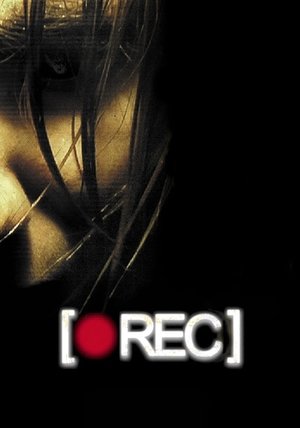
[REC], released in 2007 and co-directed by Plaza and Jaume Balagueró, became the decisive film of Plaza's career. Television reporter Ángela Vidal and her cameraman accompany firefighters responding to an emergency call at an apartment building in Barcelona. What begins as a routine television assignment becomes a quarantine when authorities seal the building and its residents begin displaying violent and inexplicable symptoms. The premise is simple, but the filmmakers use the restrictions of the camera to create an unusually immediate form of horror.
The entire experience is structured around what the television camera can capture. The viewer cannot leave the building, cannot see around corners independently and cannot obtain information from an objective perspective. Every revelation depends on where the cameraman stands and what survives long enough to enter the frame. The camera therefore functions not merely as a stylistic device but as one of the central mechanisms of the film. When characters run, visibility deteriorates. When the camera falls, the audience loses orientation. When light disappears, technology becomes the only available means of seeing what remains in the building.
This limitation gives [REC] much of its intensity. The inhabitants understand very little about why they have been locked inside, while official explanations arrive incompletely and often contradict what they are experiencing. The building itself becomes a vertical maze of apartments, staircases, landings and closed doors. Plaza and Balagueró repeatedly use the ordinary architecture of urban housing to control information and movement. A neighbor can disappear behind a door and return transformed; a staircase can become the only route between safety and infection; the entrance remains visible but impossible to cross.
The horror escalates from apparent disease toward something more disturbing. The final discoveries connect the events to religious investigation and the figure of Tristana Medeiros, transforming what had resembled an outbreak movie into a story where infection and demonic possession begin to overlap. The shift does not replace one explanation with another so much as destabilize the assumptions on which the characters have been operating. Medical containment, religious ritual and physical mutation occupy the same mythology.
[REC] did not invent found footage, but it demonstrated how aggressively the format could be combined with the momentum of infection horror. Its camera does not simply preserve evidence after an event. Recording happens inside the danger, and the insistence on continuing to film repeatedly places the camera operator and reporter in direct conflict with survival. The result became one of the most influential European horror films of its period and generated both an extended Spanish franchise and the American remake Quarantine.
[REC]² and the Expansion of the Mythology
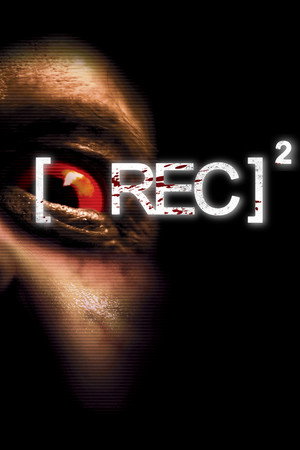
Plaza and Balagueró returned together for [REC]² in 2009. The sequel begins shortly after the first film and sends a tactical police unit into the quarantined building alongside a figure whose real purpose gradually exposes more of the religious explanation behind the outbreak. Where the original carefully withholds information, the sequel deliberately expands the mythology and makes the demonic dimension more explicit.
The visual structure also develops beyond the single television camera of the first film. Multiple recording devices create overlapping viewpoints, allowing the story to move between different groups while retaining the basic found-footage principle. This change gives the filmmakers more freedom without abandoning the idea that the audience should only see images captured by characters physically present inside the event.
[REC]² also transforms knowledge into a source of danger. Understanding what happened to Tristana Medeiros does not make the situation easier to control. Instead, each new explanation reveals a threat that is more complicated than the apparent infection suggested by the first film. Scientific and religious frameworks collide, and the building becomes less a quarantine zone than the physical center of a supernatural crisis.
[REC]³: Genesis and Breaking the Found Footage Rules
For [REC]³: Genesis in 2012, Plaza directed alone and deliberately changed the formal identity of the franchise. The story relocates the outbreak to the wedding of Koldo and Clara, played by Diego Martín and Leticia Dolera. Cameras are initially present for entirely ordinary reasons, as guests record the celebration, but the infection enters the event and rapidly transforms the wedding into a massacre.
The most significant decision comes when Plaza abandons the found-footage format during the film. What begins through diegetic recording equipment eventually becomes conventional cinematic photography. The change announces that the third installment will not simply reproduce the mechanics of the first two films. Plaza expands the tone as well, combining gore and demonic horror with romantic melodrama, physical comedy and exaggerated heroic imagery.
Clara becomes particularly important to this tonal transformation. Her progression from bride to blood-covered survivor gives the film one of the franchise's most distinctive central images. Wedding iconography, religious ceremony and infection collide repeatedly, allowing Plaza to use familiar symbols of union and celebration as the background for dismemberment and supernatural chaos.
The film remains connected to the religious mythology established in [REC]², but Plaza treats that mythology with greater irreverence. The result divided audiences expecting the oppressive realism of the original, yet it is revealing within his career because it demonstrates his refusal to treat the success of [REC] as a fixed formula. He was willing to dismantle one of the franchise's defining formal rules inside the franchise itself.
Verónica and a Return to Intimate Supernatural Horror
Verónica in 2017 marked a major return to supernatural horror outside the [REC] series. Set in Madrid, the film follows teenager Verónica as she balances school with responsibility for her younger siblings. During a solar eclipse, she participates in a Ouija session that appears to open a connection with something she cannot control. What begins as an adolescent attempt to reach beyond ordinary experience gradually invades the family apartment and places both Verónica and the children around her in danger.
The scale is considerably smaller than the apocalyptic direction eventually taken by the [REC] franchise. Plaza returns to domestic space and concentrates on the emotional pressure already present before supernatural events begin. Verónica is effectively carrying responsibilities that exceed her age, and the horror intensifies a life already defined by absence, fatigue and the need to protect younger children. The entity threatening the family therefore enters a household that is vulnerable long before anything supernatural becomes visible.
Plaza uses ordinary objects and rooms to sustain the film's fear. Hallways, bedrooms and family routines become increasingly uncertain, while religious and occult imagery develops around Verónica's attempts to understand what she has released. The character of Sister Death, a blind nun associated with supernatural perception, provides one of the film's most memorable links between Catholic imagery and occult horror. Plaza would later return directly to that figure in Sister Death.
Verónica also demonstrates how Plaza's horror filmmaking had developed beyond the frantic visual grammar most associated with [REC]. The film relies on controlled framing, atmosphere and gradual encroachment rather than continuous handheld panic. The change is significant because it shows that Plaza's ability to generate horror does not depend on a single formal device. The immediacy of found footage and the composed supernatural imagery of Verónica are different tools serving the same interest in ordinary spaces becoming contaminated by forces hidden inside them.
The Grandmother and the Horror of Ageing
The Grandmother moves Plaza's horror into another intimate domestic setting. Written by Carlos Vermut, the film follows Susana, a young model who returns to Madrid after her grandmother Pilar suffers a serious health crisis. The obligation to care for the woman who raised her gradually develops into something far more disturbing as the relationship between youth, ageing and bodily identity takes on supernatural dimensions.
The film uses the physical vulnerability associated with old age as a source of discomfort without treating ageing itself as a simple monster. The deeper horror comes from the desire to escape bodily decline and from the possibility that youth can become something appropriated rather than naturally possessed. Susana's profession places particular emphasis on appearance and the social value assigned to a young body, giving the supernatural elements a context that is both personal and cultural.
Plaza directs the film with considerably more restraint than the [REC] sequels. Long stretches depend on observation, physical proximity and the unease created by caregiving. The apartment again becomes a closed environment, but this time the threat is embedded in a relationship of obligation and affection. Susana cannot simply treat her grandmother as an external enemy, which gives the horror a different emotional structure from a conventional home-invasion or possession story.
Sister Death and the Expansion of the Verónica Universe
Sister Death in 2023 allowed Plaza to return to the world of Verónica while radically changing period, setting and protagonist. The film follows Narcisa, a young novice with supernatural abilities who arrives at a former convent functioning as a school for girls in post-war Spain. Strange events and suppressed histories gradually reveal the violence embedded in the institution and the origins of the figure later encountered by Verónica.
Rather than functioning merely as an explanation of a popular supporting character, the film develops its own form of religious horror. The convent provides Plaza with another enclosed environment governed by rules, authority and silence. Faith is not presented as automatically protective or threatening. It becomes part of a larger struggle over guilt, institutional memory and experiences that cannot be contained by official explanations.
The historical setting also allows the film to connect supernatural horror with buried human violence. Secrets remain physically and emotionally present even when the people responsible attempt to suppress them. Narcisa's visions therefore function not simply as supernatural attacks but as access to a past that the institution has failed to confront. Plaza again uses horror as a process through which hidden history becomes impossible to ignore.
The connection to Verónica is important, but Sister Death avoids simply repeating the visual and narrative structure of the earlier film. Plaza treats the shared universe as an opportunity to approach related themes from another period and perspective. The result reinforces his recurring interest in religion, female protagonists and spaces in which inherited trauma continues to shape the present.
Returning to Found Footage with V/H/S/Halloween
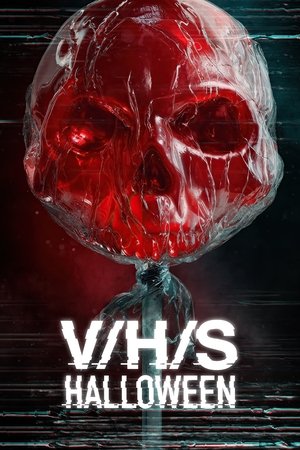
In 2025 Plaza returned to anthology horror and to recorded-image aesthetics with Ut Supra Sic Infra, his segment for V/H/S/Halloween. The story begins around the aftermath of a massacre and a reconstruction of the events that produced it, bringing cameras, police procedure and supernatural violence into the same narrative. Decades after [REC], Plaza was again working inside a franchise built around the idea that horrific events are mediated through recorded images.
The return is significant because found footage had become one of the dominant international horror forms in the years following [REC]. Plaza no longer approached the format as the relatively novel commercial proposition it had been in 2007. Instead, he returned as a filmmaker whose earlier work had become part of the form's modern history. The segment therefore extends rather than simply repeats his relationship with cameras inside horror narratives.
Religion, Possession and Hidden Systems
Religion appears repeatedly across Plaza's horror work, but rarely as a simple division between sacred protection and supernatural evil. Second Name, [REC], [REC]², [REC]³: Genesis, Verónica and Sister Death all use belief, ritual or religious institutions in different ways. Priests may possess knowledge unavailable to secular authorities, but institutions can also conceal violence, and ritual can become another means through which characters misunderstand the scale of what they are confronting.
This ambiguity is especially important to the [REC] mythology. What first appears to be an infectious outbreak becomes inseparable from possession, while scientific attempts to contain the threat exist alongside theological attempts to understand it. Plaza and Balagueró create horror precisely from the inability of a single explanatory system to contain what is happening.
In Verónica and Sister Death, the relationship becomes more personal. Religious imagery surrounds characters whose supernatural experiences isolate them from ordinary social life. Plaza uses Catholic spaces and symbols because they carry cultural and historical meaning before any explicit supernatural event occurs. Horror emerges when those familiar symbols no longer guarantee that the world is ordered or comprehensible.
Enclosed Spaces and the Architecture of Fear
One of Plaza's most consistent horror strategies is confinement. The apartment building in [REC] and [REC]² is physically sealed. The wedding venue in [REC]³ becomes a territory overrun by infection. The family apartment in Verónica turns into a supernatural trap. The Grandmother places caregiving inside a domestic environment that becomes increasingly oppressive, while Sister Death uses the convent as both architectural enclosure and institutional system.
These locations are effective because Plaza rarely begins with environments that look designed for horror. Apartments, schools and celebrations are recognizable parts of ordinary life. Their transformation produces fear by denying characters the assumption that familiar spaces are safe. The threat does not simply enter from outside. It often appears to have been waiting inside the structure, the family or the institution all along.
Paco Plaza's Place in Modern Horror
Plaza's historical importance within horror is anchored by [REC], but his career cannot be reduced to that achievement. The film helped demonstrate how found footage could be combined with relentless physical horror, confined architecture and infection mechanics, while [REC]² expanded the mythology and [REC]³: Genesis deliberately challenged the visual rule on which the franchise had been built.
His later work confirms a broader horror identity. Verónica trades handheld panic for domestic supernatural dread. The Grandmother turns ageing, beauty and caregiving into body horror and psychological unease. Sister Death combines a period convent setting with supernatural perception, institutional secrecy and religious imagery. His return to recorded-image horror in V/H/S/Halloween further demonstrates that the form associated with his international breakthrough remains one part of a larger relationship with the genre.
Across these films, Plaza repeatedly changes technique while returning to a recognizable set of fears: the body becoming unreliable, the family failing to provide safety, institutions hiding dangerous truths and apparently ordinary spaces becoming impossible to escape. That consistency, combined with the international impact of [REC], places him among the most significant Spanish horror filmmakers to emerge in the early twenty-first century.
Selected Work
Notable Horror Collaborators
Notable collaborators and creative partners throughout Paco Plaza's horror career.
 Jaume Balagueró
[REC] CO-CREATOR
Co-created and co-directed REC and REC 2 with Plaza, establishing the quarantined apartment, demonic infection mythology and found-footage language that made the franchise a landmark of modern Spanish horror.
PR
Pablo Rosso
CINEMATOGRAPHER
Shot REC, REC 2, REC 3: Genesis and Verónica, helping Plaza move from frantic in-camera found footage to the more controlled supernatural imagery of his later horror.
DG
David Gallart
EDITOR
Edited REC, REC 2, REC 3: Genesis and The Grandmother, shaping both the breathless escalation of the franchise and the slower psychological tension of Plaza's later horror.
JF
Julio Fernández
FRANCHISE PRODUCER
Produced REC, REC 2 and REC 3: Genesis through Filmax, supporting Plaza across the three horror films that established and expanded his most internationally influential franchise.
 Javier Botet
CREATURE PERFORMER
Embodied Tristana Medeiros across the REC mythology, giving physical form to the emaciated supernatural figure behind some of the franchise's most disturbing and recognizable horror imagery.
EL
Enrique López Lavigne
HORROR PRODUCER
Produced Verónica, The Grandmother and Sister Death, becoming a key partner in Plaza's post-REC return to supernatural, psychological and religious horror outside the franchise.
Paco Plaza Horror Movies
Directing (10 credits)
2023
2022
2017
2012
2009
2007
2005
2004
2002
Writing (8 credits)
2025
2017
2014
2012
2009
2008
2007
2002
Acting (2 credits)
2019
2009
Production (1 credits)
2017