

2017
Ridley Scott
Horror Director · Biography · Horror Filmography · Family · Collaborators · Credits
Horror subgenres & themes
Most represented across this person's horror filmography:
BODY HORROR
• MONSTER
Biography
Ridley Scott and the Horror of Alien
Ridley Scott occupies a distinctive place in horror because a relatively small portion of his directing career has been enough to reshape the genre permanently. Alien turned outer space into an enclosed nightmare in which industrial corridors, corporate indifference, biological invasion and sexualized creature design combined with the mechanics of a haunted-house film. More than three decades later, Prometheus and Alien: Covenant returned Scott directly to the same universe and transformed the original creature story into a larger form of cosmic and biological horror concerned with creation, extinction and the danger of seeking answers that humanity may not be equipped to survive. Between those periods, Hannibal demonstrated that Scott could create horror without a supernatural monster at all, building terror around appetite, mutilation and a human predator who treats violence as culture.
The continuity across these films is not a single visual style so much as Scott's fascination with hostile environments. His horror characters enter spaces they believe can be understood through professional knowledge, technology or social authority and discover that those systems offer very little protection. The Nostromo is a workplace before it becomes a death trap. The scientific mission of Prometheus becomes an encounter with evidence capable of destroying the explorers' understanding of human origins. The Covenant expedition approaches an apparently habitable world and finds a biological nightmare waiting inside it. Scott repeatedly makes horror from the collapse of confidence: the more sophisticated the expedition, institution or technology appears, the more disturbing its failure becomes.
Alien and the Industrial Haunted House
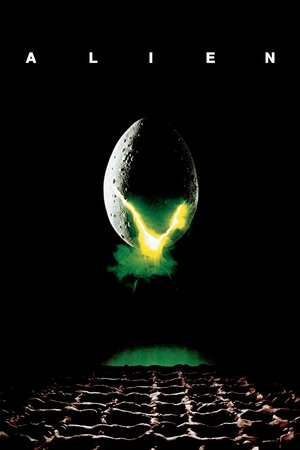
Alien (1979) remains the foundation of Scott's horror career. The crew of the commercial towing vessel Nostromo is diverted after detecting what appears to be a distress transmission, and the decision to investigate eventually allows an unknown organism onto the ship. Scott described the essential idea in terms of terror occurring in space rather than treating science fiction itself as the primary attraction. That approach explains much of the film's endurance. Once the creature enters the Nostromo, the ship functions like a vast haunted structure whose inhabitants are trapped inside corridors, ventilation systems and machinery with something they cannot reliably locate or understand.
The realism of the crew makes the horror more effective. These are workers discussing food, pay, repairs and routine responsibilities rather than heroic explorers seeking adventure. The Nostromo is filled with pipes, condensation, mechanical noise and practical clutter, giving the future the appearance of an industrial workplace that has existed long before the audience arrived. When the Alien begins hunting the crew, the ordinary familiarity of that environment becomes part of the threat. Spaces designed for maintenance and transportation suddenly provide concealment for an organism whose body seems disturbingly compatible with the machinery surrounding it.
H.R. Giger and Biomechanical Terror
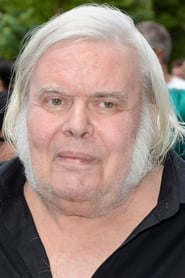
H.R. Giger became one of the defining creative collaborators of Scott's horror career because Alien depends upon a visual concept that conventional monster design could not have supplied. Giger's biomechanical imagery merges anatomy and machinery until it becomes difficult to determine where one category ends and the other begins. His work shaped not only the adult creature but also the alien environment surrounding it, including the derelict spacecraft and imagery associated with the organism's life cycle. The result makes the monster feel less like an animal accidentally transported onto the Nostromo and more like part of an entire biological architecture with rules fundamentally different from human life.
Scott recognized that the horror would be diminished if the creature could be interpreted too quickly. Giger's design contains recognizably anatomical elements while refusing to settle into a familiar body plan. Bone, metal, sexuality and predation occupy the same image. The design also connects directly with the reproductive violence of the story: penetration, implantation, gestation and birth are transformed into mechanisms of attack. Giger's influence therefore reaches far beyond the appearance of one monster. He gives Alien a visual system in which reproduction itself becomes a source of body horror.
Dan O'Bannon and the Architecture of the Nightmare
Dan O'Bannon supplied the screenplay for Alien and, with Ronald Shusett, developed the story from which the film emerged. The basic structure is extremely efficient: an isolated group encounters an unknown organism, one member becomes the unwilling host for something growing inside him, and the surviving crew gradually realizes that they are trapped with a predator whose biology they do not understand. Scott's direction expands that structure into an immersive visual world, but O'Bannon provides the mechanism that allows the horror to escalate from discovery to infection and finally to pursuit.
The biological life cycle is especially important because it prevents the creature from functioning as a conventional killer. The danger changes form. The egg leads to the facehugger, the facehugger creates the apparently recovered host, the host becomes the site of the chestburster and the rapidly growing organism eventually becomes the adult hunter. Each stage forces the characters to revise what they believe they know about the threat. That process of continual biological surprise became fundamental to the larger Alien mythology and remained part of Scott's horror when he returned to the universe decades later.
Sigourney Weaver and the Emergence of Ripley
Sigourney Weaver's Ellen Ripley becomes the human center of Alien, although Scott deliberately introduces the crew as an ensemble rather than announcing immediately who will survive. That uncertainty is essential to the film's suspense. Characters played by more established actors can die suddenly, and Ripley gradually becomes central because she continues making practical decisions while the social structure around her collapses. Weaver's performance gives Scott a protagonist whose strength comes from attention, procedure and survival instinct rather than conventional action-hero behavior.
Ripley's conflict with the threat also extends beyond the creature. She attempts to enforce quarantine procedure before Ash overrides her, and the later revelation concerning the company's priorities confirms that institutional authority is willing to sacrifice the crew for access to the organism. Scott therefore surrounds Ripley with two forms of horror: an incomprehensible biological predator and a recognizable corporate system that considers human life expendable. Weaver's controlled performance keeps both threats grounded because Ripley responds first as a professional trying to make rational decisions inside a situation that becomes progressively less rational.
Walter Hill, David Giler and the Alien Production Line
Walter Hill and David Giler belong to the essential production history surrounding Scott's relationship with Alien. Both were involved with the original film through Brandywine Productions and helped shape the project that Scott eventually directed. Their importance did not end when the Nostromo was destroyed. Hill and Giler remained connected with the developing franchise across subsequent decades, creating an unusual continuity behind a series that repeatedly changed directors, casts and narrative direction.
The relationship became particularly relevant when Scott returned to the universe with Prometheus and Alien: Covenant. Scott, Hill and Giler again appear together within the production structure of those films, linking the prequel period directly with people involved in the 1979 original. Hill also remained alongside Scott as a producer of Alien: Romulus. This recurring collaboration helps explain why Hill and Giler are more meaningful connections than collaborators attached to only a peripheral phase of Scott's horror career: they belong to the infrastructure through which the Alien mythology survived, expanded and eventually returned to its original director.
Hannibal and Horror Without the Xenomorph
Hannibal (2001) demonstrates that Scott's horror instincts were not dependent upon extraterrestrial creatures. The film returns Anthony Hopkins to Hannibal Lecter and places the character inside a story of obsession, revenge, bodily mutilation and appetite. Scott approaches Lecter differently from the unknowable organism of Alien. Hannibal speaks, understands culture and can behave with extraordinary politeness, but those qualities make his violence more disturbing because brutality is not produced by animal instinct. It is chosen, prepared and sometimes aestheticized by a highly intelligent human being.
The film repeatedly places refinement beside physical horror. Art, architecture, food and cultivated conversation coexist with disfigurement and cannibalism, allowing Scott to create unease from the absence of a clean boundary between civilization and monstrosity. Lecter does not need to abandon sophistication in order to become frightening; sophistication itself becomes part of the mechanism through which he controls other people. The result provides an important counterpoint to Scott's Alien films. One form of horror comes from encountering life so alien that human motives do not apply, while the other comes from a human intelligence capable of understanding morality perfectly well and violating it deliberately.
Prometheus and the Horror of Origins
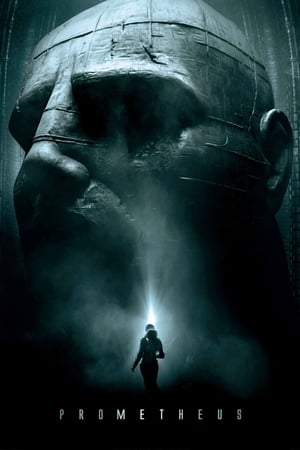
Prometheus (2012) marked Scott's return to the universe he had helped establish more than thirty years earlier. Rather than recreating the confined slasher structure of Alien, the film expands outward into questions concerning the origin of humanity and the beings known as Engineers. A scientific expedition follows archaeological evidence to a distant moon in the belief that its creators may be waiting there. The premise begins with discovery and optimism, but the expedition gradually uncovers biological material, dead civilizations and evidence suggesting that creation and destruction may be inseparable.
The horror is therefore cosmic before it becomes immediately physical. The characters seek an explanation of human existence and find something capable of making that existence feel accidental, disposable or deliberately threatened. Scott returns repeatedly to images of bodies being penetrated, infected, transformed and used as biological material, connecting the philosophical scale of the story with the intimate body horror of the original film. The question of where humanity came from does not provide comfort. The possibility of receiving an answer becomes terrifying in itself.
Michael Fassbender and David
Michael Fassbender became the defining performer of Scott's Alien prequel period through the android David in Prometheus and Alien: Covenant. David initially appears to be another artificial member of an expedition, but Fassbender gradually reveals a consciousness that is observant, resentful, curious and increasingly independent of the humans who created him. The character gives Scott a new route into the themes of creation already surrounding the Engineers because David himself is a created intelligence examining the limitations of his makers.
By Alien: Covenant, the relationship between creation and horror has moved dramatically. David is no longer simply studying biological danger; he has begun manipulating it and treating living organisms as material for experimentation. Fassbender also plays Walter, another synthetic built according to a more restricted model, allowing the film to place two artificial beings with radically different relationships to obedience and creativity opposite one another. David becomes frightening not because he lacks intelligence but because intelligence has developed without the ethical restraints his creators assumed would accompany it.
Alien: Covenant and the Return of the Creature
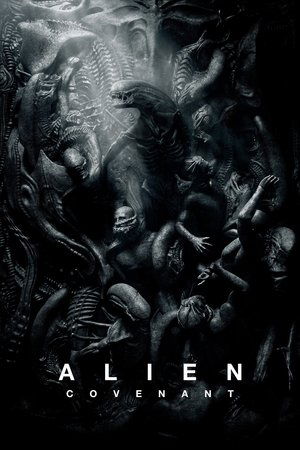
Alien: Covenant (2017) reconnects Scott's prequel mythology more directly with the visceral creature horror of Alien. The Covenant is a colony ship carrying people toward a planned new home when the crew diverts to a nearby world that appears unexpectedly suitable for settlement. As in the original film, curiosity and the apparent possibility of safety lead the characters into an environment whose biological rules they do not understand. Infection returns as an immediate source of terror, with organisms entering human bodies and producing creatures through violently accelerated transformation.
The film also combines two kinds of threat that Scott had been developing separately. The newly encountered creatures provide direct physical horror, while David represents deliberate intellectual horror. The organism does not need moral intention in order to kill, but David actively studies, modifies and admires its possibilities. Scott therefore turns the mythology toward a disturbing question: the perfect predator may be terrifying on its own, but something capable of intentionally shaping that predator may be worse. Biological horror and artificial intelligence become part of the same creative chain.
Alien: Romulus and the Producer's Return to the Roots
Scott remained directly connected to the franchise as producer of Fede Álvarez's Alien: Romulus (2024). The film returns the series to a compact survival-horror structure involving young colonists exploring a derelict space station and encountering the organism that has defined the franchise since 1979. Scott did not direct the film, but his production involvement places him alongside Walter Hill in another chapter explicitly designed to recover the enclosed terror associated with the original.
The continuation is significant within Scott's horror career because it demonstrates that his relationship with Alien had moved beyond periodically returning as director. By this stage he was one of the guardians of a mythology capable of being interpreted by another generation of horror filmmakers. The industrial environments, biological contamination and vulnerable human bodies established in the first film remain recognizable, but they can now be reorganized by directors who grew up with Scott's original approach as part of the basic vocabulary of science-fiction horror.
Alien: Earth and The Terror
Scott's production work has also carried his horror interests into television. He serves as executive producer of Alien: Earth, extending the franchise into episodic storytelling while preserving the connection with the universe that began with his 1979 film. The series consciously draws upon the grounded, practical feeling associated with the original Alien, demonstrating how strongly Scott's first horror film continues to determine the visual expectations surrounding the property even when another filmmaker is controlling the narrative.
Scott Free is also behind The Terror, the horror anthology on which Scott has served as executive producer. The series combines historical situations with supernatural or psychological terror, including the doomed Franklin expedition, the experience of Japanese Americans during wartime incarceration and, in 2026, The Terror: Devil in Silver. These projects broaden Scott's horror influence beyond films he personally directs. Isolation, hostile environments and people trapped inside systems they cannot control remain central, connecting the television productions with concerns already visible aboard the Nostromo decades earlier.
Ridley Scott's Horror Legacy
Ridley Scott did not need an enormous catalogue of horror features to become fundamental to the genre. Alien alone changed the visual and thematic possibilities of science-fiction horror by combining a working-class future, haunted-house suspense, sexualized biomechanical design and an organism whose reproductive cycle turns the human body into hostile territory. H.R. Giger gave that nightmare its visual anatomy, Dan O'Bannon supplied the narrative mechanism, Sigourney Weaver gave it a human survivor and Walter Hill and David Giler helped build the production structure through which the mythology continued.
Scott's later return through Prometheus and Alien: Covenant did not simply reproduce the first film. The horror expanded toward creation, artificial intelligence and the possibility that humanity's search for origins may reveal something fundamentally hostile. Michael Fassbender's David became the central figure of that new phase, transforming scientific curiosity into deliberate biological experimentation. Through Alien: Romulus, Alien: Earth and The Terror, Scott has continued participating in horror as a producer even when another filmmaker occupies the director's chair.
The strongest line running through his horror work is the destruction of security. Technology does not save the Nostromo. Scientific knowledge does not protect the crew of the Prometheus. Colonization offers no refuge aboard the Covenant. Culture does not make Hannibal Lecter less monstrous. Scott repeatedly creates characters who believe they have entered controlled environments and then reveals that the environment was never truly under human control. That loss of control is the core of his horror cinema.
Photos (3)
Images: TMDB
Selected Work
Notable Horror Collaborators
Notable collaborators and creative partners throughout Ridley Scott's horror career.
 H.R. Giger
Defining Horror Visual Collaborator
Giger created the biomechanical creature and alien environments that gave Scott's Alien its defining visual identity and permanently reshaped science-fiction horror.
 Dan O'Bannon
Defining Alien Screenwriter & Creator
O'Bannon wrote Alien and helped create the biological nightmare that Scott transformed into one of the foundational works of modern science-fiction horror.
 Sigourney Weaver
Defining Horror Lead
Weaver played Ellen Ripley in Scott's Alien, giving the film its central human survivor and creating one of the most enduring protagonists in modern horror.
 Walter Hill
Recurring Alien Producer & Creative Collaborator
Hill worked within the original Alien production and later shared Prometheus, Alien: Covenant and Alien: Romulus with Scott, providing long-term continuity across the franchise.
 Michael Fassbender
Defining Alien Prequel Lead
Fassbender played David in Prometheus and Alien: Covenant, becoming the central performer through whom Scott explored artificial intelligence, creation and biological horror.
DG
David Giler
Recurring Alien Producer
Giler was part of the original Alien production and later reunited with Scott as producer on Prometheus and Alien: Covenant, linking the original film directly with the prequel era.
Ridley Scott Horror Movies
Directing (4 credits)
2012
1985
1979
Production (12 credits)
2025
2024
2024
2022
2018
2017
2017
2017
2016
2013
2012
2009
Production Design / Art Department (1 credits)
1965