
2025
Scott Derrickson
Horror Director · Biography · Horror Filmography · Collaborators · Credits
Horror subgenres & themes
Most represented across this person's horror filmography:
BODY HORROR
• HAUNTED HOUSES
• POSSESSION
• SLASHER
Biography
Scott Derrickson and contemporary supernatural horror
Scott Derrickson developed a substantial career in American horror as a director and screenwriter whose work repeatedly combines supernatural material with investigations conducted by characters attempting to understand what they have encountered. His principal genre films include Hellraiser: Inferno, The Exorcism of Emily Rose, Sinister, Deliver Us from Evil, The Black Phone and Black Phone 2. Between these projects he also directed major science-fiction and superhero productions, giving him experience with both highly restricted genre budgets and large studio filmmaking.
Derrickson’s horror career is particularly important for the continuity of several professional relationships. Paul Harris Boardman was his principal early screenwriting partner. C. Robert Cargill became his long-term writer and producing collaborator beginning with Sinister. Composer Christopher Young worked with him repeatedly during the supernatural-horror period of the 2000s and early 2010s. Jason Blum provided the low-budget production structure that enabled Derrickson to regain substantial creative control after a difficult large-studio experience. Ethan Hawke later became a recurring performer across two different Derrickson horror properties.
Education, film study and early directing experience
Derrickson studied communication and humanities at Biola University, completing undergraduate degrees before continuing his formal film education at the University of Southern California. USC records him among the alumni of its cinematic arts program, where he completed graduate study during the 1990s. His education combined practical filmmaking with sustained interest in philosophy, religion and European cinema, subjects that later became relevant to several of his horror films.
Before establishing himself as a feature director, Derrickson made short-form work and gained experience as a writer. He also developed a professional relationship with Paul Harris Boardman, with whom he would co-write several projects. Their shared interest in stories involving supernatural events, moral uncertainty and characters attempting to interpret apparently impossible experiences became especially visible once Derrickson entered feature horror.
Hellraiser: Inferno and the first feature
Derrickson made his feature-directing debut with Hellraiser: Inferno, released in 2000 as the fifth feature in the series created from Clive Barker’s The Hellbound Heart. Derrickson and Boardman wrote the screenplay, with Craig Sheffer playing corrupt police detective Joseph Thorne and Doug Bradley returning as Pinhead. The film was produced for the direct-to-video market and used the Hellraiser mythology within a detective narrative structured around Thorne’s investigation and psychological deterioration.
Looking back on the production decades later, Derrickson identified it as an important stage in his education as a director. He believed that he had concentrated too heavily on visual complexity and insufficiently on extracting every possible nuance from the central performance. He subsequently described lead performance as the practical ceiling on the quality of a film, a lesson that influenced the way he approached casting and actors throughout the rest of his career.
Learning to prioritize actors in genre filmmaking
Derrickson’s later directing reflects this emphasis on performance. Horror frequently requires actors to respond to events that may be invisible during production, created through effects later or represented only through sound. The credibility of supernatural material therefore depends substantially on the behavior of the character experiencing it. Derrickson became increasingly careful about placing strong dramatic actors at the center of genre concepts rather than assuming atmosphere and effects could carry the film independently.
This concern can be traced through Jennifer Carpenter in The Exorcism of Emily Rose, Ethan Hawke in Sinister, Eric Bana and Edgar Ramírez in Deliver Us from Evil and the young cast of The Black Phone. The films differ considerably in narrative structure, but each depends on the audience accepting the emotional condition of the principal characters before the supernatural explanation becomes fully established.
The Exorcism of Emily Rose and the courtroom-horror structure
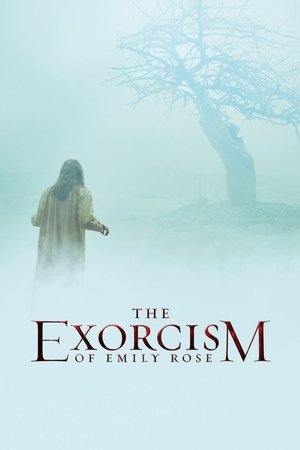
The Exorcism of Emily Rose, released in 2005, became Derrickson’s major theatrical breakthrough. He and Paul Harris Boardman developed the screenplay from material associated with the case of Anneliese Michel, the young German woman who died in 1976 after undergoing numerous exorcism rites. The finished film fictionalizes the circumstances through the prosecution of Father Moore, played by Tom Wilkinson, after the death of Emily Rose, played by Jennifer Carpenter.
Derrickson has explained that one of the principal attractions was the possibility of combining courtroom drama with supernatural horror. The legal structure permits competing explanations to be presented through testimony. Medical interpretation, psychological diagnosis and religious belief can all be argued without the film requiring the courtroom itself to resolve the metaphysical question conclusively.
Ambiguity, belief and evidence
The ambiguity of the Michel case was important to Derrickson. He stated during the film’s original release that he did not regard the underlying historical events as susceptible to a simple explanation. This uncertainty shaped the adaptation. The supernatural scenes are presented dramatically, but the courtroom simultaneously supplies alternative interpretations of Emily’s condition and of the decisions made by the people responsible for her care.
Derrickson has discussed Christian belief openly in relation to his work, but his horror films rarely depend on every character sharing one religious interpretation. His interest frequently lies in the conflict created when people encounter evidence that can be interpreted according to incompatible systems. In Emily Rose, legal procedure becomes the structure through which those interpretations are tested against one another.
Jennifer Carpenter and physical performance
Jennifer Carpenter’s performance became central to the effectiveness of the possession material. Derrickson sought an actor capable of producing unusual physical movement without relying entirely on visual effects. Carpenter’s control of posture, voice and bodily tension allowed several of Emily’s most disturbing scenes to be performed directly for the camera.
The result reinforced Derrickson’s lesson from Hellraiser: Inferno. The supernatural concept becomes convincing because the performer gives it a credible physical form. Laura Linney, Tom Wilkinson and Campbell Scott provide a separate style of performance in the courtroom material, giving the film two distinct acting environments that correspond with its hybrid structure.
Commercial success and movement into larger studio filmmaking
The Exorcism of Emily Rose became a significant commercial success and changed Derrickson’s professional position. The result opened access to considerably larger productions and eventually led him to direct the 2008 remake of The Day the Earth Stood Still, starring Keanu Reeves and Jennifer Connelly. The science-fiction film operated on a scale far beyond Derrickson’s previous work.
Derrickson later described the experience as professionally difficult and personally instructive. Although the production gave him extensive experience with studio filmmaking and large visual-effects systems, he felt that the finished film no longer represented the work he had originally intended to make. Its critical reception left him uncertain about the future of his directing career.
Failure, creative responsibility and Guillermo del Toro
The period following The Day the Earth Stood Still became an important turning point in Derrickson’s career. He has described believing that his career might be over and feeling that he had ended up responsible for a finished film that no longer felt fully like his own. During this period he discussed the situation with Guillermo del Toro, who advised him directly against allowing the same circumstances to occur again.
Derrickson later identified the conversation as professionally important. The lesson he drew from it concerned responsibility rather than budget. A filmmaker should understand the creative compromises being accepted before entering a project and should avoid a process in which the final result can become fundamentally disconnected from the reasons for taking the assignment. This thinking strongly affected the circumstances under which he agreed to make his next horror film.
The meeting with C. Robert Cargill
Derrickson had followed the writing of film critic C. Robert Cargill before the two became professional collaborators. They developed a correspondence and eventually met socially. During a meeting in Las Vegas, Derrickson described an opportunity he had been offered to make a low-budget horror film with significant creative control. Cargill responded by pitching a horror idea he had been developing.
The concept centered on a crime writer discovering films recording the murders of several families. Derrickson immediately responded to the premise and asked Cargill to prepare a treatment. Producer Jason Blum became interested, and the project moved into development with unusual speed. Derrickson also invited Cargill to write the screenplay with him, beginning a partnership that continued through multiple films and eventually their production company Crooked Highway.
Sinister and the return to controlled-budget horror
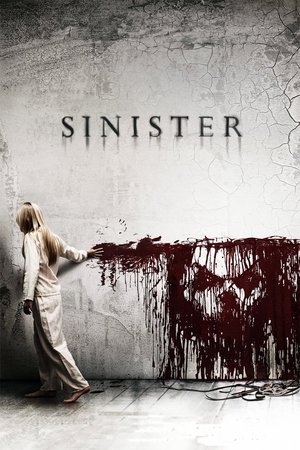
Sinister was made for a small fraction of the budget Derrickson had commanded on The Day the Earth Stood Still. Ethan Hawke plays true-crime writer Ellison Oswalt, who moves his family into a house where a previous family was murdered without telling them the property’s history. He discovers a box of Super 8 films depicting several apparently unrelated family killings and begins investigating their connection.
The restricted production scale gave Derrickson the kind of authority he wanted after his previous studio experience. Jason Blum’s developing model imposed a firm budget while offering substantial creative control. Derrickson and Cargill could therefore build the film around a concentrated location, one principal family and carefully controlled supernatural escalation rather than around expensive spectacle.
Personal professional anxiety inside Sinister
Derrickson has acknowledged that Ellison Oswalt’s professional situation drew partly from his own state of mind after The Day the Earth Stood Still. Ellison has experienced earlier success and becomes increasingly desperate to recover his reputation through another major book. That desperation affects decisions involving his family and his willingness to remain inside a dangerous environment.
The autobiographical connection does not make Ellison a literal representation of the director. It does explain why professional fear and family responsibility receive unusual weight inside the supernatural narrative. The horror develops around a protagonist whose judgment is compromised before he fully understands what he has discovered.
The Super 8 films and controlled visual contrast
The murder films discovered by Ellison became the most distinctive formal element of Sinister. Their Super 8 appearance separates them immediately from the conventional digital photography surrounding the Oswalt family. The crimes are presented through apparently simple home-movie compositions in which ordinary family environments become evidence of carefully staged murder.
Derrickson uses these sequences sparingly. Their disturbing effect depends partly on the gap between the informal visual texture of home movies and the violence recorded within them. The absence of conventional explanatory dialogue during several sequences forces the viewer to examine the footage in much the same way Ellison does.
Christopher Young and the sound of supernatural horror
Composer Christopher Young became one of Derrickson’s principal early horror collaborators. After scoring The Exorcism of Emily Rose, he returned for Sinister and later Deliver Us from Evil. The three films required different approaches, but each uses music and sound to create an atmosphere that extends beyond conventional orchestral suspense scoring.
Sinister in particular combines Young’s score with unusual pre-existing music associated with the murder films. Derrickson treats sound as an independent source of unease rather than simply reinforcing visual shocks. The collaboration with Young therefore became part of the director’s broader interest in anticipation, rhythm and the timing of information.
C. Robert Cargill as a long-term writing partner
The success of Sinister established Cargill as Derrickson’s principal writing collaborator. Their partnership developed through division of ideas rather than strict separation of duties. Both men contribute to story construction and screenplay development, with debate continuing until they find a solution they consider stronger than either initial position.
The relationship later extended into producing. Derrickson and Cargill formed Crooked Highway and became increasingly involved in retaining control over development as projects moved toward production. Their shared work includes the Sinister property, Doctor Strange development and both Black Phone films.
Sinister 2 and moving from director to producer
Derrickson and Cargill wrote Sinister 2 but did not attempt to reproduce the first production by directing it themselves. Ciarán Foy was hired as director, while Derrickson remained involved as writer and producer. Foy later described Derrickson and Cargill as available throughout development while still allowing him to make directorial decisions during production.
The arrangement gave Derrickson experience managing a horror property from a position outside the director’s chair. It also established a distinction that remained relevant to his later producing work: franchise continuity can be preserved without requiring another filmmaker to imitate the visual decisions of the original director.
Deliver Us from Evil and the return of Paul Harris Boardman
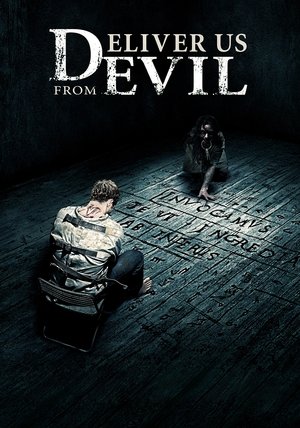
Derrickson reunited with Paul Harris Boardman for Deliver Us from Evil in 2014. The screenplay drew from a book associated with former New York police officer Ralph Sarchie and combines police investigation with possession and exorcism. Eric Bana plays Sarchie while Edgar Ramírez plays Mendoza, the priest who eventually becomes involved in the case.
The project returned Derrickson to several concerns present in The Exorcism of Emily Rose, particularly the meeting between institutional investigation and supernatural explanation. The police procedural structure provides an initially practical method for approaching events before the characters accept that ordinary criminal categories are insufficient.
Paul Harris Boardman and Derrickson’s first phase as a screenwriter
Boardman collaborated with Derrickson on three important horror productions across fourteen years: Hellraiser: Inferno, The Exorcism of Emily Rose and Deliver Us from Evil. The partnership therefore covers Derrickson’s first feature, his commercial breakthrough and a later return to exorcism material after he had become an established studio filmmaker.
Their work often uses investigative characters as points of entry into horror. Detectives, lawyers, priests and other professionals encounter evidence that challenges the explanatory systems normally available to them. This structural tendency remained present after Derrickson’s principal writing partnership shifted toward Cargill.
Doctor Strange and large-scale visual filmmaking
Derrickson directed Marvel Studios’ Doctor Strange in 2016. Although the film belongs primarily to superhero fantasy rather than horror, the assignment is relevant to his genre career because it gave him extensive experience with large-scale visual-effects design, action and a production infrastructure far larger than the one used on Sinister.
Derrickson entered development on the sequel but eventually left the project following creative disagreements. The departure occurred before he made The Black Phone. Rather than moving immediately into another large franchise assignment, he returned to a comparatively contained horror production with Cargill and Blumhouse.
Returning to horror with The Black Phone
Derrickson had been interested in Joe Hill’s short story The Black Phone for years. After leaving the Doctor Strange sequel, the project became an opportunity to return to the scale and working relationships of Sinister. Derrickson and Cargill adapted Hill’s story, with Jason Blum producing and Derrickson and Cargill also assuming producer responsibilities.
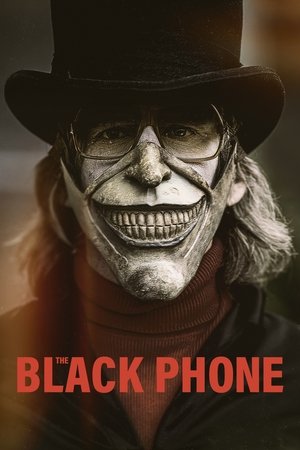
The story follows Finney Blake, a thirteen-year-old boy kidnapped by a child murderer known as the Grabber. A disconnected telephone in the basement allows Finney to receive calls from the killer’s previous victims. Hill’s original premise provided the central captivity mechanism, while Derrickson and Cargill expanded the characters, family background and supernatural structure into a feature.
Autobiographical childhood material in The Black Phone
Derrickson incorporated material drawn from memories of childhood during the 1970s into the adaptation. The violence surrounding Finney does not begin with the Grabber. Bullying, physical conflict among children and instability within the family establish an environment in which danger is already familiar before the kidnapping occurs.
Joe Hill specifically praised the autobiographical material for giving the film a credible sense of childhood during the period rather than presenting the 1970s through nostalgic decoration. This grounding was important to Derrickson because the supernatural telephone becomes more effective when Finney’s ordinary world has already been established in concrete social terms.
Empathy as a practical horror mechanism
Derrickson and Cargill have repeatedly described audience investment in the protagonist as more important than excessive explanation of the villain. Their approach to the Grabber deliberately withholds much of his background. The character remains dangerous because his behavior is specific enough to feel real while his origins and complete motivations remain inaccessible.
Finney receives considerably more narrative attention. His relationship with his sister Gwen, his difficulties with other children and his gradual ability to use information supplied by the dead victims create the emotional structure. The more the audience wants him to escape, the more effective the captivity scenes become. Derrickson therefore treats characterization as a direct component of suspense rather than as material separate from the horror mechanism.
Ethan Hawke as recurring horror collaborator
Ethan Hawke first worked with Derrickson as Ellison Oswalt in Sinister. A decade later he played the Grabber in The Black Phone. The two roles occupy opposite sides of their respective stories: Ellison is a protagonist whose obsession places his family at risk, while the Grabber is the source of the immediate human threat.
Hawke returned for Black Phone 2, giving the actor three major horror collaborations with Derrickson. Their work demonstrates the director’s continuing preference for experienced performers capable of carrying genre material without treating it as inherently less demanding than drama.
Black Phone 2 and developing a sequel from completed character arcs
Black Phone 2, released in 2025, reunited Derrickson and Cargill as writers, Blum as producer and Ethan Hawke, Mason Thames and Madeleine McGraw as principal returning cast members. The sequel presented a structural problem because the first film had already resolved Finney’s imprisonment and confrontation with the Grabber.
The filmmakers therefore expanded the supernatural dimension rather than repeating another kidnapping narrative. Gwen’s dreams and calls from the black phone become central, while the Grabber operates after death. Derrickson and Cargill also used Super 8 photography to distinguish portions of the dream material visually from ordinary reality. The sequel demonstrates their preference for altering the mechanism of an established property instead of reproducing the exact structure of the first film.
Restraint, timing and the construction of scares
Derrickson has repeatedly emphasized timing when discussing horror direction. A threatening event shown too early can prevent anticipation from developing, while delaying too long can exhaust the audience’s attention. The practical problem is therefore one of duration and information rather than simply the intensity of the eventual image.
This concern connects several otherwise different projects. Sinister asks viewers to wait while Ellison studies apparently static images. The Black Phone spends extended periods inside a nearly empty basement. Emily Rose alternates courtroom testimony with reconstructed events. Each film regulates when the audience receives information rather than maintaining continuous visible threat.
Religious belief without eliminating dramatic uncertainty
Derrickson’s personal interest in faith has been discussed openly throughout his career and is particularly relevant to The Exorcism of Emily Rose and Deliver Us from Evil. His use of religious material, however, frequently depends on characters reaching different conclusions about the same evidence. Doctors, lawyers, police officers and priests occupy different interpretive positions.
This allows belief to function dramatically instead of merely as decoration around demonic imagery. Characters have to decide what they consider credible and what action follows from that decision. The approach distinguishes Derrickson’s supernatural horror from stories in which religious symbols function only as weapons whose meaning is never questioned.
Scott Derrickson’s place in contemporary horror
Derrickson’s horror career spans direct-to-video franchise filmmaking, mid-budget studio supernatural films and the controlled-budget production system associated with Blumhouse. That progression gives him unusual experience with several economic models of modern American genre production. He has also moved repeatedly between horror and large-scale studio assignments without abandoning long-term writing and acting collaborations established on smaller films.
His strongest contribution to contemporary horror lies in the combination of professional investigation, strong central performances and carefully limited supernatural information. Detectives, writers, lawyers and children encounter threats they cannot understand completely, while the films concentrate on how those characters behave under uncertainty. The continuing partnerships with Cargill, Blum, Hawke and other collaborators have allowed Derrickson to refine that approach across more than two decades of horror filmmaking.
Selected Work
Notable Horror Collaborators
Notable collaborators and creative partners throughout Scott Derrickson's horror career.
 C. Robert Cargill
Writer-Director / Writer-Producer Collaborator
Cargill became Derrickson’s principal writing partner after developing Sinister with him. Their horror work includes Sinister, Sinister 2, The Black Phone and Black Phone 2, and their wider professional partnership developed into the production company Crooked Highway.
 Jason Blum
Writer-Director / Producer Collaborator
Blum provided the controlled-budget production framework for Sinister and later reunited with Derrickson on The Black Phone and Black Phone 2. Their collaboration allowed Derrickson to make several of his principal horror films with substantially greater creative authority than on conventional large studio productions.
 Ethan Hawke
Director / Actor Collaborator
Hawke starred for Derrickson in Sinister and later played the Grabber in The Black Phone and Black Phone 2. The three films give him one of the director’s most substantial recurring acting relationships and place him in both protagonist and antagonist roles.
 Christopher Young
Director / Composer Collaborator
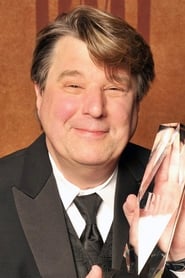
Young composed the scores for The Exorcism of Emily Rose, Sinister and Deliver Us from Evil. Their three-film horror collaboration covers Derrickson’s major supernatural work before Doctor Strange and gave music and sound an important role in the atmosphere of each production.
 Paul Harris Boardman
Writer-Director / Writer Collaborator
Boardman was Derrickson’s principal early screenwriting collaborator on Hellraiser: Inferno, The Exorcism of Emily Rose and Deliver Us from Evil. Their shared horror work spans Derrickson’s feature debut, his theatrical breakthrough and his later return to exorcism material.
 Joe Hill
Writer-Director / Author Collaborator
Hill wrote the short story adapted by Derrickson and C. Robert Cargill as The Black Phone and remained involved as the property expanded into Black Phone 2. The collaboration currently falls below the normal three-title threshold, but Hill’s source material and continuing participation are fundamental to Derrickson’s Black Phone films.
Scott Derrickson Horror Movies
Directing (8 credits)
2023
2022
2021
2014
2012
2005
2000
Writing (10 credits)
2025
2023
2022
2021
2015
2014
2012
2005
2000
2000
Production (7 credits)
2025
2022
2021
2020
2015
2012
2006
Acting (2 credits)
2018
2015