





2024
Tobin Bell
Horror Actor · Biography · Horror Filmography · Collaborators · Credits
Horror subgenres & themes
Most represented across this person's horror filmography:
CLOWN
Biography
Tobin Bell and the Voice of Jigsaw
Tobin Bell became one of the defining horror actors of the twenty-first century through a character who was initially designed to remain almost invisible. In James Wan's Saw, John Kramer spends most of the film apparently dead on the floor of a filthy industrial bathroom while two prisoners attempt to understand why they have been placed there. The final revelation that the body has been alive throughout the ordeal instantly reconfigures everything the audience has watched. Bell needs very little dialogue to make the moment work. The deliberate movement, controlled expression and quiet delivery establish a villain radically different from the masked slashers and physically dominant killers who had traditionally defined horror franchises. John Kramer is frightening because his violence appears to have been planned long before his victims understood that they were in danger.
That sense of preparation became the foundation of Bell's horror identity. Jigsaw rarely needs to chase anyone. His presence is communicated through recorded messages, surveillance footage, elaborate mechanisms and Billy the puppet, while Bell's voice supplies the intelligence behind them. The contrast between his calm manner and the brutality of the traps became one of the franchise's most distinctive elements. Even as the sequels greatly expanded Kramer's history, apprentices and philosophy, Bell preserved the impression that the character views himself not as a conventional murderer but as a man demonstrating a principle. The more horrifying the situations become, the more quietly he tends to explain them.
Before Saw and the Importance of Restraint
Bell had spent years working as a character actor before Saw transformed his career. His earlier work included small film roles, television appearances and the kind of supporting parts in which an actor must establish personality quickly without controlling the entire narrative. That background proved unexpectedly useful for John Kramer because the original film offers Bell almost none of the conventional opportunities associated with a major horror villain. He is physically inactive for most of the running time, his identity is hidden and much of what the audience knows about Jigsaw comes through other characters. Instead of treating those limitations as a problem, Bell approached stillness as part of the performance and understood that the apparent corpse needed to remain convincing enough for the final revelation to survive.
The restraint remained important after the franchise began giving him much more material. Bell rarely tries to make Kramer frightening through constant aggression. His authority comes from attention, patience and the certainty with which he discusses his own ideas. He can sit in a chair or lie in a hospital bed while stronger characters threaten him and still appear to control the scene because he knows something they do not. This became one of the central contradictions of Jigsaw: a terminally ill man with a failing body creates situations in which physically healthy people become completely powerless.
James Wan and the Revelation of John Kramer
James Wan is the defining directorial connection in Bell's horror career because the original Saw creates the cinematic grammar through which Jigsaw is introduced. Wan does not present Kramer immediately as a recognizable villain. Instead, the character exists first through evidence: photographs, recordings, previous victims, police investigations and grotesque devices designed around specific human weaknesses. By withholding the man himself, Wan allows the idea of Jigsaw to become larger than any ordinary killer before Bell is finally revealed. The bathroom twist works because the answer has been present in the frame since the beginning while the audience has been trained to classify it as irrelevant.
Bell's performance completes that structure. When Kramer rises, the film suddenly gives physical form to the intelligence controlling the narrative. He does not explode into theatrical villainy. His movements are deliberate and his final words are delivered with the same composure that later becomes central to the character. Wan therefore gives Bell one of the most economical horror introductions of the era: the villain does not require a long entrance because the entire film has effectively been constructing his presence in advance.
Leigh Whannell and the Construction of Jigsaw
Leigh Whannell is equally fundamental to Bell's horror identity because he helped create Jigsaw and wrote the screenplay that introduced John Kramer's methods. The first film establishes the basic philosophical structure that later sequels would expand: people who have failed to appreciate their lives are forced into situations where survival supposedly depends upon sacrifice, pain or confrontation with some personal failure. Kramer insists that his victims retain a choice, even though the conditions surrounding that choice are violently coercive. This contradiction gives Bell far more to play than a conventional sadistic killer because John genuinely believes that the distinction between murder and testing matters.
As the mythology developed, Bell increasingly supplied the human behavior necessary to support Whannell's concept. Kramer could easily have become only the anonymous engineer behind increasingly elaborate traps, but Bell gives the character habits, rhythm and emotional boundaries. He listens carefully, rarely wastes words and becomes visibly disturbed when apprentices alter the rules he considers essential. The result is not moral consistency in any objective sense, but psychological consistency from Kramer's own perspective. Bell plays the philosophy as something the character has completely internalized, which allows the audience to understand his reasoning without requiring the films to endorse it.
Saw II and Darren Lynn Bousman
Saw II radically changes Bell's role by placing John Kramer physically in front of the police for a large portion of the film. Darren Lynn Bousman removes the mystery of Jigsaw's identity and instead builds suspense around how much Kramer has already planned before allowing himself to be captured. Donnie Wahlberg's Detective Eric Matthews attempts to dominate the encounter through anger and physical authority, but Bell plays John as someone who understands that the detective's impatience is itself part of the game. The interrogation becomes one of the clearest demonstrations of Bell's approach to horror: Kramer is weakened by cancer and surrounded by police, yet the scene consistently feels as though everyone else is inside his territory.
Bousman continued directing Bell through Saw III and Saw IV, becoming one of the most important filmmakers in the development of Jigsaw beyond the original twist. These sequels reveal more about Kramer's illness, personal losses, apprentices and attempts to turn his private philosophy into something that can survive him. Bell has described the importance of understanding why Kramer makes particular decisions rather than reducing him to an interchangeable villain, and the Bousman films provide the material necessary for that deeper characterization. Decades later, the two worked together again on The Cello, demonstrating that their horror collaboration ultimately extended beyond the franchise that first connected them.
Shawnee Smith, Amanda Young and the Failure of the Method
Shawnee Smith becomes Bell's most important recurring acting partner through Amanda Young. Introduced in the original Saw as the survivor of the Reverse Bear Trap, Amanda appears at first to represent the evidence Kramer needs to prove that his philosophy works. She survived, and John interprets that survival as a transformation. By Saw II she has become his apprentice, while Saw III reveals how unstable the relationship actually is. Amanda depends emotionally upon Kramer in ways his abstract theory of survival cannot adequately contain, while John increasingly judges her according to the same rigid standards he applies to everyone else.
Their relationship gives the franchise a tragedy that goes beyond machinery. Amanda begins creating traps that do not offer genuine opportunities for survival, violating what Kramer considers the central rule of his work. John responds not simply as a disappointed mastermind but as a mentor who believes his most important student has misunderstood him. Smith and Bell play the relationship as a mixture of affection, dependency, fear and judgment, making Amanda far more than another assistant who builds traps. Saw X later returns to an earlier point in their history, allowing the two actors to play moments of partnership with the audience already knowing the collapse that awaits them.
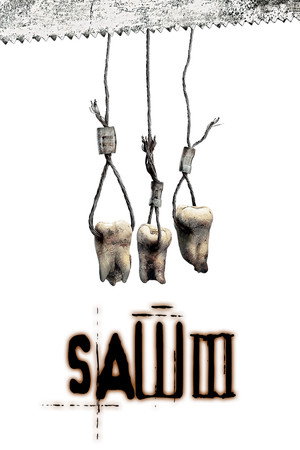
Saw III and the Dying Architect
Saw III gives Bell some of the most substantial dramatic material in the entire series because Kramer is physically close to death throughout the film. Confined largely to a hospital bed, he requires Dr. Lynn Denlon to keep him alive while another game unfolds elsewhere. The situation intensifies the defining contrast in Bell's performance: John has almost no physical power remaining, yet the people surrounding him are still moving through a structure he designed. Cancer has weakened the body without reducing the character's obsession with control.
The film also confronts Kramer with the limitations of his own system. Amanda, the person he considered proof of rehabilitation, has become psychologically dependent upon him and increasingly unwilling to follow his rules. John attempts to evaluate her through another test even while dying, demonstrating how completely the philosophy has consumed his relationships. His eventual death could have ended Jigsaw as an active figure, but the franchise instead transformed Bell into something almost archival. Later films continually return to previously unseen conversations, recordings and events, making John Kramer a character capable of influencing the narrative long after his chronological death.
Costas Mandylor and the Hoffman Succession
Costas Mandylor's Mark Hoffman provides another major extension of Kramer's legacy. Unlike Amanda, whose apprenticeship is inseparable from emotional dependence and trauma, Hoffman increasingly uses the machinery of Jigsaw with a colder instinct for self-preservation and retaliation. Flashbacks across the later sequels reveal how Kramer recognized, recruited and attempted to control him. Bell and Mandylor therefore become central to the question that drives much of the franchise after John's death: can another person actually inherit the Jigsaw method, or does the philosophy inevitably change when someone else begins deciding who deserves to be tested?
The Hoffman storyline also demonstrates why Bell remains important even when another character becomes the immediate antagonist. Kramer functions as the standard against which successors are measured. Hoffman may possess technical skill and knowledge of the games, but the films continually return to John to explain where the system originated and why later versions differ from his intentions. Their connection continues into the chronology surrounding Saw X, reinforcing Hoffman as one of the principal figures through whom Jigsaw's influence survives.
Kevin Greutert and the Long Architecture of Saw
Kevin Greutert is one of Bell's most significant franchise collaborators because his involvement with Saw extends from editing into directing. As editor of the original film and several sequels, Greutert helped shape the series' distinctive relationship with chronology, rapid montage, withheld information and retrospective revelation. He later directed Saw VI and Saw 3D, working within a mythology already dependent upon years of interconnected flashbacks and hidden relationships. His familiarity with the mechanics of the franchise gave him an unusually deep understanding of how John Kramer could remain narratively active even after death.
That history became especially important with Saw X. Rather than building another film primarily around Jigsaw's successors, Greutert places Bell directly at the center and sets the story between the first two installments. The decision allows John Kramer to function as protagonist for extended periods rather than as revelation, memory or recorded authority. Bell receives time to portray the man confronting terminal illness before the familiar machinery of Jigsaw takes control, making the horror more closely tied to his personal experience than in many previous installments.
Saw X and John Kramer at the Center
Saw X follows Kramer as he searches desperately for treatment after receiving his cancer diagnosis. He travels to Mexico for what appears to be an experimental medical procedure and briefly believes he may have found a genuine possibility of survival. When he discovers that the operation is fraudulent and that seriously ill patients are being exploited, the betrayal becomes the basis for another series of tests. The structure places the audience unusually close to John before he resumes the role of Jigsaw, allowing Bell to play vulnerability, hope and humiliation alongside the familiar control of the games.
This perspective does not make the traps less brutal or transform Kramer into a conventional hero. Instead, it demonstrates how efficiently he converts personal experience into moral justification. The people who deceived him become evidence supporting a worldview he already possesses. Bell's performance is especially effective because John rarely treats revenge as revenge. He reorganizes anger into the language of testing, insisting upon a principle even when the emotional origin of the game is clearly personal. The film therefore provides one of the fullest examinations of the gap between how Kramer understands himself and how his actions appear from outside.
Horror Beyond Saw
Although Jigsaw dominates Bell's horror reputation, the actor has repeatedly worked elsewhere in the genre. Boogeyman 2 casts him as psychiatrist Dr. Mitchell Allen, allowing his calm professional authority to operate inside psychological horror rather than trap mythology. Dark House again uses his ability to make a seemingly controlled figure feel potentially dangerous, while Belzebuth moves him into demonic and religious horror as Vasilio Canetti. These roles frequently exploit the audience's familiarity with Bell without requiring him to reproduce John Kramer directly.
The Call pairs Bell with Lin Shaye, another performer strongly identified with modern horror, while The Cello reunites him with Darren Lynn Bousman in a supernatural story far removed from the industrial spaces of Saw. The recurrence of Bell in such material demonstrates how completely his screen presence has become associated with the genre. Filmmakers can use his face and voice as part of the atmosphere before the story establishes whether his character represents knowledge, danger or protection.
The Voice as the Essential Jigsaw Effect
The elaborate traps are the most visible feature of Saw, but Bell's voice became equally fundamental to the franchise's identity. Kramer frequently communicates through recordings before a victim ever encounters him directly. The instructions must establish the rules, suggest judgment and create fear without depending upon a physical performance in the room. Bell accomplishes this through an unusually controlled rhythm. He rarely shouts and does not need a distorted monster voice. The calmness is disturbing because it suggests that the person describing mutilation has already considered every consequence and sees no reason to become emotionally excited by it.
This vocal restraint separates Jigsaw from many horror antagonists. The violence may be spectacular, but the man explaining it behaves almost pedagogically. Kramer speaks as if a trap were an argument whose conclusion should become obvious once the victim understands the rules. That mismatch between tone and circumstance creates much of the character's unease. Billy the puppet, mechanical devices and surveillance screens may represent Jigsaw visually, but Bell's voice is what convinces the audience that a single intelligence exists behind them.
Tobin Bell's Horror Legacy
Tobin Bell's place in horror rests overwhelmingly on John Kramer, yet the scale and duration of the role make that achievement unusually substantial. James Wan created the cinematic reveal that introduced Jigsaw, while Leigh Whannell established the conceptual structure and philosophy that allowed the character to expand beyond a single twist. Darren Lynn Bousman then gave Bell the space to transform Kramer into the emotional and ideological center of the early sequels, and Shawnee Smith supplied the apprentice relationship through which the failures of his philosophy became most personal. Kevin Greutert helped shape the franchise from the editing room before eventually giving Bell the most sustained protagonist role of the series in Saw X, while Costas Mandylor became one of the principal successors through whom Kramer's influence continued.
What Bell contributed across those collaborations was consistency. Jigsaw could have become only a collection of traps connected by increasingly complicated mythology, but Bell continually returned the character to a recognizable internal logic. John Kramer believes that pain can reveal whether someone values life, believes that choice remains meaningful even under extreme coercion and believes that his distinction between murder and testing deserves to be taken seriously. The films repeatedly expose contradictions in those beliefs, but Bell never plays Kramer as though he recognizes himself as a hypocrite performing villainy for an audience. That commitment is what gives the character durability.
Outside the franchise, Bell's later horror roles confirm that the essential quality was never the machinery itself. His strongest weapon is controlled authority. He can enter a scene, speak quietly and create the impression that he has already considered outcomes nobody else has noticed. Saw gave that quality its perfect character, but Tobin Bell is the reason Jigsaw ultimately became more than the man who built the traps.
Photos (4)
Images: TMDB
Selected Work
Notable Horror Collaborators
Notable collaborators and creative partners throughout Tobin Bell's horror career.
 James Wan
Defining Horror Director
Wan directed Bell in the original Saw and built its final revelation around John Kramer, creating the horror role that permanently transformed Bell's career.
 Leigh Whannell
Defining Horror Creator & Writer
Whannell co-created Jigsaw and wrote the early Saw mythology that allowed Bell to develop John Kramer from a hidden antagonist into the central figure of the franchise.
 Shawnee Smith
Defining Horror Co-Star
Smith's Amanda Young became Kramer's most important apprentice and emotional counterpart, with their relationship driving Saw II, Saw III and their earlier partnership in Saw X.
DB
Darren Lynn Bousman
Defining Saw Director
Bousman directed Bell through Saw II, Saw III and Saw IV, expanding Jigsaw's psychology, history and relationships, and later reunited with him for The Cello.
 Kevin Greutert
Defining Franchise Collaborator
Greutert helped shape the Saw series as a long-term editor before directing Saw VI, Saw 3D and Saw X, the film that restored Bell's John Kramer to the dramatic center.
 Costas Mandylor
Recurring Horror Co-Star
Mandylor's Mark Hoffman became one of Kramer's principal successors, linking Bell directly to the later Saw mythology and returning alongside him in Saw X.
Tobin Bell Horror Movies
Acting (33 credits)
2023
2023
2023
2023
2022
2021
2021
2020
2019
2019
2019
2019
2018
2018
2017
2017
2015
2014
2014
2010
2009
2008
2008
2007
2007
2007
2007
2007
2006
2005
2004
1999
Other Crew (1 credits)
2015