Tim Curry and Two of Horror's Most Enduring Icons
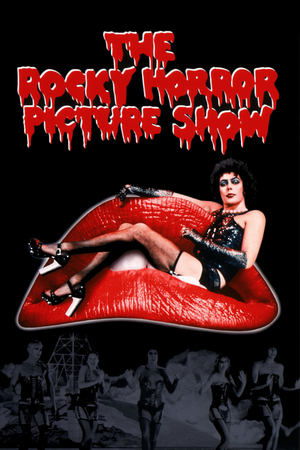
Tim Curry occupies a distinctive place in horror history because two performances separated by fifteen years became permanent parts of the genre's visual culture. As Dr. Frank-N-Furter in The Rocky Horror Picture Show, Curry turned the mad scientist of classic horror and science fiction into a flamboyant, sexually transgressive rock-and-roll showman. As Pennywise in the 1990 television adaptation of Stephen King's It, he moved in the opposite direction, transforming the familiar image of a circus clown into a smiling embodiment of predatory evil. The two characters could hardly be more different, yet both depend on Curry's ability to combine theatrical exaggeration with a precise awareness of menace.
Curry was not primarily a horror actor. His career ranged across theatre, comedy, drama, animation, fantasy and musical performance, and he resisted being reduced to the genre roles that made him famous. Nevertheless, horror repeatedly offered him unusually powerful opportunities for physical and vocal transformation. His genre work also includes Jerzy Skolimowski's The Shout, the HBO anthology Tales from the Crypt, Scooby-Doo and the Witch's Ghost, Scary Movie 2, the voodoo horror film Ritual and, late in his career, the slasher Stream. The quantity is modest beside dedicated horror performers, but the cultural reach of Frank-N-Furter and Pennywise gives Curry an importance that cannot be measured by title count alone.
The Rocky Horror Show and the Creation of Frank-N-Furter
Curry's first major horror-associated role originated on stage rather than in cinema. After studying English and drama at the University of Birmingham and entering professional theatre through Hair, he became part of the Royal Court Theatre environment in London. Richard O'Brien, whom Curry had known through Hair, was developing a musical inspired by the inexpensive science-fiction pictures, Gothic laboratories, alien invasions and monster movies that had shaped his imagination. The project became The Rocky Horror Show.
The production opened in June 1973 at the Royal Court Theatre Upstairs under the direction of Jim Sharman. Curry played Dr. Frank-N-Furter, an alien scientist who combines the laboratory arrogance of the classic mad doctor with the commanding presence of a rock singer and the deliberate sexual provocation of glam performance. O'Brien's material openly borrowed the architecture of old horror and science-fiction cinema: a stranded young couple, a remote castle, a mysterious host, a laboratory experiment, an artificially created man and visitors who discover that the apparent household belongs to something far stranger than ordinary society.
Curry's interpretation prevented Frank from becoming merely a parody of earlier screen scientists. The character is funny because of his confidence and theatrical excess, but he is also genuinely dangerous. Brad and Janet enter the castle believing they need shelter and gradually become subjects inside Frank's private world. He controls the environment, creates Rocky for his own purposes, murders Eddie and manipulates his guests while presenting each new development as part of a performance. Curry understood that the comedy would be stronger if Frank believed absolutely in his own authority.
The stage production became a major success in London and transferred to progressively larger venues. Its mixture of Gothic horror, science fiction, rock music, sexuality and deliberate bad taste created a form of genre theatre that treated the visual language of old horror films affectionately while simultaneously dismantling their moral conventions. Curry's Frank became the central image of that mixture.
The Rocky Horror Picture Show and the Midnight Horror Phenomenon
Jim Sharman directed the film adaptation, The Rocky Horror Picture Show, with Curry, Richard O'Brien, Patricia Quinn and Little Nell retaining their stage roles. Susan Sarandon and Barry Bostwick played Janet Weiss and Brad Majors. Filming at Bray Studios and Oakley Court added another connection to British horror history, since the location and surrounding production culture were closely associated with the Gothic cinema of Hammer Films.
Curry's screen performance is larger than ordinary realism but carefully controlled. Frank-N-Furter can address an entire room like a theatrical star and then reduce his movement to a stare, a raised eyebrow or a change in vocal rhythm. That control is important because the character occupies several horror archetypes at once. He is the owner of the forbidden house, the scientist who creates life, the sexual tempter who destabilizes the visitors and eventually the doomed monster of his own story.
The film initially failed commercially outside a small number of markets, but its history changed when 20th Century Fox began testing it as a midnight attraction. The Waverly Theater in Greenwich Village began midnight screenings in April 1976, and repeated attendance gradually changed the relationship between film and audience. Viewers memorized dialogue, shouted responses at the screen, dressed as characters, used props and eventually developed live shadow casts that performed beneath the projected film. Rocky Horror stopped functioning only as a movie and became a recurring ritual.
That afterlife is central to Curry's horror legacy. Frank-N-Furter did not remain a character confined to a 1975 film. The performance became something successive generations reproduced physically in cinemas, stage productions and fan events. The film's celebration of outsiders and rejection of conventional sexual and social behavior also gave its horror imagery a community function that was unusual for the genre. The castle that initially appears threatening ultimately becomes the place where ordinary identities are disrupted and remade.
Curry was ambivalent about being permanently identified with Frank. He understood very early that a role this distinctive could become difficult to escape. Yet the performance endured precisely because it resists a single interpretation. Frank is host, scientist, seducer, killer, entertainer and victim, often within the same sequence. Curry's ability to make those contradictions coexist is one reason the character survived long after the film's unsuccessful initial release.
The Shout and Psychological Horror
Jerzy Skolimowski's The Shout in 1978 placed Curry inside a very different kind of British horror. Based on a story by Robert Graves, the film centers on Crossley, a mysterious man who claims to have acquired the ability to kill with a supernatural shout. He invades the home of an experimental musician and his wife, gradually replacing ordinary domestic reality with sexual domination, occult suggestion and fear.
Curry plays a character named Robert Graves in the framing narrative at a psychiatric institution. Crossley relates the central story to him during a cricket match, making Curry's character part of the device through which the audience receives an account whose truth can never be established with certainty. The role is not large, but it places him inside one of the more unusual British horror films of the decade.
The Shout depends less on monsters or graphic violence than on unstable perception and sound. The possibility that Crossley genuinely possesses supernatural power competes with the possibility that the entire narrative is the construction of a disturbed mind. Curry's position as listener becomes important to that ambiguity. The audience, like the character hearing the story, must decide how much of Crossley's account can be trusted.
Pennywise and Stephen King's It
Curry's second defining horror performance arrived in 1990 with the television adaptation of Stephen King's It. Directed by Tommy Lee Wallace, the two-part ABC miniseries follows a group of childhood friends who confront an ancient entity preying upon the town of Derry, Maine. The creature can assume forms based on the fears of its victims, but its most recognizable manifestation is Pennywise the Dancing Clown.
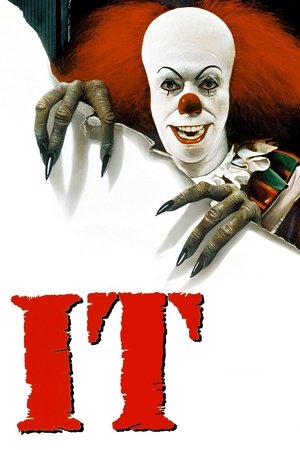
Curry plays Pennywise almost entirely as a clown rather than attempting to represent every shape assumed by the creature. This gave the miniseries a stable human face for an otherwise unknowable supernatural predator. The decision proved crucial. A clown normally exists to attract children, create amusement and reduce social distance. Curry converts each of those qualities into a threat. Pennywise smiles, jokes and speaks with exaggerated friendliness precisely because he wants his victims to move closer.
The opening murder of Georgie Denbrough demonstrates the method. Pennywise appears in a storm drain, an absurd and seemingly impossible location for a circus clown. Instead of immediately behaving like a monster, he begins a conversation. Curry uses friendliness as bait, creating a temporary suggestion that Georgie might be speaking to an eccentric but harmless adult. The horror develops through the gradual recognition that the performance of friendliness is itself predatory.
Curry discussed the character while the miniseries was being filmed in Vancouver. He described Pennywise as essentially pure evil, a form adopted by the larger entity that terrorizes Derry. More revealingly, he expressed reservations about horror becoming excessively dependent on prosthetics and gore. Curry argued that the truly frightening moment is often visible in a person's eyes when that person decides to kill. That philosophy became fundamental to his Pennywise.
Building Pennywise Without Hiding the Actor
The Pennywise makeup developed during production with makeup-effects artist Bart Mixon. More elaborate prosthetic possibilities existed, but Curry favored an approach that left enough of his face visible for the performance to remain central. The white clown makeup, red hair, exaggerated eyebrows and teeth establish the character immediately, yet the face beneath them remains capable of rapid emotional changes.
Curry could therefore alternate between broad clown behavior and sudden stillness. Some of Pennywise's most effective moments occur when the smile stops feeling comic but has not disappeared. The audience can still recognize the outward form of a children's entertainer while the intention behind it has changed completely. This is exactly the kind of psychological horror Curry described in his contemporary interview. The makeup attracts attention, but the decision behind the eyes supplies the threat.
The structure of It also uses Curry strategically. Pennywise appears, commits or threatens an act of violence and disappears again, allowing anticipation to accumulate between encounters. Curry recalled spending long periods in makeup for relatively brief sequences. That limited screen time ultimately benefited the creature. Pennywise never becomes an ordinary character sharing daily life with the protagonists. He intrudes into reality at moments when the characters believe they are safe.
The performance became one of the most durable images associated with Stephen King adaptations. Later versions of It would create a very different Pennywise, but Curry's interpretation remained influential because it exploits the tension between familiarity and evil. His clown looks sufficiently conventional to have once belonged at a real circus. The horror comes from the realization that the apparently familiar face is only a mask used by something ancient and predatory.
Tales from the Crypt and Four Faces of Horror
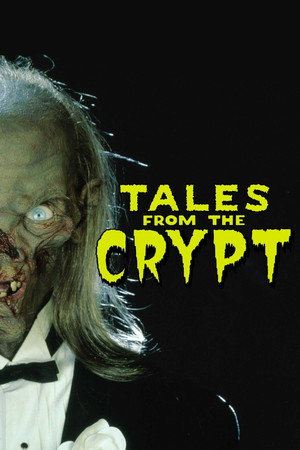
In 1993 Curry appeared in the HBO anthology Tales from the Crypt episode Death of Some Salesmen, directed by Gilbert Adler. The episode gave him one of the most technically unusual performances of his horror career. Curry plays Pa Brackett, Ma Brackett and their daughter Winona, effectively creating an entire grotesque rural family opposite Ed Begley Jr.'s dishonest cemetery salesman Judd Campbell.
The story reverses the salesman's normal relationship with his victims. Judd expects to manipulate vulnerable people into purchasing cemetery plots, but the Bracketts are far more dangerous than anyone he normally exploits. Curry differentiates the family members through voice, posture, makeup and rhythm while maintaining enough shared physical and behavioral traits to make them believable as relatives.
Winona is particularly important to the episode's mixture of disgust, sexuality and black comedy. The salesman believes he can continue manipulating the family, but his confidence gradually becomes entrapment. Curry's multiple performance turns the Brackett household into an environment controlled almost entirely by different versions of the same actor, giving the episode a dreamlike and intentionally grotesque quality.
The performance earned Curry a 1994 Primetime Emmy nomination for Outstanding Guest Actor in a Drama Series. The recognition is important within his horror career because it demonstrates that his genre reputation was not dependent only on Frank-N-Furter and Pennywise. Death of Some Salesmen allowed him to use transformation itself as the central acting challenge, moving among several characters inside the same short horror narrative.
Scooby-Doo and the Witch's Ghost
Curry's extensive voice career also intersected with supernatural horror. In the 1999 animated film Scooby-Doo and the Witch's Ghost, he voiced horror novelist Ben Ravencroft. The character initially appears to be an ally of Mystery Inc. and invites the group to Oakhaven, Massachusetts, where the town promotes a legend concerning his ancestor Sarah Ravencroft.
The story eventually reveals that Ben has manipulated the investigation because he wants Sarah's spell book and intends to release the witch's supernatural power. Curry's casting is effective because his voice already carried associations with theatrical villainy and horror. Ravencroft can sound educated, charming and trustworthy while gradually revealing the ambition beneath his cultivated exterior.
The film is aimed at a younger audience, but its witchcraft, ancestral curse, Gothic New England setting and supernatural transformation make it part of Curry's broader horror-related work. It also demonstrates how effectively he could create a villain without relying on physical appearance. Voice alone was sufficient to provide the shift from eccentric horror author to occult antagonist.
Scary Movie 2 and the Return to Horror Parody
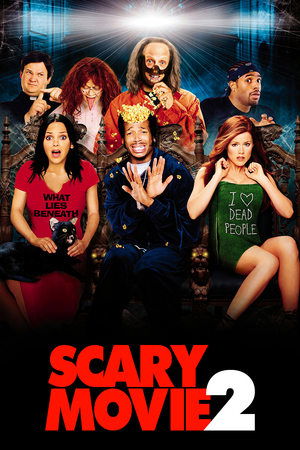
Scary Movie 2 in 2001 brought Curry back into explicit horror parody. He plays Professor Oldman, the academic responsible for bringing a group of students to Hell House under the pretext of a scientific study while secretly investigating paranormal activity. The film targets haunted-house cinema, possession movies and supernatural horror through deliberately vulgar comedy.
The casting creates an additional layer because Curry had already spent decades moving between genuine horror and parody. Professor Oldman belongs to the lineage of investigators who knowingly bring vulnerable people into haunted environments, but Curry plays the character inside a film that constantly destroys the seriousness of those conventions. The result reconnects him, in a much broader comic register, with the genre-mocking territory that had helped create Frank-N-Furter.
Ritual and Voodoo Horror
Curry appeared as Matthew Hope in Ritual, a 2002 horror film inspired by the 1943 RKO production I Walked with a Zombie. The story transfers its supernatural ambiguity to contemporary Jamaica, where medicine, family conflict and apparent voodoo influence overlap. Jennifer Grey plays a doctor drawn into the increasingly disturbing circumstances surrounding a wealthy family.
The film later acquired Tales from the Crypt branding for home-video release, creating an indirect return to the anthology franchise in which Curry had previously received his Emmy nomination. His role is supporting rather than dominant, but the film extends his genre work into another traditional horror territory: the uncertainty between medical explanation, psychological manipulation and genuine supernatural power.
Returning to Rocky Horror
Curry never again attempted to recreate his 1970s Frank-N-Furter as a conventional film performance, but he periodically re-entered the Rocky Horror universe. In the 2016 television production The Rocky Horror Picture Show: Let's Do the Time Warp Again, Laverne Cox played Frank while Curry appeared as the Criminologist narrator. The casting acknowledged that no remake could avoid the presence of the original performance.
By then Curry's relationship with Rocky Horror had changed considerably. A role he once feared might permanently typecast him had become a cultural legacy extending across generations. His participation as narrator allowed the new version to recognize that history without asking him to compete with his younger self.
Stream and Curry's Final Return to Horror
After suffering a severe stroke in 2012, Curry's mobility was greatly reduced and much of his later professional activity depended on voice performance. Horror nevertheless returned near the end of his screen career. Michael Leavy's 2024 slasher Stream assembled an unusually dense collection of genre performers including Jeffrey Combs, Danielle Harris, Dee Wallace, Tony Todd, Bill Moseley, Felissa Rose and David Howard Thornton.
Curry appears through a special voice cameo as Lockwood, connecting him to a film consciously built around several generations of horror performers. The role was small, but its significance lay in the return itself. Curry had not appeared in a new horror feature for many years, and the production deliberately treated his involvement as part of the film's connection to horror history.
Before his death, Curry completed additional work as Lockwood for the sequel Stream 2: Sudden Death. The completed performance means that his final connection with horror extends beyond his lifetime. There is an unusual symmetry in that trajectory. One of Curry's first major screen identities grew from a parody of classic monsters, while one of his final performances placed his voice inside a modern independent slasher surrounded by actors associated with later generations of the genre.
Tim Curry's Horror Legacy
Curry's influence on horror is concentrated rather than extensive. He did not spend his career moving continuously from one horror franchise to another, nor did he identify himself primarily as a genre performer. In fact, during the production of It he openly stated that he was not especially devoted to horror or fantasy as genres. What interested him more was the psychology of villains and the point at which a performance reveals a capacity for violence.
That distance may help explain why his two greatest horror characters are so different. Frank-N-Furter knows he is performing and wants everyone around him to watch. His danger is inseparable from theatrical display. Pennywise also performs, but the purpose is predation. The clown persona is a tool designed to create curiosity, familiarity and false safety before the underlying creature reveals itself. Curry understood both characters as people or entities using performance to control an audience inside the story.
His best horror work also demonstrates the value he placed on the human element beneath makeup. Frank depends on Curry's face, voice and physical confidence beneath costume and cosmetics. Pennywise became more effective when the makeup stopped trying to create the entire monster and allowed Curry's eyes and expressions to carry the threat. In Tales from the Crypt, heavy transformation served several performances rather than replacing them. Even his animated villains remained recognizable through vocal personality.
Tim Curry died on August 25, 2026, at the age of eighty. By then Frank-N-Furter had survived more than half a century of stage revivals, midnight screenings and audience participation, while Pennywise remained one of the defining horror performances of 1990s television. Few actors with such a comparatively selective horror filmography created two genre figures with that degree of independent cultural life. Curry did it by understanding that the most memorable monster is often not the one hidden most completely by makeup, but the performer who knows exactly when the smile should stop being reassuring.