

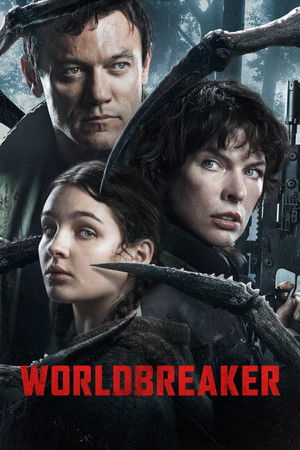
2025
Milla Jovovich
Horror Actor · Biography · Horror Filmography · Family · Collaborators · Credits
Horror subgenres & themes
Most represented across this person's horror filmography:
ZOMBIE
Biography
Milla Jovovich: Alice, Resident Evil and Action-Horror Stardom
Milla Jovovich holds an unusual place in modern horror cinema because much of her importance to the genre is concentrated in a single character. As Alice in the Resident Evil film series, she carried six features built around zombies, viral mutation, corporate experimentation and increasingly apocalyptic horror. The role developed from the amnesiac survivor of an underground laboratory disaster into the central figure of a global war against the Umbrella Corporation, giving Jovovich one of the longest continuous associations between a performer and a leading role in twenty-first-century action horror.
Alice was created specifically for the films rather than adapted directly from the Capcom games. That distinction allowed the character to evolve independently while familiar elements from the games gradually entered the series around her. Across the six films, Jovovich became the human constant connecting changing directors, game characters, monsters and increasingly elaborate versions of the Umbrella mythology. Although the franchise progressively emphasized large-scale action and science fiction, its foundation remained horror: infection, transformation, predatory creatures, laboratories filled with the dead and the recurring possibility that human identity itself could be manufactured or replaced.
Resident Evil and the Creation of Alice
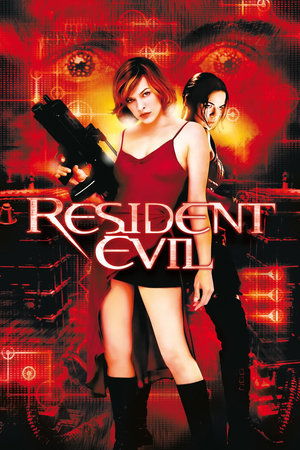
Paul W. S. Anderson's Resident Evil in 2002 introduced Jovovich as Alice, who awakens with severe memory loss in a mansion above a secret Umbrella Corporation research facility known as the Hive. A containment failure has released the T-virus, and the installation has been sealed by the Red Queen artificial intelligence. As Alice descends with an Umbrella security team, she encounters infected employees, mutant dogs and the Licker, while gradually discovering her own connection to the corporation.
The first film uses Jovovich differently from the almost superhuman figure Alice would later become. Her uncertainty is central to the horror because she initially knows little more than the audience. The Hive functions as a succession of enclosed threats, from the laser corridor to laboratories flooded after the outbreak, and Alice must reconstruct her identity while trying to survive them. Jovovich plays the character with increasing physical confidence as memories return, establishing the controlled fighting style and emotional restraint that would remain part of Alice throughout the franchise.
The film also began Jovovich's long creative relationship with Anderson. Although different directors would handle the second and third installments, Anderson continued writing and producing the series and later returned to direct the final three films. Jovovich became increasingly involved in discussions about Alice and her development, making the character more than a conventional assignment repeated from sequel to sequel. The films changed dramatically in scale, but Alice remained their organizing perspective.
Resident Evil: Apocalypse and the Expansion of the Outbreak
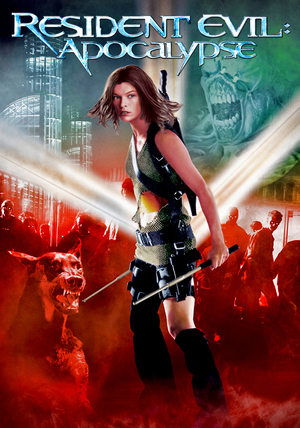
Resident Evil: Apocalypse moves the infection out of the Hive and into Raccoon City. Alice awakens after further Umbrella experimentation to find an urban environment collapsing under the T-virus outbreak. The sequel brings major game characters into the film continuity, most notably Jill Valentine, played by Sienna Guillory, and introduces Carlos Olivera, played by Oded Fehr. It also places Alice against Nemesis, transforming the more contained survival horror of the first film into a mixture of zombie siege, creature horror and large-scale action.
For Jovovich, the sequel establishes the version of Alice that would dominate the middle of the series. Umbrella's experiments have altered her physically, allowing her to confront infected creatures and corporate forces with abilities beyond those of an ordinary survivor. The transformation changes the balance of the films. Alice is no longer simply escaping horror but actively fighting the system responsible for creating it. Jovovich's increasingly physical performance became essential to that shift, particularly through hand-to-hand combat and stunt-oriented sequences that differentiated Alice from the more vulnerable protagonist introduced in the first film.
Resident Evil: Extinction and Post-Apocalyptic Horror
Resident Evil: Extinction expands the consequences of the outbreak again. The T-virus has devastated much of the planet, and Alice travels through a landscape in which the collapse of civilization is already largely complete. Russell Mulcahy directs a story that combines zombie horror with post-apocalyptic imagery, while Ali Larter joins the series as Claire Redfield and Iain Glen's Dr. Isaacs becomes one of the principal human faces of Umbrella's experimentation.
Alice has become both Umbrella's enemy and one of its most valuable biological subjects. Her altered body gives her extraordinary abilities, but those abilities also connect her directly to the corporation that transformed her. Cloning becomes increasingly important to the series, turning identity itself into part of the horror. The film ends not merely with Alice surviving but with the possibility of multiple versions of her confronting Umbrella, an idea that later installments would develop on a much larger scale.
Jovovich's presence gives continuity to a franchise that by this point has moved far from the underground corridors of the first film. The settings and scale change, yet Alice continues to embody the central conflict between individual agency and corporate control over the human body. The monsters are created by infection, but Alice represents a different result of the same impulse to engineer life.
Afterlife and Retribution: Alice at the Center of the Franchise
Paul W. S. Anderson returned to directing with Resident Evil: Afterlife. Alice begins the film attacking an Umbrella installation with an army of clones before Albert Wesker removes her enhanced abilities. The decision temporarily returns the character to human physical limitations while placing her inside another landscape overrun by the undead. Claire Redfield returns, Shawn Roberts assumes the role of Wesker, and the film introduces Chris Redfield while continuing to absorb characters and creatures from the games into Alice's cinematic universe.
Resident Evil: Retribution pushes the franchise toward an artificial world of simulations, clones and repeated identities. Alice awakens inside an Umbrella testing facility containing reconstructed environments populated by both infected creatures and replicated versions of people from earlier films. Michelle Rodriguez, Oded Fehr and Colin Salmon return in new configurations, while Sienna Guillory's Jill Valentine becomes one of Alice's principal opponents under Umbrella control.
The film turns the franchise's long-standing interest in cloning into a structural device. People who died can return because Umbrella can reproduce them, and apparently ordinary domestic lives can be manufactured as temporary scenarios. Jovovich plays several versions of Alice, including an artificial suburban incarnation whose experiences differ completely from those of the central character. The concept reinforces one of the series' recurring horror ideas: the body may look familiar while memory, identity and purpose have been created by someone else.
Resident Evil: The Final Chapter
Resident Evil: The Final Chapter brings Alice back to the Hive and Raccoon City, connecting the conclusion directly to the location where her story began. Jovovich again leads the film alongside returning performers including Ali Larter, Iain Glen and Shawn Roberts. Umbrella's larger plans and Alice's own origins become central to the narrative as the surviving characters attempt to prevent the corporation from completing its destruction of the remaining human population.
The final film emphasizes how extensively Alice has changed since 2002. The woman who awoke without memories in the first film has spent years fighting the organization that controlled her identity, and the conclusion makes that identity itself part of the final revelation. The series therefore closes on the same questions that helped establish the character: who Alice is, how much of her past can be trusted and whether a person created or manipulated by Umbrella can ultimately act independently of it.
Across six films, Jovovich gave the franchise a continuity uncommon among long-running horror adaptations. Directors, supporting characters and tones changed, and the series increasingly combined horror with action spectacle, but Alice remained present throughout. Jovovich also performed much of the fighting associated with the character, helping establish the physical style that became inseparable from the films. By the time of the final chapter, Alice had evolved from a horror survivor into the defining protagonist of an entire cinematic branch of Resident Evil.
The Fourth Kind and Pseudo-Documentary Horror
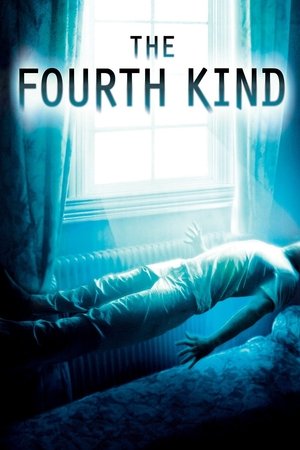
Outside Resident Evil, one of Jovovich's most prominent horror roles came in The Fourth Kind in 2009. Directed by Olatunde Osunsanmi, the film presents Jovovich as Dr. Abigail Tyler, a psychologist investigating disturbing experiences among patients in Nome, Alaska. Their memories appear connected to unexplained disappearances and possible alien abduction. Rather than using Jovovich simply as a conventional character, the film begins with her addressing the audience as herself and claiming that the dramatized material will be shown alongside archival evidence.
The technique allows the film to alternate between Jovovich's performance and supposedly authentic recordings, sometimes presenting them simultaneously in split screen. The effect is designed to blur the distinction between reconstruction and documentary evidence. The purported real material was itself part of the fiction, making the film an example of horror marketing and presentation that attempts to manufacture authenticity rather than merely tell a supernatural story.
Jovovich's performance is deliberately more vulnerable than Alice. Abigail Tyler is not an action protagonist capable of physically defeating what confronts her. Her investigation exposes her to experiences she cannot control or fully explain, and the film depends on fear, testimony and uncertainty rather than combat. The contrast demonstrates a different side of Jovovich's genre work at a time when audiences strongly associated her with the physical confidence of Resident Evil.
Faces in the Crowd and Psychological Horror
In Faces in the Crowd, Jovovich plays Anna Marchant, a woman who survives an attack by a serial killer but suffers an injury that leaves her unable to recognize faces. The condition transforms an ordinary social ability into the central mechanism of suspense: people she knows can appear unfamiliar, while the killer may stand directly in front of her without being identifiable. Jovovich also served as an executive producer on the film.
The role again removes the physical certainty associated with Alice. Anna's problem cannot be solved through strength because perception itself has become unreliable. The film uses her inability to retain facial identity to create isolation and vulnerability, placing a recognizable star in a narrative where recognition is precisely what the protagonist has lost. Although structured partly as a thriller, its serial-killer premise and persistent manipulation of human appearance place it firmly within Jovovich's darker genre work.
Hellboy and the Blood Queen
Jovovich returned to overt supernatural material in Neil Marshall's Hellboy in 2019. She plays Nimue, the Blood Queen, an ancient sorceress resurrected after centuries and determined to take revenge on humanity. Unlike Alice or Abigail Tyler, Nimue positions Jovovich on the side of the supernatural threat. The role places her inside a world of demons, witches, giants, prophecy and graphic monster violence derived from Mike Mignola's comic mythology.
Nimue is presented less as a physically relentless opponent than as a figure of supernatural authority and temptation. Her relationship with Hellboy depends partly on the possibility that he could join her rather than destroy her, turning the conflict into a question of identity as well as combat. The film therefore gives Jovovich a rare major antagonist role within horror and dark fantasy after years in which genre audiences primarily knew her as a survivor fighting monstrous forces.
Milla Jovovich's Horror Legacy
Jovovich's importance to horror is inseparable from Resident Evil, but that concentration should not be mistaken for a limited contribution. Six films allowed her to develop Alice across changing forms of horror: underground outbreak cinema, urban zombie chaos, post-apocalyptic survival, cloning, mutation, artificial realities and global extinction. Few genre performers have remained the uninterrupted protagonist of a single horror-action film continuity for that many installments.
The character also differs from many horror franchise leads because Alice was created for the films themselves. Jovovich was not simply embodying an established game heroine whose personality had already been defined elsewhere. Her performance helped create the cinematic identity of a new character who eventually became inseparable from the screen version of Resident Evil. The films increasingly built their mythology around her body, memory and relationship to Umbrella, making Alice both protagonist and one of the franchise's central experiments.
Roles in The Fourth Kind, Faces in the Crowd and Hellboy demonstrate that Jovovich's genre presence is not limited to that one mode. She has played a psychologically vulnerable investigator, a survivor whose perception cannot be trusted and a supernatural antagonist, while later dark genre projects have continued to keep her connected to speculative and horror-adjacent cinema. Nevertheless, Alice remains the defining horror role of her career and one of the most recognizable female protagonists produced by modern action-horror filmmaking.
Photos (8)
Images: TMDB
Selected Work
Notable Horror Collaborators
Notable collaborators and creative partners throughout Milla Jovovich's horror career.
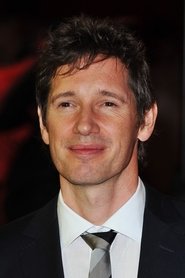 Paul W. S. Anderson
RESIDENT EVIL FILMMAKER
The central filmmaker behind Jovovich's six-film Resident Evil run, writing and producing the series and directing four installments.
 Ali Larter
RECURRING CO-STAR
Played Claire Redfield opposite Jovovich in Resident Evil: Extinction, Afterlife and The Final Chapter.
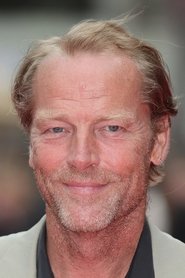 Iain Glen
RECURRING ANTAGONIST
Played Dr. Alexander Isaacs, one of Alice's principal Umbrella enemies across Apocalypse, Extinction and The Final Chapter.
 Oded Fehr
RECURRING ALLY
Played Carlos Olivera alongside Jovovich in Apocalypse, Extinction and Retribution.
 Sienna Guillory
JILL VALENTINE
A recurring Resident Evil presence opposite Jovovich as Jill Valentine across multiple installments of the series.
 Shawn Roberts
ALBERT WESKER
Played Alice's recurring Umbrella adversary Albert Wesker in Afterlife, Retribution and The Final Chapter.
 Christine Elise
FRANCHISE SURVIVOR
Returned alongside Tilly in Cult of Chucky and the Chucky television series, bringing Kyle back into the same continuing horror mythology that links the franchise's original and modern generations.
Milla Jovovich Horror Movies
Acting (10 credits)
2025
2019
2016
2012
2010
2009
2007
2004
2002
Production (1 credits)
2025